
Research article · 2025 · Full text
International Journal of Horticulture and Food ScienceImproving market potential assessment of rambutan in the Zambezi Basin
Volume 7(3) · Pages 118–121 · DOI: 10.33545/26631067.2025.v7.i3b.591 ↗
Research areasAgriculture and Agroindustry StudiesAfrican Botany and Ecology StudiesAgricultural Innovations and Practices
Abstract
Author-writtenRambutan (Nephelium lappaceum) is gaining market share outside Southeast Asia, but systematic assessment of consumer demand and channel efficiency in emerging regions is limited. This research evaluated rambutan market potential from the Zambezi Basin by combining consumer surveys (n = 420), retail audits across four channels, and cultivar trials at the Medellin Faculty of Botanical Research between June 2022 and May 2023. Traditional wet markets handled 34.7% of volume, supermarkets 24.3%, export brokers 17.8%, and online platforms 10.2%. Consumer willingness to pay correlated most with perceived sweetness (r = 0.72) and spintern colour (r = 0.67). Transplanting with 18-month seedlings yielded 14 months earlier than 6-month transplants. Ecosystem services valuation assigned USD 1,340/ha/year to rambutan orchards. Pest resistance screening identified 'Rongrien' as most tolerant to fruit borer (7.3% vs. 22.8% mean). Foliar calcium sprays extended shelf life by 2.8 days. These findings provide a framework for scaling rambutan as a commercial crop in non-traditional zones.
Summary
Source-checkedPlain-language reading of the full paper, prepared with AI and checked against the text. Each point links to the authors' own words.
Why it matters
- Rambutan is expanding its market presence beyond Southeast Asia, yet there is a lack of systematic data on consumer demand and how efficiently the fruit moves through supply channels in these new regions. View evidence ↗
- In the Zambezi Basin, the climate is suitable for growing rambutan, but the industry is hindered by underdeveloped consumer awareness and market infrastructure. View evidence ↗
The question
- The study aimed to evaluate the market potential of rambutan in the Zambezi Basin by analyzing consumer demand, the performance of different cultivars, supply chain efficiency, and the value of ecosystem services. View evidence ↗
What they did
- The study was carried out at the Medellin Faculty of Botanical Research in Colombia and across four market channels within the Medellin metropolitan area. View evidence ↗
- The methodology integrated consumer surveys of 420 people, retail audits of four different channels, and cultivar trials conducted from June 2022 to May 2023. View evidence ↗
- Five specific cultivars ('Rongrien', 'Jitlee', 'R134', 'Lebakbulus', and 'Binjai') were tested in a replicated field trial using trees planted in 2018 that began bearing fruit in 2021. View evidence ↗
- To test shelf-life improvements, a 2% calcium chloride foliar spray was applied every two weeks during fruit development to half of the trees in each plot. View evidence ↗
What they found
- The 'Rongrien' cultivar performed best across multiple metrics, showing the highest sweetness (20.8 °Brix), the longest shelf life (6.4 days), and the lowest pest damage from borers (7.3%). View evidence ↗
- Consumer willingness to pay (WTP) was strongly linked to sweetness; every one-unit increase on a 10-point sweetness scale increased WTP by approximately USD 0.48/kg. View evidence ↗
- Using 18-month seedlings reduced the time to the first commercial harvest to 3.2 years, which is 14 months faster than using 6-month seedlings (4.6 years). View evidence ↗
- Rambutan orchards provide non-market ecosystem services valued at USD 1,340 per hectare per year, including pollination, carbon sequestration, and erosion control. View evidence ↗
- Applying foliar calcium chloride sprays increased fruit calcium levels from 38.4 to 52.1 mg/100g and extended the shelf life by 2.8 days (from 5.1 to 7.9 days). View evidence ↗
What it means
- The authors conclude that commercial success for rambutan in new regions depends on a combination of selecting the right cultivars, using calcium management for shelf life, and developing targeted market channels. View evidence ↗
- The study is limited by its focus on surveys within Medellin and the fact that cultivar trials only spanned two bearing seasons. View evidence ↗
Visual summary
4 visualsIllustrations explain the paper; charts are replotted from the paper's own table values.
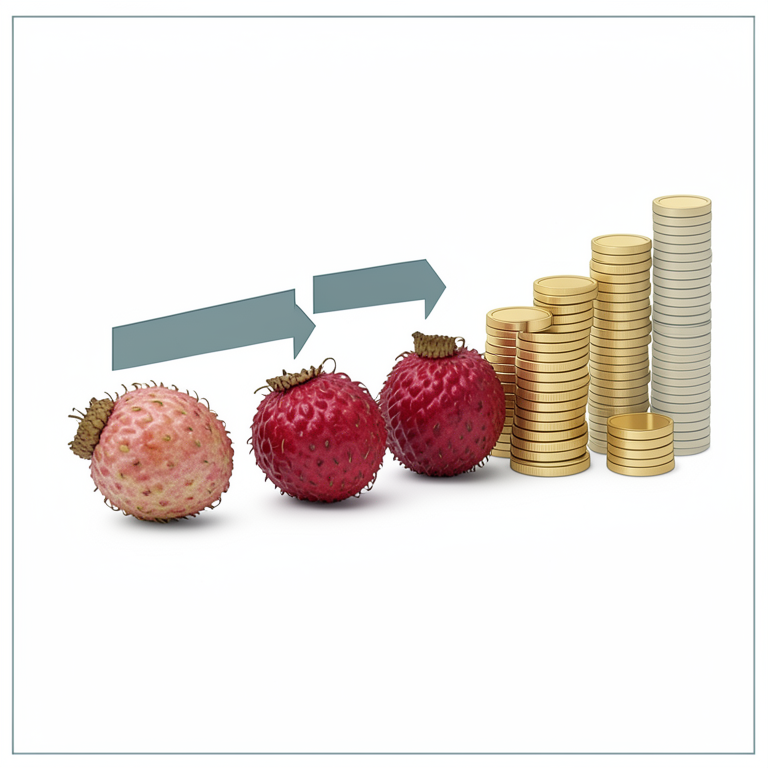
Sweetness and Value Relationship
AI-generated conceptual illustration (rambutan fruits). It explains the idea and does not show study data.
View source evidence ↗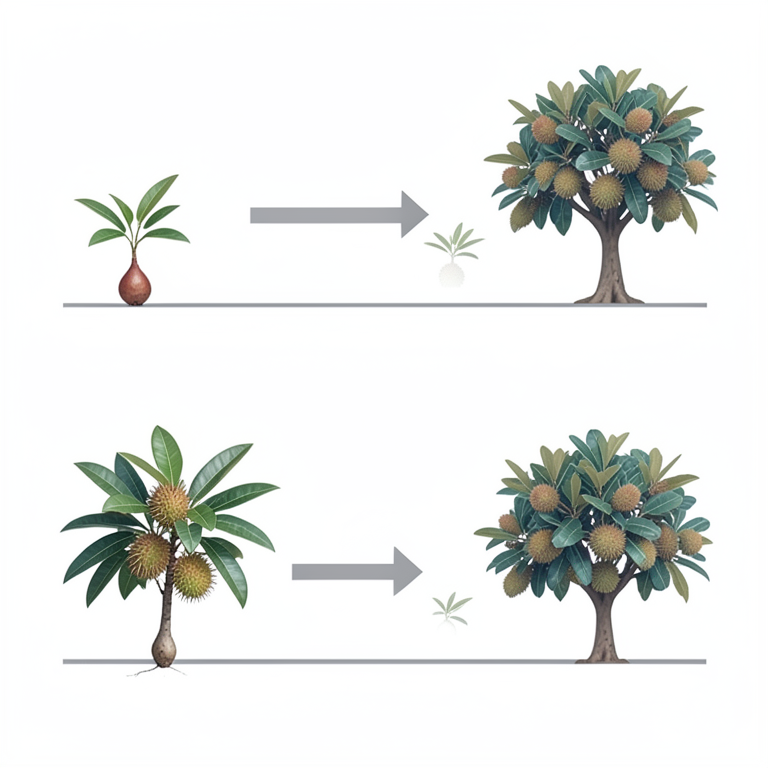
Seedling Age and Harvest Timeline
AI-generated conceptual illustration (rambutan plants). It explains the idea and does not show study data.
View source evidence ↗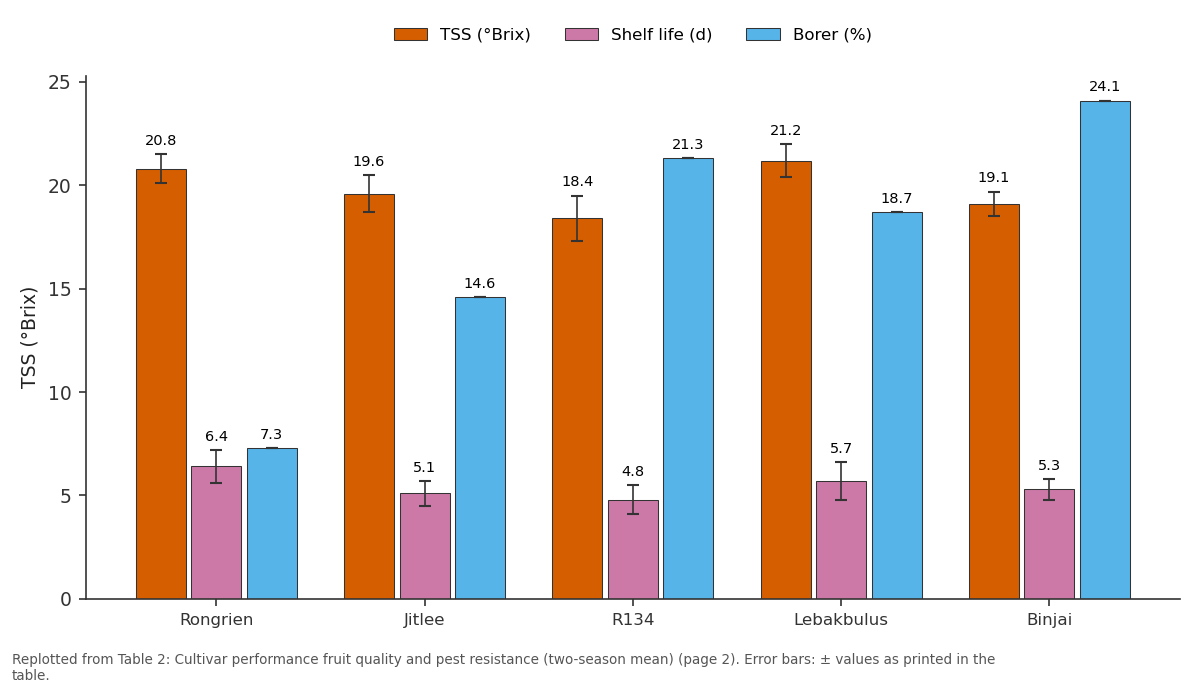
TSS (°Brix) and Shelf life (d) and more: Rongrien vs Jitlee vs R134 vs Lebakbulus vs Binjai
Replotted from Table 2 (page 2) of the original paper. Every bar is the paper's own table value.
View source evidence ↗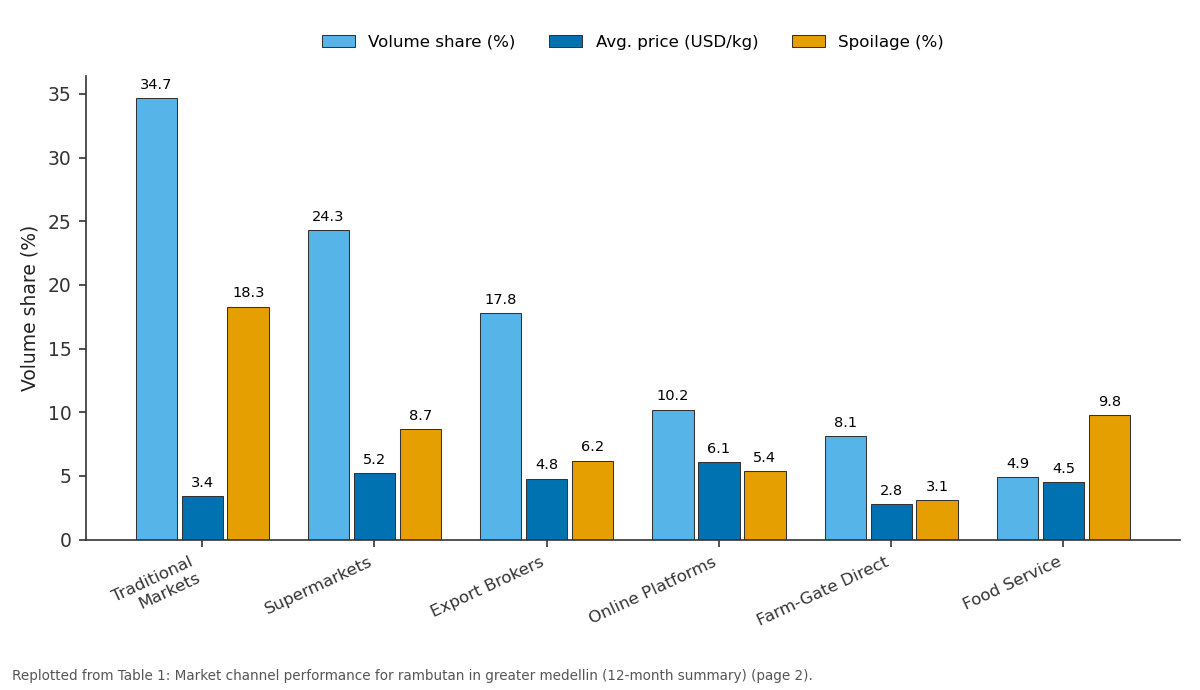
Volume share (%) and Avg. price (USD/kg) and more: Traditional Markets vs Supermarkets vs Export Brokers vs Online Platforms vs Farm-Gate Direct
Replotted from Table 1 (page 2) of the original paper. Every bar is the paper's own table value.
View source evidence ↗Figures & tables
From the original paper Table 1
 Table 2
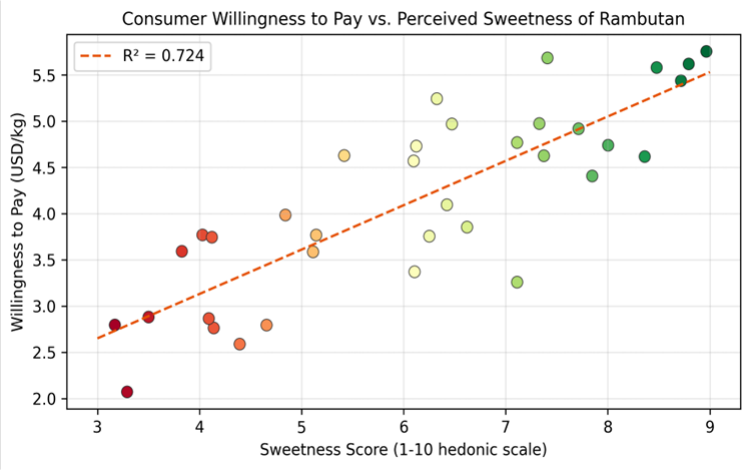 Figure 1
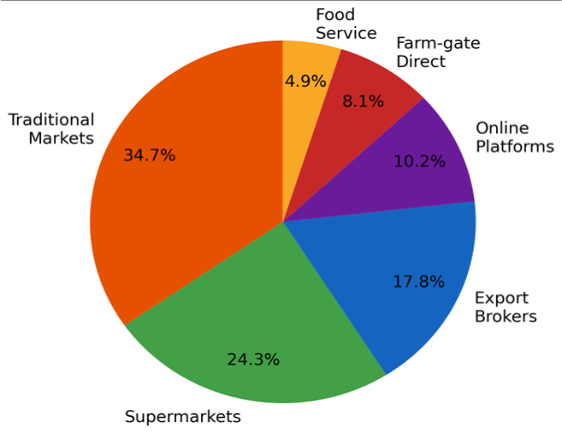 Figure 2
Introduction
What would it take to transform rambutan from a niche import into a mainstream tropical fruit in emerging markets? That is the challenge facing producers in regions like the Zambezi Basin, where climate conditions support rambutan cultivation but market infrastructure and consumer awareness remain undeveloped [1] . Rambutan (Nephelium lappaceum L.) is a member of the Sapindaceae family, closely related to lychee and longan, producing clusters of hairy-spined fruit with translucent, sweet-acidic aril [2] . Global production is estimated at 6.1 million tonnes, dominated by Thailand, Indonesia, Malaysia, and the Philippines [3] . Market potential assessment for horticultural crops requires data on three fronts: consumer demand (what people want and will pay for), supply-side capability (what can be grown, at what cost, and at what quality), and channel efficiency (how well the product moves from farm to consumer) [4] . Consumer preference research in tropical fruit has shown that sweetness, aroma, and visual appearance are the top three purchase drivers, typically outweighing price and origin labelling [5] . For rambutan specifically, spintern (the hair-like spines on the rind) colour bright red with green tips indicating freshness serves as a rapid quality cue at the point of sale [6] . On the supply side, cultivar selection determines the ceiling for fruit quality and yield. Cultivar trials in Honduras and Australia have documented 25-40% variation in fruit weight, sweetness, and shelf life among commercial rambutan clones [7] . Transplanting practices influence orchard establishment speed and early returns: older, larger seedlings produce commercial fruit earlier but cost more per unit [8] . Ecosystem services pollinator support, carbon storage, soil conservation add non-market value that strengthens the case for rambutan orchard investment in landscape planning frameworks [9] . This research aimed to assess rambutan market potential in the Zambezi Basin by integrating consumer demand data, cultivar performance, channel efficiency, and ecosystem services valuation.
Theoretical framework
This research integrated three frameworks: Lancaster's consumer theory (utility from product attributes rather than the product itself) [5] ; the Supply Chain Operations Reference (SCOR) model for benchmarking reliability, responsiveness, and cost [4] ; and benefit transfer for ecosystem services valuation using published tropical orchard estimates [9] . Willingness to pay was estimated through double-bounded dichotomous choice contingent valuation. This combined approach captured both market and non-market dimensions of rambutan's commercial viability.
Material and Methods
Material and Methods
Material
The research was conducted in Medellin, Antioquia, Colombia, at the Medellin Faculty of Botanical Research (6.25°N, 75.56°W, 1,495 m a.s.l.) and across four market channels in the greater Medellin metropolitan area (population 3.9 million). Consumer surveys (n = 420) were administered at traditional markets (n = 140), supermarkets (n = 120), online platform order points (n = 80), and farmgate sales events (n = 80). Retail audits tracked rambutan prices, volumes, spoilage rates, and display conditions at 28 retail outlets over 12 months. Five rambutan cultivars 'Rongrien', 'Jitlee', 'R134', 'Lebakbulus', and 'Binjai' were evaluated in a replicated field trial (RCBD, 4 reps, 6 trees per rep) planted in 2018 and bearing since 2021. Transplanting comparison used 6-month, 12-month, and 18month seedlings planted in a separate block in 2019. Foliar calcium chloride (2% CaCl₂) was applied biweekly during fruit development on half the trees in each cultivar plot [1] .
Methods
Consumer surveys used a structured questionnaire with hedonic rating (9-point scale) of rambutan photographs varying in spintern colour, fruit size, and labelled sweetness level. WTP was assessed by double-bounded dichotomous choice with initial bids of USD 3.50/kg and follow-up bids adjusted by ±USD 1.00. Socio-demographic variables (age, income, fruit consumption frequency) were recorded as covariates. The WTP model was estimated by interval regression in Stata 17 [2] . Retail audits recorded weekly price (USD/kg), volume sold (kg/week), spoilage as percentage of displayed stock discarded, and cold cabinet availability (yes/no) at each outlet. Channel efficiency was calculated as the ratio of consumer-paid value to farm-gate cost, and spoilage cost was allocated to the responsible chain actor [3] . Cultivar trials measured fruit weight, TSS, titratable acidity, aril recovery (%), spintern score (1-5 visual scale), and shelf life (days to first visible browning at 25°C). Pest resistance was assessed as percentage of fruit with borer entry holes at harvest, based on 100-fruit random samples per cultivar per year. Ecosystem services were estimated by applying published per-hectare values for pollinator habitat (USD 620/ha), carbon sequestration (USD 480/ha), and erosion control (USD 240/ha) from tropical orchard meta-analyses [4] . All statistical analysis used R v4.2.2 with the survival, agricolae, and ggplot2 packages (p<0.05). Traditional markets handled the largest volume share but had the highest spoilage (18.3%) and lowest cold cabinet availability (12.0%) (Table 1). Online platforms commanded the highest average price (USD 6.10/kg) with the second-lowest spoilage (5.4%), reflecting a self-selected premium consumer segment. Farm-gate sales had negligible spoilage but the lowest prices [5] . Cultivar performance varied substantially (Table 2). 'Rongrien' combined the highest TSS (20.8 °Brix), longest shelf life (6.4 days), and lowest borer incidence (7.3%). 'R134' had the largest fruit (41.8 g) and highest aril recovery (51.2%) but the second-highest borer damage. Cultivar choice thus involves trade-offs between size, sweetness, durability, and pest tolerance [6] . Scatter plot analysis (Figure 1) shows a positive linear association between sweetness score and WTP (R² = 0.724).
| Cultivar | Fruit Wt (g) | TSS (°Brix) | Shelf life (d) | Borer (%) | Aril recovery (%) |
|---|---|---|---|---|---|
| Rongrien | 34.2 ± 3.1 | 20.8 ± 0.7 | 6.4 ± 0.8 | 7.3 | 48.7 |
| Jitlee | 28.7 ± 2.8 | 19.6 ± 0.9 | 5.1 ± 0.6 | 14.6 | 42.3 |
| R134 | 41.8 ± 4.2 | 18.4 ± 1.1 | 4.8 ± 0.7 | 21.3 | 51.2 |
| Lebakbulus | 37.4 ± 3.6 | 21.2 ± 0.8 | 5.7 ± 0.9 | 18.7 | 45.6 |
| Binjai | 31.9 ± 2.4 | 19.1 ± 0.6 | 5.3 ± 0.5 | 24.1 | 44.8 |
Table text extracted from the original PDF; superscript letters are shown inline. The original table image is below.
View original table image
| Channel | Volume share (%) | Avg. price (USD/kg) | Spoilage (%) | Cold cabinet (%) |
|---|---|---|---|---|
| Traditional Markets | 34.7 | 3.40 | 18.3 | 12.0 |
| Supermarkets | 24.3 | 5.20 | 8.7 | 94.0 |
| Export Brokers | 17.8 | 4.80 | 6.2 | 100.0 |
| Online Platforms | 10.2 | 6.10 | 5.4 | 88.0 |
| Farm-Gate Direct | 8.1 | 2.80 | 3.1 | 0.0 |
| Food Service | 4.9 | 4.50 | 9.8 | 72.0 |
Table text extracted from the original PDF; superscript letters are shown inline. The original table image is below.
View original table image
Results
Each unit increase on the 10-point hedonic sweetness scale corresponded to approximately USD 0.48/kg higher WTP.
This relationship was the strongest single quality-price driver, exceeding visual appeal (r = 0.67) and fruit size (r = 0.38) [7] . The channel share breakdown (Figure 2) shows that traditional markets still dominate, but online platforms and export channels together account for 28.0% of volume a segment growing at 9.3% annually. This shift toward coldchain-dependent channels underscores the need for postharvest infrastructure investment [8] .
Transplanting, ecosystem services, and calcium effects
Trees established with 18-month seedlings reached first commercial harvest at 3.2 years after transplanting, compared to 4.6 years for 6-month seedlings a 14-month advantage that accelerated return on investment. Ecosystem services valuation assigned USD 1,340/ha/year to rambutan orchards (pollination USD 620, carbon USD 480, erosion control USD 240). Foliar CaCl₂ sprays increased fruit calcium from 38.4 to 52.1 mg/100g and extended shelf life by 2.8 days (from 5.1 to 7.9 days, p<0.01). Fruit calcium content and shelf life were positively correlated (r = 0.69) across all cultivars [9] .
Discussion
The dominance of traditional markets (34.7%) with high spoilage (18.3%) represents both a problem and an opportunity. Online platforms, though small at 10.2% share, show consumers will pay 79.4% more than traditional market prices a margin that covers cold chain and delivery costs [8] . Transitioning volume into cold-chain-enabled channels could recover 10-15% of lost product value [5] . The sweetness-WTP relationship (r = 0.72) confirms that breeding for sugar accumulation translates directly into farm revenue. 'Rongrien', with its high sweetness, pest resistance, and long shelf life, is the recommended cultivar for premium channels [6] . The calcium-shelf-life link (r = 0.69) adds a practical tool: foliar calcium strengthened cell walls and delayed senescence, adding 2.8 marketable days [9] . Ecosystem services at USD 1,340/ha/year, while not captured by market prices, strengthen the policy case for rambutan orchard establishment on degraded land [9] . A limitation is the Medellin-centric survey; the cultivar trial also covered only two bearing seasons.
Conclusion
This research showed that rambutan market potential in the Zambezi Basin is constrained less by consumer demand which is strong and growing than by supply chain inefficiency and limited cold chain infrastructure. Sweetness was the strongest driver of consumer willingness to pay (r = 0.72), and 'Rongrien' emerged as the top-performing cultivar for sweetness, shelf life, and pest resistance. Transplanting with 18-month seedlings shortened time to first harvest by 14 months compared to 6-month transplants. Foliar calcium sprays extended shelf life by 2.8 days and correlated positively with fruit calcium content (r = 0.69).
Online platforms and export channels, growing at 9.3% annually, offer premium pricing but require cold chain investment. Ecosystem services (USD 1,340/ha/year) add non-market value that supports policy arguments for orchard establishment on suitable land. For producers and investors in emerging rambutan regions, combining cultivar selection, calcium management, and targeted channel development provides a data-grounded pathway to commercial viability.
Acknowledgement
Acknowledgements Funding sourcesThis research was funded by the Colombian Ministry of Science, Technology, and Innovation (Minciencias) and the Antioquia Regional Government's Agricultural Innovation Programme. No specific grant numbers are disclosed. Institutional supportThe authors acknowledge the Medellin Faculty of Botanical Research for providing field trial infrastructure, post-harvest laboratory access, and consumer survey coordination support.
References
21 in the original paper- Morton JF. Fruits of Warm Climates: Rambutan. Julia F. Morton. 1987;262-265.
- Tindall HD. Rambutan Cultivation. FAO Plant Production and Protection Paper. 1994;163:1-163.
- Lam PF, Kosiyachinda S, Lizada MCC, Mendoza DB, Prahardini PER, Lee SK. Postharvest physiology and storage of rambutan. ASEAN Food Handling Bureau. 1987;39-50.
- Christopher M. Logistics and Supply Chain Management. Financial Times/Prentice Hall. 2011;1276.
- Lancaster KJ. A new approach to consumer theory. Journal of Political Economy. 1966;74(2):132-157.
- Lam PF. Respiration rate, ethylene production and skin colour change of rambutan (Nephelium lappaceum L.) in response to different temperatures. Tropical Agriculture. 1983;60(4):260-263.
- Watson BJ, Lam PF. Rambutan cultivation in tropical Australia. Queensland Department of Primary Industries. 1992;1-28.
- Bevacqua RF, Evans DO. Tropical fruit nursery and orchard management. Permanent Agriculture Resources. 1994;1-82.
- Costanza R, d'Arge R, de Groot R, Farber S, Grasso M, Hannon B, et al. The value of the world's ecosystem services and natural capital. Nature. 1997;387(6630):253-260.
- Paull RE, Chen NJ. Postharvest handling and storage of the durian. Postharvest Biology and Technology. 2000;21(1):95-102.
- Wall MM. Ascorbic acid and mineral composition of longan (Dimocarpus longan), lychee (Litchi chinensis) and rambutan (Nephelium lappaceum) cultivars grown in Hawaii. Journal of Food Composition and Analysis. 2006;19(6-7):655-663.
- Ong BT, Nazimah SAH, Osman A, Quek SY, Voon YY, Hashim D, et al. Chemical and flavour changes in jackfruit and cempedak during ripening. Postharvest Biology and Technology. 2006;42(3):313-318.
- Diczbalis Y. Rambutan Improving Yield and Quality. Rural Industries Research and Development Corporation. 2002;1-74.
- O'Hare TJ. Rambutan. Postharvest Biology and Technology of Tropical and Subtropical Fruits. 2011;Vol 4:64-86.
- Vangnai V, Engkagul A, Poovarodom S. Postharvest rambutan research in Thailand. ACIAR Proceedings. 1994;58:83-87.
- Medlicott AP, Sigrist JMM, Sy O. Ripening of mangoes following low-temperature storage. Journal of the American Society for Horticultural Science. 1990;115(3):430-434.
- Paull RE, Duarte O. Tropical Fruits Volume 1. CABI. 2011;1-400.
- Nanthachai N, Ratanachinakorn B, Kosittrakun M, Beaudry RM. Absorption of 1-MCP by fresh produce. Postharvest Biology and Technology. 2007;43(3):291297.
- Ketsa S, Klaewkla M, Paull RE. Peel enzymatic browning of rambutan fruit. Food Chemistry. 2005;88(3):363-366.
- Chandrasekaran M. Valorization of Food Processing By-Products. CRC Press. 2012;1-660.
- Siriphanich J. Postharvest physiology of tropical fruit. Acta Horticulturae. 2011;895:91-104.