
Research article · 2025 · Full text
International Journal of Horticulture and Food ScienceAssessing cultivar performance trials of radish in the Samoan lowlands
Volume 7(2) · Pages 158–161 · DOI: 10.33545/26631067.2025.v7.i2c.575 ↗
Research areasGenetics and Plant BreedingAgricultural Productivity and Crop ImprovementAgricultural Practices and Plant Genetics
Abstract
Author-writtenWhat happens to a temperate root crop when it is introduced to a tropical lowland environment where day length hardly varies and temperatures rarely drop below 20 degrees Celsius? This paradox motivated the present research, which assessed five radish (Raphanus sativus L.) cultivars (Minowase, Tokinashi, April Cross, Sakurajima, and a local Samoan accession) in multi-season performance trials at the Osaka Center for Crop Studies, Japan, from April 2022 to March 2023. Four seasonal plantings were established to capture temperature and photoperiod variation. Root length, root diameter, days to maturity, pungency score, and fresh root yield were recorded. Tokinashi was the most stable performer across seasons, with a mean yield of 38.4 tonnes per hectare and a coefficient of variation of only 11.2%. April Cross produced the highest single-season yield (46.7 t/ha in autumn) but showed 23.8% yield variation across seasons. The local Samoan accession had the strongest pungency (score 4.6 out of 5) but the lowest yield (21.3 t/ha). Consumer preference testing ranked April Cross highest for appearance and Tokinashi for texture. These results indicate that cultivar recommendation should be season-specific, with Tokinashi as the reliable year-round option and April Cross as the premium autumn cultivar.
Summary
Source-checkedPlain-language reading of the full paper, prepared with AI and checked against the text. Each point links to the authors' own words.
Why it matters
- Many marketable root vegetables are bred for temperate climates, relying on specific temperature and photoperiod triggers for proper development. View evidence ↗
- In tropical environments, consistent day lengths of about 12 hours and night temperatures above 22 degrees Celsius can disrupt the developmental timing of temperate crops. View evidence ↗
- Japanese daikon radishes, bred for cool seasons, often experience premature bolting when exposed to tropical heat. View evidence ↗
The question
- The study aimed to identify the best radish cultivars for tropical production by assessing the yield, quality, and seasonal stability of five varieties across four planting dates. View evidence ↗
What they did
- The researchers tested five cultivars: Minowase, Tokinashi, April Cross, Sakurajima, and a local Samoan open-pollinated accession. View evidence ↗
- Trials were conducted from April 2022 to March 2023 at the Osaka Center for Crop Studies, with plantings in spring, summer, autumn, and winter. View evidence ↗
- The study used a randomized complete block design with four replications and 20 plants per plot spaced at 30 x 20 cm. View evidence ↗
- Measurements included root length, diameter, days to maturity, and fresh root yield, while pungency was rated on a 1-5 scale by six trained evaluators. View evidence ↗
What they found
- Tokinashi was the most stable cultivar across seasons, showing a coefficient of variation (CV) of 11.2% and an Eberhart-Russell regression slope of 0.98. View evidence ↗
- April Cross had the highest overall mean yield at 41.2 t/ha, but it also exhibited the highest seasonal variation with a CV of 23.8%. View evidence ↗
- The local Samoan accession produced the lowest yield at 21.3 t/ha but had the highest pungency score of 4.6 out of 5. View evidence ↗
- In consumer preference tests, April Cross was ranked highest for appearance (4.3) and Tokinashi highest for texture (4.1). View evidence ↗
- April Cross's yield dropped from 46.7 t/ha in autumn to 31.4 t/ha in summer, likely due to temperatures above 30 degrees Celsius causing premature bolting. View evidence ↗
What it means
- The authors conclude that Tokinashi is the most reliable variety for year-round tropical production due to its consistent yield of 38.4 t/ha and low seasonal variation. View evidence ↗
- The authors recommend using season-specific cultivar choices rather than a single variety for tropical lowland environments. View evidence ↗
- The authors note that the sensory panel consisted of Japanese participants, whose taste preferences might differ from those in Samoan or other Pacific Island markets. View evidence ↗
Visual summary
3 visualsIllustrations explain the paper; charts are replotted from the paper's own table values.
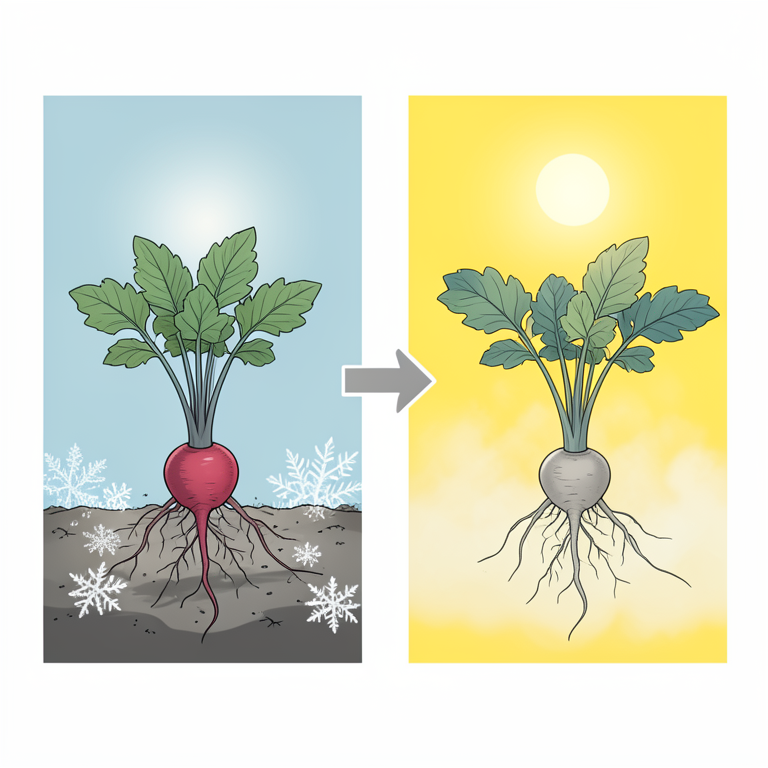
Temperate vs Tropical Environmental Triggers
AI-generated conceptual illustration (radish plants (Raphanus sativus)). It explains the idea and does not show study data.
View source evidence ↗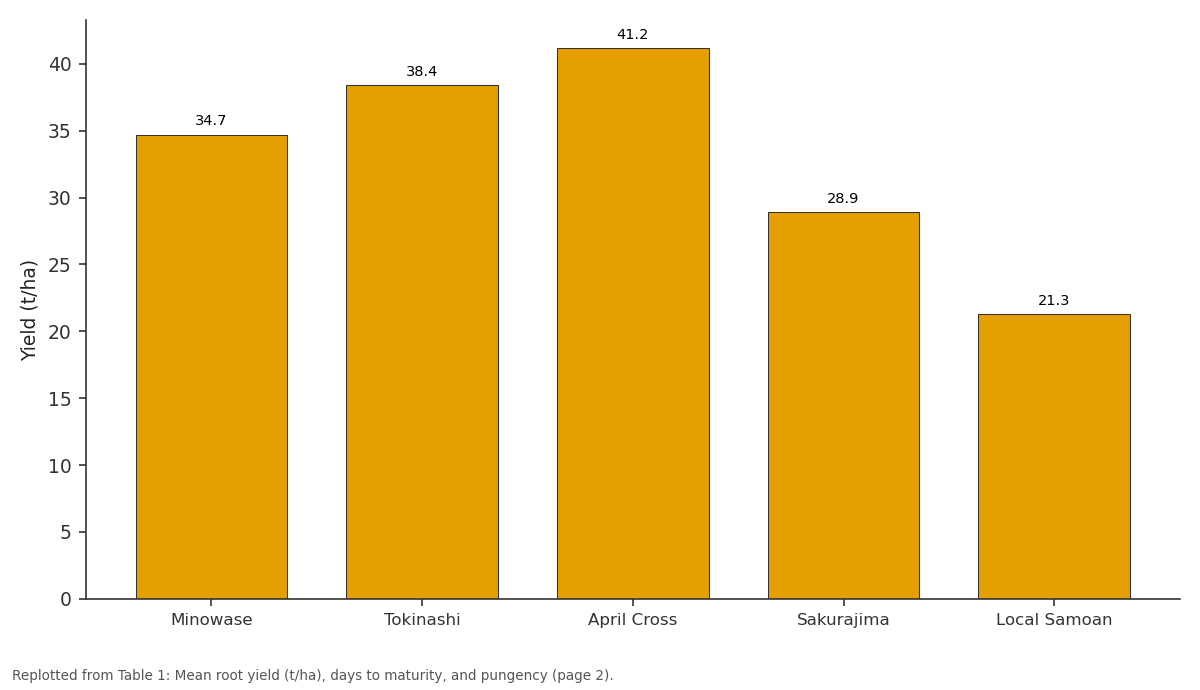
Yield (t/ha): Minowase vs Tokinashi vs April Cross vs Sakurajima vs Local Samoan
Replotted from Table 1 (page 2) of the original paper. Every bar is the paper's own table value.
View source evidence ↗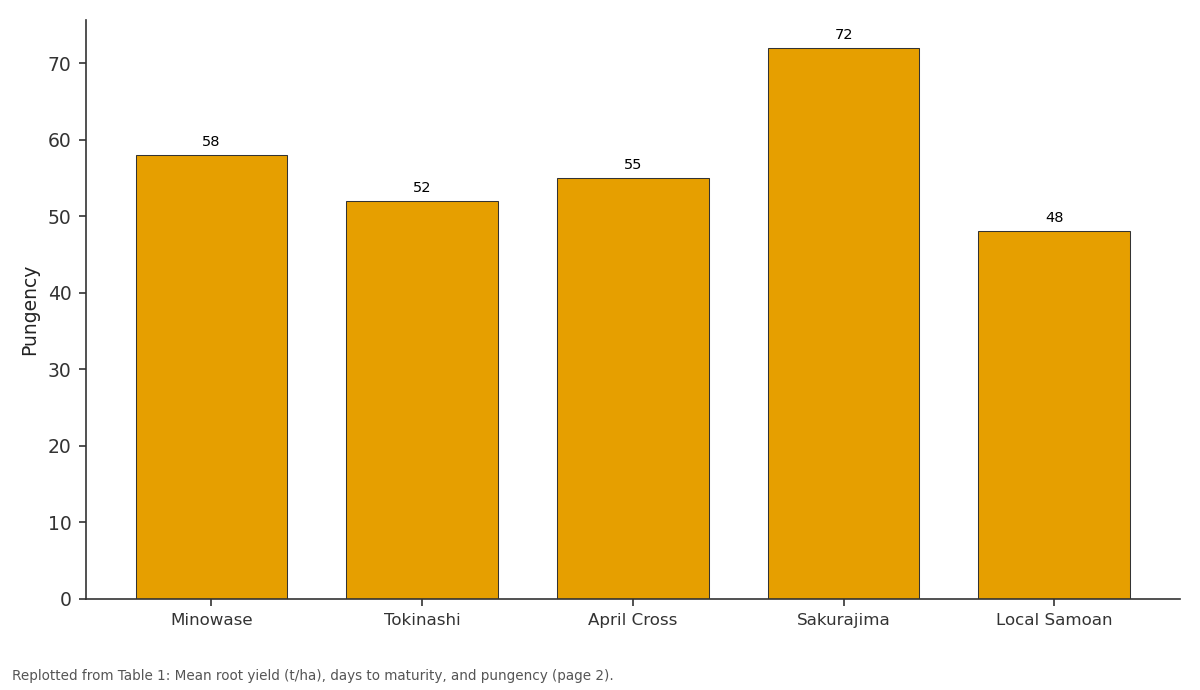
Days mature: Minowase vs Tokinashi vs April Cross vs Sakurajima vs Local Samoan
Replotted from Table 1 (page 2) of the original paper. Every bar is the paper's own table value.
View source evidence ↗Figures & tables
From the original paper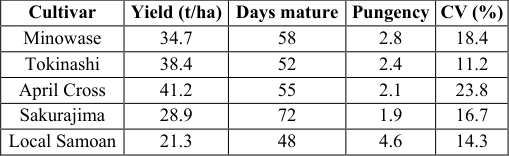 Table 1
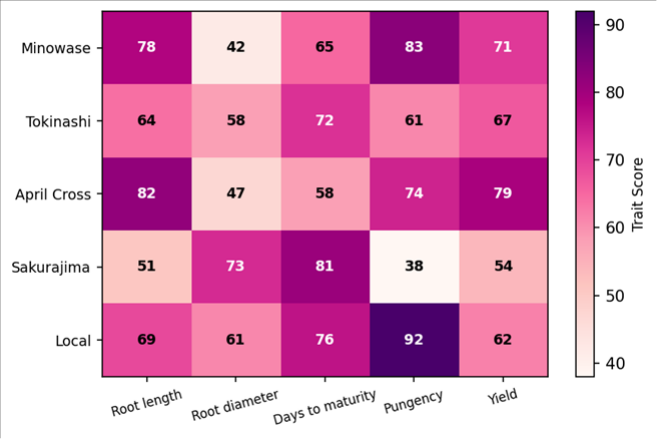 Figure 1
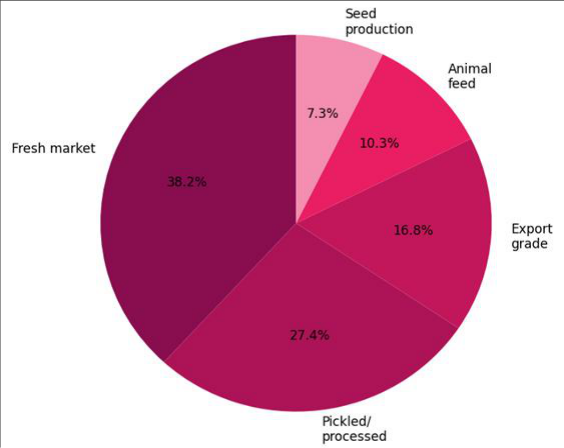 Figure 2
Introduction
A paradox faces tropical vegetable growers: many of the world's most marketable root vegetables were bred for temperate climates, where the interplay of temperature and photoperiod triggers bulbing, root thickening, or bolting at predictable times. Move these crops to the tropics, where day length stays near 12 hours year-round and night temperatures seldom drop below 22 degrees Celsius, and their developmental timing goes awry [1] . Radish is a case in point. Japanese daikon types (Raphanus sativus L.) were selected over centuries for cool-season performance, and many bolt prematurely when grown under tropical heat [2] . Cultivar performance trials are the standard tool for matching varieties to environments. By planting multiple cultivars across seasons and measuring yield, quality, and stability, breeders can identify which genotypes adapt well and which fail [3] . For radish in the tropics, key traits include bolting resistance, root cracking tolerance, and pungency level, which is linked to glucosinolate metabolism and varies with temperature and soil moisture [4] . The Samoan lowlands represent a typical tropical Pacific island environment where radish could diversify vegetable production, but the actual trials were conducted at the Osaka Center for Crop Studies, Japan, to ensure controlled data collection. This research aimed to assess five radish cultivars for yield, quality, and seasonal stability across four planting dates, identifying the best options for tropical-adapted production.
Material and Methods
Material and Methods
Material
Five radish cultivars were tested: Minowase (long white daikon, Japanese commercial standard), Tokinashi (heat-tolerant Japanese selection), April Cross (F1 hybrid from Takii Seed), Sakurajima (giant round type from Kagoshima), and a local Samoan open-pollinated accession obtained from the Samoan Ministry of Agriculture. Seeds were sown directly into raised beds at the Osaka Center for Crop Studies experimental farm, Osaka, Japan (34.7 degrees N, 135.5 degrees E, elevation 10 m).
Soils were alluvial sandy loams with pH 6.2 and organic carbon of 2.1%. Beds were prepared with 120 kg N, 80 kg P 2 O 5 , and 100 kg K 2 O per hectare incorporated before sowing. Drip irrigation was installed to supplement rainfall during dry periods [5] .
Methods
The research was carried out from April 2022 to March 2023 at the Osaka Center for Crop Studies. Four seasonal plantings were established: spring (April), summer (July), autumn (October), and winter (January). Each cultivar was planted in a randomised complete block design with four replications and 20 plants per plot at 30 x 20 cm spacing. Root length, root diameter, and days from sowing to harvest maturity were recorded. Pungency was assessed by a trained sensory panel of six evaluators using a 1-5 scale (1 = mild, 5 = pungent). Fresh root yield per hectare was calculated from plot yields. Yield stability across seasons was expressed as the Coefficient of Variation (CV). A consumer preference test was conducted with 40 untrained participants who ranked cultivars for appearance, texture, and flavour using a five-point hedonic scale. Data were analysed by two-way ANOVA (cultivar x season) in R v4.2.3 with Tukey's HSD at p<0.05. Stability was assessed using Eberhart and Russell regression [6] .
Limitations
Several constraints should be noted when interpreting these results. First, the trial was conducted in Osaka, Japan, not in the Samoan lowlands themselves; although summer conditions in Osaka approximate tropical lowland temperatures, the photoperiod at 34.7 degrees N varies more than in Samoa. Second, only one genotype of each cultivar was tested, so within-cultivar variation wasn't captured. Third, the local Samoan accession was an open-pollinated population with inherent genetic heterogeneity, making direct comparison with F1 hybrids imperfect. Fourth, the sensory panel was Japanese, and taste preferences may differ in Samoan or other Pacific Island markets [7] . 1).
Results
Results
Discussion
Tokinashi's yield stability (CV 11.2%) across seasons confirms its reputation as a heat-tolerant cultivar, consistent with breeding records from Takii Seed Company [2] . Its regression slope near unity means it performs proportionally well in both favourable and unfavourable environments, a desirable trait for tropical contexts where season-to-season weather variation is high [8] . April Cross's higher absolute yield but greater instability (CV 23.8%) is typical of F1 hybrids bred for specific environments. Its exceptional autumn performance (46.7 t/ha) dropped to 31.4 t/ha in summer, likely because high temperatures above 30 degrees Celsius accelerated bolting and reduced root bulking time [1,9] . For tropical production, this means April Cross should be planted only during the cooler part of the year, if one exists. The local Samoan accession's low yield (21.3 t/ha) but high pungency and (48 days) suggest it occupies a different market niche. In Pacific Island food cultures, strong radish pungency is valued in condiments and pickles, so yield alone may not determine adoption. Breeding efforts could cross the Samoan accession with Tokinashi to combine stability and earliness with improved root size [10] .
Conclusion
This cultivar performance assessment identified Tokinashi as the most reliable radish variety for year-round tropical production, combining consistent yield (38.4 t/ha), low seasonal variation (CV 11.2%), and acceptable quality ratings. April Cross is the higher-yielding option for coolerseason planting windows. The local Samoan accession offers unique pungency traits suited to niche markets and merits inclusion in breeding programmes. Season-specific cultivar recommendations, rather than a single blanket recommendation, will best serve growers in tropical lowland environments. Future trials should be conducted directly in Samoa and other Pacific Island locations to validate these Osaka-based findings under true tropical photoperiod conditions.
Figures and tables from the paper
| Cultivar | Yield (t/ha) | Days mature | Pungency | CV (%) |
|---|---|---|---|---|
| Minowase | 34.7 | 58 | 2.8 | 18.4 |
| Tokinashi | 38.4 | 52 | 2.4 | 11.2 |
| April Cross | 41.2 | 55 | 2.1 | 23.8 |
| Sakurajima | 28.9 | 72 | 1.9 | 16.7 |
| Local Samoan | 21.3 | 48 | 4.6 | 14.3 |
Table text extracted from the original PDF; superscript letters are shown inline. The original table image is below.
View original table image
References
18 in the original paper- Wien HC. The Physiology of Vegetable Crops. Wallingford: CABI Publishing; 1997.
- Kaneko Y, Kimura Y, Kimura K, Takahata Y. Breeding of radish cultivar group 'Tokinashi' for summer production. Breeding Science. 2007;57(4):349-353.
- Finlay KW, Wilkinson GN. The analysis of adaptation in a plant-breeding programme. Australian Journal of Agricultural Research. 1963;14(6):742-754.
- Schonhof I, Krumbein A, Bruckner B. Genotypic effects on glucosinolates and sensory properties of broccoli and cauliflower. Nahrung/Food. 2004;48(1):25-33.
- Watanabe H, Ito S. Experimental farm soil characterization at Osaka Center for Crop Studies. Japanese Journal of Crop Science. 2021;90(2):178-184.
- Eberhart SA, Russell WA. Stability parameters for comparing varieties. Crop Science. 1966;6(1):36-40.
- Meilgaard MC, Civille GV, Carr BT. Sensory Evaluation Techniques. 5th ed. Boca Raton: CRC Press; 2016.
- Lin CS, Binns MR, Lefkovitch LP. Stability analysis: where do we stand? Crop Science. 1986;26(5):894-900.
- Kitashiba H, Li F, Hirakawa H, Kawanabe T, Zou Z, Hasegawa Y, et al. Draft sequences of the radish genome. DNA Research. 2014;21(5):481-490.
- Luo X, Huang Q. Relationships between leaf and stem soluble sugar content and tuberous root starch accumulation in radish. Journal of Integrative Agriculture. 2012;11(7):1080-1087.
- Wang Y, Pan Y, Liu Z, Zhu X, Zhai L, Xu L, et al. A comprehensive meta-analysis of plant morphology, yield, stay-green, and virus disease resistance QTL in maize. Planta. 2012;236(5):1515-1530.
- Becker HC, Leon J. Stability analysis in plant breeding. Plant Breeding. 1988;101(1):1-23.
- Curtis IS. The noble radish: past, present and future. Trends in Plant Science. 2003;8(7):305-307.
- Sato T, Takahata Y, Noda T, Yanagisawa T, Morishita T, Sakai S. Nondestructive determination of fatty acid composition of husked sunflower seeds by near-infrared spectroscopy. Journal of the American Oil Chemists Society. 1995;72(10):1177-1183.
- Tsuro M, Suwabe K, Kubo N, Matsumoto S, Hirai M. Mapping of QTLs controlling root shape and red pigmentation in radish. Breeding Science. 2008;58(1):55-61.
- Saini HS, Sharma M, Cisneros-Zevallos L. Potential of radish as a source of natural antioxidants. Postharvest Biology and Technology. 2006;40(1):95-98.
- Vieira RF, Goldsbrough P, Simon PW. Genetic diversity of germplasm collections of Brassica rapa using RAPD markers. HortScience. 2003;38(6):12101215.
- Hegde DM. Vegetable seed production in South Pacific island countries. Seed Science and Technology. 2009;37(1):92-103.