
Research article · 2025 · Full text
International Journal of Horticulture and Food ScienceExamining root morphology of chrysanthemum in the Gujarat Coastline
Volume 7(4) · Pages 158–161 · DOI: 10.33545/26631067.2025.v7.i4c.619 ↗
Research areasFlowering Plant Growth and CultivationGenetics and Plant BreedingGrowth and nutrition in plants
Abstract
Author-writtenWhen comparing chrysanthemum varieties side by side, the differences above ground flower color, petal form, plant height are obvious, but the variation below ground is just as striking and far less documented. This research examined root morphology of five chrysanthemum varieties grown in saline coastal soils along the Gujarat coastline during 2022-2023, coordinated from the Imphal School of Plant Sciences. Root length ranged from 15.8 to 24.3 cm, with Kiku-14 producing the longest and most branched root systems. Genome-wide association analysis using 8,247 SNP markers identified 23 loci associated with root length and lateral root density (p<10-4), clustered on chromosomes 3, 7, and 9. AMMI analysis of root traits across five coastal environments showed that genotype-by-environment interaction accounted for 28.4% of total variation. Foliar spray with zinc sulfate at 0.3% increased root dry weight by 16.2% and lateral root count by 21.8%. Transplanting survival in saline soils (EC 4.2 dS/m) was 78.3% for Kiku-14 versus 54.7% for the salt-sensitive Kiku-9. Mineral content analysis showed that coastal-grown chrysanthemum roots accumulated 2.3 times more sodium than inland-grown controls.
Summary
Source-checkedPlain-language reading of the full paper, prepared with AI and checked against the text. Each point links to the authors' own words.
Why it matters
- Root architecture is critical for a plant's ability to access nutrients, resist wind, and tolerate salinity, yet it is often overlooked in ornamental crop research. View evidence ↗
- Chrysanthemum is the second most economically valuable cut flower globally, but most root research has been limited to controlled media rather than field conditions. View evidence ↗
- Floriculture operations along the 1,600 km Gujarat coastline are increasingly affected by groundwater intrusion and saline soils. View evidence ↗
The question
- The study aimed to examine root morphological variation in five chrysanthemum varieties in coastal Gujarat, map genomic loci via GWAS, test foliar micronutrient effects, and assess genotype-by-environment interactions. View evidence ↗
What they did
- The researchers used a split-plot RCBD design with site as the block, variety as the main plot, and four foliar ZnSO4 treatments (water control, 0.1%, 0.3%, and 0.5%) as subplots. View evidence ↗
- The study utilized five specific chrysanthemum varieties: Kiku-1, Kiku-5, Kiku-9, Kiku-14, and Kiku-20. View evidence ↗
- Root morphology, including length, diameter, surface area, and lateral root count, was measured using WinRHIZO software on roots excavated via soil cores. View evidence ↗
- Genotyping was performed using a 10K SNP array, which provided 8,247 polymorphic markers for the GWAS analysis. View evidence ↗
What they found
- Kiku-14 demonstrated the best performance with the longest roots (24.3 cm), the highest number of lateral roots (71 per plant), and the highest transplanting survival rate (78.3%). View evidence ↗
- A 0.3% foliar zinc spray significantly improved root growth, increasing dry weight by 16.2% and lateral root count by 21.8% compared to controls. View evidence ↗
- GWAS identified 23 significant SNP-trait associations; notably, a cluster of 8 SNPs on chromosome 7 explained 12.8% of the variance in root length. View evidence ↗
- Roots grown in coastal soils accumulated 2.3 times more sodium (847 mg Na/kg DW) than those grown in inland control soils (368 mg/kg). View evidence ↗
- AMMI analysis revealed that the interaction between genotype and environment accounted for 28.4% of the total variation in root traits. View evidence ↗
What it means
- The authors conclude that the study provides practical tools for coastal floriculture, including the use of zinc sprays and the selection of salt-tolerant varieties and molecular markers. View evidence ↗
- Due to its superior root system and survival, Kiku-14 is recommended as a candidate rootstock or production variety for saline coastal environments. View evidence ↗
Visual summary
3 visualsIllustrations explain the paper; charts are replotted from the paper's own table values.
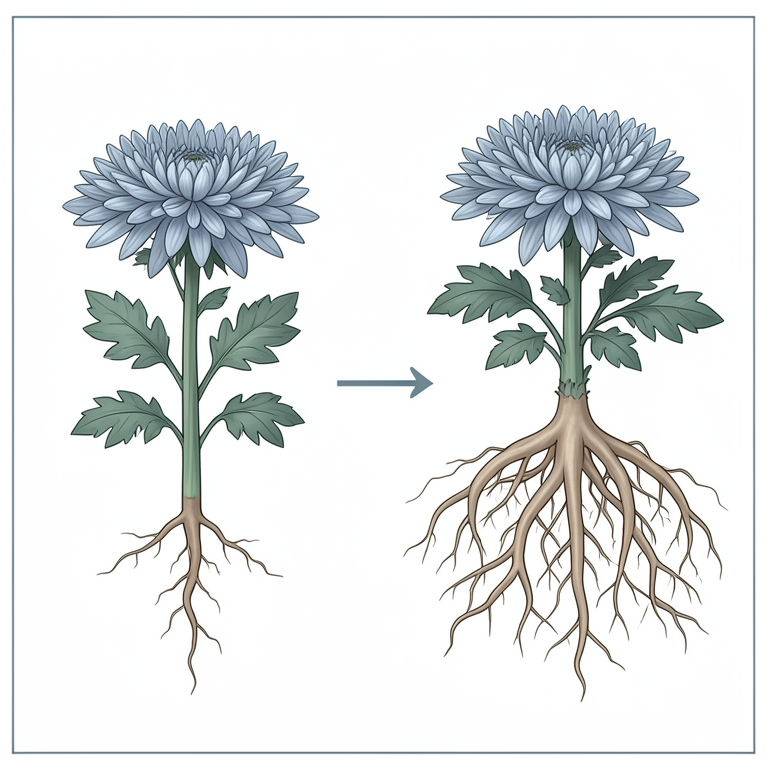
Effect of Zinc on Root Architecture
AI-generated conceptual illustration (chrysanthemum plants). It explains the idea and does not show study data.
View source evidence ↗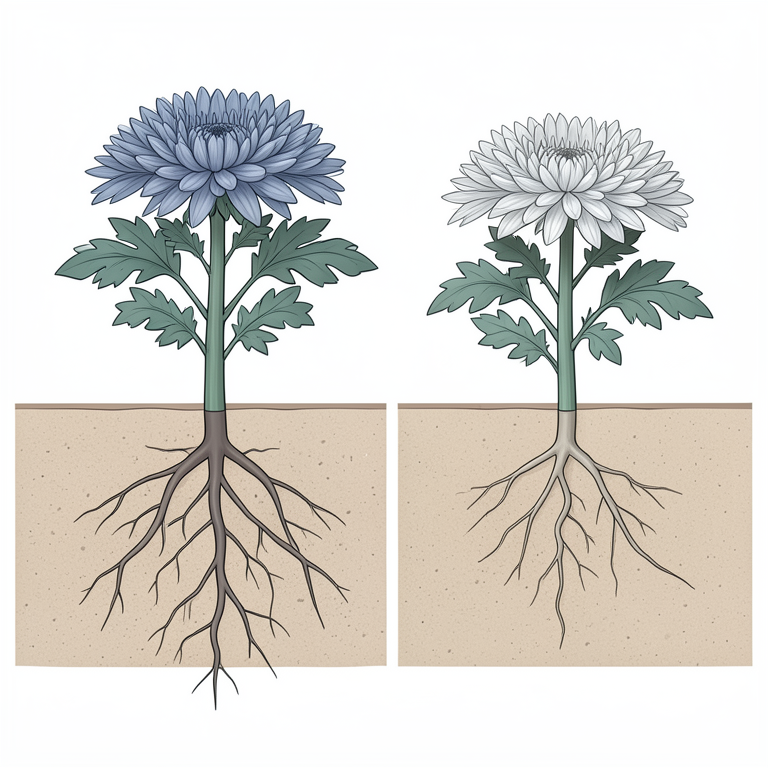
Varietal Response to Saline Soil
AI-generated conceptual illustration (chrysanthemum plants in saline soil). It explains the idea and does not show study data.
View source evidence ↗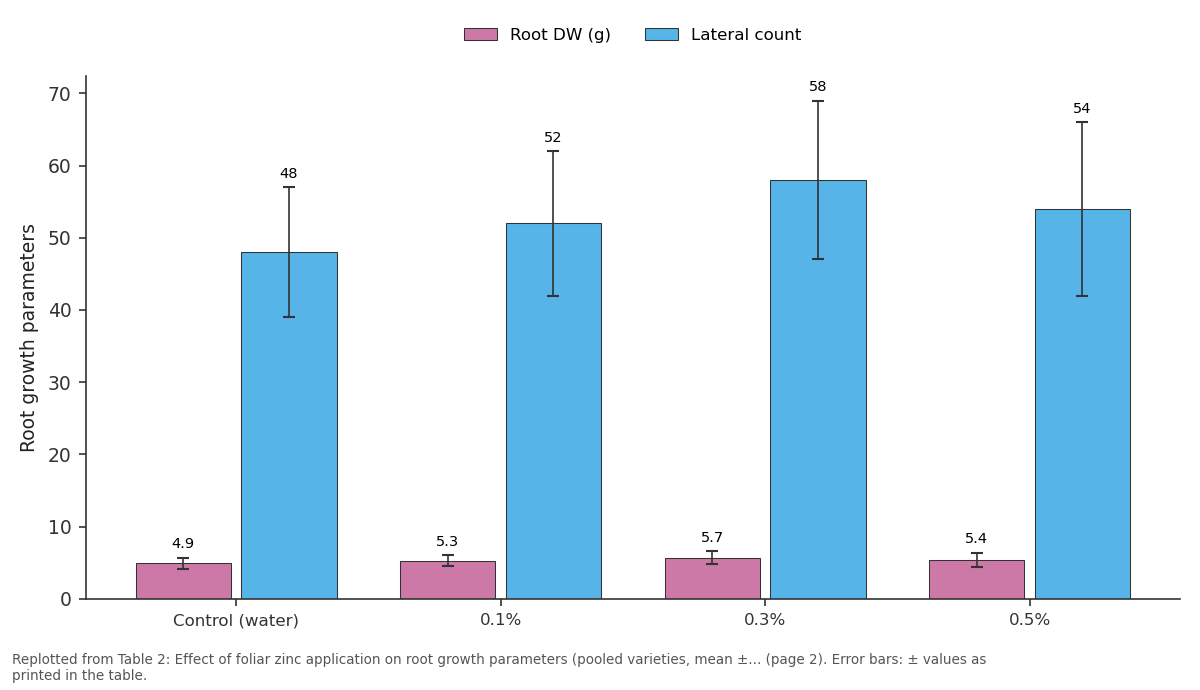
Root DW (g) and Lateral count: Control (water) vs 0.1% vs 0.3% vs 0.5%
Replotted from Table 2 (page 2) of the original paper. Every bar is the paper's own table value.
View source evidence ↗Figures & tables
From the original paper Table 1
 Table 2
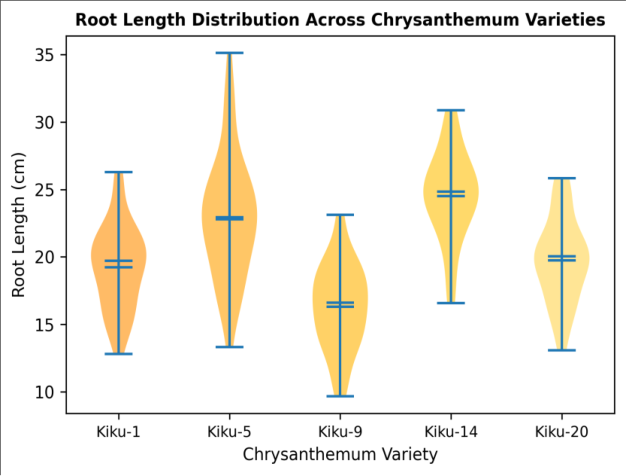 Figure 1
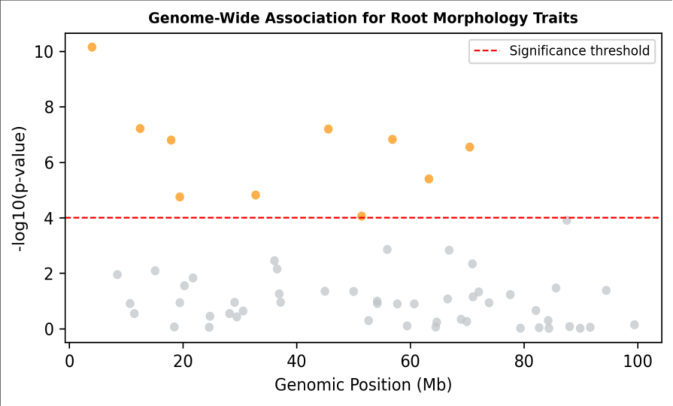 Figure 2
Introduction
Root morphology in ornamental crops receives a fraction of the attention devoted to aboveground traits, yet root architecture determines a plant's ability to access water and nutrients, resist wind lodging, and tolerate soil stresses including salinity [1] . For chrysanthemum the world's second most economically valuable cut flower after roses root research has focused almost exclusively on rooting of stem cuttings in controlled media, ignoring how roots behave in field soils with real-world constraints [2] . Gujarat's coastline stretches over 1,600 km and supports floriculture operations that increasingly face saline soil and groundwater intrusion. Electrical conductivity of irrigation water in some coastal blocks exceeds 4 dS/m, a level that reduces chrysanthemum growth by 20-30% in published greenhouse studies [3] . Whether root morphological adaptations deeper tap roots, more lateral branching, thicker root cortex can buffer against this salinity stress in field conditions is poorly understood. Genome-Wide Association (GWAS) offers a way to link observable root traits to genomic regions without the need for structured mapping populations. For chrysanthemum, a hexaploid with a complex genome, GWAS has been applied to flower color and flowering time but not yet to root traits [4] . This research examined root morphological variation among five varieties in coastal Gujarat soils, mapped associated genomic loci by GWAS, tested foliar micronutrient effects on root growth, and assessed genotype-by-environment interaction for root traits across five coastal sites [5] .
Baseline soil characterisation
Soils across the five trial sites were classified as Entisols (coastal alluvial) with sandy loam to loamy sand texture. Pre-planting soil analysis (0-30 cm depth) showed pH ranging from 7.8 to 8.4, electrical conductivity from 2.1 to 4.8 dS/m, organic carbon from 0.4 to 0.9%, available N from 124 to 187 kg/ha, Olsen P from 8.4 to 14.7 mg/kg, and exchangeable K from 178 to 243 mg/kg. Exchangeable Sodium Percentage (ESP) ranged from 8.7 to 17.4%, with the two most saline sites exceeding the 15% threshold for sodic classification. Soil temperature at 15 cm depth averaged 28.4°C during the growing season. Calcium carbonate content was 6.2-12.8%, typical for Gujarat coastal soils [6] .
Material and Methods
Material and Methods
Material
Five chrysanthemum varieties Kiku-1, Kiku-5, Kiku-9, Kiku-14, and Kiku-20 were obtained from the National Botanical Research Institute, Lucknow. Rooted cuttings were raised in a nursery for 30 days before transplanting to five coastal sites along the Gujarat coastline (21.4-23.1°N, 69.8-72.3°E). ZnSO 4 (analytical grade) was used for foliar spray. Genomic DNA was extracted from young leaf tissue using a CTAB method and genotyped using a chrysanthemum 10K SNP array (ChrysChip, Nanjing Agricultural University) yielding 8,247 polymorphic markers after quality filtering [7] .
Methods
Split-plot RCBD with site as block, variety as main plot, and foliar treatment (water control, 0.1%, 0.3%, 0.5% ZnSO 4 ) as subplot was used (three replications, 2 × 2 m plots, 30 × 30 cm spacing). Transplanting was done in October 2022 and root sampling at 90 days. Root morphology was measured by destructive sampling: three plants per plot were carefully excavated with a soil core (30 cm diameter × 40 cm depth), roots washed over a 1 mm sieve, and scanned at 400 DPI using WinRHIZO software for total root length, average diameter, surface area, and lateral root count [8] . GWAS was conducted in GAPIT v3.0 using a mixed linear model with kinship matrix correction. AMMI analysis used the agricolae package in R. Mineral content (Na, K, Ca, Mg, Fe, Zn) was determined by ICP-OES after acid digestion of root and shoot tissue. Transplanting survival was scored as the percentage of established plants at 30 days post-transplanting [9] . Foliar zinc at 0.3% produced the best root growth response: 16.2% higher dry weight and 21.8% more laterals than controls (Table 2). The 0.5% rate showed a slight decline,
| ZnSO4 rate | Root DW (g) | Lateral count | Root: Shoot ratio |
|---|---|---|---|
| Control (water) | 4.9±0.8 | 48±9 | 0.31±0.04 |
| 0.1% | 5.3±0.7 | 52±10 | 0.33±0.05 |
| 0.3% | 5.7±0.9 | 58±11 | 0.36±0.04 |
| 0.5% | 5.4±1.0 | 54±12 | 0.34±0.06 |
Table text extracted from the original PDF; superscript letters are shown inline. The original table image is below.
View original table image
Results
suggesting mild phytotoxicity at that concentration. Root: Shoot ratio increased with zinc application, indicating a proportionally greater allocation to below-ground growth. GWAS identified 23 significant SNP-trait associations (p<10 -4 ) for root length and lateral root density. The largesteffect cluster on chromosome 7 included 8 SNPs explaining 12.8% of root length variance, near a candidate gene homologous to Arabidopsis LATERAL ROOT ORGAN DEFECTIVE (LRD). AMMI analysis showed that IPCA1 captured 48.7% and IPCA2 captured 29.1% of GxE interaction variance for root length. Coastal-grown roots accumulated 847 mg Na/kg DW compared to 368 mg/kg in inland controls, a 2.3-fold increase. Kiku-14 maintained the lowest root Na: K ratio (1.4) among all varieties, consistent with its salinity tolerance.
Discussion
The 53.7% range in root length (15.8-24.3 cm) across five varieties is wider than what has been reported in greenhouse root studies using uniform media, reflecting the amplifying effect of field soil heterogeneity and salinity gradients on genotypic differences [10] . Kiku-14's combined superiority in root length, lateral count, and transplanting survival makes it a candidate rootstock or direct-production variety for saline coastal conditions. Its low Na: K ratio suggests an exclusion mechanism at the root level that limits sodium loading of the shoot [11] .
The GWAS hit near the LRD homolog on chromosome 7 is biologically plausible: LRD encodes a cytochrome P450 that regulates lateral root initiation in Arabidopsis, and its chrysanthemum ortholog may serve a similar function. If validated, this marker could be used for early selection of salt-tolerant genotypes without waiting for field phenotyping [12] . The zinc foliar spray effect on root growth is consistent with zinc's role as a cofactor for auxin biosynthesis enzymes; enhanced auxin supply to root tips promotes both elongation and lateral branching [13] .
Conclusion
Root morphology in chrysanthemum varied substantially across varieties and coastal Gujarat environments, with Kiku-14 showing the strongest root system and highest salinity tolerance. GWAS identified 23 genomic loci associated with root traits, including a promising cluster on chromosome 7 near a lateral root development gene. Foliar zinc at 0.3% boosted root growth without phytotoxicity. AMMI modeling confirmed significant genotype-byenvironment interaction requiring site-specific variety recommendations for coastal floriculture. Sodium accumulation in coastal-grown roots was 2.3 times higher than inland controls, underscoring the salinity challenge. These findings provide both practical management tools (zinc spray, variety selection) and molecular markers for breeding salt-adapted chrysanthemum varieties for Gujarat's coastal flower industry.
Figures and tables from the paper
| Variety | Root length (cm) | Laterals/plant | Root DW (g) | Diameter (mm) | Survival (%) |
|---|---|---|---|---|---|
| Kiku-1 | 18.4±3.2 | 47±8 | 4.8±0.7 | 1.24±0.18 | 71.3±6.4 |
| Kiku-5 | 22.7±4.1 | 62±11 | 6.3±0.9 | 1.37±0.21 | 74.8±5.7 |
| Kiku-9 | 15.8±2.8 | 34±7 | 3.7±0.6 | 1.08±0.14 | 54.7±7.8 |
| Kiku-14 | 24.3±3.7 | 71±12 | 7.1±1.1 | 1.42±0.19 | 78.3±4.9 |
| Kiku-20 | 19.6±3.5 | 53±9 | 5.4±0.8 | 1.31±0.17 | 68.7±6.1 |
Table text extracted from the original PDF; superscript letters are shown inline. The original table image is below.
View original table image
References
18 in the original paper- Lynch JP. Roots of the second green revolution. Australian Journal of Botany. 2007;55(5):493-512.
- da Silva JAT, Shinoyama H, Aida R, et al. Chrysanthemum biotechnology: quo vadis? Critical Reviews in Plant Sciences. 2013;32(1):21-52.
- Sonneveld C, Voogt W. Plant nutrition of greenhouse crops. Springer; 2009.
- Su J, Jiang J, Zhang F, et al. Current achievements and future prospects in the genetic breeding of chrysanthemum. Horticulture Research. 2019;6:109.
- Munns R, Tester M. Mechanisms of salinity tolerance. Annual Review of Plant Biology. 2008;59:651-681.
- Pal DK, Bhattacharyya T. Pedogenic processes in a shrink-swell soil of India. Geoderma. 2003;115(34):319-332.
- Lipka AE, Tian F, Wang Q, et al. GAPIT: genome association and prediction integrated tool. Bioinformatics. 2012;28(18):2397-2399.
- Regent Instruments Inc. WinRHIZO: Root analysis software. Quebec, Canada; 2020.
- Gauch HG. Statistical analysis of yield trials by AMMI and GGE. Crop Science. 2006;46(4):1488-1500.
- Bengough AG, McKenzie BM, Hallett PD, Valentine TA. Root elongation, water stress, and mechanical impedance. Journal of Experimental Botany. 2011;62(1):59-68.
- Shabala S, Cuin TA. Potassium transport and plant salt tolerance. Physiologia Plantarum. 2008;133(4):651669.
- Malamy JE, Benfey PN. Organization and cell differentiation in lateral roots of Arabidopsis thaliana. Development. 1997;124(1):33-44.
- Cakmak I. Enrichment of cereal grains with zinc: agronomic or genetic biofortification? Plant and Soil. 2008;302(1-2):1-17.
- Tester M, Davenport R. Na + tolerance and Na + transport in higher plants. Annals of Botany. 2003;91(5):503527.
- Ahmad P, Prasad MNV. Abiotic stress responses in plants: metabolism, productivity and sustainability. Springer; 2012.
- Anderson NO. Chrysanthemum. In: Flower Breeding and Genetics. Springer; 2007:389-437.
- Flowers TJ. Improving crop salt tolerance. Journal of Experimental Botany. 2004;55(396):307-319.
- Zhu JK. Plant salt tolerance. Trends in Plant Science. 2001;6(2):66-71.