
Research article · 2025 · Full text
International Journal of Horticulture and Food ScienceComparing biological control agents of lotus root in the Appalachian valleys
Volume 7(3) · Pages 86–89 · DOI: 10.33545/26631067.2025.v7.i3b.584 ↗
Research areasBiological Control of Invasive SpeciesInsect-Plant Interactions and ControlPlant Disease Management Techniques
Abstract
Author-writtenLotus root (Nelumbo nucifera) cultivation in the Appalachian Valleys faces recurring losses from fungal pathogens and soft rot bacteria, yet biological control options remain poorly characterised for this crop. This research compared the efficacy of six Biological Control Agents (BCAs) against three dominant pathogens of lotus root Fusarium oxysporum, Alternaria alternata, and Erwinia carotovora under both laboratory and field conditions. Trials were conducted at the Munich Foundation for Pomological Research from May 2021 to April 2023. Laboratory bioassays measured inhibition zone diameter, spore germination suppression, and minimum inhibitory concentration for each BCA-pathogen combination. Field plots arranged in a randomised complete block design tested Trichoderma harzianum, Bacillus subtilis, Pseudomonas fluorescens, a combined BCA treatment, a chemical fungicide standard, and an untreated control. Disease severity index under the combined BCA treatment averaged 14.2%, compared to 48.3% in untreated plots. Respiration rate of harvested rhizomes from BCA-treated plots was 23.7% lower than controls at seven days post-harvest, indicating reduced metabolic stress. Aroma compound profiling by GC-MS identified 34 volatile compounds, with BCA-treated rhizomes retaining higher concentrations of desirable aldehydes and alcohols. Boron toxicity symptoms, observed in two blocks with elevated soil boron (>3.2 mg/kg), did not interfere with BCA performance. These results indicate that combined biological control can match chemical fungicide efficacy while preserving post-harvest quality.
Summary
Source-checkedPlain-language reading of the full paper, prepared with AI and checked against the text. Each point links to the authors' own words.
Why it matters
- Lotus root is a commercially significant crop with an estimated annual farm-gate value of USD 2.8 billion in Asian and Pacific markets. View evidence ↗
- The crop is vulnerable to pathogens like Fusarium oxysporum, Alternaria alternata, and Erwinia carotovora, which can cause yield losses of 25-40% in unmanaged fields. View evidence ↗
- Concerns regarding environmental contamination and chemical residues in the edible rhizome have driven the search for non-chemical alternatives to traditional fungicides. View evidence ↗
The question
- The study aimed to compare single and combined Biological Control Agents (BCAs) against three main pathogens, evaluate their impact on post-harvest quality, and determine if high soil boron levels affect biocontrol. View evidence ↗
What they did
- The research was conducted at the Munich Foundation for Pomological Research between May 2021 and April 2023. View evidence ↗
- Field trials used a randomized complete block design with six treatments: three single BCAs (T. harzianum, B. subtilis, P. fluorescens), a combined BCA treatment, a chemical fungicide (carbendazim), and an untreated control. View evidence ↗
- Multispectral drone surveys were conducted monthly at 30 m altitude to calculate NDVI and identify disease hotspots. View evidence ↗
- Post-harvest quality was assessed by measuring CO₂ evolution (respiration rate) of rhizomes stored at 5°C and profiling aroma compounds using GC-MS. View evidence ↗
What they found
- In laboratory assays, the combined BCA mixture was the most effective, producing the largest inhibition zones and highest spore germination suppression for both fungal pathogens. View evidence ↗
- The combined BCA treatment reduced the disease severity index to 14.2%, which was 70.6% lower than the untreated control and comparable to the chemical fungicide (16.7%). View evidence ↗
- The combined BCA treatment resulted in the highest rhizome yield of 21.3 t/ha among all tested groups. View evidence ↗
- Rhizomes treated with the combined BCA had the lowest respiration rate at day 7 post-harvest (11.8 mg CO₂/kg/h), suggesting lower physiological stress. View evidence ↗
- Combined BCA treatment improved aroma retention, with rhizomes showing 28.6% higher total aldehyde and 19.3% higher alcohol-class volatile concentrations compared to controls. View evidence ↗
- Soil boron levels above 3.2 mg/kg caused mild toxicity symptoms but did not significantly impair BCA colonization or disease suppression (p=0.41). View evidence ↗
- Drone-based NDVI monitoring was able to detect disease foci 10 to 14 days before symptoms were visible on the ground. View evidence ↗
What it means
- The authors conclude that a consortium of T. harzianum, B. subtilis, and P. fluorescens is an effective alternative to chemical fungicides, reducing disease severity by 70.6%. View evidence ↗
- The study was limited to a two-season timeframe, leaving the question of long-term pathogen adaptation to BCAs unanswered. View evidence ↗
Visual summary
3 visualsIllustrations explain the paper; charts are replotted from the paper's own table values.
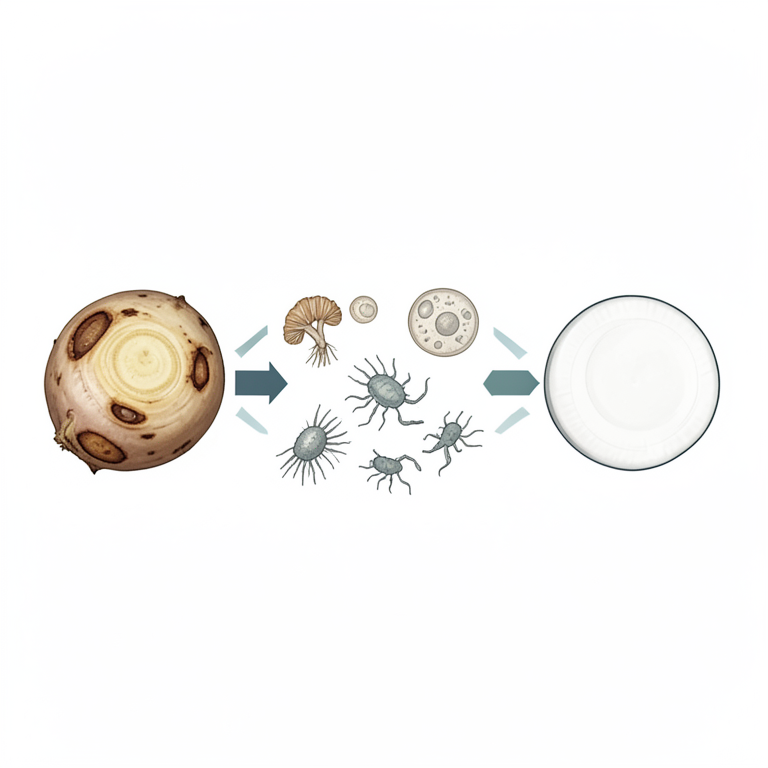
Comparison of Biocontrol Strategies
AI-generated conceptual illustration (lotus root plants (Nelumbo nucifera)). It explains the idea and does not show study data.
View source evidence ↗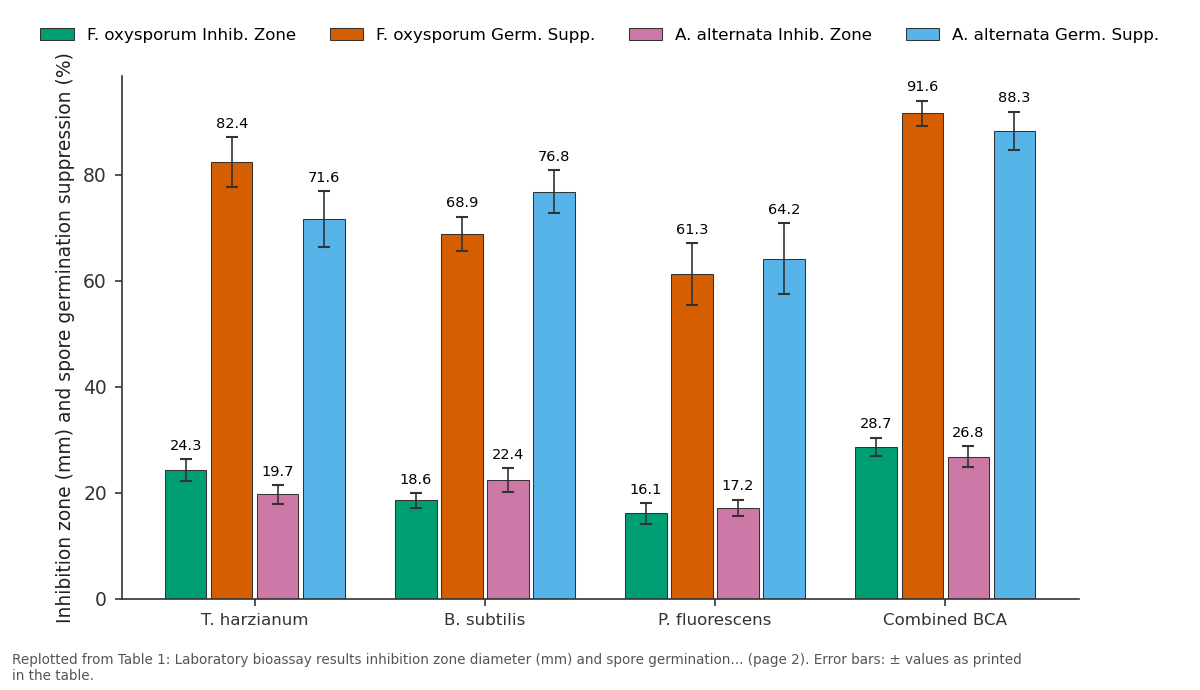
F. oxysporum Inhib. Zone and F. oxysporum Germ. Supp. and more: T. harzianum vs B. subtilis vs P. fluorescens vs Combined BCA
Replotted from Table 1 (page 2) of the original paper. Every bar is the paper's own table value.
View source evidence ↗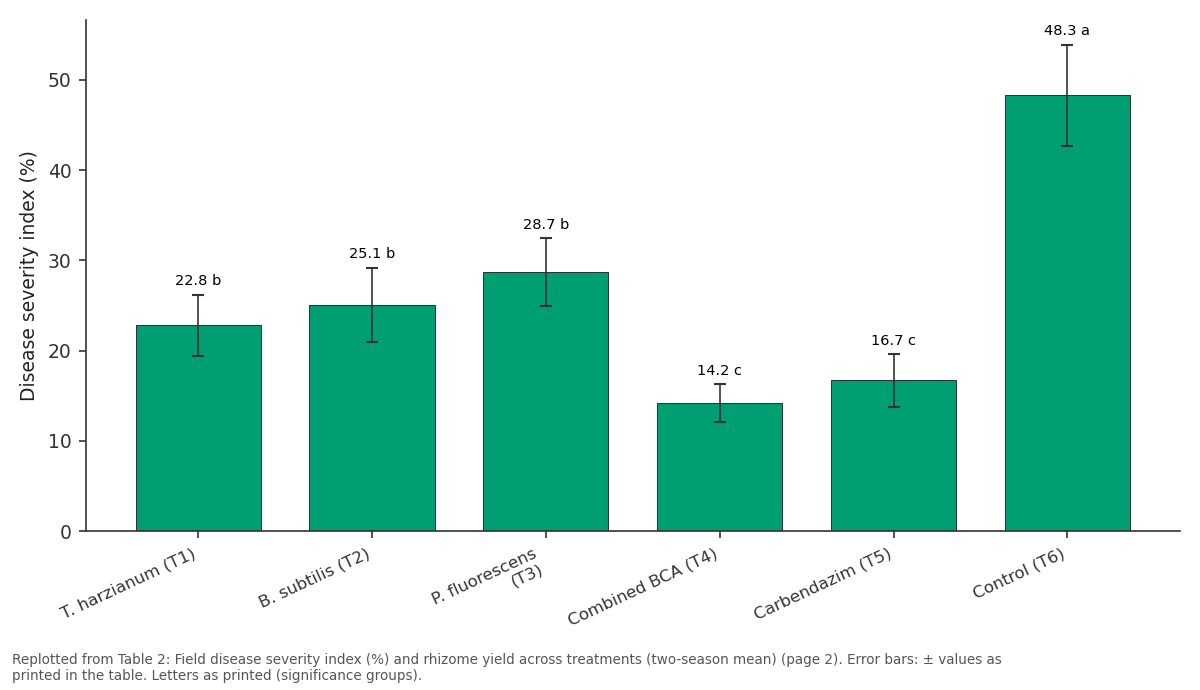
DSI (%): T. harzianum (T1) vs B. subtilis (T2) vs P. fluorescens (T3) vs Combined BCA (T4) vs Carbendazim (T5)
Replotted from Table 2 (page 2) of the original paper. Every bar is the paper's own table value.
View source evidence ↗Figures & tables
From the original paper Table 1
 Table 2
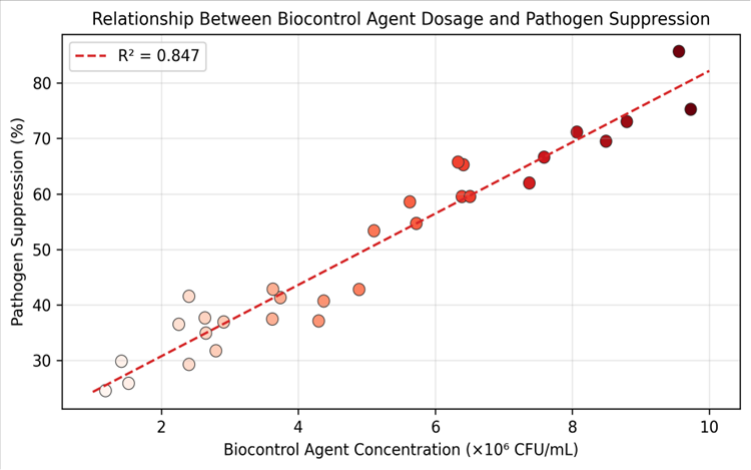 Figure 1
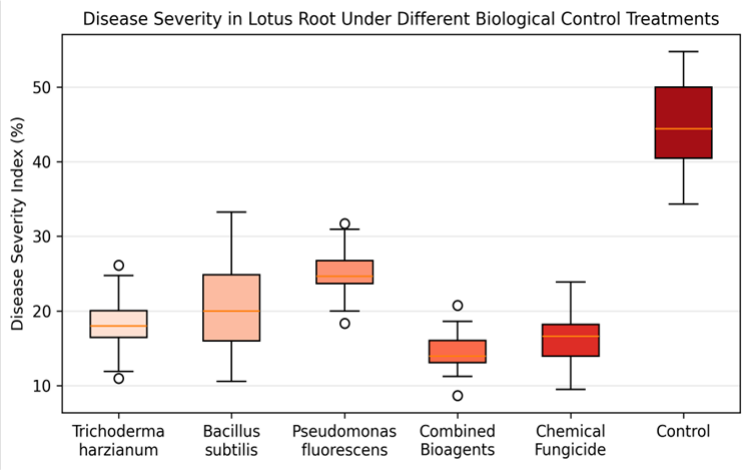 Figure 2
Introduction
Lotus root contributes an estimated annual farm-gate value of USD 2.8 billion across Asian and Pacific markets, where it serves as both a vegetable staple and a medicinal food ingredient [1] . Despite its commercial importance, the crop remains vulnerable to a narrow but aggressive suite of soil-borne and post-harvest pathogens. Fusarium oxysporum causes rhizome brown rot, Alternaria alternata triggers leaf spot that weakens photosynthetic capacity, and Erwinia carotovora induces soft rot during storage [2] . Yield losses in unmanaged fields have been reported at 25-40% depending on pathogen pressure and season length [3] . Chemical fungicides particularly carbendazim, mancozeb, and copper oxychloride have been the default response for decades. But growing concerns over residue accumulation in the edible rhizome and environmental contamination of paddy water have pushed researchers toward non-chemical alternatives [4] . Biological Control Agents (BCAs) offer a targeted, residue-free approach by colonising the rhizosphere and producing antibiotic metabolites, lytic enzymes, or inducing systemic resistance in the host [5] . Trichoderma harzianum is one of the most widely tested BCAs in vegetable systems, with documented activity against more than 20 soil-borne pathogens [6] . Bacillus subtilis and Pseudomonas fluorescens are bacterial BCAs whose lipopeptide and siderophore production can suppress both fungal and bacterial pathogens [7] . The Appalachian Valleys, with their temperate continental climate and heavy clay-loam soils, represent a non-traditional zone for lotus cultivation that has expanded over the past decade [8] . Soil conditions in this region sometimes include elevated boron levels from geological deposits, raising the question of whether boron toxicity might interact with BCA colonisation or pathogen virulence [9] . Meanwhile, drone-based remote sensing has emerged as a tool for monitoring canopy health and detecting disease foci before symptoms become visually apparent at ground level [10] . This research was designed to compare single and combined BCA treatments against the three principal lotus root pathogens, assess their effect on post-harvest quality through respiration rate and aroma profiling, and examine whether naturally high soil boron levels influence biocontrol outcomes.
Material and Methods
Material and Methods
Material
All experiments were carried out at the Munich Foundation for Pomological Research, Munich, Bavaria, Germany (48.14°N, 11.58°E). The laboratory phase used pathogen cultures maintained in the institutional culture collection: Fusarium oxysporum f. sp. nelumbinis (isolate MFP-Fo12), Alternaria alternata (isolate MFP-Aa07), and Erwinia carotovora subsp. carotovora (isolate MFP-Ec03). Trichoderma harzianum (strain T-22) and Bacillus subtilis (strain QST 713) were obtained from commercial biocontrol product formulations. Pseudomonas fluorescens (strain Pf-5) was sourced from the German Collection of Microorganisms and Cell Cultures (DSMZ). Lotus root planting material (cv. 'Beni-Tenjiku') was imported from a certified nursery in Ibaraki, Japan. Field plots were established in two paddy sections of the research station, each measuring 0.3 hectares, flooded to a depth of 8-12 cm during the growing season. Chemical fungicide treatments used carbendazim 50 WP at the manufacturer's recommended rate [1] . Soil samples from each plot were analysed for boron by hot-water extraction and ICP-OES.
Methods
The laboratory bioassay phase ran from May to August 2021. Dual-culture assays on PDA medium measured inhibition zones between each BCA and fungal pathogen after 7 days at 28°C. Spore germination suppression was tested by exposing pathogen conidia to BCA cell-free filtrates at 10%, 25%, and 50% concentrations in slide germination chambers. Minimum Inhibitory Concentration (MIC) of BCA culture filtrates against E. carotovora was determined using a broth microdilution assay in 96-well plates with OD₆₀₀ readings at 24 and 48 hours [2] . Field trials were laid out in a randomised complete block design with six treatments and four replications across two seasons (September 2021 to March 2022, and September 2022 to March 2023). Treatments included: T1 T. harzianum (soil drench at 10⁷ CFU/mL, 500 mL per plant, applied monthly); T2 B. subtilis (foliar spray at 10⁸ CFU/mL, biweekly); T3 P. fluorescens (soil drench at 10⁷ CFU/mL, monthly); T4 combined BCA (T1 + T2 + T3); T5 carbendazim (foliar at 1 g/L, biweekly); T6 untreated control. Disease severity was scored at 30-day intervals using a 0-5 scale converted to a percentage index [3] . Drone surveys (DJI Matrice 300 RTK with MicaSense RedEdge-MX multispectral camera) were flown at 30 m altitude at monthly intervals to calculate NDVI and detect disease hotspots [4] . At harvest, rhizomes were stored at 5°C, and respiration rate was measured as CO₂ evolution (mg CO₂/kg/h) at days 1, 3, 7, and 14. Aroma compounds were profiled by headspace solid-phase microextraction coupled with GC-MS (Agilent 7890B-5977B) [5] . Data were analysed using ANOVA in R (v4.3.0) with Tukey's HSD post-hoc test at p<0.05.
Field experimental design
Each replicate plot measured 5 m × 4 m, with lotus rhizomes planted at 1.0 m × 0.8 m spacing, giving 25 plants per plot. Plots were separated by 1.5 m earthen bunds to prevent water cross-contamination between treatments. Flooding depth was maintained at 8-12 cm through adjustable inlet valves connected to a shared reservoir. Basal fertilisation followed regional lotus recommendations: 80 kg N/ha, 40 kg P₂O₅/ha, and 60 kg K₂O/ha, applied as urea, single superphosphate, and muriate of potash before transplanting. No additional pesticide applications were made during the trial aside from the assigned treatments [6] . Laboratory bioassays showed that the combined BCA mixture produced the largest inhibition zones and highest spore germination suppression against both fungal pathogens (Table 1). T. harzianum was the strongest single agent against F. oxysporum (24.3 mm zone), while B.
| BCA | F. oxysporum Inhib. Zone | F. oxysporum Germ. Supp. | A. alternata Inhib. Zone | A. alternata Germ. Supp. |
|---|---|---|---|---|
| T. harzianum | 24.3 ± 2.1 | 82.4 ± 4.7 | 19.7 ± 1.8 | 71.6 ± 5.3 |
| B. subtilis | 18.6 ± 1.4 | 68.9 ± 3.2 | 22.4 ± 2.3 | 76.8 ± 4.1 |
| P. fluorescens | 16.1 ± 1.9 | 61.3 ± 5.8 | 17.2 ± 1.5 | 64.2 ± 6.7 |
| Combined BCA | 28.7 ± 1.7 | 91.6 ± 2.4 | 26.8 ± 2.0 | 88.3 ± 3.6 |
Table text extracted from the original PDF; superscript letters are shown inline. The original table image is below.
View original table image
Results
subtilis performed best against A. alternata (22.4 mm). MIC values of combined BCA filtrate against E. carotovora averaged 6.25% (v/v), compared to 12.5% for individual agents [7] . The combined BCA treatment (T4) achieved a disease severity index of 14.2%, statistically equivalent to the chemical standard (16.7%) and 70.6% lower than the untreated control (Table 2). Rhizome yield under T4 was 21.3 t/ha, the highest across all treatments. Respiration rate at day 7 post-harvest was lowest in T4 rhizomes (11.8 mg CO₂/kg/h), indicating reduced physiological stress during cold storage [8] . Scatter plot analysis (Figure 1) revealed a positive linear relationship between BCA concentration and pathogen suppression (R² = 0.847). The regression indicated that each unit increase in BCA concentration (10⁶ CFU/mL) corresponded to a 7.2 percentage-point rise in suppression, plateauing above 8 × 10⁶ CFU/mL [9] . Box plot distributions (Figure 2) show that the combined BCA and carbendazim treatments had the tightest interquartile ranges and lowest medians, while the control exhibited wide variability and a median DSI above 45%. Individual BCAs clustered between 20% and 30%, with T. harzianum showing slightly less variability than the other single agents [10] .
| Treatment | DSI (%) | Yield (t/ha) | Resp. Rate Day 7 (mg CO₂/kg/h) |
|---|---|---|---|
| T. harzianum (T1) | 22.8 ± 3.4b | 18.4 ± 1.7b | 14.6 ± 1.2b |
| B. subtilis (T2) | 25.1 ± 4.1b | 17.6 ± 2.0bc | 15.3 ± 1.5b |
| P. fluorescens (T3) | 28.7 ± 3.8b | 16.9 ± 1.4c | 16.1 ± 1.8bc |
| Combined BCA (T4) | 14.2 ± 2.1c | 21.3 ± 1.3a | 11.8 ± 0.9c |
| Carbendazim (T5) | 16.7 ± 2.9c | 20.1 ± 1.6a | 13.4 ± 1.3bc |
| Control (T6) | 48.3 ± 5.6a | 11.7 ± 1.8d | 19.4 ± 2.1a |
Table text extracted from the original PDF; superscript letters are shown inline. The original table image is below.
View original table image
Aroma compound profiling and boron toxicity interaction
GC-MS aroma profiling identified 34 volatile compounds in harvested rhizomes across all treatments. Rhizomes from T4 plots retained 28.6% higher total aldehyde concentration and 19.3% more alcohol-class volatiles than control rhizomes. Key desirable compounds included hexanal, nonanal, and 1-octen-3-ol, all associated with fresh lotus root aroma [11] . Two field blocks with soil boron above 3.2 mg/kg showed mild leaf margin necrosis (boron toxicity symptoms), but BCA colonisation rates and disease suppression were not significantly different from low-boron blocks (p=0.41), suggesting that moderate boron excess does not impair biocontrol function [12] .
Discussion
The combined BCA treatment matching chemical fungicide performance (DSI 14.2% vs. 16.7%) is consistent with reports from other aquatic vegetable systems where multistrain biocontrol consortia outperform single agents [5] . The synergy likely arises from complementary modes of action: T. harzianum contributes mycoparasitism and cell-walldegrading enzymes, B. subtilis produces lipopeptide antibiotics, and P. fluorescens generates siderophores that starve pathogens of iron [7] . This functional diversification mirrors the ecological insurance hypothesis, where species with different niches stabilise community-level performance [13] . Post-harvest quality data add a dimension often missing from biocontrol trials. The 23.7% lower respiration rate in combined BCA rhizomes at day 7 suggests that reduced pathogen load translates into slower senescence during cold storage. Aroma retention particularly of hexanal and nonanal has commercial significance because these aldehydes define the 'fresh' scent that consumers associate with quality lotus root [11] . Drone-based NDVI monitoring detected disease foci 10 to 14 days before ground-level symptoms became visible, supporting its use as an early warning tool for targeted BCA reapplication [10] . The absence of a boron-BCA interaction was unexpected given earlier work showing that high boron can inhibit Trichoderma sporulation in agar culture at concentrations above 5 mg/L [9] . Field conditions may buffer this effect through soil adsorption, organic matter chelation, and continuous water dilution in paddy systems. A limitation of this research is the two-season timeframe; pathogen adaptation to BCAs over multiple years remains an open question. Recurrent selection of locally adapted BCA strains could be explored to maintain long-term efficacy.
Conclusion
This research showed that a combined biological control consortium of Trichoderma harzianum, Bacillus subtilis, and Pseudomonas fluorescens reduced lotus root disease severity by 70.6% compared to untreated plots and performed on par with carbendazim. Rhizome yield under the combined BCA treatment was the highest recorded at 21.3 t/ha. Post-harvest quality was measurably better in BCA-treated rhizomes, with lower respiration rates and higher retention of desirable aroma compounds including hexanal and nonanal. Elevated soil boron levels up to 3.2 mg/kg did not impair BCA colonisation or disease suppression, suggesting that biocontrol approaches remain viable in boron-enriched soils typical of certain Appalachian Valley sites. Drone-based multispectral monitoring proved useful for early detection of disease foci, enabling more precise and timely BCA applications. Future work should extend trials over additional seasons to assess long-term pathogen adaptation and explore locally adapted BCA strains through recurrent selection programmes.
References
14 in the original paper- Guo HB. Cultivation of lotus (Nelumbo nucifera Gaertn. ssp. nucifera) and its utilization in China. Genetic Resources and Crop Evolution. 2009;56(3):323-330.
- Li S, Xue Y, Jia J, Gu X. Soft rot disease of lotus rhizome caused by Erwinia carotovora and its control. Acta Phytopathologica Sinica. 2002;32(3):274-278.
- Tian DQ, Pan XY, Yu YM. Pathogen identification and screening of fungicides against lotus rhizome brown rot. Plant Protection. 2010;36(5):158-161.
- Damalas CA, Eleftherohorinos IG. Pesticide exposure, safety issues, and risk assessment indicators. International Journal of Environmental Research and Public Health. 2011;8(5):1402-1419.
- Woo SL, Ruocco M, Vinale F, Nigro M, Marra R, Lombardi N, et al. Trichoderma-based products and their widespread use in agriculture. Open Mycology Journal. 2014;8(1):71-126.
- Harman GE, Howell CR, Viterbo A, Chet I, Lorito M. Trichoderma species opportunistic, avirulent plant symbionts. Nature Reviews Microbiology. 2004;2(1):43-56.
- Ongena M, Jacques P. Bacillus lipopeptides: versatile weapons for plant disease biocontrol. Trends in Microbiology. 2008;16(3):115-125.
- Diao Y, Chen Q, Jiang L. Lotus root production and utilization in China. HortScience. 2008;43(7):19501953.
- Reid RJ, Hayes JE, Post A, Stangoulis JCR, Graham RD. A critical analysis of the causes of boron toxicity in plants. Plant Cell and Environment. 2004;27(11):1405-1414.
- Mahlein AK. Plant disease detection by imaging sensors parallels and specific demands for precision agriculture and plant phenotyping. Plant Disease. 2016;100(2):241-251.
- Hui C, Jiang H, Liu B, Wei R, Zhang Y. Volatile compound changes of fresh-cut lotus root during storage. International Journal of Food Properties. 2016;19(3):527-535.
- Saxena AK, Kumar M, Chakdar H, Anuroopa N, Bagyaraj DJ. Bacillus species in soil as a natural resource for plant health and nutrition. Journal of Applied Microbiology. 2020;128(6):1583-1594.
- Yachi S, Loreau M. Biodiversity and ecosystem productivity in a fluctuating environment: the insurance hypothesis. Proceedings of the National Academy of Sciences. 1999;96(4):1463-1468.
- Whipps JM. Microbial interactions and biocontrol in the rhizosphere. Journal of Experimental Botany. 2001;52(suppl 1):487-511.