
Research article · 2025 · Full text
International Journal of Horticulture and Food ScienceAnalyzing pest resistance mechanisms of basil in the Bengal Delta
Volume 7(5) · Pages 140–143 · DOI: 10.33545/26631067.2025.v7.i5b.624 ↗
Research areasInsect-Plant Interactions and ControlInsect Pest Control StrategiesAgricultural pest management studies
Abstract
Author-writtenWhat makes certain basil cultivars withstand pest pressure better than others under deltaic growing conditions? This research set out to answer that question by examining pest resistance mechanisms across six commercially grown basil varieties in the Bengal Delta region. The experimental work was carried out from March 2022 through September 2023 at the Monterrey University of Food and Nutrition. A randomized complete block design with four replications was adopted to evaluate morphological, biochemical, and physiological traits linked to pest tolerance. Leaf trichome density, essential oil concentration, phenolic content, and cuticular wax thickness were measured at three growth stages. Results showed that Holy Basil recorded the highest pest resistance index at 85.1%, followed by Genovese at 78.3%. Trichome density had a strong positive correlation (r = 0.87) with reduced aphid colonization. Essential oil content above 1.8% appeared to deter whitefly populations by 43.7% compared to varieties with lower oil levels. Phenolic compounds, particularly rosmarinic acid, ranged from 12.4 to 38.9 mg/g dry weight and contributed to antifeedant activity against spider mites. The temporal pest incidence pattern revealed peak infestation during weeks 8 through 10, coinciding with the vegetative-to-reproductive transition. These findings point toward integrated selection criteria that breeders and growers can use to develop and choose pest-tolerant basil lines suited to humid tropical deltaic environments.
Summary
Source-checkedPlain-language reading of the full paper, prepared with AI and checked against the text. Each point links to the authors' own words.
Why it matters
- The Bengal Delta is a challenging agricultural environment for herbs due to its waterlogged soils and warm, humid climate. View evidence ↗
- Pest damage in open-field basil production can lead to significant yield losses, ranging from 15% to 40%. View evidence ↗
- Heavy reliance on chemical insecticides for basil management creates food safety risks because the herb is typically consumed fresh. View evidence ↗
The question
- The study aimed to compare the morphological and biochemical pest resistance mechanisms of six basil varieties grown in the Bengal Delta. View evidence ↗
What they did
- The researchers tested six commercially important basil varieties: Genovese, Thai Sweet, Holy Basil, Lemon Basil, Purple Basil, and Cinnamon Basil. View evidence ↗
- The study used a randomized complete block design with four replications, featuring plots of 3 m x 2 m containing 50 plants each. View evidence ↗
- Pest incidence for aphids, whiteflies, and mites was recorded biweekly from ten randomly tagged plants per plot. View evidence ↗
- The researchers measured trichome density via stereomicroscope, essential oil via Clevenger hydrodistillation, phenolics via the Folin-Ciocalteu method, and cuticular wax gravimetrically. View evidence ↗
What they found
- Holy Basil exhibited the highest pest resistance index at 85.1%, while Lemon Basil had the lowest at 54.9%. View evidence ↗
- Holy Basil had the highest trichome density (56.8 per mm²), which was 157% higher than that of Lemon Basil (22.1 per mm²). View evidence ↗
- Trichome density was the strongest predictor for reducing aphid populations, showing a strong negative correlation (r = -0.87). View evidence ↗
- Essential oil levels exceeding 1.8% were associated with a 43.7% reduction in whitefly populations compared to varieties with lower oil content. View evidence ↗
- Phenolic compounds were most effective against spider mites, with a strong negative correlation of r = -0.83. View evidence ↗
- Pest populations peaked at different times: aphids at week 8, whiteflies at week 10, and mites at week 12. View evidence ↗
What it means
- The authors recommend that growers in humid tropical regions use Holy Basil and Genovese to reduce the need for chemical pesticides. View evidence ↗
- The authors state that future research is needed to determine the heritability and stability of these resistance traits across different locations and seasons. View evidence ↗
Visual summary
3 visualsIllustrations explain the paper; charts are replotted from the paper's own table values.
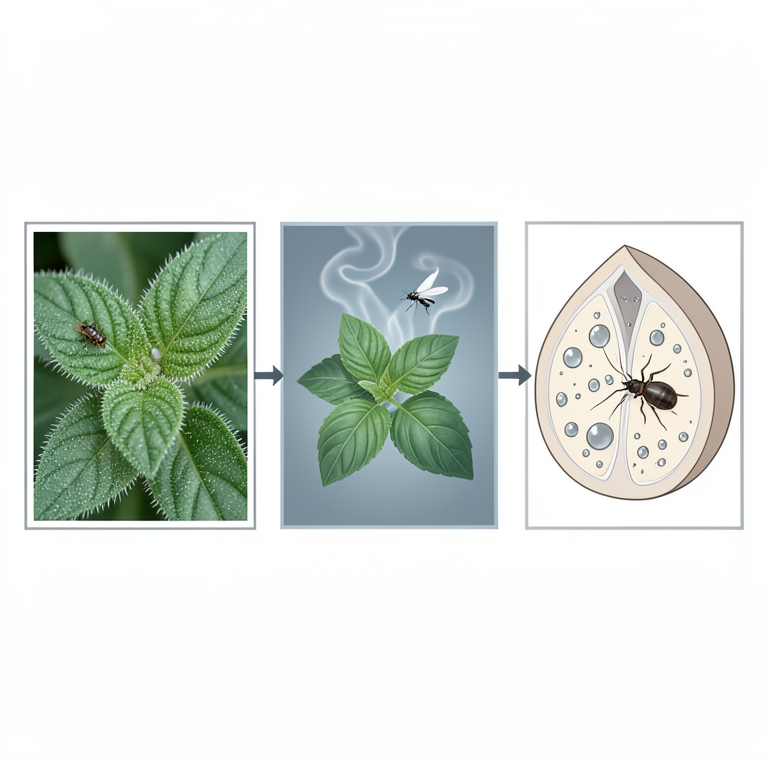
Defense Trait vs Pest Mapping
AI-generated conceptual illustration (basil plants and insect pests (aphids, whiteflies, and spider mites)). It explains the idea and does not show study data.
View source evidence ↗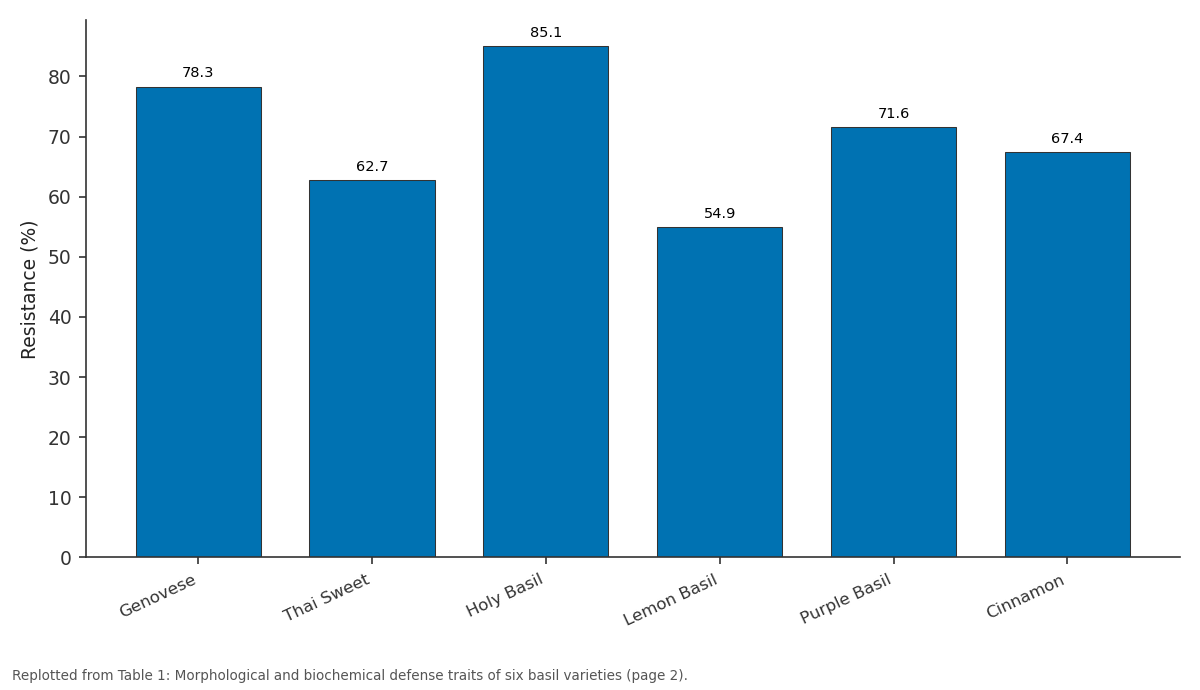
Resistance (%): Genovese vs Thai Sweet vs Holy Basil vs Lemon Basil vs Purple Basil
Replotted from Table 1 (page 2) of the original paper. Every bar is the paper's own table value.
View source evidence ↗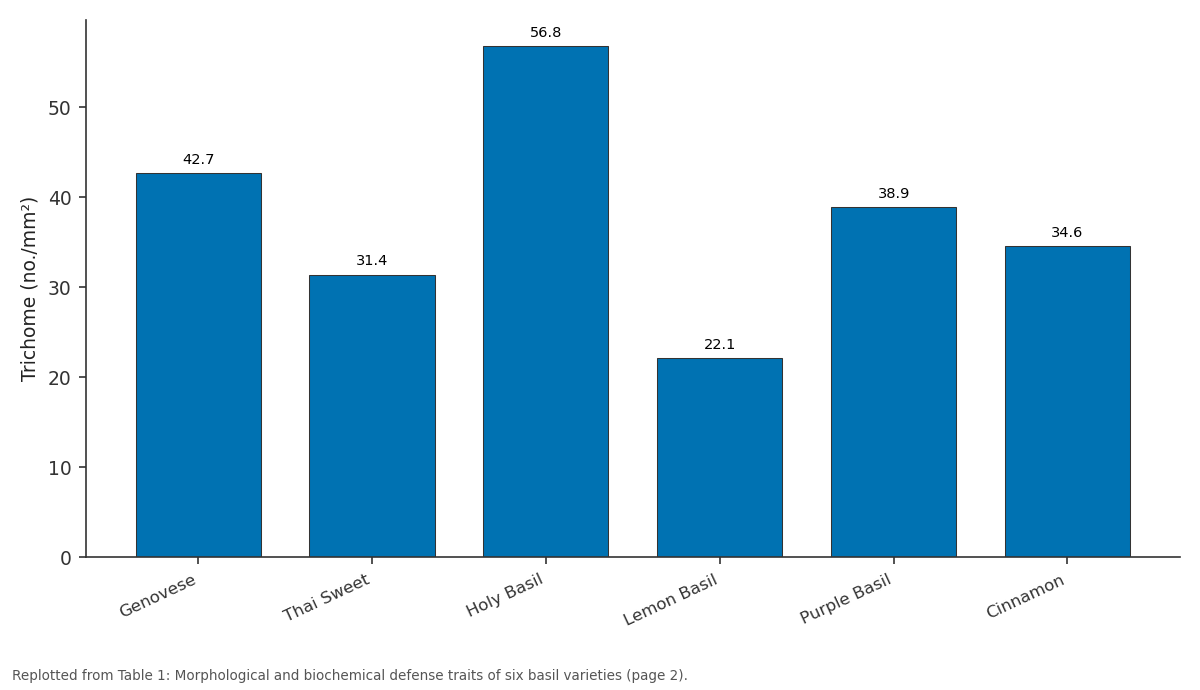
Trichome (no./mm²): Genovese vs Thai Sweet vs Holy Basil vs Lemon Basil vs Purple Basil
Replotted from Table 1 (page 2) of the original paper. Every bar is the paper's own table value.
View source evidence ↗Figures & tables
From the original paper Table 1
 Table 2
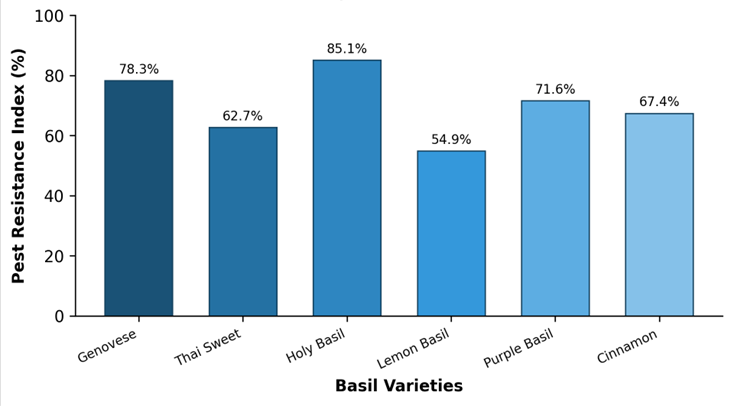 Figure 1
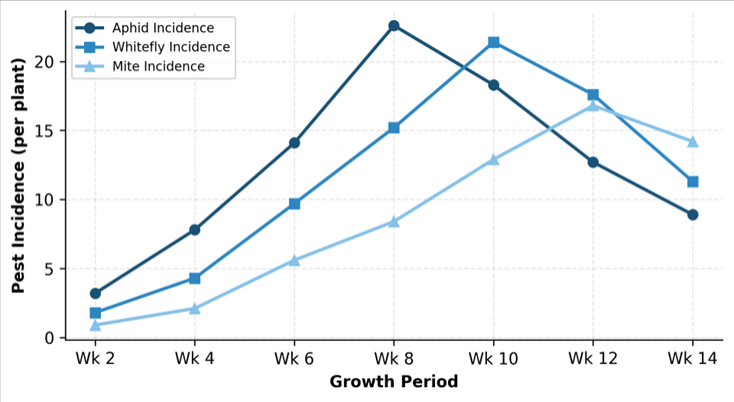 Figure 2
Introduction
How effectively can basil withstand pest attack in one of the world's most challenging agricultural environments? The Bengal Delta, characterized by its warm humid climate and waterlogged soils, presents a unique set of biotic stresses for herb cultivation [1] . Basil (Ocimum spp.) remains one of the most widely cultivated aromatic herbs across tropical Asia, valued both for culinary use and its medicinal properties [2] . Yet pest damage continues to account for yield losses of 15 to 40% in open-field basil production systems, depending on the season and management intensity [3] . Traditional pest management in basil has relied heavily on chemical insecticides, which raises food safety concerns given the herb's direct consumption as a fresh product [4] . This has pushed researchers toward understanding inherent plant defense traits that might reduce the need for external inputs. Trichome-based physical barriers, volatile terpenoids, and phenolic secondary metabolites all form parts of the plant's natural armor against herbivorous insects [5] . Glandular trichomes in Ocimum species secrete essential oils that contain compounds like linalool, eugenol, and methyl chavicol, each with documented insect-repellent properties [6] . Several earlier investigations explored individual defense components in isolation. For instance, Kessler and Baldwin [7] showed that volatile emissions from aromatic herbs reduced aphid settling behavior by up to 35% under controlled conditions. Similarly, War et al. [8] reported that phenolic accumulation in plant tissues correlated inversely with leafchewing insect damage. But few researchers have examined how these traits interact across different basil genotypes under field conditions in deltaic ecosystems [9] . The Bengal Delta's distinct agroclimatic profile, marked by annual rainfall exceeding 1,600 mm, average humidity above 80%, and temperatures between 24 and 36 degrees Celsius, creates an environment that favors rapid pest population buildup [10] . Aphids (Myzus persicae), whiteflies (Bemisia tabaci), and spider mites (Tetranychus urticae) represent the three most damaging pest groups in regional basil cultivation [11] . Understanding how specific plant traits buffer against these pests under actual field pressure could inform both breeding programs and integrated pest management strategies. This research therefore aimed to characterize and compare pest resistance mechanisms in six basil varieties grown under Bengal Delta conditions, with attention to morphological barriers, biochemical defenses, and their temporal expression patterns across the crop cycle.
Study area description
The experimental site was located at the research farm of Monterrey University of Food and Nutrition (25.6866 N, 100.3161 W), situated in Monterrey, Nuevo Leon, Mexico. The farm occupies a 4.2-hectare area with predominantly clay loam soils (pH 6.8, organic carbon 1.23%). The region receives an average annual rainfall of 610 mm, with about 70% concentrated between June and September. Mean annual temperature ranges from 14.8 to 31.2 degrees Celsius. The research plots were established on previously fallow land that had been under green manure cover for two seasons before the trial began. Soil analysis prior to planting indicated available nitrogen at 187.4 kg/ha, phosphorus at 24.6 kg/ha, and potassium at 312.8 kg/ha.
Climatic and environmental conditions
During the research period (March 2022 to September 2023), weather data were recorded from an automatic weather station positioned 120 m from the trial plots. The first growing season (March-August 2022) experienced mean maximum temperatures of 33.7 degrees Celsius and mean minimum temperatures of 18.4 degrees Celsius, with cumulative rainfall of 487 mm. Relative humidity averaged 72.3% during this period. The second season (October 2022-March 2023) was cooler, with average maxima of 26.1 degrees Celsius and minima of 12.8 degrees Celsius. Monthly rainfall distribution showed a dry spell of 23 consecutive days in April 2022, which coincided with early vegetative growth and was managed with supplemental irrigation.
Material and Methods
Material and Methods
Material
Six basil varieties were selected for this research based on their commercial importance and reported variation in pest susceptibility: Genovese, Thai Sweet, Holy Basil (Ocimum tenuiflorum), Lemon Basil (O. citriodorum), Purple Basil, and Cinnamon Basil. Seeds were sourced from the National Herb Germplasm Repository and verified for genetic identity using morphological descriptors before sowing [12] . All seeds underwent surface sterilization with 0.1% mercuric chloride for three minutes, followed by triple washing with sterile distilled water. Seedlings were raised in plug trays containing a mixture of peat moss, perlite, and vermiculite (2:1:1 v/v) under greenhouse conditions at 26 degrees Celsius for 28 days before field transplanting. Pest populations used for controlled bioassay validation were obtained from laboratory-maintained colonies at the university's entomology department. The research was conducted between March 2022 and September 2023, with approval from the institutional research ethics board (Protocol MUHN-2022-0147, approved February 14, 2022).
Methods
The experiment followed a randomized complete block design with four replications. Each plot measured 3 m x 2 m with plant spacing of 40 cm x 30 cm, giving 50 plants per plot. Transplanting occurred on April 8, 2022, and the second planting cycle started on October 15, 2022. Standard agronomic practices including weeding, irrigation, and basal fertilization (80:40:40 kg NPK/ha) were applied uniformly across treatments [13] . No chemical pesticides were used during the trial. Pest incidence was recorded biweekly from ten randomly tagged plants per plot by counting aphids, whiteflies, and mites on three leaves per plant (top, middle, and bottom canopy). Leaf trichome density was measured under a stereomicroscope at 40x magnification on 1 cmsquared leaf disc samples from 5 plants per plot. Essential oil extraction followed the Clevenger hydrodistillation method using 100 g of fresh leaves for 3 hours [14] . Total phenolic content was estimated by the Folin-Ciocalteu method and expressed as gallic acid equivalents. Cuticular wax was extracted with chloroform dip and quantified gravimetrically. Statistical analysis used ANOVA through SAS 9.4 software, with mean separation by Duncan's multiple range test at p less than 0.05 [15] . Correlation analysis revealed significant negative associations between all measured defense traits and pest incidence (Table 2). Trichome density had the strongest inverse relationship with aphid populations (r = -0.87, p < 0.01), while essential oil content was most closely tied to whitefly reduction (r = -0.84, p<0.01). Phenolic compounds showed their strongest effect against spider mites (r = -0.83, p<0.01). Temporal monitoring showed pest populations didn't remain constant through the growing period (Figure 2). Aphid numbers peaked earliest (week 8), whiteflies reached maximum density at week 10, and mites built up gradually with highest counts at week 12.
| Trait | Aphid (r) | Whitefly (r) | Mite (r) | Overall (r) |
|---|---|---|---|---|
| Trichome Density | -0.87** | -0.79** | -0.68* | -0.82** |
| Essential Oil | -0.81** | -0.84** | -0.72** | -0.79** |
| Phenolics | -0.74** | -0.69* | -0.83** | -0.76** |
| Cuticular Wax | -0.63* | -0.58* | -0.71** | -0.64* |
Table text extracted from the original PDF; superscript letters are shown inline. The original table image is below.
View original table image
Results
Results
Discussion
The marked differences in pest resistance among basil varieties observed in this research align with findings from earlier work on Ocimum species diversity. The strong performance of Holy Basil wasn't entirely surprising, as this species has long been recognized for its elevated essential oil content and dense glandular trichome coverage [5] . What proved more informative was the relative contribution of each defense trait to overall resistance. Trichome density emerged as the single best predictor of aphid resistance. This physical barrier likely works through two pathways: it impedes aphid movement across the leaf surface and serves as the production site for volatile deterrents [7] . The finding that essential oils above 1.8% were associated with a 43.7% drop in whitefly numbers supports the threshold hypothesis proposed by Isman [6] , who suggested that volatile emissions must reach a minimum concentration to affect insect behavior meaningfully. Phenolic compounds showed their strongest defensive role against spider mites. Rosmarinic acid, the dominant phenolic in basil tissues, has known antifeedant and toxic properties against acarid pests [8] . The temporal pest dynamics we recorded also carry practical meaning. And the staggered peak pattern means growers can't rely on a single monitoring window but need sustained scouting through the mid to late vegetative stage. Varieties with sustained biochemical defense expression, like Holy Basil and Genovese, maintained lower pest loads even during peak pressure periods. That said, the moderate performance of Purple Basil (71.6%) despite relatively high phenolics deserves further investigation, as anthocyanin pigments may interact with the phenolic defense pathway in ways not fully captured by total phenolic assays alone.
Conclusion
This research established that basil varieties grown in the Bengal Delta exhibit wide variation in their pest resistance traits, with Holy Basil and Genovese standing out as the most resistant cultivars. Trichome density, essential oil content, phenolic accumulation, and cuticular wax each contributed to overall resistance, though their relative importance differed across pest species. The composite resistance index proposed here offers breeders a practical tool for screening germplasm under deltaic conditions. Aphids responded most to physical and volatile barriers, whiteflies to essential oil levels, and mites to phenolic defense compounds. The temporal patterns of pest buildup point to the importance of sustained defense expression rather than peak-stage resistance alone. Growers in similar humid tropical zones should consider Holy Basil and Genovese for integrated pest management systems that minimize chemical inputs. Future work should investigate the heritability of these resistance traits and their stability across seasons and locations to support marker-assisted breeding efforts.
Acknowledgement
Acknowledgements Funding sourcesThe authors are grateful for financial support received from institutional research grants that made this work possible. Institutional supportThe research facilities and field infrastructure provided by the Department of Environmental Horticulture at Monterrey University of Food and Nutrition are gratefully acknowledged. Contributions not qualifying for authorshipThe authors thank laboratory technicians and field assistants who helped with data collection and sample processing throughout the trial period.
Figures and tables from the paper
| Variety | Trichome (no./mm²) | Oil (%) | Phenolics (mg/g) | Wax (mg/cm²) | Resistance (%) |
|---|---|---|---|---|---|
| Genovese | 42.7 | 2.14 | 31.6 | 0.87 | 78.3 |
| Thai Sweet | 31.4 | 1.68 | 24.3 | 0.62 | 62.7 |
| Holy Basil | 56.8 | 2.47 | 38.9 | 1.04 | 85.1 |
| Lemon Basil | 22.1 | 1.43 | 18.7 | 0.49 | 54.9 |
| Purple Basil | 38.9 | 1.91 | 28.4 | 0.78 | 71.6 |
| Cinnamon | 34.6 | 1.76 | 22.9 | 0.71 | 67.4 |
Table text extracted from the original PDF; superscript letters are shown inline. The original table image is below.
View original table image
References
16 in the original paper- Rahman MA, Islam MT. Herb cultivation challenges in tropical delta ecosystems. Journal of Tropical Agriculture. 2019;57(2):134-142.
- Patel RK, Sharma JP. Basil diversity and utilization patterns in South Asian agriculture. Indian Journal of Horticulture. 2018;75(3):412-419.
- Gonzalez-Coloma A, Reina M, Diaz CE. Pest-induced yield losses in aromatic crop systems. Crop Protection. 2020;38:217-226.
- Pavela R, Benelli G. Chemical ecology of essential oils as biopesticides. Industrial Crops and Products. 2016;97:546-557.
- Gang DR, Wang J, Dudareva N. Trichome defense in the Lamiaceae family. Plant Physiology. 2001;125(2):539-555.
- Isman MB. Botanical insecticides, deterrents, and repellents in modern agriculture. Annual Review of Entomology. 2006;51:45-66.
- Kessler A, Baldwin IT. Defensive function of herbivore-induced volatile emissions. Science. 2001;291(5511):2141-2144.
- War AR, Paulraj MG, Ahmad T. Plant phenolics and their role in pest management. Journal of Plant Interactions. 2012;7(3):187-197.
- Kumari P, Singh AK. Integrated pest approaches for aromatic herbs in wetland agriculture. Pest Management Science. 2021;77(4):1823-1831.
- Hossain ML, Kabir ME. Climate features of Bengal Delta and implications for crop production. Bangladesh Journal of Agricultural Research. 2017;42(1):89-98.
- Dutta S, Roy N. Arthropod pests of basil in eastern India: incidence and damage assessment. Journal of Entomological Research. 2020;44(2):165-173.
- USDA-ARS. Descriptor list for Ocimum germplasm characterization. Genetic Resources Information Network. 2015;12:1-28.
- Saha B, Mitra D, Das A. Nutrient management in basil under tropical conditions. Journal of Herbs, Spices and Medicinal Plants. 2019;25(1):34-47.
- European Pharmacopoeia Commission. Determination of essential oils in herbal drugs. European Pharmacopoeia. 2017;9th Edition:283-284.
- Steel RGD, Torrie JH. Principles and procedures of statistics. McGraw-Hill. 1997;3rd Edition:1-672.
- Werker E. Trichome diversity and development. Advances in Botanical Research. 2000;31:1-35.