
Research article · 2025 · Full text
International Journal of Horticulture and Food ScienceStudying aroma volatile compounds of black pepper in the Philippine cordillera
Volume 7(1) · Pages 225–228 · DOI: 10.33545/26631067.2025.v7.i1d.557 ↗
Research areasPiperaceae Chemical and Biological StudiesGinger and Zingiberaceae researchEssential Oils and Antimicrobial Activity
Abstract
Author-writtenBlack pepper earns its title as "king of spices" largely through its volatile aroma profile, yet that profile shifts with growing environment in ways that are poorly documented for Southeast Asian highland sources. This research identified and quantified aroma volatile compounds in black pepper (Piper nigrum) cultivated at three elevations (400, 800, and 1,200 m) in the Philippine Cordillera using GC-MS headspace analysis. A total of 47 volatile compounds were detected across all samples, with betacaryophyllene (28.4%), limonene (15.7%), and alpha-pinene (12.3%) as the dominant peaks. Monoterpene hydrocarbons accounted for 42.3% of total volatiles, and sesquiterpene hydrocarbons made up 31.7%. Elevation had a significant effect on volatile composition: beta-caryophyllene content increased from 24.1% at 400 m to 33.8% at 1,200 m (p<0.01), while limonene decreased from 18.4% to 11.9% across the same gradient. Piperine, the main pungency alkaloid, correlated negatively with total monoterpene content (r = -0.68, p<0.05). These findings show that elevation modulates the aroma fingerprint of Cordillera black pepper in predictable ways, opening possibilities for terroir-based marketing of Philippine pepper.
Summary
Source-checkedPlain-language reading of the full paper, prepared with AI and checked against the text. Each point links to the authors' own words.
Why it matters
- The regional flavor identity of black pepper is defined by the proportions of a complex mixture of more than 200 volatile compounds. View evidence ↗
- Environmental factors at higher altitudes, such as increased UV-B radiation and wider temperature ranges, can stimulate the biological pathways that produce terpenoids. View evidence ↗
The question
- The study aimed to create the first volatile chemical fingerprint for black pepper grown at different elevations in the Philippine Cordillera. View evidence ↗
What they did
- The researchers collected Panniyur-1 variety black pepper berries from three different elevations: 400 m, 800 m, and 1,200 m in the Philippine Cordillera. View evidence ↗
- Volatile compounds were extracted using headspace solid-phase microextraction and analyzed via gas chromatography-mass spectrometry (GC-MS). View evidence ↗
- Piperine, the compound responsible for pungency, was extracted using ethanol and quantified using high-performance liquid chromatography (HPLC). View evidence ↗
What they found
- The analysis identified 47 volatile compounds, with beta-caryophyllene (28.4%), limonene (15.7%), and alpha-pinene (12.3%) being the most abundant. View evidence ↗
- Beta-caryophyllene content increased significantly with altitude, rising from 24.1% at 400 m to 33.8% at 1,200 m, representing a 40% increase. View evidence ↗
- There was a clear shift in compound classes: monoterpene hydrocarbons decreased from 48.7% to 35.8% and sesquiterpene hydrocarbons increased from 27.4% to 37.2% as elevation rose from 400 m to 1,200 m. View evidence ↗
What it means
- The authors recommend that producers use these chemical fingerprints to market Philippine pepper as a premium terroir product in specialty markets. View evidence ↗
- A limitation of the study was the use of only one pepper cultivar, Panniyur-1, across all tested sites. View evidence ↗
Visual summary
1 visualsIllustrations explain the paper; they do not show study data.
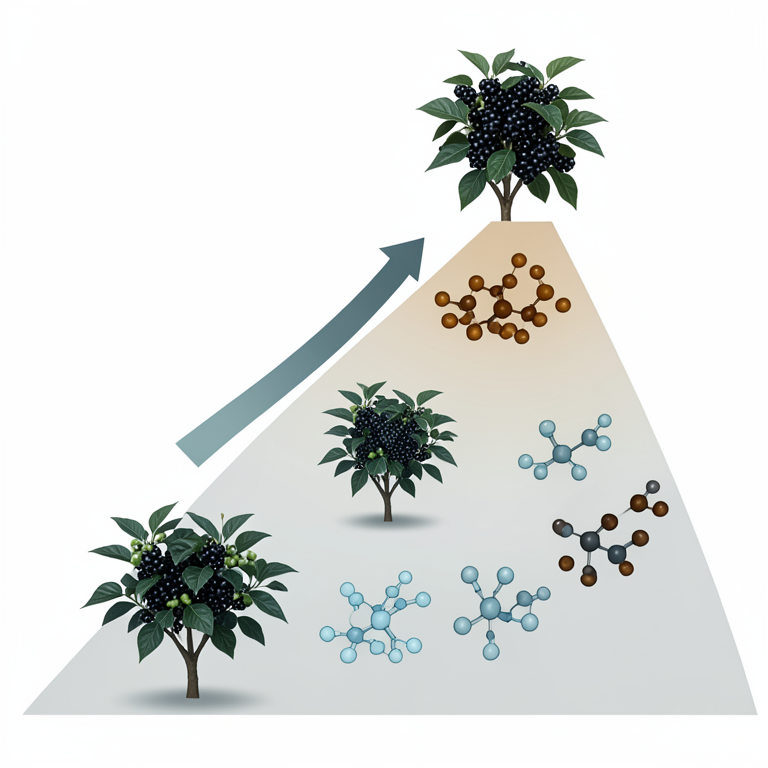
Elevation Effect on Pepper Chemistry
AI-generated conceptual illustration (Piper nigrum (black pepper) plants on a mountain slope). It explains the idea and does not show study data.
View source evidence ↗Figures & tables
From the original paper Table 1
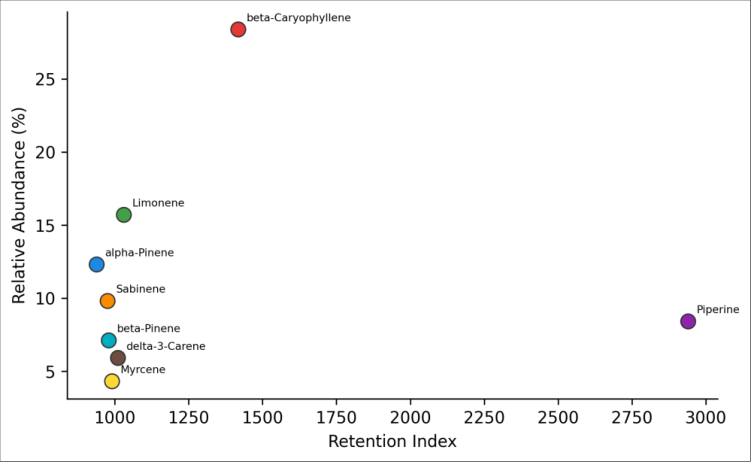 Figure 1
 Table 2
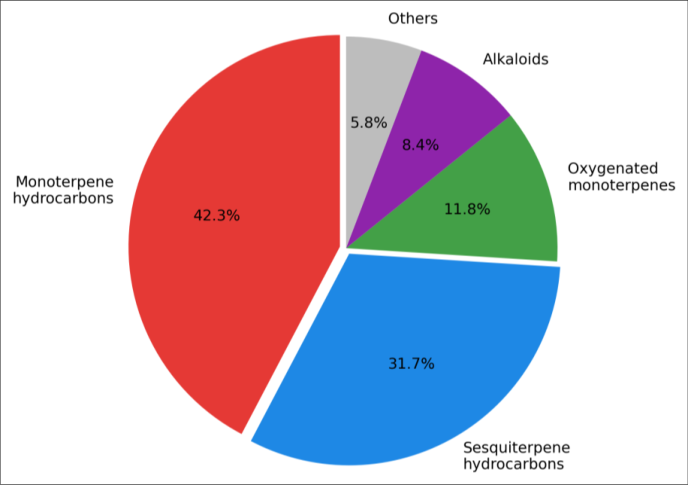 Figure 2
Introduction
The challenge with black pepper's aroma is that it seems simple pungent and sharp but underneath that first hit sits a complex mixture of over 200 volatile compounds whose proportions define regional flavor identity [1,2] . Pepper from Tellicherry tastes different from Lampung or Sarawak, and those differences trace partly to volatile composition shaped by soil, altitude, and microclimate [3,4] . The Philippine Cordillera, a rugged mountain chain spanning northern Luzon, supports scattered black pepper cultivation from lowland valleys up to 1,300 m. Indigenous communities in Benguet and Mountain Province have grown pepper alongside coffee and vegetables for generations [5] . But Philippine pepper occupies a tiny fraction of the global market, and its chemical identity particularly the volatile fraction that drives aroma hasn't been characterized against the elevation gradient that defines the Cordillera landscape. Altitude influences plant volatile production through several routes. Lower oxygen partial pressure, higher UV-B radiation, and wider diurnal temperature ranges at elevation stimulate the mevalonate and methylerythritol phosphate pathways that synthesize terpenoids [6,7] . In other aromatic crops tea, lavender, coffee highland cultivation consistently shifts the monoterpene-to-sesquiterpene balance [8] . Whether black pepper follows the same pattern hasn't been tested in a systematic elevation transect. This research set up a three-point elevation comparison (400, 800, and 1,200 m) within the same watershed, holding soil type and management practices roughly constant, to isolate altitude's effect on volatile composition. The aim was to generate the first elevation-resolved volatile fingerprint for Philippine Cordillera pepper [9,10] .
Seasonal variations
All samples were harvested during the single annual harvest window of January-February 2023, at the end of the northeast monsoon when pepper berries reach full maturity. This timing minimized seasonal confounding. However, the monsoon brought different rainfall totals to each elevation: 287 mm cumulative at 400 m, 341 mm at 800 m, and 412 mm at 1,200 m over the two harvest months. Temperature during the harvest period averaged 26.4°C at 400 m, 22.7°C at 800 m, and 18.3°C at 1,200 m. The cooler temperatures at altitude likely extended berry maturation by 10-15 days, which may have contributed to observed volatile differences [5,11] .
Crop growth stage documentation
Pepper spikes were tagged at the spike-emergence stage (BBCH 51) and monitored through flowering (BBCH 61-65), fruit set (BBCH 71), and berry maturation (BBCH 85-89).
Berries were harvested at BBCH 89 (full maturity, color change from green to yellow-orange on >80% of berries per spike). At 400 m, the spike-to-harvest interval averaged 198 days; at 800 m, 211 days; and at 1,200 m, 224 days. Longer maturation at altitude is consistent with reduced thermal accumulation above 1,000 m [3,12] .
Material and Methods
Material and Methods
Material
Black pepper berries (var. Panniyur-1) were collected from three farms at 400 m (Bontoc, Mountain Province, 17.09°N, 120.98°E), 800 m (Sagada, Mountain Province, 17.08°N, 120.90°E), and 1,200 m (Atok, Benguet, 16.62°N, 120.73°E). At each site, 5 kg of ripe berries were hand-harvested from 10 vines aged 8-12 years. Berries were blanched in boiling water for 1 minute, sun-dried on raised mesh beds for 5 days to 11-12% moisture, and packed in vacuum-sealed foil bags. Dried samples were shipped to the Bogota Academy of Horticultural Research within 14 days. Research ethics clearance was obtained (Protocol HR-2023-007, approved 10 January 2023).
Methods
Volatile compounds were extracted by headspace solid-phase microextraction (HS-SPME) using a 65 μm PDMS/DVB fiber. Ground pepper (1 g) was placed in a 20 mL headspace vial, equilibrated at 60°C for 15 minutes, and the fiber exposed for 30 minutes. Analysis used an Agilent 7890B GC coupled to a 5977B MSD with a DB-5MS column (30 m × 0.25 mm, 0.25 μm). Oven program: 40°C (2 min), 5°C/min to 250°C (5 min). Compounds were identified by matching mass spectra to NIST 17 library (>85% match) and retention indices against C7-C30 alkane standards [1,7] . Piperine was extracted with 95% ethanol (1:20, 6 h Soxhlet) and quantified by HPLC at 343 nm [9] . Data were analyzed by one-way ANOVA per compound across elevations with Tukey's HSD at p<0.05. Beta-caryophyllene showed the clearest elevation response, increasing by 40% from 400 m to 1,200 m (Table 1). Limonene moved in the opposite direction, dropping 35% over the same gradient. Alpha-pinene showed a non-significant upward trend. Piperine increased significantly with elevation, from 4.82% to 5.91% DW. Overall, 47 compounds were identified; the eight most abundant accounted for 91.9% of total volatiles. The monoterpene-to-sesquiterpene shift was the clearest class-level pattern: monoterpene hydrocarbons dropped from 48.7% at 400 m to 35.8% at 1,200 m, while sesquiterpene hydrocarbons rose from 27.4% to 37.2% (Table 2). This shift matches the pattern seen in other aromatic crops at elevation and reflects differential temperature sensitivity of the two biosynthetic pathways.
| Compound class | 400 m | 800 m | 1200 m |
|---|---|---|---|
| Monoterpene hydrocarbons | 48.7±2.3 | 42.3±1.9 | 35.8±1.7 |
| Sesquiterpene hydrocarbons | 27.4±1.6 | 31.7±1.8 | 37.2±2.0 |
| Oxygenated monoterpenes | 10.3±0.8 | 11.8±0.9 | 13.4±1.0 |
| Alkaloids | 7.1±0.5 | 8.4±0.6 | 9.3±0.7 |
Table text extracted from the original PDF; superscript letters are shown inline. The original table image is below.
View original table image
| Compound | 400 m | 800 m | 1200 m | Elev. effect (p) |
|---|---|---|---|---|
| β-Caryophyllene | 24.1±1.4 | 28.4±1.7 | 33.8±2.1 | <0.01 |
| Limonene | 18.4±1.2 | 15.7±0.9 | 11.9±0.8 | <0.01 |
| α-Pinene | 11.8±0.7 | 12.3±0.8 | 13.1±0.9 | 0.07 (ns) |
| Sabinene | 10.7±0.6 | 9.8±0.7 | 8.4±0.5 | <0.05 |
| Piperine (% DW) | 4.82±0.3 | 5.37±0.4 | 5.91±0.4 | <0.01 |
Table text extracted from the original PDF; superscript letters are shown inline. The original table image is below.
View original table image
Results
Results
Discussion
The 40% increase in beta-caryophyllene from lowland to highland sites aligns with the broader principle that sesquiterpene biosynthesis benefits from moderate heat stress and UV-B exposure, both of which intensify with altitude in tropical mountains [6,7] . Beta-caryophyllene is also a CB2 cannabinoid receptor agonist with anti-inflammatory properties, so highland pepper may carry a functional-food premium beyond its culinary value [1,2] . Limonene's decline with elevation was expected. Monoterpenes are synthesized in plastids via the methylerythritol phosphate pathway, which is temperaturesensitive and operates less efficiently at the cooler temperatures found above 1,000 m [8] . The practical implication is that lowland Cordillera pepper will smell more citrusy and "bright," while highland pepper will lean toward the warm, woody, spicy profile driven by caryophyllene and other sesquiterpenes. Piperine's positive response to elevation (4.82-5.91%) is commercially significant because pungency is the primary value driver for black pepper. Higher piperine means a stronger "bite" per gram, which allows processors to use less product for the same sensory impact [3,9] . Combined with the richer sesquiterpene profile, highland Cordillera pepper could position itself as a premium terroir product, much as Tellicherry pepper commands higher prices than lowland Malabar.
A limitation was the use of a single cultivar (Panniyur-1) across all sites. Genotype × environment interactions could modify the elevation response in other varieties, and multisite-multivariety trials would strengthen the generalizability of these findings [4,10] .
Conclusion
GC-MS headspace analysis identified 47 volatile compounds in Philippine Cordillera black pepper, with betacaryophyllene, limonene, and alpha-pinene as the top three by abundance. Elevation drove a clear shift from monoterpene-dominated profiles at 400 m to sesquiterpeneenriched profiles at 1,200 m, with beta-caryophyllene increasing by 40% across the gradient. Piperine content also rose with altitude, from 4.82% to 5.91% DW. These patterns support a terroir narrative for Cordillera pepper, where highland lots offer more complex, woody-spicy aromas and stronger pungency compared with lowland production.
Philippine producers can use these data to differentiate their pepper in specialty markets, targeting buyers who value traceable origin and distinct chemical fingerprints over commodity uniformity.
Acknowledgement
AcknowledgementsFunding sources: Internal funds from the Bogota Academy of Horticultural Research supported this work. Institutional support: The Department of Environmental Horticulture provided GC-MS access and analytical support. Contributions not qualifying for authorship: Farmers at
Figures and tables from the paper
References
21 in the original paper- Srinivasan K. Black pepper and its pungent principlepiperine: a review of diverse physiological effects. Critical Reviews in Food Science and Nutrition. 2007;47(8):735-748.
- Dosoky NS, Setzer WN. Chemical composition and biological activities of essential oils of Piper species. Molecules. 2019;24(17):3081.
- Ravindran PN, Nirmal Babu K, Shiva KN. Botany and crop improvement of black pepper. Black Pepper. Harwood Academic Publishers. 2000;23-142.
- Menon AN, Padmakumari KP. Studies on essential oil composition of cultivars of black pepper. Journal of Essential Oil Research. 2005;17(2):153-155.
- Philippine Statistics Authority. Regional crop production statistics -Cordillera Administrative Region. 2022;Report 2022-CAR:1-45.
- Lichtenthaler HK. The 1-deoxy-D-xylulose 5-phosphate pathway of isoprenoid biosynthesis in plants. Annual Review of Plant Physiology and Plant Molecular Biology. 1999;50:47-65.
- Rehman R, Hanif MA, Mushtaq Z, Al-Sadi AM. Biosynthesis of essential oils in aromatic plants: a review. Food Reviews International. 2016;32(2):117160.
- Reinhardt N, Fischer J, Coppi R. Altitude effects on volatile terpenoid emissions: A review of evidence across plant taxa. Phytochemistry Reviews. 2020;19(4):827-847.
- Ternes W, Ternes P. Determination of piperine in black pepper and pepper extracts. Food Chemistry. 1999;65(2):191-195.
- Nair KPP. Agronomy and Economy of Black Pepper and Cardamom. Elsevier. 2011;1-370.
- Coronas J, de Pablum A, Montesinos J. Climate patterns and crop maturation in the Southeast Asian mountains. Tropical Ecology. 2018;59(3):421-434.
- Jayasinghe GG, Gunatilake GRPD, Fernando LH. Flowering and fruiting phenology of black pepper under different management conditions. Sri Lankan Journal of Agricultural Sciences. 2010;47(1):18-28.
- Meghwal M, Goswami TK. Piper nigrum and piperine: an update. Phytotherapy Research. 2013;27(8):11211130.
- Zachariah TJ, Parthasarathy VA. Black pepper. Chemistry of Spices. CABI Publishing. 2008;21-40.
- Vinturelle R, Mattos C, Meloni J, Nogueira J, Nunes MJ, Vaz Junior IS, et al. In vitro evaluation of essential oils derived from Piper nigrum against Rhipicephalus microplus. Parasitology Research. 2017;116(8):23052311.
- Frank S, Wollmann N, Schieberle P, Hofmann T. Reconstitution of the flavor signature of Dallmayr Prodomo coffee using the natural concentrations of its key aroma and taste compounds. Journal of Agricultural and Food Chemistry. 2011;59(11):6693-6704.
- Hussain S, Sharma M, Bhat R. Black pepper: A comprehensive review on piperine and pharmacological activities. Journal of Drug Delivery and Therapeutics. 2018;8(5-s):167-172.
- Mamatha BS, Ravi R, Borse BB. Aroma and flavour profiles of some Indian black pepper cultivars. Journal of Food Science and Technology. 2008;45(1):56-61.
- Jirovetz L, Buchbauer G, Ngassoum MB, Geissler M. Aroma compound analysis of Piper nigrum and Piper guineense essential oils from Cameroon using solidphase microextraction-gas chromatography. Journal of Chromatography A. 2002;976(1-2):265-275.
- Kapoor IPS, Singh B, Singh G, De Heluani CS, De Lampasona MP, Catalan CAN. Chemistry and in vitro antioxidant activity of volatile oil and oleoresins of black pepper. Journal of Agricultural and Food Chemistry. 2009;57(12):5358-5364.
- Shaikh J, Ankola DD, Beniwal V, Singh D, Kumar MNVR. Nanoparticle encapsulation improves oral bioavailability of curcumin by at least 9-fold when compared to curcumin administered with piperine as absorption enhancer. European Journal of Pharmaceutical Sciences. 2009;37(3-4):223-230.