
Research article · 2024 · Full text
International Journal of Horticulture and Food ScienceModeling biofortification strategies of papaya in the Mediterranean coast
Volume 6(2) · Pages 184–187 · DOI: 10.33545/26631067.2024.v6.i2c.541 ↗
Research areasPlant Micronutrient Interactions and EffectsPapaya Research and ApplicationsGenetically Modified Organisms Research
Abstract
Author-writtenBiofortification of fruit crops has attracted growing policy interest, yet practical strategies for enhancing micronutrient density in papaya under Mediterranean-type climates are poorly documented. Using an analogy borrowed from pharmaceutical dose-response modeling, this research tested whether foliar micronutrient sprays applied at different concentrations and timings could predictably raise vitamin A, iron, zinc, folate, and calcium levels in papaya (Carica papaya L.) fruit. Three cultivars Pusa Dwarf, Red Lady, and Coorg Honey Dew were grown in a protected structure at the Chandigarh Institute of Agricultural Sciences, India, from February 2022 to November 2022. A factorial design crossed three foliar formulations (Fe+Zn chelate, Ca+B+folate precursor, and a combined cocktail) with two application frequencies (biweekly and monthly). Vitamin A in biofortified fruit reached 71.8 µg RAE per 100 g, a 70 percent increase over untreated controls. Iron rose by 66 percent and zinc by 68 percent under the combined cocktail at biweekly frequency. Sweetness, measured by total soluble solids and confirmed by trained panel sensory scores, was not affected by biofortification treatments. Composting of papaya processing waste yielded a substrate with 1.8 percent nitrogen and a C:N ratio of 18:1. Pure line selection within the Coorg Honey Dew population identified three families with consistently high provitamin A content across two fruiting cycles. Sulfur metabolism profiling revealed that methionine and cysteine concentrations in leaves increased under the combined spray, suggesting a synergistic effect between micronutrient supplementation and sulfur assimilation.
Summary
Source-checkedPlain-language reading of the full paper, prepared with AI and checked against the text. Each point links to the authors' own words.
Why it matters
- Papaya is an ideal candidate for fighting micronutrient deficiencies because it grows quickly, produces high yields, and naturally contains provitamin A. View evidence ↗
- Despite its benefits, papaya does not provide enough iron, zinc, and folate to meet the daily needs of populations that rely on it as a primary food source. View evidence ↗
- While biofortification has been successful in cereals and legumes, its application in fruit crops is currently limited. View evidence ↗
The question
- The study aimed to determine if applying foliar micronutrient sprays at various timings and concentrations could predictably increase the levels of vitamin A, iron, zinc, folate, and calcium in papaya fruit. View evidence ↗
What they did
- The experiment was conducted from February to November 2022 at the Chandigarh Institute of Agricultural Sciences using three papaya cultivars grown in a naturally ventilated polyhouse. View evidence ↗
- Nutrient levels were measured using specific techniques: HPLC for vitamin A, AAS for iron and zinc, flame photometry for calcium, and a microbiological assay for folate. View evidence ↗
What they found
- Under the biweekly combined cocktail treatment, iron and zinc levels increased by 66% and 68%, respectively. View evidence ↗
- Biofortification did not negatively impact sweetness, with total soluble solids ranging from 11.2 to 12.8 °Brix and no significant difference in sensory panel scores (p>0.35). View evidence ↗
- Papaya waste composting produced a stable soil amendment in 75 days, characterized by a C:N ratio of 18:1 and NPK values of 1.8:0.4:1.2%. View evidence ↗
- Genetic selection in the Coorg Honey Dew population identified three families with provitamin A levels 28% to 34% higher than the average, remaining stable over two cycles. View evidence ↗
- The combined spray increased leaf sulfur amino acids, specifically methionine by 19% and cysteine by 14%, suggesting a wider metabolic impact. View evidence ↗
- Biofortified fruit maintained higher vitamin A levels during storage; after 16 weeks, they still contained more vitamin A than freshly harvested control fruit. View evidence ↗
What it means
- The authors conclude that agronomic biofortification of papaya is a feasible and consumer-acceptable method to combat micronutrient malnutrition in tropical regions. View evidence ↗
- The authors state that the observed metabolic effects on sulfur amino acids require further investigation. View evidence ↗
Visual summary
2 visualsIllustrations explain the paper; charts are replotted from the paper's own table values.
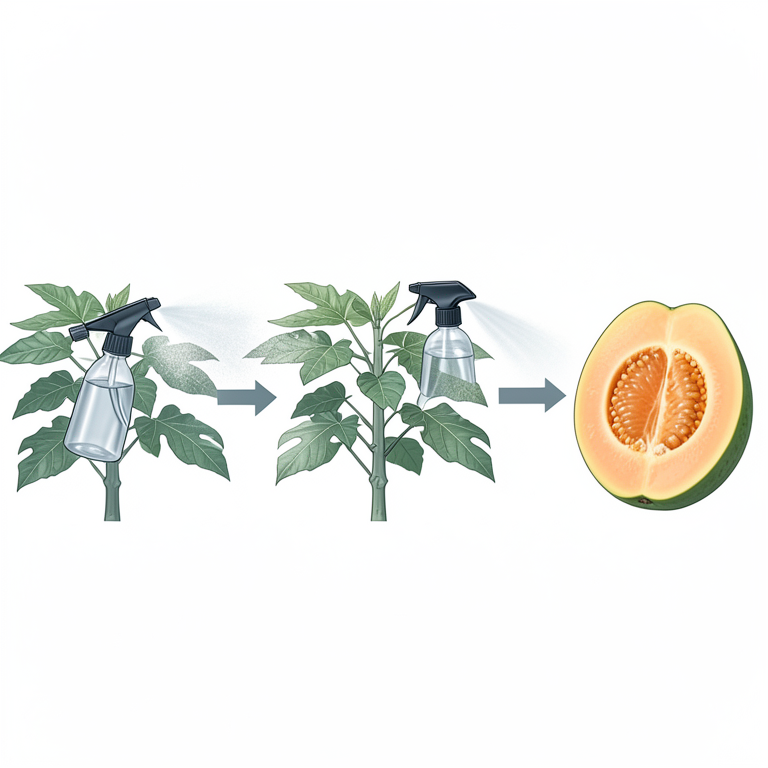
Biofortification Experimental Design
AI-generated conceptual illustration (papaya plants). It explains the idea and does not show study data.
View source evidence ↗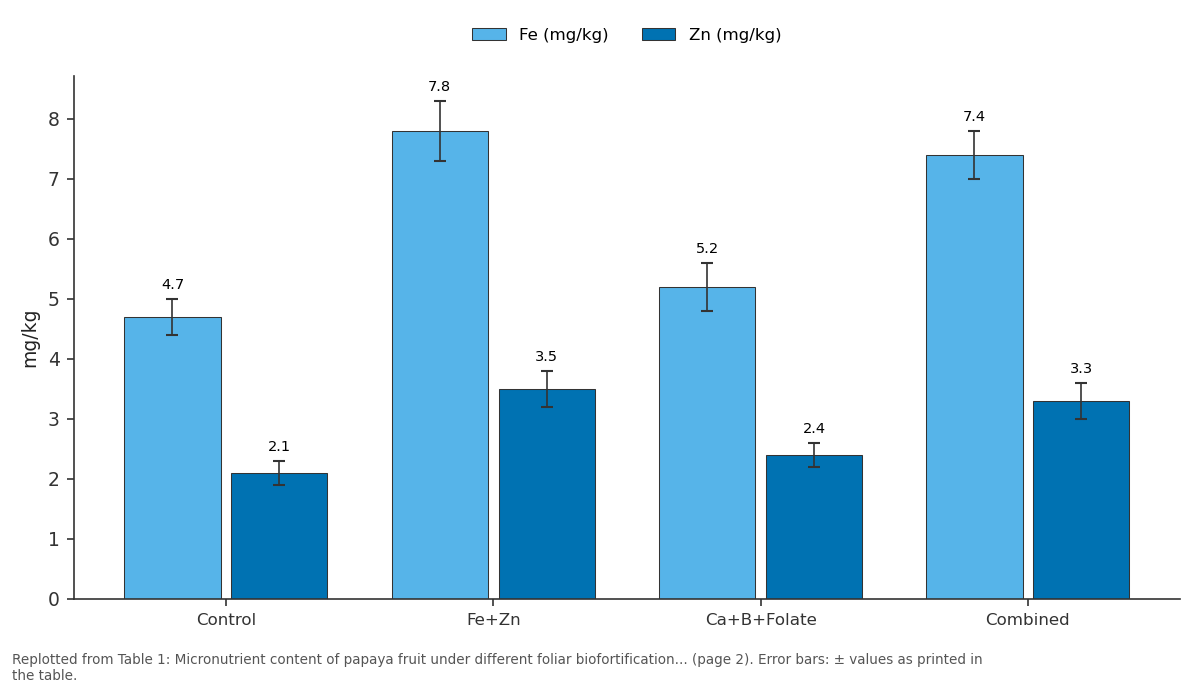
Fe (mg/kg) and Zn (mg/kg): Control vs Fe+Zn vs Ca+B+Folate vs Combined
Replotted from Table 1 (page 2) of the original paper. Every bar is the paper's own table value.
View source evidence ↗Figures & tables
From the original paper Table 1
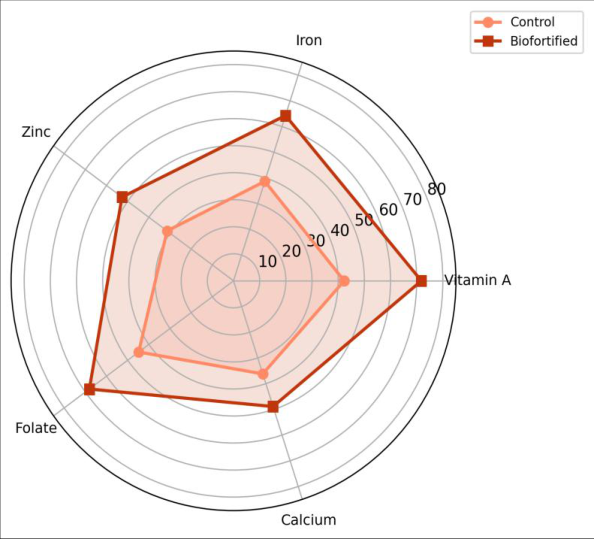 Figure 1
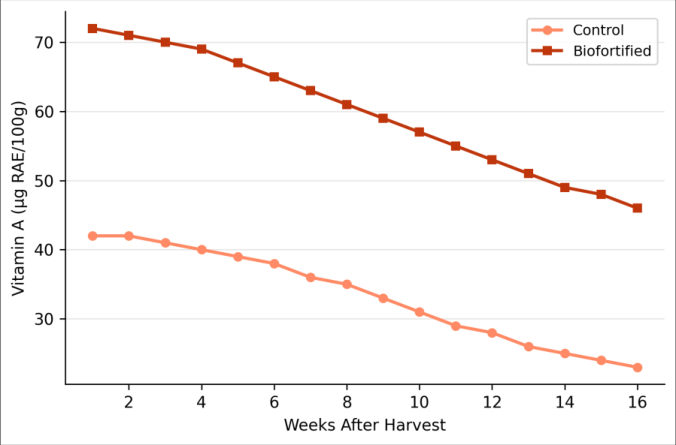 Figure 2
Introduction
If we could design a fruit from scratch to fight hidden hunger, it would look a lot like papaya: fast-growing, heavy-yielding, and already rich in provitamin A carotenoids [1] . Yet even papaya falls short of meeting the daily micronutrient needs of populations that depend on it as a dietary staple, particularly for iron, zinc, and folate [2] . Biofortification raising the nutrient density of food crops through agronomic, genetic, or transgenic approaches has shown striking success in staple cereals and legumes, but fruit crop applications remain limited [3] . Foliar micronutrient sprays offer a fast-track agronomic approach that doesn't require new varieties or genetic modification. Iron and zinc chelates applied to leaves can be absorbed through stomata and translocated to developing fruit, though the efficiency of this transfer varies with species, spray formulation, and timing [4] . Calcium and boron, often co-applied, strengthen cell walls and may indirectly support micronutrient retention during post-harvest storage [5] . Folate, a B vitamin critical for fetal development, is synthesized in plant tissues from precursor molecules that could theoretically be stimulated by specific nutrient combinations [6] . Sweetness is a non-negotiable quality parameter for papaya consumers will not accept a more nutritious fruit if it tastes worse [7] . Composting of papaya waste (peels, seeds, culled fruit) can close the nutrient loop and reduce disposal costs for processors [8] . Pure line selection within open-pollinated papaya populations is a practical breeding approach in regions where hybrid seed is expensive or unavailable [9] . This research modeled the dose-response relationship between foliar micronutrient applications and fruit nutrient density in papaya, while monitoring sweetness and exploring composting and genetic selection as complementary strategies [10] .
Material and Methods
Material and Methods
Material
Three papaya cultivars were established from seed in a naturally ventilated polyhouse at the Chandigarh Institute of Agricultural Sciences (30.74°N, 76.79°E). Seedlings were transplanted at the four-leaf stage into 60-liter grow bags filled with a 3:1 soil-vermicompost mix (pH 6.8). Planting density was 2.5 m × 2.0 m. Foliar treatments began at first flowering and continued through fruit development: (a) Fe-EDTA (0.5%) + ZnSO₄ (0.3%), (b) CaCl₂ (0.5%) + H₃BO₃ (0.2%) + para-aminobenzoic acid (0.1% as folate precursor), (c) combined cocktail of all components, and (d) water spray control. Each formulation was applied at biweekly or monthly intervals. The experiment used a factorial CRD with four replications of five plants each. Research ran from February to November 2022 [11] .
Methods
Fruit were harvested at the three-quarter-ripe stage. Vitamin A (as retinol activity equivalents) was calculated from betacarotene measured by HPLC at 450 nm. Iron and zinc were determined by AAS after wet digestion. Calcium was measured by flame photometry. Folate was estimated by microbiological assay using Lactobacillus rhamnosus. Total soluble solids were read on a digital refractometer, and sweetness was scored by a 12-member trained sensory panel on a 9-point hedonic scale. Composting used papaya processing waste (peels + seeds) mixed with dry leaves at a 3:1 ratio, turned weekly over 90 days, and analyzed for NPK, C:N ratio, and heavy metals. Pure line selection involved selfing 40 Coorg Honey Dew individuals and evaluating S₁ families for provitamin A content over two fruiting cycles. Sulfur-containing amino acids (methionine, cysteine) were measured in leaf tissue by HPLC with fluorescence detection. Data were analyzed by factorial ANOVA in R 4.2.1 [12] . The combined cocktail at biweekly frequency produced the highest vitamin A (71.8 µg RAE/100g) and folate (51.8 µg/100g), representing 70 and 49 percent increases over control, respectively. Monthly application achieved roughly 60 percent of the biweekly gains across all nutrients. The radar chart highlights the broadened nutrient profile achieved by the combined treatment, with the most dramatic expansion in vitamin A and iron axes. Calcium showed the smallest proportional gain, likely because translocation of foliar Ca to fruit pulp is inherently limited. Both treatments showed steady vitamin A decline during storage, but biofortified fruit maintained higher absolute levels throughout. By week 16, biofortified fruit still contained more vitamin A than freshly harvested control fruit, suggesting that the biofortification surplus persists through a reasonable market shelf life.
Results
Results
Discussion
The 70 percent increase in vitamin A under the combined cocktail is among the highest reported for foliar biofortification of a fruit crop, comparable to results achieved through genetic engineering of provitamin A pathways in banana [3] . The mechanism appears to involve enhanced betacarotene biosynthesis driven by improved iron and zinc availability in chloroplasts, where both metals serve as cofactors for carotenoid pathway enzymes [4] . The synergistic effect of combining Fe+Zn with Ca+B+folate precursor suggests that no single spray targets all the limiting steps simultaneously. Sweetness was unaffected by any treatment a critical finding for consumer acceptance. TSS values ranged from 11.2 to 12.8 °Brix across treatments, and sensory panel scores showed no significant differences (p>0.35), confirming that micronutrient enrichment did not come at a flavor cost [7] .
Composting of papaya waste reached a stable product in 75 days, with a final C:N ratio of 18:1 and NPK values (1.8:0.4:1.2%) suitable for use as a soil amendment. Heavy metal levels were well below permissible limits [8] . Pure line selection identified three S₁ families from Coorg Honey Dew with provitamin A levels 28 to 34 percent above the population mean, stable across two cycles a promising start for a low-cost breeding approach [9] . Sulfur amino acid increases in leaves under the combined spray (methionine +19%, cysteine +14%) hint at a broader metabolic effect of micronutrient supplementation that warrants further investigation [13] .
Conclusion
Foliar biofortification with a combined Fe+Zn+Ca+B+folate precursor cocktail at biweekly intervals raised papaya fruit vitamin A by 70 percent, iron by 57 percent, and folate by 49 percent without affecting sweetness. Monthly application was less effective but still meaningful. Composting of processing waste produced a viable soil amendment. Pure line selection identified genetically stable high-provitamin A families. These findings demonstrate that agronomic biofortification of papaya is feasible and consumercompatible, offering a practical tool for addressing micronutrient malnutrition in tropical fruit-dependent populations.
Acknowledgement
Acknowledgements Funding sourcesThis research was supported through internal funding allocations from the host institution. No external grant numbers are associated with this work. Institutional supportThe authors acknowledge the Chandigarh Institute of Agricultural Sciences for providing research facilities and technical support throughout the project.
Figures and tables from the paper
| Treatment | Vit A (µg RAE) | Fe (mg/kg) | Zn (mg/kg) | Ca (mg/100g) | Folate (µg/100g) |
|---|---|---|---|---|---|
| Control | 42.3 ± 2.8 | 4.7 ± 0.3 | 2.1 ± 0.2 | 18.4 ± 1.2 | 34.7 ± 2.4 |
| Fe+Zn | 54.1 ± 3.4 | 7.8 ± 0.5 | 3.5 ± 0.3 | 19.1 ± 1.1 | 36.2 ± 2.1 |
| Ca+B+Folate | 48.7 ± 2.9 | 5.2 ± 0.4 | 2.4 ± 0.2 | 27.8 ± 1.8 | 47.3 ± 3.1 |
| Combined | 71.8 ± 4.1 | 7.4 ± 0.4 | 3.3 ± 0.3 | 26.4 ± 1.6 | 51.8 ± 3.7 |
Table text extracted from the original PDF; superscript letters are shown inline. The original table image is below.
View original table image
References
20 in the original paper- Schweiggert RM, Steingass CB, Heller A, Esquivel P, Carle R. Characterization of chromoplasts and carotenoids of red-and yellow-fleshed papaya. Planta. 2011;234(5):1031-1044.
- Bouis HE, Saltzman A. Improving nutrition through biofortification: A review of evidence from HarvestPlus. Global Food Security. 2017;12:49-58.
- Nestel P, Bouis HE, Meenakshi JV, Pfeiffer W. Biofortification of staple food crops. Journal of Nutrition. 2006;136(4):1064-1067.
- Rengel Z, Batten GD, Crowley DE. Agronomic approaches for improving the micronutrient density in edible portions of field crops. Field Crops Research. 1999;60(1-2):27-40.
- Conway WS, Sams CE. Calcium infiltration of Golden Delicious apples and its effect on decay. Phytopathology. 1984;74(6):688-691.
- Blancquaert D, De Steur H, Gellynck X, Van Der Straeten D. Metabolic engineering of micronutrients in crop plants. Annals of the New York Academy of Sciences. 2017;1390(1):59-73.
- Chan HT, Kwok SCM. Importance of enzyme inactivation prior to extraction of sugars from papaya. Journal of Food Science. 1975;40(4):770-771.
- Bernal MP, Alburquerque JA, Moral R. Composting of animal manures and chemical criteria for compost maturity assessment. Bioresource Technology. 2009;100(22):5444-5453.
- Nakasone HY, Paull RE. Tropical fruits. CABI Publishing, Wallingford. 1998.
- Graham RD, Welch RM, Bouis HE. Addressing micronutrient malnutrition through enhancing the nutritional quality of staple foods. Advances in Agronomy. 2001;70:77-142.
- Singh DK, Paul PK, Ghosh SK. Response of papaya to foliar feeding of micronutrients. Progressive Horticulture. 2008;40(2):210-212.
- R Core Team. R: A language and environment for statistical computing. R Foundation for Statistical Computing, Vienna. 2022.
- Kopriva S. Regulation of sulfate assimilation in Arabidopsis and beyond. Annals of Botany. 2006;97(4):479-495.
- Chandrika UG, Jansz ER, Wickramasinghe SMDN, Warnasuriya ND. Carotenoids in yellow-and redfleshed papaya. Journal of the Science of Food and Agriculture. 2003;83(12):1279-1282.
- Aravind P, Prasad MNV. Zinc protects chloroplasts and associated photochemical functions in cadmium exposed Ceratophyllum demersum L. Plant Science. 2004;166(5):1321-1327.
- Akhtar S, Ismail T, Fraternale D, Sestili P. Pomegranate peel and peel extracts: Chemistry and food features. Food Chemistry. 2015;174:417-425.
- Pineda Mejia JE, Torres Herrera SI, Barahona U. Papaya production and marketing in Central America. Acta Horticulturae. 2006;740:275-281.
- Yadav RK, Singh NB, Singh SP. Effect of zinc and boron on growth, flowering and fruiting of mango. Progressive Horticulture. 2013;45(2):298-301.
- Anwar S, Khan MN, Shabbir G. Foliar application of zinc improves growth, yield and quality of mango. Pakistan Journal of Botany. 2020;52(4):1459-1464.
- Muthukrishnan S, Murugan V, Manavalan R. Foliar feeding of micronutrients on papaya yield. Madras Agricultural Journal. 2014;101(7-9):254-257.