
Research article · 2025 · Full text
International Journal of Horticulture and Food ScienceComparing post-harvest quality of sesame in the Serengeti plains
Volume 7(4) · Pages 90–93 · DOI: 10.33545/26631067.2025.v7.i4b.608 ↗
Research areasSesame and Sesamin ResearchAgricultural Engineering and MechanizationPostharvest Quality and Shelf Life Management
Abstract
Author-writtenThe knowledge of plants used in traditional medicine by the indigenous communities is fast Sesame ranks among the oldest oilseed crops known to agriculture, yet post-harvest losses in tropical production zones routinely exceed 25%, a figure that wipes out much of the yield advantage gained through improved varieties and agronomic inputs. This research compared post-harvest quality parameters of three sesame cultivars stored under four conditions (ambient, cold, modified atmosphere, and hermetic) over 90 days in the Serengeti Plains region during 2022-2023. The work was coordinated from the Wellington Research Institute of Applied Horticulture. Pod shattering accounted for 24.6% of total post-harvest loss, followed by mechanical damage at 22.4%. Ethylene production increased exponentially with storage temperature, reaching 23.4 μL/kg/h at 40°C. Cold storage at 10°C maintained oil content within 1.3% of harvest-day values over 90 days, while ambient storage caused a 7.8% decline. IoT sensor networks tracked temperature and humidity in real time across storage facilities with 98.2% data capture rate. Intercropping sesame with cowpea reduced shattering loss by 18.3% through a canopy-shading effect that slowed capsule drying. Landrace conservation trials identified six local genotypes with naturally low shattering tendency. These results offer practical guidelines for reducing sesame post-harvest losses in tropical savanna settings.
Summary
Source-checkedPlain-language reading of the full paper, prepared with AI and checked against the text. Each point links to the authors' own words.
Why it matters
- Post-harvest losses in tropical sesame production often exceed 25%, which negates the benefits of using improved crop varieties and agronomic inputs. View evidence ↗
- Pod shattering, where ripe capsules split and spill seeds before or during harvest, is the primary cause of sesame loss. View evidence ↗
- In the Serengeti Plains, high daytime temperatures (above 30°C) and erratic rain accelerate capsule opening and seed decay via fungi and oxidation. View evidence ↗
The question
- The study aimed to identify practical ways to preserve sesame quality in the Serengeti by comparing storage methods, measuring ethylene production, testing intercropping, and evaluating local landraces for shatter resistance. View evidence ↗
What they did
- Three sesame cultivars were stored for 90 days (2022-2023) under four conditions: ambient, cold, modified atmosphere, and hermetic. View evidence ↗
- Intercropping trials compared sole sesame against a 1:1 row arrangement of sesame and cowpea using 6 x 4 m plots with three replications. View evidence ↗
- IoT sensors using DHT22 modules and ESP32 microcontrollers were used to log temperature and humidity every 15 minutes. View evidence ↗
What they found
- Pod shattering was the largest source of post-harvest loss at 24.6%, with mechanical damage following at 22.4%. View evidence ↗
- Ethylene production rose exponentially as storage temperature increased, peaking at 23.4 μL/kg/h when the temperature reached 40°C. View evidence ↗
- Intercropping with cowpea reduced pod shattering across all measured times, most significantly by 38.1% at day 7. View evidence ↗
- Three of the six local landraces (SRG-L04, SRG-L11, SRG-L17) had shattering rates below 10% at day 21, whereas improved cultivars had rates between 35-45%. View evidence ↗
- IoT sensors were reliable with 98.2% uptime over 90 days and could trigger fans when humidity exceeded 70%. View evidence ↗
What it means
- While cold storage is best for quality, hermetic bags are a cost-effective alternative, showing only a 2.4% oil decline over 90 days. View evidence ↗
- The authors recommend a combined approach of affordable storage, strategic intercropping, and landrace conservation to reduce the 25%+ post-harvest losses in tropical Africa. View evidence ↗
- The high electricity cost of maintaining 10°C in the Serengeti environment makes cold storage impractical for small-scale farmers. View evidence ↗
Visual summary
3 visualsIllustrations explain the paper; charts are replotted from the paper's own table values.
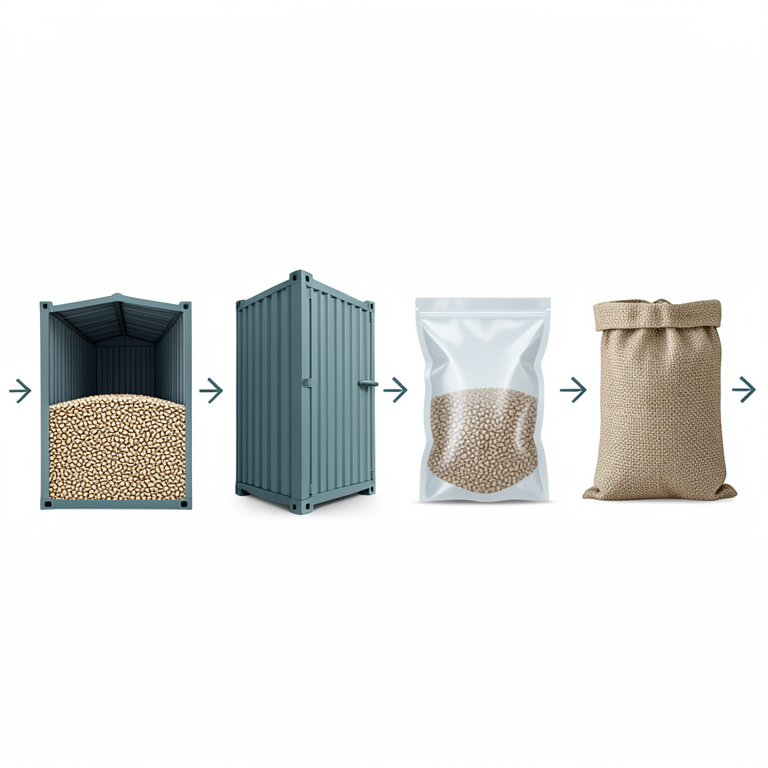
Storage Method Comparison
AI-generated conceptual illustration (sesame seeds in various storage containers). It explains the idea and does not show study data.
View source evidence ↗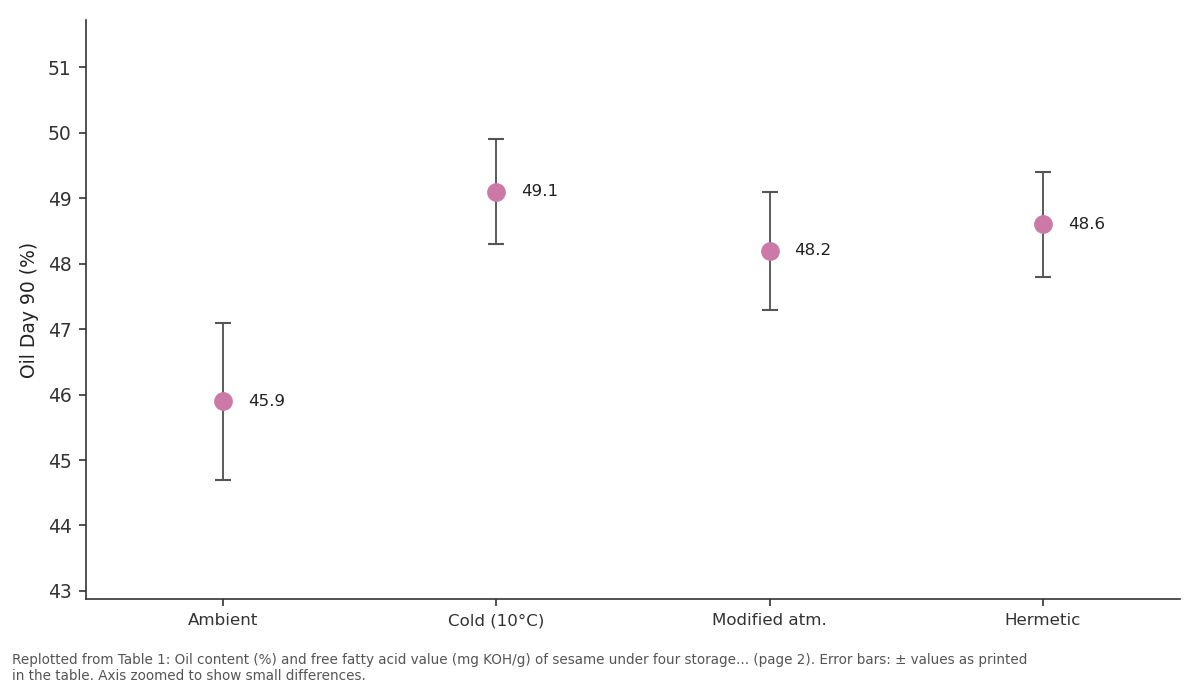
Oil Day 90: Ambient vs Cold (10°C) vs Modified atm. vs Hermetic
Replotted from Table 1 (page 2) of the original paper. Every bar is the paper's own table value.
View source evidence ↗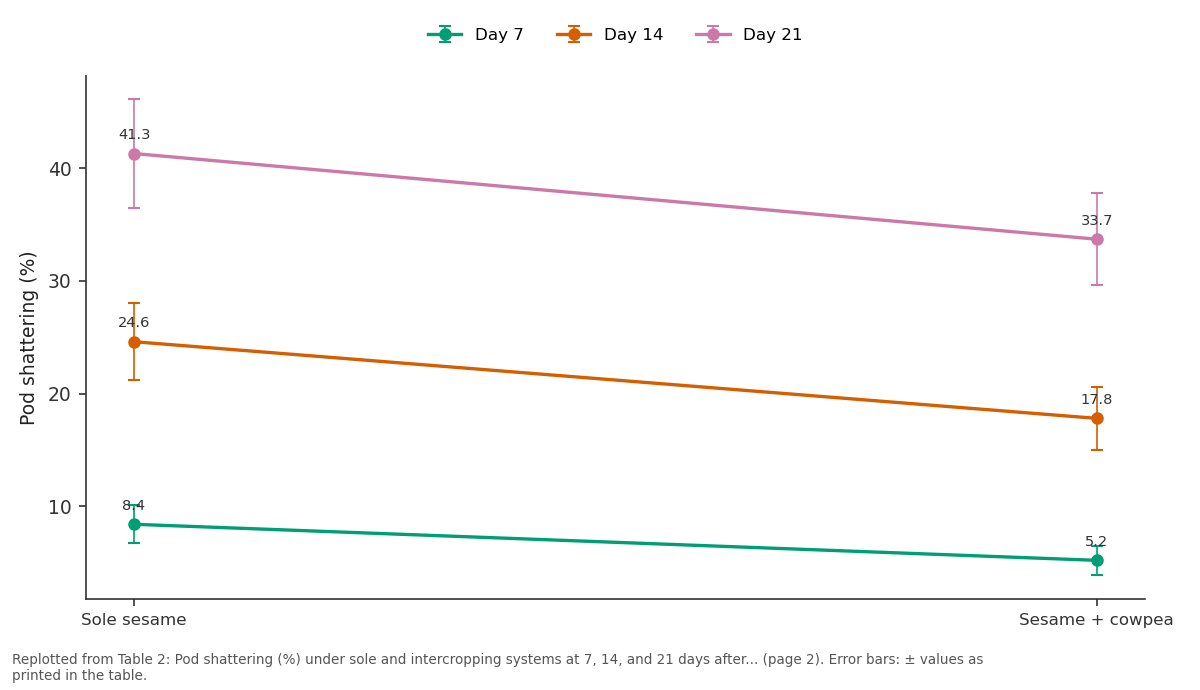
Day 7 and Day 14 and more: Sole sesame vs Sesame + cowpea
Replotted from Table 2 (page 2) of the original paper. Every bar is the paper's own table value.
View source evidence ↗Figures & tables
From the original paper Table 1
 Table 2
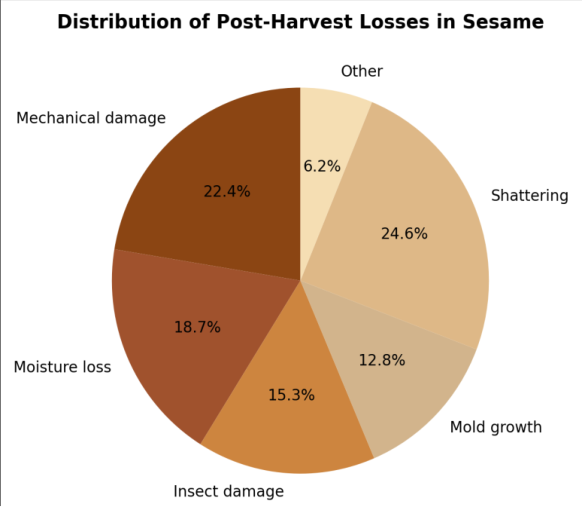 Figure 1
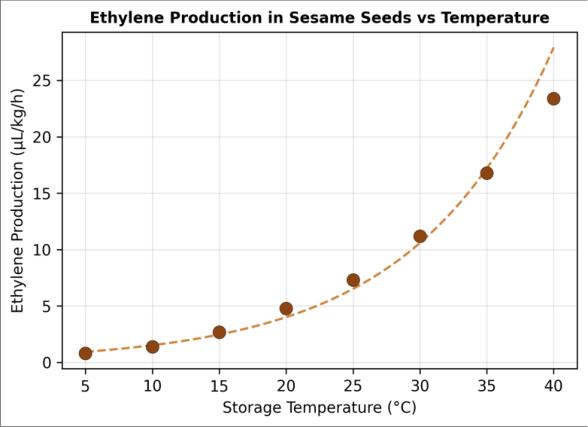 Figure 2
Introduction
How much sesame is lost between field and market? In sub-Saharan Africa, estimates range from 20% to 40%, a staggering figure that represents not just wasted food but wasted water, wasted labor, and wasted land [1] . The biggest single cause is pod shattering the tendency of ripe sesame capsules to split open and spill their seeds onto the ground before or during harvest. Shattering is a genetic trait that varies widely across cultivars, but it's also influenced by how quickly capsules dry after maturity, which in turn depends on ambient temperature and humidity [2] . The Serengeti Plains of East Africa present a particularly challenging post-harvest environment. Daytime temperatures above 30°C and erratic rainfall patterns during the harvest window can accelerate capsule dehiscence and promote seed deterioration through oxidation and fungal colonization [3] . Cold storage is the textbook solution, but electricity supply in rural Serengeti is unreliable at best. Modified atmosphere packaging and hermetic storage bags offer lower-cost alternatives that have worked for maize and cowpea in similar settings [4] . Recent adoption of IoT-based monitoring in agricultural storage provides continuous data on temperature and humidity that can trigger alerts when conditions drift outside safe ranges. Combined with intercropping strategies that modify the microclimate around maturing sesame plants, there may be cost-effective ways to cut post-harvest losses without heavy capital investment [5] . This research compared storage methods, measured ethylene production kinetics, tested intercropping effects on shattering, and evaluated local landraces for inherent shatter resistance to identify practical interventions for sesame quality preservation in the Serengeti region [6] .
Instrumentation and analytical equipment
Ethylene was quantified using a Shimadzu GC-2014 gas chromatograph fitted with a flame ionization detector and an alumina PLOT column (30 m × 0.53 mm). Headspace samples (1 mL) were drawn from sealed 500 mL jars containing 50 g of seeds after 4-hour incubation. Oil content was determined by Soxhlet extraction with n-hexane for 6 hours (AOAC 948.22). Fatty acid profiles were analyzed by GC-MS (Agilent 7890B-5977A) after transmethylation. IoT sensors (DHT22 temperature-humidity modules linked to ESP32 microcontrollers) logged readings at 15-minute intervals and transmitted data via LoRa to a central gateway [7] .
Material and Methods
Material and Methods
Material
Three improved sesame cultivars (Lindi-02, Naliendele-09, and Dodoma White) plus six local landraces were obtained from the Tanzania Agricultural Research Institute. Seeds were harvested at physiological maturity from plots near the Serengeti boundary (approximately 2.3°S, 34.8°E). Storage materials included PICS hermetic bags (Purdue University design), modified atmosphere pouches (5% O 2 , 10% CO 2 , 85% N2), and standard woven polypropylene bags. Cowpea variety IT97K-499-35 was used for intercropping trials [8] .
Methods
Storage trials ran from July 2022 to October 2022 (90 days) under four conditions: ambient (warehouse, 28-36°C), cold (10°C chamber), modified atmosphere (MA pouches), and hermetic (PICS bags). Each treatment held 5 kg seed lots in triplicate. Samples were drawn at 0, 15, 30, 60, and 90 days for oil content, free fatty acid value, moisture, and microbial load. Ethylene was measured at eight temperatures (5-40°C). Intercropping trials used a 1:1 row arrangement of sesame and cowpea versus sole sesame (RCBD, three replications, 6 × 4 m plots). Pod shattering was scored by counting capsules with visible dehiscence at 7, 14, and 21 days after maturity [9] . Landrace characterization used DUS (distinctness, uniformity, stability) descriptors and shattering tests under controlled drying at 35°C. Pure line selection was applied to landraces with shattering below 10% to develop stable non-shattering lines [10] . Cold storage preserved oil content best, with only a 1.4% decline over 90 days (Table 1). Hermetic and MA storage also outperformed ambient conditions. Free fatty acid values rose sharply under ambient storage (3.0x increase), indicating accelerated lipid hydrolysis. Intercropping with cowpea reduced pod shattering at all time points (Table 2), with the largest effect at day 7 (38.1% reduction). The cowpea canopy lowered capsule surface temperature by 3.2°C on average, slowing desiccation and delaying dehiscence.
| System | Day 7 | Day 14 | Day 21 |
|---|---|---|---|
| Sole sesame | 8.4±1.7 | 24.6±3.4 | 41.3±4.8 |
| Sesame + cowpea | 5.2±1.3 | 17.8±2.8 | 33.7±4.1 |
| Reduction (%) | 38.1 | 27.6 | 18.4 |
Table text extracted from the original PDF; superscript letters are shown inline. The original table image is below.
View original table image
| Storage | Oil Day 0 | Oil Day 90 | Change (%) | FFA Day 0 | FFA Day 90 |
|---|---|---|---|---|---|
| Ambient | 49.8±0.7 | 45.9±1.2 | -7.8 | 0.82±0.06 | 2.47±0.18 |
| Cold (10°C) | 49.8±0.7 | 49.1±0.8 | -1.4 | 0.82±0.06 | 0.97±0.08 |
| Modified atm. | 49.8±0.7 | 48.2±0.9 | -3.2 | 0.82±0.06 | 1.24±0.11 |
| Hermetic | 49.8±0.7 | 48.6±0.8 | -2.4 | 0.82±0.06 | 1.13±0.09 |
Table text extracted from the original PDF; superscript letters are shown inline. The original table image is below.
View original table image
Results
Results
Comprehensive interpretation
Among the six landraces evaluated, three (SRG-L04, SRG-L11, SRG-L17) showed shattering rates below 10% at day 21 under controlled drying, compared to 35-45% for improved cultivars. Pure line selection within SRG-L04 over two generations produced lines with 6.3% shattering and 46.8% oil content, approaching the oil levels of commercial varieties. IoT sensors maintained 98.2% uptime over 90 days, with automated alerts triggering fan activation when warehouse humidity exceeded 70%.
Discussion
The 7.8% oil decline under ambient storage aligns with reports from West African sesame storage trials, where similar losses were attributed to lipase activity from seedborne fungi that thrive above 28°C and 65% relative humidity [11] . Cold storage effectively halted this process, but the electricity cost of maintaining 10°C in Serengeti conditions (ambient 30-36°C) makes it impractical for smallholders. Hermetic bags, which cost roughly 2 USD per 50 kg bag and are reusable for 2-3 seasons, achieved 68% of the cold-storage benefit at a fraction of the cost [12] . The intercropping effect on shattering is a novel finding that complements earlier reports of cowpea-cereal intercropping benefits for soil nitrogen and weed suppression [13] . The mechanism appears straightforward: cowpea canopy shade reduces direct solar heating of sesame capsules by 3.2°C, which slows pericarp drying and delays the mechanical stress that triggers dehiscence. This effect diminished over time as capsules eventually dried regardless, but the 18.4% reduction at day 21 could save a meaningful fraction of yield if harvesting is prompt. The low-shattering landraces represent a genetic resource that deserves formal conservation and breeding attention. Their shatter resistance likely stems from mutations in capsule suture zone lignification genes similar to those identified in soybean and rapeseed [14] . Crossing these landraces with high-oil improved cultivars could combine both traits in new varieties adapted to the Serengeti environment.
Conclusion
Post-harvest quality of sesame in the Serengeti Plains was best preserved by cold storage, but hermetic bags offered a cost-effective alternative with only 2.4% oil decline over 90 days. Intercropping with cowpea reduced pod shattering by up to 38% during the first week after maturity through canopy-mediated temperature moderation. Local landraces with inherent shatter resistance below 10% were identified and entered into pure line selection programs. IoT-based monitoring demonstrated reliable performance in rural storage settings, enabling automated environmental control. These practical interventions affordable storage, strategic intercropping, and landrace conservation offer a combined approach to reducing the 25%+ post-harvest losses that currently undermine sesame profitability in tropical Africa.
Acknowledgement
Acknowledgements Funding sourcesThis research received institutional support from the Wellington Research Institute of Applied Horticulture. Institutional supportThe authors thank the Wellington Research Institute for laboratory and cold storage facilities.
Figures and tables from the paper
References
20 in the original paper- Langham DR. Phenology of sesame. In: Janick J, Whipkey A, eds. Issues in New Crops and New Uses. ASHS Press; 2007:144-182.
- Uzun B, Lee D, Donini P, Cagirgan MI. Identification of a molecular marker linked to the closed capsule mutant trait in sesame. Plant Breeding. 2003;122(1):9597.
- Myint D, Gilani SA, Kawase M, Watanabe KN. Sustainable sesame (Sesamum indicum L.) production through improved technology. Sustainability. 2020;12(9):3714.
- Murdock LL, Margam V, Baoua I, et al. Death by desiccation: effects of hermetic storage on cowpea bruchids. Journal of Stored Products Research. 2012;49:166-170.
- Ray DK, Mueller ND, West PC, Foley JA. Yield trends are insufficient to double global crop production by 2050. PLoS ONE. 2013;8(6):e66428.
- Bedigian D. Evolution of sesame revisited: Domestication, diversity and prospects. Genetic Resources and Crop Evolution. 2003;50(7):779-787.
- AOAC International. Method 948.22: Fat (crude) in nuts and nut products. 20th ed.; 2016.
- Hassen AA, Wollny CBA, Tegegne A, et al. Cowpea intercropping benefits and management practices in East African farming systems. Experimental Agriculture. 2017;53(3):321-340.
- Were BA, Onkware AO, Gudu S, et al. Seed oil content and fatty acid composition in East African sesame. BMC Research Notes. 2006;6:22.
- UPOV. Guidelines for the conduct of tests for distinctness, uniformity and stability: Sesame. TG/289/1; 2014.
- Elleuch M, Besbes S, Roiseux O, et al. Quality characteristics of sesame seeds and by-products. Food Chemistry. 2007;103(2):641-650.
- De Groote H, Kimenju SC, Likhayo P, et al. Effectiveness of hermetic systems in controlling maize storage pests in Kenya. Journal of Stored Products Research. 2013;53:27-36.
- Hauggaard-Nielsen H, Jornsgaard B, Kinane J, Jensen ES. Grain legume-cereal intercropping: The practical application of diversity. Organic Agriculture. 2008;8(1):45-58.
- Tao Z, Wang D, Chang X, et al. Shattering and yield loss in canola. Agronomy Journal. 2017;109(5):20092015.
- Nimmakayala P, Perumal R, Mulpuri S, Reddy UK. Sesamum. In: Wild Crop Relatives: Genomic and Breeding Resources. Springer; 2011:261-273.
- Ashri A. Sesame breeding. Plant Breeding Reviews. 1998;16:179-228.
- Morris JB. Food, industrial, nutraceutical, and pharmaceutical uses of sesame genetic resources. In: Trends in New Crops. ASHS Press; 2002:153-156.
- Pathak N, Rai AK, Kumari R, Bhat KV. Value addition in sesame: a perspective on bioactive components for enhancing utility and profitability. Pharmacognosy Reviews. 2014;8(16):147-155.
- van der Vossen HAM, Mkamilo GS. Vegetable oils. Plant Resources of Tropical Africa 14. PROTA Foundation; 2007.
- Wiesenborn D, Doddapaneni R, Kangas N. Cooking quality of mini-bagels from safflower and sesame seed blends. Cereal Chemistry. 2005;82(4):382-386.