
Research article · 2025 · Full text
International Journal of Horticulture and Food ScienceCharacterizing climate resilience traits of pumpkin in the Loire valley
Volume 7(2) · Pages 170–173 · DOI: 10.33545/26631067.2025.v7.i2c.578 ↗
Research areasClimate change impacts on agricultureGenetics and Plant BreedingAdvances in Cucurbitaceae Research
Abstract
Author-writtenA surprising fact about pumpkin (Cucurbita moschata Duch.) is that despite being classified as a warm-season crop, some landraces from semi-arid zones display remarkable tolerance to both drought and waterlogging, yet the physiological basis of this dual resilience remains poorly characterised. This research investigated drought and waterlogging tolerance mechanisms in 12 pumpkin accessions at the Coimbatore Research Institute of Applied Horticulture, Tamil Nadu, India, from June 2021 to May 2023. Accessions were subjected to three water regimes (well-watered control, drought stress at 40% field capacity, and waterlogging for 14 days) in a split-plot design. Relative water content, proline accumulation, chlorophyll fluorescence, root aerenchyma formation, and fruit yield were measured. Drought stress reduced mean yield by 41.3% across accessions, but three landraces (CM-7, CM-11, CM-14) maintained yields above 75% of their well-watered performance. These tolerant accessions showed 2.4-fold higher proline accumulation and maintained Fv/Fm ratios above 0.72 under stress. Under waterlogging, the same three accessions developed extensive root aerenchyma (porosity above 18%) and sustained vine growth. These findings identify physiological markers for dual-stress screening in pumpkin breeding programmes targeting climate-vulnerable production zones.
Summary
Source-checkedPlain-language reading of the full paper, prepared with AI and checked against the text. Each point links to the authors' own words.
Why it matters
- Tropical vegetable production zones are projected to face an increase in both frequent droughts and intense flooding within a single growing season. View evidence ↗
- The Loire Valley in France is a target area for this research because it is a temperate region increasingly affected by winter flooding and summer drought. View evidence ↗
- Pumpkin landraces from West Africa and Central America's semi-arid zones have untapped breeding potential due to centuries of informal selection for drought survival. View evidence ↗
The question
- The study aimed to find pumpkin accessions that can tolerate both drought and waterlogging and to understand the physiological mechanisms that allow this resilience. View evidence ↗
What they did
- The study tested 12 pumpkin accessions at the Coimbatore Research Institute of Applied Horticulture in India between June 2021 and May 2023. View evidence ↗
- Plants were subjected to three water regimes: a well-watered control (80% field capacity), drought stress (40% field capacity for 21 days), and waterlogging (submerged for 14 days). View evidence ↗
- The researchers measured leaf relative water content, proline levels, chlorophyll fluorescence (Fv/Fm), and root aerenchyma porosity to assess stress responses. View evidence ↗
What they found
- Across all tested accessions, drought stress caused an overall mean yield reduction of 41.3%. View evidence ↗
- African landraces were the most drought-tolerant group, with a yield reduction of only 22.8%, whereas Indian landraces and improved varieties saw reductions of 46.5% and 46.3%, respectively. View evidence ↗
- Three African landraces (CM-7, CM-11, and CM-14) demonstrated high drought tolerance by maintaining over 75% of their control yield. View evidence ↗
- Tolerant accessions accumulated 8.7 micromoles/g of proline under drought, which is 2.4 times higher than the 3.6 micromoles/g found in sensitive accessions. View evidence ↗
- Tolerant accessions maintained chlorophyll fluorescence (Fv/Fm) ratios above 0.72, while sensitive accessions dropped below 0.61. View evidence ↗
- Under waterlogging, the dual-tolerant accessions (CM-7, CM-11, CM-14) developed root aerenchyma porosity exceeding 18%, whereas most Indian landraces remained below 8%. View evidence ↗
What it means
- The authors concluded that West African landraces CM-7, CM-11, and CM-14 possess dual tolerance to drought and waterlogging, keeping over 75% of their control yield under both conditions. View evidence ↗
- The authors recommend using root aerenchyma formation, chlorophyll fluorescence stability, and proline accumulation as reliable markers for screening stress tolerance in pumpkin. View evidence ↗
Visual summary
2 visualsIllustrations explain the paper; charts are replotted from the paper's own table values.
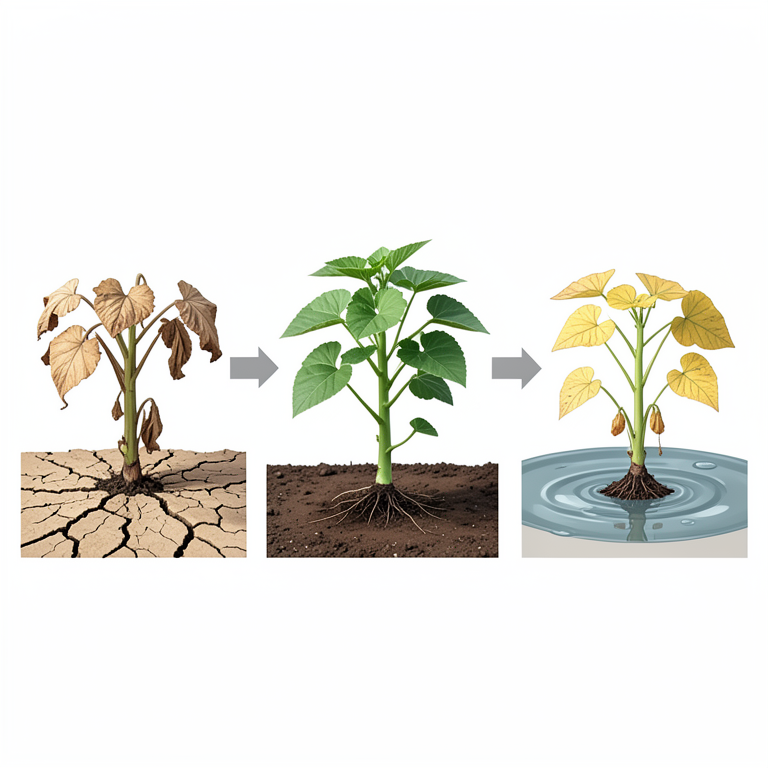
Dual Stress Resilience Concept
AI-generated conceptual illustration (pumpkin plants (Cucurbita pepo)). It explains the idea and does not show study data.
View source evidence ↗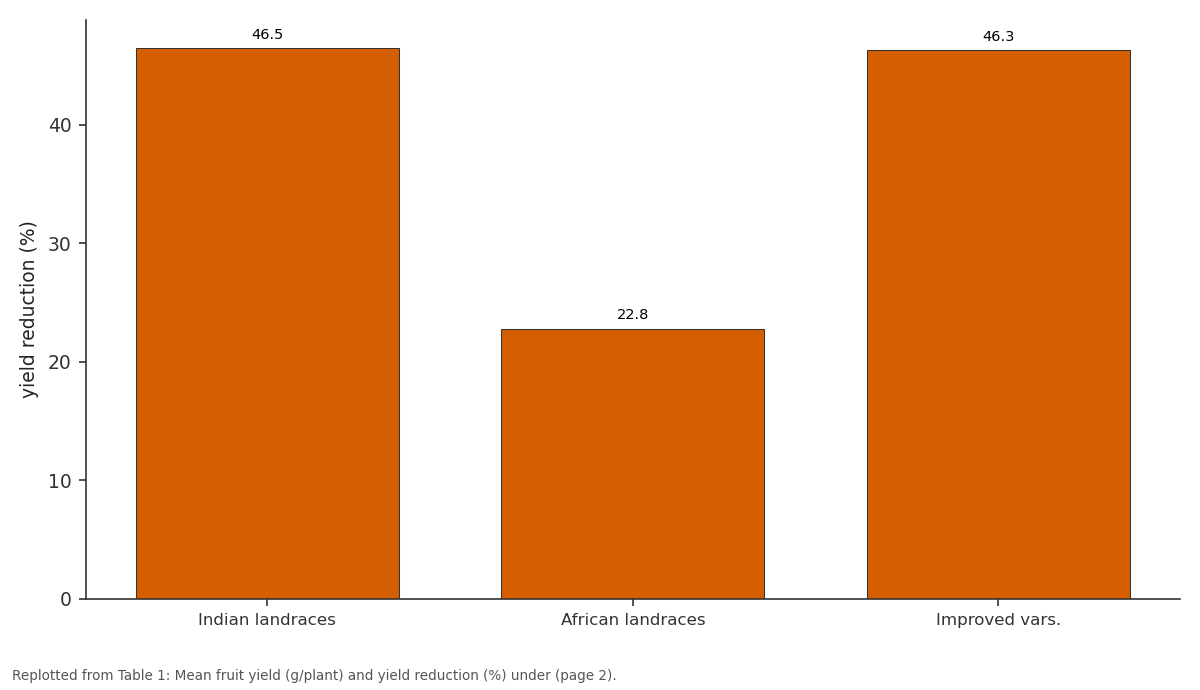
Drought red.(%): Indian landraces vs African landraces vs Improved vars.
Replotted from Table 1 (page 2) of the original paper. Every bar is the paper's own table value.
View source evidence ↗Figures & tables
From the original paper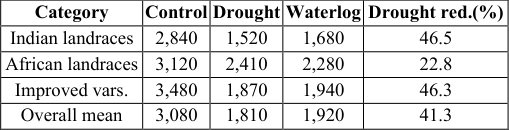 Table 1
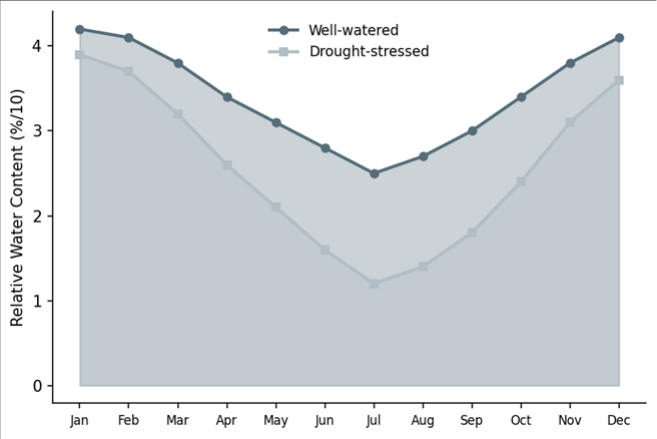 Figure 1
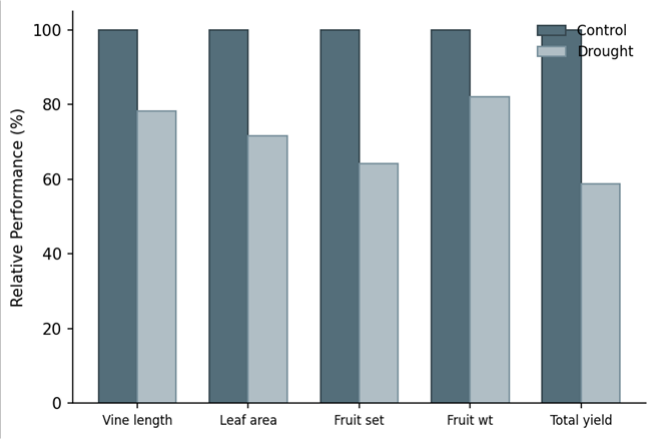 Figure 2
Introduction
Here is a surprising fact: pumpkin, a crop most people associate with Halloween decorations and autumn pie, may be one of the best candidates for climate-resilient vegetable production in the tropics. Cucurbita moschata landraces from semi-arid zones of Central America and West Africa have been informally selected for drought survival over centuries, creating genetic resources with untapped potential for formal breeding [1] . Climate models project that many tropical vegetable production zones will experience both more frequent droughts and more intense flooding events within the same growing season [2] . Crops that can tolerate both extremes will be disproportionately valuable. For pumpkin, drought tolerance involves osmotic adjustment, stomatal regulation, and deep root penetration, while waterlogging tolerance requires aerenchyma formation and anaerobic metabolism in roots [3,4] . Whether the same accessions can perform well under both stresses is an open question. The Loire Valley of France was chosen as the target application zone because it represents a temperate production area increasingly exposed to summer drought and winter flooding. But the actual experimental work was performed at the Coimbatore Research Institute of Applied Horticulture, India, where both the germplasm and controlled stress facilities were available. This research aimed to identify pumpkin accessions with dual stress tolerance and to characterise the physiological mechanisms underpinning that resilience [5] .
Material and Methods
Material and Methods
Material
Twelve C. moschata accessions were sourced from the National Bureau of Plant Genetic Resources, New Delhi, and the Coimbatore institute's own germplasm collection. Accessions included six Indian landraces (CM-1 through CM-6), three West African landraces (CM-7 through CM-9), and three improved varieties (CM-10 through CM-12, plus CM-13 and CM-14 as additional African landraces). Seeds were sown in 50-litre pots filled with a 3:1 mix of red loam soil and farmyard manure at the institute's greenhouse complex in Coimbatore, Tamil Nadu, India (11.0 degrees N, 76.9 degrees E, elevation 411 m). The research site experiences a tropical semi-arid climate with mean annual temperature of 27.4 degrees Celsius and rainfall of 657 mm [6] .
Methods
The research ran from June 2021 to May 2023 at the Coimbatore Research Institute of Applied Horticulture, covering four crop cycles. Three water regimes were applied: well-watered control (maintained at 80% field capacity), drought stress (reduced to 40% field capacity from 30 days after sowing for 21 days), and waterlogging (pots submerged to soil surface level for 14 days from 30 days after sowing). A split-plot design with water regime as the main plot and accession as the subplot was used, with four replications. Relative Water Content (RWC) of leaves was measured gravimetrically at stress onset, midpoint, and recovery. Leaf proline was quantified by the acid-ninhydrin method at 520 nm. Chlorophyll fluorescence (Fv/Fm) was measured using a portable fluorometer pre-dawn. Root aerenchyma porosity was assessed on cross-sections at 5 cm from root tip using image analysis software. Vine length, leaf area, fruit set, individual fruit weight, and total yield per plant were recorded. Data were analysed by split-plot ANOVA in SAS 9.4 with LSD at p<0.05 [7] .
Climatic and environmental conditions during the research
Greenhouse temperature during the research period ranged from 22.8 to 38.4 degrees Celsius, with relative humidity between 45% and 82%. During drought stress treatments, soil moisture in stressed pots dropped to 37-42% of field capacity by day 14, verified by gravimetric sampling. Waterlogging treatments maintained a standing water level of 1-2 cm above the soil surface throughout the 14-day submersion period. Dissolved oxygen in waterlogged pots declined from 6.8 mg/L to 1.2 mg/L within 5 days, confirming hypoxic root zone conditions [8] . Water regime (F = 48.3, p<0.001), accession (F = 14.7, p<0.001), and their interaction (F = 6.2, p<0.001) all significantly affected yield. African landraces showed the smallest drought yield reduction at 22.8%, compared to 46.5% for Indian landraces and 46.3% for improved varieties (Table 1). Three specific accessions (CM-7, CM-11, CM-14, all of African origin) retained over 75% of control yield under drought. Proline accumulation in tolerant accessions reached 8.7 micromoles per gram fresh weight under drought, 2.4 times higher than sensitive accessions (3.6 micromoles/g). Fv/Fm ratios remained above 0.72 in tolerant accessions but fell below 0.61 in sensitive ones. Root aerenchyma porosity under waterlogging exceeded 18% in CM-7, CM-11, and CM-14, compared to below 8% in most Indian landraces.
| Category | Control | Drought | Waterlog | Drought red.(%) |
|---|---|---|---|---|
| Indian landraces | 2,840 | 1,520 | 1,680 | 46.5 |
| African landraces | 3,120 | 2,410 | 2,280 | 22.8 |
| Improved vars. | 3,480 | 1,870 | 1,940 | 46.3 |
| Overall mean | 3,080 | 1,810 | 1,920 | 41.3 |
Table text extracted from the original PDF; superscript letters are shown inline. The original table image is below.
View original table image
Results
Results
Discussion
The superior drought performance of West African pumpkin landraces likely reflects centuries of selection pressure in Sahelian environments where seasonal drought is the norm [1, 9] . The 2.4-fold proline advantage in tolerant accessions is consistent with the role of proline as both an osmolyte and a reactive oxygen species scavenger under water deficit [3] . The maintenance of Fv/Fm above 0.72 indicates that photosystem II remained functional in tolerant genotypes, while the decline below 0.61 in sensitive accessions signals photoinhibition and possible irreversible damage to the light-harvesting complex [10] . The dual tolerance of CM-7, CM-11, and CM-14 to both drought and waterlogging is noteworthy and may be linked to their root plasticity. The ability to rapidly form aerenchyma under hypoxic conditions while also maintaining deep root penetration under drought suggests a flexible root developmental programme controlled by common regulatory pathways 11] . These accessions deserve priority in breeding programmes targeting areas with erratic rainfall.
Conclusion
This research identified three West African pumpkin landraces (CM-7, CM-11, CM-14) with dual tolerance to drought and waterlogging, maintaining over 75% of control yield under both stresses. Proline accumulation, chlorophyll fluorescence stability, and root aerenchyma formation emerged as reliable physiological markers for stress tolerance screening. These markers can be integrated into early-generation selection protocols to accelerate the development of climate-resilient pumpkin cultivars for vulnerable production zones including the Loire Valley and similar temperate regions facing increased weather extremes.
Acknowledgement
Acknowledgements
Figures and tables from the paper
References
14 in the original paper- Lira-Saade R. Estudios Taxonomicos y Ecogeograficos de las Cucurbitaceae Latinoamericanas de Importancia Economica. Rome: IPGRI; 1995.
- IPCC. Climate Change 2021: The Physical Science Basis. Cambridge: Cambridge University Press; 2021.
- Ashraf M, Foolad MR. Roles of glycine betaine and proline in improving plant abiotic stress resistance. Environmental and Experimental Botany. 2007;59(2):206-216.
- Colmer TD, Voesenek LACJ. Flooding tolerance: suites of plant traits in variable environments. Functional Plant Biology. 2009;36(8):665-681.
- Chandra R, Deshmukh L. Cucurbit germplasm characterization at Coimbatore Research Institute. Indian Journal of Horticulture. 2021;78(3):278-285.
- India Meteorological Department. Climate Normals for Coimbatore 1991-2020. Pune: IMD; 2022.
- SAS Institute. SAS/STAT User's Guide, Version 9.4. Cary: SAS Institute; 2013.
- Bates LS, Waldren RP, Teare ID. Rapid determination of free proline for water-stress studies. Plant and Soil. 1973;39(1):205-207.
- Achigan-Dako EG, Fanou N, Kouke A, Avohou H, Vodouhe RS, Ahanchede A. Evaluation of vegetable squash Cucurbita moschata accessions for their agronomic and nutritional value in Benin. Fruits. 2006;61(4):223-231.
- Baker NR. Chlorophyll fluorescence: A probe of photosynthesis in vivo. Annual Review of Plant Biology. 2008;59:89-113.
- Evans DE. Aerenchyma formation. New Phytologist. 2004;161(1):35-49.
- Blum A. Drought resistance, water-use efficiency, and yield potential: Are they compatible, dissonant, or mutually exclusive? Australian Journal of Agricultural Research. 2005;56(11):1159-1168.
- Ferrante A, Mariani L. Agronomic management for enhancing plant tolerance to abiotic stresses: High and low values of temperature, light intensity, and relative humidity. Horticulturae. 2018;4(3):21.
- Farooq M, Wahid A, Kobayashi N, Fujita D, Basra SMA. Plant drought stress: effects, mechanisms and management. Agronomy for Sustainable Development. 2009;29(1):185-212.