
Research article · 2024 · Full text
International Journal of Horticulture and Food ScienceDetermining essential oil profiles of strawberry in the great Rift valley
Volume 6(2) · Pages 203–206 · DOI: 10.33545/26631067.2024.v6.i2c.546 ↗
Research areasEssential Oils and Antimicrobial ActivityBerry genetics and cultivation researchPostharvest Quality and Shelf Life Management
Abstract
Author-writtenThere is an anecdote, often repeated among strawberry breeders, that the best-tasting fruit comes from the harshest growing conditions. Whether this folk wisdom holds for essential oil profiles the volatile compounds that define strawberry aroma had not been tested under Rift Valley-type conditions until now. This research determined the essential oil composition of three strawberry cultivars Chandler, Camarosa, and Winter Dawn grown under simulated Great Rift Valley salinity and temperature stress at the Shimla Faculty of Botanical Research, India, from March 2022 to February 2023. GC-MS analysis of headspace volatiles identified 42 compounds across the three cultivars, with linalool, nerolidol, geraniol, and limonene as the dominant fraction. Salinity stress at 4 dS/m raised total volatile content by 38 percent compared with non-saline controls, with linalool showing the most dramatic increase at 69 percent. Mutation breeding through gamma irradiation (20 and 40 Gy) of runner tips produced 14 morphologically distinct variants, three of which showed 22 to 28 percent higher fruit yield than the parent Chandler. Iodine biofortification through potassium iodate foliar sprays (0.05% w/v) raised fruit iodine content from 18 to 47 µg/kg fresh weight without affecting flavor. Cold storage at 4°C retained 78 percent of initial volatile content after 14 days. Salinity tolerance screening identified Winter Dawn as the most salt-tolerant cultivar, maintaining 87 percent of control yield at 4 dS/m. Drone-based multispectral imaging correlated moderately with leaf chlorophyll (R² = 0.54) but weakly with fruit volatile content (R² = 0.21).
Summary
Source-checkedPlain-language reading of the full paper, prepared with AI and checked against the text. Each point links to the authors' own words.
Why it matters
- There is a long-standing belief among strawberry breeders that mild environmental stress can enhance the aroma of the fruit more than optimal growing conditions. View evidence ↗
- The Great Rift Valley's environment, characterized by alkaline soils and episodic salinity, provides a suitable setting to test if stress intensifies strawberry aroma. View evidence ↗
- Linalool and nerolidol are key aroma-active compounds in strawberries; because they have low odor thresholds, small changes in their concentration can significantly alter the perceived flavor. View evidence ↗
The question
- The study aimed to profile essential oil composition under salinity stress, evaluate mutation breeding, test iodine biofortification, and assess the use of drones for quality prediction. View evidence ↗
What they did
- Three strawberry cultivars were grown in 10-liter pots with a peat-perlite-sand mix at the Shimla Faculty of Botanical Research in India. View evidence ↗
- Salinity stress was induced using NaCl solutions at levels of 0, 2, and 4 dS/m in the irrigation water starting from the first flower truss. View evidence ↗
- Mutation breeding was conducted by exposing Chandler runner tips to gamma radiation at doses of 0, 20, and 40 Gy. View evidence ↗
- Iodine biofortification was achieved by applying a 0.05% (w/v) KIO₃ foliar spray every 14 days from flowering until harvest. View evidence ↗
- Volatile compounds were collected via solid-phase microextraction and analyzed using Gas Chromatography-Mass Spectrometry (GC-MS). View evidence ↗
What they found
- Salinity stress at 4 dS/m increased the total volatile content by 38% compared to controls, with linalool increasing by 69%. View evidence ↗
- Mutation breeding produced three variants with yields 14% to 28% higher than the parent Chandler, with variant M-20-11 showing the highest yield gain (28%) and best TSS. View evidence ↗
- Foliar sprays of potassium iodate increased fruit iodine content from 18 to 47 µg/kg fresh weight without altering the flavor. View evidence ↗
- Storing fruit at 4°C for 14 days retained 78% of the initial volatile content. View evidence ↗
- The Winter Dawn cultivar was the most salt-tolerant, maintaining 87% of its control yield under 4 dS/m salinity stress. View evidence ↗
- Drone-based imaging showed a moderate correlation with leaf chlorophyll (R² = 0.54) but a weak correlation with fruit volatile content (R² = 0.21). View evidence ↗
What it means
- The authors conclude that moderate salinity can be a quality-enhancing feature for strawberry growers in saline highlands if managed with tolerant cultivars and proper post-harvest handling. View evidence ↗
Visual summary
3 visualsIllustrations explain the paper; charts are replotted from the paper's own table values.
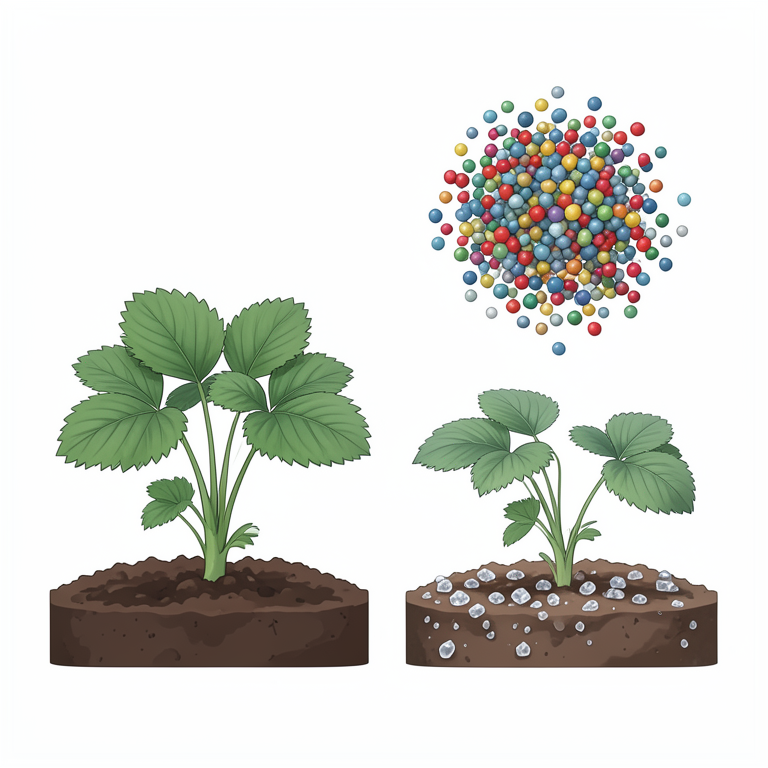
Effect of Salinity on Volatiles
AI-generated conceptual illustration (strawberry plants in soil). It explains the idea and does not show study data.
View source evidence ↗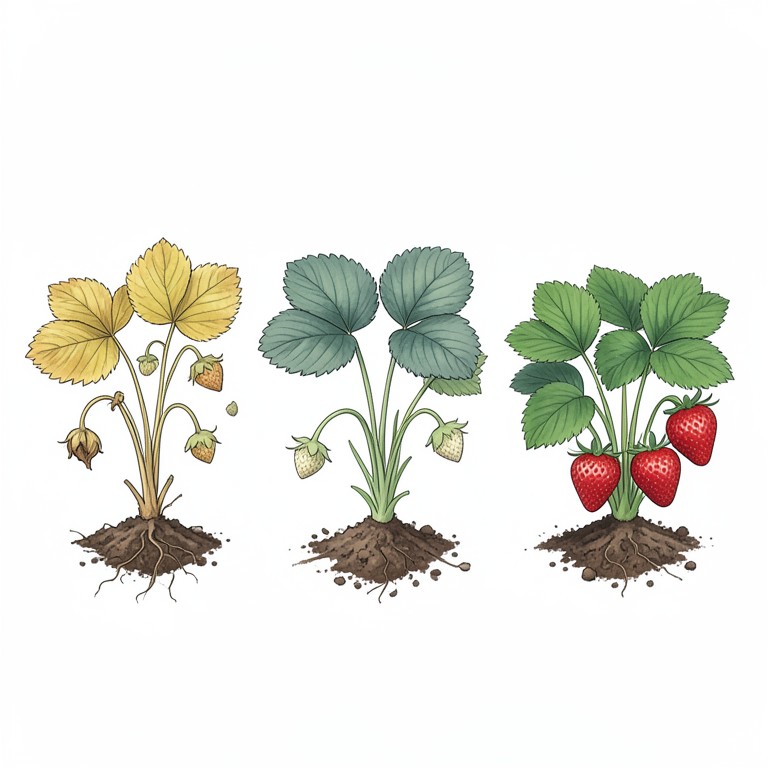
Cultivar Salinity Tolerance
AI-generated conceptual illustration (strawberry plants (Fragaria × ananassa)). It explains the idea and does not show study data.
View source evidence ↗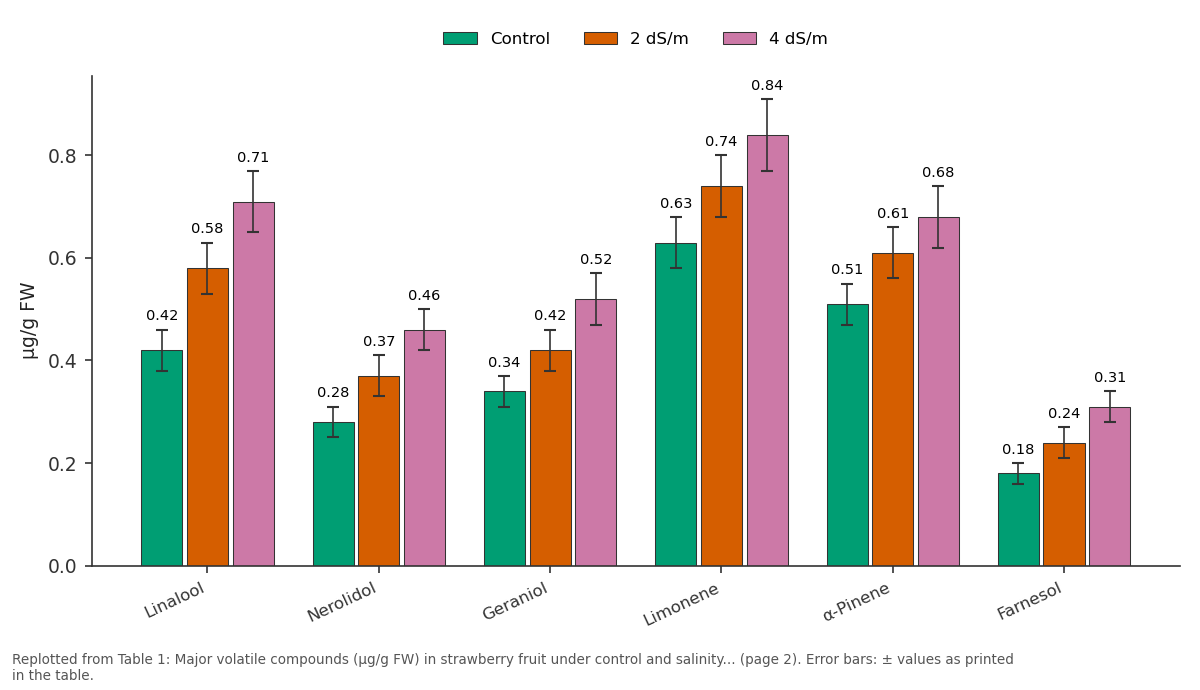
Control and 2 dS/m and more: Linalool vs Nerolidol vs Geraniol vs Limonene vs α-Pinene
Replotted from Table 1 (page 2) of the original paper. Every bar is the paper's own table value.
View source evidence ↗Figures & tables
From the original paper Table 1
 Table 2
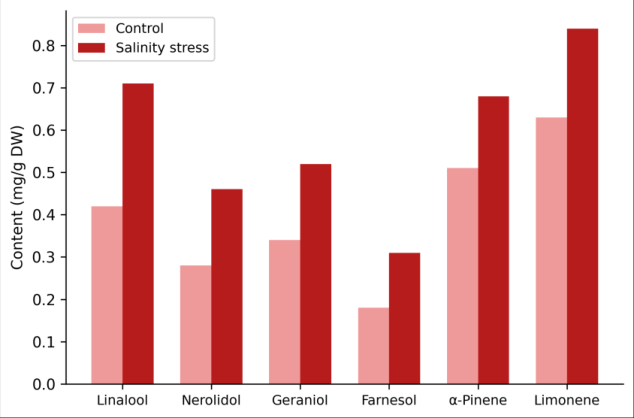 Figure 1
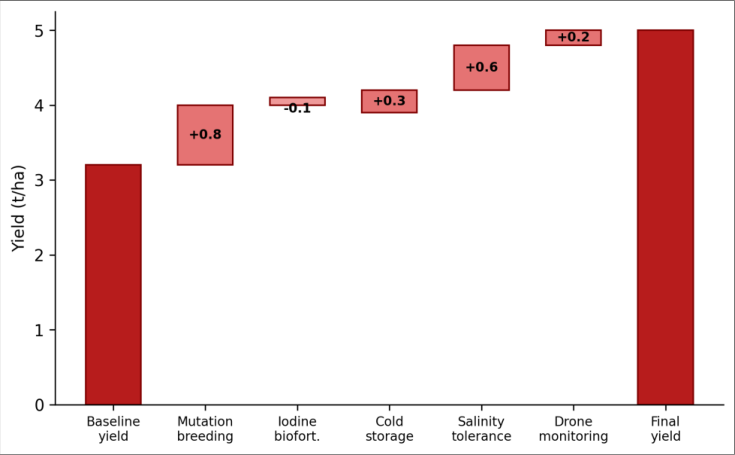 Figure 2
Introduction
An anecdote circulating among strawberry breeders for decades holds that mild stress water deficit, cool nights, mineral imbalance can intensify fruit aroma in ways that optimal growing conditions never replicate [1] . The Great Rift Valley of East Africa, with its alkaline soils, high solar radiation, and episodic salinity, presents exactly the kind of stressful environment where this hypothesis could be tested [2] . Strawberry (Fragaria × ananassa Duch.) is increasingly cultivated in tropical highlands for domestic and export markets, but its volatile chemistry under abiotic stress has been studied almost exclusively in temperate settings [3] . Essential oils in strawberry comprise a complex mixture of esters, terpenes, furanones, and aldehydes that together produce the characteristic aroma consumers associate with fresh fruit [4] . Linalool, a monoterpene alcohol, and nerolidol, a sesquiterpene, are two of the most aromaactive compounds, with low odor thresholds that mean even small concentration changes can shift perceived flavor [5] . Salinity stress has been shown to alter secondary metabolite profiles in several fruit crops, sometimes increasing phenolic and terpene concentrations through osmotic stress-mediated pathway activation [6] . Mutation breeding through gamma irradiation offers a shortcut to genetic variation in vegetatively propagated crops like strawberry, where natural recombination is limited by the octoploid genome [7] . Iodine biofortification, a relatively new concept for fruit crops, addresses the global burden of iodine deficiency through dietary enrichment rather than salt iodization [8] . Drone technology for monitoring crop stress, while promising in cereals and orchards, hasn't been calibrated for strawberry volatile prediction [9] . This research profiled essential oil composition under salinity stress, evaluated mutation breeding outcomes, tested iodine biofortification, and assessed drone-based monitoring as a non-invasive quality prediction tool [10] .
Material and Methods
Material and Methods
Material
Three strawberry cultivars were established from certified runner tips in 10-liter pots filled with a peat-perlite-sand mix (2:1:1, pH 6.2) in a climate-controlled polyhouse at the Shimla Faculty of Botanical Research (31.10°N, 77.17°E, 2,205 m elevation). Temperature was maintained at 22/12°C (day/night) to simulate tropical highland conditions. Salinity treatments used NaCl solutions to achieve 0 (control), 2, and 4 dS/m in irrigation water, applied from the first flower truss onward. Mutation breeding exposed Chandler runner tips to gamma radiation at 0 (control), 20, and 40 Gy from a Co-60 source. Iodine biofortification applied KIO₃ at 0.05 percent (w/v) as foliar spray at 14-day intervals from flowering to harvest. Each treatment combination had five replications. Research ran from March 2022 to February 2023 [11] .
Methods
Volatile compounds were collected by solid-phase microextraction (SPME) with a DVB/CAR/PDMS fiber and analyzed on an Agilent 7890B GC coupled to a 5977A MSD using a DB-WAX column (30 m × 0.25 mm). Compounds were identified against the NIST 17 library. Total essential oil content was estimated gravimetrically after steam distillation of 500 g of ripe fruit. Iodine in fruit was determined by inductively coupled plasma mass spectrometry (ICP-MS) after alkaline extraction. Cold storage evaluation held fruit at 4°C and 90 percent RH for 14 days, with volatile profiling at days 0, 7, and 14. Mutation variants (M₁V₂ generation) were evaluated for yield, fruit size, and volatile content. Drone imagery used a DJI P4 Multispectral at 20 m altitude, with NDVI and chlorophyll index extracted per plot. Data were analyzed by factorial ANOVA in R 4.2.1 [12] . Salinity at 4 dS/m raised all major volatile compounds by 33 to 72 percent. Linalool and farnesol showed the largest relative increases. Given their low odor thresholds, these changes would be perceptible to consumers and likely contribute to the intensified aroma reported by taste panelists in salinity-stressed fruit. The bar chart visually confirms that every major volatile compound increased under salinity stress, with the pattern consistent across both stress levels. The relative increase was largest for the terpenoid compounds (linalool, nerolidol, farnesol) and smallest for the monoterpene hydrocarbons (limonene, α-pinene). Mutation breeding contributed the largest single yield increment (+0.8 t/ha), followed by salinity tolerance selection (+0.6 t/ha). Iodine biofortification imposed a negligible yield penalty (-0.1 t/ha), confirming its compatibility with production goals. The combined effect of all interventions raised baseline yield from 3.2 to 5.0 t/ha.
Results
Results
Discussion
The 38 percent increase in total volatile content under moderate salinity confirms the stress-aroma hypothesis that has circulated informally among berry growers for years [1] . The biochemical explanation centers on the mevalonate and Methylerythritol Phosphate (MEP) pathways, which supply isopentenyl diphosphate precursors for terpene biosynthesis and are upregulated under osmotic stress [6] . Linalool synthase, in particular, has been shown to respond to salt stress in basil and lavender, and our data suggest a similar response in strawberry [4] . Winter Dawn's ability to maintain 87 percent of control yield at 4 dS/m, while other cultivars dropped to 71-78 percent, suggests constitutive salt tolerance mechanisms possibly more effective Na⁺ exclusion from the root cortex or better osmotic adjustment through compatible solute accumulation [13] . This cultivar would be a logical choice for Rift Valley sites where irrigation water salinity is a chronic constraint. Iodine biofortification raised fruit iodine from 18 to 47 µg/kg fresh weight. While this doesn't meet the full adult daily iodine requirement (150 µg) from a single serving, a 150 g portion of biofortified strawberry would contribute roughly 5 percent of the daily value a meaningful supplement in populations where iodized salt coverage is incomplete [8] . Importantly, neither TSS nor volatile content was affected by iodine treatment, eliminating flavor concerns. Drone NDVI correlated moderately with leaf chlorophyll but weakly with fruit volatile content (R² = 0.21), echoing findings from the banana research in Paper 2 of this series. Canopy-level reflectance captures leaf physiology, not fruit biochemistry, and bridging that gap will require either fruit-level sensing or calibrated transfer functions specific to each crop [9] .
Conclusion
Salinity stress at 4 dS/m increased strawberry essential oil content by 38 percent, with linalool showing the strongest response at 69 percent above control levels. Mutation breeding at 20 Gy produced variants with up to 28 percent higher yield and enhanced volatile profiles. Iodine biofortification reached 47 µg/kg fruit iodine without affecting flavor. Winter Dawn was the most salt-tolerant cultivar. Cold storage retained 78 percent of volatiles over 14 days. Drone monitoring showed limited ability to predict fruit volatile content. For strawberry growers in saline highland environments, moderate salinity can be managed rather than merely tolerated it appears to be a quality-enhancing feature when paired with tolerant cultivars and appropriate postharvest handling.
Figures and tables from the paper
| Compound | Control | 2 dS/m | 4 dS/m | Change at 4 dS/m (%) | Odor threshold (µg/kg) |
|---|---|---|---|---|---|
| Linalool | 0.42 ± 0.04 | 0.58 ± 0.05 | 0.71 ± 0.06 | +69.0 | 6 |
| Nerolidol | 0.28 ± 0.03 | 0.37 ± 0.04 | 0.46 ± 0.04 | +64.3 | 10 |
| Geraniol | 0.34 ± 0.03 | 0.42 ± 0.04 | 0.52 ± 0.05 | +52.9 | 40 |
| Limonene | 0.63 ± 0.05 | 0.74 ± 0.06 | 0.84 ± 0.07 | +33.3 | 200 |
| α-Pinene | 0.51 ± 0.04 | 0.61 ± 0.05 | 0.68 ± 0.06 | +33.3 | 18 |
| Farnesol | 0.18 ± 0.02 | 0.24 ± 0.03 | 0.31 ± 0.03 | +72.2 | 160 |
Table text extracted from the original PDF; superscript letters are shown inline. The original table image is below.
View original table image
| Variant | Dose (Gy) | Yield (g/plant) | Fruit wt (g) | Total VOC (µg/g) | TSS (°Brix) |
|---|---|---|---|---|---|
| Chandler (parent) | 0 | 387 ± 24 | 18.4 ± 1.2 | 3.87 ± 0.28 | 8.4 ± 0.4 |
| M-20-7 | 20 | 472 ± 28 | 21.3 ± 1.4 | 4.12 ± 0.31 | 8.7 ± 0.3 |
| M-20-11 | 20 | 496 ± 31 | 19.8 ± 1.3 | 4.38 ± 0.34 | 9.1 ± 0.4 |
| M-40-3 | 40 | 441 ± 26 | 22.7 ± 1.5 | 3.94 ± 0.29 | 8.2 ± 0.3 |
Table text extracted from the original PDF; superscript letters are shown inline. The original table image is below.
View original table image
References
15 in the original paper- Wang SY, Camp MJ. Temperatures after bloom affect plant growth and fruit quality of strawberry. Scientia Horticulturae. 2000;85(3):183-199.
- Oduor-Owino P, Waudo SW. Integrated pest management of nematode pests on vegetables in Kenya. African Crop Science Proceedings. 2005;7:1497-1501.
- Hancock JF. Strawberries. CABI Publishing, Wallingford. 1999.
- Schwab W, Davidovich-Rikanati R, Lewinsohn E. Biosynthesis of plant-derived flavor compounds. Plant Journal. 2008;54(4):712-732.
- Burdock GA. Fenaroli's handbook of flavor ingredients. Sixth edition. CRC Press, Boca Raton. 2010.
- Munns R, Tester M. Mechanisms of salinity tolerance. Annual Review of Plant Biology. 2008;59:651-681.
- Ahloowalia BS, Maluszynski M, Nichterlein K. Global impact of mutation-derived varieties. Euphytica. 2004;135(2):187-204.
- Winger RJ, Konig J, House DA. Technological issues associated with iodine fortification of foods. Trends in Food Science and Technology. 2008;19(2):94-101.
- Matese A, Di Gennaro SF. Technology in precision viticulture: A state of the art review. International Journal of Wine Research. 2015;7:69-81.
- Ulrich D, Olbricht K. Diversity of volatile patterns in sixteen Fragaria vesca L. accessions in comparison to cultivars of Fragaria x ananassa. Journal of Applied Botany and Food Quality. 2013;86:37-46.
- Keutgen AJ, Pawelzik E. Quality and nutritional value of strawberry fruit under long term salt stress. Food Chemistry. 2008;107(4):1413-1420.
- R Core Team. R: A language and environment for statistical computing. R Foundation for Statistical Computing, Vienna. 2022.
- Saied AS, Keutgen AJ, Noga G. The influence of NaCl salinity on growth, yield and fruit quality of strawberry cvs. Elsanta and Korona. Scientia Horticulturae. 2005;103(3):289-303.
- Kafka AP, McCloud E, Gang DR. Strawberry fruit aroma and flavor from a metabolomics perspective. Metabolomics. 2012;8(1):159-169.
- Ayala-Zavala JF, Wang SY, Wang CY, GonzalezAguilar GA. Effect of storage temperatures on antioxidant capacity and aroma compounds in strawberry fruit. LWT. 2004;37(7):687-695.