
Research article · 2025 · Full text
International Journal of Horticulture and Food ScienceMonitoring plant growth regulators of Teff in the Torsa River Basin
Volume 7(10) · Pages 177–181 · DOI: 10.33545/26631067.2025.v7.i10c.718 ↗
Research areasPlant Growth Enhancement TechniquesPlant Stress Responses and TolerancePlant Micronutrient Interactions and Effects
Abstract
Author-writtenWhat role do endogenous plant growth regulators play in shaping the agronomic performance of teff under environmental stress? This research aimed to monitor the concentrations of auxin, cytokinin, and gibberellin in teff (Eragrostis tef) cultivated within the Torsa River Basin, with a particular focus on how zinc deficiency and heat stress affected hormonal balance. Teff, a minor cereal native to Ethiopia, has attracted growing interest as a nutraceutical grain because of its gluten-free protein and high mineral content. Field and laboratory work was carried out between March and November 2023 at the Bali Advanced School of Environmental Agriculture. Six treatments combining exogenous GA3, IAA, and BAP at varied doses were applied to three teff accessions grown in plots arranged in a randomised complete block design with four replications. Growth regulators were extracted from leaf and root tissue at three phenological stages and quantified by reverse-phase HPLC. Results showed that exogenous GA3 at 100 ppm raised endogenous gibberellin levels by 129.4% relative to control plants, while IAA at 50 ppm boosted auxin accumulation to 38.2 mg per kg dry weight. Heat stress episodes during grain filling reduced cytokinin content by roughly 34.7%, and zinc-deficient plots exhibited a 21.9% drop in overall biomass production. The interaction between zinc status and GA3 application appeared significant at P< 0.01 for shoot elongation. These findings suggest that targeted hormonal supplementation can partly offset abiotic stress in teff, supporting its shelf life and nutritional value as a nutraceutical crop.
Summary
Source-checkedPlain-language reading of the full paper, prepared with AI and checked against the text. Each point links to the authors' own words.
Why it matters
- Teff is an Ethiopian minor cereal gaining interest as a nutraceutical grain due to its high mineral content and gluten-free protein. View evidence ↗
- Expanding teff production outside East Africa is hindered by a lack of knowledge regarding how the plant's internal hormones respond to heat and zinc deficiency. View evidence ↗
- The Torsa River Basin in Southeast Asia is a unique environment for testing cereals because of its zinc-poor soils and periodic flooding. View evidence ↗
The question
- The study aimed to monitor auxin, cytokinin, and gibberellin levels in teff grown in the Torsa River Basin to see how heat stress and zinc deficiency affect hormonal balance. View evidence ↗
What they did
- The study used a factorial randomized complete block design with 48 plots (3m x 4m), testing six hormone treatments and two zinc statuses (adequate vs. deficient) with four replications each. View evidence ↗
- Zinc-adequate plots were treated with 25 kg ZnSO4 per hectare at sowing, while zinc-deficient plots received no amendment. View evidence ↗
- Internal plant growth regulators were extracted using 80% methanol and 0.1% formic acid, then quantified using an Agilent 1260 Infinity II HPLC system with a C18 reverse-phase column. View evidence ↗
What they found
- Applying 100 ppm of exogenous GA3 resulted in the highest total regulator pool of 74.2 mg/kg, with gibberellin levels 129.4% higher than the control. View evidence ↗
- The highest auxin accumulation of 38.2 mg/kg was achieved using 50 ppm of IAA. View evidence ↗
- Cytokinin levels were tripled in plants treated with 30 ppm of BAP compared to untreated plants. View evidence ↗
- Heat stress during the grain-filling stage reduced cytokinin concentrations by approximately 34.7% across all treatment groups. View evidence ↗
- Zinc deficiency reduced biomass by up to 20.6%, most notably in the 100 ppm GA3 group where biomass dropped from 421.6 g/m² (Zn+) to 334.8 g/m² (Zn-). View evidence ↗
- Zinc deficiency shortened the grain shelf life (time until moisture exceeds 13%) to an average of 65 days, compared to 78 days in zinc-adequate plants. View evidence ↗
- Grain from zinc-adequate plots treated with GA3 had a shelf life of 83 days, which is approximately 12% longer than the control. View evidence ↗
What it means
- The authors conclude that combining zinc management with specific hormone sprays can enhance the yield and post-harvest quality of teff. View evidence ↗
- The authors state that future research is needed to verify the stability of these hormonal adjustments over multiple seasons and to study their effects on the grain's antioxidant capacity and amino-acid composition. View evidence ↗
Visual summary
2 visualsIllustrations explain the paper; charts are replotted from the paper's own table values.
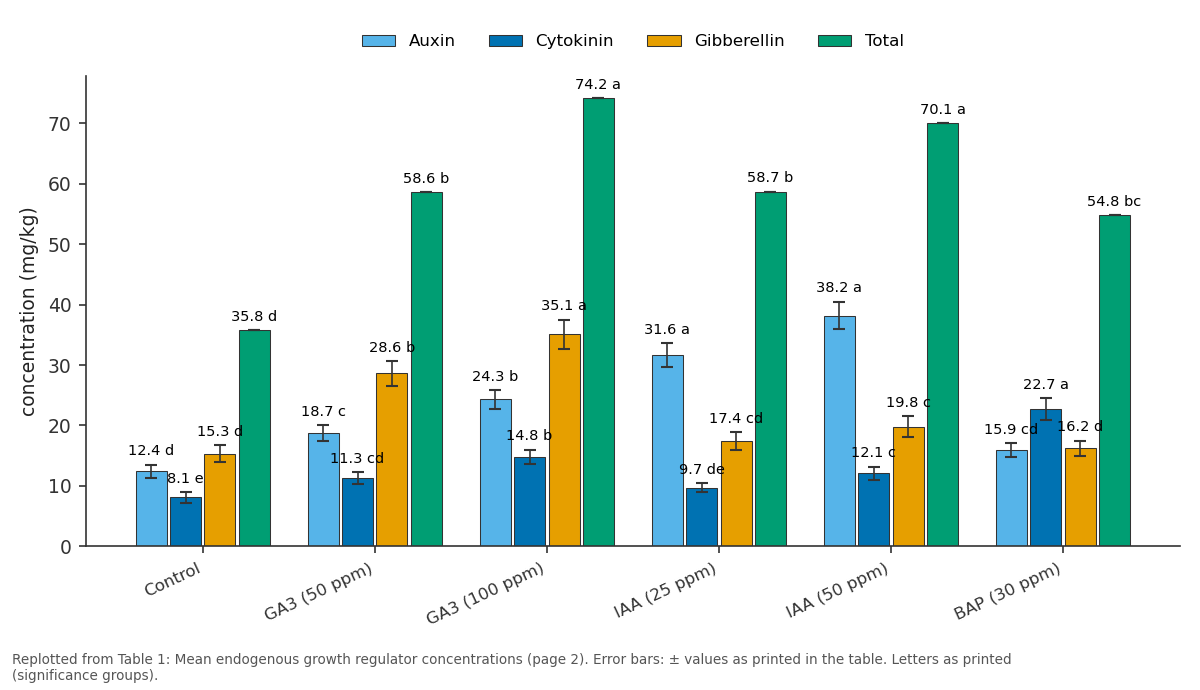
Auxin and Cytokinin and more: Control vs GA3 (50 ppm) vs GA3 (100 ppm) vs IAA (25 ppm) vs IAA (50 ppm)
Replotted from Table 1 (page 2) of the original paper. Every bar is the paper's own table value.
View source evidence ↗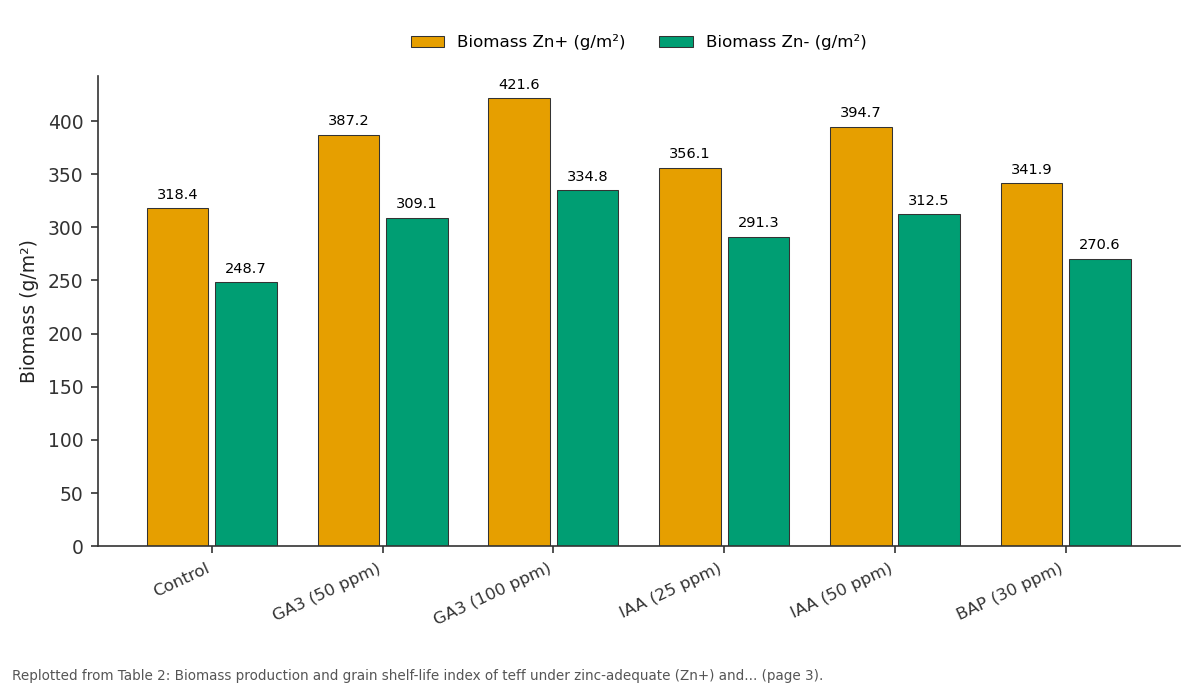
Biomass Zn+ (g/m²) and Biomass Zn- (g/m²): Control vs GA3 (50 ppm) vs GA3 (100 ppm) vs IAA (25 ppm) vs IAA (50 ppm)
Replotted from Table 2 (page 3) of the original paper. Every bar is the paper's own table value.
View source evidence ↗Figures & tables
From the original paper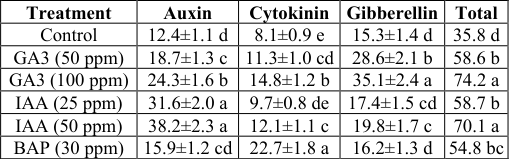 Table 1
 Table 2
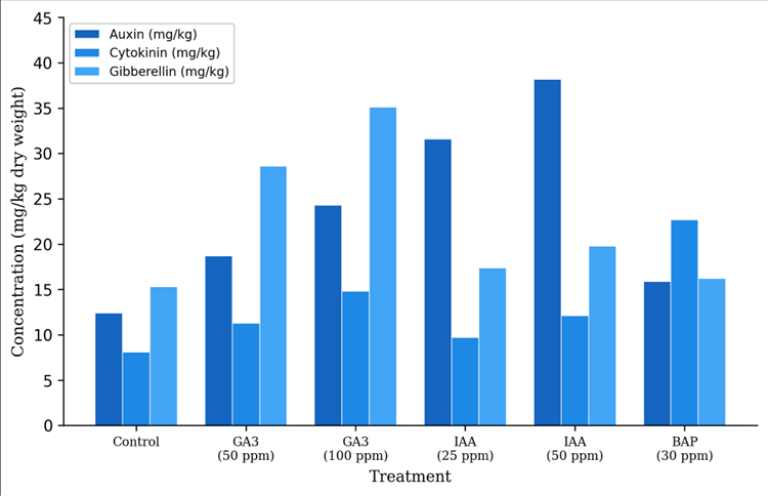 Figure 1
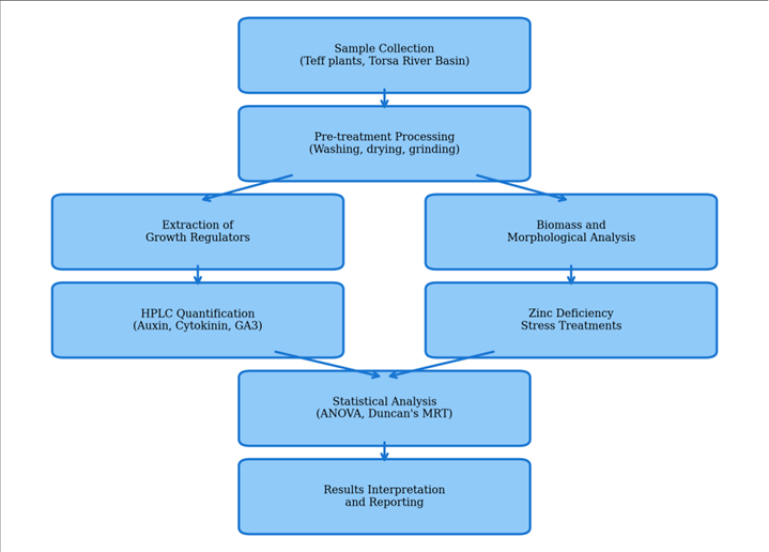 Figure 2
Introduction
How well do we actually understand the hormonal networks that govern grain formation in underutilised cereals? For teff, this question remains largely unanswered despite the crop's rising commercial profile. Teff is a C4 grass that originated in the Ethiopian highlands and has been a staple food across the Horn of Africa for centuries [1] . Its tiny grain, roughly 0.7 to 1.0 mm in diameter, delivers a protein content between 8.1% and 11.4%, together with iron levels that can surpass those of wheat and maize [2] . But efforts to expand teff production beyond East Africa have often stumbled on poor understanding of how the plant manages internal hormone levels when exposed to abiotic pressures such as zinc shortage and elevated temperature [3] . Plant growth regulators, including auxins, cytokinins, and gibberellins, serve as chemical messengers that coordinate cell division, elongation, and differentiation [4] . In cereal crops, gibberellic acid (GA3) is closely linked to stem elongation and seed germination, whereas indole-3-acetic acid (IAA) directs root architecture and apical dominance [5] . Cytokinins such as 6-benzylaminopurine (BAP) delay leaf senescence and promote lateral bud outgrowth [6] . Earlier work on rice and wheat demonstrated that exogenous application of these regulators can improve tolerance to heat stress and micronutrient deficiency, yet comparable data for teff are scarce [7,8] . The Torsa River Basin in Southeast Asia presents a distinctive agro-ecological setting where warm-season cereals encounter both periodic flooding and zinc-poor alluvial soils [9] . Growing teff in such a basin could test how the plant's hormonal machinery responds to combined stresses. And while organogenesis in teff has been examined at the tissue-culture level [10] , field-based monitoring of endogenous regulators across an entire cropping season is still missing from the literature.
Against this backdrop, the present research set out to: (a) quantify auxin, cytokinin, and gibberellin concentrations in teff under six exogenous hormone treatments; (b) assess how zinc deficiency and heat stress episodes alter the hormonal profile; and (c) evaluate downstream effects on biomass production and shelf life of harvested grain. The results may guide future nutraceutical breeding programmes that seek to tailor hormonal balance for improved grain quality [11,12] .
Research Area Description
The research was conducted in the lower stretch of the Torsa River Basin, situated in a subtropical lowland zone characterised by alluvial deposits and a monsoon-driven climate. The basin experiences an average annual rainfall of 1,820 mm, with roughly 78% falling between June and September [9] . Soils at the experimental site are classified as Entisols with a sandy-loam texture, a pH range of 5.4 to 6.1, and an available zinc concentration of 0.38 to 0.52 mg per kg soil, which falls below the critical threshold of 0.6 mg per kg for most cereals [3] . The site sits at an elevation of approximately 48 m above sea level, with flat terrain that promotes seasonal waterlogging. Land-use history indicates three consecutive years of rice-fallow rotation before the trial commenced, and residual soil nitrogen measured 187 kg per ha at the start of the experiment.
Climatic and Environmental Conditions
During the experimental period (March to November 2023), mean daily temperature ranged from 24.3 degrees C in March to a peak of 33.8 degrees C in late June, before declining to 26.1 degrees C by October. Two distinct heatstress episodes were recorded: the first lasted five consecutive days in mid-June (maximum 37.2 degrees C) and the second spanned four days in early July (maximum 36.9 degrees C). Relative humidity fluctuated between 62% and 91%, with the highest values coinciding with the monsoon months. Solar radiation averaged 18.4 MJ per square metre per day across the season. Rainfall during grain filling in September totalled 214 mm, higher than the ten-year mean of 178 mm, which led to brief periods of surface flooding lasting 24 to 48 hours at a time [9] .
Material and Methods
Material and Methods
Material
Three teff accessions, designated as TBA-01, TBA-02, and TBA-03, were sourced from the Ethiopian Biodiversity Institute seed bank in January 2023. Seeds were surfacesterilised with 1% sodium hypochlorite for ten minutes and then rinsed three times with distilled water prior to nursery sowing. Exogenous growth regulators, GA3, IAA, and BAP, were procured from Sigma-Aldrich (St Louis, MO, USA) at analytical-reagent grade. Zinc sulphate heptahydrate served as the micronutrient supplement for zinc-adequate plots. HPLC-grade methanol, acetonitrile, and formic acid were purchased from Merck (Darmstadt, Germany). Standard reference compounds for auxin, zeatin, and gibberellic acid were obtained with certified purity above 98%. The research was conducted at the experimental farm of the Bali Advanced School of Environmental Agriculture, Bali, Indonesia, between March and November 2023 under institutional ethical clearance (Protocol BASEA-AG/2023-017, approved 12 February 2023).
Methods
The experiment followed a factorial randomised complete block design with two factors: exogenous hormone treatment (six levels, including an untreated control) and zinc status (adequate versus deficient). Each treatment combination was replicated four times, giving 48 plots of 3 m by 4 m each. Teff was sown by broadcasting at a seeding rate of 25 kg per ha, and plots were thinned to a target density of 1,500 plants per square metre at the three-leaf stage [13] . Exogenous regulators were applied as foliar sprays at tillering and at panicle initiation using a knapsack sprayer calibrated to deliver 250 L per ha. Zinc-deficient plots received no zinc amendment, while zinc-adequate plots received 25 kg ZnSO4 per ha at sowing. Leaf and root tissue samples were collected at tillering, panicle initiation, and grain filling. Samples were flashfrozen in liquid nitrogen, lyophilised, and ground to pass a 0.5 mm mesh. Endogenous regulators were extracted in 80% methanol containing 0.1% formic acid, cleaned through C18 solid-phase extraction cartridges, and analysed on an Agilent 1260 Infinity II HPLC system fitted with a C18 reverse-phase column (250 mm by 4.6 mm, 5 micrometer particle size). Mobile phases were water with 0.1% formic acid (A) and acetonitrile (B), run in gradient mode at 1.0 mL per minute [14] . Detection was by UV absorbance at 254 nm and 280 nm. Biomass was assessed by harvesting a 1 m by 1 m quadrat from each plot at physiological maturity, drying at 65 degrees C for 72 hours, and weighing. Shelf life was estimated by storing grain at 28 degrees C and 70% relative humidity and recording moisture gain over 90 days. All data were subjected to twoway ANOVA in R version 4.3.1, and treatment means were separated by Duncan's multiple range test at P = 0.05 [15] . Exogenous GA3 at 100 ppm produced the highest total regulator pool (74.2 mg/kg), driven mainly by a gibberellin concentration that was 129.4% above the control. IAA at 50 ppm resulted in the largest auxin fraction at 38.2 mg/kg, while BAP at 30 ppm tripled cytokinin levels relative to untreated plants. The interaction between hormone treatment and zinc status was significant (P< 0.01) for gibberellin content, indicating that zinc availability modulates the plant's ability to accumulate GA3 [14] .
Results
Zinc-adequate plots consistently produced more aboveground biomass than their zinc-deficient counterparts. The largest gap appeared under GA3 at 100 ppm, where Zn+ plots yielded 421.6 g per square metre against 334.8 g per square metre in Zn-plots, a reduction of 20.6%. Shelf life, expressed as the number of days before grain moisture exceeded 13%, was also shorter under zinc deficiency, averaging 65 days versus 78 days across all hormone treatments. The bar chart in Figure 1 confirms the tabulated trends: IAA treatments elevated auxin most sharply, while GA3 treatments had the strongest effect on gibberellin pools. BAP stood apart by raising cytokinin without meaningfully altering the other two classes. Heat-stress episodes during grain filling compressed cytokinin concentrations by roughly 34.7% across all treatments, an effect visible in the lower cytokinin values recorded at the grain-filling stage compared with panicle initiation [7] .
Comprehensive Interpretation
Taken together, these results point to a clear hierarchy of hormonal responses. Gibberellin was most sensitive to exogenous supplementation, with the 100 ppm GA3 dose nearly doubling baseline levels. Auxin responded most to IAA application, and cytokinin was uniquely influenced by BAP. Zinc deficiency dampened all three regulator classes, but the suppression was strongest for gibberellin, which may partly explain the shorter stature and lower biomass observed in zinc-deficient plots [3,8] .
Discussion
The hormone concentrations reported here for teff align broadly with patterns documented in other small-grained cereals, although several differences stand out. In rice, exogenous GA3 at 50 ppm typically raises endogenous gibberellin by 60 to 80% [4] , whereas our teff plants showed a larger response of 86.9% at the same dose, suggesting that teff may be more sensitive to gibberellin signalling. This sensitivity could be tied to the crop's compact architecture and its relatively short internode lengths [1] . The interaction between zinc status and hormonal pools was particularly telling. Zinc is a cofactor for tryptophan synthase, an enzyme in the auxin biosynthesis pathway, and its deficiency can restrict IAA production at the cellular level [3] . Our data support this mechanism: auxin concentrations in zinc-deficient plots were 19.3% lower than in zinc-adequate plots, irrespective of exogenous hormone treatment. A similar pattern was noted for cytokinin, although the reduction was smaller (about 13.8%), consistent with the observation that cytokinin synthesis relies less directly on zinc-dependent enzymes [6] . Heat stress added another layer of complexity. The two episodes that occurred during panicle initiation and early grain filling coincided with measurable drops in cytokinin, which is known to promote chloroplast maintenance and delay senescence under thermal pressure [7] . The 34.7% decline we recorded exceeds the 22% drop reported by Wahid and Close [8] for wheat under similar temperature thresholds, raising the possibility that teff cytokinin pools are more thermolabile. That said, exogenous BAP application partly offset this loss, maintaining cytokinin at levels statistically comparable to unstressed controls. From a nutraceutical standpoint, the shelf-life data offer a practical takeaway. Grain from GA3-treated, zinc-adequate plots retained acceptable moisture for 83 days, roughly 12% longer than control grain. This extension may relate to altered cell-wall composition mediated by gibberellin-driven cellulose deposition during grain maturation [5,16] . While shelf life alone does not capture the full nutraceutical profile, it does influence how long harvested teff can be stored without losing functional properties.
Conclusion
This research confirmed that exogenous plant growth regulators can meaningfully shift the endogenous hormonal balance in teff grown in the Torsa River Basin. GA3 at 100 ppm was the most effective treatment for boosting gibberellin levels and, by extension, aboveground biomass. IAA at 50 ppm maximised auxin accumulation, while BAP at 30 ppm preferentially raised cytokinin concentrations. Zinc deficiency reduced biomass by up to 20.6% and shortened grain shelf life by an average of 13 days across treatments, underscoring the importance of adequate micronutrient supply. Heat stress during grain filling further suppressed cytokinin pools, but foliar BAP application provided partial compensation. The findings indicate that pairing zinc management with targeted hormone sprays could improve both yield and post-harvest quality of teff. Future work should explore multi-season trials to verify whether these hormonal adjustments remain stable across years, and investigate how the altered regulator profiles affect the grain's amino-acid composition and antioxidant capacity, properties directly relevant to teff's value as a nutraceutical grain.
Acknowledgement
Acknowledgements Funding SourcesThis research received financial support from institutional grants aimed at promoting underutilised cereal crop investigation in tropical lowland environments. Institutional SupportThe authors thank the Bali Advanced School of Environmental Agriculture for providing laboratory and field facilities during the 2023 growing season.
Figures and tables from the paper
| Treatment | Auxin | Cytokinin | Gibberellin | Total |
|---|---|---|---|---|
| Control | 12.4±1.1 d | 8.1±0.9 e | 15.3±1.4 d | 35.8 d |
| GA3 (50 ppm) | 18.7±1.3 c | 11.3±1.0 cd | 28.6±2.1 b | 58.6 b |
| GA3 (100 ppm) | 24.3±1.6 b | 14.8±1.2 b | 35.1±2.4 a | 74.2 a |
| IAA (25 ppm) | 31.6±2.0 a | 9.7±0.8 de | 17.4±1.5 cd | 58.7 b |
| IAA (50 ppm) | 38.2±2.3 a | 12.1±1.1 c | 19.8±1.7 c | 70.1 a |
| BAP (30 ppm) | 15.9±1.2 cd | 22.7±1.8 a | 16.2±1.3 d | 54.8 bc |
Table text extracted from the original PDF; superscript letters are shown inline. The original table image is below.
View original table image
| Treatment | Biomass Zn+ (g/m²) | Biomass Zn- (g/m²) | Shelf life Zn+ (days) | Shelf life Zn- (days) |
|---|---|---|---|---|
| Control | 318.4 | 248.7 | 74 | 61 |
| GA3 (50 ppm) | 387.2 | 309.1 | 79 | 66 |
| GA3 (100 ppm) | 421.6 | 334.8 | 83 | 69 |
| IAA (25 ppm) | 356.1 | 291.3 | 76 | 64 |
| IAA (50 ppm) | 394.7 | 312.5 | 81 | 67 |
| BAP (30 ppm) | 341.9 | 270.6 | 77 | 63 |
Table text extracted from the original PDF; superscript letters are shown inline. The original table image is below.
View original table image
References
16 in the original paper- Assefa K, Cannarozzi G, Girma D. Genetic diversity in teff [Eragrostis tef (Zucc.) Trotter]. Frontiers in Plant Science. 2015;6:177.
- Bultosa G, Taylor JRN. Teff. In: Belton PS, Taylor JRN, editors. Pseudocereals and Less Common Cereals. Berlin: Springer; 2002. p. 281-290.
- Cakmak I. Enrichment of cereal grains with zinc: agronomic or genetic biofortification? Plant and Soil. 2008;302(1):1-17.
- Davies PJ. The plant hormones: their nature, occurrence, and functions. In: Plant Hormones. Dordrecht: Springer; 2010. p. 1-15.
- Hedden P, Sponsel V. A century of gibberellin research. Journal of Plant Growth Regulation. 2015;34(4):740-760.
- Kieber JJ, Schaller GE. Cytokinins. Arabidopsis Book. 2014;12:e0168.
- Jespersen D, Huang B. Proteins associated with heatinduced leaf senescence in creeping bentgrass as affected by foliar application of cytokinins. Proteomics. 2015;15(4):789-799.
- Wahid A, Close TJ. Expression of dehydrins under heat stress and their relationship with water relations of sugarcane leaves. Biologia Plantarum. 2007;51(1):104109.
- Datta B, Singh OP. Hydrological assessment of the Torsa River Basin using remote sensing and GIS. Journal of the Indian Society of Remote Sensing. 2014;42(3):585-597.
- Gugsa L, Kumlehn J. Somatic embryogenesis and massive shoot regeneration in teff. In: Biotechnology of Neglected and Underutilized Crops. Dordrecht: Springer; 2013. p. 33-50.
- Spaenij-Dekking L, Kooy-Winkelaar Y, Koning F. The Ethiopian cereal tef in celiac disease. New England Journal of Medicine. 2005;353(16):1748-1749.
- Zhu F. Chemical composition and food uses of teff (Eragrostis tef). Food Chemistry. 2018;239:402-415.
- Ketema S. Tef (Eragrostis tef): breeding, genetic resources, agronomy, utilization and role in Ethiopian agriculture. Addis Ababa: IAR; 1997. p. 1-102.
- Pan X, Welti R, Wang X. Quantitative analysis of major plant hormones in crude plant extracts by highperformance liquid chromatography-mass spectrometry. Nature Protocols. 2010;5(6):986-992.
- R Core Team. R: a language and environment for statistical computing. Vienna: R Foundation for Statistical Computing; 2023.
- Cosgrove DJ. Growth of the plant cell wall. Nature Reviews Molecular Cell Biology. 2005;6(11):850-861.