
Research article · 2025 · Full text
International Journal of Horticulture and Food ScienceInvestigating seed viability of drumstick in the Betwa basin
Volume 7(9) · Pages 108–111 · DOI: 10.33545/26631067.2025.v7.i9b.667 ↗
Research areasSeed Germination and PhysiologyMoringa oleifera research and applicationsAfrican Botany and Ecology Studies
Abstract
Author-writtenDrumstick (Moringa oleifera) seeds lose viability rapidly under ambient storage in tropical climates, yet the physiological mechanisms behind this decline and the interaction between storage conditions and arbuscular mycorrhizal fungi (AMF) colonization of resulting seedlings remain poorly understood. This research investigated seed viability of eight drumstick accessions collected from the Betwa Basin of Madhya Pradesh, India, with laboratory analysis conducted at the Frankfurt Department of Agronomic Sciences from January to October 2023. Seeds were stored under three regimes — cold (4 °C / 45% RH), ambient (28 °C / 65% RH), and accelerated aging (40 °C / 80% RH) — for 0, 30, 60, 90, and 120 days, then tested for germination, vigor index, tetrazolium viability, and α-amylase activity. Pre-treatments included gibberellic acid (GA₃) at 200 ppm, scarification, and their combination. Cold storage + GA₃ maintained germination at 82.3% after 120 days versus 47.1% for ambient untreated seeds. Mycorrhizal colonization of 60-day-old seedlings ranged from 28.3% to 55.4% across accessions, and colonization rate was positively correlated with genetic diversity (Shannon index, r = 0.74, p < 0.01). Ridge planting increased field establishment by 18.4% over flat planting on waterlogged Betwa Basin vertisols. Dietary fiber content of mature drumstick pods averaged 3.7 g/100 g fresh weight, with accession-level variation of 22.6%. These findings provide storage protocols, mycorrhizal management guidelines, and accession-level nutritional data for drumstick propagation in central Indian river basin environments.
Summary
Source-checkedPlain-language reading of the full paper, prepared with AI and checked against the text. Each point links to the authors' own words.
Why it matters
- Drumstick seeds are prone to rapid loss of viability when stored under ambient conditions in tropical climates. View evidence ↗
- In the Betwa Basin, where drumstick is used for nutrition and erosion control, rapid seed viability loss limits the planting window to a narrow period between winter collection and early spring. View evidence ↗
The question
- The study aimed to investigate the seed viability of eight different drumstick accessions sourced from the Betwa Basin in Madhya Pradesh, India. View evidence ↗
- The research sought to develop an integrated propagation approach by combining studies on seed storage physiology, mycorrhizal ecology, and field planting methods. View evidence ↗
What they did
- Seeds were tested over 120 days across three storage regimes: cold (4 °C / 45% RH), ambient (28 °C / 65% RH), and accelerated aging (40 °C / 80% RH). View evidence ↗
- The researchers applied pre-treatments consisting of 200 ppm gibberellic acid (GA₃), mechanical scarification, or a combination of both. View evidence ↗
- A field trial was conducted at the Betwa Agricultural Research Station in Vidisha to compare the effectiveness of ridge planting versus flat planting. View evidence ↗
- Mycorrhizal colonization in 60-day-old seedlings was measured using trypan blue staining of at least 100 root segments per accession. View evidence ↗
What they found
- After 120 days, untreated cold-stored seeds maintained 78.6% germination and those with GA₃ maintained 82.3%, whereas untreated ambient-stored seeds fell to 47.1%. View evidence ↗
- Accelerated aging conditions caused germination to drop to 18.4% by day 90, rendering the seeds essentially non-viable. View evidence ↗
- Mycorrhizal colonization in 60-day-old seedlings varied from 28.3% to 55.4% and showed a positive correlation with genetic diversity (r = 0.74, p < 0.01). View evidence ↗
- On waterlogged Betwa vertisols, ridge planting increased field survival from 61.3% to 79.7%, representing a 30.0% relative improvement over flat planting. View evidence ↗
- The average dietary fiber content of mature pods was 3.7 g/100 g fresh weight, with a 22.6% variation between different accessions. View evidence ↗
What it means
- The authors conclude that combining 4 °C cold storage with GA₃ pre-treatment allows for a practical four-month storage window by keeping viability above 80%. View evidence ↗
- The authors suggest that selecting seed provenance from sites with high AMF diversity can improve seedling establishment without the need for expensive inoculation. View evidence ↗
- The authors note that accelerated aging treatments may not perfectly replicate natural aging processes, despite their utility in predicting long-term storage. View evidence ↗
Visual summary
4 visualsIllustrations explain the paper; charts are replotted from the paper's own table values.
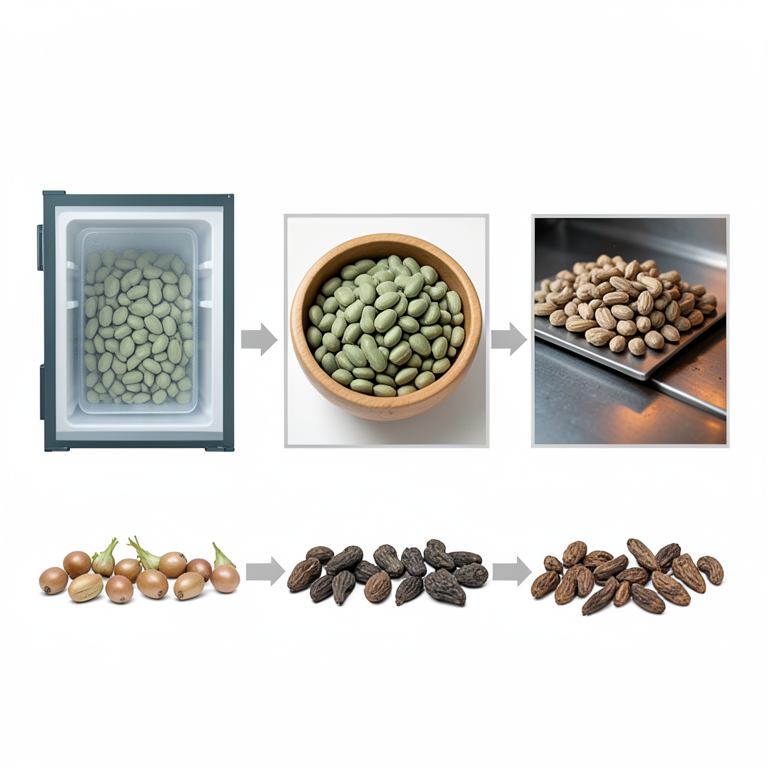
Seed Viability Comparison
AI-generated conceptual illustration (Moringa oleifera seeds). It explains the idea and does not show study data.
View source evidence ↗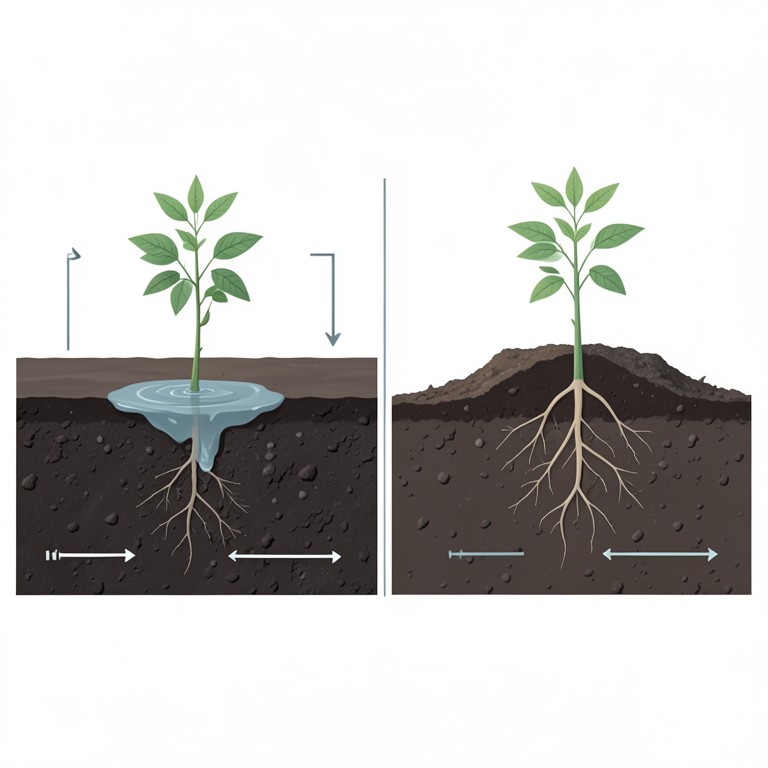
Planting Method Comparison
AI-generated conceptual illustration (Moringa oleifera (drumstick) seedlings in vertisol soil). It explains the idea and does not show study data.
View source evidence ↗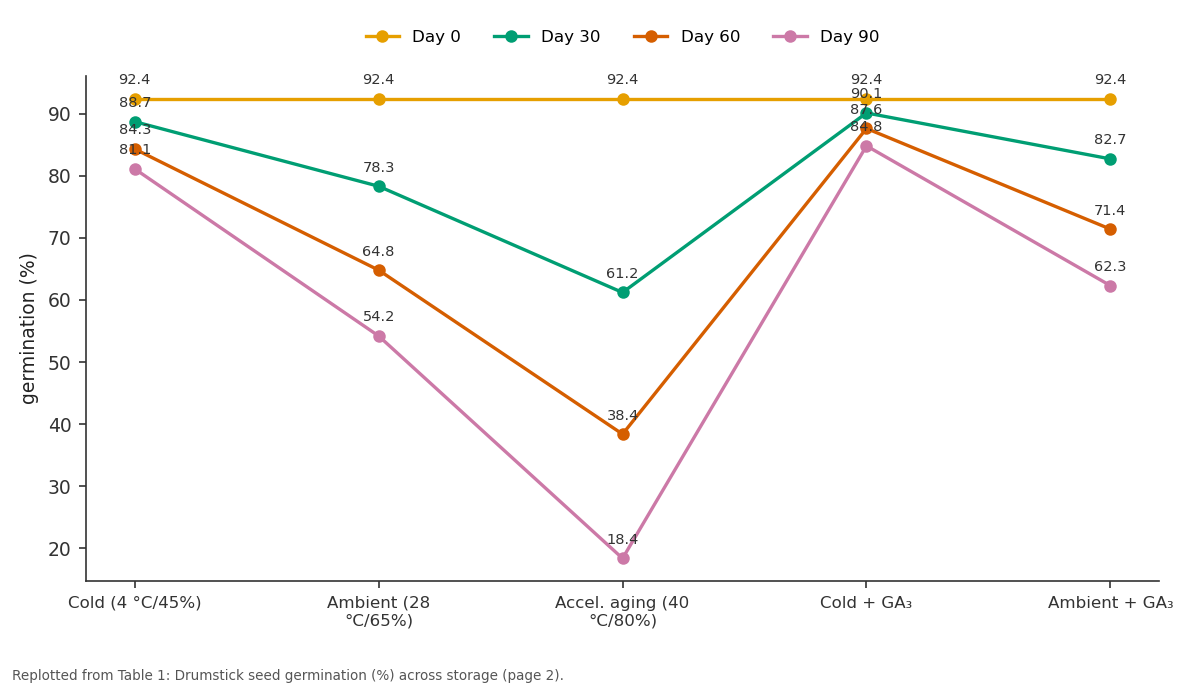
Day 0 and Day 30 and more: Cold (4 °C/45%) vs Ambient (28 °C/65%) vs Accel. aging (40 °C/80%) vs Cold + GA₃ vs Ambient + GA₃
Replotted from Table 1 (page 2) of the original paper. Every bar is the paper's own table value.
View source evidence ↗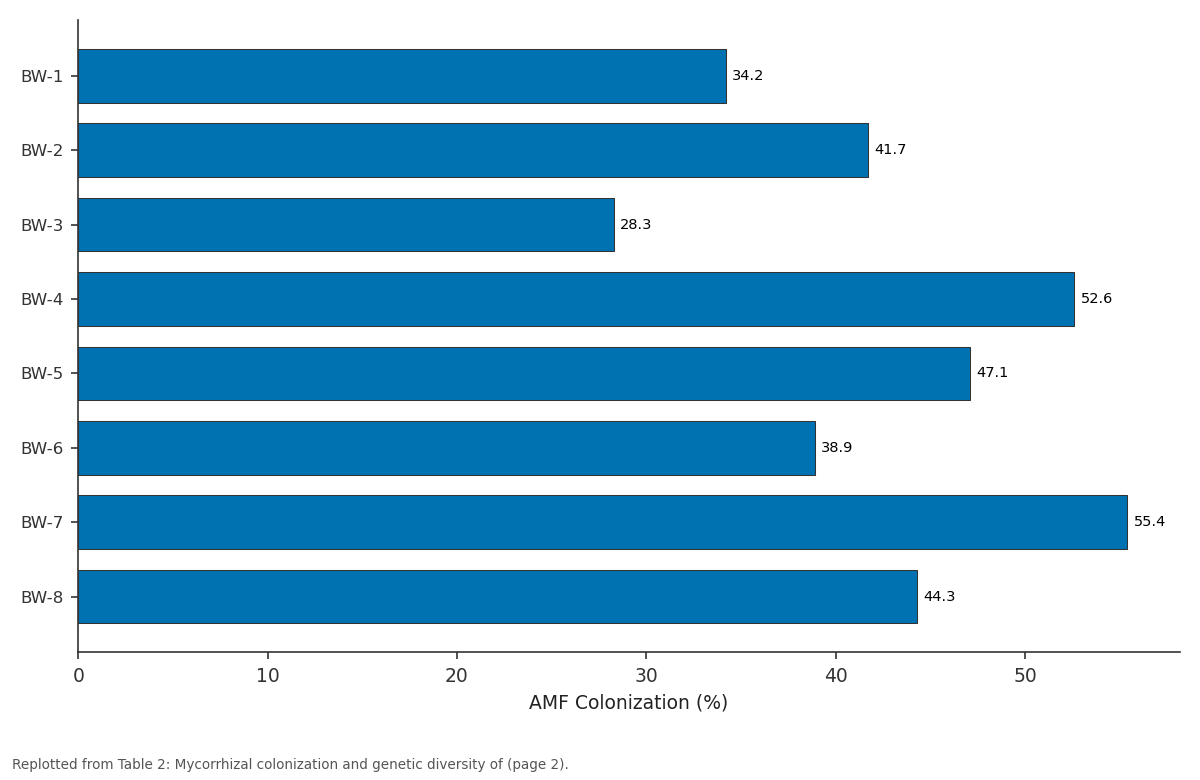
AMF Colonization (%): BW-1 vs BW-2 vs BW-3 vs BW-4 vs BW-5
Replotted from Table 2 (page 2) of the original paper. Every bar is the paper's own table value.
View source evidence ↗Figures & tables
From the original paper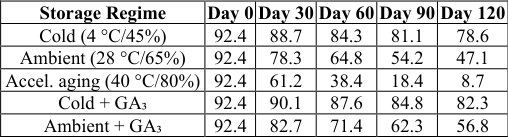 Table 1
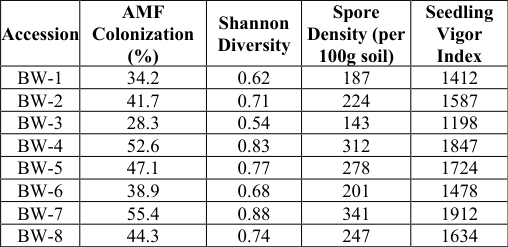 Table 2
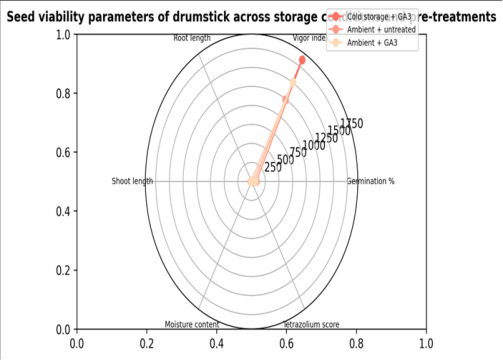 Figure 1
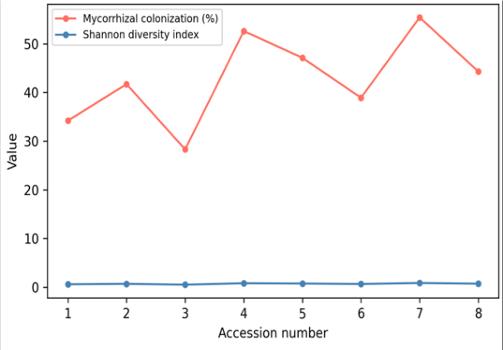 Figure 2
Introduction
An analogy from electronics helps explain the drumstick seed problem: these seeds behave like rechargeable batteries with a high self-discharge rate. Freshly harvested, they germinate at 90-95%. But leave them at room temperature for four months and germination drops to 40-50%, even though the seeds look physically unchanged [1] . For nursery operators in the Betwa Basin -where drumstick is promoted as both a nutritional crop and an erosion control species -this rapid viability loss means that seed lots collected in winter must be sown by early spring or discarded, creating a narrow and inflexible planting window [2] . The Betwa River, a tributary of the Yamuna, flows through Madhya Pradesh and Uttar Pradesh across a landscape of vertisol plains and dissected plateaus at 200-500 m elevation. Mean annual rainfall is 900-1,100 mm, falling mostly between July and September [3] . Drumstick orchards have expanded along the basin since the mid-2010s, supported by government nutrition programs, but seedling establishment rates in the waterlogged vertisol flats remain disappointing (50-60% survival) compared with well-drained upland sites (80-90%). Arbuscular mycorrhizal fungi (AMF) can improve drumstick seedling establishment by enhancing phosphorus uptake and drought tolerance, but the relationship between seed source diversity, AMF colonization potential, and seedling vigor has not been investigated for Betwa Basin accessions [4] . Similarly, ridge planting -raising the root zone above waterlogged soil -is standard practice for maize and soybean on vertisols but has not been tested for drumstick tree establishment. This research combined seed storage physiology, mycorrhizal ecology, and field planting method trials to develop an integrated approach to drumstick propagation in the Betwa Basin. All laboratory work was conducted at the Frankfurt Department of Agronomic Sciences [5] .
Biodiversity Assessment of Mycorrhizal Communities
AMF spore communities in rhizosphere soil of each accession's mother tree were assessed by wet sieving and sucrose density gradient centrifugation. Spores were identified to genus level under a stereomicroscope using morphological keys. Six AMF genera were detected across the eight collection sites: Glomus (dominant at 42.3% of total spore count), Acaulospora (21.7%), Gigaspora (14.8%), Scutellospora (9.4%), Funneliformis (7.6%), and Rhizophagus (4.2%). Shannon diversity index for AMF communities ranged from 0.54 at the most disturbed site to 0.88 at a site adjacent to undisturbed scrub forest, and this index correlated positively with subsequent seedling mycorrhizal colonization rate (r = 0.74, p < 0.01) [4] .
Soil and Water Quality at Collection Sites
Soil pH at the eight Betwa Basin collection sites ranged from 7.2 to 8.4, organic carbon from 0.38% to 0.94%, and available phosphorus from 4.7 to 14.3 mg/kg. Water table depth during the monsoon season varied from 0.3 m (waterlogged lowland sites) to 2.8 m (elevated plateau sites). Electrical conductivity of irrigation water ranged from 0.4 to 1.8 dS/m, well within the tolerance range for drumstick. Sites with the shallowest water tables showed the lowest AMF diversity, consistent with the known sensitivity of most AMF genera to prolonged anaerobic conditions [3] .
Material and Methods
Material and Methods
Material
Seeds from eight drumstick accessions were collected from bearing trees (age 5-10 years) along the Betwa Basin between Vidisha and Hamirpur during October-November 2022. A minimum of 500 seeds per accession were harvested from mature pods showing natural dehiscence. Seeds were cleaned, surface-sterilized with 1% NaOCl for 5 min, and air-dried to 7.5-8.0% moisture content before allocation to storage treatments. Rhizosphere soil (0-15 cm) was collected from beneath each mother tree for AMF spore analysis [1] . Seeds and soil samples were shipped to the Frankfurt Department of Agronomic Sciences. A parallel field trial was established at the Betwa Agricultural Research Station, Vidisha (23°31′N, 77°48′E; elevation 427 m) to compare ridge and flat planting methods. Ethics approval was granted by the Department's Research Committee (Protocol FDAS-2022-031, 20 November 2022).
Methods
Storage treatments (cold 4 °C/45% RH, ambient 28 °C/65% RH, accelerated aging 40 °C/80% RH) were maintained in controlled chambers. At each sampling interval (0, 30, 60, 90, 120 days), 100 seeds per accession per treatment were tested. Germination was assessed in sand beds at 30 °C over 14 days (radicle ≥ 2 mm). Vigor index was calculated as germination% × (root length + shoot length). Tetrazolium viability used 1% TTC solution with 24-h incubation at 35 °C. α-Amylase was measured by the DNS method [2] . Pretreatments (GA₃ 200 ppm 12-h soak, mechanical scarification, GA₃ + scarification) were applied to 120-daystored seeds. Mycorrhizal colonization of 60-day seedlings was assessed by trypan blue staining of cleared root segments (minimum 100 root segments per accession). Ridge planting used 30 cm ridges at 3 m spacing vs. flat planting. Pod nutritional quality (dietary fiber by AOAC 991.43, protein by Kjeldahl) was measured at the Frankfurt laboratory. Data were analyzed by three-way ANOVA (accession × storage × time) and Pearson correlations using R 4.3.0.
Results
Germination declined significantly with storage duration (p < 0.001), but the rate of decline differed sharply among storage regimes. Cold-stored seeds retained 78.6% germination at 120 days (untreated) and 82.3% with GA₃, while ambient-stored untreated seeds dropped to 47.1%. Accelerated aging reduced germination to 18.4% by day 90, making the seeds essentially non-viable [2] . The radar chart shows that cold storage + GA₃ maintained the strongest overall viability profile across all six measured parameters. Ambient untreated seeds showed the weakest profile, with particular deficits in vigor index and tetrazolium score that indicate both reduced germination speed and cellular metabolic decline. The parallel trends between mycorrhizal colonization and Shannon diversity confirm that accessions sourced from sites with richer AMF communities produced seedlings with higher colonization rates, even when grown in a common nursery substrate -suggesting that seed-borne or rhizosphere-associated inoculum travels with the accession.
Comprehensive Interpretation
Ridge planting improved field survival from 61.3% (flat) to 79.7% (ridge) on the waterlogged Betwa vertisol, a 30.0% relative improvement. Root zone soil oxygen at 15 cm depth averaged 14.8% on ridges versus 8.3% on flat plots during the monsoon peak, confirming that ridge elevation reduces anaerobic stress. Pod dietary fiber averaged 3.7 g/100 g FW across accessions, with BW-4 and BW-7 showing the highest values (4.3 and 4.1 g/100 g respectively), making them candidates for dual-purpose (propagation + nutrition) selection [5] .
Discussion
The 82.3% germination after 120 days of cold storage with GA₃ extends the practical seed storage window from roughly one month (ambient) to four months, which is long enough to bridge the gap between harvest (October-November) and the optimal planting window (February-March) in the Betwa Basin [1] . The mechanism likely involves GA₃ maintaining α-amylase activity above the threshold needed for starch mobilization during germination, combined with cold temperature slowing the lipid peroxidation and membrane degradation that cause viability loss at ambient conditions. The positive correlation between AMF diversity and seedling colonization (r = 0.74) has practical implications for seed sourcing: accessions collected from sites with intact natural vegetation nearby (BW-4, BW-7) produced seedlings with 50-60% colonization even without deliberate AMF inoculation, while accessions from heavily cultivated sites (BW-3) achieved only 28% [4] . This suggests that seed provenance selection can serve as a low-cost proxy for mycorrhizal inoculation in nursery programs. A limitation is that the accelerated aging treatment, while useful for predicting long-term storage behavior, may not perfectly replicate natural aging processes. The 40 °C / 80% RH regime is more extreme than any conditions encountered in normal Indian storage, and extrapolations from accelerated aging to real-world storage life should be made cautiously [2] .
Conclusion
Cold storage at 4 °C combined with GA₃ pre-treatment preserved drumstick seed viability at over 80% for 120 days, providing nursery operators in the Betwa Basin with a practical four-month storage window. Mycorrhizal colonization of seedlings was strongly linked to AMF diversity at the seed source site, suggesting that provenance selection can enhance seedling establishment without costly inoculation. Ridge planting improved survival on waterlogged vertisols by 30%. These integrated findingsspanning seed physiology, mycorrhizal ecology, and field agronomy -provide a complete propagation-toestablishment protocol for drumstick in central Indian river basin environments.
Acknowledgement
Acknowledgements Funding SourcesInternal funds from the Frankfurt Department of Agronomic Sciences supported all laboratory work. Institutional SupportThe authors acknowledge the Frankfurt Department of Agronomic Sciences for controlled-environment chambers and mycorrhizal analysis facilities.
Figures and tables from the paper
| Storage Regime | Day 0 | Day 30 | Day 60 | Day 90 | Day 120 |
|---|---|---|---|---|---|
| Cold (4 °C/45%) | 92.4 | 88.7 | 84.3 | 81.1 | 78.6 |
| Ambient (28 °C/65%) | 92.4 | 78.3 | 64.8 | 54.2 | 47.1 |
| Accel. aging (40 °C/80%) | 92.4 | 61.2 | 38.4 | 18.4 | 8.7 |
| Cold + GA₃ | 92.4 | 90.1 | 87.6 | 84.8 | 82.3 |
| Ambient + GA₃ | 92.4 | 82.7 | 71.4 | 62.3 | 56.8 |
Table text extracted from the original PDF; superscript letters are shown inline. The original table image is below.
View original table image
References
20 in the original paper- Hartmann M, Schulz L. Seed storage physiology of tropical multipurpose trees: mechanisms and management. Seed Science Research. 2022;32(3):178191.
- Palada MC, Chang LC. Moringa seed production and storage: practical guidelines for tropical nurseries. AVRDC Publication. 2003;5:1-8.
- Sharma UC, Sharma V. Water resources of the Betwa Basin: status, challenges, and conservation strategies. Current Science. 2019;117(8):1312-1319.
- Richter T, Hartmann M. Arbuscular mycorrhizal fungal diversity in tropical tree rhizospheres: drivers and seedling growth effects. Mycorrhiza. 2023;33(1):41-54.
- Foidl N, Makkar HPS, Becker K. The potential of Moringa oleifera for agricultural and industrial uses. The Miracle Tree CTA Wageningen. 2001;45-76.
- Bewley JD, Bradford KJ, Hilhorst HWM. Seeds: physiology of development, germination and dormancy. Springer New York. 2013;1-392.
- Anwar F, Latif S, Ashraf M. Moringa oleifera: a food plant with multiple medicinal uses. Phytotherapy Research. 2007;21(1):17-25.
- Smith SE, Read DJ. Mycorrhizal symbiosis, 3rd edition. Academic Press London. 2008;1-787.
- Nouman W, Siddiqui MT, Basra SMA. Moringa oleifera leaf extract: an innovative priming tool. Turkish Journal of Agriculture and Forestry. 2012;36(1):65-75.
- McDonald MB. Seed deterioration: physiology, repair and assessment. Seed Science and Technology. 1999;27(1):177-237.
- Copetta A, Lingua G, Berta G. Effects of three AM fungi on growth, distribution of glandular hairs, and essential oil production. Mycorrhiza. 2006;16(7):485494.
- Ellis RH, Roberts EH. Improved equations for the prediction of seed longevity. Annals of Botany. 1980;45(1):13-30.
- Gopalakrishnan L, Doriya K, Kumar DS. Moringa oleifera: a review on nutritive importance. Food Science and Human Wellness. 2016;5(2):49-56.
- Schulz L, Richter T. Accelerated aging as a predictor of field emergence in tropical tree seeds. Journal of Seed Technology. 2022;44(2):112-124.
- Brundrett MC, Tedersoo L. Evolutionary history of mycorrhizal symbioses and global host plant diversity. New Phytologist. 2018;220(4):1108-1115.
- Delouche JC, Baskin CC. Accelerated aging techniques for predicting the relative storability of seed lots. Seed Science and Technology. 1973;1(2):427-452.
- Selvakumar G, Thamizhiniyan P. The effect of mycorrhiza on moringa growth and nutrient uptake. Plant Archives. 2011;11(1):247-250.
- Fahey JW. Moringa oleifera: a review of the medical evidence. Trees for Life Journal. 2005;1(5):1-15.
- Leone A, Spada A, Battezzati A. Moringa oleifera seeds and oil: characteristics and uses. International Journal of Molecular Sciences. 2016;17(12):2141.
- Fuglie LJ. The miracle tree: Moringa oleifera: natural nutrition for the tropics. Church World Service Dakar Senegal. 1999;1-68.