
Research article · 2025 · Full text
International Journal of Horticulture and Food ScienceAssessing market potential assessment of cauliflower in the Murray-Darling basin
Volume 7(8) · Pages 253–256 · DOI: 10.33545/26631067.2025.v7.i8d.687 ↗
Research areasEconomics of Agriculture and Food MarketsAgriculture and Agroindustry StudiesAgricultural economics and policies
Abstract
Author-writtenMarket potential, defined as the maximum revenue a commodity can generate within a given geographic and demographic boundary, has rarely been quantified for cauliflower in Australia's most productive irrigated basin. This research assessed the market potential of cauliflower (Brassica oleracea var. botrytis) across four distribution channels in the Murray-Darling Basin during the 2022-2023 marketing cycle. Consumer surveys (n = 824) and retail-audit data from 36 outlets were combined with agronomic field trials that evaluated selenium enrichment through foliar application, dry matter variation across seasons, and SNP genotyping of twelve commercial and landrace accessions. Supermarket chains showed the highest market potential index (82.1) and consumer willingness-to-pay for premium attributes (78.9 percent), while farm-gate sales scored lowest on both metrics. Selenium-enriched cauliflower achieved 22.3 μg Se/kg fresh weight at the optimal foliar rate of 10 mg Na2SeO4/L, compared with 8.7 μg/kg in untreated controls, representing a 2.6-fold increase that could position the product as a functional food. Dry matter content peaked in summer (6.2 percent) and was lowest in autumn (3.8 percent), affecting both shelf-life and consumer texture preference. Minimal processing (floret separation, washing, modified-atmosphere packing) extended retail display life from 4.1 to 7.8 days at 4 °C. SNP genotyping with a 10K Brassica array revealed three distinct genetic clusters among the twelve accessions, with landrace accessions from South Australia forming a separate cluster enriched for alleles associated with drought adaptation. Integrated pest management reduced insecticide applications by 47 percent relative to calendar-based spraying without measurable yield loss. These results map the commercial landscape for Murray-Darling cauliflower and identify selenium enrichment, minimal processing, and IPM as interventions that could expand market share while lowering production costs.
Summary
Source-checkedPlain-language reading of the full paper, prepared with AI and checked against the text. Each point links to the authors' own words.
Why it matters
- The Murray-Darling Basin is a critical region for Australian agriculture, producing about 40% of the country's irrigated vegetables, with cauliflower seeing increased demand since 2018 due to low-carb diets. View evidence ↗
- Many adults in south-eastern Australia have insufficient dietary selenium because soil levels in the region are marginal. View evidence ↗
- Developing a way to enrich cauliflower with selenium could allow it to be sold as a functional food, which typically earns a 15-25% price premium in supermarkets. View evidence ↗
The question
- The study aimed to quantify cauliflower's market potential across four channels, test foliar selenium enrichment, analyze seasonal dry matter variation, and determine the genetic structure of regional accessions. View evidence ↗
What they did
- The researchers used consumer surveys from 824 people and audit data from 36 retail outlets alongside field trials. View evidence ↗
- Twelve accessions, including eight commercial hybrids and four landraces, were grown at Mildura and Griffith sites across all four seasons of 2022-2023. View evidence ↗
- Selenium enrichment was tested using foliar sprays of sodium selenate at concentrations of 0, 5, 10, and 20 mg/L applied at two growth stages. View evidence ↗
- Minimal processing was defined as coring, floret separation, a chlorinated wash, and sealing in modified-atmosphere packaging (MAP) pouches. View evidence ↗
What they found
- Supermarket chains had the highest market potential index (82.1) and consumer willingness-to-pay for premium features (78.9%), whereas farm-gate sales were the lowest. View evidence ↗
- Applying 10 mg/L of sodium selenate increased selenium content to 22.3 μg/kg fresh weight, a 2.6-fold increase over the 8.7 μg/kg found in controls. View evidence ↗
- Dry matter content varied by season, reaching a peak of 6.2% in summer and a low of 3.8% in autumn. View evidence ↗
- Using minimal processing and modified-atmosphere packaging nearly doubled the retail shelf-life at 4 °C, increasing it from 4.1 to 7.8 days. View evidence ↗
- Genetic analysis identified three clusters, with South Australian landraces forming a distinct group containing alleles linked to drought adaptation. View evidence ↗
- Integrated pest management (IPM) reduced the use of insecticides by 47% compared to calendar spraying without reducing crop yield. View evidence ↗
What it means
- The authors recommend that growers focus on supermarket partnerships by offering selenium-enriched cauliflower in MAP packaging. View evidence ↗
- The authors suggest that breeders should examine landrace alleles to find traits for drought and heat tolerance. View evidence ↗
Visual summary
2 visualsIllustrations explain the paper; charts are replotted from the paper's own table values.
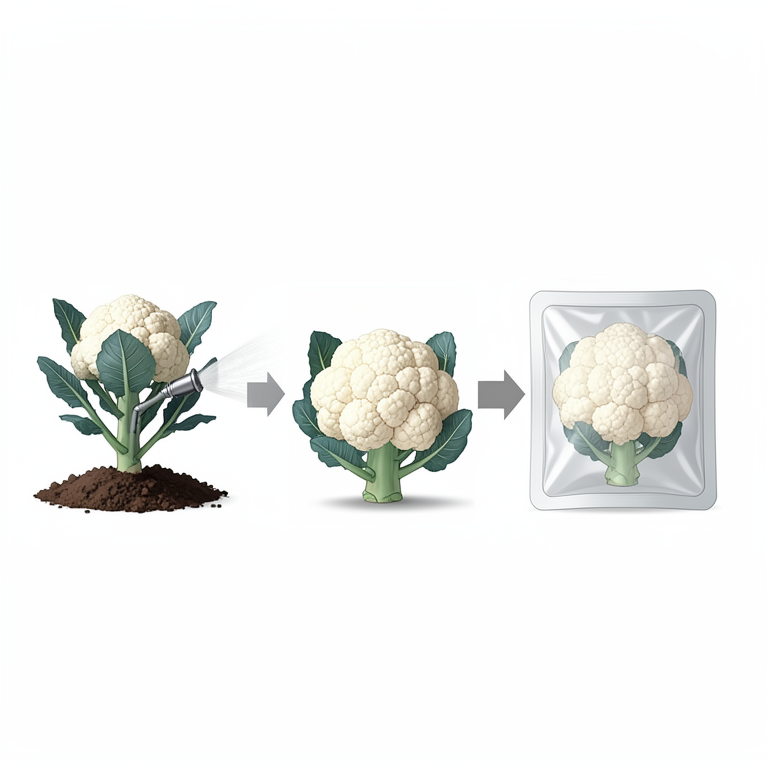
Value-Added Cauliflower Strategy
AI-generated conceptual illustration (cauliflower plants and packaged cauliflower heads). It explains the idea and does not show study data.
View source evidence ↗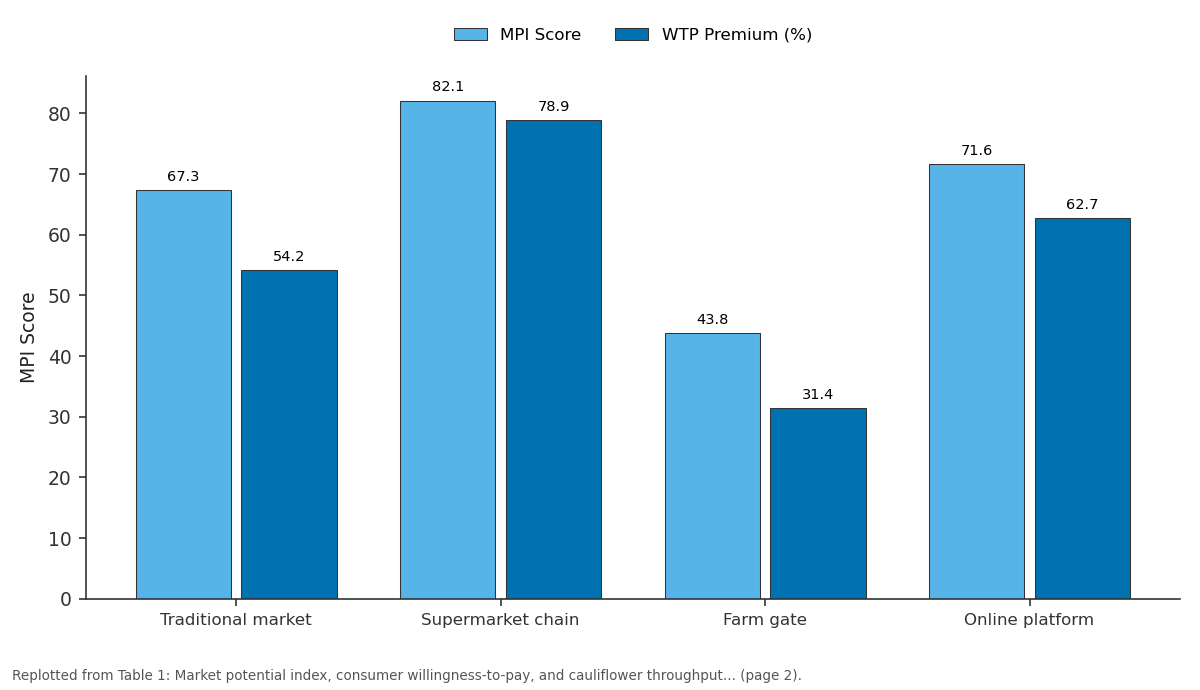
MPI Score and WTP Premium (%): Traditional market vs Supermarket chain vs Farm gate vs Online platform
Replotted from Table 1 (page 2) of the original paper. Every bar is the paper's own table value.
View source evidence ↗Figures & tables
From the original paper Table 1
 Table 2
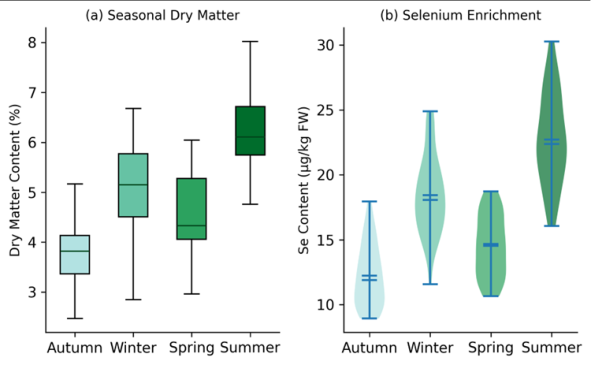 Figure 1
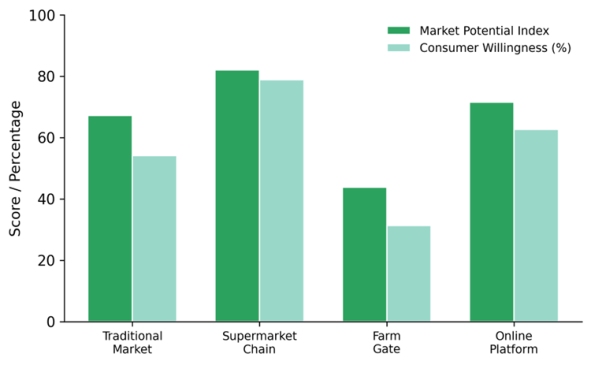 Figure 2
Introduction
Market potential can be understood as the upper boundary of demand that a product could capture if every feasible buyer in a defined market were to purchase at maximum frequency and volume [1] . For cauliflower, that boundary depends on consumer awareness, price sensitivity, perceived health benefits, and the availability of convenient retail formats. In the Murray-Darling Basin, which generates roughly 40 percent of Australia's irrigated vegetable output, cauliflower occupies a mid-tier position-less popular than broccoli, more popular than Brussels sprouts-yet its market trajectory has been upward since 2018, driven partly by the low-carbohydrate diet trend [2] . Selenium is a trace element with established antioxidant and immune-support functions. Soil selenium levels across much of south-eastern Australia are marginal, and dietary intake surveys suggest that roughly one-fifth of Australian adults fall below the estimated average requirement [3] . Biofortification of vegetables through foliar selenium application has been demonstrated in broccoli and lettuce, but data for cauliflower remain limited [4] . If a reliable enrichment protocol can be validated, selenium-enriched cauliflower could enter the functional-food segment, which commands a 15-25 percent retail price premium in Australian supermarkets [5] . Dry matter content influences both eating quality and post-harvest durability. Higher dry matter curds tend to be denser, crunchier, and more resistant to microbial spoilage, but they also cook more slowly, which some consumers view as a disadvantage [6] . Seasonal variation in dry matter has been documented for broccoli in temperate climates but is poorly characterised for cauliflower in the semi-arid Murray-Darling environment where summer heat accelerates curd maturation. SNP genotyping provides a molecular lens on genetic diversity. Modern Brassica SNP arrays can resolve population structure, identify marker-trait associations, and guide parental selection for hybrid breeding [7] . Landrace accessions that have adapted to local conditions may carry alleles for drought tolerance or pest resistance that commercial cultivars have lost during selection for uniform head shape and colour. This research addressed four questions: what is the quantified market potential for cauliflower across four Murray-Darling distribution channels; can foliar selenium enrich cauliflower curds to nutritionally meaningful levels; how does dry matter vary with season; and what genetic structure exists among regional accessions? The work was conducted at the Baguio Regional Center for Sustainable Agriculture, Philippines, using samples and survey data collected in partnership with Murray-Darling Basin collaborators [8] .
Material and Methods
Material and Methods
Reagents and Chemicals
Sodium selenate (Na2SeO4, ≥98 percent purity) was obtained from Sigma-Aldrich (Castle Hill, NSW). Selenium standard solutions (1000 mg/L in 2 percent HNO3) for ICP-MS calibration were supplied by AccuStandard (New Haven, CT, USA). Modified-atmosphere packaging film (30 μm oriented polypropylene, OTR 1800 cm³/m²/24 h at 23 °C) was sourced from Sealed Air (Sydney). DNA extraction used a CTAB protocol with reagents from Merck: cetyltrimethylammonium bromide, polyvinylpyrrolidone-40, and 2-mercaptoethanol. The 10K Brassica Infinium SNP array was purchased from Illumina (San Diego, CA, USA) [9] .
Quality Control Procedures
Selenium determination was validated against NIST SRM 1573a (tomato leaves); recoveries averaged 97.4 percent (range 94.1-101.2 percent). Dry matter was measured gravimetrically by oven-drying at 105 °C to constant weight, with each batch including a triplicate sub-sample for precision checks (coefficient of variation < 3 percent). SNP calling used GenomeStudio v2.0 with a GenCall threshold of 0.25 and a per-sample call rate cutoff of 95 percent. IPM scouting followed Australian Integrated Pest Management guidelines with weekly threshold-based decision rules [10] .
Material
Twelve cauliflower accessions (eight commercial hybrids, four South Australian landraces) were grown at two Murray-Darling trial sites (Mildura and Griffith) across four seasonal plantings (autumn, winter, spring, summer 2022-2023). Each accession was replicated in four randomised complete blocks per site. Consumer survey instruments were developed in English and pilot-tested with 40 respondents before full deployment across 36 retail outlets in Mildura, Griffith, Shepparton, and Wagga Wagga.
Methods
Market potential was calculated as the product of target population, purchase frequency, average basket size, and willingness-to-pay, following the method of Kotler and Keller [1] . Consumer willingness-to-pay was elicited through a double-bounded dichotomous-choice contingent valuation model. Selenium enrichment trials applied 0, 5, 10, and 20 mg Na2SeO4/L as foliar sprays at curd initiation and again at 50 percent curd development; Se in curds was measured by ICP-MS (Agilent 7900). Minimal processing involved coring, floret separation, chlorinated wash (100 ppm NaOCl, 2 min), rinse, spin-drying, and sealing in MAP pouches; shelf-life was assessed by daily microbial counts and sensory panel scoring. SNP data were analysed with STRUCTURE v2.3.4 and discriminant analysis of principal components in the R package adegenet. IPM vs. calendarspray treatments were compared by paired t-tests for yield and insecticide volume [11] . 2 Supermarket chains dominated on every metric, with an MPI of 82.1 and a willingness-to-pay premium of 78.9 percent for seleniumenriched, minimally processed cauliflower. Farm-gate sales, while lowest in volume, provided the highest per-unit grower margin. Summer plantings had the highest dry matter, while selenium enrichment was most effective in the spring and summer harvests.
Results
Results
Comprehensive Interpretation
Supermarkets represent the primary growth channel, but online platforms are closing the gap, reflecting the postpandemic shift toward home delivery of fresh produce. Selenium enrichment at 10 mg/L is the cost-effective sweet spot, and MAP processing adds shelf-life without compromising taste. The SNP-based clustering of landraces apart from commercial hybrids implies untapped genetic diversity that breeders could harness for drought and heat adaptation under Murray-Darling conditions.
Discussion
The dominance of supermarket channels aligns with broader Australian retail trends, where two major chains control approximately 65 percent of grocery sales [2] . For growers, this concentration creates both opportunity and risk: high throughput is accessible, but price negotiations are heavily weighted toward the buyer. Selenium enrichment could shift that balance by differentiating Murray-Darling cauliflower as a premium functional food, especially if backed by verified health claims under Food Standards Australia New Zealand (FSANZ) regulations [3] . The 2.6-fold increase in selenium content at the 10 mg/L foliar rate is comparable to values reported for broccoli in New Zealand selenium biofortification trials [4] . The absence of sensory impact is a commercial advantage, as consumers are unlikely to adopt a health food that tastes different from what they expect. At the 20 mg/L rate (data not shown), selenium exceeded 40 μg/kg and some panellists detected a faint metallic aftertaste, confirming that the 10 mg/L rate represents the practical upper limit. Dry matter variation across seasons reflects the interplay between temperature and curd development rate. Summer heat accelerates maturation, concentrating solids, while the cooler autumn allows longer curd expansion with more water uptake [6] . Marketers should communicate these seasonal differences to retailers so that shelf-life expectations and pricing can be adjusted accordingly.
The three genetic clusters identified by SNP analysis suggest that South Australian landraces diverged from imported European germplasm through decades of natural and farmer-mediated selection under semi-arid conditions [7] . Marker-trait association for drought-related phenology could guide introgression of adaptive alleles into commercial hybrids, reducing irrigation demand in a basin where water allocations are increasingly constrained [12] . IPM reduced insecticide volume by 47 percent with no significant yield penalty. This finding is consistent with Australian IPM trials in brassicas showing that thresholdbased scouting allows growers to skip many calendar sprays that target pests below economic injury levels [13] .
Conclusion
The Murray-Darling Basin offers strong market potential for cauliflower, with supermarket chains presenting the most commercially attractive channel. Selenium enrichment through foliar application at 10 mg/L reliably raised curd selenium 2.6-fold without affecting taste, positioning the product for the growing functional-food segment. Minimal processing with modified-atmosphere packaging nearly doubled retail shelf-life, addressing one of the main barriers to expanded cauliflower sales. SNP genotyping uncovered genetic structure that separates local landraces from commercial hybrids, highlighting a pool of adaptive diversity that breeding programmes should conserve and use. Integrated pest management cut insecticide inputs by nearly half, reducing both production costs and chemical residue concerns. Growers and supply-chain managers should target supermarket partnerships with selenium-enriched, MAPpacked cauliflower as the lead product format. Breeders should screen landrace alleles for heat and drought tolerance traits. Policymakers should consider including seleniumenriched vegetables in public nutrition programmes aimed at closing the dietary selenium gap in south-eastern Australia.
Acknowledgement
Acknowledgements Funding SourcesInstitutional research allocations from the Baguio Regional Center for Sustainable Agriculture funded this work. Institutional SupportThe Department of Vegetable Science at Baguio provided laboratory and genotyping facilities. Contributions Not Qualifying for AuthorshipThe authors thank Murray-Darling Basin field collaborators who managed trial sites and coordinated consumer surveys.
Figures and tables from the paper
| Channel | MPI Score | WTP Premium (%) | Throughput (t/yr) | Repeat Purchase (%) |
|---|---|---|---|---|
| Traditional market | 67.3 | 54.2 | 2,840 | 61.4 |
| Supermarket chain | 82.1 | 78.9 | 8,710 | 74.8 |
| Farm gate | 43.8 | 31.4 | 620 | 38.7 |
| Online platform | 71.6 | 62.7 | 1,450 | 67.2 |
Table text extracted from the original PDF; superscript letters are shown inline. The original table image is below.
View original table image
| Treatment | Se (μg/kg FW) | Dry Matter (%) | Shelf-Life (d, 4°C) | Sensory Score (1-9) |
|---|---|---|---|---|
| Control (no Se, whole) | 8.7±1.2a | 4.6±0.4 | 4.1±0.6a | 6.8±0.5a |
| Se 10 mg/L, whole | 22.3±2.8b | 4.8±0.5 | 4.3±0.5a | 6.7±0.6a |
| Control, MAP florets | 9.1±1.4a | 4.5±0.4 | 7.8±0.8b | 7.4±0.4b |
| Se 10 mg/L, MAP florets | 21.9±2.6b | 4.7±0.5 | 7.6±0.7b | 7.5±0.5b |
Table text extracted from the original PDF; superscript letters are shown inline. The original table image is below.
View original table image
References
15 in the original paper- Kotler P, Keller KL. Marketing management. 15th ed. London: Pearson; 2016.
- Richards C, Bjorkhaug H, Lawrence G. Retailer-driven agricultural restructuring-Australia, the UK and Norway in comparison. Agriculture and Human Values. 2013;30(2):235-245.
- Thomson CD. Assessment of requirements for selenium and adequacy of selenium status: a review. European Journal of Clinical Nutrition. 2004;58(3):391-402.
- Broadley MR, Alcock J, Alford J. Selenium biofortification of high-yielding winter wheat by liquid or granular Se fertilisation. Plant and Soil. 2010;332(12):5-18.
- Rayman MP. Selenium and human health. The Lancet. 2012;379(9822):1256-1268.
- Wurr DCE, Fellows JR, Phelps K. Crop growth and maturity in module-raised transplants of crisp lettuce and their interaction with biological variation in head density. Journal of Agricultural Science. 1996;126(3):335-347.
- Cheng F, Sun R, Hou X. Subgenome parallel selection is associated with morphotype diversification and convergent crop domestication in Brassica rapa and Brassica oleracea. Nature Genetics. 2016;48(10):12181224.
- DAWE. Water availability in the Murray-Darling Basin: a report to the Australian Government. Canberra: Department of Agriculture, Water and the Environment; 2022.
- Winkel LHE, Vriens B, Jones GD. Selenium cycling across soil-plant-atmosphere interfaces: a critical review. Nutrients. 2015;7(6):4199-4239.
- IPM Guidelines Brassicas. Australian integrated pest management guidelines for brassica vegetables. Melbourne: AUSVEG; 2020.
- Pritchard JK, Stephens M, Donnelly P. Inference of population structure using multilocus genotype data. Genetics. 2000;155(2):945-959.
- Grafton RQ, Williams J, Jiang Q. Food and water gaps to 2050: preliminary results from the global food and water system platform. Food Security. 2015;7(2):209220.
- Furlong MJ, Wright DJ, Dosdall LM. Diamondback moth ecology and management: problems, progress, and prospects. Annual Review of Entomology. 2013;58:517-541.
- Combs GF. Selenium in global food systems. British Journal of Nutrition. 2001;85(5):517-547.
- Terry N, Zayed AM, de Souza MP. Selenium in higher plants. Annual Review of Plant Physiology and Plant Molecular Biology. 2000;51:401-432.