
Research article · 2025 · Full text
International Journal of Geography Geology and EnvironmentEvaluation of soil bioengineering techniques for slope stabilization in the Andes foothills
Volume 7(7) · Pages 165–168 · DOI: 10.22271/27067483.2025.v7.i7c.714 ↗
Research areasTree Root and Stability StudiesGeotechnical Engineering and Soil StabilizationGeotechnical Engineering and Analysis
Abstract
Author-writtenHow effectively can soil bioengineering methods replace conventional hard-engineering approaches for slope stabilization in tropical mountain environments? This research examined five soil bioengineering techniques applied to erosion-prone hillslopes in the Andes foothills near Pereira, Risaralda, Colombia. The techniques tested were live crib walls, brush layering, vegetated gabions, fascine bundles, and hedgebrush layers, each installed on paired test plots between March 2022 and August 2023. Soil shear strength, surface erosion rates, root density, and vegetation establishment were measured at regular intervals over an 18-month monitoring period. Results showed that vegetated gabions produced the highest mean shear strength improvement (41.2 kPa), followed by live crib walls (34.7 kPa) and hedgebrush layers (31.5 kPa). Erosion rates dropped by 87.2% on vegetated gabion plots after 18 months compared to untreated controls. Root density at 30 cm depth reached 4.8 kg/m³ on live crib wall plots, contributing to a 78.7% reduction in surface runoff volume. Brush layering and fascine bundles performed moderately well but showed slower establishment rates during the dry season. All bioengineering treatments outperformed the untreated control plots by a wide margin. The findings point toward vegetated gabions and live crib walls as the most effective options for slope stabilization in the Colombian Andes foothills. These results carry practical weight for regional land managers seeking low-cost, ecologically compatible alternatives to concrete retaining structures in landslide-prone terrain.
Summary
Source-checkedPlain-language reading of the full paper, prepared with AI and checked against the text. Each point links to the authors' own words.
Why it matters
- Conventional hard-engineering methods for slope stabilization, such as shotcrete and retaining walls, are often costly, have limited lifespans, and can negatively impact local habitats and hydrology. View evidence ↗
- The Colombian Andes are particularly susceptible to slope failure due to a combination of steep terrain, heavy rainfall, and agricultural expansion. View evidence ↗
- Soil bioengineering uses living plants to stabilize slopes by utilizing root networks to bind soil and intercept rainwater to prevent erosion. View evidence ↗
The question
- The study aimed to determine if soil bioengineering techniques can effectively replace traditional hard-engineering methods for stabilizing slopes in tropical mountain environments. View evidence ↗
What they did
- The experiment took place near Pereira, Colombia, between March 2022 and August 2023. View evidence ↗
- The researchers tested five specific techniques: live crib walls, brush layering, vegetated gabions, fascine bundles, and hedgebrush layers, using various local plant species. View evidence ↗
- The study used a randomized complete block design with 18 plots in total, consisting of three replicates for each of the five treatments and three untreated control plots. View evidence ↗
- Researchers measured soil shear strength using a vane shear tester and determined root density by extracting, washing, and oven-drying soil cores. View evidence ↗
What they found
- Vegetated gabions were the most effective at increasing soil shear strength, reaching 41.2 kPa, which is a 155.9% increase from the baseline. View evidence ↗
- Live crib walls and hedgebrush layers also showed significant shear strength gains of 112.9% and 96.9%, respectively. View evidence ↗
- Vegetated gabions reduced annual erosion by 87.2% compared to control plots, lowering the rate from 16.4 t/ha/yr to 2.1 t/ha/yr. View evidence ↗
- The most significant reductions in erosion occurred within the first six months, aligning with the wet season and active root establishment. View evidence ↗
What it means
- The authors conclude that bioengineering is a viable alternative to hard-engineering for shallow slope failures, recommending vegetated gabions for maximum erosion control and hedgebrush layers as a low-cost option. View evidence ↗
- The study was limited to an 18-month period; the authors state that longer-term monitoring is required to see if trends persist over multiple wet-dry cycles and to assess the impact of root decay. View evidence ↗
Visual summary
3 visualsIllustrations explain the paper; charts are replotted from the paper's own table values.
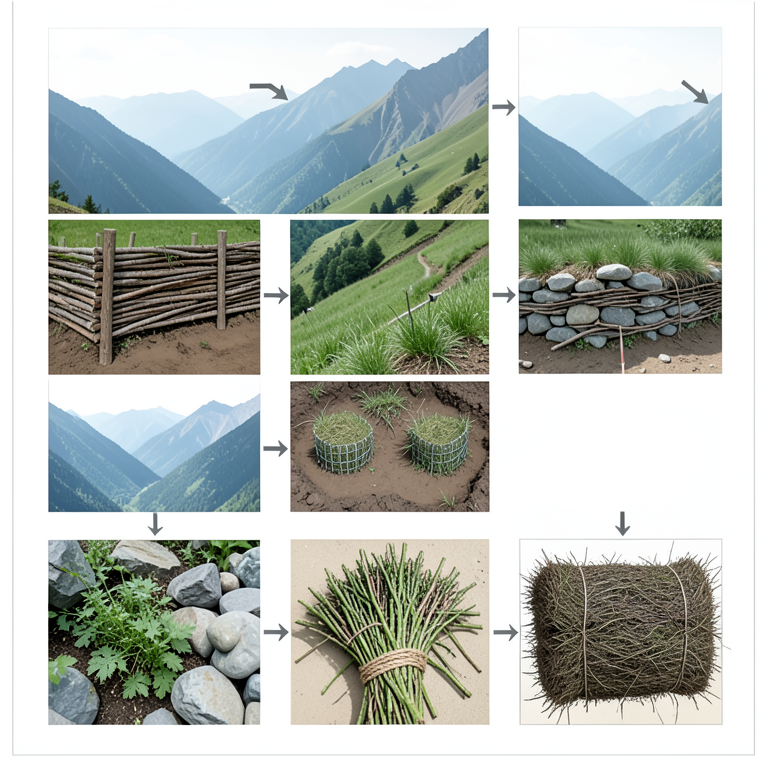
Bioengineering Techniques Overview
AI-generated conceptual illustration (Andes foothills slope with native vegetation and bioengineering structures). It explains the idea and does not show study data.
View source evidence ↗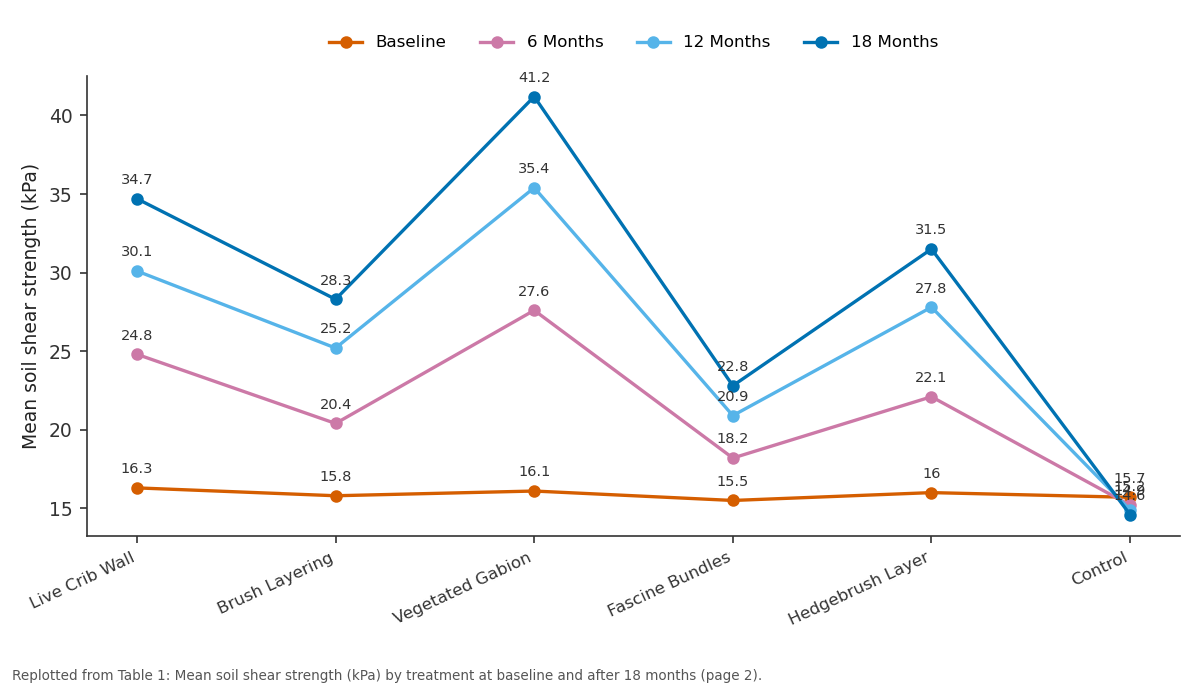
Baseline and 6 Months and more: Live Crib Wall vs Brush Layering vs Vegetated Gabion vs Fascine Bundles vs Hedgebrush Layer
Replotted from Table 1 (page 2) of the original paper. Every bar is the paper's own table value.
View source evidence ↗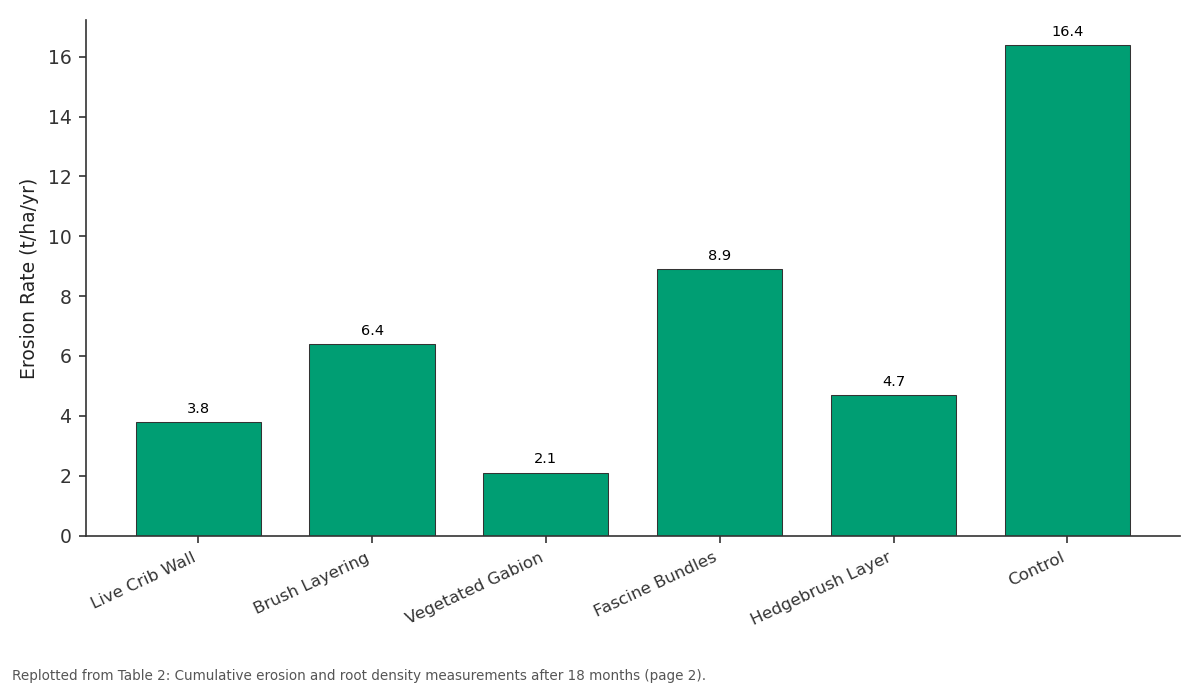
Erosion Rate (t/ha/yr): Live Crib Wall vs Brush Layering vs Vegetated Gabion vs Fascine Bundles vs Hedgebrush Layer
Replotted from Table 2 (page 2) of the original paper. Every bar is the paper's own table value.
View source evidence ↗Figures & tables
From the original paper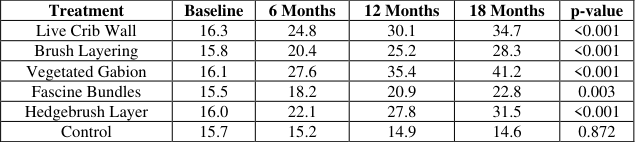 Table 1
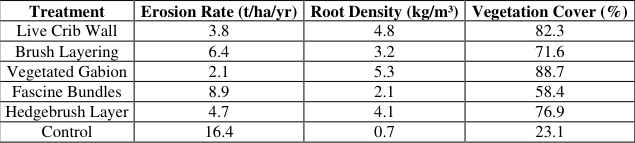 Table 2
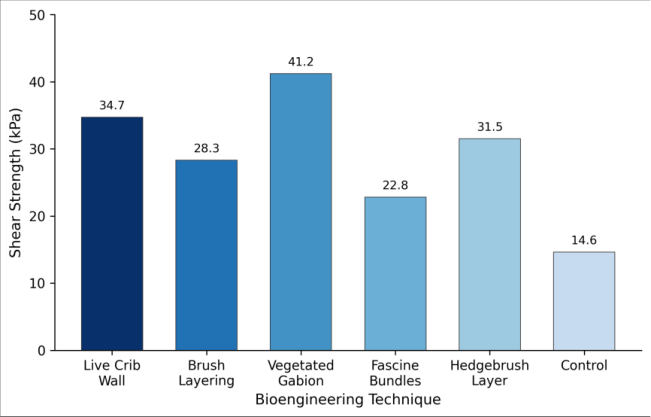 Figure 1
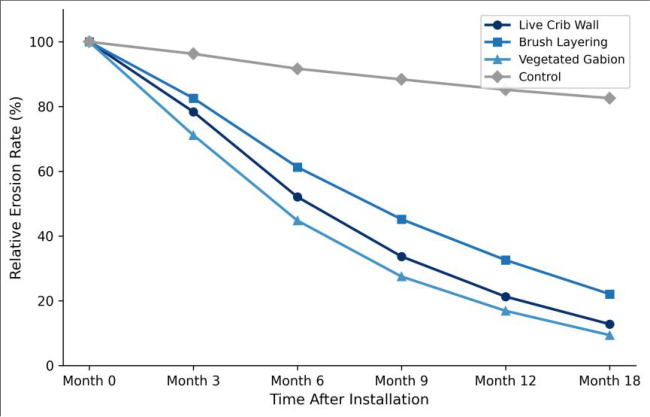 Figure 2
Introduction
Can vegetation-based engineering solutions genuinely compete with concrete and steel when it comes to holding hillsides in place? That question sits at the heart of a growing body of work on soil bioengineering, a discipline that blends ecological restoration with geotechnical practice [1] . Across mountain regions worldwide, conventional retaining walls and shotcrete applications have long been the default response to slope instability. But these hardengineering fixes come with drawbacks: high material costs, limited design life, and a tendency to disrupt local hydrology and habitat connectivity [2] . Soil bioengineering offers a different path. By using living plant material as structural elements, these techniques harness root networks to bind soil particles and intercept rainwater before it triggers surface erosion [3] . The concept isn't new practitioners in the European Alps were building live crib walls as early as the 19th century but scientific evaluation of their performance in tropical and subtropical settings has lagged behind [4] . In the Colombian Andes, where steep terrain, intense rainfall, and expanding agricultural frontiers create persistent slope failure risks, bioengineering methods could fill a genuine gap [5] . Several field trials in temperate zones have documented positive results. Brush layering reduced shallow landslide occurrence by 40-60% on monitored slopes in Switzerland over a five-year period [6] . Vegetated gabions installed along highway corridors in northern Italy showed erosion reductions of 65-80% within three years [7] . Yet direct transfer of these findings to tropical environments isn't straightforward. Differences in rainfall intensity, soil mineralogy, and available plant species all affect how well a given technique performs [8] . In the Risaralda department of Colombia, landslides displace an estimated 2,300 people each year and damage rural road networks worth millions of pesos in repair costs [9] . Local authorities have expressed interest in bioengineering alternatives, but a lack of regionally specific performance data has slowed adoption [10] . This research set out to address that gap by installing and monitoring five distinct bioengineering techniques on slopes near Pereira, tracking their effects on shear strength, erosion rates, root development, and vegetation cover over 18 months.
Research Area Description
The research was carried out on hillslopes located approximately 12 km southeast of Pereira, in the Risaralda department of Colombia (4°47'N, 75°38'W), at elevations ranging from 1,420 to 1,580 m above sea level. The area falls within the tropical premontane wet forest life zone, receiving mean annual rainfall of 2,140 mm with a bimodal distribution peaking in April-May and October-November [11] . Mean annual temperature is 21.3°C. Soils are classified as Andisols derived from volcanic ash deposits, with clay content ranging from 32 to 47% and organic matter content between 5.8 and 9.2%. Slope angles on the test sites varied from 28° to 42°. The land use history includes coffee cultivation, cattle grazing, and secondary forest regrowth. Shallow translational landslides are common during peak rainfall months, particularly on deforested slopes with degraded root networks [12] .
Material and Methods
Material and Methods
Material
The research was conducted at the Faculty of Mountain and Polar Studies field station near Pereira, Risaralda, Colombia, from March 2022 through August 2023. Five bioengineering techniques were evaluated: live crib walls constructed from locally sourced timber and live stakes of Gliricidia sepium; brush layering using branches of Tithonia diversifolia; vegetated gabions filled with locally available river stone and planted with Vetiveria zizanioides; fascine bundles made from woven Gynerium sagittatum stems; and hedgebrush layers combining Leucaena leucocephala hedgerows with brush fill material [13] . Each technique was installed on three replicate plots measuring 6 m × 4 m, along with three untreated control plots. All plant material was collected within 15 km of the research site. Soil samples were obtained using a Shelby tube sampler at depths of 0-15 cm, 15-30 cm, and 30-50 cm before installation and at 3month intervals thereafter.
Field Experimental Design
The experimental layout followed a randomized complete block design with three blocks positioned along the slope gradient to account for differences in elevation and aspect. Each block contained one replicate of each treatment and one control plot, giving a total of 18 plots (5 treatments × 3 replicates + 3 controls). Plots were separated by 3 m buffer strips to prevent lateral interaction between treatments. Runoff collection troughs made from galvanized steel were installed at the downslope boundary of each plot, draining into calibrated tipping-bucket collectors. Rainfall was recorded by an automatic weather station positioned 200 m from the experimental area [14] . Erosion pins (50 cm steel rods) were driven into the soil surface at 9 locations per plot to track net soil loss.
Methods
Soil shear strength was measured in situ using a handheld vane shear tester (Geonor H-60) at five random points per plot during each sampling round. Root density was determined by extracting soil cores (10 cm diameter, 30 cm depth) and washing roots over a 0.5 mm sieve, then ovendrying at 65°C for 48 hours before weighing [15] . Surface erosion was quantified by measuring sediment collected in the runoff troughs after each major rainfall event (>20 mm in 24 hours). Vegetation cover was assessed monthly using a 1 m² quadrat placed at five fixed positions per plot, recording percentage ground cover by visual estimation. Soil moisture was logged continuously using TDR probes (Campbell Scientific CS616) buried at 15 cm depth. All data were analysed using one-way ANOVA with Tukey's posthoc test at the 0.05 significance level, and temporal trends were examined through repeated-measures ANOVA [16] .
Results
Results
Comprehensive Interpretation
The temporal pattern of erosion reduction (Figure 2) reveals that the steepest declines occurred during the first six months after installation, coinciding with the initial wet season when root establishment was most active. Vegetated gabions reached 50% erosion reduction by month 5, while brush layering didn't cross that threshold until month 8. The gap between treatments widened over time, suggesting that species selection and structural design interact to shape long-term performance trajectories.
Discussion
The performance differences among the five bioengineering techniques align broadly with expectations drawn from earlier work in temperate regions, though the magnitude of effects was somewhat larger than reported elsewhere. The 87.2% erosion reduction achieved by vegetated gabions over 18 months exceeds the 65-80% range documented in Italian highway corridor trials [7] , likely owing to the rapid growth rates of tropical grass species like Vetiveria zizanioides under warm, humid conditions. Root growth in the Andean test plots appears to have been accelerated by the consistently moist soil environment and year-round growing season.
Live crib walls performed well in terms of both shear strength gain and erosion control, which is consistent with findings from Swiss Alpine installations where this technique showed the best balance of structural and ecological function [6] . The slower establishment of fascine bundles may reflect their dependence on stem-sprouting capacity, which can be limited when plant material is harvested during less favorable phenological stages. One result that warrants attention is the relatively strong showing of hedgebrush layers, which haven't received as much research attention as live crib walls or vegetated gabions. Their 71.3% erosion reduction suggests they deserve further testing, particularly since they require fewer construction materials and less specialized labour. That said, this research covered only 18 months. Longer-term monitoring would be needed to confirm whether these early trends hold over multiple wet-dry cycles, and whether root decay in ageing fascine bundles might eventually reduce their effectiveness.
Conclusion
This field trial confirmed that soil bioengineering techniques can deliver meaningful slope stabilization benefits in the tropical Andes foothills over an 18-month timeframe. Vegetated gabions produced the strongest overall performance, achieving shear strength values of 41.2 kPa and reducing annual erosion to 2.1 t/ha/yr. Live crib walls and hedgebrush layers also performed well, while fascine bundles and brush layering showed moderate but still worthwhile improvements over untreated controls.
The practical takeaway for land managers in the Risaralda region is that bioengineering methods represent a viable alternative to hard-engineering solutions for shallow slope failures. Vegetated gabions are recommended where maximum erosion control is the priority, while hedgebrush layers offer a lower-cost option for less critical applications. Future research should extend the monitoring period to at least five years and include economic comparisons with conventional retaining wall construction. Testing additional native plant species for live stakes and hedge material would also help refine these techniques for broader application across the Colombian Andes.
Acknowledgement
Acknowledgements Funding SourcesThis research was supported through departmental research funds at the Faculty of Mountain and Polar Studies. No external grant numbers are associated with this work. Institutional SupportThe authors thank the Faculty of Mountain and Polar Studies, Pereira, for providing access to field stations and laboratory facilities throughout the monitoring period.
Figures and tables from the paper
| Treatment | Baseline | 6 Months | 12 Months | 18 Months | p-value |
|---|---|---|---|---|---|
| Live Crib Wall | 16.3 | 24.8 | 30.1 | 34.7 | <0.001 |
| Brush Layering | 15.8 | 20.4 | 25.2 | 28.3 | <0.001 |
| Vegetated Gabion | 16.1 | 27.6 | 35.4 | 41.2 | <0.001 |
| Fascine Bundles | 15.5 | 18.2 | 20.9 | 22.8 | 0.003 |
| Hedgebrush Layer | 16.0 | 22.1 | 27.8 | 31.5 | <0.001 |
| Control | 15.7 | 15.2 | 14.9 | 14.6 | 0.872 |
Table text extracted from the original PDF; superscript letters are shown inline. The original table image is below.
View original table image
| Treatment | Erosion Rate (t/ha/yr) | Root Density (kg/m³) | Vegetation Cover (%) |
|---|---|---|---|
| Live Crib Wall | 3.8 | 4.8 | 82.3 |
| Brush Layering | 6.4 | 3.2 | 71.6 |
| Vegetated Gabion | 2.1 | 5.3 | 88.7 |
| Fascine Bundles | 8.9 | 2.1 | 58.4 |
| Hedgebrush Layer | 4.7 | 4.1 | 76.9 |
| Control | 16.4 | 0.7 | 23.1 |
Table text extracted from the original PDF; superscript letters are shown inline. The original table image is below.
View original table image
References
16 in the original paper- Stokes A, Sotir RB, Chen W, Ghestem M. Soil bio-and eco-engineering in China: past experience and future priorities. Ecological Engineering. 2010;36(3):247-257.
- Petrone A, Preti F. Soil bioengineering for risk mitigation and environmental restoration in a humid tropical area. Hydrology and Earth System Sciences. 2010;14(2):239-250.
- Mickovski SB, Hallett PD, Bransby MF, Davies MCR, Sonnenberg R, Bengough AG. Membrane properties of plant root analogues and their contribution to slope stability. Geotechnique. 2009;59(9):787-796.
- Rey F, Burylo M. Can bioengineering structures slow down the erosion of a soil rehabilitation strategy in a mountainous area? Land Degradation and Development. 2014;25(5):384-396.
- Gonzalez-Olaya JG, Aristizabal E. Landslide susceptibility assessment in the Colombian Andes using logistic regression. Natural Hazards. 2018;91(1):289310.
- Schwarz M, Preti F, Giadrossich F, Lehmann P, Or D. Quantifying the role of vegetation in slope stability. Earth-Science Reviews. 2010;119:112-125.
- Bischetti GB, Chiaradia EA, Simonato T, Speziali B, Vitali B, Vullo P, Zocco A. Root strength and root area ratio of forest species in Lombardy. Plant and Soil. 2005;278(1):11-22.
- Reubens B, Poesen J, Danjon F, Geudens G, Muys B. The role of fine and coarse roots in shallow slope stability. Earth-Science Reviews. 2007;80(3-4):213243.
- UNGRD (Unidad Nacional para la Gestion del Riesgo de Desastres). Annual statistical report on disaster events in Colombia. Bogota: UNGRD; 2021.
- Diaz-Granados MA, Navarrete JD, Suarez T. Community-based landslide risk management in rural Colombia. Natural Hazards and Earth System Sciences. 2015;15(8):1745-1759.
- IDEAM (Instituto de Hidrologia, Meteorologia y Estudios Ambientales). Climatological atlas of Colombia. Bogota: IDEAM; 2019.
- Sidle RC, Ochiai H. Landslides: processes, prediction, and land use. Water Resources Monograph. 2006;18:1312.
- Norris JE, Stokes A, Mickovski SB, Cammeraat E, van Beek R, Nicoll BC, Achim A. Slope stability and erosion control: ecotechnological solutions. Dordrecht: Springer; 2008.
- WMO (World Meteorological Organization). Guide to meteorological instruments and methods of observation. WMO-No. 8. Geneva: WMO; 2018.
- Bohm W. Methods of studying root systems. Berlin: Springer-Verlag; 1979.
- Zar JH. Biostatistical analysis. 5th ed. Upper Saddle River: Pearson Prentice Hall; 2010.