
Research article · 2026 · Full text
International Journal of Biology SciencesImpact of pesticide exposure on honey bees (Apis mellifera) populations: A survey- based study in Muzaffarpur, Bihar
Volume 8(5) · Pages 30–35 · DOI: 10.33545/26649926.2026.v8.i5a.824 ↗
Research areasInsect and Pesticide ResearchPesticide Exposure and ToxicityPlant and animal studies
Abstract
Author-writtenHoney bees (Apis mellifera) play a crucial role in pollination, contributing significantly to agricultural productivity and ecological balance (Sharaf El-Din et.al., 2025). However, in recent years, pesticide exposure has emerged as a silent threat, adversely affecting honey bee health and endangering food security (Almasri et al., 2022). This study highlights a critical disconnect between beekeepers, who report severe hive disruptions, and farmers, some of whom may unknowingly contribute to the problem. Conducted in Muzaffarpur, Bihar, the study surveyed 39 beekeepers and 64 farmers to understand their awareness, practices, and perceptions regarding pesticide impacts on honeybee populations. Results from the beekeepers' survey showed that 61.5% of beekeepers observed increased mortality during pesticide use, while 56.4% of them reported disoriented flight and 53.8% noticed reduced foraging. Although 69.2% of beekeepers were aware of pesticide risks, only 35.9% of them had received formal training. Moreover, 48.7% of beekeepers reported declines in brood development, and 25.6% reported queen loss—clear signs of colony stress. Among farmers, a relatively small proportion maintained buffer zones and avoided spraying during flowering, indicating limited adoption of mitigation strategies. This study underscores the urgent need for targeted education, improved pesticide management practices, and stronger collaboration between beekeepers and farmers to promote pollinator-friendly agriculture and long-term ecological and food system sustainability (Zhang et al., 2023)
Summary
Source-checkedPlain-language reading of the full paper, prepared with AI and checked against the text. Each point links to the authors' own words.
Why it matters
- Honey bees (Apis mellifera) are essential for maintaining ecological balance and supporting agricultural productivity through pollination. View evidence ↗
- Pesticide exposure is a significant threat that harms honey bee health, which in turn puts food security at risk. View evidence ↗
- There is a lack of region-specific research in the litchi-growing areas of Bihar that combines the perspectives of both farmers and beekeepers. View evidence ↗
The question
- The study aims to understand the awareness and perceived impacts of pesticides on honey bees among farmers and beekeepers in Muzaffarpur, Bihar, and to suggest sustainable protection practices. View evidence ↗
What they did
- The researchers conducted a survey with a sample size of 39 beekeepers and 64 farmers. View evidence ↗
- The study took place from November to July 2024, aligning with the flowering seasons of key crops like litchi, mustard, and sunflower. View evidence ↗
- Data was collected using a descriptive survey method with structured questionnaires specific to beekeepers and farmers. View evidence ↗
- The study used chi-square tests of independence and Fisher's exact tests to analyze associations between variables like training, awareness, and hive damage. View evidence ↗
What they found
- Beekeepers reported significant bee health issues during pesticide use, including increased mortality (61.5%), disoriented flight (56.4%), and reduced foraging (53.8%). View evidence ↗
- Colony stress was evident, with 48.7% of beekeepers noting declines in brood development and 25.6% reporting the loss of queens. View evidence ↗
- While 69.2% of beekeepers were aware of pesticide risks, only 35.9% had received formal training. View evidence ↗
- Among farmers, insecticides were the most prevalent pesticide type used (60.9%), followed by fungicides (21.9%) and herbicides (12.5%). View evidence ↗
- Adherence to safety guidelines was low among farmers, with only 20.3% reporting consistent adherence. View evidence ↗
- Mitigation efforts were poor, as 58.3% of farmers did not use buffer zones and 66.7% sprayed pesticides during the flowering period. View evidence ↗
What it means
- The authors conclude that there is an urgent need for integrated strategies, including farmer education, stricter regulations, IPM practices, and better cooperation between farmers and beekeepers. View evidence ↗
- The study is limited by its reliance on self-reported perceptions; the authors recommend future longitudinal studies and experimental residue analysis for validation. View evidence ↗
Visual summary
3 visualsIllustrations explain the paper; charts are replotted from the paper's own table values.
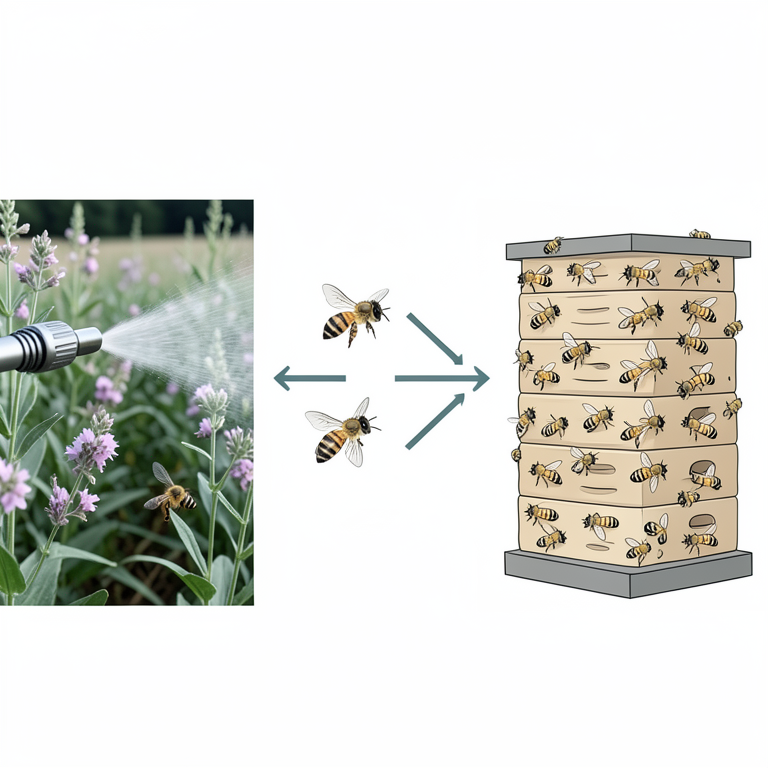
Research Framework
AI-generated conceptual illustration (Honey bees (Apis mellifera) and agricultural crops). It explains the idea and does not show study data.
View source evidence ↗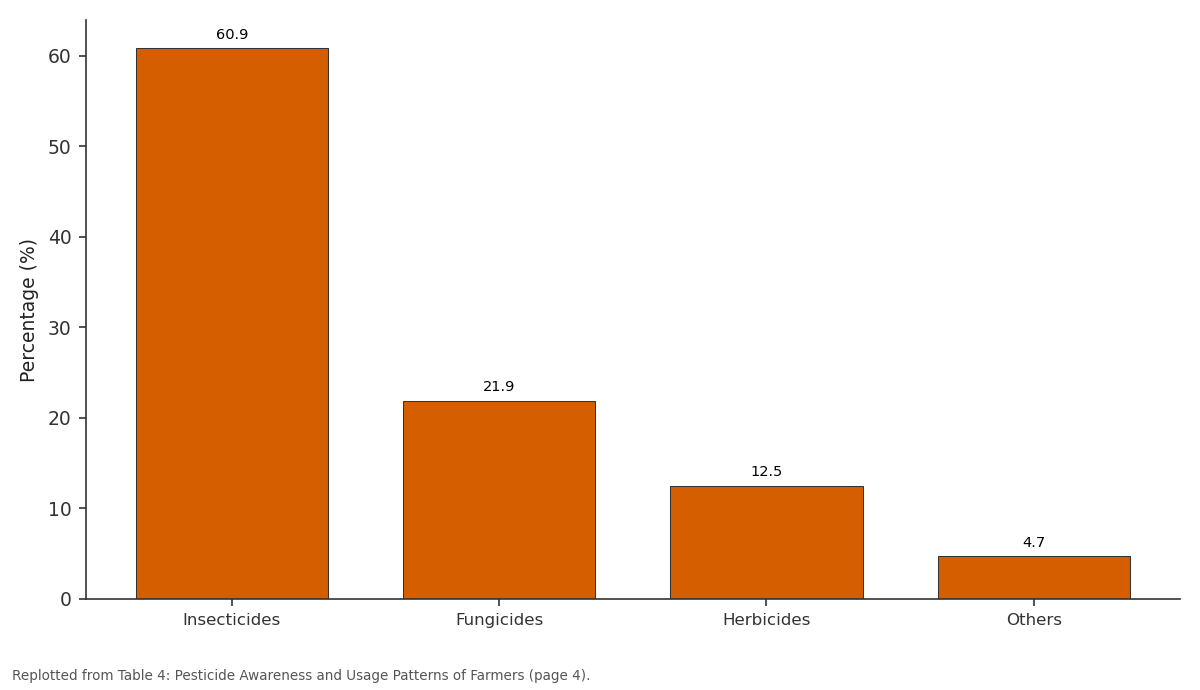
Percentage (%): Insecticides vs Fungicides vs Herbicides vs Others
Replotted from Table 4 (page 4) of the original paper. Every bar is the paper's own table value.
View source evidence ↗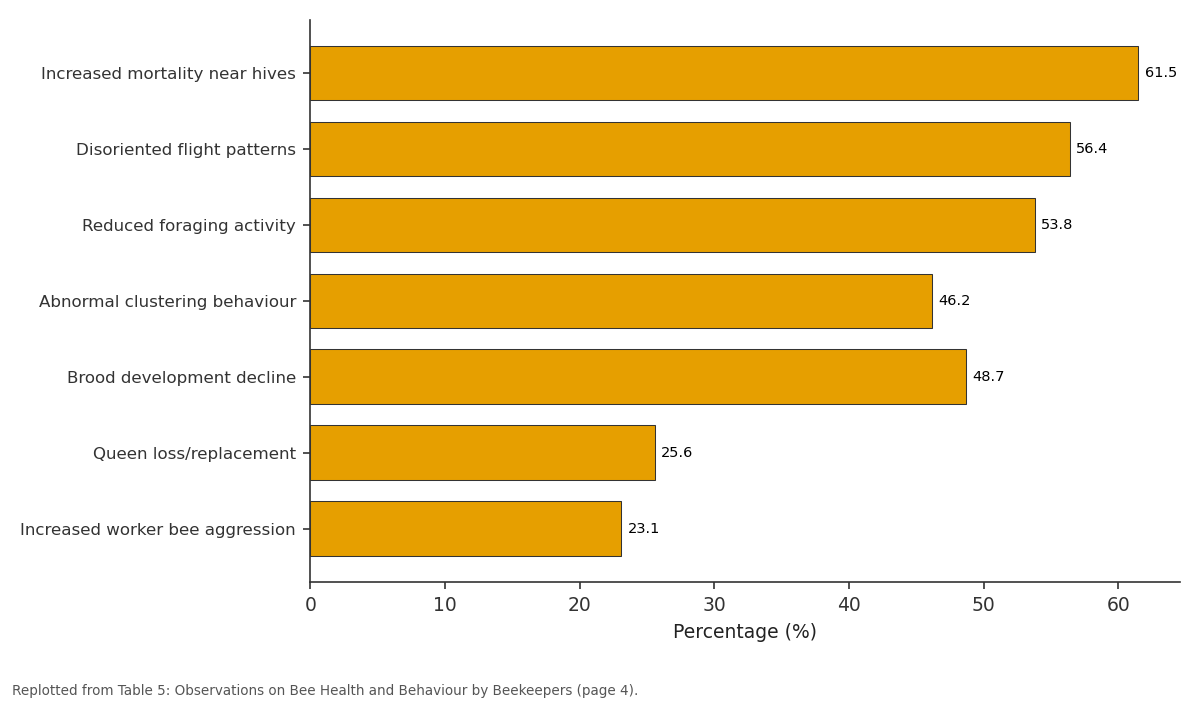
Percentage (%): Increased mortality... vs Disoriented flight... vs Reduced foraging... vs Abnormal clustering... vs Brood development...
Replotted from Table 5 (page 4) of the original paper. Every bar is the paper's own table value.
View source evidence ↗Figures & tables
From the original paper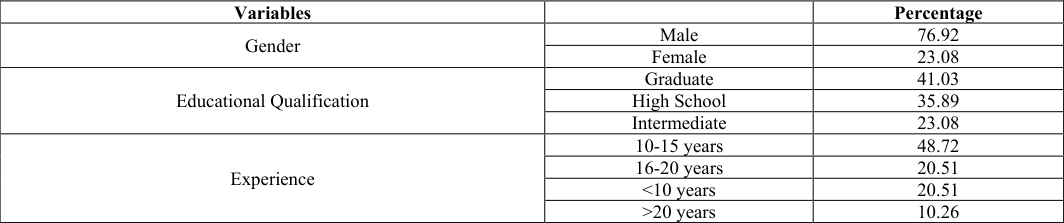 Table 1
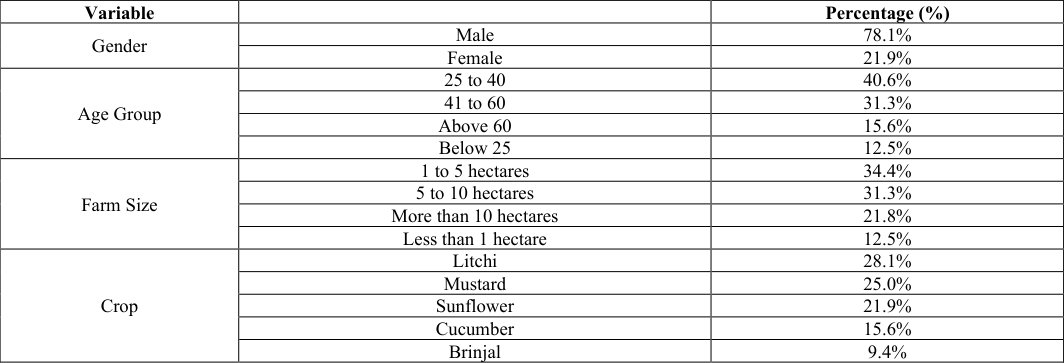 Table 2
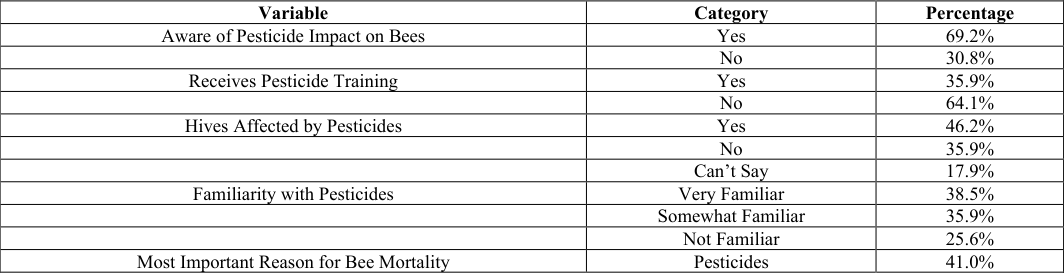 Table 3
 Table 3
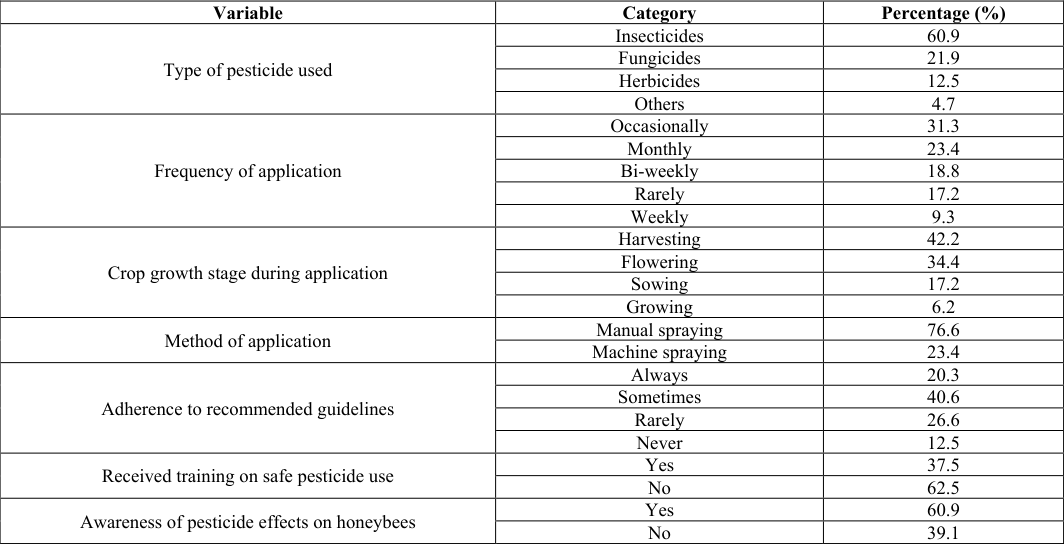 Table 4
 Table 4
 Table 5
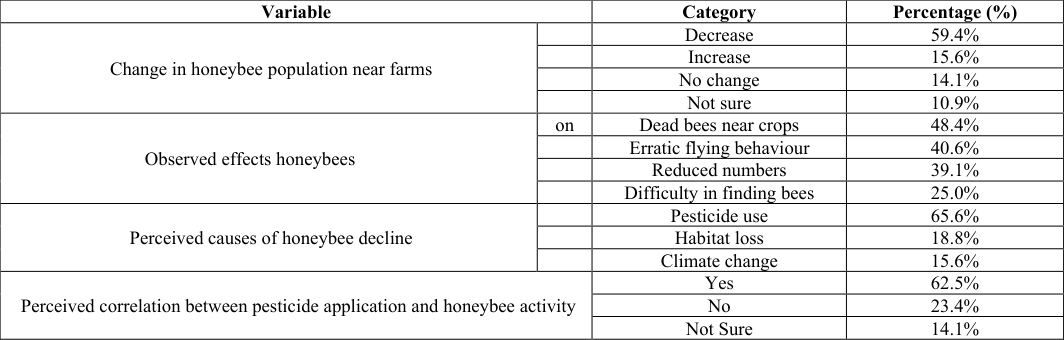 Table 6
 Table 7
Introduction
The relationship between pollinators and flowering plants is fundamental to our planet's ecological balance and global crop production (Shaden et al., 2021). Animal pollinators are estimated to increase the yield of more than 70% of globally important commercial crops, whereas insect pollination produces approximately 87.5% of global flowering plant species (Yoori Cho et al., 2021) [2] . Among these pollinators, honey bees(Apis mellifera) stand as a vital species, acting as a vigorous workforce in the pollination of a wide array of essential crops such as apples, cherries, grapes, broccoli, sunflowers, etc. (Boyko Neov et al., 2019) [10] , and play a crucial role in ecosystem sustainability (Nagma Praveen). Often regarded as a symbol of an efficient, dynamic and sedulous workforce, honey bees significantly contribute to the welfare of society (JJM Van der Steen, 2015). Honey bees are one of about 200,000 existing species of plant pollinators (Boyko Neov et al., 2019) [10] , pollinating 3/4th of the world's angiosperm plants and increasing crop yield by 1/3rd (Mulatu Wakgari & Gebissa Yigezu, 2021) [14] . They provide resources such as honey, wax, propolis, royal jelly, and venom, and support food, employment, apitherapy, and environmental protection (FAO Report, 2019). Honeybees contribute significantly to the global economy in a lesser-known way, i.e., by providing pollination services (Shaden A.M. Khalifa et al., 2021) [13] . Although bees are ecologically and economically important, extinction rates are 100 to 1000 times higher than normal due to multiple interferences such as habitat loss, monocropping, lack of nutrition, [11] . Improved agriculture practices, such as rampant pesticide use, affect foragers and different life stages of honey bees (A. mellifera), leading to impaired behaviours such as reduced egg laying, disrupted homing and waggle dance communication, and forager disorientation, as reported in studies on Gaucho-treated sunflower crops and neonicotinoid exposure (Minh-Ha Pham-Delegue et al., 2002; Boyko Neov et al., 2019) [8,10] . Thus, while modern agricultural practices enhance productivity, they pose a grave threat to honey bee populations by altering essential behaviors and reducing survival (Margaoan et al., 2024) [18] . Despite growing global evidence linking pesticide exposure to pollinator decline, region-specific studies in the intensive litchi-growing belts of Bihar remain limited, particularly those integrating both beekeeper observations and farmer practices. In light of these concerns, the present survey study sets out with the following objectives: (1) To understand the awareness and perceived impacts of pesticide exposure on honey bees among local farmers and beekeepers. (2) To document the observed impacts of pesticide usage on honeybee populations in the field. (3) To identify patterns of honeybee decline associated with agricultural practices. (4) To suggest sustainable practices to protect honeybee health and ensure ecological balance.
Materials and Methods
Materials and Methods
Study Area
The study was conducted in Muzaffarpur district, Bihar, India (26.120° N, 85.380° E) with field surveys conducted across selected agricultural belts in Saraiya, Karza, Vaishali, Marwan, and Paroo blocks, chosen for the coexistence of pesticide-intensive farming and managed apiaries. Saraiya block primarily comprised litchi orchards, a major bee-pollinated crop, while Karza block consisted of mixed cropping systems dominated by bee-pollinated crops such as cucumber, brinjal, etc. grown near active apiaries. The Vaishali-Marwan belt was characterized by litchi orchards with intermittent vegetable cultivation, whereas the Paroo block comprised mustard and sunflower crops with variable pesticide application practices near apiaries. Only agricultural fields located within a 3 km radius of apiary sites were included, corresponding to the effective foraging (catchment) range of honey bees and ensuring ecological relevance for assessing pesticide exposure.
Study design and sampling procedure
This study is a cross-sectional survey designed to understand the perceived impact of pesticide exposure on honey bee populations in Muzaffarpur, Bihar. A stratified random sampling method was used to ensure a representative sample of both beekeepers and farmers, capturing diverse experiences and perspectives. The study spans from November to July 2024, coinciding with the flowering season of major bee-pollinated crops such as litchi, mustard, sunflower and vegetables, when pesticide use is at its peak, and honey bees are actively foraging. A descriptive survey method was employed using structured questionnaires tailored to each group. The Beekeepers Survey focuses on apiculture practices, pesticide exposure, and observed bee health, while the Farmers Survey emphasizes pesticide usage patterns, awareness, and mitigation efforts. A total of 39 beekeepers and 64 farmers were selected based on their active engagement in beekeeping and pesticide use. Surveys were conducted through face-to-face interviews and physical form distribution, with data quality ensured through response monitoring and follow-ups on unclear and incomplete responses. Participation was voluntary and informed consent was obtained from all respondents prior to data collection.
Statistical Analysis
The questionnaires were checked, coded, and analysed using R statistical software, which has been extensively applied in pollinator research (e.g., Traynor et al., 2016) [7] . Descriptive statistics were used to summarize categorical variables, consistent with methods employed in related studies (Dassou et al., 2020) [3] . Association between variables such as awareness of pesticide impact, training, hive damage, and adherence to recommended guidelines was tested using the chi-square test of independence. Fischer's exact test was applied when expected cell frequencies were low. Statistical significance was set at p<0.05.
Results and Discussion
Results and Discussion
Demographic Profile
The research interviewed 103 participants from Muzaffarpur, Bihar-39 beekeepers and 64 farmers, all with first-hand experience in apiculture and agriculture, providing key insights on honeybee health and pesticide exposure. Beekeepers were aged 32-52 years, with 77% male. The findings of Mujuni et al. (2012) [9] in Uganda similarly indicated a strong gender imbalance in apiculture, with 95% of the beekeepers in the study area being male. Their experience ranged from 7 to 22 years. Educationally, 41% were graduates, 36% had completed high school, and 23% had completed intermediate education. Farmers ranged from under 25 to over 60 years. Most cultivated 1-5 hectares of land, growing litchi, mustard, sunflower, cucumber, and brinjal. Male farmers made up 78% of the group. These characteristics were summarised using descriptive statistics. No inferential statistical tests were applied as these variables were included for contextual characterisation of the study population. As presented in Table 3.1, beekeepers who were aware of pesticide impacts reported a higher incidence of hive damage (55.6%) than those who were not aware (16.7%); however, this association was marginally non-significant (χ² = 3.65, p = 0.056). This suggests a possible trend indicating that awareness may be shaped by direct experience of colony loss rather than preventive knowledge. Additionally, no significant relationship was found between pesticide-related training and awareness of pesticide impacts (χ² = 0.00, p = 1.00), indicating that existing training programs may not sufficiently enhance practical understanding of pesticide risks.
| Comparison | Category | n (%) | χ² (df) | p-value |
|---|---|---|---|---|
| Awareness × Hive damage | Aware | 15 (55.6) | 3.65(1) | 0.056 |
| Not Aware | 2 (16.7) | |||
| Training × Awareness | Trained | 9 (69.2) | 0.00 (1) | 1.00 |
| Not Trained | 8 (30.8) |
Table text extracted from the original PDF; superscript letters are shown inline. The original table image is below.
View original table image
| Variable | Category | Percentage |
|---|---|---|
| Aware of Pesticide Impact on Bees | Yes | 69.2% |
| No | 30.8% | |
| Receives Pesticide Training | Yes | 35.9% |
| No | 64.1% | |
| Hives Affected by Pesticides | Yes | 46.2% |
| No | 35.9% | |
| Can’t Say | 17.9% | |
| Familiarity with Pesticides | Very Familiar | 38.5% |
| Somewhat Familiar | 35.9% | |
| Not Familiar | 25.6% | |
| Most Important Reason for Bee Mortality | Pesticides | 41.0% |
Table text extracted from the original PDF; superscript letters are shown inline. The original table image is below.
View original table image
Observations on Bee Health and Behavior by Beekeepers
Among 39 beekeepers, 61.5% reported increased honeybee mortality during active pesticide use, with dead or weakened bees near hive entrances. Disoriented flight (56.4%) and reduced foraging (53.8%) were common during nearby spraying. Additionally, 48.7% observed declines in brood development, and 25.6% reported queen loss or replacement-signs of colony stress. Abnormal clustering (46.2%) and increased aggression (23.1%) also reflected behavioral disruptions from pesticide exposure. These findings suggest that pesticide use leads not only to immediate mortality but also long-term behavioral and developmental challenges in colonies (Tokach et al., 2024) [19] .
Observations on Bee Health and Behavior by Farmers:
A majority of farmers (59.4%) reported a noticeable decline in honeybee populations near their farms in recent years.
Frequently observed indicators included dead bees near treated crops (48.4%), erratic flying behaviour (40.6%), reduced bee numbers (39.1%), and difficulty in locating bees (25.0%), suggesting both acute and sublethal impacts on honeybee health. Most respondents (65.6%) identified pesticide use as the primary cause of these changes, while fewer attributed them to habitat loss or climate variability. Notably, 62.5% of farmers perceived a direct correlation between pesticide application and reduced honeybee activity. These farmer-reported observations strongly support earlier findings of intensive insecticide use, improper application timing, and low guideline compliance, collectively reinforcing the link between current pesticide practices and declining honeybee health.
Conclusion
This study highlights critical intersections between pesticide usage patterns, farmer practices, and honeybee health in Muzaffarpur, Bihar. The demographic profiles of beekeepers and farmers revealed substantial experience in apiculture and agriculture but varying levels of formal education and pesticide awareness. While awareness of pesticide impacts on honeybees was moderately high among beekeepers, structured training remained limited. Similarly, although farmers demonstrated some understanding of pesticide risks, unsafe practices and irregular adherence to recommended guidelines persisted. Field observations provided further evidence of the detrimental effects of pesticide exposure, including increased honeybee mortality, disoriented flight behavior, reduced foraging activity, and declines in brood development. These behavioral and health disruptions threaten the sustainability of local honeybee populations, with direct implications for pollination services and agricultural productivity. The observed mortality and behavioural aberrations, including disorientation and heightened aggression, are consistent with well-documented sublethal effects of agrochemicals on arthropods (Fine et al., 2023). Specific herbicides such as bentazone and metamitron have been shown to induce increased aggression and impair mobility in bees, further supporting these observations (Belsky & Joshi, 2020). Both beekeepers and farmers suggested a range of mitigation strategies, such as maintaining buffer zones, avoiding pesticide application during flowering, adopting bee-friendly pesticides, and improving farmer-beekeeper communication. However, a substantial proportion of respondents reported not adopting these practices, indicating that while awareness is growing, widespread behavioural change is still needed. The findings underscore the urgent need for integrated approaches combining farmer education, strengthened pesticide regulations, promotion of organic and integrated pest management (IPM) practices, and enhanced cooperation between agricultural and apicultural communities. Implementing these strategies at both local and policy levels will be crucial to ensuring the health of pollinators and the resilience of agricultural ecosystems in the region.
Acknowledgement
AcknowledgmentsThe authors are grateful to all respondents (beekeepers and farmers) for their cooperation and valuable input. The authors also acknowledge support from the University Department of Zoology, Muzaffarpur, Bihar.
Figures and tables from the paper
| Variables | — | Percentage |
|---|---|---|
| Gender | Male | 76.92 |
| Female | 23.08 | |
| Educational Qualification | Graduate | 41.03 |
| High School | 35.89 | |
| Intermediate | 23.08 | |
| Experience | 10-15 years | 48.72 |
| 16-20 years | 20.51 | |
| <10 years | 20.51 | |
| >20 years | 10.26 |
Table text extracted from the original PDF; superscript letters are shown inline. The original table image is below.
View original table image
| Variable | — | Percentage (%) |
|---|---|---|
| Gender | Male | 78.1% |
| Female | 21.9% | |
| Age Group | 25 to 40 | 40.6% |
| 41 to 60 | 31.3% | |
| Above 60 | 15.6% | |
| Below 25 | 12.5% | |
| Farm Size | 1 to 5 hectares | 34.4% |
| 5 to 10 hectares | 31.3% | |
| More than 10 hectares | 21.8% | |
| Less than 1 hectare | 12.5% | |
| Crop | Litchi | 28.1% |
| Mustard | 25.0% | |
| Sunflower | 21.9% | |
| Cucumber | 15.6% | |
| Brinjal | 9.4% |
Table text extracted from the original PDF; superscript letters are shown inline. The original table image is below.
View original table image
| Variable | Category | Percentage (%) |
|---|---|---|
| Type of pesticide used | Insecticides | 60.9 |
| Fungicides | 21.9 | |
| Herbicides | 12.5 | |
| Others | 4.7 | |
| Frequency of application | Occasionally | 31.3 |
| Monthly | 23.4 | |
| Bi-weekly | 18.8 | |
| Rarely | 17.2 | |
| Weekly | 9.3 | |
| Crop growth stage during application | Harvesting | 42.2 |
| Flowering | 34.4 | |
| Sowing | 17.2 | |
| Growing | 6.2 | |
| Method of application | Manual spraying | 76.6 |
| Machine spraying | 23.4 | |
| Adherence to recommended guidelines | Always | 20.3 |
| Sometimes | 40.6 | |
| Rarely | 26.6 | |
| Never | 12.5 | |
| Received training on safe pesticide use | Yes | 37.5 |
| No | 62.5 | |
| Awareness of pesticide effects on honeybees | Yes | 60.9 |
| No | 39.1 |
Table text extracted from the original PDF; superscript letters are shown inline. The original table image is below.
View original table image
| Comparison | Category | n (%) | χ² (df) | p-value |
|---|---|---|---|---|
| Training x Awareness | Trained | 8(33.3) | 10.51 (1) | 0.001 |
| Not trained | 31(77.5) | |||
| Awareness x Adherence | Aware | 39 (100) | 59.87 (1) † | <0.001 |
| Not Aware | 8 (100) |
Table text extracted from the original PDF; superscript letters are shown inline. The original table image is below.
View original table image
| Observation | Percentage (%) |
|---|---|
| Increased mortality near hives | 61.5% |
| Disoriented flight patterns | 56.4% |
| Reduced foraging activity | 53.8% |
| Abnormal clustering behaviour | 46.2% |
| Brood development decline | 48.7% |
| Queen loss/replacement | 25.6% |
| Increased worker bee aggression | 23.1% |
Table text extracted from the original PDF; superscript letters are shown inline. The original table image is below.
View original table image
| Variable | — | Category | Percentage (%) |
|---|---|---|---|
| Change in honeybee population near farms | Decrease | 59.4% | |
| Increase | 15.6% | ||
| No change | 14.1% | ||
| Not sure | 10.9% | ||
| Observed effects honeybees | on | Dead bees near crops | 48.4% |
| Erratic flying behaviour | 40.6% | ||
| Reduced numbers | 39.1% | ||
| Difficulty in finding bees | 25.0% | ||
| Perceived causes of honeybee decline | Pesticide use | 65.6% | |
| Habitat loss | 18.8% | ||
| Climate change | 15.6% | ||
| Perceived correlation between pesticide application and honeybee activity | Yes | 62.5% | |
| No | 23.4% | ||
| Not Sure | 14.1% |
Table text extracted from the original PDF; superscript letters are shown inline. The original table image is below.
View original table image
| Mitigation Measures | Percentage (%) |
|---|---|
| Maintain buffer zones | 58.3% (No); 41.7% (Yes) |
| Avoid spraying during flowering | 66.7% (No); 33.3% (Yes) |
| Inform beekeepers before spraying | 75% (Yes); 25% (No) |
| Use bee-friendly pesticides | 86.7% (No); 13.3% (Yes) |
Table text extracted from the original PDF; superscript letters are shown inline. The original table image is below.
View original table image
References
19 in the original paper- Belsky J, Joshi KN. Effects of fungicide and herbicide chemical exposure on Apis and non-Apis bees in agricultural landscape. Front Environ Sci. 2020.
- Cho Y, Jeong S, Lee D, et al. Foraging trip duration of honey bee increases during a poor air quality episode and the increase persists thereafter. Ecol Evol. 2021;11(4):1492-1500.
- Dassou AG, et al. Farmer knowledge and perceptions of agrochemicals use on honeybees community and honey production in Benin. Research Square. 2020.
- FAO. FAO report. 2019.
- Fine JD, et al. Indirect exposure to insect growth disruptors affects honey bee (Apis mellifera) reproductive behaviour and ovarian protein expression. PLoS One. 2023.
- Van der Steen JJM. The foraging honey bee. Br Bee J. 2015.
- Traynor KS, et al. In-hive pesticide exposome: assessing risks to migratory honeybees from in-hive pesticide contamination in the Eastern United States. Sci Rep. 2016.
- Pham-Délégué MH, et al. Behavioural methods to assess the effects of pesticides on honey bees. Apidologie. 2002;33:425-432.
- Mujuni A, Natukunda K, et al. Factors affecting the adoption of beekeeping and associated technologies in Bushenyi district, Western Uganda. Livest Res Rural Dev. 2012;24(8).
- Neov B, Georgieva A. Biotic and abiotic factors associated with colonies mortalities of managed honey bee (Apis mellifera). Diversity. 2019;11(12):237.
- Paudel YP, et al. Honey bee (Apis mellifera L.) and pollination issues: current status, impacts and potential drivers of decline. J Agric Sci. 2015;7(6).
- Khalifa SA, Elshafiey EH. Overview of bee pollination and its economic value for crop production. Insects. 2021;12:688.
- Sharma A, Shukla RK, et al. Global trends in pesticides: a looming threat and viable alternatives. Ecotoxicol Environ Saf. 2022;201:110871.
- Wakgari M, Yigezu G. Honey bee keeping constraints and future prospects. Cogent Food Agric. 2021;7:1872192.
- Sharaf HED, Radawan H, et al. A novel fish protein hydrolysate supplement enhances honeybee foraging activity and colony strength: a pilot study. PLoS One. 2025.
- Almasri H, Liberti J, Brunet J, Engel P, Belzunces LP. Mild chronic exposure to pesticides alters physiological markers of honey bee health without perturbing the core gut microbiota. Sci Rep. 2022.
- Zhang G, Olsson RL, et al. Strategies and techniques to mitigate the negative impacts of pesticide exposure on honey bees. Environ Pollut. 2023.
- Margaoan R, Papa G, Nicolescu A. Environmental pollution effect on honey bees and their derived products: a comprehensive analysis. Environ Sci Pollut Res. 2024;32:10370-10391.
- Tokach R, Smart A. Honey bee colony behaviour and ontogeny are adversely affected when exposed to a pesticide-contaminated environment. J Insect Sci. 2024;24.