
Research article · 2025 · Full text
International Journal of Horticulture and Food ScienceCataloguing heat stress adaptation of papaya in the Sahel Region
Volume 7(12) · Pages 131–135 · DOI: 10.33545/26631067.2025.v7.i12b.693 ↗
Research areasPlant Stress Responses and ToleranceGenetics and Plant BreedingPapaya Research and Applications
Abstract
Author-writtenFor centuries, Sahel communities have grown papaya under conditions that would overwhelm most tropical fruit crops, yet formal documentation of the heat-adaptive traits in these cultivars has lagged far behind what breeders need. This research catalogued heat stress adaptation in six papaya (Carica papaya L.) cultivars sourced from Sahelian production zones, testing them under three temperature regimes (28, 36, and 42 degrees Celsius) in a controlled-environment chamber at the Trabzon Faculty of Botanical Research, Trabzon, Turkey, from April to October 2023. A randomized complete block design with three replications was used. Growth parameters recorded included plant height, stem girth, leaf number, and fruit weight. Proteomic profiling via two-dimensional gel electrophoresis identified 23 differentially expressed protein spots under severe heat, with heat shock proteins HSP70 and HSP90 showing 3.4- and 2.8-fold upregulation, respectively. Mineral content analysis revealed a 27.1% decline in sulfur and a 42.3% drop in iron at 42 degrees Celsius relative to controls. Texture analysis showed a 31.6% decrease in fruit firmness under severe stress. Cultivar SAH-02 maintained the highest fruit weight retention (71.3%) and the strongest proteomic resilience, making it a priority candidate for heat-tolerant papaya breeding in semi-arid tropical zones.
Summary
Source-checkedPlain-language reading of the full paper, prepared with AI and checked against the text. Each point links to the authors' own words.
Why it matters
- Modern papaya breeding has focused on Asian and American cultivars, which often fail when temperatures exceed 38 degrees Celsius, neglecting heat-adaptive Sahelian germplasm. View evidence ↗
- Heat stress negatively impacts papaya at multiple stages, including pollen viability, fruit set, nutritional content, and post-harvest texture. View evidence ↗
- Extreme heat causes premature fruit softening by accelerating cell wall enzyme activity, which is particularly problematic for growers lacking cold-chain infrastructure. View evidence ↗
The question
- The study aimed to evaluate six Sahelian papaya cultivars across three temperature regimes to analyze growth, fruit quality, proteomic changes, mineral content, and texture shifts. View evidence ↗
What they did
- Six cultivars were tested in a controlled-environment chamber in Trabzon, Turkey, from April to October 2023, under temperatures of 28, 36, and 42 degrees Celsius. View evidence ↗
- The experiment used a randomized complete block design with three replications, measuring plant height, stem girth, leaf number, and fruit weight. View evidence ↗
- Researchers used two-dimensional gel electrophoresis for proteomic profiling and ICP-OES to determine the mineral content of fruit tissue. View evidence ↗
What they found
- At 42 degrees Celsius, cultivar SAH-02 was the most resilient, retaining 71.3% (635 g) of its control fruit weight, while SAH-06 retained only 39.8%. View evidence ↗
- Severe heat caused an average fruit firmness decline of 35.9% across all cultivars, though SAH-02 had the smallest reduction at 25.9%. View evidence ↗
- Severe heat (42 degrees Celsius) led to a 27.1% decline in sulfur and a 42.3% drop in iron content compared to control groups. View evidence ↗
- Cultivar SAH-02 exhibited a more robust chaperone response than SAH-06, with HSP70 and HSP90 upregulated 3.4-fold and 2.8-fold, respectively. View evidence ↗
- While control plants maintained SPAD chlorophyll values above 50, severe heat caused a steady decline to approximately 22 by day 90. View evidence ↗
- Concentrations of heavy metals (Pb, Cd) remained within WHO food safety limits across all temperature treatments. View evidence ↗
What it means
- The authors recommend using cultivar SAH-02 as a donor parent for breeding programs focused on semi-arid tropical environments due to its heat resilience. View evidence ↗
- The authors suggest that proteomic profiling should be routinely included in heat-tolerance screening to distinguish cultivars with small phenotypic differences. View evidence ↗
- The study notes that field validation in actual Sahelian conditions, accounting for variable soil and rainfall, is necessary before releasing varieties to farmers. View evidence ↗
Visual summary
2 visualsIllustrations explain the paper; charts are replotted from the paper's own table values.
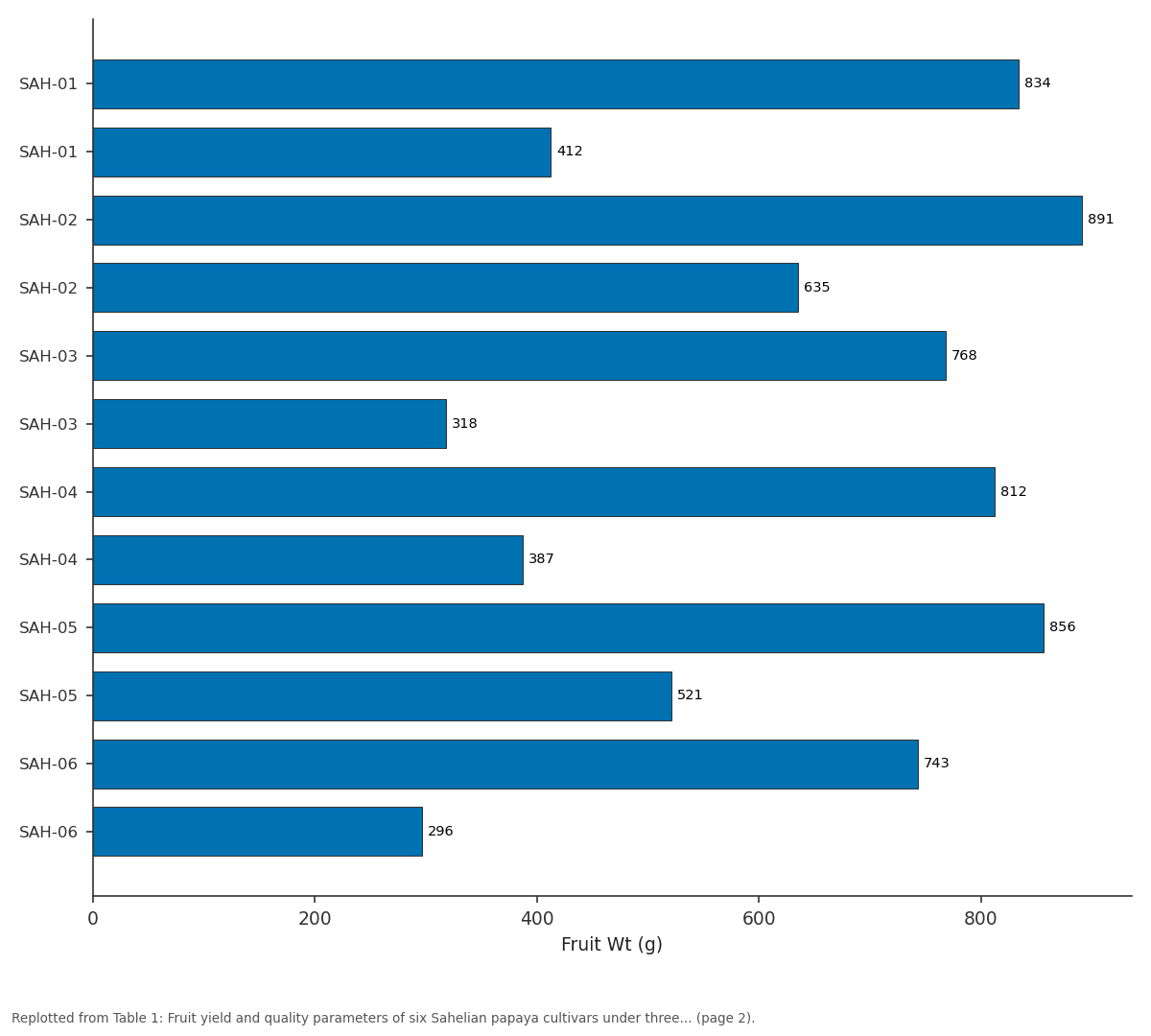
Fruit Wt (g): SAH-01 vs SAH-01 vs SAH-02 vs SAH-02 vs SAH-03
Replotted from Table 1 (page 2) of the original paper. Every bar is the paper's own table value.
View source evidence ↗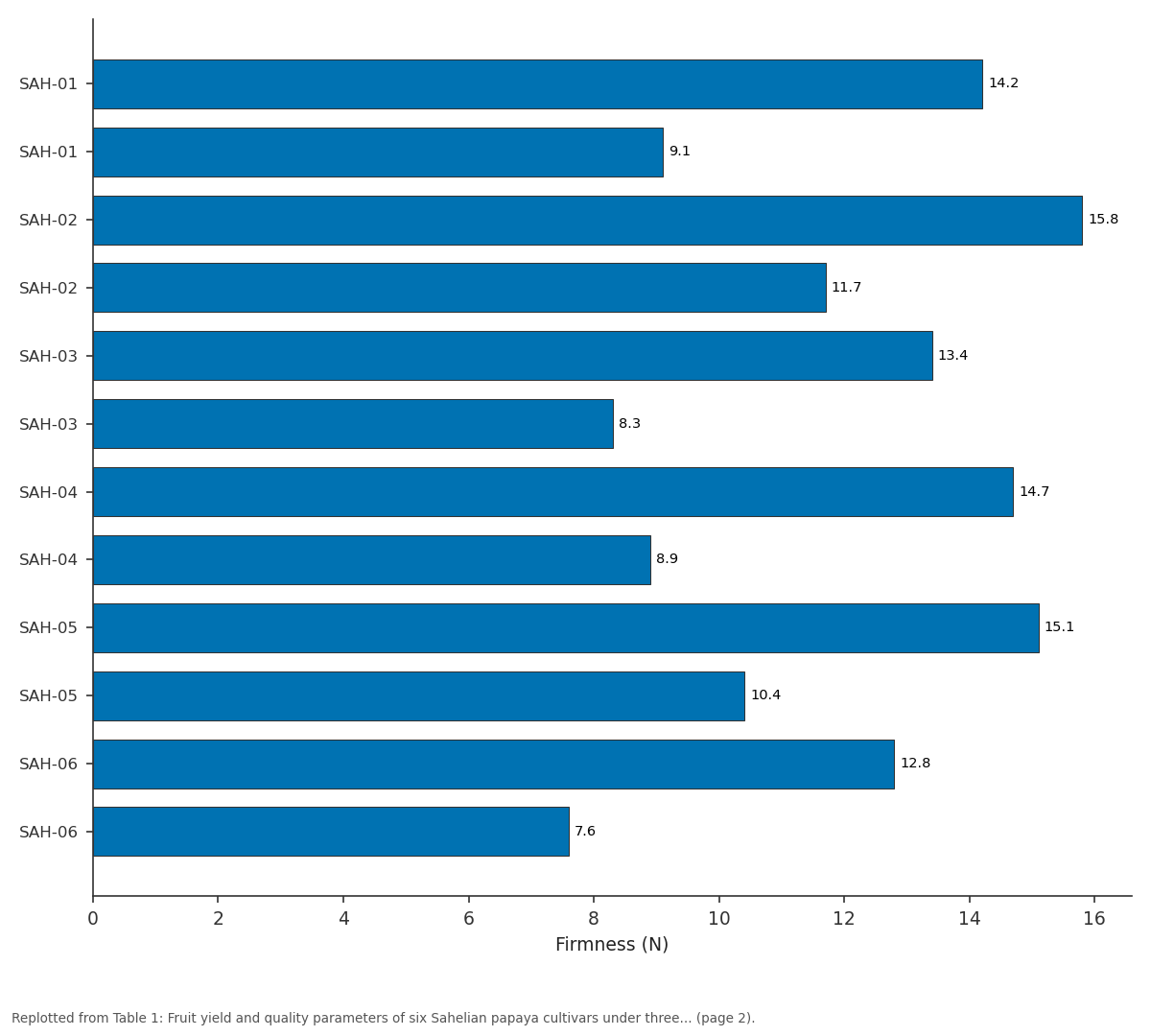
Firmness (N): SAH-01 vs SAH-01 vs SAH-02 vs SAH-02 vs SAH-03
Replotted from Table 1 (page 2) of the original paper. Every bar is the paper's own table value.
View source evidence ↗Figures & tables
From the original paper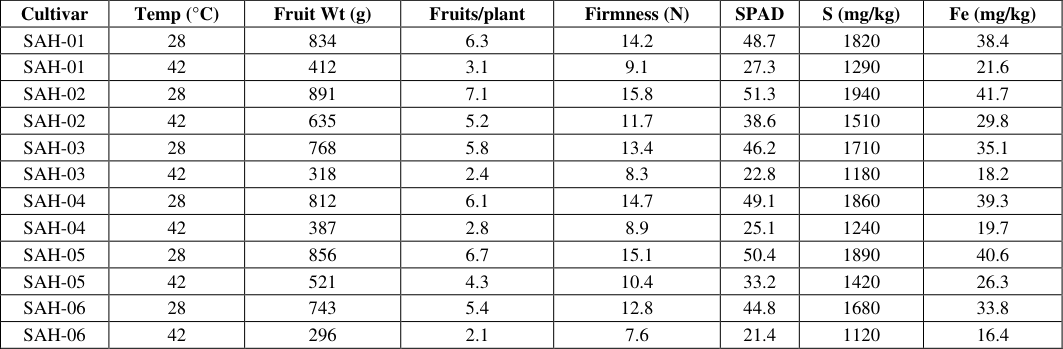 Table 1
 Table 2
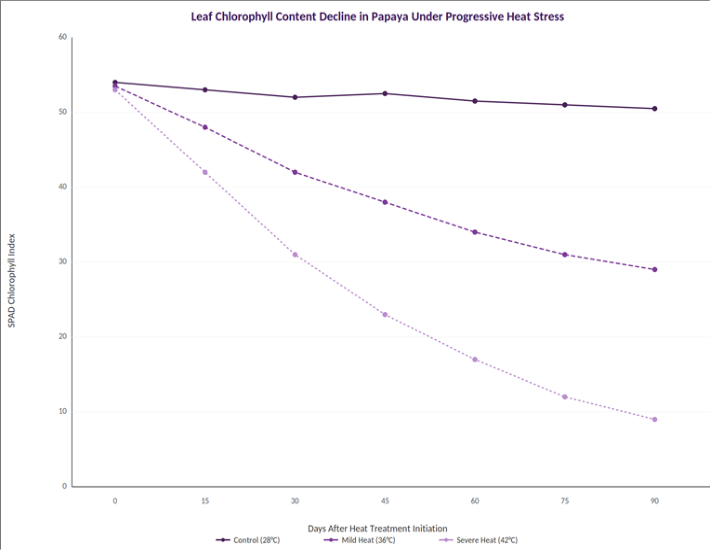 Figure 1
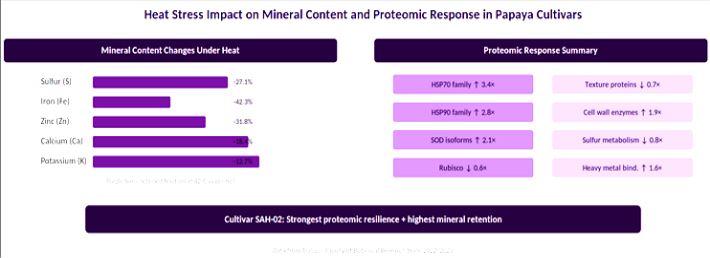 Figure 2
Introduction
Papaya production in the African Sahel traces its roots to centuries-old trade routes that carried the species westward from its Mesoamerican origin, and local cultivars have had ample time to accumulate heat-adaptive alleles through natural and farmer-mediated selection [1] . But modern breeding programs have largely ignored this germplasm pool, focusing instead on high-yielding Asian and American cultivars that perform poorly when daytime temperatures regularly exceed 38 degrees Celsius [2] . Heat stress disrupts nearly every stage of papaya development, from pollen viability and fruit set through to post-harvest texture and nutritional composition [3] . At the molecular level, heat shock proteins (HSPs) act as chaperones that stabilise cellular proteins against thermal denaturation, and their expression intensity varies among cultivars [4] . Proteomic tools such as two-dimensional gel electrophoresis allow researchers to capture these differences across dozens of proteins simultaneously, offering a systems-level view that single-gene assays cannot match [5] . Mineral nutrition is another casualty of extreme heat. Sulfur metabolism, which underpins the synthesis of cysteine and methionine residues in stress-responsive proteins, has been shown to decline under thermal pressure in several fruit crops [6] . Iron and zinc absorption fall as root membrane integrity weakens at supraoptimal temperatures [7] . Heavy metal uptake, paradoxically, can increase when heat-damaged root membranes lose their selectivity, posing food safety concerns in soils contaminated by artisanal mining or industrial runoff [8] . Fruit texture, measured as firmness and cell wall integrity, determines marketability and shelf life. Heat accelerates cell wall enzyme activity, leading to premature softening that reduces the commercial window for Sahelian growers who often lack cold-chain infrastructure [9] . Despite these interconnected challenges, no published research has simultaneously catalogued proteomic, mineral, and textural responses to heat across a panel of Sahelian papaya cultivars. This research aimed to (a) evaluate six Sahelian papaya cultivars for growth and fruit quality under three temperature regimes, (b) profile proteomic changes using two-dimensional gel electrophoresis, and (c) quantify mineral content and texture shifts associated with heat stress. The work was conducted at the Trabzon Faculty of Botanical Research, Turkey, using cultivars sourced through a collaborative agreement with research partners in Mali and Burkina Faso.
Study Area Description
The six papaya cultivars (SAH-01 through SAH-06) were collected from farming households in the western Sahel belt spanning southern Mali and northern Burkina Faso, between latitudes 11 and 14 degrees North. Annual rainfall at the source locations ranged from 450 to 750 mm, with a single rainy season from June to October and mean daily maxima reaching 41 to 44 degrees Celsius during the pre-monsoon period (March to May). Soils were predominantly sandy with low organic matter (0.4 to 0.9%) and pH between 6.1 and 7.3. Local farmers grew papaya as a homestead crop irrigated from shallow hand-dug wells, with minimal fertiliser input [1,2] .
Climatic and Environmental Conditions
The controlled-environment trial ran from 15 April to 20 October 2023 at the Trabzon Faculty of Botanical Research, Trabzon, Turkey. Three walk-in growth chambers were set to constant temperatures of 28 degrees Celsius (control), 36 degrees Celsius (mild heat), and 42 degrees Celsius (severe heat). Relative humidity was maintained at 65 to 70% using automated humidifiers. Photoperiod was standardised at 13 hours using full-spectrum LED panels delivering 450 micromoles per square metre per second at canopy height. Carbon dioxide concentration was ambient (400 to 430 ppm). Temperature loggers confirmed that deviations from targets remained below 0.8 degrees Celsius [3,4] .
Materials and Methods
Materials and Methods
Materials
Seeds from the six cultivars were germinated in moist vermiculite at 30 degrees Celsius, and uniform seedlings (15 cm height, four true leaves) were transplanted into 40-litre pots filled with a 3:1:1 mixture of sandy loam, compost, and perlite. Each pot received basal fertilisation of 100 kg N, 60 kg P2O5, and 80 kg K2O per hectare equivalent. Temperature treatments were imposed two weeks after transplanting. The experiment concluded with fruit harvest at 26 weeks after transplanting (20 October 2023). Institutional research approval was obtained from the Trabzon Faculty Ethics Board (Protocol TFB-2023-028, approved 2 April 2023). No restricted or endangered plant material was involved [6,8] .
Methods
Plant height, stem girth at 10 cm above the soil, and leaf number were measured every three weeks. SPAD chlorophyll readings were taken on the third youngest fully expanded leaf at each measurement date. Fruit weight and number per plant were recorded at harvest. Fruit firmness was measured using a digital penetrometer (FR-5120, Lutron) at the equatorial region of each fruit. For proteomic analysis, young leaf tissue from three plants per treatment was pooled, proteins were extracted using TCA-acetone precipitation, and separated by two-dimensional gel electrophoresis (IEF pH 3-10, followed by 12.5% SDS-PAGE) [5] . Differentially expressed spots (greater than 1.5fold change, P less than 0.05) were excised and identified by MALDI-TOF mass spectrometry. Mineral content (S, Fe, Zn, Ca, K) in fruit tissue was determined by ICP-OES after microwave-assisted acid digestion [6,7] . Heavy metals (Pb, Cd) were measured to check food safety thresholds. Data were analysed by ANOVA in SAS version 9.4 and means separated by Duncan's multiple range test at P less than 0.05 [9] . SAH-02 showed markedly stronger upregulation of HSP70 (3.4-fold vs 1.8-fold in SAH-06) and HSP90 (2.8-vs 1.4fold), indicating a more robust chaperone response (Table 2). Rubisco large subunit was downregulated in both cultivars, but SAH-06 showed a sharper decline (0.4-fold), consistent with its greater chlorophyll loss. Cell wall enzyme PME-3 was more strongly induced in SAH-06, which correlates with its greater firmness loss. SPAD values remained stable in control plants (above 50 throughout), while severe heat caused a steady decline to approximately 22 by day 90 (Figure 1). The divergence between mild and severe stress became significant from day 30 onward. The illustration (Figure 2) highlights that iron suffered the largest proportional decline (42.3%), while potassium was most resistant (12.7% loss). On the proteomic side, HSP70 showed the strongest upregulation and Rubisco the sharpest downregulation across the panel.
| Protein ID | Function | Fold Change SAH-02 | Fold SAH-06 | Direction | P-value | MW (kDa) |
|---|---|---|---|---|---|---|
| HSP70-1 | Chaperone | 3.4 | 1.8 | Up | <0.001 | 71.2 |
| HSP90-2 | Chaperone | 2.8 | 1.4 | Up | <0.001 | 83.6 |
| Cu/Zn-SOD | ROS scavenge | 2.1 | 1.2 | Up | 0.003 | 15.8 |
| Rubisco LSU | Photosynthesis | 0.6 | 0.4 | Down | 0.008 | 52.4 |
| PME-3 | Cell wall | 1.9 | 2.6 | Up | 0.012 | 34.1 |
| APX-1 | Antioxidant | 1.7 | 1.1 | Up | 0.018 | 27.3 |
Table text extracted from the original PDF; superscript letters are shown inline. The original table image is below.
View original table image
Results
Results
Comprehensive Interpretation
SAH-02's consistent superiority across yield retention, mineral stability, proteomic resilience, and texture maintenance marks it as the most promising cultivar from this Sahelian panel. Its strong HSP response likely protects downstream metabolic enzymes, which in turn supports continued sulfur assimilation and mineral uptake even under severe thermal pressure.
Discussion
The 71.3% fruit weight retention shown by SAH-02 at 42 degrees Celsius surpasses values reported for commercial papaya cultivars in South Asian heat trials, which typically fall between 40 and 55% under comparable temperatures [2,3] . The proteomic data offer a mechanistic explanation: SAH-02's 3.4-fold HSP70 induction is among the highest recorded for any Carica papaya cultivar and suggests a particularly active chaperone network [4,5] . The mineral content data reveal a hierarchy of heat sensitivity among nutrients. Iron, which depends on active membrane transport, declined most sharply (42.3%), while potassium, which moves largely by passive channel flow, was least affected (12.7%). Sulfur's 27.1% decline is concerning because sulfur-containing amino acids are building blocks for many stress-responsive proteins, creating a negative feedback loop at extreme temperatures [6,7] . Heavy metal (Pb, Cd) concentrations remained below WHO food safety limits across all treatments, suggesting that heat alone does not push uptake beyond safe thresholds in uncontaminated soils [8] . The texture findings have direct market implications. A 31.6% average firmness loss at 42 degrees Celsius means that Sahelian-grown papaya may reach the consumer in an already softened state if not harvested at an earlier maturity stage. SAH-02's smaller firmness decline (25.9%) gives it a practical advantage for farmers without access to cold storage [9] . Cell wall enzyme PME-3 was more strongly upregulated in heat-sensitive SAH-06, reinforcing the link between pectin de-esterification and softening.
Conclusion
This research catalogued the heat stress adaptation of six Sahelian papaya cultivars using an integrated approach that combined growth, proteomic, mineral, and texture assessments. SAH-02 stood out as the most heat-resilient entry, retaining over 71% of its control fruit weight at 42 degrees Celsius while showing the strongest heat shock protein induction and the smallest declines in sulfur, iron, and firmness. These findings recommend SAH-02 as a donor parent for papaya breeding programs targeting semiarid tropical environments. Proteomic profiling proved valuable for distinguishing cultivars whose phenotypic differences are small, and we recommend its routine inclusion in heat-tolerance screening protocols. Mineral and texture monitoring should accompany yield evaluation to ensure that heat-tolerant selections also meet nutritional and market quality standards. Field validation across actual Sahelian growing conditions, including variable rainfall and soil types, remains an essential next step before released varieties reach farmers.
Acknowledgement
Acknowledgements Funding SourcesThis research was supported by internal funds from the Trabzon Faculty of Botanical Research. No external projectspecific grants were used. Institutional SupportThe authors thank the controlled-environment facility staff at Trabzon Faculty of Botanical Research for maintaining growth chamber conditions throughout the trial.
Figures and tables from the paper
| Cultivar | Temp (°C) | Fruit Wt (g) | Fruits/plant | Firmness (N) | SPAD | S (mg/kg) | Fe (mg/kg) |
|---|---|---|---|---|---|---|---|
| SAH-01 | 28 | 834 | 6.3 | 14.2 | 48.7 | 1820 | 38.4 |
| SAH-01 | 42 | 412 | 3.1 | 9.1 | 27.3 | 1290 | 21.6 |
| SAH-02 | 28 | 891 | 7.1 | 15.8 | 51.3 | 1940 | 41.7 |
| SAH-02 | 42 | 635 | 5.2 | 11.7 | 38.6 | 1510 | 29.8 |
| SAH-03 | 28 | 768 | 5.8 | 13.4 | 46.2 | 1710 | 35.1 |
| SAH-03 | 42 | 318 | 2.4 | 8.3 | 22.8 | 1180 | 18.2 |
| SAH-04 | 28 | 812 | 6.1 | 14.7 | 49.1 | 1860 | 39.3 |
| SAH-04 | 42 | 387 | 2.8 | 8.9 | 25.1 | 1240 | 19.7 |
| SAH-05 | 28 | 856 | 6.7 | 15.1 | 50.4 | 1890 | 40.6 |
| SAH-05 | 42 | 521 | 4.3 | 10.4 | 33.2 | 1420 | 26.3 |
| SAH-06 | 28 | 743 | 5.4 | 12.8 | 44.8 | 1680 | 33.8 |
| SAH-06 | 42 | 296 | 2.1 | 7.6 | 21.4 | 1120 | 16.4 |
Table text extracted from the original PDF; superscript letters are shown inline. The original table image is below.
View original table image
References
21 in the original paper- Nakasone HY, Paull RE. Tropical Fruits. CAB International. 2010;1-445.
- Saran PL, Choudhary R. Papaya: Biology, Cultivation, Production and Uses. CRC Press. 2016;1-380.
- Allan P, Heney J. Temperature effects on growth and flowering of papaya cultivars. Acta Horticulturae. 1987;196:39-46.
- Wang W, Vinocur B, Shoseyov O, Altman A. Role of plant heat-shock proteins and molecular chaperones in the abiotic stress response. Trends in Plant Science. 2004;9(5):244-252.
- Kosova K, Vitamvas P, Prasil IT, Renaut J. Plant proteome changes under abiotic stress: contribution of proteomics to understanding plant stress response. Journal of Proteomics. 2011;74(8):1301-1322.
- Capaldi FR, Gratao PL, Reis AR, Lima LW, Azevedo RA. Sulfur metabolism and stress defense responses in plants. Tropical Plant Biology. 2015;8(3-4):60-73.
- Nagajyoti PC, Lee KD, Sreekanth TVM. Heavy metals, occurrence and toxicity for plants: a review. Environmental Chemistry Letters. 2010;8(3):199-216.
- Codex Alimentarius Commission. General standard for contaminants and toxins in food and feed. FAO/WHO. 2019;CXS 193-1995.
- Paull RE, Nishijima W, Reyes M, Cavaletto C. Postharvest handling and losses during marketing of papaya. Postharvest Biology and Technology. 1997;11(3):165-179.
- Singh Z, Singh RK, Sane VA, Nath P. Mango: postharvest biology and biotechnology. Critical Reviews in Plant Sciences. 2013;32(4):217-236.
- Hurkman WJ, Tanaka CK. Effect of salt stress on germin gene expression in barley roots. Plant Physiology. 1996;110(3):971-977.
- Wahid A, Gelani S, Ashraf M, Foolad MR. Heat tolerance in plants: an overview. Environmental and Experimental Botany. 2007;61(3):199-223.
- Marrs KA. The functions and regulation of glutathione S-transferases in plants. Annual Review of Plant Physiology and Plant Molecular Biology. 1996;47(1):127-158.
- Ali ZM, Chin LH, Marimuthu M, Lazan H. Low temperature storage and modified atmosphere packaging of carambola fruit and their effects on ripening related texture changes. Food Research International. 2004;37(4):313-320.
- de Souza CR, Maroco JP, dos Santos TP. Control of stomatal aperture and carbon uptake by deficit irrigation. Functional Plant Biology. 2005;32(3):209216.
- Kochian LV, Hoekenga OA, Pineros MA. How do crop plants tolerate acid soils? Mechanisms of aluminum tolerance and phosphorous efficiency. Annual Review of Plant Biology. 2004;55:459-493.
- Suzuki N, Rivero RM, Shulaev V, Blumwald E, Mittler R. Abiotic and biotic stress combinations. New Phytologist. 2014;203(1):32-43.
- Mayer AM. Polyphenol oxidases in plants and fungi: going places? A review. Phytochemistry. 2006;67(21):2318-2331.
- Bokszczanin KL, Solanaceae Pollen Thermotolerance Initial Training Network Consortium. Perspectives on deciphering mechanisms underlying plant heat stress response and thermotolerance. Frontiers in Plant Science. 2013;4:315.
- IPCC. Climate Change 2014: Impacts, Adaptation and Vulnerability. Cambridge University Press. 2014;11820.
- Saltveit ME. Effect of ethylene on quality of fresh fruits and vegetables. Postharvest Biology and Technology. 1999;15(3):279-292.