
Research article · 2026 · Full text
International Journal of Horticulture and Food ScienceInvestigating the effect of yellow coffee extract combined with magnesium oxide nanoparticles (MgO-NPs) on selected physiological parameters in diabetic rats
Volume 8(4) · Pages 85–89 · DOI: 10.33545/26631067.2026.v8.i4b.530 ↗
Research areasNatural Antidiabetic Agents StudiesCoffee research and impactsNanoparticles: synthesis and applications
Abstract
Author-writtenThis study investigated how combining yellow coffee extract with magnesium oxide nanoparticles (MgO-NPs) affects physical health over a 28-day trial using laboratory rats to determine how it protects from developing Type II diabetes. Results showed that feeding laboratory rats acceptable yellow coffee extract and MgO-NPs results in reduced blood glucose levels, weight loss, and better lipid profiles. Also, feeding adult male albino rats yellow coffee extract with MgO-NPs resulted in lower blood glucose levels and decreased likelihood of developing diabetes.
Summary
Source-checkedPlain-language reading of the full paper, prepared with AI and checked against the text. Each point links to the authors' own words.
Why it matters
- Yellow coffee is a globally grown crop valued for its medicinal and nutritional properties. View evidence ↗
- Moderate consumption of yellow coffee is associated with the prevention of liver disorders and type 2 diabetes. View evidence ↗
- Magnesium oxide nanoparticles (MgO-NPs) are used for their antioxidant properties and their ability to control blood sugar and improve thyroid function. View evidence ↗
The question
- The study aimed to determine if a combination of yellow coffee extract and MgO-NPs could protect laboratory rats from developing Type II diabetes over 28 days. View evidence ↗
What they did
- The groups consisted of a healthy control, an untreated diabetic control, and three diabetic groups receiving either 150 mg/kg/day of yellow coffee extract, 2 mg/kg/day of MgO-NPs, or both. View evidence ↗
What they found
- The combination treatment (G5) lowered liver enzyme levels compared to the diabetic control (G2), with AST decreasing from 64.05±0.4 to 45.02±0.6 IU/L and ALT from 57.30±1.2 to 41.30±1.4 IU/L. View evidence ↗
- Immunity levels were significantly improved in the combination group (G5) compared to the diabetic control (G2), with IgA increasing from 3.04±1.6 to 122.05±1.2 mg/dl and IgG from 3.50±5.0 to 20.03±1.25 mg/dl. View evidence ↗
- The combination treatment (G5) improved lipid profiles compared to the diabetic control (G2), reducing LDL from 129.20±1.4 to 42.13±1.4 mg/dl and Cholesterol from 162.09±1.0 to 89.11±1.0 mg/dl. View evidence ↗
What it means
- The authors conclude that the combination of yellow coffee extract and MgO-NPs effectively reduces blood glucose, promotes weight loss, and improves lipid profiles in diabetic rats. View evidence ↗
Visual summary
3 visualsIllustrations explain the paper; charts are replotted from the paper's own table values.
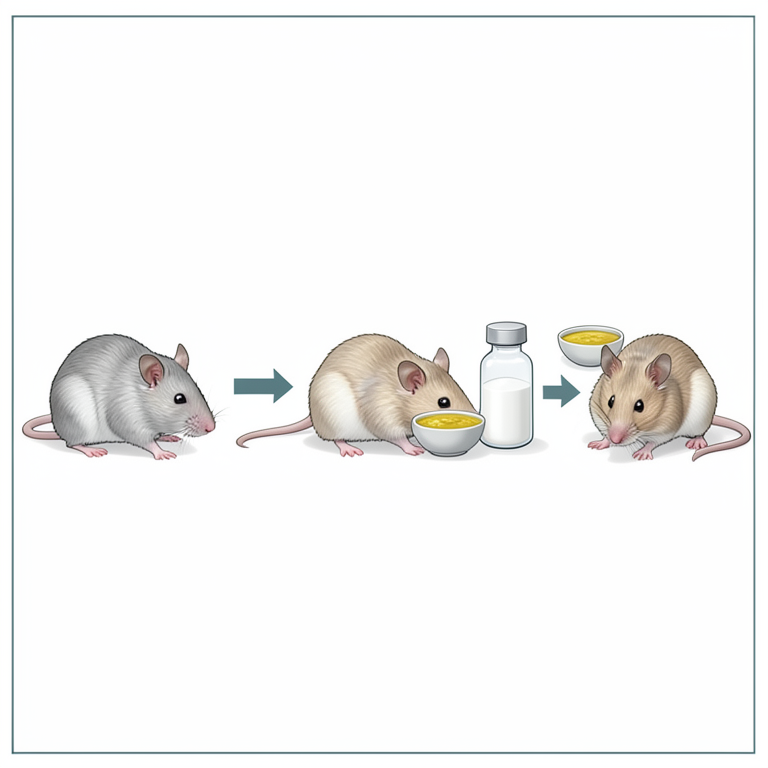
Experimental Group Layout
AI-generated conceptual illustration (Laboratory rats). It explains the idea and does not show study data.
View source evidence ↗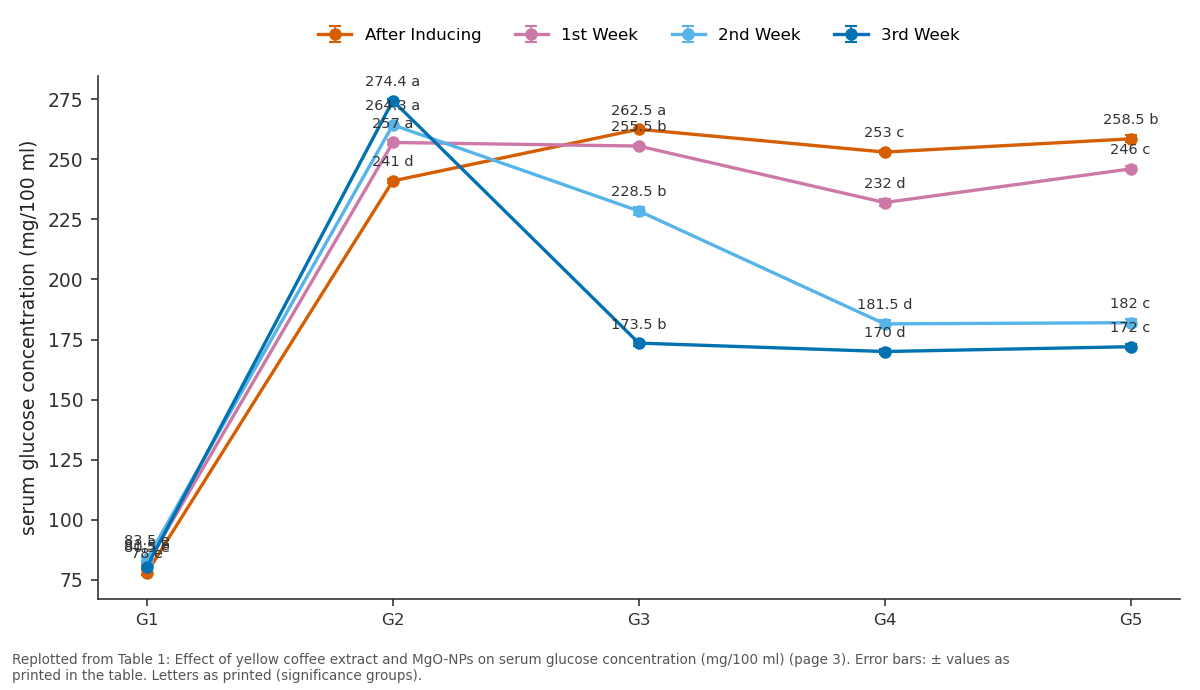
After Inducing and 1st Week and more: G1 vs G2 vs G3 vs G4 vs G5
Replotted from Table 1 (page 3) of the original paper. Every bar is the paper's own table value.
View source evidence ↗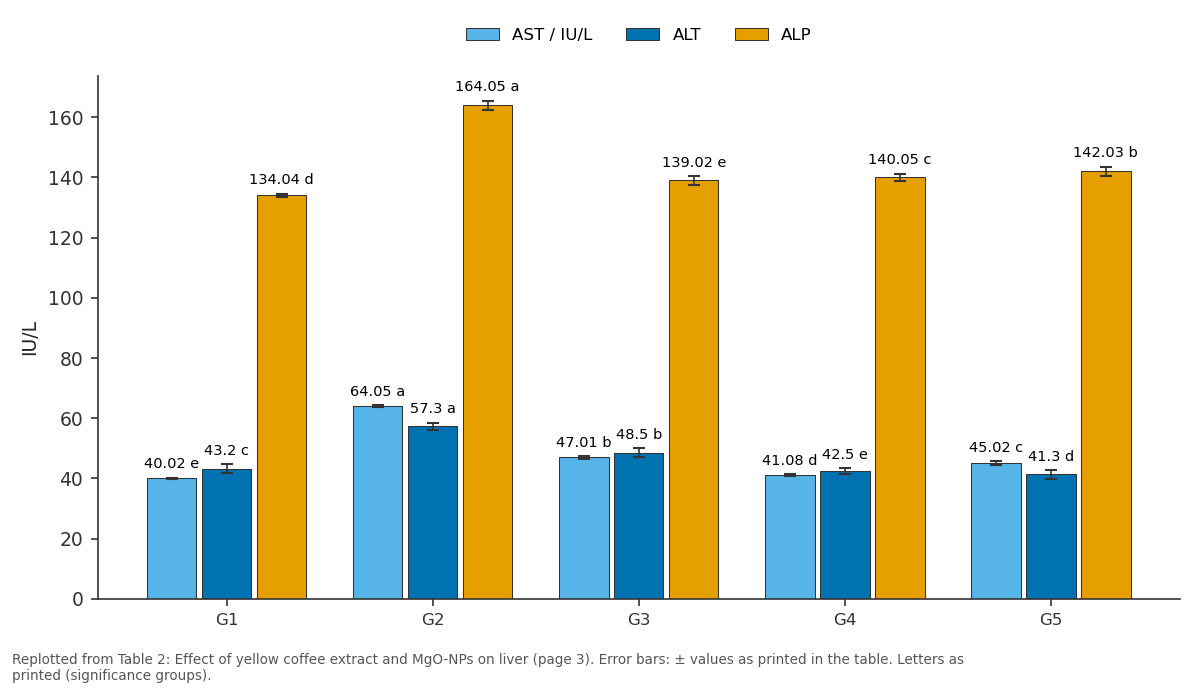
AST / IU/L and ALT and more: G1 vs G2 vs G3 vs G4 vs G5
Replotted from Table 2 (page 3) of the original paper. Every bar is the paper's own table value.
View source evidence ↗Figures & tables
From the original paper Table 1
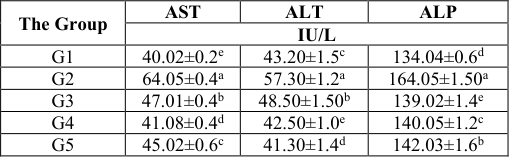 Table 2
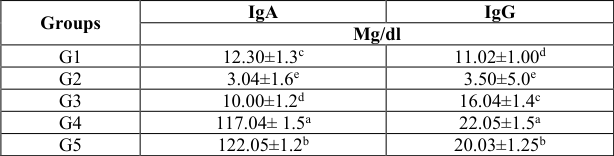 Table 3
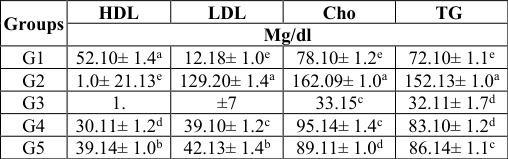 Table 4
Introduction
Because its genetic make-up is different from other varieties of coffee (such as Arabica and Robusta), yellow coffee tastes and smells different from both of them. Yellow coffee is grown all over the world and is considered an essential crop because of its nutritional and medicinal value. It grows in tropical areas of the world and is produced by over 100 million people in developing countries (including Latin America, Africa, Asia, and the Arabian Gulf). Approximately 1,500 tons of yellow coffee are produced every year [1] . The main chemical constituents found in yellow coffee include proteins, lipids, carbohydrates, mineral salts, caffeine, phenolic compounds, and organic acids; therefore, yellow coffee is an important source of nutrition for consumers [2] . Several studies have shown that consuming yellow coffee in moderation may help prevent chronic diseases, particularly type 2 diabetes and liver disorders. In addition, certain antioxidants found in yellow coffee may help fight cancerous tumors [3] . Magnesium oxide nanoparticles (MgO-NPs) have a variety of uses, including controlling blood sugar levels and improving thyroid function; they also have an antioxidant property, meaning that they can assist in preventing damage to cells due to free radicals and aiding in the prevention of high cholesterol levels. This substance is also necessary for the functioning of the brain and nerves, as well as providing enhanced immunity levels [4] .
Nutritional Importance and Chemical Composition of Yellow Coffee
Many of the natural chemical compounds contained within yellow coffee assist with the medicinal and physiological properties of yellow coffee. The most notable of these include fats, fatty acids, proteins, minerals (such as calcium, magnesium, phosphorus, and potassium), monosaccharides, and polysaccharides. Drinking yellow coffee in moderation and at an acceptable concentration level is safe and healthy for most adults [5] . Although there is no exact dosage recommendation for yellow coffee, it is not suggested that yellow coffee extracts be consumed in amounts greater than 250mg/kg on a daily basis. Prior scientific studies have demonstrated that yellow coffee consumption has a positive effect on managing diabetes by decreasing the insulin levels in the bloodstream, which helps lower high blood pressure in diabetic people [6] . Yellow coffee may help with weight loss and reducing obesity. It does this because of the nutrients it has; one of them is called chlorogenic acid. There are many advantages to consuming chlorogenic acid, and many studies have shown that this chemical is safe and effective for promoting weight loss by lowering the percentage of body fat, balancing glucose and insulin levels, and increasing feelings of fullness [7] . Yellow coffee contains phenolic molecules, a type of powerful antioxidant. Antioxidants from these molecules help protect the lining of blood vessels, prevent damage to the liver, and aid in the functioning of the brain and nerves by reducing the absorption of sugars and carbohydrates during digestion [8] . Yellow coffee has a significant amount of caffeine, which offers excellent nutritional and physiological benefits and can be beneficial in treating diabetes and Alzheimer's disease [9] .
1.2
Nutritional Significance and Chemical Characteristics of Magnesium Oxide Nanoparticles (MgO-NPs) Magnesium oxide nanoparticles (MgO-NPs) have drawn much scientific interest due to their unique properties as a result of their nanoscale size, most of which are between 1 and 100 nm long. In terms of chemistry, MgO-NPs consist mainly of magnesium oxide (MgO), and maintain a stoichiometric ratio of 1.0:1.0 between magnesium (Mg) ions and oxygen (O) ions [10] . This well-defined chemical composition confers MgO-NPs with high stability and excellent functional properties for use in bioengineering and commercial manufacturing applications.
Materials and Methods
Materials and Methods
Sample Preparation
Local Tikrit markets provide yellow coffee samples, which have been purified before extraction following [11] . Postextraction, the coffee is refrigerated until ready for use. Chinese sourced MgO-NPs were purchased from Areej Al-Furat Medical and Laboratory supplies Co., an authorized dealer located in Baghdad.
Lab Animals preparation
The study utilized male adult (180-185g, 6-7 weeks) Sprague-Dawley rats purchased from the College of Veterinary Medicine at Tikrit University. Following the acquisition, the rats were kept in cages composed of metal with a metal slotted top and lined with wood shavings. There was a complete change of wood shavings every two (2) days, and cages were maintained in a sanitary condition. All rats were housed under laboratory conditions with a 12hour light/12-hour dark photoperiod at 25ºC. Two acclimatization days were allowed to ensure each rat was healthy and adapting to its new home. Food and water were always available to each rat. Each rat was maintained under laboratory conditions with respect to light and dark photoperiod; room temperature was constantly maintained at 25ºC. Acclimatization to the new environments allowed each rat to have 2 days to confirm they were free from disease. All animals were fed and watered continuously while being monitored throughout the study.
Experimental Induction of Diabetes:
Male rats were made diabetic by injecting them with alloxan monohydrate (from BDH, UK), a commonly used substance for inducing diabetes mellitus in animals. To make sure the drug was active, alloxan was made just before the injection by dissolving 1 g of alloxan in 10 ml of normal saline, which was injected under the skin at a dose of 100 mg/kg body weight according to the method of Owoyele et al. (2005). The rats fasted for 24 hours before the injection to increase the efficacy of the drug. After receiving alloxan, the rats received standard lab chow and drank 5% glucose solution for 24 hours after the injection to prevent the development of acute hypoglycemia as a result of the rapid destruction of beta pancreatic cells and the accompanying rapid release of large amounts of insulin that would normally cause a significant decrease in blood sugar levels. All control rats remained healthy and only received 1 ml of normal saline and were given free access to food and water for the duration of the study. Glucose in the urine of the rats that received alloxan was tested for 10 consecutive days using Urine Reagent Strips (MACHEREY-NAGEL, Germany), with urine being checked once per day, and confirming that the amount of glucose in the urine of those rats was greater than 200 mg/100 ml with signs of extreme tiredness and frequent urination, indicating the presence of diabetes [12] .
Experimental Design for Laboratory Animals
Twenty-five rats participating in the trial were randomly allocated among five groups with five rats per group. Group 1: Control group -no treatment administered Group 2 (Diabetes induced Control Group) -Diabetes was induced in this group; the animals received no treatment but received both food and water during the entire duration of the trial. Group 3 (Diabetes induced) -These rats received a standard diet along with 150 mg/kg/day of yellow coffee extract Group 4 (Diabetes induced) -These rats received a standard diet along with 2 mg/kg/day of MgO-NPs Group 5 (Diabetes induced) -These rats received a standard diet along with 150 mg/kg/day of yellow coffee extract and 2 mg/kg/day of MgO-NPs
Blood samples
The rats were deprived of food for 10 hours before receiving chloroform anesthesia once the trial was finished. The animal was put into a glass container that was sealed, and a needle was used to take blood from its heart. The serum was obtained by centrifuging about 4-5 ml of blood into plastic tubes and centrifuging them for 15 minutes at 3000 rpm in a centrifuge. The tubes were then kept at 2°C until the analyses were carried out.
Results and Discussion
Results and Discussion
Effect of Yellow Coffee Extract and Magnesium Oxide (MgO-NPs) Nanoparticles on Blood Glucose
The results shown in Table (1-1) indicate that the induction of type 2 diabetes with alloxan resulted in a significant increase (P>0.05) in the serum glucose concentration of untreated induced diabetic male mice throughout the experimental period compared to the healthy control group. Healthy rats and rats with induced diabetes were studied for 28 days. Different letters on the rates in the same column indicate significant differences between the rates at a probability level of 0.05. This is because the alloxan substance given to the study mice attacked pancreatic B cells, which led to the production of large quantities of free radicals that accumulated significantly and became toxic and destructive to pancreatic beta cells responsible for producing insulin, and disrupted the functions of cellular insulin receptors. Thus, the process of cells receiving glucose stopped significantly, which activates the processes of glycogen breakdown and glucose formation from non-carbohydrate sources [13] . This result is consistent with [14] , who reported that the production of large quantities of free radicals damaged the pancreatic cells responsible for insulin production in animals with induced diabetes. Table 1-1 displays the impact of oral yellow coffee with MgO-NPs on blood glucose levels in mice receiving treatment. In the positive control group, the third group of animals was given yellow coffee, the fourth group of animals was given MgO-NPs, and the fifth group was fed both yellow coffee and MgO-NPs. The blood glucose findings validated the diagnosis before treatment.
| Group | After Inducing | 1st Week | 2nd Week | 3rd Week | 4th Week / End of Experiment |
|---|---|---|---|---|---|
| G1 | 78.00±1.00ᵉ | 81.50±1.50ᵉ | 83.50±1.00ᵉ | 80.50±0.50ᵉ | 82.50±1.00ᵉ |
| G2 | 241.00±1.00ᵈ | 257.00±1.00ᵃ | 264.30±0.50ᵃ | 274.40±0.50ᵃ | 279.01±1.00ᵃ |
| G3 | 262.50±0.50ᵃ | 255.50±1.00ᵇ | 228.50±1.50ᵇ | 173.50±1.00ᵇ | 152.50±1.00ᶜ |
| G4 | 253.00±1.00ᶜ | 232.00±1.50ᵈ | 181.50±1.50ᵈ | 170.00±1.00ᵈ | 157.00±1.50ᵇ |
| G5 | 258.50±1.50ᵇ | 246.00±1.00ᶜ | 182.00±1.50ᶜ | 172.00±1.00ᶜ | 143.00±1.50ᵈ |
Table text extracted from the original PDF; superscript letters are shown inline. The original table image is below.
View original table image
The results of the present study indicate that blood glucose levels in the groups receiving yellow coffee, MgO-NPs, or both agents were significantly less than those of the untreated group throughout the duration of this study. The antioxidant properties of coffee are due in part to the many different kinds of compounds (such as vitamins, phenolic acids, protein) that offer their own types of antioxidants. These antioxidant compounds in coffee can help with weight loss by helping to reduce your blood glucose and help the body to stop developing obesity when taken with other nutrients that are found in yellow coffee. Thanks to MgO-NPs, you get a reduction in glucose levels in the blood serum due to stimulation of the pancreas, creating Insulin, a necessary hormone for maintaining blood sugar levels, and the function of the immune system [15] .
Effects of Yellow Coffee Extract and MgO-NPs on Serum Liver Enzymes in Induced Diabetic and Healthy
Male Rats: Table (1-2) shows a significant increase (P<0.05) in the levels of the liver enzymes AST, ALT, and ALP in the control group compared to the healthy control group throughout the experimental period. Different letters in the same column indicate significant differences between the rates at p≤ 0.05. The findings are in line with the findings of [16] . regarding the rise in AST, ALT, and ALP enzyme levels in diabetic mice because of the increased enzyme levels brought on by the death of liver cells and, as a result, the death of cardiac tissue [17] . Diabetes has been shown to contribute to increased enzyme activity associated with metabolic dysfunction and decreased hepatic function; therefore, it is hypothesized that the metabolic activity of hepatocytes will also be increased and consequently lead to higher concentrations of the enzymes aspartate aminotransferase (AST), alanine aminotransferase (ALT), and alkaline phosphatase (ALP) [18] . Table 1-2 also reflects [19] , who suggested that ASTs, ALTs, and ALPs activities were reduced considerably. The reason for this decrease is due to the active ingredients in coffee, which are a natural antioxidant that works to break down free radicals and reduce their activity and effect, thus preventing the destruction of cell membranes through the oxidation process and maintaining the level of liver enzyme values.
The results of the current study are consistent with what was stated [20] , that the improvement in the level of liver enzymes, as shown in Table (1-2), is due to MgO-NPs acting as a protective substance for the liver, and having a positive effect against liver damage caused by oxidative stress, improving its vital functions and reducing the results of oxidative stress damage [21] .
Effect of Yellow Coffee Extract and Magnesium Oxide (MgO-NPs) Nanoparticles on Immunity Levels
Table 1-3 shows a significant decrease (p< 0.05) in the serum concentrations of IgA and IgG immunoglobulins in the studied animals between the infected control group and the healthy, uninfected control group. Different letters in the same column indicate significant differences between the rates at p≤ 0.05. The animals' alloxan-induced diabetes caused the immune system to attack the pancreas, destroying insulin-producing cells and impairing immune system function, as evidenced by the results, which showed a significant decrease in the values of (IgA and IgG). This is in line with the findings of [22] , who suggested that diabetes is an immunosuppressive condition due to its impact on the body's synthesis of immunoglobulins (IgG and IgA). These findings are in agreement with the work of [23] , who showed that the increased immunoglobulin levels in the coffee-treated groups were due to caffeine and phenolic compounds found in coffee. This increases immunity by promoting the production of cytokines and the activation of both the immune system and liver functions in response to disease. This study also confirms the findings of [24] , who found an increase in immunoglobulin levels in rats with diabetes using MgO nanoparticles. The increase in the biological activity of the nanoparticles enhanced their ability to penetrate cells, thus supporting the immune system and supplying energy to the body while acting as an antioxidant to protect from cell damage and disease.
Effect of Yellow Coffee Extract and Magnesium Oxide (MgO-NPs) Nanoparticles on Lipid Levels
Table (1-4) shows that elevated levels of HDL, LDL, Cho, and TG in rats with induced diabetes are very common in this disease (Mohammed and Kakey, 2020). Rats with type 2 diabetes have been reported to have lower LDL, Cho, and TG levels and higher HDL levels when treated with yellow coffee and MgO-NPs. This could be due to the fact that drinking coffee orally increases lipoprotein lipase activity, which lowers TG and, as a result, reduces body fat and increases satiety [25] . According to [26] , coffee's phenolic chemicals protect the liver, function as antioxidants, and reduce blood lipid levels, especially triglycerides. MgO-NPs also strengthen the body's immune system, provide it with energy, and protect cells from damage by maintaining body weight, eliminating obesity, and reducing fat levels as an antioxidant agent, thus reducing fat levels, reducing oxidative damage and preventing cardiovascular diseases [27] .
Figures and tables from the paper
| The Group | AST | ALT | ALP |
|---|---|---|---|
| IU/L | |||
| G1 | 40.02±0.2e | 43.20±1.5c | 134.04±0.6d |
| G2 | 64.05±0.4a | 57.30±1.2a | 164.05±1.50a |
| G3 | 47.01±0.4b | 48.50±1.50b | 139.02±1.4e |
| G4 | 41.08±0.4d | 42.50±1.0e | 140.05±1.2c |
| G5 | 45.02±0.6c | 41.30±1.4d | 142.03±1.6b |
Table text extracted from the original PDF; superscript letters are shown inline. The original table image is below.
View original table image
| Groups | IgA | IgG |
|---|---|---|
| Mg/dl | ||
| G1 | 12.30±1.3c | 11.02±1.00d |
| G2 | 3.04±1.6e | 3.50±5.0e |
| G3 | 10.00±1.2d | 16.04±1.4c |
| G4 | 117.04± 1.5a | 22.05±1.5a |
| G5 | 122.05±1.2b | 20.03±1.25b |
Table text extracted from the original PDF; superscript letters are shown inline. The original table image is below.
View original table image
| Groups | HDL | LDL | Cho | TG |
|---|---|---|---|---|
| Mg/dl | ||||
| G1 | 52.10± 1.4a | 12.18± 1.0e | 78.10± 1.2e | 72.10± 1.1e |
| G2 | 1.0± 21.13e | 129.20± 1.4a | 162.09± 1.0a | 152.13± 1.0a |
| G3 | 1. | ±7 | 33.15c | 32.11± 1.7d |
| G4 | 30.11± 1.2d | 39.10± 1.2c | 95.14± 1.4c | 83.10± 1.2d |
| G5 | 39.14± 1.0b | 42.13± 1.4b | 89.11± 1.0d | 86.14± 1.1c |
Table text extracted from the original PDF; superscript letters are shown inline. The original table image is below.
View original table image
References
27 in the original paper- Hernandez G, Alarcón-Gutiérrez E, Ronzón S. Physical and sensorial quality of yellow caturra coffee after a carbonic maceration process. Journal of Food Science. 2023;18:1-9.
- Ighodaro OM, Adeosun AM, Akinloye PA, Fontes P, Alexandre C, Moreira V. Chemical constituents of coffee. In: 2021. p. 1-48.
- Alasmari KM, Abu Zeid I, al-Attar A. Medicinal properties of Arabica coffee (Coffea arabica) oil: an overview. Journal of Medical Sciences. 2020;8(1):2029.
- Gatou MA, Skylla E, Dourou P, Pippa N, Gazouli M. Magnesium oxide (MgO) nanoparticles: synthetic strategies and biomedical applications. Nanomaterials. 2024;14(3):215.
- Kolb H, Martin S, Kempf K. Coffee and lower risk of type 2 diabetes: arguments for a causal relationship. Nutrients. 2021;13(4):1144.
- Mitiku H, Kim TY, Kang H, Apostolidis E, Lee JY, Kwon YI. Selected coffee (Coffea arabica L.) extracts inhibit intestinal α-glucosidases activities in-vitro and postprandial hyperglycemia in SD rats. BMC Complementary Medicine and Therapies. 2022;22(1):249.
- Hernandez-Alcantara G, Alarcón Gutiérrez E, RonzónSoto S. Physical, chemical, and sensory characteristics in yellow caturra coffee: a comparison between fermenters. Journal of Agriculture and Food. 2025;118.
- Tavirani MR, Farahani M, Tavirani MR, Razzaghi Z, Arjmand B, Khodadoost M. Introducing coffee as a complementary agent beside metformin against type 2 diabetes. Journal of Diabetes and Metabolic Disorders. 2024;11(3):31-40.
- Reis CE, Dórea JG, da Costa TH. Effects of coffee consumption on glucose metabolism: a systematic review of clinical trials. Journal of Traditional and Complementary Medicine. 2019;9(3):184-191.
- Mayekar J. Study on the synthesis and characterization of magnesium oxide nanoparticles synthesized by precipitation method. Journal of Nanotechnology. 2024;1-5.
- Bhattarai RR, Al-Ali H, Johnson SK. Extraction, isolation and nutritional quality of coffee protein. Nutrients. 2022;11(20):3244.
- Okamura T, Pei XY, Miyoshi I, Shimizu Y, TakanashiYanobu R, Mototani Y, et al. Phenotypic characterization of LEA rat: a new rat model of nonobese type 2 diabetes. 2013.
- Mohammed IH, Kakey ES. Effect of Prosopis farcta extracts on some complications (hematology and lipid profiles) associated with alloxan induced diabetic rats. Journal of Biology. 2020;34(1):45-50.
- Burrack AL, Martinov T, Fife BT. T cell-mediated beta cell destruction: autoimmunity and alloimmunity in the context of type 1 diabetes. Frontiers in Endocrinology. 2017;1-15.
- Shaukat A, Hussain G, Irfan S, Ijaz MU, Anwar H. Therapeutic potential of MgO and MnO nanoparticles within the context of thyroid profile and pancreatic histology in a diabetic rat model. 2022;1-18.
- Ahmed M, Zaman E, Sharif T, Zabta M. Antidiabetic and hypolipidemic effects of aqueous methanolic extract of Acacia nilotica pods in alloxan induced diabetic rabbits. Scandinavian Journal of Laboratory Animal Science. 2008;35(1):29-34.
- Kaleem M, Medha P, Ahmed QU, Asif M, Bano B. Beneficial effects of Annona squamosa extract in streptozotocin-induced diabetic rats. Singapore Medical Journal. 2008;49(10):800-804.
- Bi Y, Yang Y, Yuan X, Wang J, Wang T, Liu Z, et al. Association between liver enzymes and type 2 diabetes: a real-world study. Frontiers in Public Health. 2024;110.
- Kumar A, Gupta V, Sachdeva MP. Impact of coffee intake on liver related diseases: a review. 2019;1-5.
- Shehata YM, Mansour MF, Shadad S, Metwally MMM, Arisha AH. Anti-diabetic effects of curcuminmagnesium oxide nanoparticles conjugate in type 2 diabetic rats. Journal of Nanoscience. 2020;263-272.
- Amini M, Ostadsharif M, Naghsh N. Effects of magnetic hydroethanolic extract of Nigella sativa and magnesium oxide nanoparticles (MgO) on catalase gene expression in liver of diabetic male rats. Journal of Medical Sciences. 2022;32(2):123-131.
- Singh R, Gholipourmalekabadi M, Shafikhani SH. Animal models for type 1 and type 2 diabetes: advantages and limitations. 2024;1-17.
- Acıkalın B, Sanlier N. Coffee and its effects on the immune system. Trends in Food Science & Technology. 2021;114:625-632.
- Naguib GH, Kayal RA, El-Aziz GSA, Alnowaiser A, Mazhar J, Mira A, et al. Innovative dual therapy: magnesium oxide nanoparticles and royal jelly for parotid gland protection in diabetic male rats. International Journal of Nanomedicine. 2025;20:1030110324.
- Wulandari A, Hidayati S, Fauziah DT. Antidiabetic effects of robusta coffee bean ethanol extract (Coffea canephora) in diabetic mice with alloxan induction. Journal of Pharmacy. 2024;1584-1591.
- Chien XY. The relationship between coffee and weight management. 2024;128-135.
- Martina SJ, Yohana I. The effect of Gayo Arabica coffee leaf extract on blood sugar levels in rat with type 2 diabetes mellitus. International Journal of Health. 2021;10(10):64-69.