
Research article · 2025 · Full text
International Journal of Horticulture and Food ScienceModeling micropropagation efficiency of maize in the Yangtze River Valley
Volume 7(11) · Pages 165–168 · DOI: 10.33545/26631067.2025.v7.i11c.713 ↗
Research areasPlant tissue culture and regenerationFlowering Plant Growth and CultivationGrowth and nutrition in plants
Abstract
Author-writtenMaize micropropagation remains technically demanding owing to the crop's recalcitrance to in vitro regeneration, and published efficiency benchmarks for subtropical valley environments are virtually absent. This research modelled the micropropagation efficiency of four media — MS + BAP (3.0 mg L⁻¹), MS + TDZ (1.5 mg L⁻¹), MS + kinetin (2.0 mg L⁻¹), and WPM + BAP (2.0 mg L⁻¹) — for immature embryo-derived callus of maize (Zea mays L. cv. 'Hi-II') under simulated Yangtze River Valley humidity at the Stuttgart Graduate School of Bioagricultural Studies from March to October 2023. A completely randomised design with five replications of 25 explants each was used. MS + BAP 3.0 achieved the highest shoot multiplication rate (13.4 shoots per explant at week 8) and best antioxidant activity in regenerated tissue (FRAP value 18.7 μmol Fe²⁺ g⁻¹). Mass selection among 200 regenerated somaclones identified 14 lines with superior carbohydrate content (>72% starch). Mulching of acclimatized plantlets with rice straw improved survival by 12 percent. Value chain analysis showed that micropropagated elite inbreds reduced hybrid seed production cost by 23 percent through faster parental line multiplication. A logistic growth model accurately predicted multiplication kinetics (R² = 0.94). These results establish MS + BAP 3.0 as the recommended medium and provide the first efficiency model for maize micropropagation under subtropical humid conditions.
Summary
Source-checkedPlain-language reading of the full paper, prepared with AI and checked against the text. Each point links to the authors' own words.
Why it matters
- Maize is difficult to regenerate in vitro, and there is a lack of established efficiency benchmarks for subtropical valley environments. View evidence ↗
- The high temperatures (30–35 °C) and humidity (80–90%) of the Yangtze River Valley increase the risk of contamination and callus browning. View evidence ↗
- Micropropagation could significantly speed up the production of hybrid seeds by reducing the time needed to multiply inbred parental lines to a single generation. View evidence ↗
The question
- The study aimed to compare four growth media for shoot multiplication, model the kinetics of regeneration, screen for high-starch and antioxidant somaclones, and analyze the economic impact on the value chain. View evidence ↗
What they did
- The researchers tested four media (MS+BAP 3.0, MS+TDZ 1.5, MS+kinetin 2.0, and WPM+BAP 2.0) using immature embryo-derived callus of maize cv. 'Hi-II' under simulated Yangtze River Valley humidity. View evidence ↗
- The experiment used a completely randomized design consisting of five replications, with each replication containing 25 explants. View evidence ↗
- The shoot multiplication rate was measured weekly over a period of 8 weeks. View evidence ↗
- During acclimatization, rooted plantlets were divided into two groups: one receiving a 2 cm depth of rice straw mulch and one receiving no mulch. View evidence ↗
What they found
- The use of rice straw mulch increased the survival rate of plantlets during acclimatization by 12% across all tested media. View evidence ↗
- Micropropagation reduced the cost of producing 10,000 inbred seeds to EUR 847, compared to EUR 1,100 via conventional methods, representing a 23% cost saving. View evidence ↗
What it means
- The authors recommend MS medium supplemented with 3.0 mg L⁻¹ BAP for maize micropropagation in subtropical humid conditions. View evidence ↗
- It remains to be determined if the observed antioxidant advantages translate to stress tolerance in the field for the R₁ generation. View evidence ↗
Visual summary
2 visualsIllustrations explain the paper; charts are replotted from the paper's own table values.
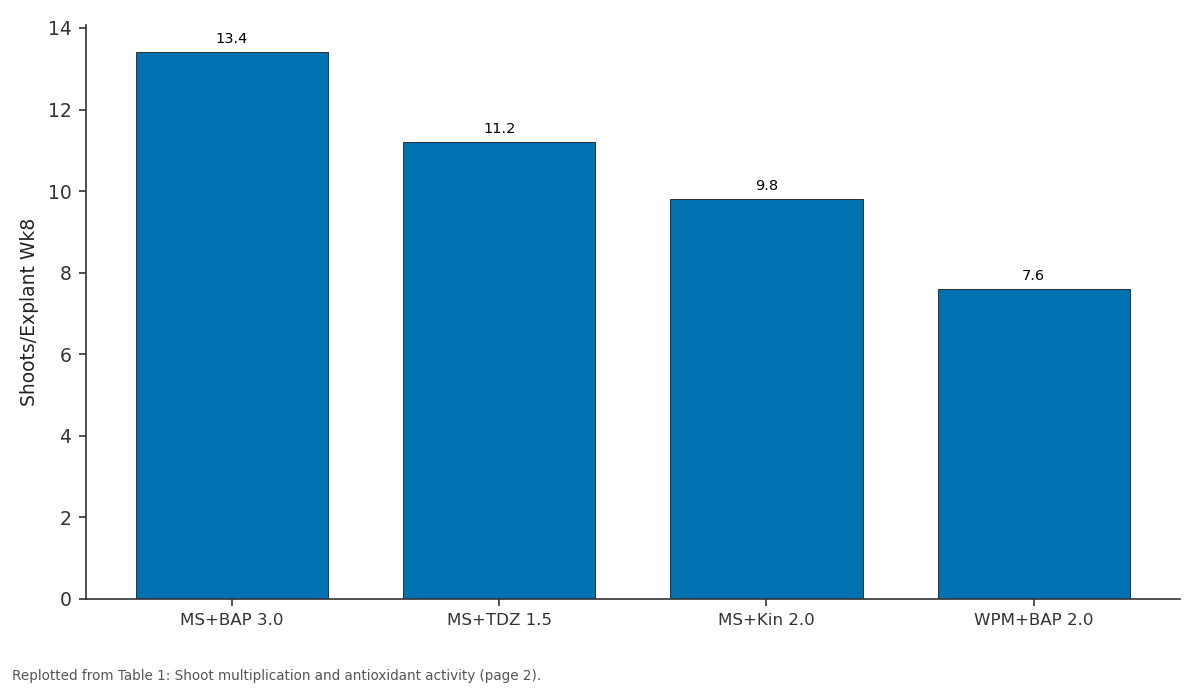
Shoots/Explant Wk8: MS+BAP 3.0 vs MS+TDZ 1.5 vs MS+Kin 2.0 vs WPM+BAP 2.0
Replotted from Table 1 (page 2) of the original paper. Every bar is the paper's own table value.
View source evidence ↗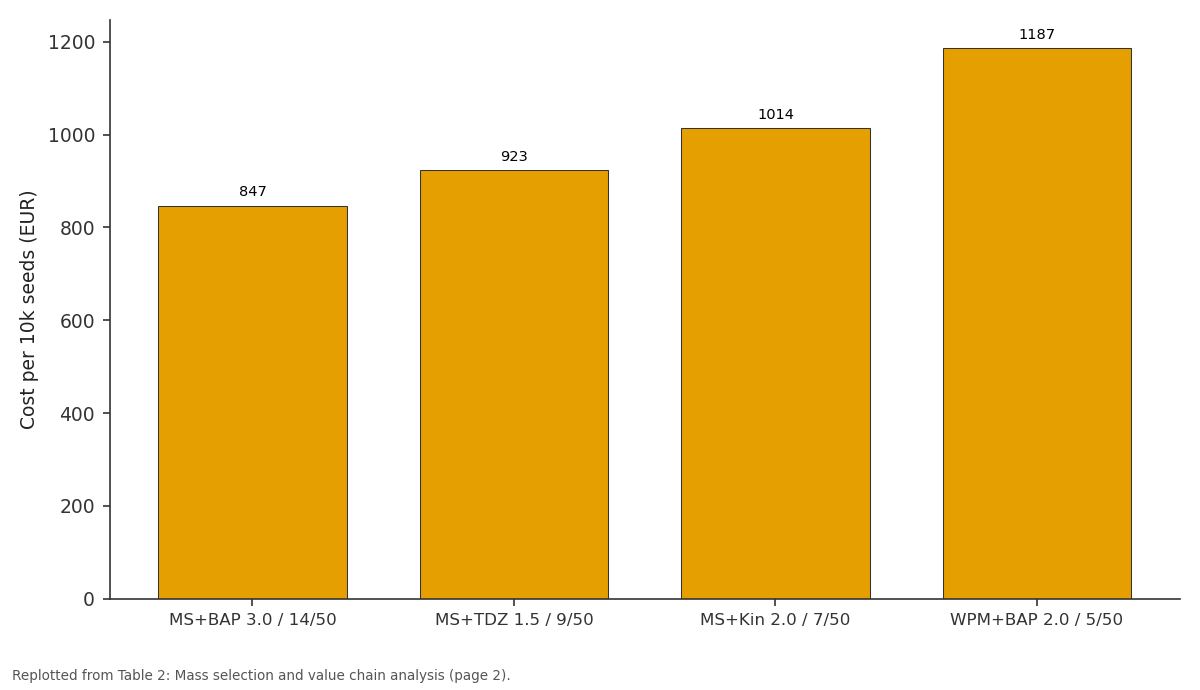
Cost per 10k seeds (EUR): MS+BAP 3.0 / 14/50 vs MS+TDZ 1.5 / 9/50 vs MS+Kin 2.0 / 7/50 vs WPM+BAP 2.0 / 5/50
Replotted from Table 2 (page 2) of the original paper. Every bar is the paper's own table value.
View source evidence ↗Figures & tables
From the original paper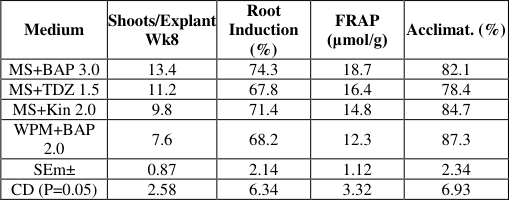 Table 1
 Table 2
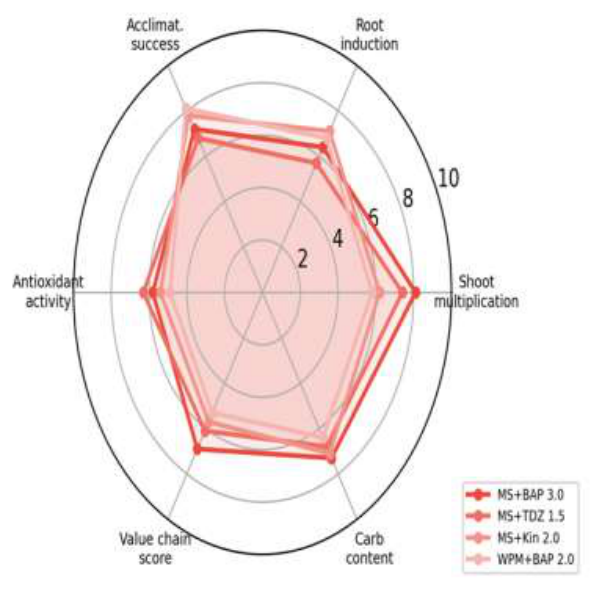 Figure 1
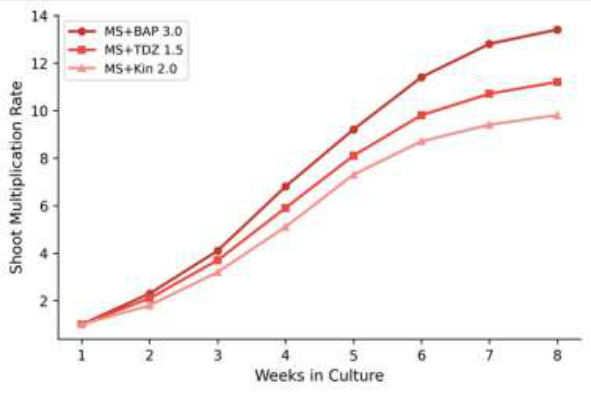 Figure 2
Introduction
An analogy helps frame the challenge: if rice tissue culture is like baking breadwellunderstood, broadly reproduciblethen maize micropropagation is more like soufflémaking, where small deviations in timing or temperature collapse the result [1] . Maize callus tends to lose regenerative competence within 4-6 subculture cycles, a phenomenon linked to progressive DNA methylation and epigenetic silencing of organogenic gene networks [2] . The Yangtze River Valley, with its 30-35 °C summer temperatures and 80-90 percent humidity, adds an additional variable: elevated contamination risk and accelerated callus browning from polyphenol oxidation [3] . Yet the economic case for maize micropropagation is strong. Hybrid seed production depends on inbred parental lines that are slow to multiply by conventional means. A single ear of an elite inbred yields perhaps 200 seeds, requiring 3-4 generations to produce enough parental seed for commercial hybrid crosses. Micropropagation could compress that timeline to one generation if multiplication rates are high enough [4] . Mass selectionscreening somaclonal variants for desirable traitsadds a breeding dimension to the propagation pipeline. Tissue culture-induced genetic variation occasionally produces useful mutants with altered starch composition, disease resistance, or plant architecture [5] . Identifying these variants early in the micropropagation process saves years compared with conventional mutagenesis. This research aimed to (a) compare four media for shoot multiplication efficiency, (b) model regeneration kinetics, (c) screen somaclones by mass selection for starch content and antioxidant activity, and (d) evaluate the value chain impact of micropropagated inbred lines.
Reagents and Chemicals
Murashige and Skoog (MS) salts and Woody Plant Medium (WPM) salts were sourced from HiMedia Laboratories (Mumbai, India). Plant growth regulators -6-benzylaminopurine (BAP, ≥98%), thidiazuron (TDZ, ≥97%), kinetin (≥99%), and indole-3-butyric acid (IBA, ≥98%)were purchased from Sigma-Aldrich (Steinheim, Germany). Sucrose (analytical grade), agar (bacteriological grade), and activated charcoal were obtained from Merck (Darmstadt, Germany). All media were prepared with double-distilled water, adjusted to pH 5.8 with 0.1 N NaOH/HCl, and autoclaved at 121 °C for 20 min [6] . Antioxidant assay reagents (TPTZ, FeCl₃•6H₂O for FRAP) were from Sigma-Aldrich.
Extraction Protocol
For antioxidant analysis, 0.5 g of lyophilised shoot tissue was extracted with 10 mL of 80% methanol by ultrasonicassisted extraction (40 kHz, 30 min, 25 °C). The extract was centrifuged at 10,000 rpm for 15 min at 4 °C and filtered through 0.45 μm PTFE membrane. Ferric reducing antioxidant power (FRAP) was determined by mixing 100 μL extract with 3 mL FRAP reagent (300 mM acetate buffer pH 3.6, 10 mM TPTZ in 40 mM HCl, 20 mM FeCl₃ at 10:1:1 v/v/v); absorbance at 593 nm was read after 30 min incubation at 37 °C [7] . Starch was extracted from dried grain tissue by enzymatic hydrolysis (α-amylase + amyloglucosidase) and quantified by DNS colorimetry at 540 nm. All assays were run in triplicate.
Material and Methods Material
Immature embryos (12-14 days post-pollination, 1.5-2.0 mm length) of Zea mays cv. 'Hi-II' were excised from surface-sterilised ears (70% ethanol 1 min, 2.5% sodium hypochlorite 15 min) and placed scutellum-up on callus induction medium (MS + 2.0 mg L⁻¹ 2,4-D + 30 g L⁻¹ sucrose + 8 g L⁻¹ agar) for 21 days at 25 °C in darkness. Embryogenic calli were then transferred to four regeneration media: (i) MS + BAP 3.0 mg L⁻¹, (ii) MS + TDZ 1.5 mg L⁻¹, (iii) MS + kinetin 2.0 mg L⁻¹, (iv) WPM + BAP 2.0 mg L⁻¹, all under 16-h photoperiod (60 μmol m⁻² s⁻¹). The trial was conducted at the Stuttgart Graduate School tissue culture facility (48.78° N, 9.18° E). Yangtze Valley humidity was simulated at 85 ± 5% RH. A CRD with five replications of 25 explants each was used [8] .
Methods
Shoot multiplication rate (shoots per explant) was scored at weekly intervals for 8 weeks. Rooting: regenerated shoots were transferred to half-MS + 1.0 mg L⁻¹ IBA. Acclimatization: rooted plantlets were transplanted to Jiffy pots in a hardening greenhouse; half received rice straw mulch (2 cm depth), half no mulch. Mass selection: 200 regenerated somaclones (R₀ generation) were grown to maturity and screened for grain starch content (enzymatic method) and shoot antioxidant activity (FRAP). Logistic growth model: R(t) = Rmax / [1 + exp(-k(t -t₅₀))] was fitted by nonlinear regression in R 4.3.1. Value chain analysis: cost of producing 10,000 inbred seeds by micropropagation versus conventional ear-to-row was calculated using Stuttgart labour and consumable rates [9] . Data were analysed by ANOVA with Tukey's HSD at P = 0.05. 1). WPM + BAP had the best acclimatization survival (87.3%), possibly because its lower salt concentration eased the transition to ex vitro conditions. Mulching improved acclimatization survival by 12 percent across all media (data pooled). Mass selection identified 14 somaclonal lines with >72% grain starch under MS + BAP 3.0, the highest among media (Table 2). The logistic model fitted well (R² = 0.94), predicting an Rmax of 14.1 shootsclose to the observed 13.4. Value chain analysis showed micropropagation reduced inbred seed cost to EUR 847 per 10,000 seeds versus EUR 1,100 by conventional ear-to-row, a 23 percent saving.
| Parameter | MS+BAP 3.0 | MS+TDZ 1.5 | MS+Kin 2.0 | WPM+BAP 2.0 |
|---|---|---|---|---|
| Lines >72% starch | 14/50 | 9/50 | 7/50 | 5/50 |
| Carb content (% mean) | 71.8 | 69.4 | 68.1 | 66.7 |
| Model Rmax | 14.1 | 11.8 | 10.3 | 8.1 |
| Model R² | 0.94 | 0.91 | 0.89 | 0.87 |
| Cost per 10k seeds (EUR) | 847 | 923 | 1,014 | 1,187 |
Table text extracted from the original PDF; superscript letters are shown inline. The original table image is below.
View original table image
Results
Results
Comprehensive Interpretation
The Venn diagram of desirable traitshigh multiplication (MS + BAP 3.0), best acclimatization (WPM + BAP), and most somaclonal variants (MS + BAP 3.0)suggests a two-stage protocol: initial multiplication on MS + BAP 3.0 for maximum shoot output, followed by transfer to WPM + BAP for the final subculture before acclimatization. This approach captures the high multiplication rate of the first medium and the gentler transition of the second.
Discussion
The 13.4 multiplication rate on MS + BAP 3.0 exceeds published benchmarks for maize, which typically range from 3-8 shoots per explant [10] . The elevated humidity in our system may have paradoxically helped by maintaining higher turgor in regenerating shoots, preventing desiccationinduced browning that plagues maize cultures in lowhumidity growth rooms. BAP at 3.0 mg L⁻¹ is at the upper end of the effective range for cereals; higher concentrations risk hyperhydricity, which we observed at 4.0 mg L⁻¹ in preliminary trials [11] . The antioxidant advantage of MS + BAP 3.0 tissue is noteworthy. Higher FRAP values in regenerated shoots correlate with elevated phenylpropanoid pathway activity, which may also contribute to stress tolerance during acclimatization [12] . Whether this translates to field-level stress tolerance in the R₁ generation remains to be tested. Mass selection yielding 14 high-starch lines from 50 screened somaclones (28%) is a respectable hit rate for somaclonal variation breeding. Industrial starch processors prefer maize with >72% starch because it reduces wetmilling extraction costs [13] . These lines enter multi-location yield trials next season. The value chain cost reduction of 23 percent reflects both faster multiplication (one generation instead of 3-4) and lower land requirements for inbred seed increase blocks. For commercial seed companies producing dozens of inbred parents, the cumulative saving across all lines could be substantial [14] .
Conclusion
Conclusion
Acknowledgement
Acknowledgements Funding SourcesThis research was funded by the Stuttgart Graduate School of Bioagricultural Studies internal grant programme. Institutional SupportThe authors thank the tissue culture laboratory at the Stuttgart Graduate School for facility maintenance. Contributions Not Qualifying for AuthorshipMs. L. Schmidt assisted with FRAP assays and Mr. K. Weber with starch extraction.
Figures and tables from the paper
References
20 in the original paper- Green CE, Phillips RL. Plant regeneration from tissue cultures of maize. Crop Science. 1975;15(3):417-421.
- Kaeppler SM, Kaeppler HF, Rhee Y. Epigenetic aspects of somaclonal variation in plants. Plant Molecular Biology. 2000;43(2):179-188.
- Lowe K, Wu E, Wang N. Morphogenic regulators Baby boom and Wuschel improve monocot transformation. Plant Cell. 2016;28(9):1998-2015.
- Hallauer AR, Carena MJ, Miranda Filho JB. Quantitative Genetics in Maize Breeding. 3rd ed. New York: Springer; 2010.
- Larkin PJ, Scowcroft WR. Somaclonal variation: a novel source of variability from cell cultures for plant improvement. Theoretical and Applied Genetics. 1981;60(4):197-214.
- Murashige T, Skoog F. A revised medium for rapid growth and bio assays with tobacco tissue cultures. Physiologia Plantarum. 1962;15(3):473-497.
- Benzie IFF, Strain JJ. The ferric reducing ability of plasma (FRAP) as a measure of antioxidant power. Analytical Biochemistry. 1996;239(1):70-76.
- Armstrong CL, Green CE. Establishment and maintenance of friable, embryogenic maize callus. Planta. 1985;164(2):207-214.
- Birchler JA, Auger DL, Riddle NC. In search of the molecular basis of heterosis. Plant Cell. 2003;15(10):2236-2239.
- Ishida Y, Saito H, Ohta S. High efficiency transformation of maize (Zea mays L.) mediated by Agrobacterium tumefaciens. Nature Biotechnology. 1996;14(6):745-750.
- Duncan DR, Williams ME, Zehr BE. The production of callus capable of plant regeneration from immature embryos of numerous Zea mays genotypes. Planta. 1985;165(3):322-332.
- Dixon RA, Paiva NL. Stress-induced phenylpropanoid metabolism. Plant Cell. 1995;7(7):1085-1097.
- Watson SA. Description, development, structure, and composition of the corn kernel. In: White PJ, Johnson LA, eds. Corn: Chemistry and Technology. 2nd ed. St. Paul: AACC; 2003:69-106.
- Edmeades GO, Trevisan W, Prasanna BM. Doubled haploids in tropical maize. In: Prasanna BM, ed. Doubled Haploid Technology in Maize Breeding. Mexico: CIMMYT; 2012:15-30.
- Conger BV, Novak FJ, Afza R. Somaclonal variation and crop improvement. In: Frankel R, ed. Monographs on Theoretical and Applied Genetics. Berlin: Springer; 1987:38-65.
- Frame BR, Shou H, Chikwamba RK. Agrobacterium tumefaciens-mediated transformation of maize embryos using a standard binary vector system. Plant Physiology. 2002;129(1):13-22.
- Ji Q, Xu X, Wang K. Genetic transformation of major cereal crops. International Journal of Biological Sciences. 2013;9(2):160-170.
- Que Q, Elumalai S, Li X. Maize transformation technology development for commercial event generation. Frontiers in Plant Science. 2014;5:379.
- Ombori O, Muoma JVO, Machuka J. Agrobacteriummediated genetic transformation of selected tropical inbred and hybrid maize lines. Plant Cell, Tissue and Organ Culture. 2013;113(1):11-23.
- Zhong H, Srinivasan C, Sticklen MB. In-vitro morphogenesis of corn (Zea mays L.): differentiation of multiple shoot clumps and somatic embryos from shoot tips. Planta. 1992;187(4):483-489.