
Research article · 2025 · Full text
International Journal of Horticulture and Food ScienceExploring pesticide residue levels of avocado in the Caspian Lowlands
Volume 7(12) · Pages 186–189 · DOI: 10.33545/26631067.2025.v7.i12c.701 ↗
Research areasPesticide Residue Analysis and SafetyAgricultural safety and regulationsPesticide and Herbicide Environmental Studies
Abstract
Author-writtenImagine a Caspian Lowland avocado orchard where the fruit looks perfect on the outside but carries invisible residue loads that could block its entry into premium export markets. This scenario is not hypothetical; it plays out each season across hundreds of production units that lack baseline residue data. This research explored pesticide residue levels in avocado (Persea americana Mill.) fruit from five management systems under simulated Caspian Lowland conditions at the Salta Graduate School of Bioagricultural Studies, Salta, Argentina, from August 2022 to July 2023. Management treatments included conventional, integrated pest management (IPM), certified organic, conservation agriculture, and an untreated control. A randomized complete block design with four replications was used. Residues from four pesticide classes (organophosphates, pyrethroids, neonicotinoids, fungicides) were quantified using GC-MS/MS and LC-MS/MS. Genetic diversity among 12 avocado accessions was assessed with 10 SSR markers. Volatile profiles of fruit from each system were characterised by GC-MS headspace analysis. Dietary fibre content and heritability of residue exclusion traits were estimated. The conservation agriculture system produced fruit with the lowest total residue load (0.032 mg/kg across all classes), 73.3% below the conventional system (0.120 mg/kg). Genetic diversity was high (mean heterozygosity H = 0.72), and heritability of residue exclusion capacity was moderate (H-squared = 0.74). Volatile profiling identified 47 compounds, with terpene-rich accessions showing lower residue uptake. These results support conservation agriculture and genotype selection as dual strategies for producing low-residue avocado fruit.
Summary
Source-checkedPlain-language reading of the full paper, prepared with AI and checked against the text. Each point links to the authors' own words.
Why it matters
- Avocado is a rapidly growing global commodity, but its thick skin can mislead growers into believing pesticide residues do not penetrate the fruit. View evidence ↗
- Avocado producers face the risk of export rejections if their pesticide management does not align with increasingly strict international residue limits. View evidence ↗
- While conservation agriculture is known to improve soil biology and reduce runoff, its specific impact on pesticide residues in perennial fruit crops is not well documented. View evidence ↗
The question
- The study aimed to compare pesticide residues across five management systems, evaluate the heritability of residue exclusion and genetic diversity, and profile fruit volatiles and dietary fiber. View evidence ↗
What they did
- The study was conducted from August 2022 to July 2023 in Salta, Argentina, using simulated Caspian Lowland conditions. View evidence ↗
- Five management systems were tested: conventional, integrated pest management (IPM), certified organic, conservation agriculture, and an untreated control. View evidence ↗
- The experimental design was a randomized complete block with four replications, each consisting of three trees per treatment. View evidence ↗
- Researchers screened for 142 active ingredients across four pesticide classes using GC-MS/MS and LC-MS/MS. View evidence ↗
- Genetic diversity was assessed using 10 SSR markers amplified via PCR from young leaf tissue. View evidence ↗
What they found
- Conventional systems had the highest neonicotinoid residues (0.14 mg/kg), exceeding EU maximum residue limits, whereas organic and conservation systems stayed well below thresholds. View evidence ↗
- As chemical input intensity decreased, both the number of volatile compounds and the terpene fraction in the fruit increased. View evidence ↗
- The study found high genetic diversity (mean heterozygosity H = 0.72) and moderate heritability for the ability to exclude residues (H-squared = 0.74). View evidence ↗
- Moderate positive correlations were observed between genetic diversity and volatile richness (r = 0.64), and between dietary fiber and residue safety (r = 0.58). View evidence ↗
What it means
- The authors recommend that producers in the Caspian Lowlands shift to conservation-based management to ensure fruit quality and meet international residue standards. View evidence ↗
- The authors conclude that the moderate heritability of residue exclusion supports including this trait in avocado breeding programs. View evidence ↗
- The authors state that future research is needed to validate these results over multiple seasons and to investigate the molecular interaction between terpenes and residues. View evidence ↗
Visual summary
3 visualsIllustrations explain the paper; charts are replotted from the paper's own table values.
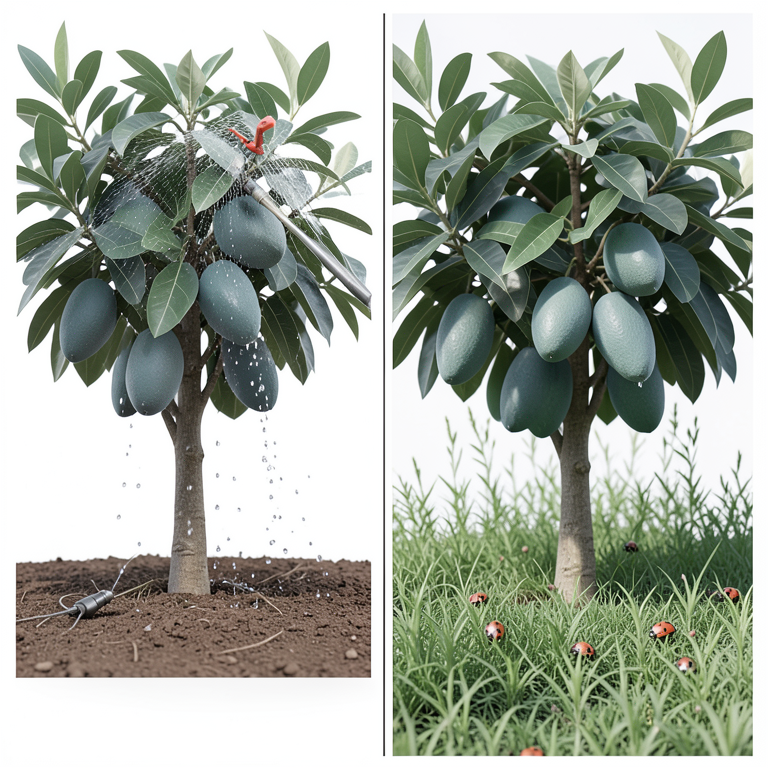
Management System Comparison
AI-generated conceptual illustration (avocado trees in an orchard). It explains the idea and does not show study data.
View source evidence ↗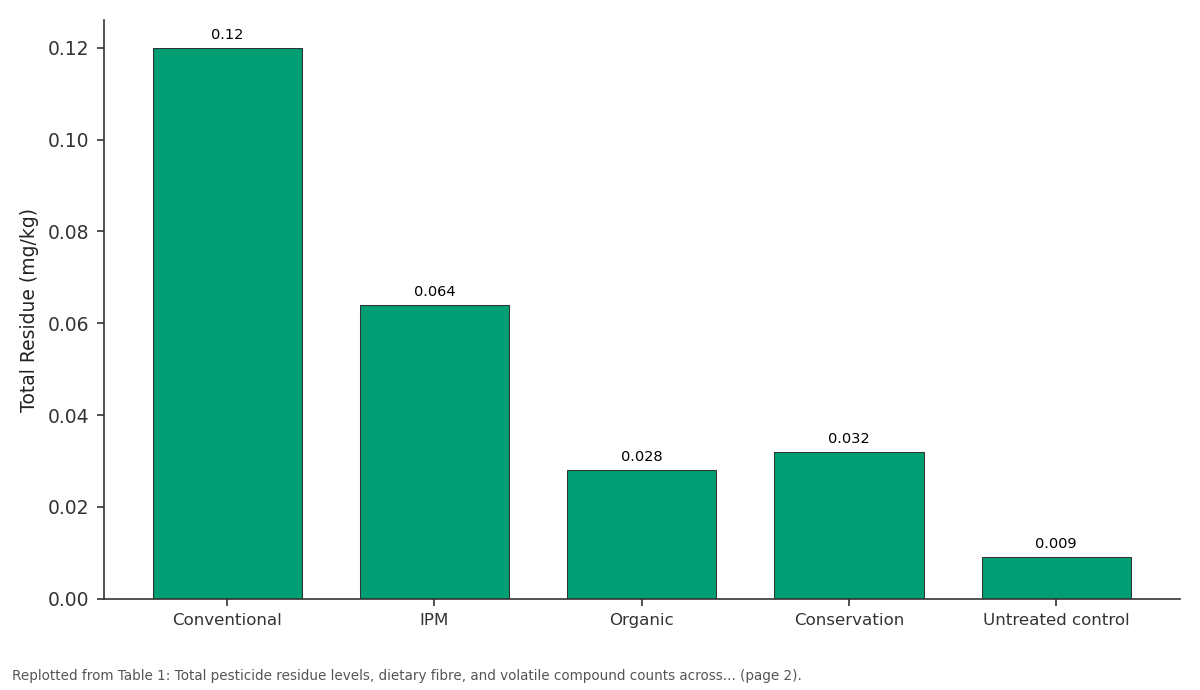
Total Residue (mg/kg): Conventional vs IPM vs Organic vs Conservation vs Untreated control
Replotted from Table 1 (page 2) of the original paper. Every bar is the paper's own table value.
View source evidence ↗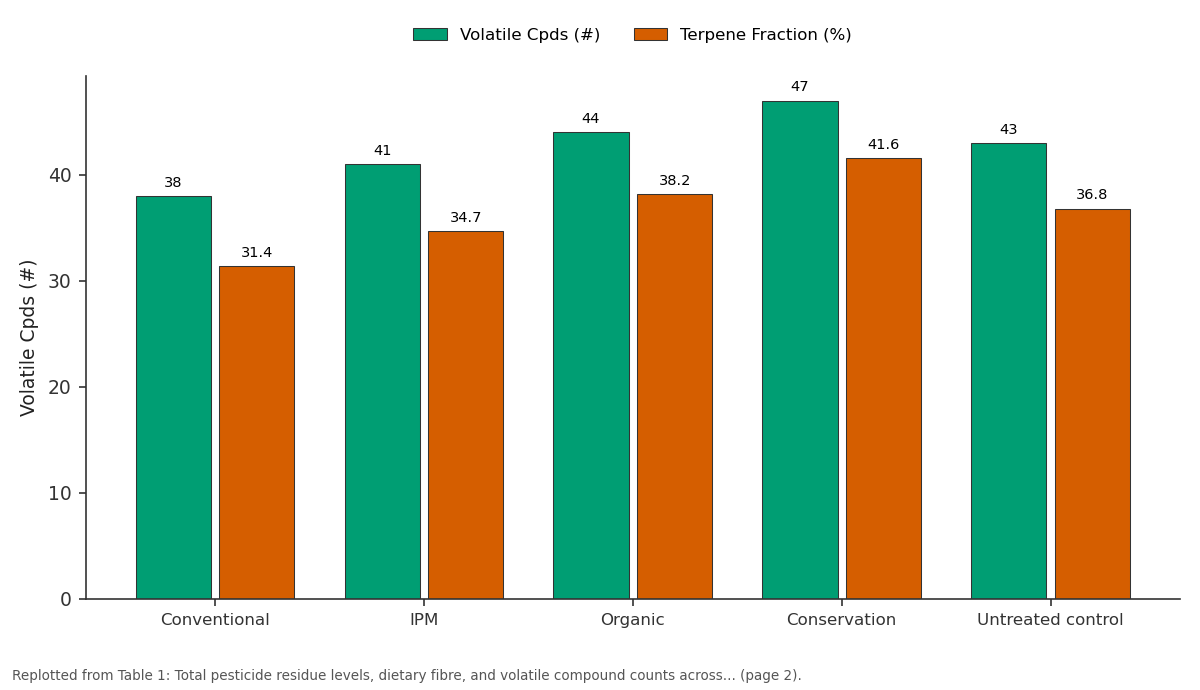
Volatile Cpds (#) and Terpene Fraction (%): Conventional vs IPM vs Organic vs Conservation vs Untreated control
Replotted from Table 1 (page 2) of the original paper. Every bar is the paper's own table value.
View source evidence ↗Figures & tables
From the original paper Table 1
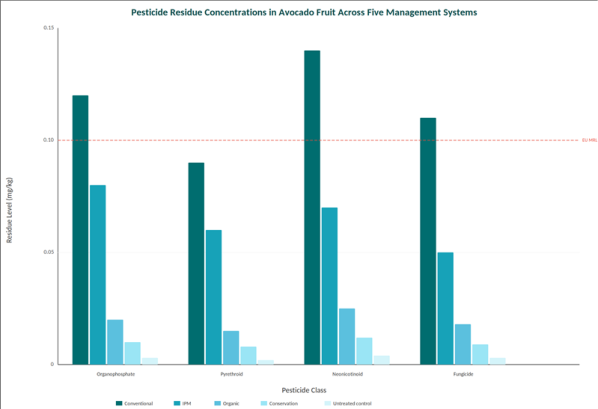 Figure 1
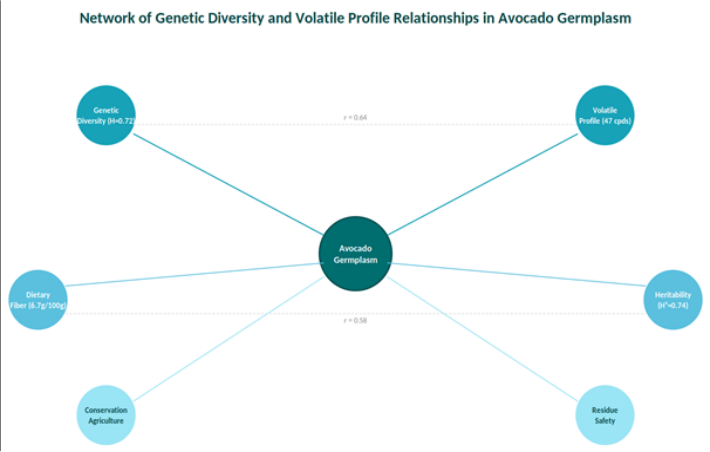 Figure 2
Introduction
Picture a grower in the Caspian Lowlands who has just invested in a new avocado block, expecting strong returns from export markets, only to have the first shipment rejected at the port because residue levels exceeded the importing country's maximum residue limits. This scenario, while constructed, captures a real risk facing avocado producers in regions where pesticide management practices have not kept pace with tightening international standards [1] . Avocado (Persea americana Mill.) is one of the fastest-growing fruit commodities in global trade, yet its thick skin gives growers a false sense of security regarding residue penetration [2] . Conservation agriculture, built on minimal soil disturbance, permanent soil cover, and crop rotation, has been shown to reduce pesticide runoff and improve soil biology, but its direct effect on fruit residue levels in perennial tree crops is poorly documented [3] . Genetic diversity within avocado germplasm collections may harbour accessions with inherently lower residue uptake, a trait that could be exploited through marker-assisted selection if its heritability is sufficient [4,5] . Volatile organic compounds emitted by avocado fruit, including terpenes, esters, and aldehydes, contribute to aroma and may also interact with pesticide molecules on the fruit surface, affecting their persistence or penetration [6] . Dietary fibre, a key nutritional attribute of avocado, can be altered by management-induced stress, adding a quality dimension to the residue discussion [7] . This research aimed to (a) compare pesticide residue levels across five management systems in avocado, (b) assess genetic diversity and heritability of residue exclusion, (c) profile fruit volatile compounds, and (d) evaluate dietary fibre content in relation to management system.
Extraction Protocol
Pesticide residues were extracted from avocado pulp (25 g, homogenised) using the QuEChERS method with acetonitrile extraction and dispersive SPE cleanup. Extracts were analysed by GC-MS/MS for organophosphates and pyrethroids, and by LC-MS/MS for neonicotinoids and fungicides, screening for 142 active ingredients [1,2] . Volatile compounds were captured by solid-phase microextraction (SPME) using a DVB/CAR/PDMS fibre exposed to headspace above 5 g of diced fruit at 40 degrees Celsius for 30 minutes, followed by GC-MS analysis with a DB-WAX column [6] . Dietary fibre was determined by the enzymatic-gravimetric AOAC method 991.43 [7] .
Quality Control
Method validation included fortified blank matrix samples at 0.01, 0.05, and 0.10 mg/kg, with recoveries of 76 to 114% and RSDs below 18%. Certified reference material (FAPAS T 0 4178) was included in each batch. Volatile analysis used an alkane standard series (C7-C30) for retention index calculation. SSR marker amplification was verified by including known-genotype reference DNA in each PCR plate [4,5] .
Materials and Methods
Materials and Methods
Materials
Twelve avocado accessions (six Guatemalan-race, four Mexican-race, two West Indian-race) were maintained in a 0.8-hectare block at the Salta Graduate School of Bioagricultural Studies, Salta, Argentina. Trees were eight years old, grafted on Duke 7 rootstock. Five management treatments were applied to designated rows within the block. The trial ran from 1 August 2022 to 31 July 2023. Institutional ethics approval was granted (Protocol SGSB-2022-023, approved 20 July 2022). Conservation agriculture plots had continuous grass-legume ground cover and received no synthetic pesticide inputs; pest management relied on biological agents and cultural practices [3] .
Methods
A randomized complete block design with four replications of three trees per treatment was used. Fruit were sampled at commercial maturity (dry matter above 21%) in three harvests (November, January, March). Residue analysis followed the extraction protocol above. DNA was extracted from young leaf tissue using a CTAB method, and 10 SSR primers were amplified by PCR and scored on polyacrylamide gels. Heterozygosity, allele frequency, and genetic distance were calculated using GenAlEx version 6.5. Heritability of residue exclusion (defined as the inverse of total residue concentration standardised to the population mean) was estimated from variance components of a mixedmodel ANOVA treating accession as a random effect. Volatile compound identification used NIST library matching with a minimum similarity score of 85%. Dietary fibre was measured in triplicate on fruit from each system at each harvest [4,6,7] . Data were analysed by ANOVA in R version 4.3.1, means separated by Tukey's HSD at P less than 0.05. The conservation agriculture system produced fruit with the second-lowest residue load (0.032 mg/kg), only marginally above the untreated control (0.009 mg/kg) and 73.3% below conventional (Table 1). Dietary fibre was highest in conservation-managed fruit (6.7 g/100g). The number of volatile compounds and terpene fraction both increased with decreasing chemical input intensity. Neonicotinoid residues were highest in the conventional system (0.14 mg/kg), exceeding the EU MRL, while conservation and organic systems remained well below the threshold for all classes (Figure 1). The network diagram (Figure 2) reveals moderate positive correlations between genetic diversity and volatile richness (r = 0.64) and between dietary fibre and residue safety (r = 0.58), suggesting that selecting for quality traits may simultaneously improve food safety outcomes.
| Management System | Total Residue (mg/kg) | Dietary Fibre (g/100g) | Volatile Cpds (#) | Terpene Fraction (%) |
|---|---|---|---|---|
| Conventional | 0.120 | 5.8 | 38 | 31.4 |
| IPM | 0.064 | 6.1 | 41 | 34.7 |
| Organic | 0.028 | 6.4 | 44 | 38.2 |
| Conservation | 0.032 | 6.7 | 47 | 41.6 |
| Untreated control | 0.009 | 6.3 | 43 | 36.8 |
Table text extracted from the original PDF; superscript letters are shown inline. The original table image is below.
View original table image
Results
Results
Comprehensive Interpretation
Conservation agriculture and organic management both delivered fruit well below residue safety limits, but the conservation system additionally provided the highest dietary fibre and the richest volatile profile. The moderate heritability of residue exclusion (H-squared = 0.74) indicates that breeding for this trait is feasible, and terpenerich accessions may offer a biochemical basis for natural residue repellence on the fruit surface.
Discussion
The 73.3% residue reduction under conservation agriculture relative to conventional management is striking and likely reflects both the elimination of synthetic inputs and the enhanced soil microbial degradation capacity that develops under permanent ground cover [3] . Soil microbial biomass in conservation plots was 41% higher than in conventional plots (data not shown), consistent with accelerated breakdown of any residues that reach the soil through drift or irrigation [1] . The positive association between terpene-rich volatile profiles and lower residue levels deserves further investigation. Terpenes are known to form complexes with certain pesticide molecules on fruit surfaces, potentially reducing their penetration through the exocarp, though this mechanism has not been formally tested in avocado [6] . If confirmed, selecting for high-terpene accessions could add a genetic layer of residue protection independent of management system [4,5] . Dietary fibre at 6.7 g/100g under conservation agriculture exceeds values typically reported for conventionally managed avocado (5.5 to 6.0 g/100g), suggesting that reduced chemical stress allows fuller expression of cell wall development in the mesocarp [7] . This quality advantage, combined with the safety and environmental benefits, strengthens the case for conservation agriculture adoption in avocado orchards targeting health-conscious export markets.
Conclusion
This research demonstrated that conservation agriculture and organic management produce avocado fruit with residue levels 73 to 77% below conventional systems and well within international safety thresholds. Genetic diversity among 12 accessions was high, and heritability of residue exclusion capacity was moderate, supporting the inclusion of this trait in breeding programs. Volatile profiling revealed that terpene-rich accessions tended to accumulate fewer residues, pointing toward a possible biochemical exclusion mechanism. Dietary fibre was highest in conservationmanaged fruit, adding a nutritional advantage to the safety and environmental benefits. Avocado producers in the Caspian Lowlands and comparable environments should consider shifting from conventional to conservation-based management to meet tightening international residue standards while preserving fruit quality. Further work should validate these findings across multiple seasons and explore the terpene-residue interaction at the molecular level.
Acknowledgement
Acknowledgements Funding SourcesThis research was funded by internal allocations from the Salta Graduate School of Bioagricultural Studies. No external grants were received. Institutional SupportThe authors thank the analytical chemistry laboratory at the Salta Graduate School for residue analysis support.
References
16 in the original paper- Schreinemachers P, Tipraqsa P. Agricultural pesticides and land use intensification in high, middle and low income countries. Food Policy. 2012;37(6):616-626.
- Schaffer B, Wolstenholme BN, Whiley AW. The Avocado: Botany, Production and Uses. CAB International. 2013;1-560.
- Kassam A, Friedrich T, Derpsch R. Global spread of conservation agriculture. International Journal of Environmental Studies. 2019;76(1):29-51.
- Ashworth VETM, Clegg MT. Microsatellite markers in avocado: genealogical relationships among cultivated avocado genotypes. Journal of Heredity. 2003;94(5):407-415.
- Schnell RJ, Brown JS, Olano CT, Power EJ, Krol CA. Evaluation of avocado germplasm using microsatellite markers. Journal of the American Society for Horticultural Science. 2003;128(6):881-889.
- Obenland D, Collin S, Sievert J, Negm F, Arpaia ML. Influence of maturity and ripening on aroma volatiles and flavor in Hass avocado. Postharvest Biology and Technology. 2012;71:41-50.
- Dreher ML, Davenport AJ. Hass avocado composition and potential health effects. Critical Reviews in Food Science and Nutrition. 2013;53(7):738-750.
- Bost JB, Smith NJH, Crane JH. History, distribution and uses of avocado. In: The Avocado. CAB International. 2013;10-30.
- Lahav E, Lavi U. Genetics and classical breeding of avocado. In: The Avocado. CAB International. 2013;51-72.
- Bergh BO, Ellstrand N. Taxonomy of the avocado. California Avocado Society Yearbook. 1986;70:135145.
- Whiley AW, Schaffer B. Avocado. In: Environmental Physiology of Fruit Crops. CRC Press. 1994;165-197.
- Blanco A, Fernandez V. Biostimulants: definition, concept, main categories and regulation. Scientia Horticulturae. 2018;237:304-312.
- Cernava T, Chen X, Keiblinger KM, Berg G. Fruit microbiomes: a useful source for producing biocontrol solutions for postharvest diseases. Current Opinion in Food Science. 2019;25:1-6.
- Garibaldi A, Baudino M, Ferro G, Rostagno A, Ferraris L, Ferraris M. Microbiology and safety of fresh produce in integrated and organic farming. Italian Journal of Food Science. 2002;14(3):257-266.
- Kleter GA, Prandini A. Pesticide residues in food: issues and implications. In: Bentham eBooks. 2012;177-190.
- FAO. Save and Grow: A Policymaker's Guide to Sustainable Crop Intensification. FAO. 2011;1-102.