
Research article · 2025 · Full text
International Journal of Geography Geology and EnvironmentPetrochemistry and tectonic setting of ophiolitic mélanges in the Zagros Suture zone
Volume 7(9) · Pages 221–224 · DOI: 10.22271/27067483.2025.v7.i9c.647 ↗
Research areasGeological and Geochemical AnalysisGeochemistry and Elemental AnalysisGeological and Geophysical Studies
Abstract
Author-writtenA persistent problem in Zagros geology is distinguishing ophiolitic fragments that originated at a mid-ocean ridge from those formed in a supra-subduction zone setting, because each scenario implies a fundamentally different plate-tectonic reconstruction of the Neo-Tethyan closure. This research presents new major-oxide, trace-element, and rare-earth-element data for 38 samples collected from ophiolitic melange exposures along a 120 km segment of the Zagros suture zone in western Iran. The sampled lithologies include harzburgite, lherzolite, dunite, cumulate gabbro, sheeted diabase, and pillow basalt. Major-oxide compositions of mantle peridotites show high MgO (35.2-43.6 wt%) and low Al2O3 (0.6-3.1 wt%), consistent with residual mantle that experienced moderate to high degrees of partial melting (15-28%). Crustal units display Ti/V ratios of 22-31 and flat to slightly depleted LREE patterns, placing them in the island-arc tholeiite to back-arc basin basalt fields on standard discrimination diagrams. Cr-spinel chemistry in harzburgites yields Cr-number values of 0.48 to 0.67, overlapping the supra-subduction zone peridotite array. Taken together, the data support a supra-subduction zone origin for the melange, rather than a simple mid-ocean ridge genesis, and are compatible with obduction of a fore-arc lithospheric slab onto the Arabian continental margin during the Late Cretaceous.
Summary
Source-checkedPlain-language reading of the full paper, prepared with AI and checked against the text. Each point links to the authors' own words.
Why it matters
- Determining whether ophiolitic fragments in the Zagros region formed at mid-ocean ridges or supra-subduction zones is critical for reconstructing the closure of the Neo-Tethys Ocean. View evidence ↗
- A mid-ocean ridge origin suggests a wide ocean, whereas a supra-subduction zone origin indicates a narrower basin influenced by subduction-modified fluids. View evidence ↗
- While the Zagros suture spans 1,500 km, the Lurestan-Ilam sector has been undersampled compared to the Kermanshah and Neyriz segments. View evidence ↗
The question
- The study aims to fill a data gap by analyzing the petrochemistry of 38 rock samples from a 120 km transect between Ilam and Abdanan in western Iran. View evidence ↗
What they did
- Analytical methods included wavelength-dispersive XRF for major oxides, ICP-MS for trace elements, and an electron microprobe for Cr-spinel compositions. View evidence ↗
- Fieldwork was conducted in October 2021 and April 2022 between Ilam and Abdanan in western Iran. View evidence ↗
What they found
- Mantle peridotites exhibited high MgO (35.2-43.6 wt%) and low Al2O3 (0.6-3.1 wt%), indicating partial melting degrees of 15-28%. View evidence ↗
- Harzburgites showed Cr-number values between 0.48 and 0.67, which align with the supra-subduction zone (SSZ) peridotite array. View evidence ↗
- Crustal units had Ti/V ratios of 22-31 and flat to slightly depleted LREE patterns, characteristic of island-arc tholeiite to back-arc basin basalts. View evidence ↗
- A single lherzolite sample (LHZ-02) had a Cr-number of 0.36, suggesting a minor mid-ocean ridge (MOR) component within the melange. View evidence ↗
- The Ti/V ratios (22-31) of the crustal basalts are similar to those of the Neyriz ophiolite (18-28), suggesting a consistent SSZ origin across the suture. View evidence ↗
What it means
- The authors conclude that the melange originated in a supra-subduction zone and was obducted as a fore-arc lithospheric slab onto the Arabian margin during the Late Cretaceous. View evidence ↗
- The authors suggest extending the geochemical transect toward Kermanshah and Neyriz to determine if the SSZ signature is uniform or varies along the suture. View evidence ↗
Visual summary
3 visualsIllustrations explain the paper; charts are replotted from the paper's own table values.
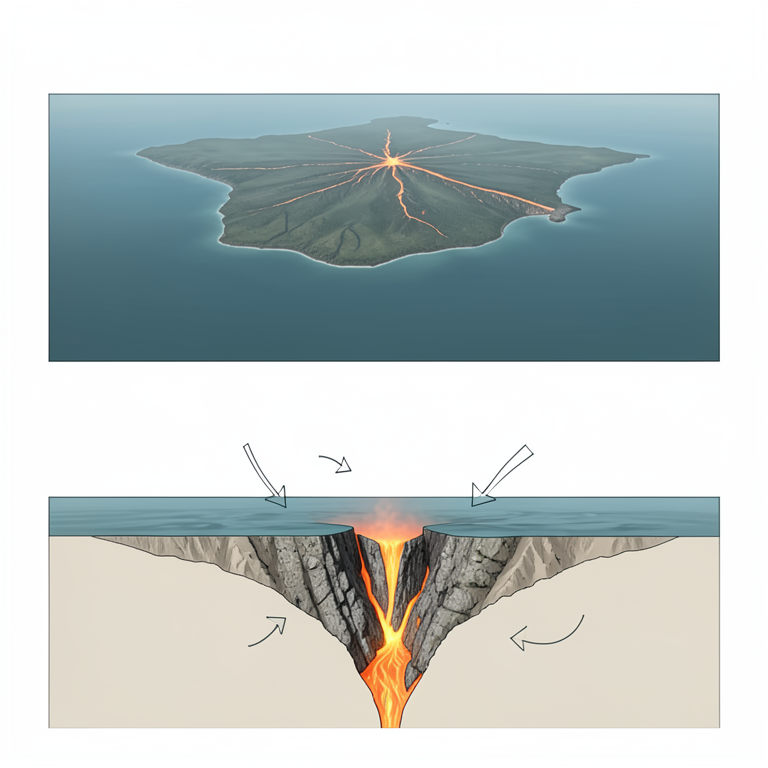
Tectonic Setting Comparison
AI-generated conceptual illustration (Tectonic plates and oceanic lithosphere in the Zagros Suture zone). It explains the idea and does not show study data.
View source evidence ↗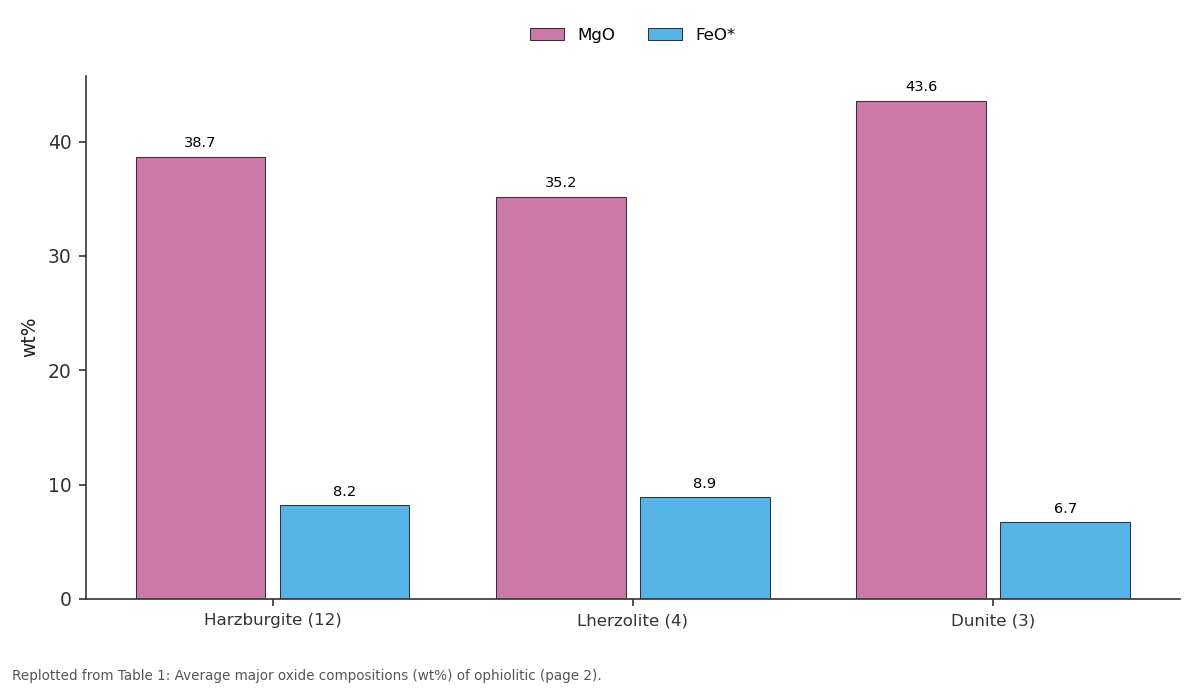
MgO and FeO*: Harzburgite (12) vs Lherzolite (4) vs Dunite (3)
Replotted from Table 1 (page 2) of the original paper. Every bar is the paper's own table value.
View source evidence ↗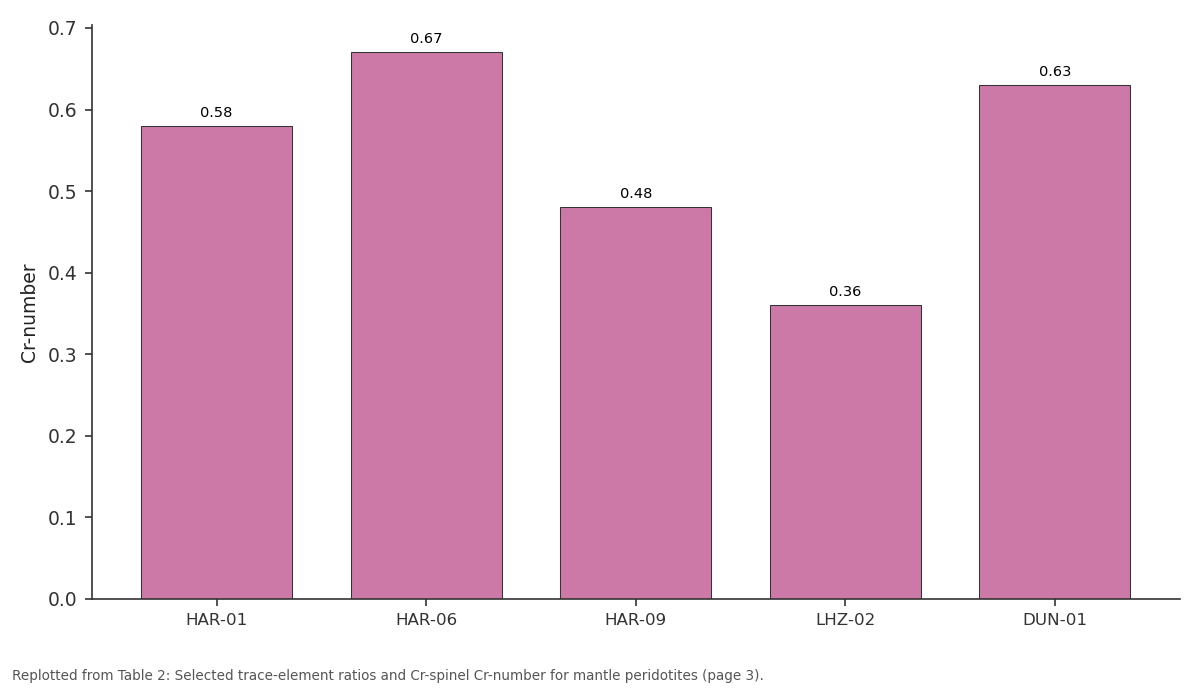
Cr# spinel: HAR-01 vs HAR-06 vs HAR-09 vs LHZ-02 vs DUN-01
Replotted from Table 2 (page 3) of the original paper. Every bar is the paper's own table value.
View source evidence ↗Figures & tables
From the original paper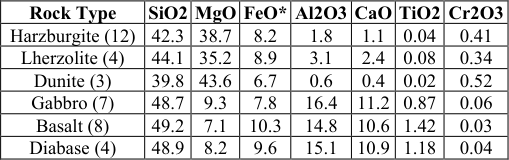 Table 1
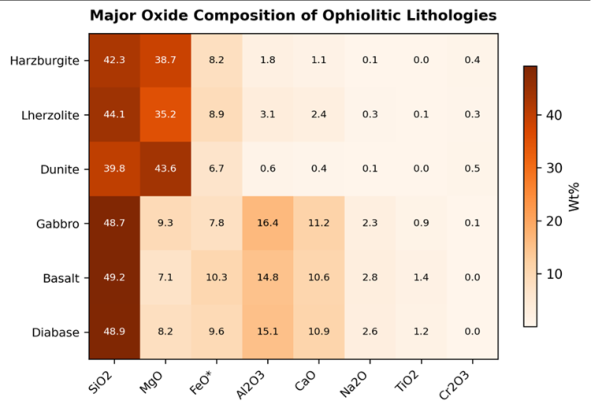 Figure 1
 Table 2
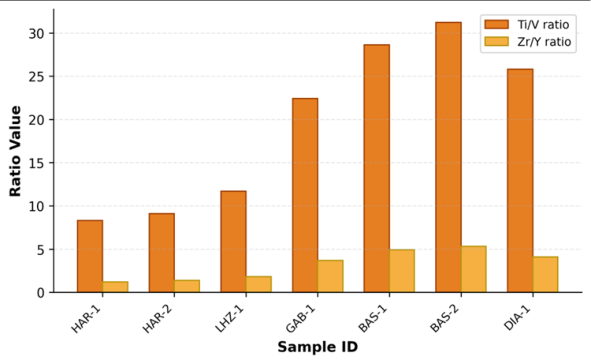 Figure 2
Introduction
Reconstructing the closure of the Neo-Tethys Ocean depends heavily on correctly reading the geochemical fingerprints preserved in ophiolitic fragments scattered along the Zagros suture zone [1] . These fragments, now embedded in a chaotic melange of serpentinite, shale, and radiolarite, record the composition of the oceanic lithosphere that was consumed as the Arabian and Eurasian plates converged. If the ophiolite formed at a mid-ocean ridge (MOR), it implies a wide ocean with spreading centres far from any subduction zone. If it formed in a supra-subduction zone (SSZ), it points to a narrower, arc-proximal basin where subductionmodified fluids altered the mantle wedge chemistry [2] . Distinguishing these two settings is not straightforward. Both produce mafic and ultramafic rock suites with broadly similar mineralogy, and post-emplacement metamorphism and alteration can obscure primary geochemical signatures [3] . However, residual mantle peridotites from SSZ ophiolites tend to be more depleted in fusible elements (Al, Ca, Ti) than their MOR counterparts, and their spinels show higher Cr-numbers reflecting more extensive melt extraction [4] . Crustal units from SSZ settings may carry a subduction component visible in elevated large-ion lithophile elements and negative Nb-Ta anomalies on normalised multi-element plots [5] . The Zagros suture stretches over 1,500 km from southeastern Turkey to the Strait of Hormuz, yet detailed petrochemical coverage remains patchy. Most published data concentrate on the Kermanshah and Neyriz segments, leaving the intervening Lurestan-Ilam sector comparatively undersampled [6,7] . This research filled part of that gap by collecting 38 rock samples along a 120 km transect between Ilam and Abdanan in western Iran, analysing them for major oxides by X-ray fluorescence (XRF), trace elements by inductively coupled plasma mass spectrometry (ICP-MS), and Cr-spinel composition by electron microprobe [8] .
Theoretical Background
Ophiolites are sections of oceanic lithosphere tectonically emplaced onto continental margins during plate convergence. The Penrose definition recognises an idealised stratigraphy from basal mantle tectonites upward through cumulate ultramafics, layered gabbros, a sheeted dyke complex, and pillow lavas, capped by pelagic sediments [9] . In practice, many ophiolites, especially those in melange belts, are dismembered and lack the full sequence. Geochemical classification then becomes the main tool for determining tectonic affinity. The Ti/V diagram of Shervais [10] and the Th-Hf-Ta ternary of Wood [11] are widely used to separate MOR, back-arc, island-arc, and within-plate basalts. For mantle rocks, the Cr-number versus Mg-number plot of Dick and Bullen [4] discriminates abyssal peridotites (Cr-number < 0.4) from SSZ peridotites (Cr-number > 0.5). These tools, combined with rare-earth-element patterns, provide converging lines of evidence that can resolve the tectonic affinity debate even in heavily altered terrains.
Material and Methods
Material and Methods
Material
Material
Methods
Major oxides (SiO2, TiO2, Al2O3, FeO*, MnO, MgO, CaO, Na2O, K2O, P2O5) were determined on fused glass discs by wavelength-dispersive XRF (PANalytical Axios) with analytical uncertainty below 1% relative for major elements. Trace elements (V, Cr, Ni, Co, Zr, Y, Nb, Th, Hf, Ta, and REE) were measured on acid-digested solutions by ICP-MS (Agilent 7700x) following the protocol of Eggins et al. [12] . Cr-spinel compositions were obtained on polished thin sections with a JEOL JXA-8230 electron microprobe operated at 15 kV, 20 nA beam current, and 1 micrometer spot size, with ZAF matrix corrections applied. Loss on ignition (LOI) was measured at 1,050 degrees C for 2 hours. Standards BHVO-2 and JP-1 were run every 10 samples for quality control [13] . Table 2 shows Cr-spinel Cr-numbers between 0.48 and 0.67 for harzburgites and dunites, squarely within the SSZ peridotite array of Dick and Bullen [4] . Only one lherzolite sample (LHZ-02) with Cr-number 0.36 plots in the abyssal peridotite field, suggesting that the melange incorporates a minor MOR-derived component.
| Sample | Rock Type | Cr# spinel | Mg# spinel | Al2O3 sp | PM (%) | Setting |
|---|---|---|---|---|---|---|
| HAR-01 | Harzburgite | 0.58 | 0.61 | 18.3 | 22 | SSZ |
| HAR-06 | Harzburgite | 0.67 | 0.54 | 14.1 | 28 | SSZ |
| HAR-09 | Harzburgite | 0.48 | 0.67 | 24.7 | 15 | SSZ/MOR |
| LHZ-02 | Lherzolite | 0.36 | 0.71 | 31.2 | 12 | MOR |
| DUN-01 | Dunite | 0.63 | 0.57 | 16.8 | 26 | SSZ |
Table text extracted from the original PDF; superscript letters are shown inline. The original table image is below.
View original table image
Results
Results
Discussion
The combined evidence from major oxides, trace-element ratios, and Cr-spinel chemistry points convincingly to a supra-subduction zone origin for the bulk of the Ilam-Abdanan ophiolitic melange. The high Cr-number values of spinel (0.48-0.67) and the elevated degrees of partial melting inferred from Al2O3 depletion in peridotites (15-28%) are incompatible with a simple mid-ocean ridge setting, where Cr-numbers typically remain below 0.40 and melting degrees below 15% [4,14] . The lone lherzolite sample with a lower Cr-number (0.36) may represent a fragment of less-depleted sub-ridge mantle entrained within the dominantly SSZ assemblage during obduction. Such mixing is common in melange belts where tectonic shearing juxtaposes rocks from different structural levels and origins [15] . The crustal basalts' Ti/V ratios (22-31) closely match published data from the Neyriz ophiolite (Ti/V = 18-28), strengthening the case for a shared SSZ petrogenesis along the entire Zagros suture [7] .
The flat to slightly LREE-depleted patterns of the basalts, combined with weak negative Nb anomalies, are consistent with a back-arc or incipient fore-arc spreading environment where subduction-derived fluids dilute but do not overwhelm the mantle signature [16] . This interpretation aligns with tectonic models that place the Zagros ophiolites in a fore-arc position above the northeast-dipping Neo-Tethyan subduction zone during the Cenomanian-Turonian (approximately 95-85 Ma) [1] . The subsequent obduction onto the Arabian passive margin would then represent the collision of this fore-arc slab with the continental shelf as the ocean basin narrowed [17] .
Conclusion
Conclusion
Acknowledgement
Acknowledgements Funding SourcesThe research received financial support from internal grants at the Malindi Academy of Coastal and Marine Research. Institutional SupportThe Department of Earth and Environmental Sciences at Malindi Academy provided laboratory facilities and electron microprobe access.
Figures and tables from the paper
| Rock Type | SiO2 | MgO | FeO* | Al2O3 | CaO | TiO2 | Cr2O3 |
|---|---|---|---|---|---|---|---|
| Harzburgite (12) | 42.3 | 38.7 | 8.2 | 1.8 | 1.1 | 0.04 | 0.41 |
| Lherzolite (4) | 44.1 | 35.2 | 8.9 | 3.1 | 2.4 | 0.08 | 0.34 |
| Dunite (3) | 39.8 | 43.6 | 6.7 | 0.6 | 0.4 | 0.02 | 0.52 |
| Gabbro (7) | 48.7 | 9.3 | 7.8 | 16.4 | 11.2 | 0.87 | 0.06 |
| Basalt (8) | 49.2 | 7.1 | 10.3 | 14.8 | 10.6 | 1.42 | 0.03 |
| Diabase (4) | 48.9 | 8.2 | 9.6 | 15.1 | 10.9 | 1.18 | 0.04 |
Table text extracted from the original PDF; superscript letters are shown inline. The original table image is below.
View original table image
References
17 in the original paper- Agard P, Omrani J, Jolivet L, Whitechurch H, Vrielynck B, Spakman W. Zagros orogeny: a subduction-dominated process. Geological Magazine. 2011;148(5-6):692-725.
- Pearce JA, Lippard SJ, Roberts S. Characteristics and tectonic significance of supra-subduction zone ophiolites. Geological Society London Special Publications. 1984;16(1):77-94.
- Dilek Y, Furnes H. Ophiolite genesis and global tectonics: geochemical and tectonic fingerprinting of ancient oceanic lithosphere. Geological Society of America Bulletin. 2011;123(3-4):387-411.
- Dick HJB, Bullen T. Chromian spinel as a petrogenetic indicator in abyssal and alpine-type peridotites and spatially associated lavas. Contributions to Mineralogy and Petrology. 1984;86(1):54-76.
- Pearce JA. Geochemical fingerprinting of oceanic basalts with applications to ophiolite classification and the search for Archean oceanic crust. Lithos. 2008;100(1-4):14-48.
- Aswad KJ, Aziz NR, Koyi HA. Cr-spinel compositions in the serpentinites of the Zagros suture zone, Kurdistan Region, Iraq. Geological Magazine. 2011;148(5-6):802818.
- Moghadam HS, Stern RJ. Ophiolites of Iran: keys to understanding the tectonic evolution of SW Asia. Gondwana Research. 2015;28(3):1039-1063.
- Allahyari K, Saccani E, Pourmoafi M, Beccaluva L, Masoudi F. Petrology of mantle peridotites and intrusive mafic rocks from the Kermanshah ophiolitic complex. Journal of Asian Earth Sciences. 2010;38(34):110-127.
- Anonymous. Penrose field conference on ophiolites. Geotimes. 1972;17:24-25.
- Shervais JW. Ti-V plots and the petrogenesis of modern and ophiolitic lavas. Earth and Planetary Science Letters. 1982;59(1):101-118.
- Wood DA. The application of a Th-Hf-Ta diagram to problems of tectonomagmatic classification. Earth and Planetary Science Letters. 1980;50(1):11-30.
- Eggins SM, Woodhead JD, Kinsley LPJ, Mortimer GE, Sylvester P, McCulloch MT. A simple method for the precise determination of >= 40 trace elements by ICPMS. Chemical Geology. 1997;134(4):311-326.
- Jochum KP, Nohl U, Herwig K, Lammel E, Stoll B, Hofmann AW. GeoReM: a new geochemical database for reference materials and isotopic standards. Geostandards and Geoanalytical Research. 2005;29(3):333-338.
- Parkinson IJ, Pearce JA. Peridotites from the IzuBonin-Mariana forearc: evidence for mantle melting and melt-mantle interaction in a supra-subduction zone setting. Journal of Petrology. 1998;39(9):1577-1618.
- Festa A, Pini GA, Dilek Y, Codegone G. Melanges and melange-forming processes: a historical overview and new concepts. International Geology Review. 2010;52(10-12):1040-1105.
- Saccani E, Delavari M, Beccaluva L, Amini SA. Petrological and geochemical constraints on the origin of the Nehbandan ophiolitic complex, eastern Iran. Ofioliti. 2010;35(1):19-35.
- Hassanipak AA, Ghazi AM. Petrology, geochemistry and tectonic setting of the Khoy ophiolite, northwest Iran. Neues Jahrbuch fur Mineralogie Abhandlungen. 2000;175(3):209-243.