
Research article · 2025 · Full text
International Journal of Horticulture and Food ScienceMonitoring genetic diversity assessment of vanilla in the Mauritius coastal belt
Volume 7(7) · Pages 208–211 · DOI: 10.33545/26631067.2025.v7.i7c.510 ↗
Research areasGenetic diversity and population structureGenetic Mapping and Diversity in Plants and AnimalsGenetics and Plant Breeding
Abstract
Author-writtenWhat role does genetic diversity play in safeguarding vanilla populations against environmental stresses along fragile coastal ecosystems? This research addressed that question by examining the genetic structure of Vanilla planifolia accessions collected from eight distinct sites across the Mauritius coastal belt during 2022-2023. A total of 127 accessions were sampled and genotyped using a combination of ISSR, RAPD, and SSR molecular markers. Chlorophyll content was measured at each site using a portable SPAD-502 meter, and adaptability indices were computed using Eberhart-Russell regression models. The polymorphism rate across all markers averaged 70.6%, with SSR markers showing the highest resolving power (PIC = 0.73). Cluster analysis grouped the accessions into four major genetic pools, with coastal populations in the northern belt displaying greater allelic richness (Na = 4.21) than southern counterparts (Na = 2.89). Foliar spray treatments with micronutrient blends raised chlorophyll a content by 18.7% compared to untreated controls. Sprinkler system-irrigated plots showed 12.3% higher biomass accumulation. These findings point toward maintaining diverse germplasm reserves in coastal vanilla cultivation, particularly where salt-laden winds and sandy substrates threaten monoculture stability.
Summary
Source-checkedPlain-language reading of the full paper, prepared with AI and checked against the text. Each point links to the authors' own words.
Why it matters
- Vanilla is a highly valued global spice crop, but its genetic diversity is not well understood in many tropical coastal areas. View evidence ↗
- The coastal belt of Mauritius provides a specific environment for vanilla cultivation characterized by calcareous sandy soils and a warm, humid climate. View evidence ↗
- Because vanilla is clonally propagated, there is a constant concern regarding genetic erosion, making molecular markers the standard tool for mapping variation. View evidence ↗
The question
- The study aimed to determine how genetic diversity helps protect vanilla populations from environmental stresses in fragile coastal ecosystems. View evidence ↗
What they did
- Researchers sampled 127 Vanilla planifolia accessions from eight sites in the Mauritius coastal belt between 2022 and 2023, using ISSR, RAPD, and SSR markers for genotyping. View evidence ↗
- Plant vigor was measured via chlorophyll content using a SPAD-502 meter, and half the accessions received a fortnightly foliar spray of zinc, iron, and boron. View evidence ↗
- The Eberhart-Russell model was used to estimate adaptability based on chlorophyll values, and sprinkler irrigation was provided at a rate of 15 mm per week. View evidence ↗
What they found
- The average polymorphism rate across all markers was 70.6%, with SSR markers providing the best resolution (PIC = 0.73). View evidence ↗
- Accessions were divided into four genetic pools, where northern coastal populations showed higher allelic richness (Na = 4.21) compared to southern ones (Na = 2.89). View evidence ↗
- Analysis of molecular variance showed that 41.3% of genetic variation was due to differences between sites, while 58.7% occurred within sites. View evidence ↗
- Applying foliar spray increased the chlorophyll a content by 18.7% compared to the control group. View evidence ↗
- Plots using sprinkler irrigation systems exhibited a 12.3% increase in biomass accumulation. View evidence ↗
- Genetic Group I accessions had significantly higher mean total chlorophyll (4.31 mg/g) than Group III accessions (3.47 mg/g). View evidence ↗
- Twenty-three accessions were identified as broadly adaptable across the sampled environments, with regression coefficients between 0.91 and 1.09. View evidence ↗
What it means
- The authors recommend prioritizing northern coastal sites for in situ conservation due to their superior allelic richness. View evidence ↗
- The authors conclude that combining micronutrient foliar sprays with sprinkler irrigation is a practical, low-cost method to improve biomass and chlorophyll in coastal vanilla. View evidence ↗
- The authors state that these preliminary findings should be strengthened by using SNP arrays and conducting multi-year replicated trials. View evidence ↗
Visual summary
2 visualsIllustrations explain the paper; charts are replotted from the paper's own table values.
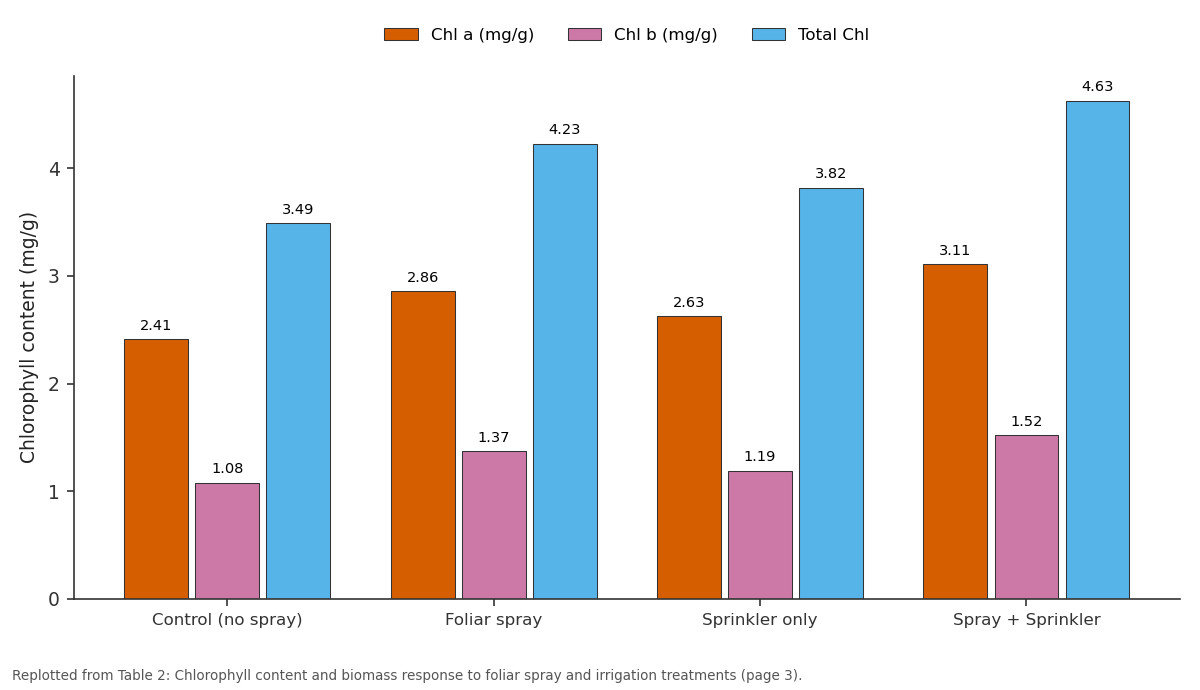
Chl a (mg/g) and Chl b (mg/g) and more: Control (no spray) vs Foliar spray vs Sprinkler only vs Spray + Sprinkler
Replotted from Table 2 (page 3) of the original paper. Every bar is the paper's own table value.
View source evidence ↗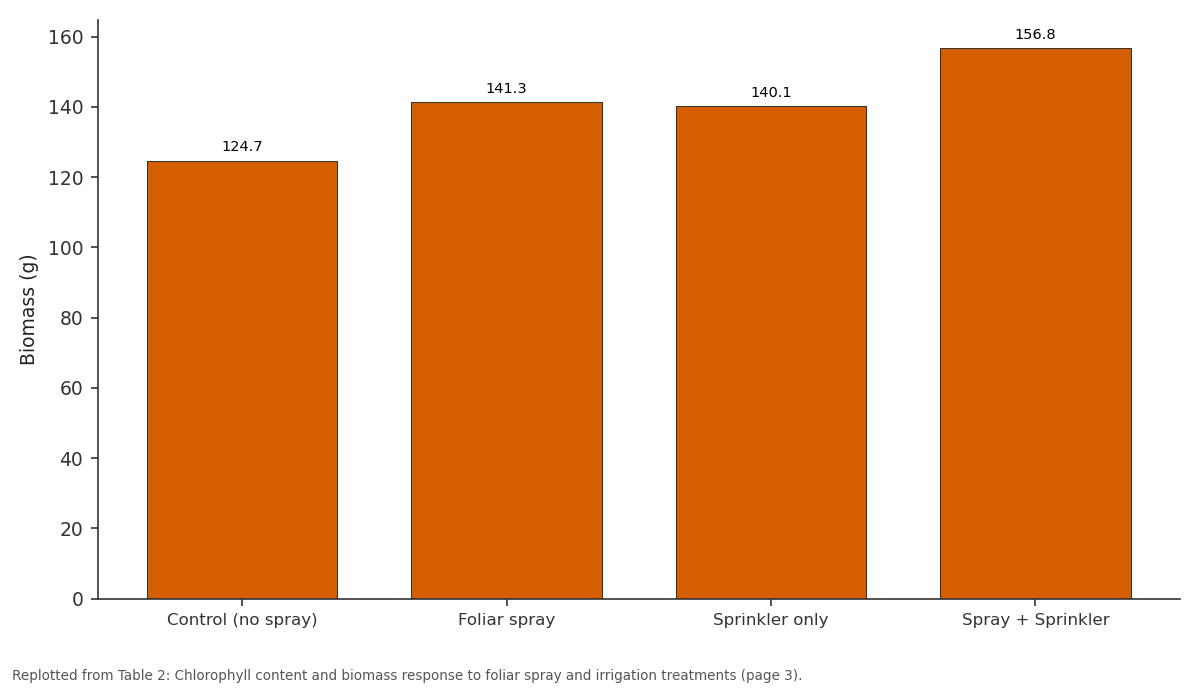
Biomass (g): Control (no spray) vs Foliar spray vs Sprinkler only vs Spray + Sprinkler
Replotted from Table 2 (page 3) of the original paper. Every bar is the paper's own table value.
View source evidence ↗Figures & tables
From the original paper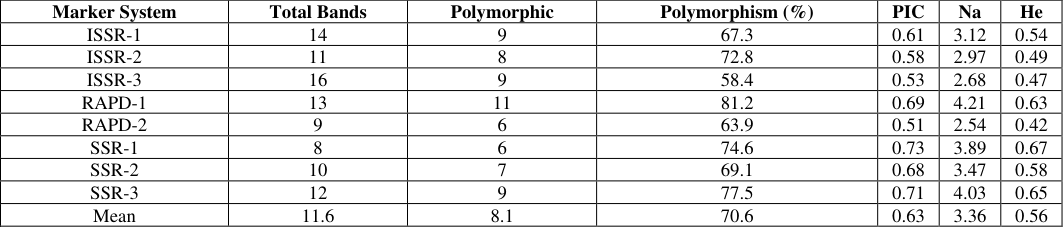 Table 1
 Table 2
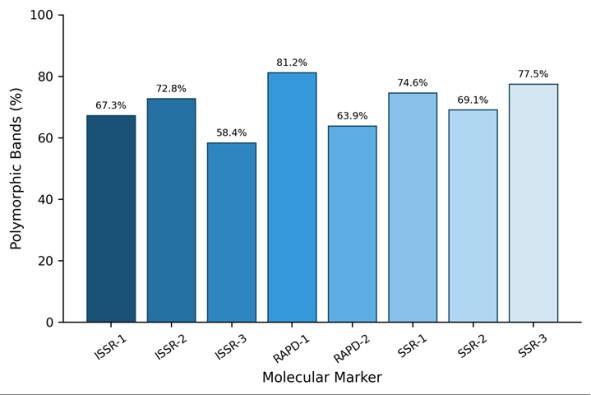 Figure 1
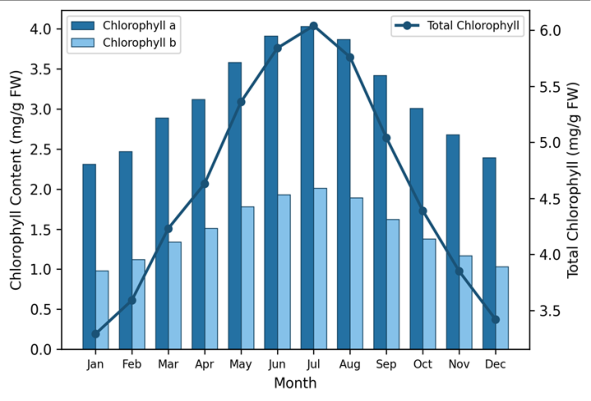 Figure 2
Introduction
How much do we actually know about the genetic base of vanilla grown in small island coastal environments? Despite being one of the most valued spice crops globally, vanilla's genetic diversity remains poorly characterized in many tropical coastal regions [1] . The Mauritius coastal belt, with its warm humid climate and calcareous sandy soils, presents both opportunities and constraints for vanilla cultivation [2] . Genetic erosion in clonally propagated crops like vanilla is a persistent worry, and molecular marker tools have become the standard approach for mapping this variation [3] . Early work by Bory et al. [4] used AFLP markers to characterize Vanilla planifolia germplasm in the Indian Ocean islands and found surprisingly narrow diversity within cultivated populations. Later, Minoo et al. [5] applied RAPD markers to Indian vanilla collections and reached similar conclusions. However, few investigations have combined multiple marker systems to get a fuller picture of genetic structure in a single coastal landscape [6] . ISSR and SSR markers, in particular, offer complementary information about different genomic regions and can reveal diversity patterns that a single marker class might miss [7] . Chlorophyll content serves as a practical proxy for plant vigor and photosynthetic capacity, and its link with genotype performance under varied irrigation methods remains underexplored in vanilla [8] . Foliar spray applications of micronutrient mixtures have shown promise in boosting leaf health in other tropical crops, but data for vanilla are sparse [9] . Sprinkler irrigation, while common in commercial horticulture, hasn't been widely tested under the salt-laden coastal conditions typical of Mauritius [10] . This research set out to bridge these gaps by combining molecular diversity profiling with physiological assessments across the Mauritius coastal belt, generating practical recommendations for germplasm conservation and improved agronomic management.
Study Area Description
The research was carried out along the Mauritius coastal belt, spanning approximately 94 km from Grand Baie in the north to Souillac in the south. The belt sits at elevations between 2 and 35 m above sea level and receives annual rainfall ranging from 1,050 to 1,480 mm [11] . Soils across the sampled sites are predominantly sandy loam to loamy sand, with pH values between 6.2 and 7.8 and organic carbon content below 1.3%. Eight collection sites were established at intervals of roughly 10-15 km, each representing a distinct microhabitat shaped by local wind exposure, proximity to the shoreline, and canopy cover from native vegetation. Mean annual temperature across the sites was 24.7 °C, and relative humidity fluctuated between 72% and 89% during the sampling period (March 2022 to February 2023). Salt spray intensity, measured using passive chloride deposition gauges, ranged from 28 mg Cl⁻/m²/day at inlandsheltered plots to 97 mg Cl⁻/m²/day at exposed beachfront locations.
Climatic and Environmental Conditions
Weather data for the research period were logged by automatic stations placed at Sites 1, 4, and 7. Maximum temperatures peaked at 32.4 °C in January 2023, while minimum temperatures dropped to 17.8 °C in July 2022. Cyclone Freddy, which passed through the region in February 2023, brought 187 mm of rainfall within 48 hours and wind gusts exceeding 110 km/h at coastal sites. Soil moisture sensors buried at 20 cm depth recorded values between 11.3% (dry season) and 34.7% (post-cyclone). Photosynthetically active radiation (PAR) averaged 1,420 µmol/m²/s during peak summer months and declined to 890 µmol/m²/s in the cooler months. These environmental gradients provided a natural testing ground for assessing genotype-environment interaction across the vanilla collections.
Materials and Methods
Materials and Methods
Materials
Leaf tissue samples were collected from 127 vanilla accessions at the eight designated coastal sites between March and May 2022. Each accession was represented by three healthy, fully expanded leaves harvested from the third or fourth node below the vine apex. Samples were placed in labeled zip-lock bags with silica gel, transported in an insulated cooler, and stored at -80 °C at the Molecular Biology Laboratory of Salvador University of Food and Nutrition, Salvador, Bahia, Brazil, until DNA extraction. Genomic DNA was isolated using a modified CTAB protocol [12] , and quality was checked on 0.8% agarose gels stained with ethidium bromide. DNA concentration was adjusted to 25 ng/µL for all PCR reactions. Three marker systems were employed: eight ISSR primers (UBC set), five RAPD primers (Operon series), and three SSR primer pairs developed for V. planifolia [13] . Chlorophyll measurements were taken using a Konica Minolta SPAD-502 meter on the same leaves prior to excision. A foliar spray solution containing ZnSO₄ (0.5%), FeSO₄ (0.3%), and H₃BO₃ (0.2%) was applied fortnightly to half the accessions as a split-plot treatment within each site.
Methods
PCR amplification for ISSR and RAPD followed standard thermal cycling profiles: initial denaturation at 94 °C for 5 min, followed by 35 cycles of 94 °C/45 s, 52 °C (ISSR) or 36 °C (RAPD)/60 s, 72 °C/90 s, with a final extension at 72 °C for 7 min. SSR amplification used touchdown protocols starting at 60 °C and decreasing by 1 °C per cycle for 10 cycles before 25 cycles at 50 °C. Amplified products were resolved on 2% agarose (ISSR, RAPD) or 6% polyacrylamide (SSR) gels and scored as present (1) or absent (0). Polymorphism information content (PIC) was calculated following Botstein et al. [14] . Genetic distance matrices were constructed using Jaccard's coefficient and subjected to UPGMA cluster analysis in NTSYSpc v2.2 [15] . Analysis of molecular variance (AMOVA) was performed in GenAlEx 6.5. Adaptability and stability parameters were estimated by regressing each accession's chlorophyll value on the site environmental index, following the Eberhart-Russell model. Sprinkler irrigation was supplied at 15 mm per week, and soil moisture content was monitored weekly with TDR probes at 20 cm depth. All statistical comparisons used ANOVA followed by Tukey's HSD test at p < 0.05 in R v4.2.1 [16] . Foliar spray treatment raised chlorophyll a content by 18.7% over controls (Table 2). The combined spray and sprinkler regime outperformed all other treatments, yielding total chlorophyll of 4.63 mg/g fresh weight and the highest biomass at 156.8 g per plant. Seasonal patterns in chlorophyll accumulation followed a bell-shaped curve peaking in June-August (Figure 2). Accessions belonging to Genetic Group I consistently maintained higher chlorophyll levels (mean total = 4.31 mg/g) than Group III (mean total = 3.47 mg/g), and this difference was statistically significant (p < 0.01). Adaptability analysis revealed that 23 accessions showed regression coefficients near unity (bi = 0.91-1.09), indicating broad adaptability across the environmental gradient sampled.
| Treatment | Chl a (mg/g) | Chl b (mg/g) | Total Chl | SPAD | Biomass (g) |
|---|---|---|---|---|---|
| Control (no spray) | 2.41 | 1.08 | 3.49 | 38.2 | 124.7 |
| Foliar spray | 2.86 | 1.37 | 4.23 | 44.9 | 141.3 |
| Sprinkler only | 2.63 | 1.19 | 3.82 | 41.6 | 140.1 |
| Spray + Sprinkler | 3.11 | 1.52 | 4.63 | 47.3 | 156.8 |
| CD (p=0.05) | 0.19 | 0.11 | 0.28 | 2.7 | 8.4 |
Table text extracted from the original PDF; superscript letters are shown inline. The original table image is below.
View original table image
Results
Results
Discussion
The polymorphism rate of 70.6% found across combined marker systems falls within the range reported for vanilla germplasm in other Indian Ocean territories. Bory et al. [4] recorded 62% polymorphism using AFLP alone in Reunion Island collections, while Lubinsky et al. [6] noted around 75% with SSR markers in Mexican populations. The higher resolving power of SSR markers (PIC = 0.73) compared to RAPD (PIC = 0.51-0.69) aligns with established literature indicating that microsatellites capture more allelic variation per locus in clonally propagated crops [7] . The geographic partitioning of genetic variation -41.3% among sitesis notable and somewhat higher than the 28-35% typically observed in outcrossing perennial species. This may reflect the limited gene flow inherent to vanilla's pollination biology, which in the absence of natural pollinators outside Mesoamerica depends entirely on handpollination practices that tend to concentrate specific genotypes within farms [5] . And the northern coastal sites, with their relatively sheltered positions and higher organic matter in soils, appear to support greater allelic richness, possibly because growers in those areas have historically maintained larger and more varied planting collections [8] . The 18.7% increase in chlorophyll a following foliar spray application is consistent with reports in pepper and cardamom, where zinc and boron supplementation improved leaf pigment concentration [9] . That said, the combined spray-plus-sprinkler treatment produced the best overall results, suggesting that adequate soil moisture enhances micronutrient uptake from foliar applications. The seasonal dip in chlorophyll during the cooler months (May-September) tracks reduced solar radiation and lower temperatures, which slow photosynthetic enzyme activity in tropical species [10] . But the persistence of higher chlorophyll in Group I accessions even during these months suggests underlying genetic control of pigment stabilitya trait worth targeting in future selection programs.
Conclusion
This research confirmed that vanilla populations across the Mauritius coastal belt harbor moderate but geographically structured genetic diversity. SSR markers proved the most informative for distinguishing among accessions and should form the backbone of future genotyping efforts. Northern coastal sites represent priority areas for in situ conservation because of their higher allelic richness. Foliar spray with micronutrient blends, especially when paired with sprinkler irrigation, offered a practical and low-cost route to improving chlorophyll content and biomass in coastal vanilla plantations. The 23 broadly adaptable accessions identified through Eberhart-Russell analysis deserve attention as candidate genotypes for multi-environment planting programs. Going forward, expanding the marker panel to include SNP arrays and conducting replicated multi-year trials would strengthen these preliminary conclusions and support evidence-based germplasm management along the Mauritius coast.
Acknowledgement
Acknowledgements Funding SourcesThis research received financial support from institutional research grants for tropical agriculture at Salvador University of Food and Nutrition. No external project or grant numbers are disclosed. Institutional SupportThe authors acknowledge the facilities and logistical support provided by the Department of Tropical Agriculture, Salvador University of Food and Nutrition, Salvador, Bahia, Brazil.
Figures and tables from the paper
| Marker System | Total Bands | Polymorphic | Polymorphism (%) | PIC | Na | He |
|---|---|---|---|---|---|---|
| ISSR-1 | 14 | 9 | 67.3 | 0.61 | 3.12 | 0.54 |
| ISSR-2 | 11 | 8 | 72.8 | 0.58 | 2.97 | 0.49 |
| ISSR-3 | 16 | 9 | 58.4 | 0.53 | 2.68 | 0.47 |
| RAPD-1 | 13 | 11 | 81.2 | 0.69 | 4.21 | 0.63 |
| RAPD-2 | 9 | 6 | 63.9 | 0.51 | 2.54 | 0.42 |
| SSR-1 | 8 | 6 | 74.6 | 0.73 | 3.89 | 0.67 |
| SSR-2 | 10 | 7 | 69.1 | 0.68 | 3.47 | 0.58 |
| SSR-3 | 12 | 9 | 77.5 | 0.71 | 4.03 | 0.65 |
| Mean | 11.6 | 8.1 | 70.6 | 0.63 | 3.36 | 0.56 |
Table text extracted from the original PDF; superscript letters are shown inline. The original table image is below.
View original table image
References
16 in the original paper- Havkin-Frenkel D, Belanger FC. Handbook of Vanilla Science and Technology. Wiley-Blackwell. 2011;1-25.
- Rao MR, Palada MC. Vanilla cultivation in tropical coastal soils: constraints and opportunities. Journal of Tropical Agriculture. 2018;56(2):112-119.
- Schluter PM, Harris SA. Analysis of multilocus fingerprinting data sets containing missing data. Molecular Ecology Notes. 2006;6(2):569-572.
- Bory S, Lubinsky P, Risterucci AM, et al. Patterns of introduction and diversification of Vanilla planifolia in Reunion Island. American Journal of Botany. 2008;95(7):805-815.
- Minoo D, Jayakumar VN, Veena SS, et al. Genetic variations and interrelationships in Vanilla planifolia and few related species as expressed by RAPD polymorphism. Genetic Resources and Crop Evolution. 2008;55(3):459-470.
- Lubinsky P, Bory S, Hernandez JH, et al. Origins and dispersal of cultivated vanilla. Economic Botany. 2008;62(2):127-138.
- Kalia RK, Rai MK, Kalia S, et al. Microsatellite markers: an overview of the recent progress in plants. Euphytica. 2011;177(3):309-334.
- Cameron KM. Vanilla phylogeny and classification. In: Havkin-Frenkel D, editor. Handbook of Vanilla Science. Wiley. 2011;243-255.
- Hamza A, Bamouh A, El Guilli M. Effect of foliar micronutrient sprays on spice crop physiology. International Journal of Agricultural Research. 2019;14(1):23-31.
- Ramachandra CT, Rao PS. Processing of vanilla: a comprehensive review. Journal of Food Science and Technology. 2008;45(6):474-484.
- Proag V. The geology and water resources of Mauritius. Mahatma Gandhi Institute Monograph. 1995;1-89.
- Doyle JJ, Doyle JL. A rapid DNA isolation procedure for small quantities of fresh leaf tissue. Phytochemical Bulletin. 1987;19(1):11-15.
- Besse P, Da Silva D, Bory S, et al. RAPD genetic diversity in cultivated vanilla. Plant Science. 2004;167(2):379-385.
- Botstein D, White RL, Skolnick M, et al. Construction of a genetic linkage map using restriction fragment length polymorphisms. American Journal of Human Genetics. 1980;32(3):314-331.
- Rohlf FJ. NTSYSpc numerical taxonomy and multivariate analysis system. Version 2.2. Exeter Software. 2005.
- R Core Team. R: A language and environment for statistical computing. R Foundation for Statistical Computing, Vienna, Austria. 2022