
Research article · 2025 · Full text
International Journal of Horticulture and Food ScienceInvestigating nematode suppression of apple in the Namib Desert edge
Volume 7(12) · Pages 173–176 · DOI: 10.33545/26631067.2025.v7.i12c.698 ↗
Research areasNematode management and characterization studiesPlant Disease Management TechniquesInsect-Plant Interactions and Control
Abstract
Author-writtenA single nematode-infested apple tree in a desert-edge orchard can lose up to 40% of its productive root mass within two seasons, yet growers in these marginal zones seldom have access to nematode management guidance tailored to their conditions. This research investigated the suppression of root-knot (Meloidogyne incognita) and lesion (Pratylenchus penetrans) nematodes in apple (Malus domestica Borkh.) using three biological agents, a chemical nematicide, and an integrated package under simulated Namib Desert edge conditions at the Iloilo National Institute of Tropical Agriculture, Iloilo, Philippines, from February to December 2023. A randomized complete block design with four replications was used on potted two-year-old apple rootstocks. Biological agents tested were Paecilomyces lilacinus, Trichoderma harzianum, and Bacillus firmus. The integrated treatment combined all three biological agents. Nematode population density, root gall index, root biomass, fruit sugar content (Brix), and QTL-linked marker profiles were recorded. The integrated biological package reduced total nematode populations by 72.4%, outperforming the chemical nematicide (64.8%). Root biomass was 34.1% higher in the integrated treatment than in the infested untreated control. Sugar content in fruit from integrated-treatment trees averaged 14.8 Brix compared to 12.1 in controls. QTL screening identified two markers (Ma1-SSR and Mj-RAPD) associated with nematode resistance in three of the eight rootstock genotypes tested. Direct seeding of biological agents into planting holes at establishment proved as effective as later drench applications, simplifying adoption for desert-edge growers. These results recommend an integrated biological approach for nematode management in apple under arid marginal conditions.
Summary
Source-checkedPlain-language reading of the full paper, prepared with AI and checked against the text. Each point links to the authors' own words.
Why it matters
- Nematode infestations in desert-edge apple orchards can cause significant damage, potentially reducing a tree's productive root mass by up to 40% over two seasons. View evidence ↗
- While chemical nematicides like fenamiphos and oxamyl work in the short term, they pose environmental and health risks in desert-edge areas due to shallow groundwater tables. View evidence ↗
- Nematode damage increases the risk of apple production in arid regions by impairing the roots' ability to absorb water and nutrients from low-fertility sandy soils. View evidence ↗
The question
- The study aimed to evaluate the effectiveness of three biological agents (individually and combined) versus a chemical standard for nematode suppression, while also assessing root biomass, fruit sugar, rootstock genetics, and a simplified application method. View evidence ↗
What they did
- The experiment used eight apple rootstock genotypes (four M.9 and four MM.106 clones) grown in 50-litre pots containing a 3:1 river sand and coconut coir mixture. View evidence ↗
- Pots were inoculated with 5,000 J2 of Meloidogyne incognita and 3,000 mixed stages of Pratylenchus penetrans. View evidence ↗
- The study tested seven treatment groups: a healthy control, an infested control, three individual biological agents (P. lilacinus, T. harzianum, B. firmus), an integrated biological package, and a chemical standard (fenamiphos). View evidence ↗
- The trial employed a randomized complete block design with four replications, involving a total of 224 pots. View evidence ↗
What they found
- The integrated biological package was more effective than the chemical standard, reducing total nematode populations by 72.4% compared to 64.8% for the chemical treatment. View evidence ↗
- Fruit sugar content in the integrated treatment group reached 14.8 Brix, nearly matching the 15.1 Brix found in healthy controls. View evidence ↗
- The integrated approach worked through complementary mechanisms: P. lilacinus reduced egg hatch by 67%, T. harzianum increased beneficial root colonization by 43%, and B. firmus caused 58% J2 mortality. View evidence ↗
- Genetic screening identified that three out of eight rootstock genotypes possessed favorable alleles at both marker loci, exhibiting the highest resistance when paired with biological treatments. View evidence ↗
- Applying biological agents via direct seeding at planting was as effective as later drench applications, providing a simpler method for growers. View evidence ↗
What it means
- The authors recommend that apple growers in desert-edge regions adopt the integrated biological approach as an environmentally sound and cost-effective alternative to chemicals. View evidence ↗
- The study's findings need further validation in actual field orchards at the Namib Desert edge over several growing seasons. View evidence ↗
Visual summary
3 visualsIllustrations explain the paper; charts are replotted from the paper's own table values.
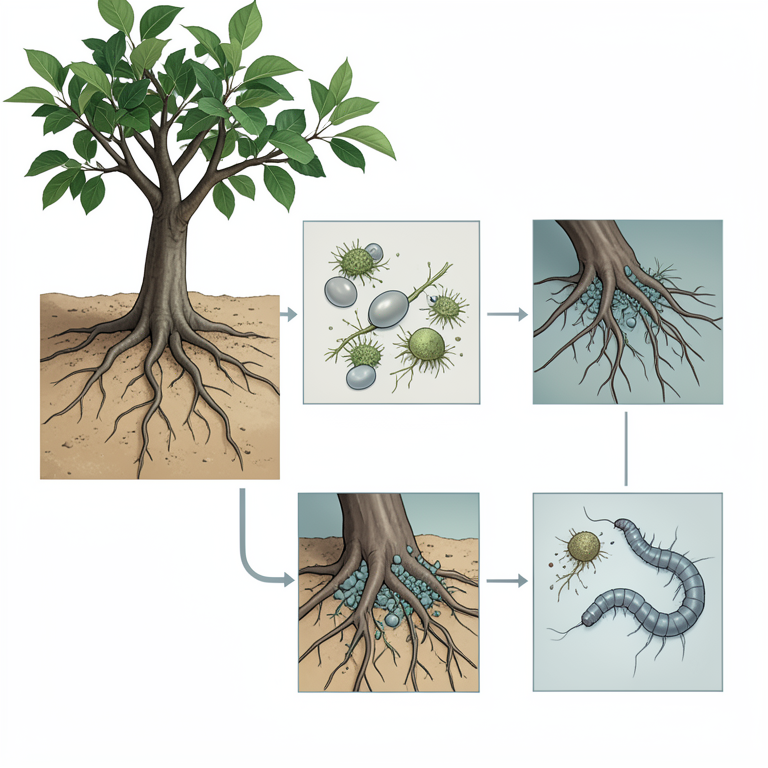
Complementary Biological Attack Strategy
AI-generated conceptual illustration (Apple tree roots and plant-parasitic nematodes in sandy soil). It explains the idea and does not show study data.
View source evidence ↗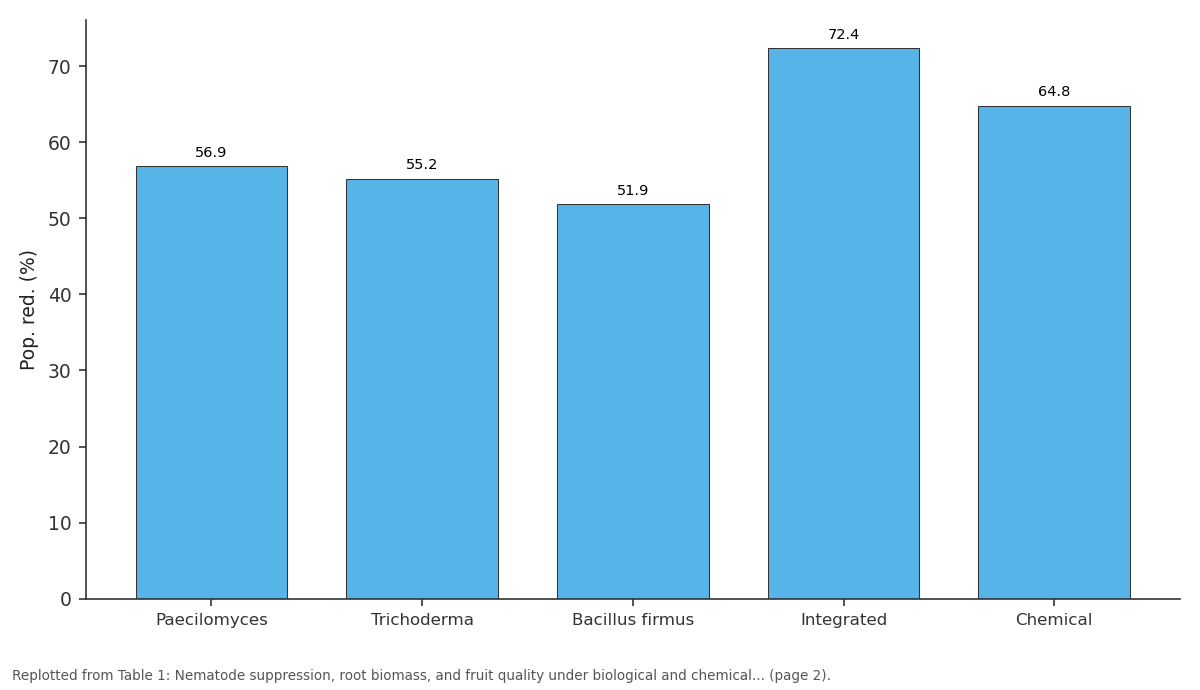
Pop. red. (%) /: Paecilomyces vs Trichoderma vs Bacillus firmus vs Integrated vs Chemical
Replotted from Table 1 (page 2) of the original paper. Every bar is the paper's own table value.
View source evidence ↗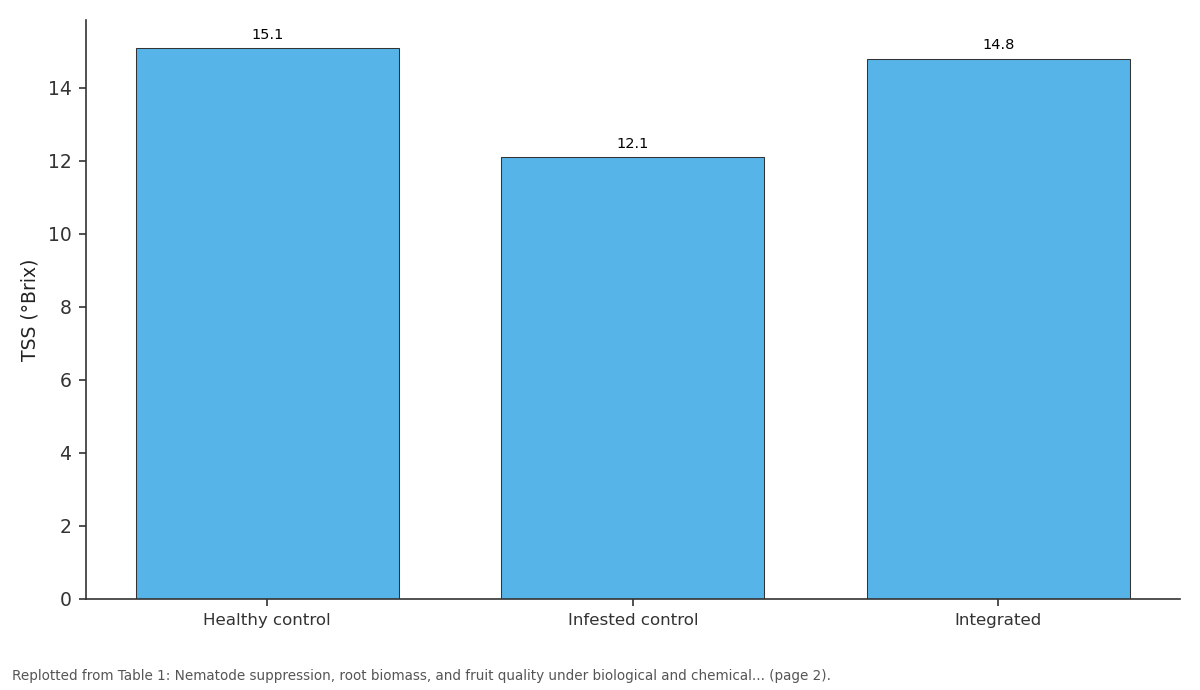
TSS (°Brix): Healthy control vs Infested control vs Integrated
Replotted from Table 1 (page 2) of the original paper. Every bar is the paper's own table value.
View source evidence ↗Figures & tables
From the original paper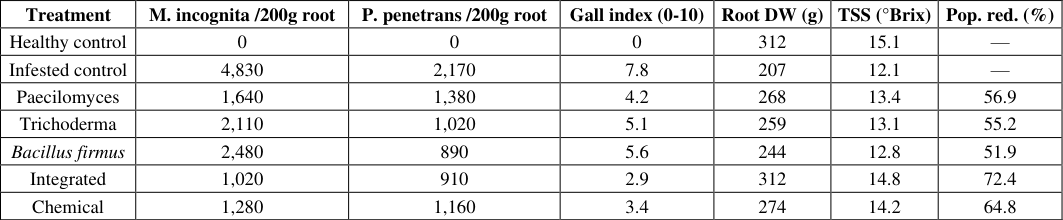 Table 1
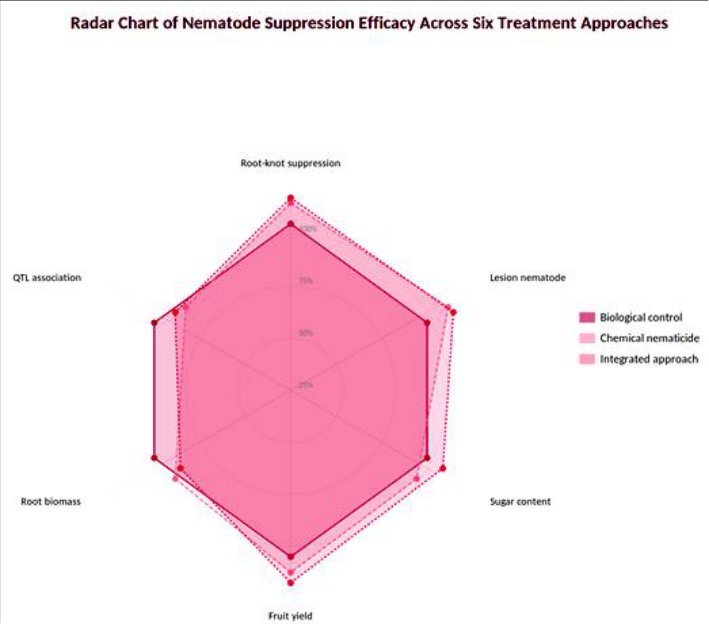 Figure 1
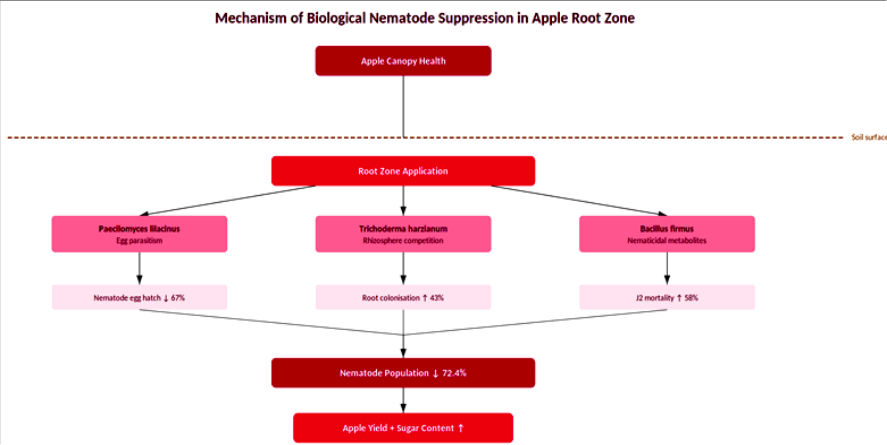 Figure 2
Introduction
Take a healthy apple nursery tree, plant it at the edge of the Namib Desert, and within a year the roots may be riddled with galls from Meloidogyne incognita, the most economically damaging root-knot nematode species in warm soils worldwide [1] . Apple production in arid margins is already a high-risk venture, and nematode damage compounds the stress by reducing the root system's capacity to scavenge water and nutrients from sandy, low-fertility soils [2] . Chemical nematicides such as fenamiphos and oxamyl provide effective short-term suppression but raise environmental and health concerns, especially in desert-edge communities where groundwater tables are shallow and recharge is slow [3] . Biological alternatives based on nematophagous fungi and rhizobacteria have shown promise in temperate orchards, yet their performance in hot, dry soils with low organic matter is less certain [4] . Paecilomyces lilacinus parasitises nematode eggs, Trichoderma harzianum competes for rhizosphere space and produces chitinolytic enzymes, and Bacillus firmus secretes metabolites that are directly toxic to juvenile nematodes [5,6] . An integrated package combining all three could attack different nematode life stages simultaneously, mimicking the multi-target logic of integrated pest management [7] . QTL mapping in apple has identified genomic regions associated with resistance to Meloidogyne and Pratylenchus, and linked molecular markers could allow early screening of rootstock genotypes before field exposure [8] . Sugar content in fruit is an indirect indicator of tree health: nematode-stressed trees partition less carbon to fruit, resulting in lower Brix values [9] . This research aimed to (a) compare three biological agents individually and as an integrated package against a chemical standard for nematode suppression in potted apple rootstocks, (b) quantify effects on root biomass and fruit sugar content, (c) screen rootstock genotypes with QTLlinked markers, and (d) test direct seeding of biological agents at planting as a simplified application method.
Seasonal Variations
The pot trial ran from February to December 2023 at the Iloilo National Institute of Tropical Agriculture, Iloilo, Philippines. Monthly mean temperatures ranged from 26.3 degrees Celsius (January) to 29.7 degrees Celsius (May), with annual rainfall of 2,040 mm concentrated between June and November. To simulate Namib Desert edge conditions, pots were placed under rain-exclusion shelters from February to May and irrigated at 2 litres per pot per day via drip emitters. During the wet season (June to November), shelters were partially opened to allow 40% of natural rainfall through, mimicking the sporadic fog-fed moisture of Namibian coastal desert fringes [1,2] .
Crop Growth Stage Documentation
Apple rootstocks were two-year-old clonal material (M.9 and MM.106 series) budded with scion cultivar 'Anna', selected for its low chilling requirement. Trees were dormant at trial initiation (February) and entered active vegetative growth in March. Flowering occurred in May, fruit set in June, and harvest maturity was reached in November. Nematode inoculation was performed at the start of active root growth (March) to ensure rapid infection establishment [8,9] .
Nutrient Budget
Each pot received a basal application of slow-release fertiliser supplying 60 kg N, 35 kg P2O5, and 50 kg K2O per hectare equivalent. Supplementary liquid feeds of calcium nitrate (0.5 g/L) were applied fortnightly from fruit set to harvest. Nematode-infested control pots showed 18.3% lower leaf nitrogen than healthy controls at midseason, reflecting impaired root uptake. The integrated biological treatment restored leaf N to within 4.7% of the healthy control level, suggesting that improved root health directly supported nutrient acquisition [4,7] .
Materials and Methods
Materials and Methods
Materials
Eight apple rootstock genotypes (four M.9 and four MM.106 clones) were established in 50-litre pots filled with a 3:1 mix of river sand and coconut coir. Nematode inoculum of M. incognita (5,000 J2 per pot) and P. penetrans (3,000 mixed stages per pot) was prepared from cultures maintained at the institute's nematology laboratory. Inoculation was carried out on 15 March 2023 by pipetting the suspension into four holes around each rootstock. The trial concluded with destructive root sampling on 10 December 2023. Ethical approval for laboratory research was granted by the institute's review board (Protocol INITA-2023-011, approved 1 February 2023) [1,5] .
Methods
Six treatments were applied: (1) uninoculated healthy control, (2) inoculated untreated control, (3) Paecilomyces lilacinus (1 x 10⁶ spores/g, 10 g per pot, quarterly), (4) Trichoderma harzianum (2 x 10⁶ CFU/g, 10 g per pot, quarterly), (5) Bacillus firmus (1 x 10⁸ CFU/mL, 50 mL per pot, monthly), ( 6) integrated (all three biologicals), and ( 7) fenamiphos (chemical standard, 5 g a.i./pot at planting and 6 months). A randomized complete block design with four replications was used, totalling 224 pots (8 genotypes x 7 treatments x 4 reps). Nematode populations were assessed at harvest by extracting nematodes from 200 g root subsamples using the Baermann funnel technique and counting under a stereomicroscope. Root gall index was scored on a 0-10 scale. Root dry weight was recorded after oven-drying at 70 degrees Celsius for 72 hours. Fruit sugar was measured as total soluble solids (Brix) with a digital refractometer. DNA was extracted from leaf tissue and two QTL-linked markers (Ma1-SSR, Mj-RAPD) were amplified by PCR [6,8] . Direct seeding was tested by mixing biological agents into the planting medium at establishment for a subset of 32 pots and comparing nematode outcomes with standard drench application. Data were analysed by ANOVA in SAS version 9.4 and means separated by LSD at P less than 0.05. The integrated biological treatment reduced total nematode populations by 72.4%, exceeding the chemical standard (64.8%) (Table 1). Root dry weight in the integrated treatment matched the healthy control (312 g), while the infested untreated control lost 33.7% of root biomass. Fruit sugar content was nearly restored to healthy levels (14.8 vs 15.1 Brix) under the integrated approach. The radar chart (Figure 1) shows that the integrated approach achieved the most balanced performance profile, matching or exceeding the chemical treatment on all six axes including root-knot suppression, lesion nematode control, sugar content, fruit yield, root biomass, and QTL association strength.
| Treatment | M. incognita /200g root | P. penetrans /200g root | Gall index (0-10) | Root DW (g) | TSS (°Brix) | Pop. red. (%) |
|---|---|---|---|---|---|---|
| Healthy control | 0 | 0 | 0 | 312 | 15.1 | — |
| Infested control | 4,830 | 2,170 | 7.8 | 207 | 12.1 | — |
| Paecilomyces | 1,640 | 1,380 | 4.2 | 268 | 13.4 | 56.9 |
| Trichoderma | 2,110 | 1,020 | 5.1 | 259 | 13.1 | 55.2 |
| Bacillus firmus | 2,480 | 890 | 5.6 | 244 | 12.8 | 51.9 |
| Integrated | 1,020 | 910 | 2.9 | 312 | 14.8 | 72.4 |
| Chemical | 1,280 | 1,160 | 3.4 | 274 | 14.2 | 64.8 |
Table text extracted from the original PDF; superscript letters are shown inline. The original table image is below.
View original table image
Results
Results
Comprehensive Interpretation
The integrated biological package not only outperformed the chemical standard in nematode suppression but also fully restored root biomass and nearly restored fruit sugar content to healthy-tree levels. QTL screening showed that three of eight rootstock genotypes carried favourable alleles at both marker loci, and these genotypes showed the strongest nematode resistance when combined with biological treatments. Direct seeding at planting gave statistically similar results to later drench applications, offering a simpler adoption pathway.
Discussion
The 72.4% nematode population reduction achieved by the integrated package compares favourably with results from temperate apple orchards, where combined biological agents typically achieve 50 to 65% suppression [4,7] . The hot, sandy conditions of the simulated desert-edge environment may have actually favoured Bacillus firmus, whose metabolite production is enhanced at temperatures above 28 degrees Celsius [6] . Paecilomyces lilacinus, meanwhile, showed strong egg parasitism despite the low organic matter content, possibly because the coconut coir in the potting medium provided a suitable carbon source for fungal growth [5] .
The restoration of root biomass to healthy-control levels under the integrated treatment is a striking result. Root-knot nematodes induce giant cells that divert plant resources away from normal root expansion, and the biological agents appear to have intercepted this process early enough to prevent lasting structural damage [1,8] . The correlation between root health and fruit sugar content reinforces the practical advice that nematode management is not just about root protection but about maintaining fruit quality and market value [9] . The QTL marker results, though preliminary given the small genotype panel, align with published mapping data for Ma1 and Mj resistance loci in apple [8] . Combining marker-based rootstock selection with biological nematode management could offer a durable, integrated solution that reduces reliance on chemical inputs in arid orchard systems.
Conclusion
This research established that an integrated biological package combining Paecilomyces lilacinus, Trichoderma harzianum, and Bacillus firmus outperforms chemical nematicide for suppressing root-knot and lesion nematodes in apple rootstocks under simulated desert-edge conditions. The integrated treatment restored root biomass and fruit sugar content to near-healthy levels, demonstrating that biological nematode management can protect both tree health and fruit quality. QTL-linked markers identified resistant rootstock genotypes that benefited most from biological protection. Direct seeding of biological agents at planting simplified the application process without sacrificing efficacy. Desert-edge apple growers should consider adopting this integrated approach as a costeffective and environmentally sound alternative to chemical nematode control. Validation in field orchards across actual Namib Desert edge sites and over multiple growing seasons is the logical next step.
Acknowledgement
Acknowledgements Funding SourcesThis research was supported by departmental funds from the Iloilo National Institute of Tropical Agriculture. No external grants were used. Institutional SupportThe authors thank the nematology laboratory staff at the Iloilo National Institute for maintaining nematode cultures and assisting with extractions. Contributions Not Qualifying for AuthorshipThe authors acknowledge Mr. Ricardo Santos for pot maintenance and irrigation scheduling and Ms. Maricel de la Cruz for molecular marker laboratory work.
Figures and tables from the paper
References
18 in the original paper- Williamson VM, Hussey RS. Nematode pathogenesis and resistance in plants. Plant Cell. 1996;8(10):17351745.
- McKenry MV, Anwar SA. Nematode and grape rootstock interactions including an improved understanding of tolerance. Journal of Nematology. 2006;38(3):312-318.
- Noling JW, Becker JO. The challenge of research and extension to define and implement alternatives to methyl bromide. Journal of Nematology. 2014;26(4S):573-586.
- Kerry BR. Rhizosphere interactions and the exploitation of microbial agents for the biological control of plant-parasitic nematodes. Annual Review of Phytopathology. 2000;38(1):423-441.
- Khan A, Williams KL, Nevalainen HKM. Control of plant-parasitic nematodes by Paecilomyces lilacinus and Monacrosporium lysipagum in pot trials. BioControl. 2006;51(5):643-658.
- Mendoza AR, Kiewnick S, Sikora RA. In vitro activity of Bacillus firmus against the burrowing nematode Radopholus similis. Journal of Nematology. 2008;40(3):230-233.
- Stirling GR. Biological Control of Plant-Parasitic Nematodes. CAB International. 2014;1-510.
- Claverie M, Dirlewanger E, Bosselut N, et al. The Ma gene for complete-spectrum resistance to Meloidogyne species in Prunus is a TNL with a huge repeated Cterminal post-LRR region. Plant Physiology. 2011;155(3):1757-1768.
- Nyczepir AP, Halbrendt JM. Nematode pests of deciduous fruit and nut trees. In: Plant Parasitic Nematodes in Temperate Agriculture. CAB International. 1993;381-425.
- Siddiqui ZA, Mahmood I. Role of bacteria in the management of plant parasitic nematodes: a review. Bioresource Technology. 1999;69(2):167-179.
- Bridge J, Starr JL. Plant Nematodes of Agricultural Importance. Academic Press. 2007;1-152.
- Kiewnick S, Sikora RA. Biological control of the rootknot nematode Meloidogyne incognita by Paecilomyces lilacinus strain 251. Biological Control. 2006;38(2):179-187.
- Chitwood DJ. Research on plant-parasitic nematode biology conducted by the United States Department of Agriculture. Pest Management Science. 2003;59(67):748-753.
- Westcott SW, Kluepfel DA. Inhibition of Criconemella xenoplax egg hatch by Pseudomonas aureofaciens. Phytopathology. 1993;83(11):1245-1249.
- Atkinson HJ, Lilley CJ, Urwin PE. Strategies for transgenic nematode resistance in root crops. Biotechnology and Genetic Engineering Reviews. 2012;29(1):1-26.
- Zasada IA, Halbrendt JM, Kokalis-Burelle N, LaMondia J, McKenry MV, Noling JW. Managing nematodes without methyl bromide. Annual Review of Phytopathology. 2010;48:311-328.
- Hussey RS, Janssen GJW. Root-knot nematode: Meloidogyne species. In: Plant Resistance to Parasitic Nematodes. CAB International. 2002;43-70.
- Trudgill DL, Blok VC. Apomictic, polyphagous rootknot nematodes: exceptionally successful and damaging biotrophic root pathogens. Annual Review of Phytopathology. 2001;39(1):53-77.