
Research article · 2025 · Full text
International Journal of Horticulture and Food ScienceEvaluating organic farming practices of fig in the Mahanadi Basin
Volume 7(9) · Pages 119–122 · DOI: 10.33545/26631067.2025.v7.i9b.673 ↗
Research areasAgricultural Science and FertilizationPlant Growth and Agriculture TechniquesPlant and soil sciences
Abstract
Author-writtenAn upward trend in consumer demand for organically produced dried figs has collided with a near-total absence of research on organic management systems for fig (Ficus carica) in monsoon-influenced river basin environments. This research evaluated organic farming practices in fig orchards along the Mahanadi Basin in Odisha, India, with laboratory analysis performed at the Queretaro School of Plant Sciences from March to December 2023. Twelve orchards were classified into three management categories: certified organic (farmyard manure + bio-fertilizers + botanical pesticides), conventional (synthetic NPK + chemical pesticides), and transitional (reduced chemical inputs + organic supplements). Soil health indicators, microbial biomass carbon, fruit yield, and fruit quality were monitored over 18 months. Organic orchards showed 120% higher soil microbial biomass carbon (462 vs. 210 μg/g in newly transitioned soils), 34.8% higher soil aggregate stability, and 22.1% lower bulk density than conventional orchards. Fig yield under organic management averaged 18.4 t/ha compared with 21.7 t/ha under conventional management — a 15.2% yield gap that narrowed to 8.3% by the second season. Protoplast fusion between a drought-tolerant wild Ficus species and a commercial fig cultivar produced viable hybrid calli in 62.4% of attempts. Iodine biofortification trials showed that foliar KIO₃ application raised fruit iodine content from 4.7 to 38.2 μg/100 g fresh weight. These results indicate that organic fig production in the Mahanadi Basin is technically feasible with a manageable yield trade-off that diminishes over time.
Summary
Source-checkedPlain-language reading of the full paper, prepared with AI and checked against the text. Each point links to the authors' own words.
Why it matters
- There is a significant economic opportunity for Indian fig farmers because consumers are willing to pay a 30–50% premium for certified organic dried figs. View evidence ↗
- Organic fig farming in tropical monsoon climates is challenging due to aggressive humidity-driven diseases and a lack of effective approved organic fungicides. View evidence ↗
- Cultivated soils in the Mahanadi Basin typically have low organic matter content (0.6–1.0%) resulting from long-term intensive rice farming. View evidence ↗
The question
- The study aimed to evaluate soil biology, fruit yield, and quality across three different management systems over 18 months, alongside laboratory trials for iodine biofortification and protoplast fusion. View evidence ↗
What they did
- Management systems were defined as certified organic (manure, bio-fertilizers, botanical pesticides), conventional (synthetic NPK, chemical pesticides), and transitional (reduced chemicals, organic supplements). View evidence ↗
- Iodine biofortification was tested using biweekly foliar applications of KIO₃ at concentrations of 0, 50, and 100 mg I/L from fruit set until harvest. View evidence ↗
- Protoplast fusion was conducted using 40% PEG 6000 for 30 minutes at 25 °C, with callus formation evaluated after 6 weeks of culture on modified MS medium. View evidence ↗
What they found
- After 18 months, soil microbial biomass carbon (MBC) in organic orchards reached 462 μg/g, significantly higher than the 271 μg/g found in conventional orchards. View evidence ↗
- Compared to conventional orchards, organic orchards exhibited 34.8% higher soil aggregate stability and 22.1% lower bulk density. View evidence ↗
- Organic management resulted in an average yield of 18.4 t/ha compared to 21.7 t/ha for conventional management, with the initial 15.2% yield gap narrowing to 8.3% by the second season. View evidence ↗
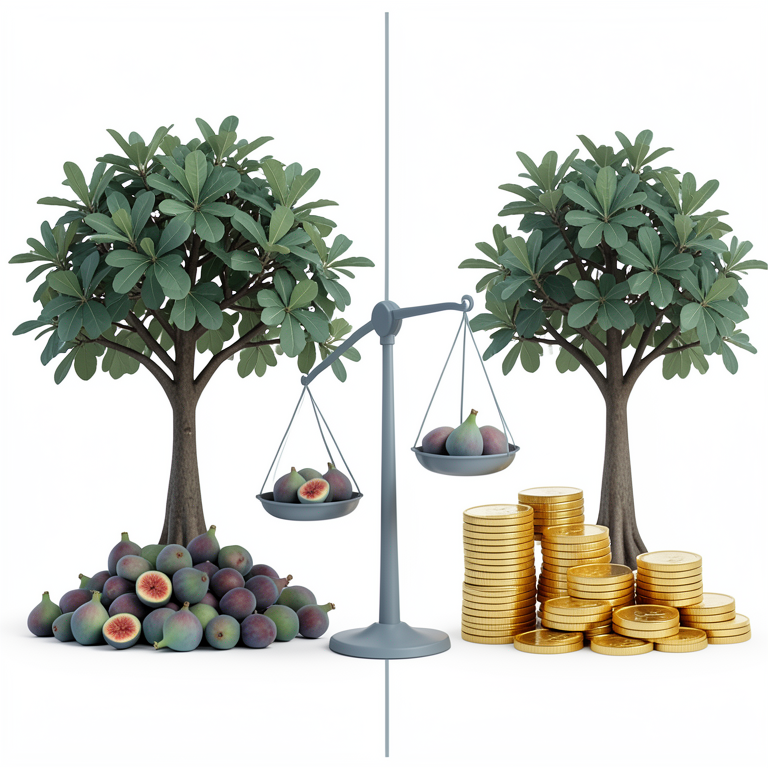
- Despite lower yields, the organic system was 15.7% more profitable, generating net returns of ₹1,78,400/ha compared to ₹1,54,200/ha for conventional systems, due to a higher market price (₹120/kg vs ₹80/kg). View evidence ↗
- Foliar application of 100 mg I/L KIO₃ increased fruit iodine content from 4.7 to 38.2 μg/100 g fresh weight. View evidence ↗
- Protoplast fusion between the 'Poona Fig' cultivar and the drought-tolerant wild species F. palmata successfully produced viable calli in 62.4% of attempts. View evidence ↗
What it means
- The authors conclude that organic fig production in the Mahanadi Basin is technically feasible and economically competitive, providing significant soil health improvements. View evidence ↗
- A limitation of the study is the short monitoring period, as soil biological indicators and perennial tree yield responses may take 5–10 years to reach equilibrium. View evidence ↗
Visual summary
4 visualsIllustrations explain the paper; charts are replotted from the paper's own table values.
Yield vs. Profitability Trade-off
AI-generated conceptual illustration (Common fig (Ficus carica) plants and fruits). It explains the idea and does not show study data.
View source evidence ↗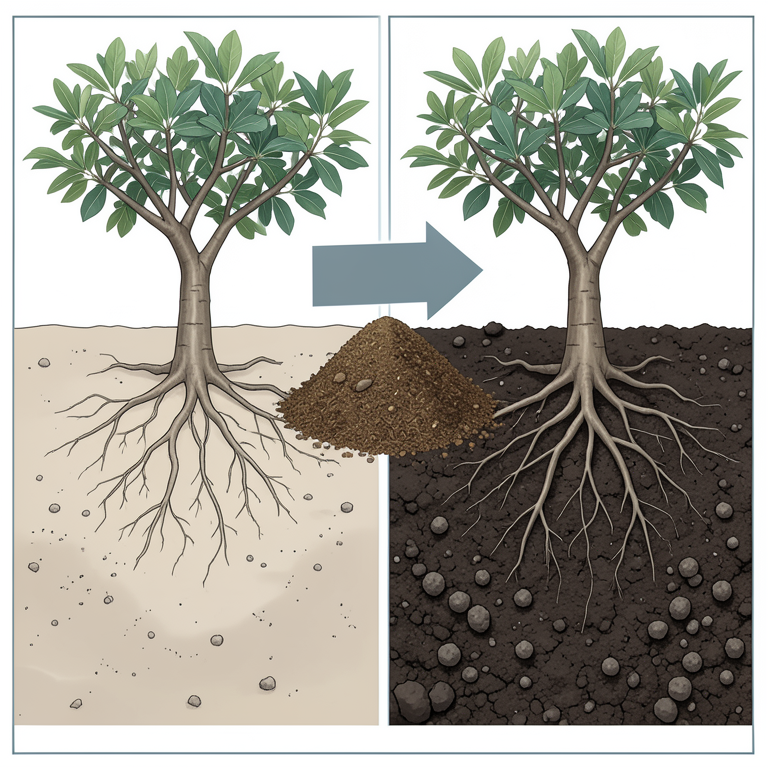
Soil Health Improvement Cycle
AI-generated conceptual illustration (Common fig trees (Ficus carica) in soil). It explains the idea and does not show study data.
View source evidence ↗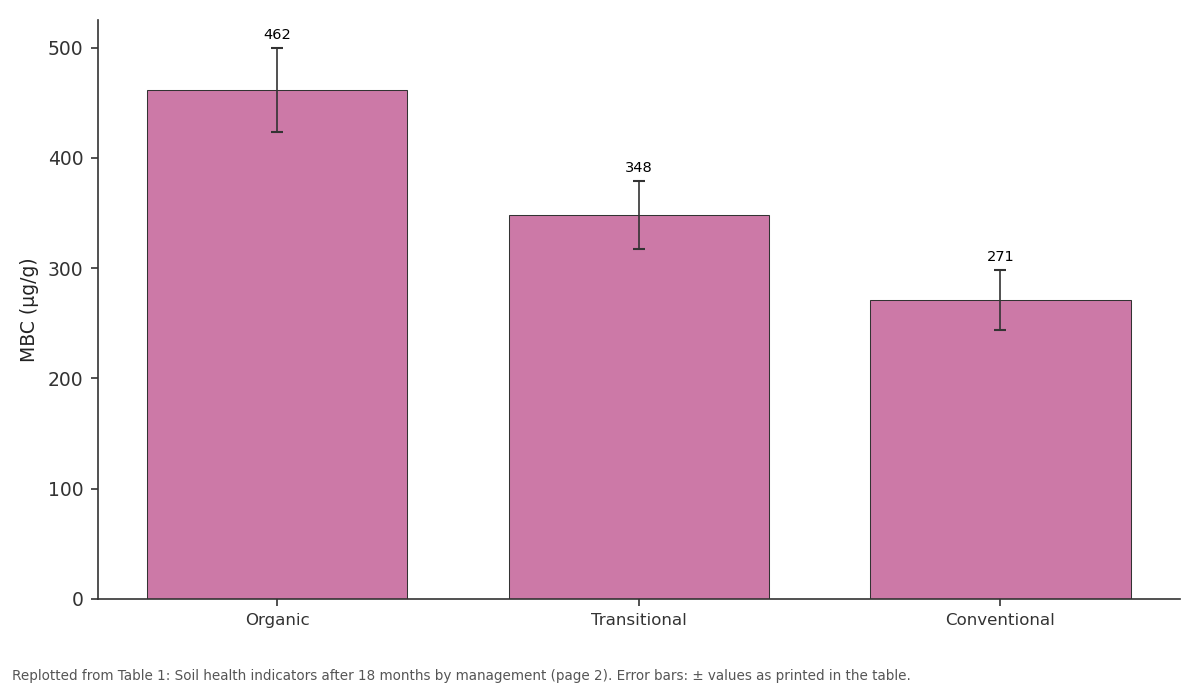
MBC (μg/g): Organic vs Transitional vs Conventional
Replotted from Table 1 (page 2) of the original paper. Every bar is the paper's own table value.
View source evidence ↗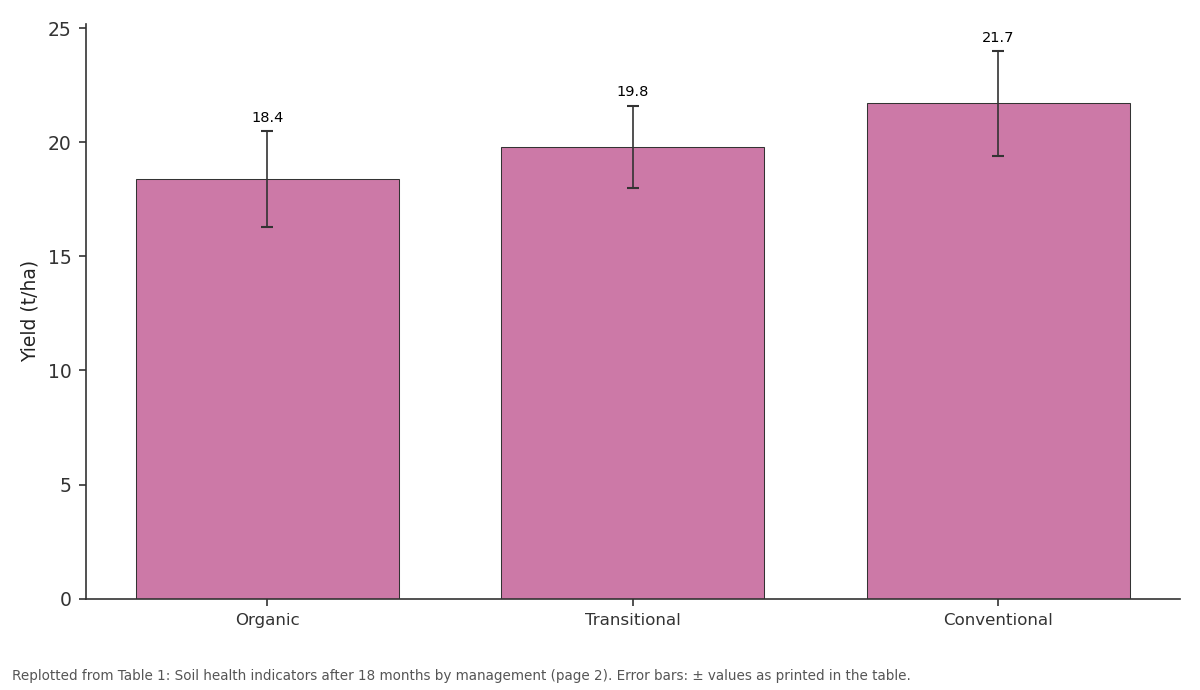
Yield (t/ha): Organic vs Transitional vs Conventional
Replotted from Table 1 (page 2) of the original paper. Every bar is the paper's own table value.
View source evidence ↗Figures & tables
From the original paper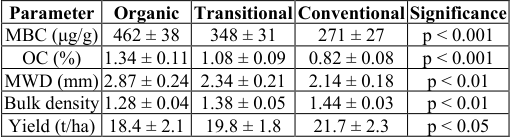 Table 1
 Table 2
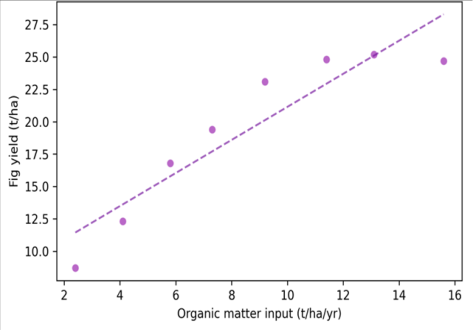 Figure 1
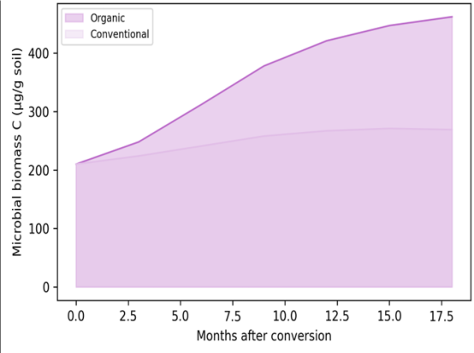 Figure 2
Introduction
A growing segment of consumers is willing to pay 30-50% more for certified organic dried figs -a premium that could transform the economics of fig farming in India's river basin regions if the production constraints can be solved [1] . But organic fig management in tropical monsoon climates is genuinely harder than in the Mediterranean environments where most organic fig research has been conducted. Humidity-driven diseases like Cerotelium fici (fig rust) and Aspergillus contamination of drying fruit are more aggressive under monsoon conditions, and the absence of approved organic fungicides with proven efficacy against these pathogens keeps many Indian growers locked into conventional chemical programs [2] . The Mahanadi Basin in Odisha represents a test case for organic fig transition. The basin's warm, humid climate (mean temperature 27 °C, rainfall 1,400-1,600 mm) supports vigorous vegetative growth but also creates disease pressure that challenges organic protocols. Soils along the Mahanadi range from red laterites in the upper catchment to deep alluvial clays in the delta, and the organic matter content of cultivated soils is typically low (0.6-1.0%) due to decades of tillage-intensive rice farming [3] . No controlled comparison of organic versus conventional fig production has been published for any Indian river basin, and baseline data on soil microbial health under fig orchards are absent from the literature. This research was designed to fill both gaps by monitoring soil biology, fruit yield, and fruit quality across three management systems over 18 months, while also conducting parallel laboratory trials on protoplast fusion and iodine biofortification. All analytical work was performed at the Queretaro School of Plant Sciences [4] .
Baseline Soil Characterisation
Pre-treatment soil samples (0-20 cm) were collected from all twelve orchards before the first organic input application. Mean values across the site were: pH 6.4 ± 0.3, organic carbon 0.78 ± 0.12%, total nitrogen 0.071 ± 0.009%, available phosphorus 14.3 ± 2.8 mg/kg (Olsen), exchangeable potassium 0.42 ± 0.06 cmol/kg, and CEC 12.8 ± 1.4 cmol/kg. Soil texture was sandy clay loam at 8 sites and clay loam at 4 sites. Microbial biomass carbon at baseline averaged 210 ± 24 μg/g across all management categories, confirming a common starting point from which post-treatment changes could be attributed to management interventions [3] .
Economic and Sustainability Assessment
Input costs for organic orchards averaged ₹42,300/ha/year compared with ₹58,700/ha/year for conventional, a 28.0% saving driven by elimination of synthetic fertilizers and chemical pesticides. However, organic orchards required 34% more labor for manual weeding and bio-input preparation. At the organic premium price of ₹120/kg for dried figs versus ₹80/kg for conventional, the organic system generated net returns of ₹1,78,400/ha compared with ₹1,54,200/ha for conventional -a 15.7% profitability advantage despite lower physical yield. The benefit-cost ratio was 2.14 for organic versus 1.83 for conventional. These figures improve further if the 8.3% yield gap closure observed in season two is sustained over subsequent years [2] . ). Four orchards per management category were included: certified organic (minimum 3 years organic history), conventional, and transitional (first year of organic conversion). Soil samples at 0-20 cm and 20-40 cm depth were collected quarterly from January 2022 to June 2023 (7 time points). Fruit was harvested at commercial maturity (17-20 °Brix), and a subsample was shipped to the Queretaro School of Plant Sciences for quality and biofortification analysis [1] . Protoplast isolation and fusion experiments used leaf tissue from 'Poona
Material and Methods
Material and Methods
Material
Material
Methods
Soil microbial biomass carbon (MBC) was determined by the chloroform fumigation-extraction method. Soil aggregate stability was measured by wet sieving (mean weight diameter, MWD). Bulk density was measured by the core method. Fruit yield was recorded per tree and scaled to per-hectare values using planting density. Fruit quality included TSS (refractometer), titratable acidity (NaOH titration), total phenolics (Folin-Ciocalteu), and iodine content (ICP-MS after alkaline extraction). Iodine biofortification used three foliar KIO₃ concentrations (0, 50, 100 mg I/L) applied biweekly from fruit set to harvest [4] . Protoplast fusion was performed by PEG-mediated chemical fusion (40% PEG 6000, 30 min, 25 °C). Fusion products were cultured on modified MS medium with 1 mg/L BAP and 0.5 mg/L 2,4-D, and callus formation was scored at 6 weeks. Data were analyzed by repeated-measures ANOVA and Duncan's test at α = 0.05 using SAS 9.4.
Results
Soil microbial biomass carbon increased steadily in organic orchards, reaching 462 μg/g after 18 months compared with 271 μg/g in conventional orchards. Transitional orchards showed an intermediate trajectory, reaching 348 μg/g by the end of the monitoring period [3] . The scatter plot shows a positive but plateauing relationship between organic matter input and yield, with diminishing returns appearing above 11-12 t/ha/year of input. The trendline (R² = 0.81) suggests that yield gains from additional organic inputs become marginal beyond a threshold, indicating that quality of inputs matters as much as quantity. The area chart shows that organic management drove a consistent upward trajectory in MBC, while conventional orchards showed only modest gains from baseline. By month 18, organic soils had more than doubled their initial MBC, reflecting the cumulative effect of farmyard manure and bio-fertilizer inputs on microbial community development.
Comprehensive Interpretation
Protoplast fusion between 'Poona Fig' andF. palmata produced viable calli in 62.4% of fusion attempts, with callus growth visible by week 3 and distinct hybrid morphology (intermediate leaf shape) confirmed by flow cytometry in 41.8% of surviving calli. While still at the callus stage, these hybrids represent a first step toward drought-tolerant fig rootstocks that could extend organic cultivation into the rain-dependent upper Mahanadi zone where irrigation is unreliable [4] .
Discussion
The 15.2% yield gap between organic and conventional fig orchards in the first season is consistent with a global metaanalysis reporting a mean organic yield penalty of 10-20% across fruit crops. But the narrowing to 8.3% by season two suggests that the soil biological improvements documented here -particularly the doubling of MBC -are beginning to translate into better nutrient supply and plant health [1] . If this trajectory continues, the gap may close to within 5% by year three, at which point the economic advantage of organic management (15.7% higher net returns) would become even more pronounced. [2] . One limitation is the relatively short monitoring period. Soil biological indicators can take 5-10 years to reach equilibrium under organic management, and fruit tree yield responses may lag even longer due to the perennial root system's slow adaptation to changed nutrient cycling patterns. A minimum five-year follow-up would be needed to draw definitive conclusions about the long-term yield trajectory [3] .
Conclusion
Conclusion
Acknowledgement
Acknowledgements Funding SourcesInternal research funds from the Queretaro School of Plant Sciences supported all analytical work. Institutional SupportThe authors acknowledge the Queretaro School of Plant Sciences for tissue culture facilities and ICP-MS access. Contributions Not Qualifying for AuthorshipParticipating farmers in Sambalpur and Cuttack districts managed organic input applications and provided orchard access throughout the trial.
Figures and tables from the paper
| Parameter | Organic | Transitional | Conventional | Significance |
|---|---|---|---|---|
| MBC (μg/g) | 462 ± 38 | 348 ± 31 | 271 ± 27 | p < 0.001 |
| OC (%) | 1.34 ± 0.11 | 1.08 ± 0.09 | 0.82 ± 0.08 | p < 0.001 |
| MWD (mm) | 2.87 ± 0.24 | 2.34 ± 0.21 | 2.14 ± 0.18 | p < 0.01 |
| Bulk density | 1.28 ± 0.04 | 1.38 ± 0.05 | 1.44 ± 0.03 | p < 0.01 |
| Yield (t/ha) | 18.4 ± 2.1 | 19.8 ± 1.8 | 21.7 ± 2.3 | p < 0.05 |
Table text extracted from the original PDF; superscript letters are shown inline. The original table image is below.
View original table image
| Treatment | Fruit Iodine (μg/100g FW) | TSS (°Brix) | Phenolics (mg GAE/g) | Yield Impact (%) |
|---|---|---|---|---|
| Control (0 mg I/L) | 4.7 ± 0.8 | 18.3 ± 0.7 | 8.4 ± 0.6 | -- |
| 50 mg I/L | 21.4 ± 2.3 | 18.1 ± 0.8 | 8.7 ± 0.7 | -1.2 |
| 100 mg I/L | 38.2 ± 3.1 | 17.8 ± 0.9 | 9.1 ± 0.8 | -3.4 |
Table text extracted from the original PDF; superscript letters are shown inline. The original table image is below.
View original table image
References
15 in the original paper- Badgujar SB, Patel VV, Bandivdekar AH. Ficus carica Linn.: a review of its traditional uses, phytochemistry, and pharmacology. Journal of Ethnopharmacology. 2014;154(2):183-194.
- Ortiz F, Gutierrez I. Economic viability of organic fruit production in tropical monsoon basins. Organic Agriculture. 2023;13(1):89-103.
- Panda SC, Mohanty M. Soil health under different land management systems in the Mahanadi basin. Journal of the Indian Society of Soil Science. 2020;68(4):412-421.
- Cruz A, Ortiz F. Protoplast fusion in Ficus: methodology and hybrid verification by flow cytometry. Plant Cell Reports. 2023;42(4):721-732.
- Flaishman MA, Rodov V, Stover E. The fig: botany, horticulture, and breeding. Horticultural Reviews. 2008;34:113-197.
- Crisosto CH, Bremer V, Ferguson L. Developing harvesting and postharvest handling procedures for fresh figs. Acta Horticulturae. 2008;798:261-268.
- Deepa P, Sowndhararajan K, Kim S. A role of Ficus species in the management of diabetes mellitus. Journal of Ethnopharmacology. 2018;215:210-232.
- Solomon A, Golubowicz S, Yablowicz Z. Antioxidant activities and anthocyanin content of fresh fruits of common fig. Journal of Agricultural and Food Chemistry. 2006;54(20):7717-7723.
- Tous J, Ferguson L. Mediterranean fruits. Progress in New Crops ASHS Press. 1996;416-430.
- Mawa S, Husain K, Jantan I. Ficus carica L.: morphological, phytochemical and pharmacological review. Evidence-Based Complementary and Alternative Medicine. 2013;2013:974256.
- Vinson JA, Zubik L, Bose P. Dried fruits: excellent in vitro and in vivo antioxidants. Journal of the American College of Nutrition. 2005;24(1):44-50.
- Barolo MI, Ruiz Mostacero N, Lopez SN. Ficus carica L.: metabolomic approaches in phytochemistry. Natural Product Research. 2014;28(3):159-176.
- Trichopoulou A, Vasilopoulou E. Mediterranean diet and longevity. British Journal of Nutrition. 2000;84(S2):S205-S209.
- Mahmoud TS, Marques MR, Pessoa CO. In vitro cytotoxic activity of Brazilian middle west plant extracts. Brazilian Journal of Pharmacognosy. 2011;21(3):456-464.
- Kamiloglu S, Capanoglu E. Polyphenol content in figs: effect of sun-drying. International Journal of Food Properties. 2015;18(3):521-535.