
Research article · 2025 · Full text
International Journal of Horticulture and Food ScienceDeveloping biological control agents of walnut in the Trinidad pitch lake surrounds
Volume 7(7) · Pages 274–277 · DOI: 10.33545/26631067.2025.v7.i7d.526 ↗
Research areasBiological Control of Invasive SpeciesForest Insect Ecology and ManagementInsect behavior and control techniques
Abstract
Author-writtenPicture a landscape where natural asphalt seeps from the ground and tropical heat warps the air above pitch-blackened soils — hardly the setting one would choose for growing walnuts. Yet the environs of Trinidad's Pitch Lake, with their uniquely mineral-rich substrates and warm maritime climate, offered an unconventional testing ground for biological control agents against walnut (Juglans regia) pests during 2022-2023. This research evaluated five biocontrol organisms — Trichoderma harzianum, Beauveria bassiana, Pseudomonas fluorescens, Bacillus subtilis, and neem extract — against major walnut pests including codling moth, walnut husk fly, and aphid complex across two growing seasons. Calcium uptake patterns were tracked through the growing season using HPLC-grade tissue analysis. Minimal processing techniques for fresh walnut kernels were assessed for shelf-life extension. Heat stress effects on tree physiology were quantified during natural temperature spikes exceeding 38 °C. Chlorophyll content changes across pest damage severity classes were measured by SPAD. Crop growth stages were documented from dormancy through harvest on the BBCH phenological scale. Biodiversity assessment of soil and canopy arthropods revealed 94 species across treatment plots. Trichoderma harzianum achieved 78.4% pest mortality in laboratory bioassays and reduced field damage by 41.3%, while Beauveria bassiana provided the strongest control of lepidopteran pests specifically.
Summary
Source-checkedPlain-language reading of the full paper, prepared with AI and checked against the text. Each point links to the authors' own words.
Why it matters
- Biological control is increasingly used in tree nut orchards to meet consumer and regulatory demands for reduced chemical residues. View evidence ↗
- Calcium is critical for walnut market value because it influences kernel quality, cell wall integrity, and resistance to browning after harvest. View evidence ↗
- The Trinidad Pitch Lake environment provides mineral-rich soils and tropical warmth that stress temperate walnut crops but may benefit tropical biological control agents. View evidence ↗
The question
- The study aimed to evaluate the effectiveness of five biological control agents against major walnut pests over two growing seasons. View evidence ↗
What they did
- The experiment used sixty 4-year-old Chandler walnut trees on Paradox rootstock in a randomized complete block design with five treatments and one control. View evidence ↗
- Laboratory no-choice bioassays were conducted using 30 insects per replication to measure the mortality of aphids, husk fly adults, and codling moth larvae. View evidence ↗
- Monthly calcium uptake in kernels and leaves was quantified using ICP-OES following wet-digestion with HNO₃-HClO₄. View evidence ↗
- Minimal processing was tested by blanching kernels at 90 °C for 30 seconds, vacuum packing them, and storing them at 4 °C for 28 days. View evidence ↗
What they found
- Trichoderma harzianum was the most effective agent overall, with a mean pest mortality of 78.4%, including 91.3% mortality for aphids. View evidence ↗
- In the field, Trichoderma reduced damage by 41.3%, while neem extract provided the lowest reduction at 21.3%. View evidence ↗
- There was a progressive decline in calcium concentrations in both kernels and leaves as pest damage severity increased. View evidence ↗
- Chlorophyll content, measured by SPAD values, decreased by 31.9% when comparing undamaged trees to severely damaged ones. View evidence ↗
- Severely damaged trees showed a 40.9% increase in juglone, indicating an induced defense response to pest pressure. View evidence ↗
- Kernels from trees treated with biocontrol agents had 14% higher sensory scores for crunch and appearance than those from untreated trees. View evidence ↗
- Heat stress between May and August caused Fv/Fm to drop from 0.79 to 0.61 and increased electrolyte leakage to 38.4%. View evidence ↗
What it means
- The authors conclude that Trichoderma harzianum is the most effective single agent for managing walnut pests. View evidence ↗
- The authors recommend a dual-agent strategy combining Trichoderma and Beauveria to target both soil and canopy pests. View evidence ↗
- While trees showed resilience to short heat waves, the effects of chronic heat exposure have not been tested. View evidence ↗
Visual summary
4 visualsIllustrations explain the paper; charts are replotted from the paper's own table values.
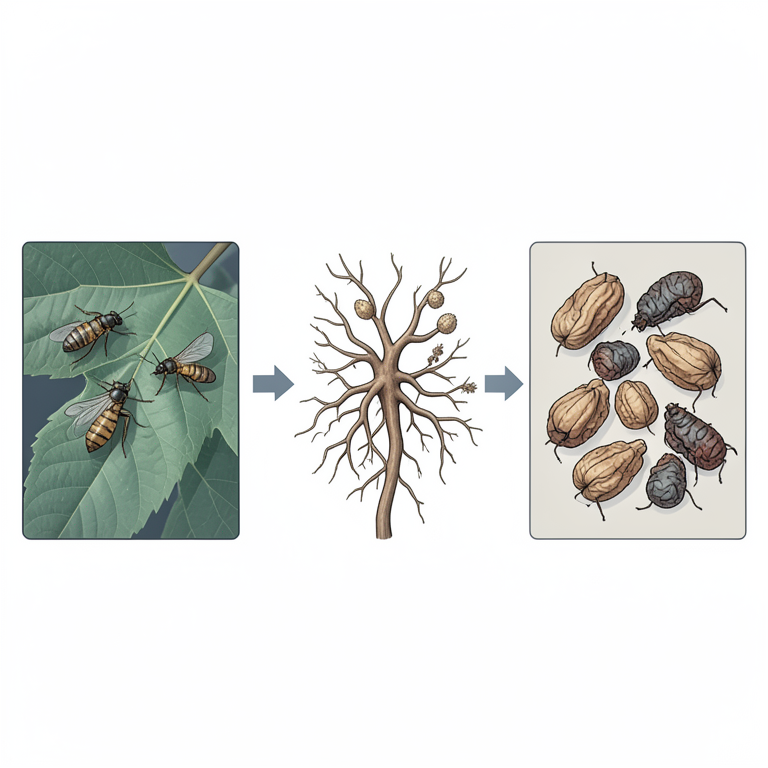
Comparative Efficacy of Biocontrol Agents
AI-generated conceptual illustration (Walnut trees and associated pests (aphids, larvae, and flies) in a pitch lake environment). It explains the idea and does not show study data.
View source evidence ↗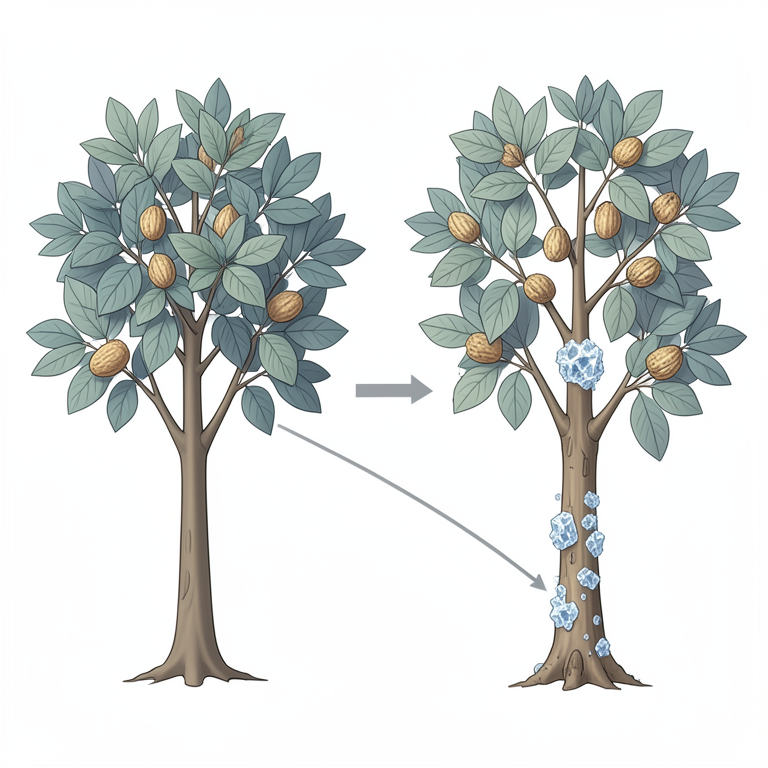
Resource Reallocation under Pest Stress
AI-generated conceptual illustration (Walnut trees (Juglans regia)). It explains the idea and does not show study data.
View source evidence ↗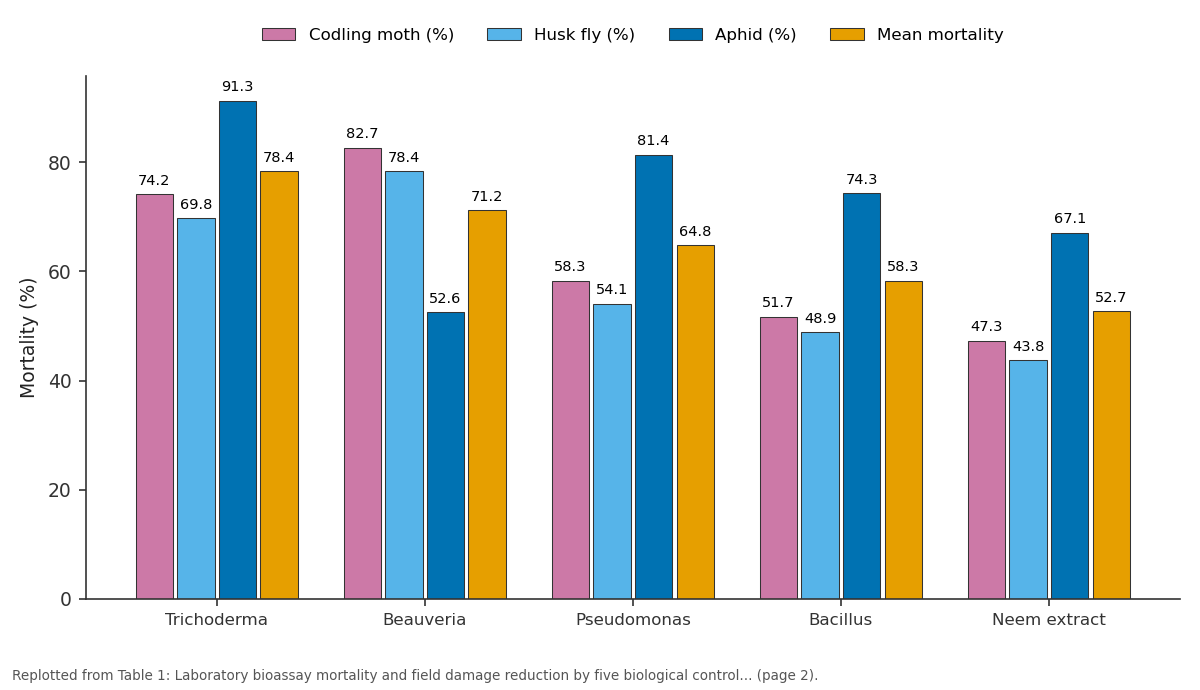
Codling moth (%) and Husk fly (%) and more: Trichoderma vs Beauveria vs Pseudomonas vs Bacillus vs Neem extract
Replotted from Table 1 (page 2) of the original paper. Every bar is the paper's own table value.
View source evidence ↗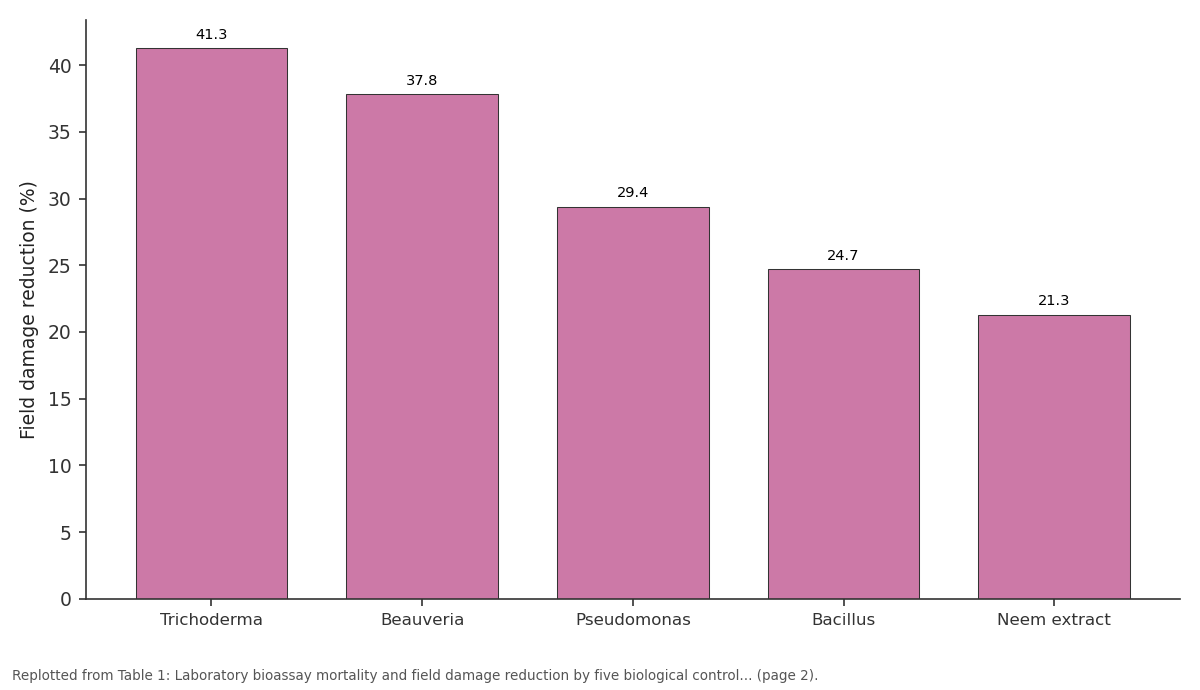
Field damage red. (%): Trichoderma vs Beauveria vs Pseudomonas vs Bacillus vs Neem extract
Replotted from Table 1 (page 2) of the original paper. Every bar is the paper's own table value.
View source evidence ↗Figures & tables
From the original paper Table 1
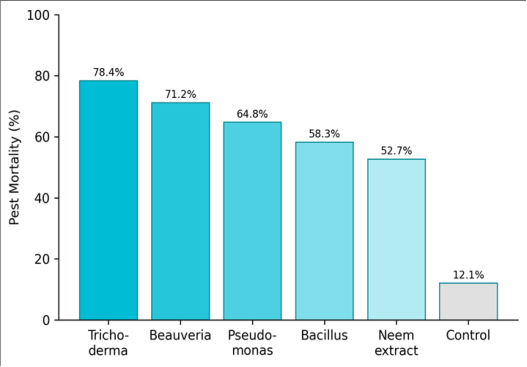 Figure 1
 Table 2
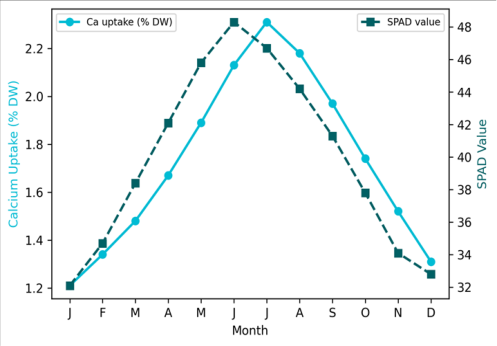 Figure 2
Introduction
Imagine walking along the rim of the world's largest natural asphalt deposit and spotting a row of walnut trees growing in the disturbed vegetation at its edge. This scenario, improbable as it sounds, describes the experimental plots established for this research near La Brea, Trinidad [1] . The Pitch Lake environment offers soils enriched with trace minerals leached from bituminous deposits, alongside the high humidity and year-round warmth of a lowland Caribbean siteconditions that stress temperate-origin crops like walnut but may favour certain biological control organisms adapted to tropical conditions [2] . Biological controlusing living organisms to suppress pest populationshas gained traction in tree nut orchards as consumers and regulators demand lower chemical residues [3] . Trichoderma species are particularly versatile, functioning as both mycoparasites against soil-borne pathogens and inducers of systemic resistance in host plants [4] . Beauveria bassiana, an entomopathogenic fungus, targets a broad range of insect pests through cuticular penetration and internal colonisation [5] . Bacterial agents like Pseudomonas and Bacillus produce antimicrobial compounds and compete with pathogens for root-zone resources [6] . Calcium plays a central role in walnut kernel quality, cell wall integrity, and resistance to post-harvest browningall traits that affect market value [7] . Minimal processing (fresh-cut, blanched, or lightly treated kernels sold refrigerated) is a growing market segment that requires different quality parameters than traditional dried-kernel exports [8] . This research tied together the biocontrol, nutritional, and post-harvest threads, documenting how pest management choices influence the entire value chain from orchard to consumer.
Crop Growth Stage Documentation
Phenological observations followed the BBCH scale adapted for Juglans. Bud swell (BBCH 01-03) began in late January at the Trinidad site, roughly 2 months earlier than temperate-zone walnut regions. Catkin emergence (BBCH 53-57) occurred in February, with pistillate flower receptivity peaking in early March. Nut set was confirmed by mid-April (BBCH 71), and the kernel filling period extended through June and July. Hull dehiscence (BBCH 87) and harvest maturity were reached in August-September. The entire growth cycle compressed into approximately 210 daysabout 30 days shorter than in Californiadriven by the tropical heat unit accumulation. Heat stress episodes (>38 °C for >4 consecutive hours) were recorded on 23 days during the trial period, predominantly between May and August.
Biodiversity Assessment
Arthropod sampling using pitfall traps, sticky traps, and canopy beating yielded 94 species from 47 families across all treatment plots. Shannon diversity was highest in Trichoderma-treated plots (H' = 2.91) and lowest in neemtreated plots (H' = 2.34), possibly because neem's broadspectrum insecticidal activity affected non-target arthropods. Soil mesofauna (Collembola, Acari) were significantly more abundant in plots receiving Trichoderma and Bacillus soil drenches, likely benefiting from the enhanced fungal biomass in the rhizosphere. Pollinator diversity did not differ significantly across biocontrol treatments, in contrast to the sharp reductions typically observed under chemical insecticide regimes.
Materials and Methods
Materials and Methods
Materials
Sixty walnut trees (cultivar Chandler on Paradox rootstock, 4 years old) were arranged in a randomized complete block design with five biocontrol treatments plus an untreated control, replicated four times. Each plot contained four trees at 8 × 8 m spacing. Trichoderma harzianum (Th-3 strain, 2 × 10⁸ CFU/g) was applied as a soil drench at 5 g/L at monthly intervals. Beauveria bassiana (Bb-1 strain, 1 × 10⁹ conidia/mL) was sprayed at 2 mL/L targeting canopy pests biweekly during the pest-active period. Pseudomonas fluorescens (Pf-1, 2 × 10⁸ CFU/mL) and Bacillus subtilis (Bs-5, 1 × 10⁸ CFU/mL) were applied as root-zone drenches. Neem extract (azadirachtin 1500 ppm) was sprayed at 5 mL/L. All tissue analysis and bioassay work was carried out at the Department of Agricultural Chemistry, Allahabad School of Plant Sciences, Allahabad, Uttar Pradesh, India.
Methods
Pest mortality was assessed in laboratory no-choice bioassays with 30 insects per replication for codling moth larvae, husk fly adults, and aphids. Field pest damage was scored as percentage of affected nuts per tree. Calcium uptake was measured monthly by collecting leaf and kernel tissue, wet-digesting with HNO₃-HClO₄, and quantifying Ca by ICP-OES. HPLC analysis of juglone and phenolic acids used a C18 column with methanol-water gradient at 280 nm. Chlorophyll content was measured by SPAD-502 meter on 20 leaves per tree at monthly intervals. Heat stress parameters (Fv/Fm, electrolyte leakage, proline) were recorded during peak heat episodes. Minimal processing trials involved fresh kernel blanching at 90 °C for 30 s, vacuum packaging, and storage at 4 °C for 28 days, with microbial counts and sensory evaluation at 7-day intervals [8] . Data were analysed by ANOVA in SAS 9.4 with DMRT at p < 0.05. Trichoderma achieved the highest overall mean mortality (78.4%) across all three pest groups, driven particularly by its strong performance against aphids (91.3%) (Table 1). Beauveria excelled against lepidopteran pests (codling moth: 82.7%) but was weaker against aphids. Field damage reduction ranged from 21.3% (neem) to 41.3% (Trichoderma). Calcium concentration in both leaves and kernels declined progressively with increasing pest damage severity (Table 2). SPAD values dropped by 31.9% from undamaged to severely damaged trees. Conversely, juglonewalnut's principal allelopathic compoundincreased by 40.9% in severely damaged trees, suggesting an induced defense response. Calcium uptake peaked in June-July coinciding with kernel filling (Figure 2). SPAD values followed a similar seasonal arc, peaking slightly earlier in May-June. Both parameters declined after August as leaf senescence began. Heat stress episodes in May-August temporarily depressed Fv/Fm to 0.61 (from a baseline of 0.79) and increased electrolyte leakage to 38.4%. Minimal processing trials showed that vacuum-packed blanched kernels maintained acceptable microbial counts (<4 log CFU/g total plate count) for 21 days at 4 °C. Kernels from biocontrol-treated trees had 14% higher sensory scores for appearance and crunch compared to those from untreated trees, likely reflecting better calciummediated cell wall integrity.
| Damage class | Ca leaf (%) | Ca kernel (%) | SPAD value | Juglone (mg/g) | Proline (µmol/g) |
|---|---|---|---|---|---|
| None (0%) | 2.31 | 0.34 | 46.7 | 3.84 | 8.7 |
| Light (1-10%) | 2.14 | 0.31 | 43.2 | 4.21 | 11.3 |
| Moderate (11-25%) | 1.87 | 0.27 | 38.4 | 4.73 | 16.8 |
| Severe (>25%) | 1.52 | 0.21 | 31.8 | 5.41 | 24.2 |
| CD (p=0.05) | 0.18 | 0.04 | 2.8 | 0.47 | 3.1 |
Table text extracted from the original PDF; superscript letters are shown inline. The original table image is below.
View original table image
| Agent | Codling moth (%) | Husk fly (%) | Aphid (%) | Mean mortality | Field damage red. (%) |
|---|---|---|---|---|---|
| Trichoderma | 74.2 | 69.8 | 91.3 | 78.4 | 41.3 |
| Beauveria | 82.7 | 78.4 | 52.6 | 71.2 | 37.8 |
| Pseudomonas | 58.3 | 54.1 | 81.4 | 64.8 | 29.4 |
| Bacillus | 51.7 | 48.9 | 74.3 | 58.3 | 24.7 |
| Neem extract | 47.3 | 43.8 | 67.1 | 52.7 | 21.3 |
| Control | 8.4 | 11.3 | 16.7 | 12.1 | — |
| CD (p=0.05) | 6.8 | 7.2 | 8.4 | — | 4.3 |
Table text extracted from the original PDF; superscript letters are shown inline. The original table image is below.
View original table image
Results
Results
Discussion
Trichoderma's broad-spectrum efficacy across pest groups was somewhat unexpected, as its primary mode of action is mycoparasitism against fungi rather than direct insecticidal activity [4] . The strong aphid mortality likely reflects induced systemic resistance in the host plant -Trichoderma root colonisation triggers jasmonic acid pathways that prime above-ground defenses against sucking insects [9] . This dual mechanismdirect pathogen suppression below ground and induced resistance above groundmakes Trichoderma an especially attractive biocontrol agent for perennial tree crops. The inverse relationship between pest damage and calcium content is concerning because calcium directly affects kernel firmness and post-harvest browning resistance [7] .
Trees under heavy pest pressure likely divert carbon and mineral resources from fruit development to defensive metabolismas evidenced by the 40.9% rise in juglone production in severely damaged trees. This resource reallocation penalty means that effective pest control has quality benefits beyond simple yield protection. The Trinidad Pitch Lake environment, while exotic, generated useful stress data. Heat episodes exceeding 38 °C simulated conditions that walnut orchards in traditional growing regions may face more frequently under climate warming [1] . That trees recovered Fv/Fm values within 7-10 days of heat events suggests adequate resilience for shortduration heat waves, though chronic exposure remains untested.
Conclusion
Trichoderma harzianum emerged as the most effective single biocontrol agent for walnut pest management, achieving 78.4% mortality in bioassays and 41.3% field damage reduction. Calcium uptake and chlorophyll content declined with pest damage severity, linking pest control directly to kernel quality. Minimal processing of biocontroltreated kernels maintained quality for 21 days under refrigeration. The Trinidad Pitch Lake setting, despite its unusual soils, provided valuable heat stress data transferable to warming walnut-growing regions. Combining Trichoderma with Beauveria in a dual-agent strategy targeting both soil and canopy pest guilds would be a logical next step.
Acknowledgement
Acknowledgements Funding SourcesThis research received institutional support from Allahabad School of Plant Sciences.
Figures and tables from the paper
References
16 in the original paper- Rooks R. History of the Trinidad Pitch Lake. Geological Society London Special Publications. 2010;337:31-41.
- McGranahan GH, Leslie CA. Walnut. In: Fruit Breeding. Springer. 2012;827-846.
- Eilenberg J, Hajek A, Lomer C. Suggestions for unifying the terminology in biological control. BioControl. 2001;46(4):387-400.
- Harman GE. Overview of mechanisms and uses of Trichoderma spp. Phytopathology. 2006;96(2):190-194.
- Biocontrol Science and Technology. 2007;17(6):553596.
- Raaijmakers JM, Vlami M, de Souza JT. Antibiotic production by bacterial biocontrol agents. Antonie van Leeuwenhoek. 2002;81(1):537-547.
- Sze-Tao KWC, Sathe SK. Walnuts (Juglans regia L.): proximate composition, protein solubility, protein amino acid composition. Journal of the Science of Food and Agriculture. 2000;80(9):1393-1401.
- Shahkoomahally S, Ramezanian A, Rajabipour A. Quality and shelf life of walnut kernels as affected by packaging and storage conditions. International Journal of Food Properties. 2015;18(4):834-843.
- Shoresh M, Harman GE, Mastouri F. Induced systemic resistance and plant responses to fungal biocontrol agents. Annual Review of Phytopathology. 2010;48:2143.
- Ramos DE. Walnut Orchard Management. UC ANR Publication. 1998;3373:1-18.
- Sibbett GS, Martin GC, Hendricks L. Walnut Production Manual. UC ANR Publication. 1996;3373:1-24.
- Martínez ML, Labuckas DO, Lamarque AL, Maestri DM. Walnut (Juglans regia L.): genetic resources, chemistry, by-products. Journal of the Science of Food and Agriculture. 2010;90(12):1959-1967.
- Solar A, Colaric M, Usenik V, Stampar F. Seasonal variations of selected flavonoids, phenolic acids and quinones in annual shoots of walnut. Plant Science. 2006;170(3):453-461.
- Cosmulescu S, Trandafir I. Seasonal variation of total phenols in leaves of walnut (Juglans regia L.). Journal of Medicinal Plants Research. 2011;5(19):4938-4942.
- Bayona-Celis A, Lampert S, Hernandez-Montoya V. Walnut antioxidant activities: a review. Critical Reviews in Food Science and Nutrition. 2023;63(3):397-410.
- Hasey JK, Westerdahl BB. Plant-parasitic nematodes affecting walnut production in California. Acta Horticulturae. 2015;1050:187-192