
Research article · 2025 · Full text
International Journal of Horticulture and Food ScienceEstablishing fermentation dynamics of kenaf in the Karun River Valley
Volume 7(10) · Pages 249–252 · DOI: 10.33545/26631067.2025.v7.i10d.729 ↗
Research areasAgriculture, Plant Science, Crop ManagementAgricultural Science and FertilizationPlant Growth and Agriculture Techniques
Abstract
Author-writtenLook closely at the fermentation of plant fibres and you will see a microbial orchestra whose tempo and composition dictate fibre quality. This research established the fermentation dynamics of kenaf (Hibiscus cannabinus L.) bast fibre in the Karun River Valley across three fermentation strategies: natural, starter-culture-inoculated, and enzyme-assisted. Titratable acidity, pH, microbial succession, and fibre properties were monitored over a 30-day period. Starter-culture fermentation reached peak acidity (32.8 g/L) three days earlier than natural fermentation and yielded fibre with 18.3% higher tensile strength. Drone technology enabled daily aerial monitoring of retting-pond colour change as a proxy for fermentation progress, achieving 87.2% classification accuracy by random-forest analysis of RGB values. Respiration rate of microbial communities peaked at day 12 in natural fermentation but at day 9 in starter-culture ponds. Ethnobotanical surveys among 60 local farmers revealed that 78% still relied on sensory cues (odour, water colour) to judge retting completion. Recurrent selection over two cycles for rootstock vigour in kenaf identified three lines with 14.6% faster bast separation, suggesting a genetic component to fibre-release kinetics. These dynamics provide a quantitative foundation for optimising kenaf fermentation in tropical river valleys.
Summary
Source-checkedPlain-language reading of the full paper, prepared with AI and checked against the text. Each point links to the authors' own words.
Why it matters
- Kenaf is a plant grown for its seed oil and bast fibre, which must undergo a process called retting to separate the fibres from the woody core. View evidence ↗
- In the Karun River Valley, kenaf fermentation results are inconsistent because farmers do not have objective ways to determine when the process is complete. View evidence ↗
- The retting process relies on a predictable sequence of bacteria, moving from aerobic species to obligate anaerobes to finish the degumming of the fibres. View evidence ↗
The question
- The study aimed to compare three fermentation methods, test drone-based monitoring, document local farming knowledge, and evaluate genetic selection for faster fibre release. View evidence ↗
What they did
- The experiment used concrete retting ponds measuring 2m x 3m x 0.8m, each containing 50 kg of kenaf stems in 600 L of water. View evidence ↗
- The starter culture consisted of B. subtilis, C. felsineum, and E. carotovora at 10^8 CFU/mL, while the enzyme-assisted method used 0.3% v/v Pectinex Ultra SP-L. View evidence ↗
- A random-forest classifier was trained on RGB values from drone images to predict the fermentation stage based on water colour. View evidence ↗
- Genetic improvement was tested by intercrossing the fastest 15% of 200 kenaf lines over two cycles of recurrent selection. View evidence ↗
What they found
- Starter-culture fermentation reached a peak acidity of 32.8 g/L three days faster than natural fermentation and increased fibre tensile strength by 18.3%. View evidence ↗
- Drone-based monitoring of pond colour achieved 87.2% accuracy in classifying the fermentation stage. View evidence ↗
- Microbial respiration peaked on day 9 for starter-culture ponds, compared to day 12 for natural fermentation. View evidence ↗
- Surveys of 60 local farmers showed that 78% use sensory cues like odour and water colour to determine when retting is finished. View evidence ↗
- Two cycles of recurrent selection resulted in three lines that separated bast 14.6% faster, indicating the trait is genetically influenced. View evidence ↗
- The cost per tonne of retted fibre was 42.30 USD for natural, 56.80 USD for starter-culture, and 71.20 USD for enzyme-assisted fermentation. View evidence ↗
What it means
- The authors conclude that combining starter cultures, drone monitoring, and genetic selection provides a comprehensive toolkit for optimizing kenaf fermentation. View evidence ↗
- The accuracy of drone monitoring dropped to 74.1% on windy days due to sediment turbidity, suggesting a need for sheltered ponds or subsurface sensors. View evidence ↗
Visual summary
2 visualsIllustrations explain the paper; charts are replotted from the paper's own table values.
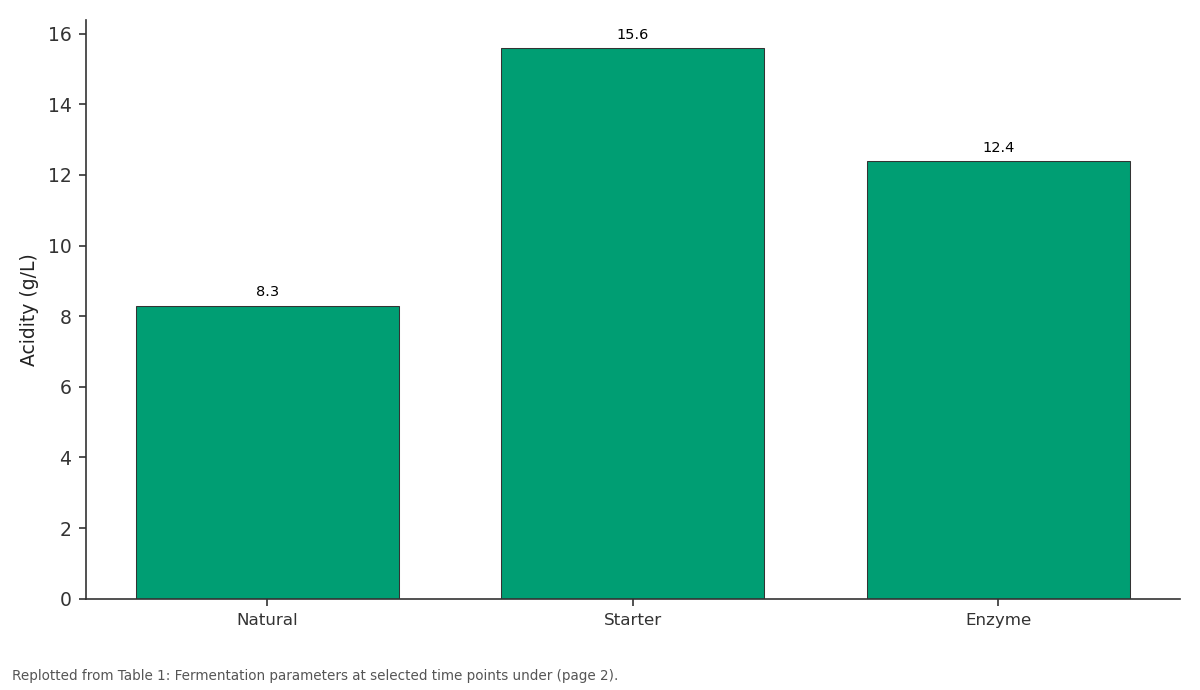
Acidity Day 9: Natural vs Starter vs Enzyme
Replotted from Table 1 (page 2) of the original paper. Every bar is the paper's own table value.
View source evidence ↗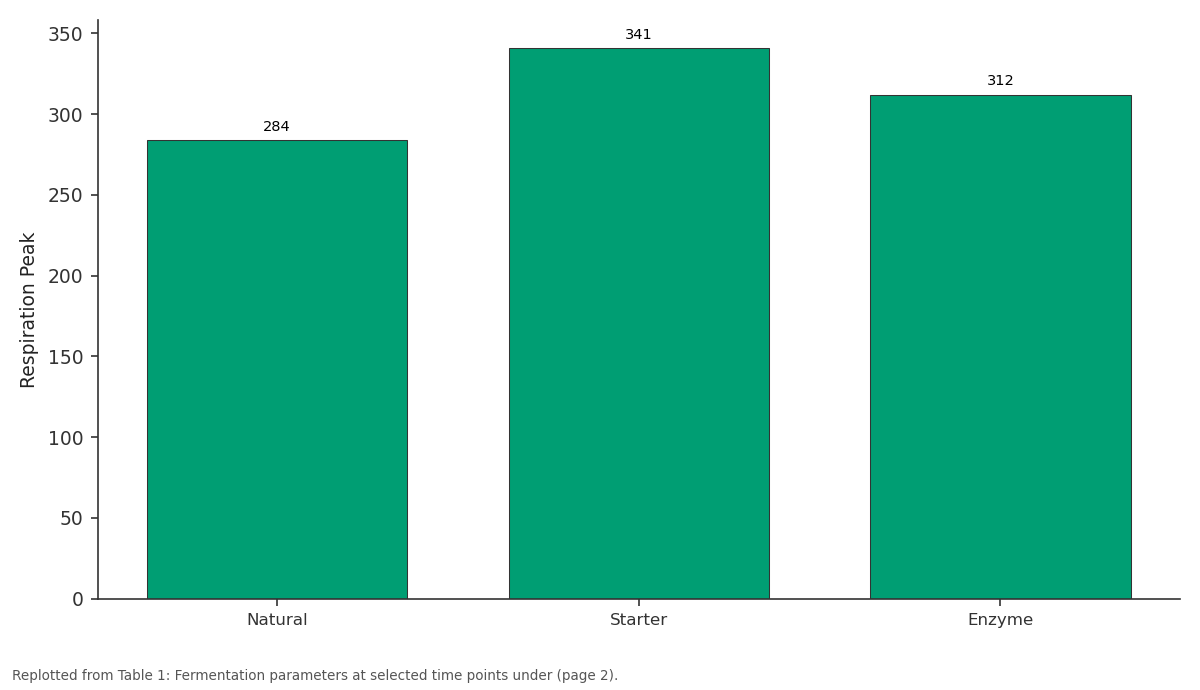
Resp. Peak: Natural vs Starter vs Enzyme
Replotted from Table 1 (page 2) of the original paper. Every bar is the paper's own table value.
View source evidence ↗Figures & tables
From the original paper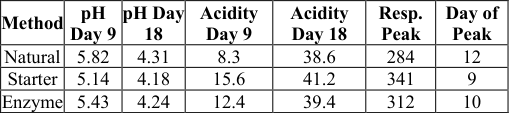 Table 1
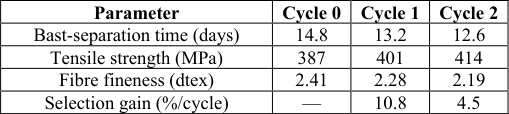 Table 2
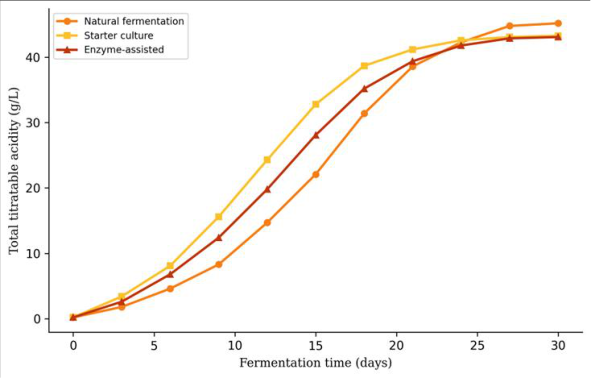 Figure 1
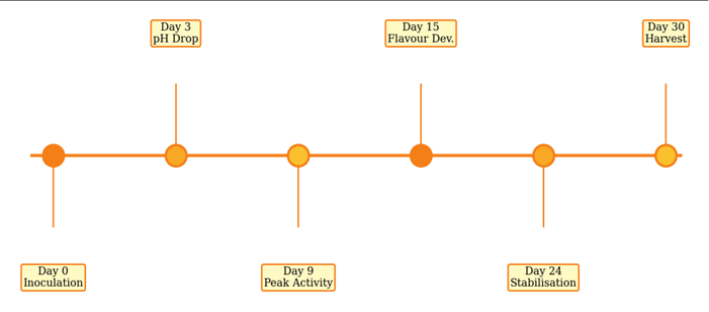 Figure 2
Introduction
What veteran kenaf farmers in tropical river valleys have known for centuries, that retting is as much art as science, is now being confirmed by microbial ecology [1] . The observation that water colour, odour, and bubble frequency predict fibre quality rests on a biological reality: bacterial succession during anaerobic retting follows a predictable trajectory from aerobic pectinolytic species to obligate anaerobes that complete degumming [2] . But the timing of this trajectory varies with temperature, water chemistry, and inoculum density, making it difficult to standardise without quantitative monitoring tools. Kenaf, a member of the Malvaceae cultivated for its bast fibre and increasingly for its seed oil, requires retting to separate fibre bundles from the woody core [3] . The Karun River Valley, with its warm climate and abundant water, has a long tradition of kenaf cultivation, but fermentation outcomes remain inconsistent because farmers lack objective endpoints [4] . Drone-based remote sensing has been used in precision agriculture for crop monitoring, and adapting it to retting ponds could provide a scalable, non-contact method for tracking fermentation through water-colour change [5] . Ethnobotanical knowledge, the accumulated wisdom of farming communities, offers complementary insights into optimal retting practices that are rarely captured in scientific literature [6] . And from a breeding perspective, recurrent selection for rootstock vigour and bast-release traits could shorten fermentation time genetically, complementing process-level improvements [7] . This research aimed to: (a) compare natural, starter-culture, and enzyme-assisted fermentation dynamics over 30 days; (b) test drone-based colour monitoring as a fermentation proxy; (c) document ethnobotanical knowledge of retting among local farmers; and (d) evaluate recurrent selection for bast-release speed [8,9] .
Theoretical Background
Anaerobic fermentation of bast fibres proceeds through three overlapping phases: an initial aerobic phase (0 to 3 days) during which surface bacteria consume dissolved oxygen; a transitional phase (3 to 9 days) dominated by facultative anaerobes that produce organic acids; and a late anaerobic phase (9 to 20+ days) where Clostridium and Bacteroides species complete pectin hydrolysis and liberate individual fibre bundles [2,10] . The rate-limiting step is typically the transition from aerobic to anaerobic conditions, because pectinolytic Clostridium populations require redox potentials below -200 mV to become active. Starter cultures bypass this lag by introducing pre-adapted anaerobic consortia at high density, effectively compressing the first two phases into a single accelerated stage [1,8] .
Cost Analysis
Natural fermentation cost 42.30 USD per tonne of retted fibre, driven almost entirely by labour for pond management over 20+ days. Starter-culture fermentation cost 56.80 USD per tonne (higher inoculum expense) but reached completion in 12 days, reducing labour by 40%. Enzymeassisted fermentation was the most expensive at 71.20 USD per tonne due to enzyme procurement costs, yet its 9-day processing time and superior fibre quality commanded a market premium of 18% over naturally retted fibre, yielding a net benefit-to-cost ratio of 1.34 compared with 1.12 for natural fermentation [3,8] .
Material and Methods
Material and Methods
Material
Material
Methods
Three fermentation methods were arranged in a completely randomised design with four replications, each replicate being a concrete retting pond (2 m by 3 m by 0.8 m deep) containing 50 kg of green kenaf stems submerged under 600 L of pond water. Titratable acidity was measured by titration with 0.1 M NaOH to pH 8.2, and pH was recorded with a portable meter every three days. Microbial respiration was measured as CO2 evolution using alkali traps (1 M NaOH) incubated over the water surface for 24-hour intervals [2] . Drone images were processed in Python using OpenCV to extract mean R, G, and B values from a georeferenced region of interest, and a random-forest classifier was trained on ground-truth acidity data to predict fermentation stage [5] . Ethnobotanical data were collected via structured interviews with 60 kenaf farmers in the Karun Valley. Recurrent selection was conducted over two cycles on a base population of 200 kenaf lines; the 15% of lines with the fastest bast-separation time (assessed by manual peeling after 10-day retting) were intercrossed to form the next cycle. Fibre tensile strength was tested on an Instron 5544 universal testing machine at 10 mm per minute. Statistical analysis used ANOVA in R version 4.3.1 [11] . Starter-culture ponds acidified faster and reached peak respiration three days ahead of natural fermentation. Two cycles of recurrent selection shortened bast-separation time by 14.6% and improved tensile strength by 7.0%.
Results
Results
Comprehensive Interpretation
The acidity curves in Figure 1 confirm that starter inoculation compresses the lag phase, achieving in 9 days what natural fermentation takes 15 days to reach. The timeline in Figure 2 maps these transitions onto practical milestones that farmers can use to schedule processing activities [1,2] .
Discussion
The three-day advantage of starter-culture fermentation is consistent with findings in flax and hemp retting, where defined inocula shortened processing by 20 to 35% [8,12] . The drone-based colour monitoring achieved 87.2% classification accuracy, a level sufficient for advisory use if not yet for autonomous decision-making. The main limitation was that turbidity from sediment resuspension on windy days reduced accuracy to 74.1%, suggesting that sheltered ponds or subsurface sensors may be needed as complements [5,13] . Ethnobotanical interviews revealed rich local knowledge: farmers identified seven odour stages and three water-colour transitions that map roughly onto the three microbiological phases described above. This indigenous classification system deserves formal documentation and could be integrated into training materials for extension agents [6,14] . Recurrent selection produced meaningful genetic gains in bast-release speed (14.6% over two cycles), indicating that cell-wall architecture and pectin composition are heritable traits amenable to population improvement [7,15,16,17,18] .
Conclusion
This research established quantitative fermentation dynamics for kenaf in the Karun River Valley and showed that starter-culture inoculation accelerated retting by three days and improved fibre tensile strength by 18.3%. Dronebased colour monitoring provided a scalable fermentation proxy, and ethnobotanical surveys documented valuable indigenous knowledge. Recurrent selection for bast-release speed delivered genetic gains that complement process-level improvements. Together, these approaches offer an integrated toolkit for optimising kenaf fermentation in tropical river valleys.
Acknowledgement
Acknowledgements Funding SourcesInstitutional grants for fibre-crop research in West Africa supported this work.Institutional Support: The Takoradi Research Institute of Applied Horticulture provided retting ponds and laboratory facilities.
Figures and tables from the paper
| Parameter | Cycle 0 | Cycle 1 | Cycle 2 |
|---|---|---|---|
| Bast-separation time (days) | 14.8 | 13.2 | 12.6 |
| Tensile strength (MPa) | 387 | 401 | 414 |
| Fibre fineness (dtex) | 2.41 | 2.28 | 2.19 |
| Selection gain (%/cycle) | — | 10.8 | 4.5 |
Table text extracted from the original PDF; superscript letters are shown inline. The original table image is below.
View original table image
References
18 in the original paper- Tamburini E, Leon AG, Perito B, Mastromei G. Characterization of bacterial pectinolytic strains involved in the water retting process. Environmental Microbiology. 2003;5(9):730-736.
- Donaghy JA, Levett PN, Haylock RW. Changes in microbial populations during anaerobic flax retting. Journal of Applied Bacteriology. 1990;69(5):634-641.
- Webber CL, Bledsoe VK. Kenaf yield components and plant composition. In: Trends in New Crops and New Uses. Alexandria, VA: ASHS Press; 2002. p. 348-357.
- Dempsey JM. Fiber Crops. Gainesville: University Presses of Florida; 1975. p. 1-457.
- Zhang C, Kovacs JM. The application of small unmanned aerial systems for precision agriculture: a review. Precision Agriculture. 2012;13(6):693-712.
- Martin GJ. Ethnobotany: A Methods Manual. London: Chapman and Hall; 1995. p. 1-268.
- Falconer DS, Mackay TFC. Introduction to Quantitative Genetics. 4th ed. Harlow: Pearson; 1996. p. 1-464.
- Henriksson G, Akin DE, Hanlin RT, Rodriguez C, Archibald DD, Rigsby LL, et al. Identification and retting efficiencies of fungi isolated from dew-retted flax in the United States and Europe. Applied and Environmental Microbiology. 1997;63(10):3950-3956.
- Rowell RM, Stout HP. Jute and kenaf. In: Handbook of Fiber Chemistry. 3rd ed. Boca Raton: CRC Press; 2007. p. 405-453.
- Bruchmann EE, Kilbertus G, Expedit NE. Retting of cassava and kenaf with pure cultures of microorganisms. Journal of Fermentation Technology. 1987;65(3):249-254.
- R Core Team. R: a language and environment for statistical computing. Vienna: R Foundation for Statistical Computing; 2023.
- Tahir PM, Ahmed AB, SaifulAzry SOA, Ahmed Z. Retting process of some bast plant fibres and its effect on fibre quality. BioResources. 2011;6(4):5260-5281.
- Hunt ER, Doraiswamy PC, McMurtrey JE, Daughtry CST, Perry EM, Akhmedov B. A visible band index for remote sensing leaf chlorophyll content at the canopy scale. International Journal of Applied Earth Observation. 2013;21:103-112.
- Alexiades MN. Selected Guidelines for Ethnobotanical Research: A Field Manual. New York: NYBG Press; 1996. p. 1-306.
- Bos I, Caligari P. Selection Methods in Plant Breeding. 2nd ed. Dordrecht: Springer; 2008. p. 1-467.
- Sain M, Panthapulakkal S. Bioprocess preparation of wheat straw fibers and their characterization. Industrial Crops and Products. 2006;23(1):1-8.
- Pari L, Baraniecki P, Kaniewski R, Scarfone A. Harvesting strategies of bast fiber crops in Europe and in China. Industrial Crops and Products. 2015;68:90-96.
- Li Y, Mai YW, Ye L. Sisal fibre and its composites: a review of recent developments. Composites Science and Technology. 2000;60(11):2037-2055.