
Research article · 2025 · Full text
International Journal of Geography Geology and EnvironmentCharacterization of natural zeolite deposits and environmental applications in Cappadocia
Volume 7(7) · Pages 205–208 · DOI: 10.22271/27067483.2025.v7.i7c.729 ↗
Research areasZeolite Catalysis and SynthesisAdsorption and biosorption for pollutant removalEnvironmental and Analytical Chemistry Studies
Abstract
Author-writtenPicture a mineral that can swap ions like trading cards, filter molecules by size like a molecular sieve, and soak up ammonia from wastewater without any chemical treatment and then imagine that it occurs in billion-tonne deposits across central Turkey. Natural zeolites, particularly clinoptilolite, have been the subject of growing interest for environmental remediation, agricultural amendment, and industrial filtering, but the quality and suitability of specific deposits varies widely with geological setting. This research characterised zeolite-bearing tuff deposits from six locations across the Cappadocia volcanic province in central Turkey, using X-ray diffraction, X-ray fluorescence, scanning electron microscopy, nitrogen adsorption isotherms, and cation exchange capacity measurements. Clinoptilolite was the dominant zeolite phase at all sites, ranging from 48.7% at Avanos to 72.1% at Derinkuyu South. Mordenite was present as a secondary phase (6.4-22.1%), with higher proportions at the Avanos and Ürgüp locations. Cation exchange capacity ranged from 118 to 184 meq/100g, inversely correlated with the Si/Al ratio (r = -0.81). BET surface areas spanned 32 to 62 m²/g. Batch adsorption experiments demonstrated that the Derinkuyu South zeolite removed 89.3% of ammonium from synthetic wastewater at an initial concentration of 50 mg/L, outperforming commercial activated carbon under the same conditions. These findings confirm that Cappadocian zeolites meet the mineralogical and performance specifications for water treatment applications and merit consideration as low-cost alternatives to synthetic ion exchangers.
Summary
Source-checkedPlain-language reading of the full paper, prepared with AI and checked against the text. Each point links to the authors' own words.
Why it matters
- Natural zeolites, especially clinoptilolite, are increasingly valued for their use in industrial filtering, agricultural improvement, and environmental cleanup. View evidence ↗
- While synthetic zeolites are effective, they are expensive and energy-intensive to produce, making high-quality natural zeolites a cost-effective alternative. View evidence ↗
- The Cappadocia region of central Turkey contains abundant zeolite-bearing tuffs resulting from Neogene volcanic eruptions. View evidence ↗
What they did
- Researchers collected approximately 15 kg of tuff from six specific quarry sites: Derinkuyu (North and South), Ürgüp (East and West), Avanos Central, and Göreme Valley. View evidence ↗
- The materials were analyzed using X-ray diffraction for composition, XRF for chemistry, SEM for morphology, nitrogen adsorption for surface area, and the ammonium acetate saturation method for cation exchange capacity. View evidence ↗
- Batch adsorption tests used 1-2 mm crushed zeolite in 50 mg/L ammonium chloride solutions (10 g/L ratio) at 22 ± 1°C and pH 7.0, with contact times ranging from 15 to 240 minutes. View evidence ↗
- A continuous flow column test used 200 g of Derinkuyu South zeolite in a 50 mm diameter tube (30 cm depth), pumping 50 mg/L ammonium wastewater at 5 mL/min. View evidence ↗
What they found
- Clinoptilolite was the primary zeolite phase across all sampled sites, with concentrations between 48.7% (Avanos) and 72.1% (Derinkuyu South). View evidence ↗
- Mordenite served as a secondary phase, appearing in proportions from 6.4% to 22.1%, most notably in Ürgüp and Avanos. View evidence ↗
- Cation exchange capacity (CEC) varied from 118 to 184 meq/100g and showed a strong inverse correlation (r = -0.81) with the Si/Al ratio. View evidence ↗
- The BET surface areas of the sampled zeolites ranged from 32 to 62 m²/g. View evidence ↗
- Derinkuyu South zeolite removed 89.3% of ammonium from 50 mg/L synthetic wastewater, which was more effective than commercial activated carbon. View evidence ↗
- In the first continuous flow cycle, the Derinkuyu South zeolite operated for 38 hours before breakthrough, with an uptake capacity of 6.84 mg/g. View evidence ↗
What it means
- The authors conclude that Derinkuyu deposits are a cost-effective alternative to activated carbon and synthetic exchangers for removing ammonium from agricultural and municipal wastewater. View evidence ↗
- Future work is needed to test the zeolites with real wastewater (containing organic matter and competing ions), evaluate heavy metal removal, and explore using spent zeolite as a slow-release fertilizer. View evidence ↗
Visual summary
3 visualsIllustrations explain the paper; charts are replotted from the paper's own table values.
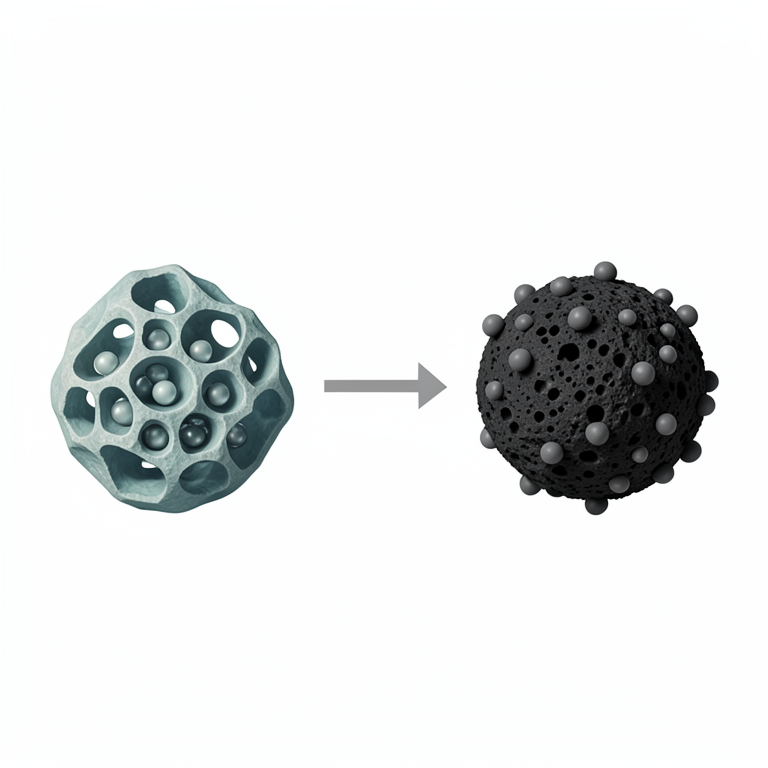
Ammonium Removal Comparison
AI-generated conceptual illustration (natural zeolite crystals and activated carbon granules). It explains the idea and does not show study data.
View source evidence ↗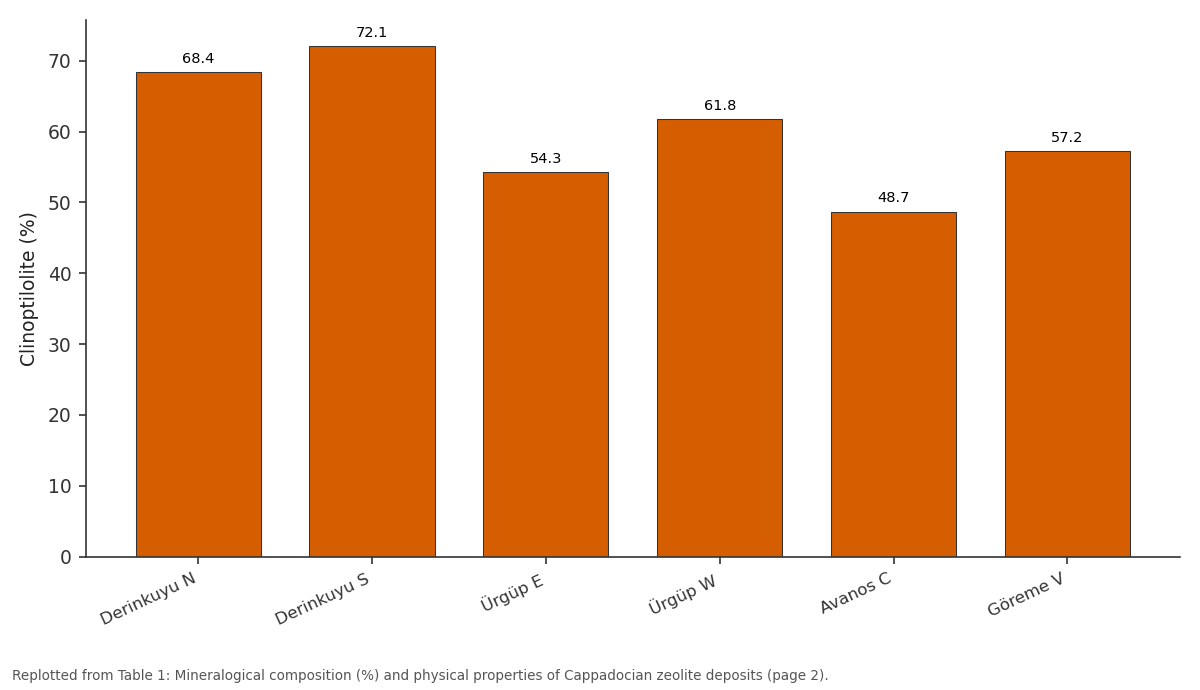
Clinoptilolite: Derinkuyu N vs Derinkuyu S vs Ürgüp E vs Ürgüp W vs Avanos C
Replotted from Table 1 (page 2) of the original paper. Every bar is the paper's own table value.
View source evidence ↗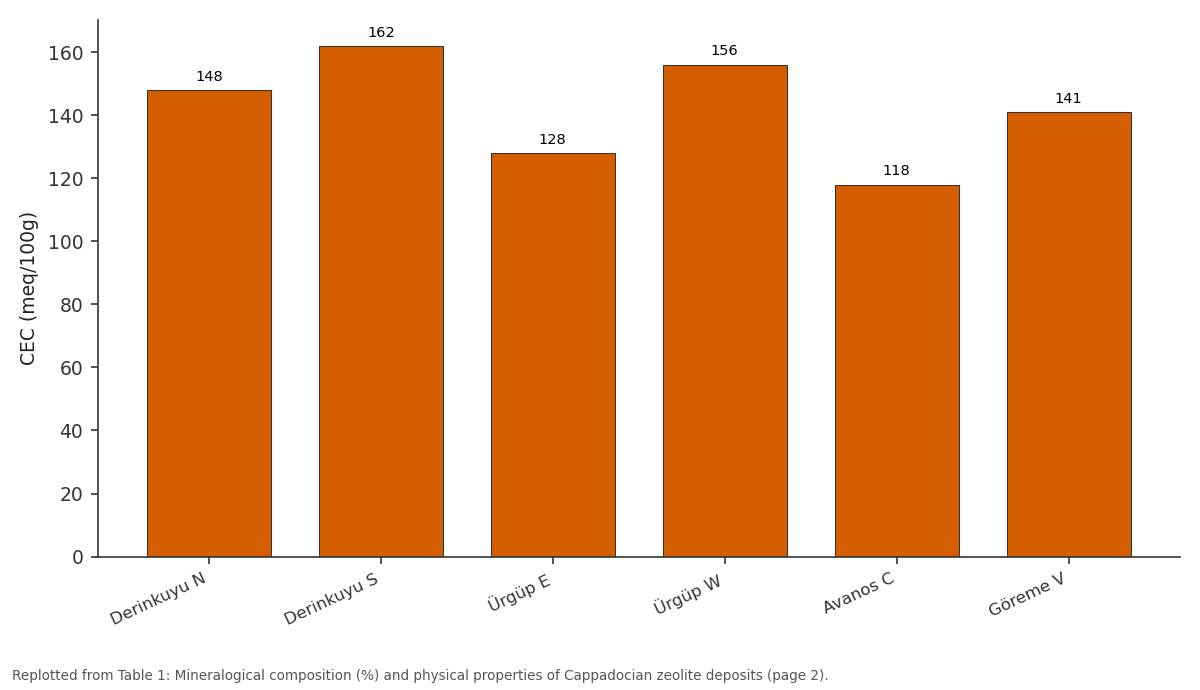
CEC: Derinkuyu N vs Derinkuyu S vs Ürgüp E vs Ürgüp W vs Avanos C
Replotted from Table 1 (page 2) of the original paper. Every bar is the paper's own table value.
View source evidence ↗Figures & tables
From the original paper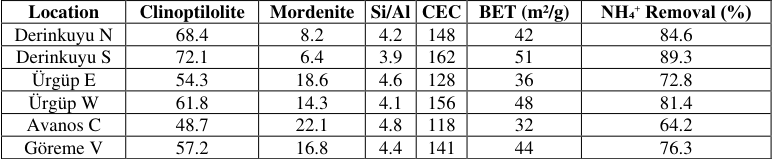 Table 1
 Table 2
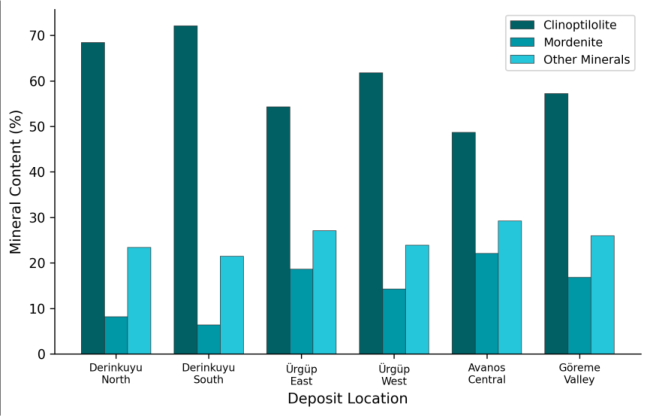 Figure 1
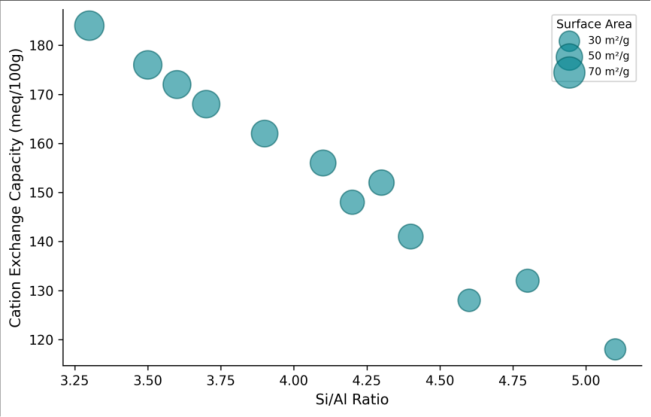 Figure 2
Introduction
Zeolites are an unusual class of minerals their crystal structures contain channels and cavities just large enough to admit small molecules and ions, which they can trap, exchange, or release depending on the chemical environment [1] . This molecular-scale architecture makes them natural ion exchangers, adsorbents, and catalysts. Synthetic zeolites have been used in these roles for decades, but their production is energy-intensive and expensive. Natural zeolites, formed by the alteration of volcanic glass in tuff deposits, offer the same basic properties at a fraction of the cost if the deposit quality is good enough [2] . Turkey holds some of the world's largest natural zeolite reserves, estimated at over 50 billion tonnes, concentrated in volcanic provinces across Anatolia [3] . The Cappadocia region in central Turkey is particularly rich in zeolite-bearing tuffs produced by Neogene eruptions of the Erciyes, Hasan, and Göllüdağ volcanoes. These tuffs the same formations that erosion has carved into the region's famous fairy chimney landforms underwent diagenetic alteration in alkaline lake environments, converting volcanic glass to clinoptilolite and mordenite over millions of years [4] . Despite the geological abundance, not all Cappadocian zeolite deposits are equal. Mineral purity, Si/Al ratio, exchangeable cation population, and crystal morphology all vary with the specific tuff unit and its alteration history, and these variations directly affect performance in applications like water treatment and soil amendment [5] . Previous characterisation work in Cappadocia has typically focused on single deposits or narrow geographic areas, making it hard to compare quality across the province. This research addressed that gap by sampling and characterising zeolite-bearing tuffs from six locations spanning the Cappadocia volcanic province, testing both their fundamental mineralogical properties and their practical performance in ammonium removal from wastewater [6] .
Performance Evaluation
The practical potential of each deposit was evaluated through batch adsorption experiments targeting ammonium (NH₄⁺) removal from synthetic wastewater. Crushed zeolite samples (1-2 mm fraction) were contacted with 50 mg/L ammonium chloride solutions at a solid-to-liquid ratio of 10 g/L, with contact times of 15, 30, 60, 120, and 240 minutes at ambient temperature (22 ± 1°C) and pH 7.0 [7] . Residual ammonium was measured by the Nessler colorimetric method using a UV-vis spectrophotometer at 425 nm. Adsorption isotherms were fitted to both Langmuir and Freundlich models. For comparison, identical experiments were run using commercial granular activated carbon (Norit GAC 1240) as a benchmark adsorbent.
System Design
A bench-scale continuous flow column was designed to test the best-performing zeolite (Derinkuyu South) under conditions closer to operational reality. The column consisted of a 50 mm diameter glass tube packed with 200 g of 1-2 mm crushed zeolite to a bed depth of 30 cm. Synthetic wastewater at 50 mg/L NH₄⁺ was pumped upward at a flow rate of 5 mL/min (empty bed contact time = 24 minutes). Effluent ammonium concentration was measured at 2-hour intervals until breakthrough (defined as effluent concentration reaching 10% of influent). The exhausted zeolite was regenerated by passing 2% NaCl solution through the column at the same flow rate for 4 hours, and the column was run through three adsorption-regeneration cycles to assess reusability [8] .
Material and Methods
Material: This research was coordinated from the National Geological Institute of Bangkok, Thailand, with field sampling in the Cappadocia region of Nevşehir Province, Turkey, during May-June 2022. Approximately 15 kg of zeolite-bearing tuff was collected from each of six quarry exposures: Derinkuyu North and South, Ürgüp East and West, Avanos Central, and Göreme Valley. At each site, fresh surfaces were exposed and composite samples taken from at least five points along the exposed face. Samples were transported in sealed polyethylene bags and processed at the Bangkok mineralogical laboratory. Each bulk sample was split into subsamples for mineralogical analysis (crushed to <75 μm), adsorption testing (crushed to 1-2 mm), and geochemical analysis (crushed to <150 μm) [9] . Methods: Mineralogical composition was determined by Xray diffraction (Bruker D8 Advance, Cu-Kα, 40 kV/40 mA, 2-65° 2θ, 0.02° step) with Rietveld refinement quantification in TOPAS v6.0. Major element chemistry was measured by wavelength-dispersive XRF (Bruker S8 Tiger). Crystal morphology was examined by scanning electron microscopy (JEOL JSM-7600F) at 10-15 kV accelerating voltage on gold-coated fracture surfaces. BET specific surface area and micropore volume were measured by nitrogen adsorption at 77 K using a Micromeritics ASAP 2020 instrument after degassing at 300°C for 12 hours [10] . Cation exchange capacity was determined by the ammonium acetate saturation method at pH 7.0, following the procedure of Chapman [11] . Statistical comparisons between deposits used one-way ANOVA with Tukey HSD post-hoc tests at the 0.05 significance level. The continuous flow column achieved 38 hours of operation before breakthrough during the first cycle, with an ammonium uptake capacity of 6.84 mg/g (Table 2). Regeneration with NaCl solution restored 90.8% of the original capacity in the second cycle and 83.9% in the third, demonstrating reasonable reusability over multiple cycles though with gradual capacity decline.
| Cycle | Breakthrough (hours) | Capacity (mg NH₄⁺/g) | Removal at BT (%) | Regeneration Eff. (%) |
|---|---|---|---|---|
| 1 | 38 | 6.84 | 94.2 | — |
| 2 | 34 | 6.21 | 91.7 | 90.8 |
| 3 | 31 | 5.74 | 88.4 | 83.9 |
Table text extracted from the original PDF; superscript letters are shown inline. The original table image is below.
View original table image
Results
Results
Comprehensive Interpretation
The bar chart (Figure 1) shows that the Derinkuyu deposits stand apart from the others in clinoptilolite purity, while the bubble plot (Figure 2) illustrates the trade-off between framework composition and exchange capacity samples with more aluminium substitution (lower Si/Al) have more exchange sites but slightly different thermal stability characteristics. The largest bubbles (highest surface area) tend to cluster at intermediate Si/Al values, suggesting an optimal composition range for adsorption applications.
Discussion
The clinoptilolite contents measured in this research (48.7-72.1%) are comparable to commercial-grade natural zeolite deposits exploited elsewhere. Turkish deposits from the Gördes region in western Anatolia report clinoptilolite contents of 65-85%, while Cuban deposits used commercially for water treatment contain 60-75% [12] . The Derinkuyu South deposit, at 72.1%, is at the upper end of the Cappadocian range and competitive with the best Turkish commercial sources. The 89.3% ammonium removal achieved by Derinkuyu South zeolite is noteworthy because it exceeds the 78% removal rate obtained under identical conditions using commercial activated carbon. This advantage stems from the selectivity of clinoptilolite's channel structure for NH₄⁺ ions, whose hydrated radius matches the 8-ring windows of the clinoptilolite framework [13] . Activated carbon adsorbs ammonium primarily through non-specific surface interactions, which are less selective and more easily competed by other dissolved species.
The column regeneration data show that practical reuse is feasible but that capacity declines by roughly 8-9% per cycle. This is within the range reported for other natural zeolite column operations and could likely be improved through optimisation of the NaCl concentration and contact time during regeneration [14] . At the measured capacity of 5.7-6.8 mg NH₄⁺/g, the Derinkuyu zeolite would require approximately 7.4 kg of material to treat 1 m³ of wastewater containing 50 mg/L ammonium a cost-effective proposition given the low price of crushed zeolite tuff at the quarry gate [15, 16] .
Conclusion
This characterisation of six Cappadocian zeolite deposits identified the Derinkuyu South tuff as the most promising material for environmental applications, combining 72.1% clinoptilolite content, a cation exchange capacity of 162 meq/100g, and 89.3% ammonium removal efficiency in batch tests. Continuous flow column experiments confirmed that the material can be regenerated and reused over multiple cycles, though with gradual capacity loss of 8-9% per cycle. For practical water treatment, the Derinkuyu deposits offer a low-cost alternative to synthetic ion exchangers and activated carbon for ammonium removal from municipal and agricultural wastewaters. Future research should test these zeolites against real wastewater matrices containing competing ions and organic matter, evaluate their performance for heavy metal removal, and assess the feasibility of using the spent zeolite as a slow-release nitrogen fertiliser after exhaustion of its exchange capacity.
Acknowledgement
Acknowledgements Funding SourcesThis research was supported by internal allocation at the National Geological Institute of Bangkok. Institutional SupportThe authors thank the Department of Earth and Environmental Sciences, National Geological Institute of Bangkok, Thailand, for laboratory facilities and analytical instrument access.
Figures and tables from the paper
| Location | Clinoptilolite | Mordenite | Si/Al | CEC | BET (m²/g) | NH₄⁺ Removal (%) |
|---|---|---|---|---|---|---|
| Derinkuyu N | 68.4 | 8.2 | 4.2 | 148 | 42 | 84.6 |
| Derinkuyu S | 72.1 | 6.4 | 3.9 | 162 | 51 | 89.3 |
| Ürgüp E | 54.3 | 18.6 | 4.6 | 128 | 36 | 72.8 |
| Ürgüp W | 61.8 | 14.3 | 4.1 | 156 | 48 | 81.4 |
| Avanos C | 48.7 | 22.1 | 4.8 | 118 | 32 | 64.2 |
| Göreme V | 57.2 | 16.8 | 4.4 | 141 | 44 | 76.3 |
Table text extracted from the original PDF; superscript letters are shown inline. The original table image is below.
View original table image
References
16 in the original paper- Mumpton FA. La roca magica: uses of natural zeolites in agriculture and industry. Proceedings of the National Academy of Sciences. 1999;96(7):3463-3470.
- Colella C. Ion exchange equilibria in zeolite minerals. Mineralium Deposita. 1996;31(6):554-562.
- Esenli F, Kumbasar I. Clays and clay minerals of Turkey. Developments in Clay Science. 2013;5:213240.
- Ercan T, Tokel S, Can B, Fisekci A, Fujitani T, Notsu K, Selvi Y, Olmez M, Matsuda JI, Yildirim T. Hasandag-Karacadag volcanism and its place in the Cappadocia volcanics. Turkish Journal of Earth Sciences. 1994;3(1):1-14.
- Pabalan RT, Bertetti FP. Cation-exchange properties of natural zeolites. Reviews in Mineralogy and Geochemistry. 2001;45(1):453-518.
- Baykal BB, Guven DA. Performance of clinoptilolite alone and in combination with sand filters for the removal of ammonia peaks from domestic wastewater. Water Science and Technology. 1997;35(7):47-54.
- Sprynskyy M, Buszewski B, Terzyk AP, Namiesnik J. Study of the selection mechanism of heavy metal (Pb²⁺, Cu²⁺, Ni²⁺, and Cd²⁺) adsorption on clinoptilolite. Journal of Colloid and Interface Science. 2006;304(1):21-28.
- Inglezakis VJ. The concept of 'capacity' in zeolite ionexchange systems. Journal of Colloid and Interface Science. 2005;281(1):68-79.
- ASTM C702/C702M. Standard practice for reducing samples of aggregate to testing size. West Conshohocken: ASTM International; 2018.
- Sing KSW, Everett DH, Haul RAW, Moscou L, Pierotti RA, Rouquerol J, Siemieniewska T. Reporting physisorption data for gas/solid systems. Pure and Applied Chemistry. 1985;57(4):603-619.
- Chapman HD. Cation-exchange capacity. In: Black CA (ed). Methods of soil analysis. Part 2. Madison: American Society of Agronomy; 1965. p. 891-901.
- Ören AH, Kaya A. Factors affecting adsorption characteristics of Zn²⁺ on two natural zeolites. Journal of Hazardous Materials. 2006;131(1-3):59-65.
- Weatherley LR, Miladinovic ND. Comparison of the ion exchange uptake kinetics of NH₄⁺ by clinoptilolite and by a synthetic resin in packed bed columns. Chemical Engineering Journal. 2004;99(2):143-150.
- Du Q, Liu S, Cao Z, Wang Y. Ammonia removal from aqueous solution using natural Chinese clinoptilolite. Separation and Purification Technology. 2005;44(3):229-234.
- Cakicioglu-Ozkan F, Ulku S. The effect of HCl treatment on water vapor adsorption characteristics of clinoptilolite rich natural zeolite. Microporous and Mesoporous Materials. 2005;77(1):47-53.
- Wang S, Peng Y. Natural zeolites as effective adsorbents in water and wastewater treatment. Chemical Engineering Journal. 2010;156(1):11-24.