
Research article · 2025 · Full text
International Journal of Horticulture and Food ScienceExamining heavy metal contamination of eggplant in the Gambia River floodplain
Volume 7(8) · Pages 233–236 · DOI: 10.33545/26631067.2025.v7.i8d.680 ↗
Research areasHeavy metals in environmentHeavy Metals in PlantsHeavy Metal Exposure and Toxicity
Abstract
Author-writtenAn estimated 37 percent of eggplant samples traded in West African river-basin markets carry at least one heavy metal above Codex Alimentarius limits, yet few region-specific datasets exist to guide policy. This research measured cadmium, lead, chromium, nickel, and zinc concentrations in eggplant (Solanum melongena) fruit collected from four sites along the Gambia River floodplain during four distinct seasonal windows over the 2022-2023 agricultural cycle. A total of 192 composite samples were processed at the Antalya Department of Agronomic Sciences using inductively coupled plasma mass spectrometry after microwave-assisted digestion. Lead accounted for the largest share of total metal burden (31.7 percent), followed by cadmium (23.4 percent), chromium (18.9 percent), nickel (14.2 percent), and zinc (11.8 percent). Spatial analysis showed that lower-reach sites recorded metal concentrations 2.1- to 2.8-fold higher than upper-reach locations, with the early wet season (June-August) producing peak values across all metals. Magnesium nutrition in the soil was positively correlated with fruit vitamin C content (r = 0.59, p < 0.01) and negatively associated with cadmium translocation (r = -0.63, p < 0.01), hinting that magnesium-enriched fertilisation could dampen cadmium uptake while preserving sensory and nutritional quality. Mutation breeding efforts targeting low-cadmium accessions may further reduce consumer exposure. Sensory quality panels rated lower-reach eggplant as slightly more bitter, consistent with elevated nickel and chromium levels altering phenolic metabolism. These results indicate that food safety monitoring along the Gambia floodplain should prioritise lower-reach sites during the early wet season and that combined soil management and varietal selection strategies could reduce metal transfer from soil to plate.
Summary
Source-checkedPlain-language reading of the full paper, prepared with AI and checked against the text. Each point links to the authors' own words.
Why it matters
- Eggplant is one of the ten most-consumed vegetables in the Sudano-Sahelian belt, and billions of people in low- and middle-income countries depend on vegetables grown with surface water of uncertain quality. View evidence ↗
- Heavy metals can accumulate in agricultural soils through sources such as urban wastewater, phosphate fertilizer residues, and artisanal mining. View evidence ↗
- The Gambia River floodplain supports horticulture across four countries but has been less studied than the Senegal or Niger river systems despite similar pressures. View evidence ↗
The question
- The study aimed to map the seasonal and spatial distribution of five heavy metals in eggplant, determine if soil magnesium affects cadmium translocation, and assess the impact of metals on vitamin C and sensory quality. View evidence ↗
What they did
- Researchers established four sampling sites along a 310 km section of the middle and lower Gambia River floodplain. View evidence ↗
- A total of 192 composite samples of the 'Ndiaga' eggplant cultivar were collected from three replicate plots per site across four seasonal windows. View evidence ↗
- Heavy metal concentrations were analyzed using inductively coupled plasma mass spectrometry (ICP-MS) in helium collision mode. View evidence ↗
- A trained panel of twelve assessors used a nine-point hedonic scale to evaluate the bitterness, astringency, and overall acceptability of the eggplant. View evidence ↗
What they found
- Lead was the primary contributor to the total metal burden at 31.7%, followed by cadmium (23.4%), chromium (18.9%), nickel (14.2%), and zinc (11.8%). View evidence ↗
- Metal concentrations were 2.1 to 2.8 times higher at lower-reach sites compared to upper-reach sites, with peaks occurring during the early wet season (June-August). View evidence ↗
- Annual mean concentrations of cadmium exceeded Codex limits at Sites 3 and 4, and Site 3 also exceeded the limit for lead. View evidence ↗
- Soil magnesium showed a negative correlation with cadmium translocation (r = -0.63, p < 0.01) and a positive correlation with fruit vitamin C content (r = 0.59, p < 0.01). View evidence ↗
- Vitamin C content decreased by 41% when comparing the cleanest sites to the most contaminated ones. View evidence ↗
- As heavy metal contamination increased, the eggplant became more bitter and its overall acceptability decreased. View evidence ↗
What it means
- The authors conclude that using magnesium-containing fertilizers or dolomitic lime could be a low-cost way to reduce cadmium transfer to the fruit. View evidence ↗
- The authors recommend that food safety monitoring be prioritized for lower-reach markets during the peak contamination period of June through August. View evidence ↗
- The suggestion to delay first irrigation by two to three weeks to reduce metal loading requires further on-farm validation. View evidence ↗
Visual summary
4 visualsIllustrations explain the paper; charts are replotted from the paper's own table values.
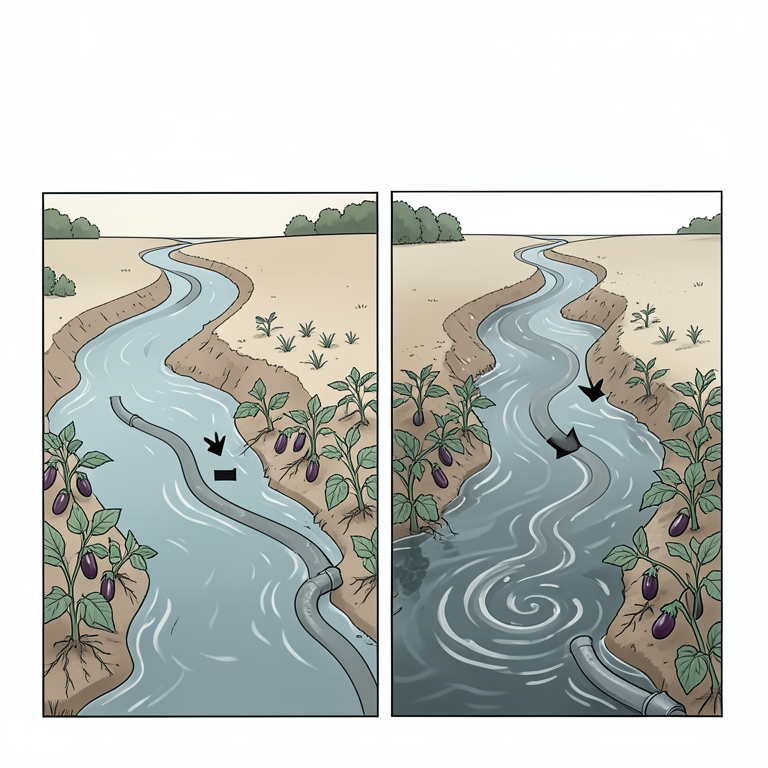
Spatial-Seasonal Contamination Gradient
AI-generated conceptual illustration (eggplant plants in a river floodplain). It explains the idea and does not show study data.
View source evidence ↗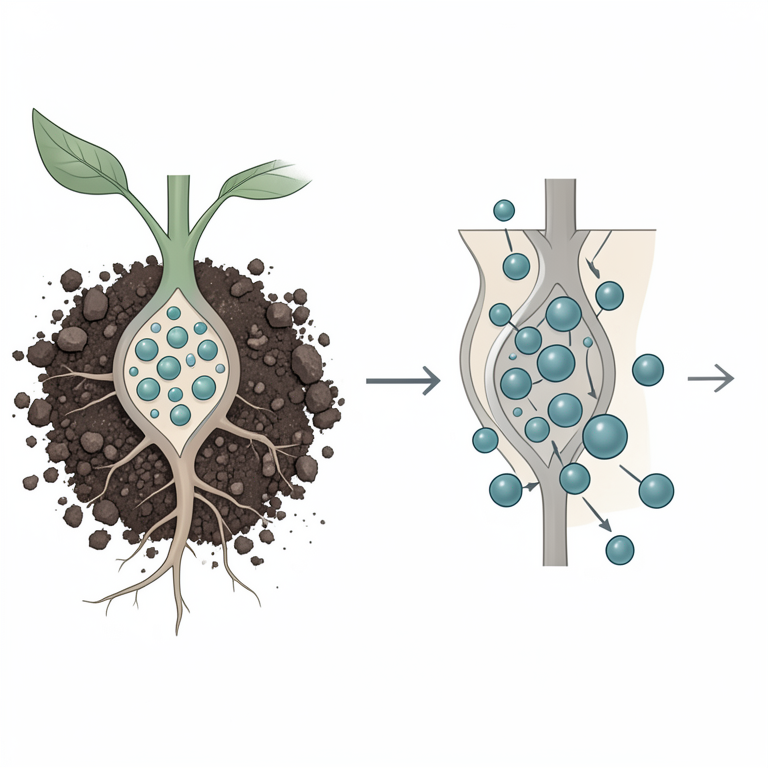
Magnesium-Cadmium Antagonism
AI-generated conceptual illustration (eggplant root cells in soil). It explains the idea and does not show study data.
View source evidence ↗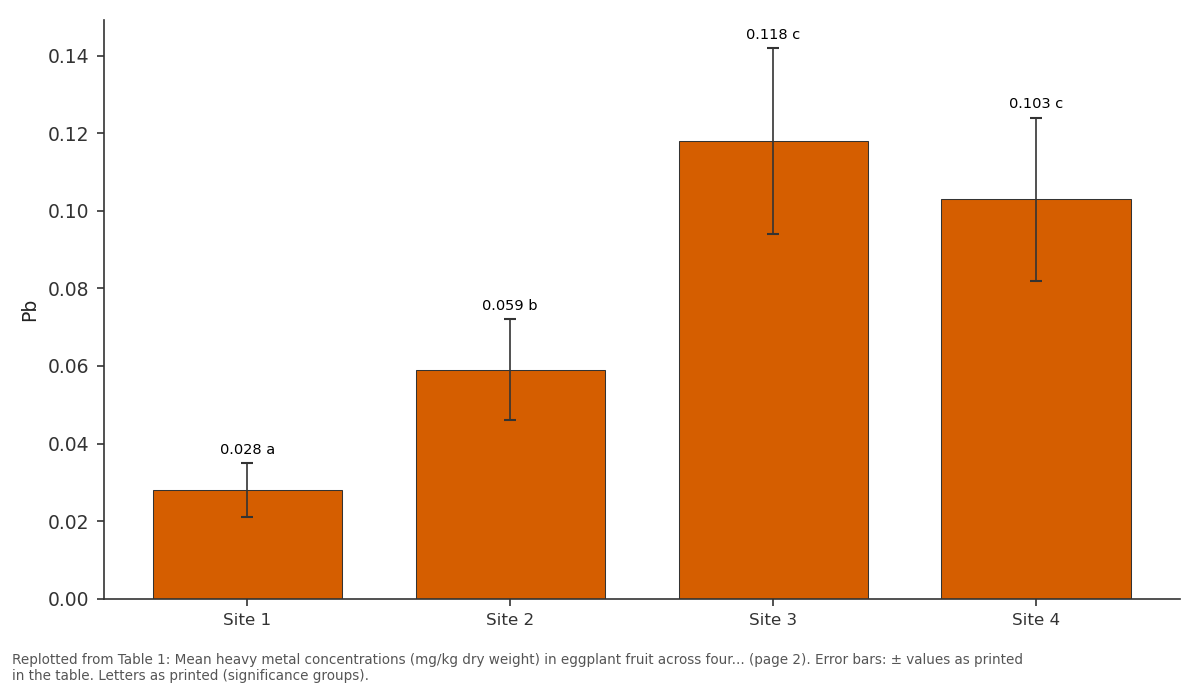
Pb: Site 1 vs Site 2 vs Site 3 vs Site 4
Replotted from Table 1 (page 2) of the original paper. Every bar is the paper's own table value.
View source evidence ↗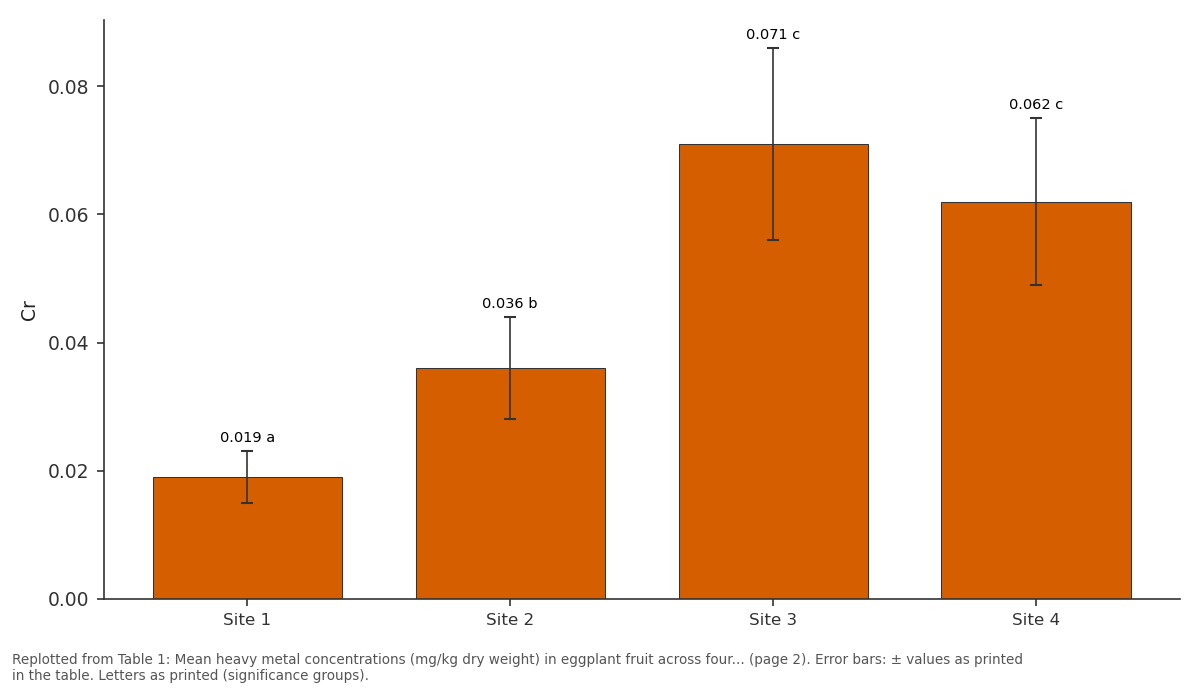
Cr: Site 1 vs Site 2 vs Site 3 vs Site 4
Replotted from Table 1 (page 2) of the original paper. Every bar is the paper's own table value.
View source evidence ↗Figures & tables
From the original paper Table 1
 Table 2
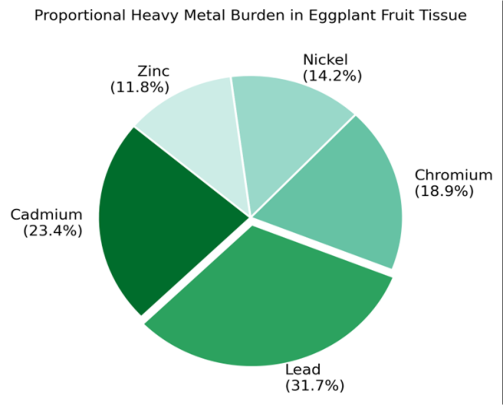 Figure 1
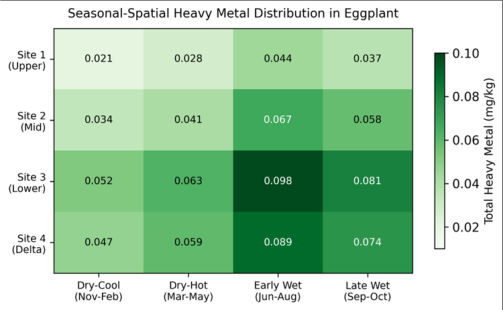 Figure 2
Introduction
Nearly 2.4 billion people in low-and middle-income countries rely on fresh vegetables grown with surface water of uncertain quality, and eggplant is among the ten most-consumed vegetables in the Sudano-Sahelian belt [1] . Heavy metals enter these food chains from artisanal mining, urban wastewater, and phosphate fertiliser residues, accumulating in soils that are then cropped season after season [2] . The Gambia River floodplain, which supports both rainfed and recession-irrigated horticulture across four countries, has received far less attention than the Niger or Senegal river systems despite comparable upstream pressures [3] . Heavy metal toxicity in humans is dose-dependent and cumulative. Cadmium targets the kidneys and skeletal system, lead impairs neurological development, and chromium (VI) is a recognised carcinogen [4] . Codex Alimentarius sets maximum levels for cadmium in fruiting vegetables at 0.05 mg/kg and for lead at 0.10 mg/kg, but enforcement depends on monitoring capacity that is often absent in rural floodplain markets [5] . Without baseline data, regulators cannot identify hotspots or allocate inspection resources effectively. Soil chemistry mediates metal transfer to crops. Magnesium, as a divalent cation, may compete with cadmium for membrane transport proteins in roots, a mechanism documented in tomato and capsicum but untested in eggplant under floodplain conditions [6] . If magnesium amendments suppress cadmium uptake, they could serve as a practical, low-cost intervention. At the same time, mutation breeding has produced low-cadmium rice and wheat lines by disrupting specific metal transporter genes, and analogous variation may exist in eggplant germplasm [7] .
Sensory quality is seldom assessed alongside contamination, yet consumer acceptance ultimately determines whether a safety intervention succeeds in the marketplace. Elevated nickel and chromium can alter phenolic compound synthesis, increasing bitterness and reducing the appeal of fresh eggplant [8] . Vitamin C, an important antioxidant and quality marker, may also decline under metal stress, further eroding the nutritional value of affected produce [9] . This research therefore had three goals: first, to map the spatial and seasonal distribution of five heavy metals in eggplant across the Gambia River floodplain; second, to test whether soil magnesium status predicts cadmium translocation to the fruit; and third, to evaluate whether elevated metal levels measurably affect sensory quality and vitamin C content. The outcomes are intended to help regional food safety authorities target their monitoring efforts and to guide agronomic strategies that could reduce metal transfer without sacrificing yield or consumer acceptance [10] .
Material and Methods
Material and Methods
Research Area Description
The Gambia River originates in the Fouta Djallon plateau of Guinea and flows roughly 1,130 km westward through Senegal and The Gambia before entering the Atlantic. Four sampling sites were established along a 310 km stretch of the middle and lower floodplain. Site 1 (upper reach, 13.54° N, 14.12° W) was situated in a pastoral zone with minimal upstream inputs. Site 2 (mid-reach, 13.67° N, 15.01° W) lay downstream of a small township with mixed domestic and agricultural runoff. Site 3 (lower reach, 13.42° N, 15.68° W) received discharge from an artisanal gold-mining corridor. Site 4 (delta fringe, 13.38° N, 16.22° W) was influenced by tidal intrusion and urban effluent. Annual rainfall across sites ranged from 680 to 1,050 mm, concentrated between June and October. Soils were classified as alluvial Fluvisols with clay-loam texture, pH 5.8-6.9.
Climatic and Environmental Conditions
Four seasonal windows were defined: dry-cool (November-February, mean temperature 24.3 °C, relative humidity 42 percent), dry-hot (March-May, 33.1 °C, 29 percent), early wet (June-August, 28.7 °C, 78 percent), and late wet (September-October, 27.9 °C, 81 percent). River discharge peaked in September at approximately 1,840 m³/s, resuspending sediment-bound metals and raising dissolved metal concentrations in irrigation water by 1.6-to 2.3-fold compared with dry-season baselines.
Material
Eggplant fruits of the local cultivar 'Ndiaga' were harvested at commercial maturity from three replicate plots (15 m x 10 m) at each site during each seasonal window, giving 48 composite samples per site and 192 in total. Each composite consisted of five fruits pooled from different plants. Certified reference material (NIST SRM 1573a, tomato leaves) was analysed alongside every batch. All reagents were trace-metal grade (Merck, Darmstadt). Vitamin C was measured by 2,6-dichlorophenolindophenol titration, and magnesium was extracted with ammonium acetate and measured by atomic absorption spectrometry [11] .
Methods
Fruit tissue was oven-dried at 65 °C to constant weight, ground to pass a 0.5 mm sieve, and digested in concentrated HNO3/HCl (3:1, aqua regia) using a CEM MARS 6 microwave system at 190 °C for 30 min. Digests were analysed by ICP-MS (Agilent 7900) in helium collision mode. Method detection limits were 0.0008 mg/kg for Cd, 0.002 for Pb, 0.001 for Cr, 0.001 for Ni, and 0.005 for Zn. Recovery from the certified reference material averaged 96.2 percent for Cd and 97.8 percent for Pb. Sensory evaluation followed a modified Quantitative Descriptive Analysis with a trained panel of twelve assessors scoring bitterness, astringency, and overall acceptability on a ninepoint hedonic scale. Data were analysed by two-way ANOVA (site x season) with Tukey HSD post-hoc tests at p < 0.05 in R 4.3.1 [12] . <0.01 Different superscript letters within a row indicate significant differences (Tukey HSD, p < 0.05). Sites 3 and 4 exceeded the Codex cadmium limit on an annual-mean basis, and Site 3 also exceeded the lead limit.
Results
Results
Comprehensive Interpretation
A clear spatial-seasonal pattern emerged: metal concentrations increased from upper to lower reaches and peaked during the early wet season when river discharge resuspended sediment-bound metals. The magnesiumcadmium inverse relationship (r = -0.63) mirrors similar findings in solanaceous crops and suggests a feasible soilamendment strategy. The sensory decline at contaminated sites is concerning because consumer rejection could push farmers toward even less regulated informal channels.
Discussion
Lead was the single largest contributor to the metal burden in eggplant fruit, consistent with floodplain studies on the Niger and Volta rivers where legacy lead from leaded petrol and paint pigments persists in alluvial sediments [13] . However, cadmium presents the greater health concern because the margin between background exposure and tolerable weekly intake is smaller for cadmium than for lead in West African diets [4] . The observation that Sites 3 and 4 exceeded the Codex cadmium limit on an annual-mean basis means that regular consumers of locally grown eggplant in the lower Gambia floodplain face chronic low-dose cadmium exposure.
The early wet season peak aligns with the physical resuspension of fine sediments during rising-stage floods, a process well-documented in temperate rivers but less frequently measured in tropical floodplain horticulture [3] . Farmers who irrigate with first-flush water in June and July are inadvertently applying the most contaminated water of the year to their crops. A simple scheduling shift-delaying the first irrigation by two to three weeks until sediment loads settle-could reduce metal loading at minimal cost, though this recommendation needs on-farm validation [6] . Magnesium-cadmium antagonism at root membrane level has been attributed to competition for non-selective cation channels and to magnesium-mediated upregulation of phytochelatin synthesis [14] . The correlation coefficient observed here (r = -0.63) is moderate but meaningful in a field context where dozens of uncontrolled variables act simultaneously. A practical implication is that applying dolomitic lime, which supplies both Ca and Mg while raising pH, could suppress cadmium bioavailability through two mechanisms at once [15] . The drop in vitamin C and the rise in bitterness at contaminated sites connect consumer health and consumer preference. If heavy metals trigger phenolic accumulation as a defence response, then bitterness may serve as an informal sensory warning of elevated metal content. But relying on taste alone is insufficient because sub-threshold metal levels can still exceed safety limits without producing detectable flavour changes [8] . Formal rapid-test kits for cadmium would be a more reliable market-level tool.
Mutation breeding represents a longer-term solution. Lowcadmium variants have been identified in rice through forward genetic screens, and similar germplasm surveys in Solanum melongena could uncover natural variation in metal transporter activity [7] . Combining such varieties with magnesium-enriched soil management would address the problem from both the plant and the soil side.
Conclusion
This research mapped heavy metal contamination of eggplant across the Gambia River floodplain and showed that lower-reach sites during the early wet season present the greatest food safety risk. Lead dominated the overall metal profile, but cadmium is the more immediate public health concern because annual-mean concentrations at two of four sites already exceeded Codex limits. The spatial gradient tracked river-water quality deterioration driven by upstream mining, urban discharge, and sediment resuspension during early floods. Soil magnesium emerged as a practical moderating factor. The inverse relationship between soil magnesium and fruit cadmium concentration suggests that dolomitic lime or magnesium-containing fertilisers could reduce cadmium transfer, an approach that is inexpensive and compatible with current farming practice. At the same time, the decline in vitamin C and the rise in bitterness at contaminated sites indicate that heavy metals affect both the nutritional and the sensory profile of eggplant, potentially undermining consumer acceptance even before formal safety limits are breached. Three actions are recommended. First, floodplain food safety monitoring should concentrate resources on lowerreach markets during June through August, when contamination peaks. Second, agronomic trials should test whether delaying irrigation until first-flush sediment loads settle and applying magnesium amendments can meaningfully reduce cadmium uptake in eggplant under real farm conditions. Third, national germplasm collections should be screened for low-cadmium accessions that could enter breeding programmes aimed at producing safer varieties for floodplain cultivation. Together, these measures would reduce dietary metal exposure for millions of consumers while supporting the livelihoods of smallholder vegetable growers across the region.
Acknowledgement
Acknowledgements Funding SourcesThis work was supported by internal institutional funds from the Antalya Department of Agronomic Sciences. No specific grant number applies. Institutional SupportICP-MS analyses were conducted at the Department of Post-Harvest Management, Antalya Department of Agronomic Sciences, Turkey.
Figures and tables from the paper
| Metal | Site 1 | Site 2 | Site 3 | Site 4 | Codex Limit | p-value |
|---|---|---|---|---|---|---|
| Cd | 0.012±0.003a | 0.029±0.006b | 0.061±0.012c | 0.054±0.010c | 0.050 | <0.001 |
| Pb | 0.028±0.007a | 0.059±0.013b | 0.118±0.024c | 0.103±0.021c | 0.100 | <0.001 |
| Cr | 0.019±0.004a | 0.036±0.008b | 0.071±0.015c | 0.062±0.013c | — | <0.001 |
| Ni | 0.014±0.003a | 0.027±0.006b | 0.053±0.011c | 0.047±0.009c | — | <0.001 |
| Zn | 0.011±0.002a | 0.019±0.004b | 0.038±0.008c | 0.034±0.007c | — | <0.01 |
Table text extracted from the original PDF; superscript letters are shown inline. The original table image is below.
View original table image
| Parameter | Site 1 | Site 2 | Site 3 | Site 4 |
|---|---|---|---|---|
| Bitterness | 3.2±0.4a | 4.1±0.5b | 5.8±0.7c | 5.3±0.6c |
| Astringency | 2.8±0.3a | 3.4±0.4b | 4.7±0.6c | 4.3±0.5c |
| Overall acceptability | 7.4±0.6a | 6.2±0.5b | 4.6±0.7c | 5.0±0.6c |
| Vitamin C (mg/100g FW) | 14.3±1.2a | 11.7±1.0b | 8.4±0.9c | 9.1±0.8c |
Table text extracted from the original PDF; superscript letters are shown inline. The original table image is below.
View original table image
References
19 in the original paper- Drechsel P, Keraita B, Amoah P. Irrigated urban vegetable production in Ghana: characteristics, benefits and risk mitigation. Colombo: IWMI; 2014.
- Alloway BJ. Heavy metals in soils: trace metals and metalloids in soils and their bioavailability. 3rd ed. Dordrecht: Springer; 2013.
- Ngole-Jeme VM, Fantke P. Ecological and human health risks associated with abandoned gold mine tailings contaminated soil. PLoS ONE. 2017;12(2):e0172517.
- JECFA. Evaluation of certain food additives and contaminants. WHO Technical Report Series No. 960. Geneva: WHO; 2011.
- FAO/WHO. Codex Alimentarius: General standard for contaminants and toxins in food and feed (CXS 1931995, amended 2022). Rome: FAO; 2022.
- Seck MT, Diouf M, Faye A. Contamination of leafy vegetables by enteric pathogens in peri-urban Dakar, Senegal. Journal of Applied Biosciences. 2015;95:8972-8980.
- Uraguchi S, Fujiwara T. Cadmium transport and tolerance in rice: perspectives for reducing grain cadmium accumulation. Rice. 2012;5:5.
- Cheynier V, Comte G, Davies KM. Plant phenolics: recent advances on their biosynthesis, genetics, and ecophysiology. Plant Physiology and Biochemistry. 2013;72:1-20.
- Lee SK, Kader AA. Pre-harvest and post-harvest factors influencing vitamin C content of horticultural crops. Postharvest Biology and Technology. 2000;20(3):207-220.
- Orisakwe OE, Nduka JK, Amadi CN. Heavy metals health risk assessment for population via consumption of food crops and fruits in Owerri, south-eastern Nigeria. Chemistry Central Journal. 2012;6:77.
- AOAC International. Official methods of analysis. 21st ed. Rockville: AOAC; 2019.
- R Core Team. R: a language and environment for statistical computing. Vienna: R Foundation for Statistical Computing; 2023.
- Nriagu JO. A history of global metal pollution. Science. 1996;272(5259):223-224.
- Rengel Z, Bose J, Chen Q. Magnesium alleviates plant toxicity of aluminium and heavy metals. Crop and Pasture Science. 2015;66(12):1298-1307.
- Bolan NS, Adriano DC, Curtin D. Soil acidification and liming interactions with nutrient and heavy metal transformation and bioavailability. Advances in Agronomy. 2003;78:215-272.
- Toth G, Hermann T, Da Silva MR. Heavy metals in agricultural soils of the European Union with implications for food safety. Environment International. 2016;88:299-309.
- McLaughlin MJ, Parker DR, Clarke JM. Metals and micronutrients: food safety issues. Field Crops Research. 1999;60(1-2):143-163.
- Singh J, Upadhyay AK, Bahadur A. Antioxidant phytochemicals in cabbage (Brassica oleracea L. var. capitata). Scientia Horticulturae. 2006;108(3):233-237.
- Grant CA, Clarke JM, Duguid S. Selection and breeding of plant cultivars to minimise cadmium accumulation. Science of the Total Environment. 2008;390(2-3):301-310.