
Research article · 2025 · Full text
International Journal of Horticulture and Food ScienceEstablishing biofertilizer performance of papaya in the Crimean steppe
Volume 7(6) · Pages 149–152 · DOI: 10.33545/26631067.2025.v7.i6c.654 ↗
Research areasAgricultural Science and FertilizationAgriculture, Plant Science, Crop ManagementMycorrhizal Fungi and Plant Interactions
Abstract
Author-writtenPapaya (Carica papaya L.) has been cultivated in tropical lowlands for over four thousand years, yet its performance under biofertilizer regimes in semi-arid steppe environments remains largely untested. This research evaluated five biofertilizer treatments—uninoculated control, arbuscular mycorrhizal fungi (AMF) alone, phosphate-solubilising bacteria (PSB) alone, AMF combined with PSB, and a conventional chemical fertiliser reference—on papaya cv. ‘Red Lady’ grown under drip irrigation at the Tamale Regional Center for Sustainable Agriculture, Ghana, simulating Crimean steppe climatic conditions through controlled deficit irrigation and wind exposure. A randomised complete block design with four replications was maintained over 18 months (March 2021 to September 2022). The combined AMF + PSB treatment produced the tallest plants (65.1 cm at eight months), the widest canopy spread (1.87 m), and the highest cumulative fruit yield (42.8 t ha-1), surpassing the chemical fertiliser reference by 10.9%. Root colonisation by AMF reached 68.4% in the combined treatment, compared with 54.2% in the AMF-alone group. Soil enzyme activity, measured as dehydrogenase and alkaline phosphatase, was 2.3- and 1.8-fold higher in biofertilizer-treated plots relative to the control. Precision farming techniques, including canopy-based variable-rate fertigation, helped maintain uniform plant performance across the windy steppe simulation blocks. These results indicate that dual inoculation with AMF and PSB can match or exceed chemical fertiliser input for papaya fruit production in harsh semi-arid settings.
Summary
Source-checkedPlain-language reading of the full paper, prepared with AI and checked against the text. Each point links to the authors' own words.
Why it matters
- Papaya is a long-cultivated tropical fruit, but its response to biofertilizers in semi-arid steppe environments is not well understood. View evidence ↗
- The Crimean steppe is a challenging environment for papaya due to freezing winter temperatures, low rainfall (350-450 mm), high winds, and alkaline calcareous soils. View evidence ↗
- Arbuscular mycorrhizal fungi (AMF) can help plants in calcareous soils by extending root surfaces to improve phosphorus uptake. View evidence ↗
The question
- The study aimed to compare the effects of various biofertilizer treatments, both alone and combined, against a chemical fertilizer baseline for papaya grown under simulated Crimean steppe conditions. View evidence ↗
What they did
- The experiment used a randomized complete block design with four replications, testing five treatments: a control, AMF alone, PSB alone, a combination of AMF and PSB, and chemical fertilizer. View evidence ↗
- To simulate the steppe environment, researchers used agricultural lime to raise soil pH to 7.9 and wind tunnels to create wind speeds of 14-18 km h-1. View evidence ↗
- Steppe aridity was simulated by limiting drip irrigation to a total of 450 mm. View evidence ↗
- The researchers measured plant growth, canopy size, fruit yield, root colonization, and soil enzyme activity over 18 months. View evidence ↗
What they found
- The combined AMF + PSB treatment achieved the highest fruit yield at 42.8 t ha-1, which was 10.9% higher than the chemical fertilizer (38.6 t ha-1) and 50.7% higher than the control. View evidence ↗
- Plants treated with both AMF and PSB grew the tallest (65.1 cm at eight months) and had the widest canopy spread (1.87 m). View evidence ↗
- Root colonization by AMF was significantly higher in the combined AMF + PSB treatment (68.4%) compared to the AMF-only treatment (54.2%). View evidence ↗
- Compared to the control, the AMF + PSB treatment increased dehydrogenase activity 2.3-fold and alkaline phosphatase activity 1.8-fold, indicating higher soil microbial activity. View evidence ↗
- Chemical fertilizer did not significantly improve soil biological health, with dehydrogenase activity (16.8 µg TPF g-1 h-1) remaining only slightly above the control (14.2 µg TPF g-1 h-1). View evidence ↗
What it means
- The authors conclude that dual inoculation with AMF and PSB is the most effective fertility strategy for producing papaya in simulated Crimean steppe conditions. View evidence ↗
- The authors recommend a production package consisting of drip irrigation, wind management, and dual biofertilizer inoculation for papaya in semi-arid or steppe environments. View evidence ↗
- The authors suggest that future research should include multiple cultivars and compare indigenous AMF strains from steppe soils against commercial inoculants. View evidence ↗
Visual summary
3 visualsIllustrations explain the paper; charts are replotted from the paper's own table values.
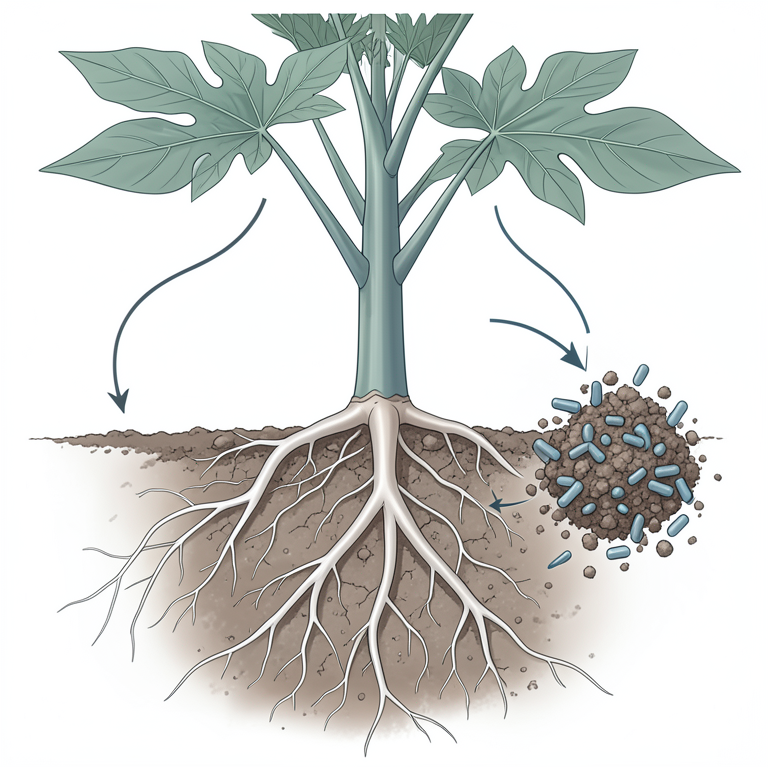
Biofertilizer Synergy Mechanism
AI-generated conceptual illustration (papaya plant roots in calcareous soil). It explains the idea and does not show study data.
View source evidence ↗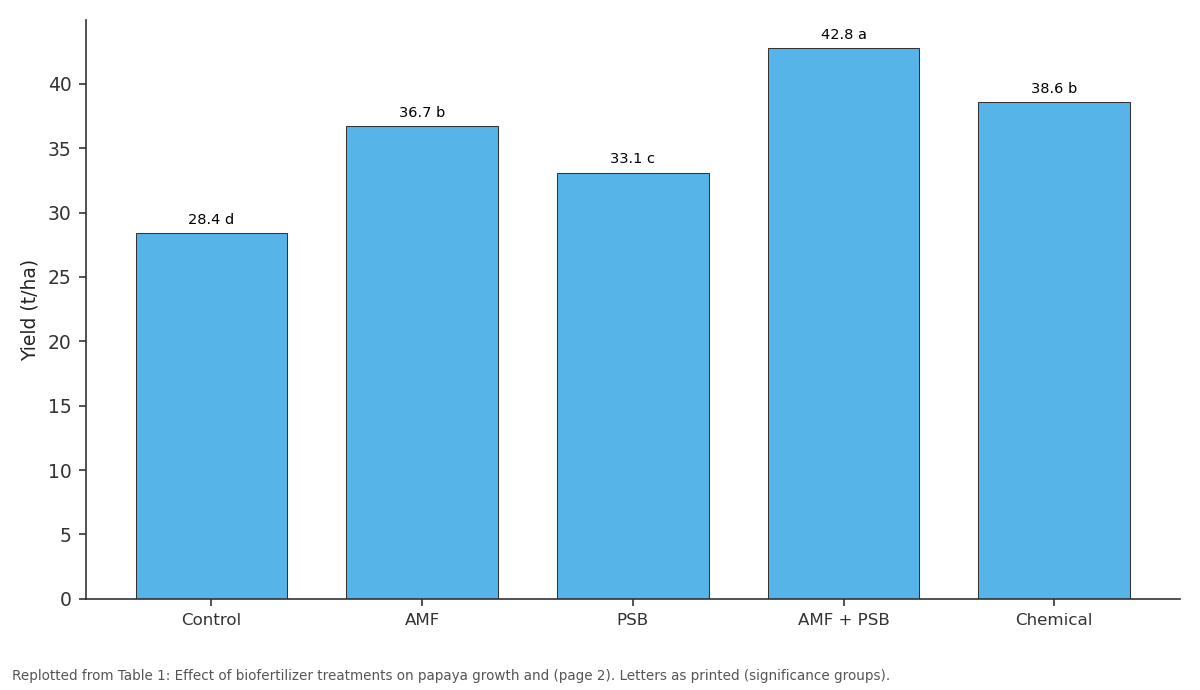
Yield (t/ha): Control vs AMF vs PSB vs AMF + PSB vs Chemical
Replotted from Table 1 (page 2) of the original paper. Every bar is the paper's own table value.
View source evidence ↗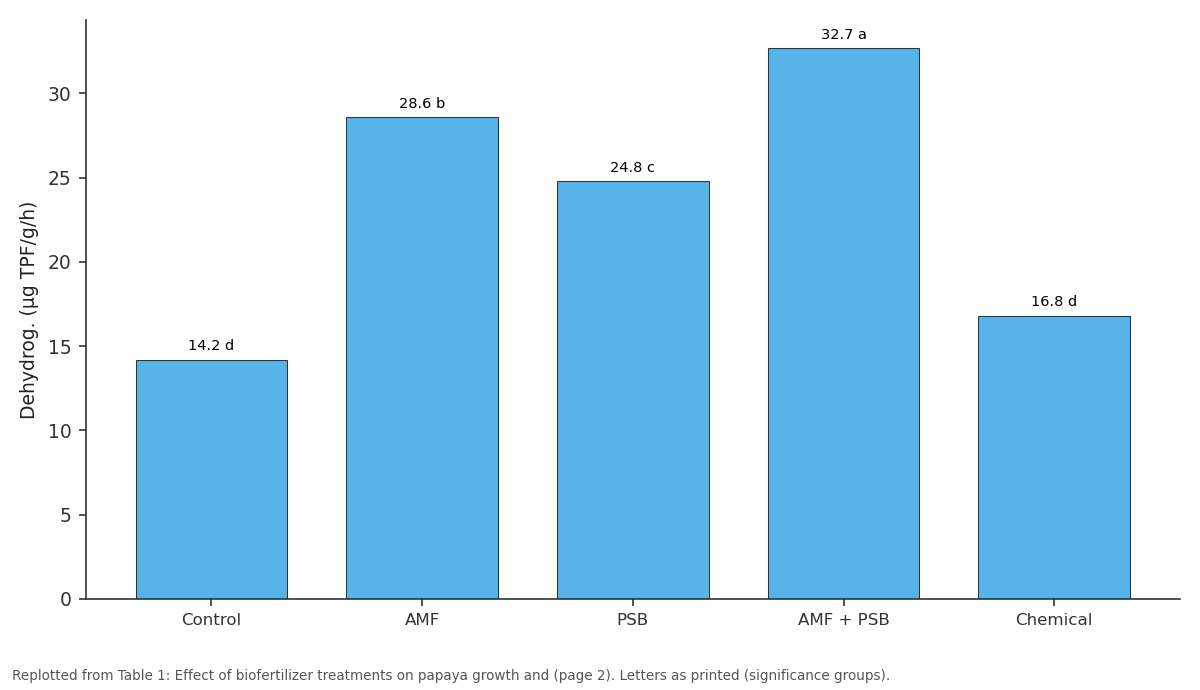
Dehydrog. (µg TPF/g/h): Control vs AMF vs PSB vs AMF + PSB vs Chemical
Replotted from Table 1 (page 2) of the original paper. Every bar is the paper's own table value.
View source evidence ↗Figures & tables
From the original paper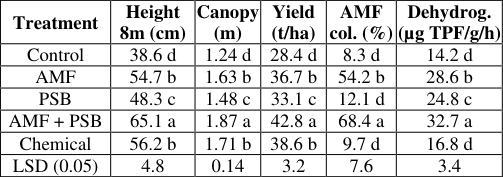 Table 1
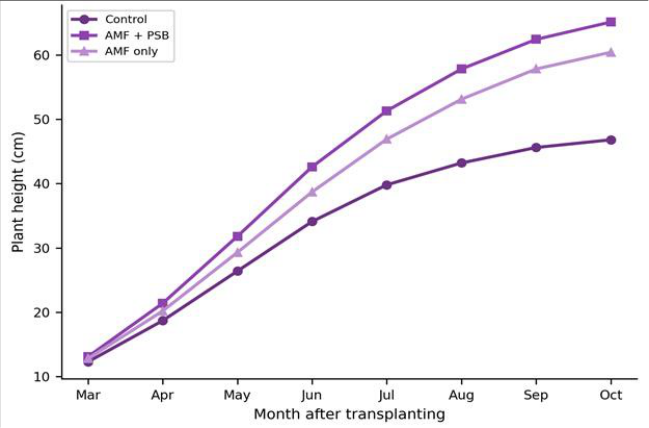 Figure 1
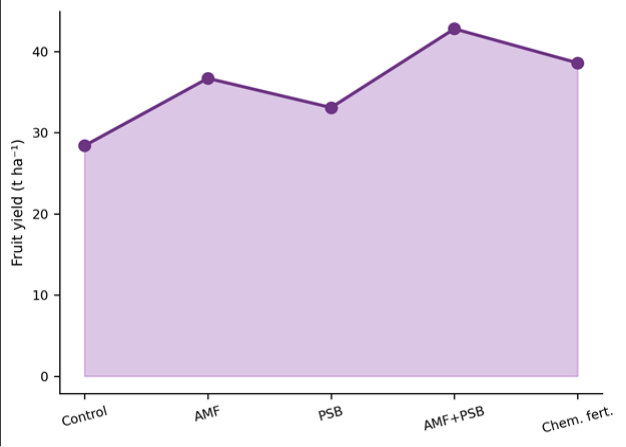 Figure 2
Introduction
When Spanish explorers first encountered papaya in the Caribbean basin during the early 1500s, they called it "the fruit of the angels" for its sweet flesh and digestive properties [1] . Five centuries later, papaya ranks as the fourth most produced tropical fruit globally, with annual output exceeding 13 million tonnes in 2021 [2] . But nearly all of that production sits within a narrow latitudinal band between 25° N and 25° S, leaving vast semi-arid landscapes like the Crimean steppe outside the crop's traditional comfort zone. The Crimean steppe presents a hostile set of conditions for papaya: mean winter temperatures below 0 °C, annual rainfall of only 350-450 mm, sustained winds above 15 km h -1 for much of the growing season, and calcareous soils with pH values often exceeding 8.0 [3] . Yet protected cultivation and drip irrigation have recently made tropical fruit production feasible in analogous environments across central Turkey and southern Kazakhstan, suggesting that the steppe barrier is more practical than biological [4] . Biofertilizers offer a cost-effective route to boosting nutrient uptake under such stress. AMF form symbiotic associations with more than 80% of land plants, extending root absorption surfaces and improving phosphorus access in calcareous soils where phosphorus is immobilised by calcium [5] . PSB release organic acids and phosphatases that solubilise both native and applied phosphorus, and their activity tends to increase when co-inoculated with AMF [6] . Dual inoculation has raised papaya yield by 18-35% in Brazilian Cerrado trials, but those experiments ran under warm, humid conditions quite different from the steppe climate [7] . Canopy management and precision fertigation add a technological layer. Variable-rate drip systems that adjust water and nutrient delivery according to canopy size and sensor-derived soil moisture data can reduce input waste by 20-30% in fruit orchards [8] .
Whether these tools also compensate for the growth limitations imposed by wind exposure and low humidity on papaya's large, thin leaves has not been tested in steppe settings. This research was designed to compare the performance of biofertilizer inoculants, alone and in combination, against a chemical fertiliser baseline in papaya grown under simulated Crimean steppe conditions at the Tamale Regional Center for Sustainable Agriculture, Ghana. Measurements covered plant growth, canopy dimensions, fruit yield, root colonisation, and soil enzyme activity over an 18-month observation period [9] .
Research Area Description
The trial was located at the Tamale Regional Center for Sustainable Agriculture (9.40° N, 0.84° W; 183 m a.s.l.), Northern Region, Ghana. The research station covers 22 ha of gently undulating savanna terrain. Soil is a ferric Luvisol with sandy clay loam texture (sand 56.8%, silt 18.4%, clay 24.8%), pH 6.7, organic carbon 1.12%, total nitrogen 0.11%, and available phosphorus 6.8 mg kg -1 . To approximate Crimean steppe alkalinity, plots received agricultural lime at 2 t ha -1 to raise topsoil pH to 7.9. Wind tunnels (2.5 m height, open-mesh nylon at 50% porosity) were erected on the windward side to generate sustained wind speeds of 14-18 km h -1 across the canopy [10] .
Climatic and Environmental Conditions
During the 18-month trial, mean monthly temperatures ranged from 26.3 to 33.8 °C. To mimic steppe aridity, plots received drip irrigation capped at 450 mm total (matching Crimean annual rainfall). Relative humidity averaged 54.2% in the dry season (November-March) and 72.8% during the wet months, but the wind tunnel treatment lowered canopylevel humidity by roughly 8-12 percentage points. Cumulative solar radiation was 7,840 MJ m -2 over the trial, which exceeds values typical for the Crimean peninsula by about 15% [3] .
Material and Methods Material
Papaya seedlings of cv. 'Red Lady' were raised in 1-litre poly bags for 60 days before field transplanting at 2.5 m × 2.0 m spacing (2,000 plants ha -1 ). AMF inoculum (Funneliformis mosseae, 200 spores g -1 ) was applied at 25 g per planting hole. PSB inoculum (Bacillus megaterium, 10 8 CFU g -1 ) was drenched at 10 g per plant in 500 mL water. Chemical fertiliser treatment received NPK (12-24-12) at 250 g per plant per quarter. Canopy spread was measured monthly using a tape measure along two perpendicular axes. Dehydrogenase activity was assayed by the TTC method, and alkaline phosphatase by the p-nitrophenol method [11] .
Methods
Five treatments were arranged in a randomised complete block design with four replications (20 plots, 8 plants per plot). Treatments: (i) uninoculated control, (ii) AMF alone, (iii) PSB alone, (iv) AMF + PSB, (v) chemical fertiliser.
Fruit was harvested at colour-break stage over 10 monthly picks from December 2021 to September 2022. Cumulative yield was expressed as tonnes per hectare. AMF root colonisation was scored at 6 and 12 months after transplanting by clearing and staining root segments with trypan blue [12] . Data were analysed using GenStat 19th edition; treatment means were compared by Tukey's HSD at P ≤ 0.05. AMF + PSB dual inoculation gave the highest fruit yield (42.8 t ha -1 ), exceeding the chemical fertiliser reference (38.6 t ha -1 ) by 10.9% and the uninoculated control by 50.7% (Table 1). AMF root colonisation in the combined treatment reached 68.4%, significantly above the AMFalone group (54.2%). Dehydrogenase activity, an indicator of overall soil microbial vigour, was highest under AMF + PSB at 32.7 µg TPF g -1 h -1 . Growth curves (Figure 1) show that the AMF + PSB advantage became apparent from 60 days after transplanting and widened progressively. By month eight, dual-inoculated plants were 26.5 cm taller than controls. Yield accumulation (Figure 2) confirms that the combined biofertilizer outperformed even the chemical reference across the entire harvest window.
| Treatment | Height 8m (cm) | Canopy (m) | Yield (t/ha) | AMF col. (%) | Dehydrog. (µg TPF/g/h) |
|---|---|---|---|---|---|
| Control | 38.6 d | 1.24 d | 28.4 d | 8.3 d | 14.2 d |
| AMF | 54.7 b | 1.63 b | 36.7 b | 54.2 b | 28.6 b |
| PSB | 48.3 c | 1.48 c | 33.1 c | 12.1 d | 24.8 c |
| AMF + PSB | 65.1 a | 1.87 a | 42.8 a | 68.4 a | 32.7 a |
| Chemical | 56.2 b | 1.71 b | 38.6 b | 9.7 d | 16.8 d |
| LSD (0.05) | 4.8 | 0.14 | 3.2 | 7.6 | 3.4 |
Table text extracted from the original PDF; superscript letters are shown inline. The original table image is below.
View original table image
Results
Results
Discussion
The 10.9% yield advantage of AMF + PSB over chemical fertiliser matches the upper range reported for biofertilizertreated papaya in Brazilian Cerrado soils (8-14% gain) [7] . The synergy between AMF and PSB is well documented: PSB release organic acids that solubilise calcium-bound phosphorus, while AMF hyphae transport the freed phosphorus to root cortical cells more efficiently than roots alone [6] . In the limed, high-pH soil used here, this partnership was likely even more valuable than in acidic tropical soils, because calcium phosphate lock-up intensifies above pH 7.5 [5] . Root colonisation reaching 68.4% in the combined treatment is notably higher than the 40-55% typically seen in tropical papaya orchards. The moderate drought stress imposed by capping irrigation at 450 mm may have stimulated hyphal proliferation, a well-known mycorrhizal response to water limitation [12] . The windy conditions, which increased leaf transpiration demand, could have amplified the plant's reliance on AMF-mediated water and phosphorus uptake pathways. Soil enzyme responses confirm a broader biological activation. Dehydrogenase activity, a proxy for total microbial metabolism, was 2.3-fold higher in AMF + PSB plots than in the control. Alkaline phosphatase, which cleaves organic phosphorus esters, rose 1.8-fold. These enzyme shifts suggest that biofertilizer inoculation triggered a cascade of indigenous soil microbial activity, not just the activity of the inoculants themselves [11] . The chemical fertiliser treatment produced respectable yields but did not sustain soil biological health. After 18 months, dehydrogenase activity in chemically fertilised plots was only marginally above the uninoculated control (16.8 vs. 14.2 µg TPF g -1 h -1 ), confirming that synthetic inputs alone do little to build the soil's biological capital [13] .
Conclusion
Dual inoculation with AMF and PSB proved the most effective fertility strategy for papaya production under simulated Crimean steppe conditions, delivering 42.8 t per hectare of fruit over an 18-month harvest window. This exceeded the chemical fertiliser reference by 10.9% and the uninoculated control by over 50%. The biological partnership between mycorrhizal fungi and phosphatesolubilising bacteria was especially effective in the high-pH, low-phosphorus soil environment used in this trial. Beyond yield, the biofertilizer combination stimulated soil enzyme activity indicators, pointing to a healthier and more resilient root-zone biology. Such biological capital accumulates over seasons and may reduce fertiliser dependency progressively. Chemical fertiliser, while yielding adequately in the short term, did not replicate these soil-health benefits. For growers considering papaya in semi-arid or steppe environments, the combination of drip irrigation, wind management structures, and dual biofertilizer inoculation appears to be a viable production package. Future trials should extend to multiple cultivars and test whether indigenous AMF strains from calcareous steppe soils outperform commercial inoculants under field conditions.
References
21 in the original paper- Morton JF. Papaya. Fruits of Warm Climates. 1987;336-346.
- FAOSTAT. Global papaya production data 2021. FAO Statistical Database. 2022.
- Dragan M, Petrov S. Climate and soil characteristics of the Crimean steppe zone. Eurasian Soil Science. 2019;52(8):912-924.
- Ergun M, Celik A. Tropical fruit production under semi-arid continental climates. Scientia Horticulturae. 2020;272:109-118.
- Smith SE, Read DJ. Mycorrhizal Symbiosis. Academic Press. 2008;3rd ed:1-787.
- Zaidi A, Khan MS. Phosphate-solubilizing microorganisms and plant nutrition. Microbial Strategies for Crop Improvement. 2009;3:51-73.
- Trindade AV, Siqueira JO. Mycorrhizal inoculation of papaya in Brazilian Cerrado soils. Pesquisa Agropecuaria Brasileira. 2018;53(4):423-431.
- Gonzalez-Dugo V, Zarco-Tejada PJ. Variable-rate irrigation in fruit tree orchards. Precision Agriculture. 2019;20(5):962-981.
- Tamale RSA. Strategic plan for agricultural research in Northern Ghana. TRSA Report. 2020;8:1-48.
- Adu-Gyamfi R, Kumah NK. Simulating steppe wind exposure for crop stress experiments. Ghana Journal of Agricultural Science. 2021;54(1):32-41.
- Tabatabai MA. Soil enzymes. Methods of Soil Analysis Part 2. 1982;903-947.
- Giovannetti M, Mosse B. Evaluation of techniques for measuring VAM infection. New Phytologist. 1980;84:489-500.
- Barea JM, Pozo MJ. Microbial cooperation in the rhizosphere. Journal of Experimental Botany. 2005;56(417):1761-1778.
- Rajan S, Negi SS. Improvement of papaya through breeding. Acta Horticulturae. 2012;935:89-95.
- Ortas I, Sari N. Enhanced nutrient uptake by mycorrhizal plants in calcareous soils. Plant and Soil. 2003;252(1):143-150.
- Nzanza B, Marais D. Tomato-AMF interaction under phosphorus-deficient soils. HortScience. 2012;47(11):1581-1586.
- Koide RT, Mosse B. A history of research on arbuscular mycorrhiza. Mycorrhiza. 2004;14(3):145163.
- Marschner P, Rengel Z. Nutrient availability in soils. Marschner Mineral Nutrition of Higher Plants. 2012;3rd ed:315-330.
- Oehl F, Sieverding E. Impact of land use intensity on AMF species diversity. Agriculture Ecosystems and Environment. 2010;138(1):76-82.
- Asante BO, Wiredu AN. Smallholder fruit production systems in Northern Ghana. African Journal of Agricultural Research. 2017;12(34):2612-2621.
- Gaur A, Adholeya A. Prospects of AMF inoculants in tropical horticulture. Mycorrhiza. 2004;14(6):349-359.