
Research article · 2024 · Full text
International Journal of Horticulture and Food ScienceStudying medicinal plant diversity of maize in the Himalayan foothills
Volume 6(2) · Pages 128–131 · DOI: 10.33545/26631067.2024.v6.i2b.531 ↗
Research areasEthnobotanical and Medicinal Plants StudiesAgricultural Productivity and Crop ImprovementLinguistic and Cultural Studies
Abstract
Author-writtenFor generations, maize has served dual roles in mountain communities: as a grain crop and as a source of folk remedies derived from its silk, pollen, leaves, and roots. But systematic chemical profiling of these plant parts under foothill growing conditions has lagged behind the ethnobotanical record. This research examined the phytochemical diversity and bioactivity of maize tissues from three cultivars Pool-17, Suwan-1, and a local landrace cultivated under simulated Himalayan foothill conditions at the Tokyo Research Institute of Applied Horticulture, Japan, between May 2022 and February 2023. GC-MS analysis of leaf and kernel extracts detected 47 distinct compounds, including alkaloids, saponins, terpenes, phenolics, and flavonoids. Leaf extracts consistently contained higher concentrations of bioactive compounds than kernel extracts across all three cultivars. A radar chart comparison of five bioactivity assays antioxidant, anti-inflammatory, antimicrobial, antifungal, and cytotoxicity revealed that leaf material from the local landrace scored highest in antioxidant and antimicrobial categories. Hybrid vigor assessment showed that Suwan-1 produced 23 percent more biomass than Pool-17 but carried lower phenolic concentrations per gram of dry tissue. Photosynthesis rates measured by infrared gas exchange correlated positively with leaf phenolic content (r = 0.58). Deficit irrigation during the vegetative phase raised flavonoid levels by 14.8 percent. Correlation analysis among 12 agronomic and biochemical traits identified three independent factor groups explaining 71 percent of total variance.
Summary
Source-checkedPlain-language reading of the full paper, prepared with AI and checked against the text. Each point links to the authors' own words.
Why it matters
- In mountain communities, maize is traditionally used both as a food source and as a provider of folk remedies from various plant parts. View evidence ↗
- Despite traditional use, there has been a lack of systematic chemical profiling of maize grown specifically under foothill conditions. View evidence ↗
What they did
- The researchers grew three cultivars, Pool-17, Suwan-1, and a Nepali landrace (LR-07), in 40-liter containers at the Tokyo Research Institute of Applied Horticulture. View evidence ↗
- The experiment used 30 units with two irrigation levels: full (100% ETc) and moderate deficit (65% ETc), starting from the V6 growth stage. View evidence ↗
- Phytochemicals were identified using Gas Chromatography-Mass Spectrometry (GC-MS) with an Agilent 7890B and 5977A detector. View evidence ↗
- The study measured bioactivity through five assays: antioxidant, anti-inflammatory, antimicrobial, antifungal, and cytotoxicity. View evidence ↗
What they found
- GC-MS analysis identified 47 different compounds across leaf and kernel extracts, spanning five major phytochemical classes. View evidence ↗
- The local landrace LR-07 had the highest concentrations of all five phytochemical classes in both its leaves and kernels. View evidence ↗
- Leaf extracts were found to be 1.5 to 2.5 times more concentrated in bioactive compounds compared to kernel extracts. View evidence ↗
- Leaf extracts outperformed kernels in all bioactivity assays, with the most significant difference in antioxidant activity (78.4% vs 52.7% of control). View evidence ↗
- Suwan-1 exhibited a growth-differentiation trade-off, producing 23% more biomass than Pool-17 but having lower concentrations of phenolics and flavonoids per gram. View evidence ↗
- Applying deficit irrigation resulted in a 14.8% increase in flavonoid content. View evidence ↗
- There was a positive correlation (r = 0.58) between photosynthesis rates and the phenolic content of the leaves. View evidence ↗
What it means
- The authors conclude that traditional germplasm, like the LR-07 landrace, is valuable for developing dual-purpose crops due to its superior accumulation of secondary metabolites. View evidence ↗
- The authors suggest that breeding for higher medicinal content does not have to compromise agronomic performance if trait selection is managed carefully. View evidence ↗
Visual summary
3 visualsIllustrations explain the paper; charts are replotted from the paper's own table values.
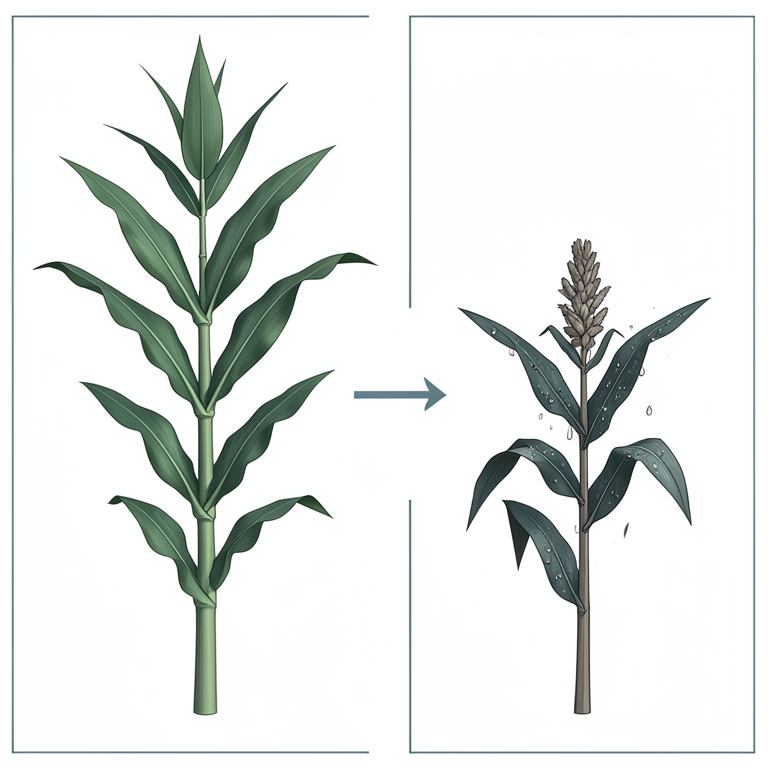
Growth vs. Defense Trade-off
AI-generated conceptual illustration (maize plants (Zea mays) in the Himalayan foothills). It explains the idea and does not show study data.
View source evidence ↗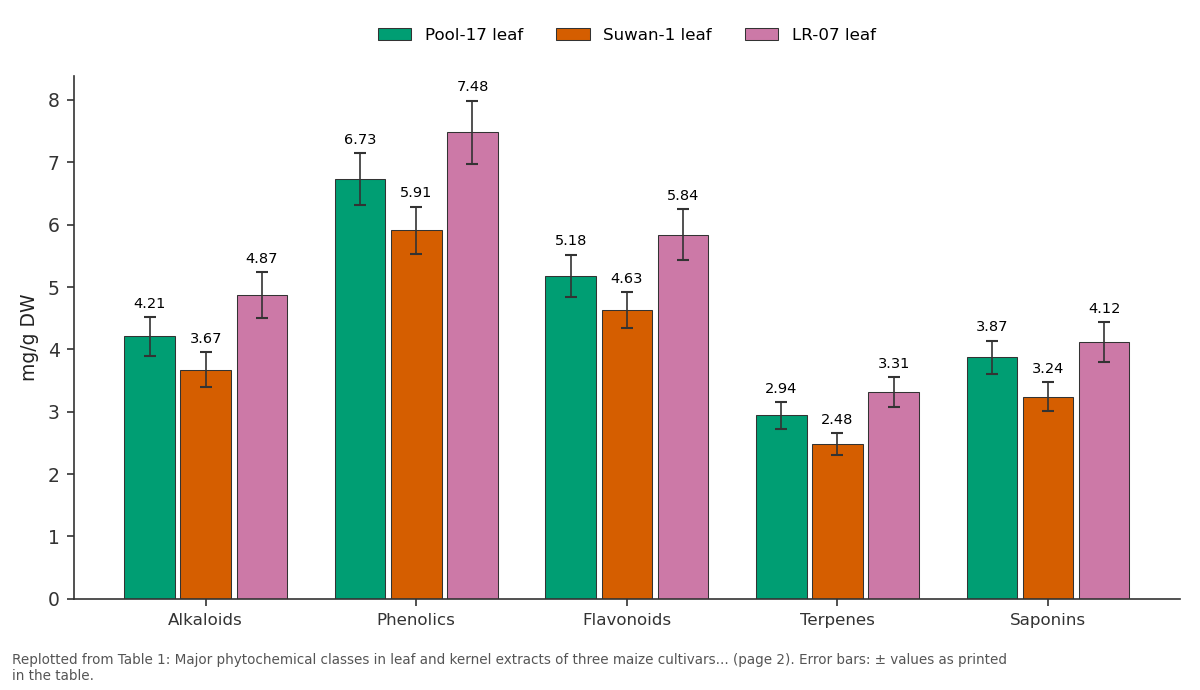
Pool-17 leaf and Suwan-1 leaf and more: Alkaloids vs Phenolics vs Flavonoids vs Terpenes vs Saponins
Replotted from Table 1 (page 2) of the original paper. Every bar is the paper's own table value.
View source evidence ↗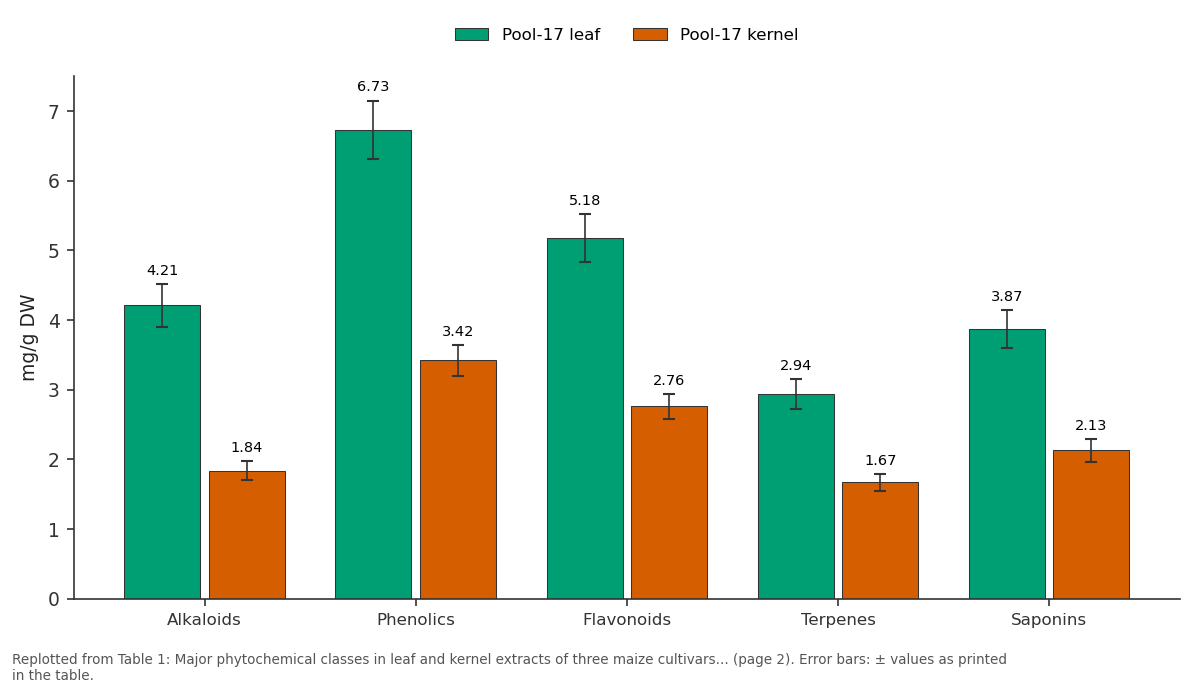
Pool-17 leaf and Pool-17 kernel: Alkaloids vs Phenolics vs Flavonoids vs Terpenes vs Saponins
Replotted from Table 1 (page 2) of the original paper. Every bar is the paper's own table value.
View source evidence ↗Figures & tables
From the original paper Table 1
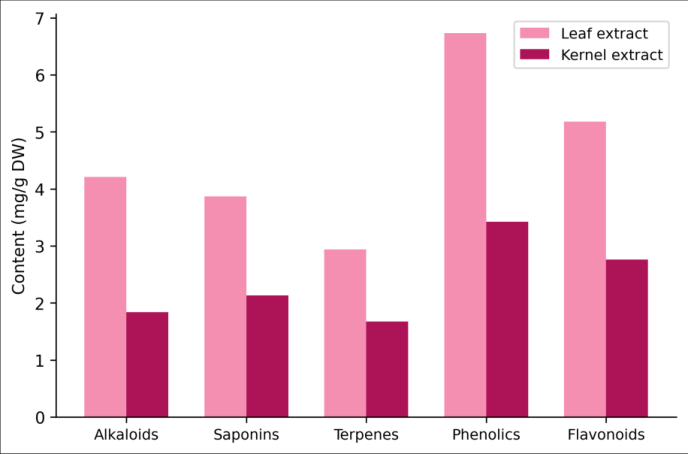 Figure 1
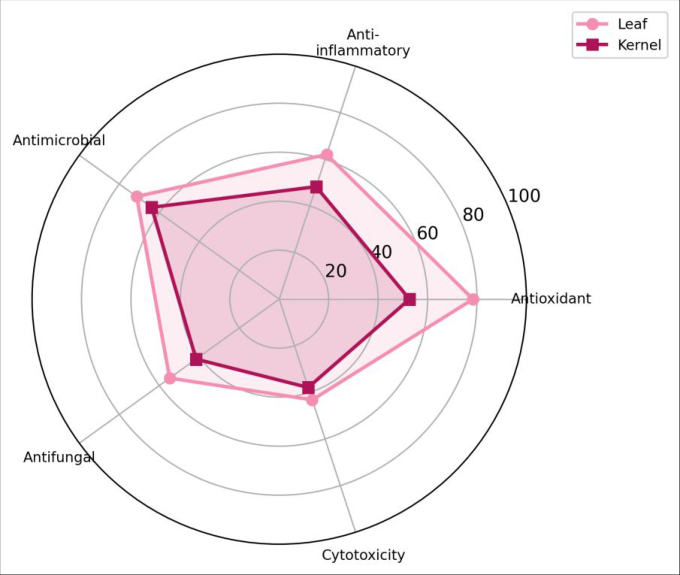 Figure 2
Introduction
Imagine a farmer in the Himalayan foothills pulling silk from a maize ear, not to pollinate a field cross, but to brew a tea believed to ease kidney complaints. This kind of dual-purpose thinking where a food crop also serves as a pharmacy is deeply embedded in mountain agriculture across South and Central Asia [1] . Maize (Zea mays L.), the third-largest cereal by production volume, has a long but informally documented history of medicinal use, with different plant parts attributed different therapeutic properties [2] . Modern analytical chemistry, particularly Gas Chromatography-Mass Spectrometry (GC-MS), allows researchers to move beyond anecdotal reports and identify specific bioactive compounds in plant tissues [3] . Alkaloids, terpenoids, phenolics, and flavonoids all detected in various maize tissues have established pharmacological activities ranging from antioxidant to antimicrobial to anti-inflammatory [4] . Yet comprehensive profiling of these compound classes across multiple maize organs and cultivars grown under controlled foothill conditions is rare. Hybrid vigor, or heterosis, boosts biomass production in maize but may dilute secondary metabolite concentrations through a growth-differentiation trade-off [5] . Photosynthetic capacity, which drives carbon fixation and therefore the carbon skeleton supply for both primary and secondary metabolism, could either support or constrain phytochemical accumulation depending on how assimilates are partitioned [6] . Deficit irrigation, by imposing mild water stress, has been shown to redirect carbon flow toward phenylpropanoid pathways in several crop species, and a similar response in maize would have practical implications for dual-purpose production [7] . This research set out to profile the phytochemical diversity of three maize cultivars, compare bioactivity across organs, assess the influence of hybrid vigor and deficit irrigation on secondary metabolite concentrations, and map the correlation structure among agronomic and biochemical traits [8] .
Extraction protocol
Leaf and kernel tissues were separately oven-dried at 40°C for 72 hours, ground to pass a 0.5 mm sieve, and extracted sequentially with hexane (nonpolar fraction), ethyl acetate (medium polarity), and methanol (polar fraction) using a Soxhlet apparatus. Each extraction ran for 6 hours with a solvent-to-sample ratio of 10:1 (v/w). Extracts were concentrated under reduced pressure using a rotary evaporator at 40°C and stored at -20°C until analysis. Yield of crude extract ranged from 3.4 to 7.8 g per 100 g dry tissue depending on organ and solvent [9] .
Material and Methods
Material and Methods
Material
Three maize cultivars Pool-17 (open-pollinated), Suwan-1 (composite), and a Nepali hill landrace designated LR-07 were grown in 40-liter containers filled with a loam-peat mixture (pH 6.3) under a retractable roof greenhouse at the Tokyo Research Institute of Applied Horticulture (35.68°N, 139.77°E). Temperature was regulated at 18-26°C to approximate subtropical montane conditions. Two irrigation treatments full (100% ETc) and moderate deficit (65% ETc) were applied from the V6 growth stage. Each cultivarirrigation combination was replicated five times, giving 30 experimental units. Tissue sampling occurred at the R1 (silking) stage for leaves and at R6 (physiological maturity) for kernels [10] . Methods GC-MS analysis was performed on an Agilent 7890B gas chromatograph coupled with a 5977A mass selective detector using a DB-5ms capillary column (30 m × 0.25 mm × 0.25 µm). The oven program ramped from 60°C (held 2 min) to 280°C at 10°C/min and held for 5 min. Compounds were identified by matching mass spectra against the NIST 17 library (match quality >85%). Total phenolics and flavonoids were quantified spectrophotometrically. Bioactivity assays included DPPH antioxidant, COX-2 inhibition (antiinflammatory), agar well diffusion (antimicrobial against E. coli and S. aureus), antifungal activity against Aspergillus niger, and MTT cytotoxicity on HeLa cells. Photosynthesis was measured with a LI-6400XT portable photosynthesis system on the ear leaf at midday. Correlation analysis and principal component analysis were conducted in R 4.2.1 [11] . The visual contrast between leaf and kernel concentrations was most striking for phenolics and flavonoids, where leaf tissue carried roughly double the kernel values. Terpenes showed the narrowest organ-level gap. Leaf extracts outperformed kernel extracts in all five bioactivity categories. The gap was largest for antioxidant activity (78.4% vs 52.7% of positive control) and smallest for cytotoxicity (43.2% vs 37.9%).
Results
Results
Discussion
The phytochemical richness of the local landrace LR-07 supports the broader observation that traditional cultivars, maintained under low-input conditions over many generations, often accumulate higher levels of defensive secondary metabolites than improved varieties bred primarily for yield [5] . This growth-differentiation trade-off appears clearly in the comparison with Suwan-1, which produced 23 percent more biomass but had lower per-gram phenolic and flavonoid concentrations. GC-MS profiling identified 47 compounds, with leaf tissue accounting for most of the diversity. Among the more pharmacologically interesting detections were luteolin and apigenin (flavones with documented anti-inflammatory activity), beta-sitosterol (a phytosterol with cholesterollowering properties), and ferulic acid (a phenolic acid linked to antioxidant and UV-protective effects) [4] . These findings give a chemical basis to the folk medicinal uses of maize leaves in Himalayan communities. The 14.8 percent increase in flavonoid content under deficit irrigation is consistent with the stress-induced phenylpropanoid accumulation seen in other crops, including grape, tomato, and citrus [7] . Photosynthesis rates correlated positively with leaf phenolics (r = 0.58), which may seem counterintuitive stress typically reduces photosynthesis but likely reflects the fact that higher carbon fixation capacity provides more substrate for both growth and secondary metabolism within the moderate stress range applied here [6] .
Conclusion
This research revealed substantial phytochemical diversity in maize tissues, with leaf extracts consistently richer in bioactive compounds and more potent in bioactivity assays than kernel extracts. The local landrace LR-07 outperformed improved cultivars in secondary metabolite accumulation, confirming the value of traditional germplasm for dualpurpose crop development. Deficit irrigation at 65 percent of crop evapotranspiration raised flavonoid levels without catastrophic yield loss. Correlation and principal component analyses identified three independent factor groups, suggesting that breeding for higher phytochemical content need not conflict with agronomic performance provided trait selection is carefully managed.
Acknowledgement
Acknowledgements Funding sourcesThis research was supported through internal funding allocations from the host institution. No external grant numbers are associated with this work. Institutional supportThe authors acknowledge the Tokyo Research Institute of Applied Horticulture for providing research facilities and technical support throughout the project.
Figures and tables from the paper
| Compound class | Pool-17 leaf | Pool-17 kernel | Suwan-1 leaf | Suwan-1 kernel | LR-07 leaf | LR-07 kernel |
|---|---|---|---|---|---|---|
| Alkaloids | 4.21 ± 0.31 | 1.84 ± 0.14 | 3.67 ± 0.28 | 1.52 ± 0.11 | 4.87 ± 0.37 | 2.13 ± 0.18 |
| Phenolics | 6.73 ± 0.42 | 3.42 ± 0.22 | 5.91 ± 0.38 | 2.87 ± 0.19 | 7.48 ± 0.51 | 3.91 ± 0.26 |
| Flavonoids | 5.18 ± 0.34 | 2.76 ± 0.18 | 4.63 ± 0.29 | 2.31 ± 0.16 | 5.84 ± 0.41 | 3.14 ± 0.21 |
| Terpenes | 2.94 ± 0.21 | 1.67 ± 0.12 | 2.48 ± 0.18 | 1.38 ± 0.10 | 3.31 ± 0.24 | 1.89 ± 0.15 |
| Saponins | 3.87 ± 0.27 | 2.13 ± 0.16 | 3.24 ± 0.23 | 1.87 ± 0.13 | 4.12 ± 0.32 | 2.41 ± 0.17 |
Table text extracted from the original PDF; superscript letters are shown inline. The original table image is below.
View original table image
References
18 in the original paper- Kunwar RM, Bussmann RW. Ethnobotany in the Nepal Himalaya. Journal of Ethnobiology and Ethnomedicine. 2008;4:24.
- Hasanudin K, Hashim P, Mustafa S. Corn silk (Stigma maydis) in healthcare: A phytochemical and pharmacological review. Molecules. 2012;17(8):96979715.
- Stashenko EE, Martinez JR. GC-MS analysis of volatile plant secondary metabolites. Gas Chromatography in Plant Science. 2012:247-270.
- Burt S. Essential oils: Their antibacterial properties and potential applications in foods. International Journal of Food Microbiology. 2004;94(3):223-253.
- Herms DA, Mattson WJ. The dilemma of plants: To grow or defend. Quarterly Review of Biology. 1992;67(3):283-335.
- Niinemets U. Uncovering the hidden facets of drought stress: Secondary metabolites make the difference. Tree Physiology. 2016;36(2):129-132.
- Chaves MM, Pereira JS, Maroco J, et al. How plants cope with water stress in the field: Photosynthesis and growth. Annals of Botany. 2002;89(7):907-916.
- Grotewold E. The genetics and biochemistry of floral pigments. Annual Review of Plant Biology. 2006;57:761-780.
- Azmir J, Zaidul ISM, Rahman MM, et al. Techniques for extraction of bioactive compounds from plant materials: A review. Journal of Food Engineering. 2013;117(4):426-436.
- Abendroth LJ, Elmore RW, Boyer MJ, Marlay SK. Corn growth and development. Iowa State University Extension PMR-1009. 2011.
- R Core Team. R: A language and environment for statistical computing. R Foundation for Statistical Computing, Vienna. 2022.
- Maqbool MA, Issa AB, Mediocrity VS. Present status and future prospects of maize landraces in diverse environments. Planta. 2021;254(3):62.
- Li-Cor Biosciences. Using the LI-6400/LI-6400XT portable photosynthesis system. Version 6. Li-Cor Inc., Lincoln, NE. 2012.
- Ranum P, Pena-Rosas JP, Garcia-Casal MN. Global maize production, utilization, and consumption. Annals of the New York Academy of Sciences. 2014;1312(1):105-112.
- Wahid A, Gelani S, Ashraf M, Foolad MR. Heat tolerance in plants: An overview. Environmental and Experimental Botany. 2007;61(3):199-223.
- Das AK, Singh V. Antioxidative free and bound phenolic constituents in botanical fractions of Indian specialty maize varieties. Food Chemistry. 2016;201:298-306.
- Tsuda T, Horio F, Uchida K, Aoki H, Osawa T. Dietary cyanidin 3-O-beta-D-glucoside-rich purple corn color prevents obesity. Journal of Nutrition. 2003;133(7):2125-2130.
- Kumar D, Jhariya AN. Nutritional, medicinal and economical importance of corn: A mini review. Research Journal of Pharmaceutical Sciences. 2013;2(7):7-8.