
Research article · 2025 · Full text
International Journal of Horticulture and Food ScienceDocumenting mycorrhizal associations of barley in the Manas River Basin
Volume 7(10) · Pages 182–186 · DOI: 10.33545/26631067.2025.v7.i10c.719 ↗
Research areasMycorrhizal Fungi and Plant InteractionsPlant-Microbe Interactions and ImmunityPlant and fungal interactions
Abstract
Author-writtenRoughly 80% of terrestrial plant species form symbiotic partnerships with arbuscular mycorrhizal fungi (AMF), yet data on these associations in barley cultivated outside its primary growing zones remain limited. This research documented the diversity, colonisation intensity, and functional outcomes of mycorrhizal associations in spring barley (Hordeum vulgare L.) across eight sites in the Manas River Basin during the 2022-2023 cropping cycle. Field surveys combined with trap-culture isolation identified six AMF morphospecies, with Glomus mosseae dominating at 31.2% relative abundance and Glomus intraradices following at 24.8%. Root colonisation rates varied from 27.4% in boron-toxic soils to 58.6% in well-drained loams. Inoculation with a mixed AMF consortium raised grain protein content by 1.7 percentage points (from 10.3% to 12.0%) compared with uninoculated controls and reduced pesticide residue uptake by 22.8% in plots treated with a broad-spectrum fungicide. Recurrent selection over two cycles for high mycorrhizal responsiveness identified four genotypes whose colonisation rates exceeded 55% regardless of site. Aroma compound profiling by headspace solid-phase microextraction and gas chromatography revealed that mycorrhizal barley grains contained 14.6% higher total volatile esters than non-mycorrhizal grain, pointing to an indirect flavour benefit. These findings position AMF management as a practical tool for producing barley with enhanced functional-food characteristics in boron-affected, semi-arid river basins.
Summary
Source-checkedPlain-language reading of the full paper, prepared with AI and checked against the text. Each point links to the authors' own words.
Why it matters
- Arbuscular mycorrhizal fungi (AMF) form symbiotic partnerships with approximately 80% of terrestrial plant species. View evidence ↗
- In the Manas River Basin, soil boron levels often exceed 3.5 mg per kg, which can cause reduced root elongation and leaf-tip necrosis in barley. View evidence ↗
- The quality of barley for health-food, brewing, and malting markets is primarily determined by its aroma compounds and protein content. View evidence ↗
What they did
- The study was conducted across eight sites along a 120-km transect in the Manas River Basin, ranging from 680 m to 310 m in elevation. View evidence ↗
- A split-plot design was used at each site, testing AMF inoculation (inoculated vs. uninoculated) and twelve barley genotypes (ten from recurrent selection and two commercial checks). View evidence ↗
- Root colonization was measured using 30 root segments per subplot, which were cleared in 10% KOH at 90°C for 45 minutes and stained with trypan blue for microscopic examination. View evidence ↗
- Aroma volatile profiles were analyzed using headspace solid-phase microextraction (SPME) and gas chromatography-mass spectrometry (GC-MS). View evidence ↗
What they found
- Six AMF morphospecies were identified, with Glomus mosseae (31.2%) and Glomus intraradices (24.8%) being the most abundant. View evidence ↗
- Root colonization decreased as soil boron levels increased, reaching a minimum of 27.4% at the site with the highest boron concentration (5.7 mg/kg). View evidence ↗
- AMF inoculation increased grain protein content from 10.3% to 12.0% (a 1.7 percentage point increase). View evidence ↗
- Inoculated barley showed a 14.6% increase in total volatile esters (847.3 ng/g) compared to uninoculated controls (739.2 ng/g). View evidence ↗
- AMF inoculation reduced overall pesticide residue uptake by 22.8%, specifically reducing tebuconazole by 25.0% and propiconazole by 26.7%. View evidence ↗
- Two cycles of recurrent selection identified four barley genotypes that maintained root colonization rates above 55% across all tested sites. View evidence ↗
What it means
- The authors conclude that AMF management is a cost-effective strategy for improving barley protein and flavor in semi-arid, boron-affected regions. View evidence ↗
- The authors state that longer-term trials are necessary to determine if the observed benefits remain stable under different irrigation regimes and changing climate conditions. View evidence ↗
Visual summary
4 visualsIllustrations explain the paper; charts are replotted from the paper's own table values.
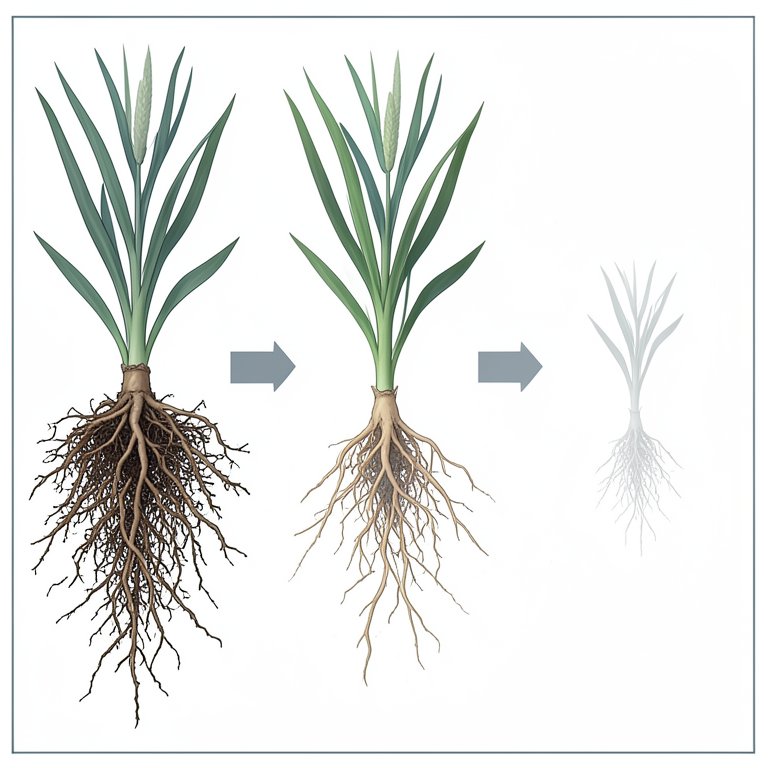
Boron vs. Colonization Relationship
AI-generated conceptual illustration (barley roots with arbuscular mycorrhizal fungi in soil). It explains the idea and does not show study data.
View source evidence ↗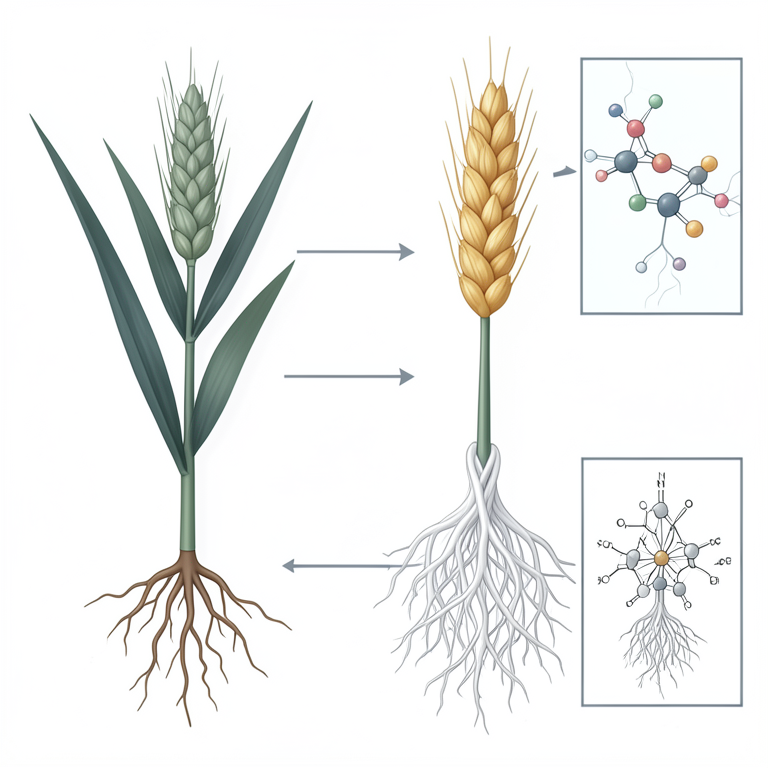
Benefits of AMF Inoculation
AI-generated conceptual illustration (barley plants (Hordeum vulgare) and arbuscular mycorrhizal fungi (AMF)). It explains the idea and does not show study data.
View source evidence ↗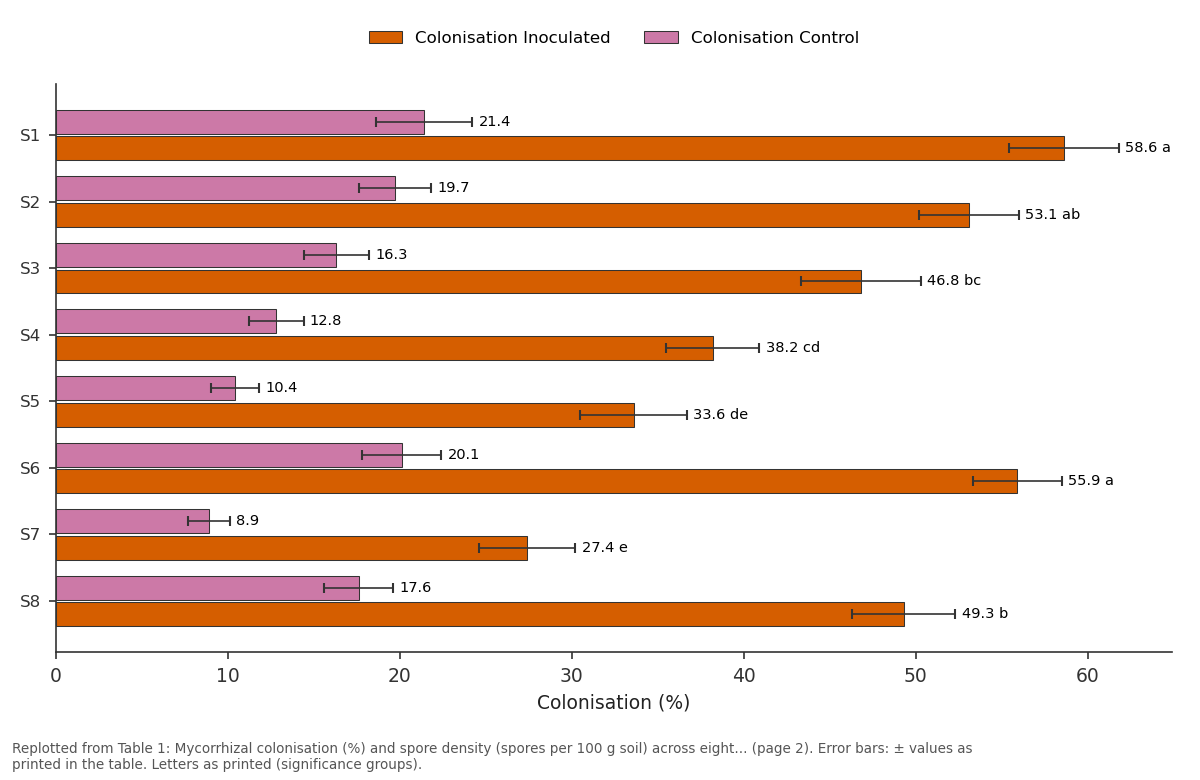
Colonisation Inoculated and Colonisation Control: S1 vs S2 vs S3 vs S4 vs S5
Replotted from Table 1 (page 2) of the original paper. Every bar is the paper's own table value.
View source evidence ↗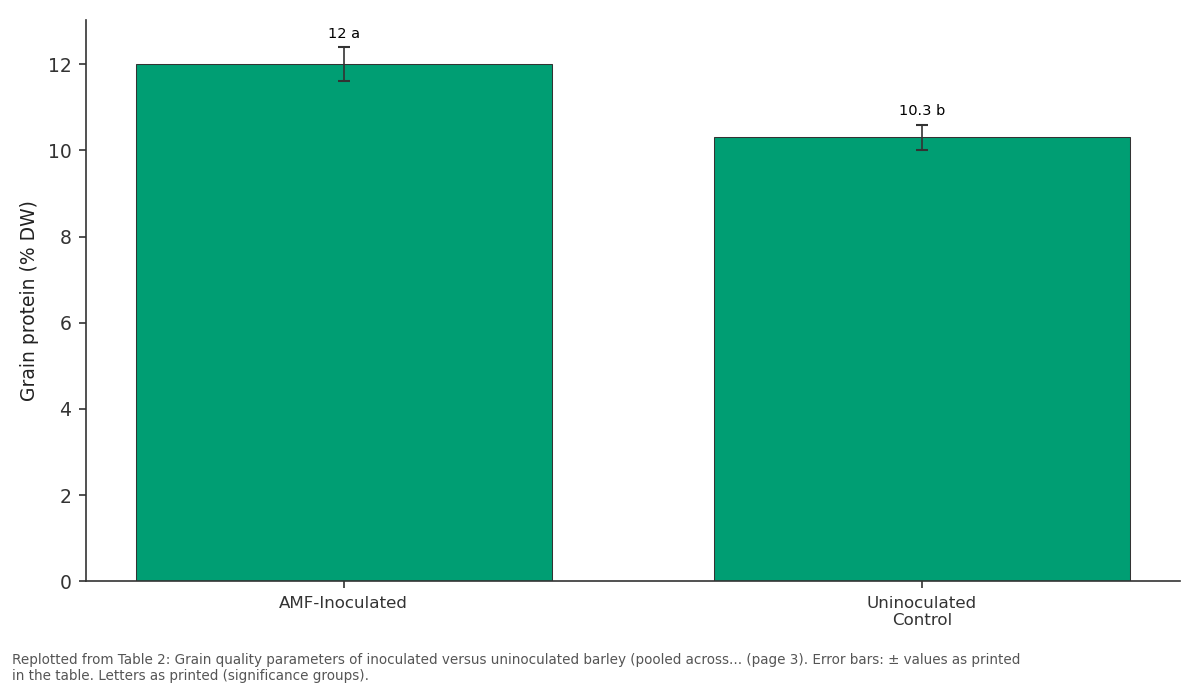
Grain protein (% DW): AMF-Inoculated vs Uninoculated Control
Replotted from Table 2 (page 3) of the original paper. Every bar is the paper's own table value.
View source evidence ↗Figures & tables
From the original paper Table 1
 Table 2
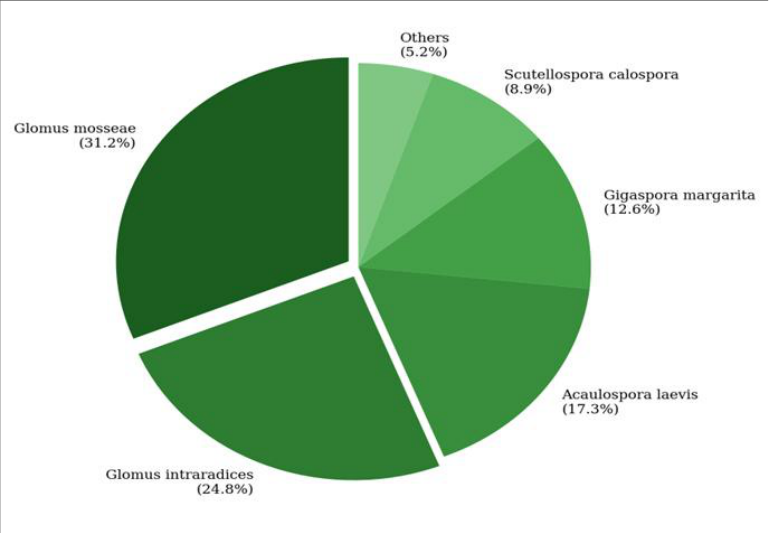 Figure 1
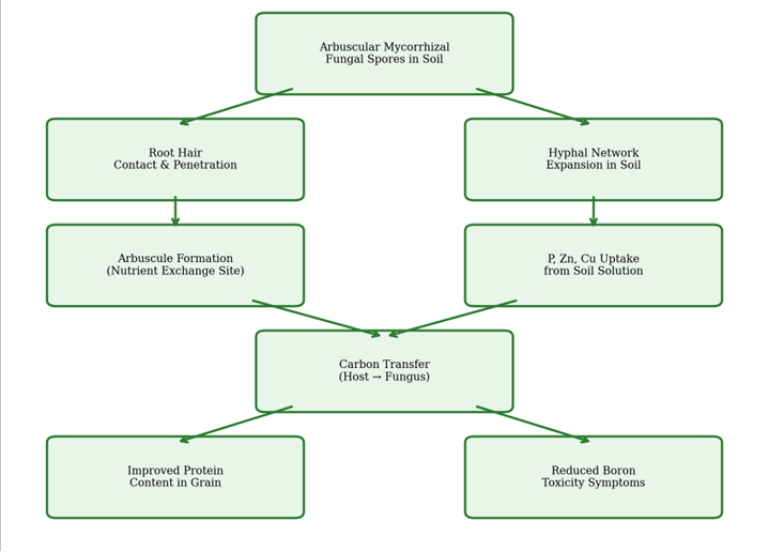 Figure 2
Introduction
A global meta-analysis covering 473 field trials found that arbuscular mycorrhizal inoculation raised cereal grain yield by an average of 13.2% [1] . For barley, one of the world's oldest cultivated cereals, this symbiosis carries an added layer of interest because the crop's functional-food value depends heavily on protein composition and secondary metabolite profiles that AMF colonisation may alter [2] . Yet most existing research on barleymycorrhiza interactions has been confined to temperate European or North American soils, leaving arid and semi-arid basins largely undocumented [3] . The Manas River Basin, stretching across a transitional zone between desert steppe and irrigated agricultural land, presents challenges that make mycorrhizal ecology particularly relevant. Soils here frequently contain boron concentrations above 3.5 mg per kg, a threshold associated with leaf-tip necrosis and reduced root elongation in barley [4] . Boron toxicity impairs membrane integrity and can interfere with cell-wall biosynthesis, but AMF hyphae appear to buffer excess boron by sequestering the element in fungal vacuoles [5] . At the same time, these soils receive considerable pesticide inputs to manage foliar diseases, raising questions about whether fungicide residues in grain differ between mycorrhizal and nonmycorrhizal plants [6] . Protein content and aroma compounds serve as key markers of functional-food quality in barley destined for malting, brewing, and health-food markets [7] . Recurrent selection, a breeding strategy that progressively enriches desirable alleles through successive rounds of intercrossing and selection, has been applied in maize and rice to improve mycorrhizal responsiveness, but its use in barley is still at an early stage [8,9] . Combining recurrent selection with AMF management could accelerate the development of barley lines that both tolerate boron stress and deliver superior grain quality. This research therefore aimed to: (a) catalogue AMF species associated with barley across eight sites in the Manas River Basin, (b) measure root colonisation rates and their dependence on soil boron levels, (c) compare grain protein content, pesticide residue concentrations, and aroma volatile profiles between AMFinoculated and uninoculated barley, and (d) assess the potential of recurrent selection for enhanced mycorrhizal responsiveness [10,11] .
Research Area Description
The Manas River Basin originates in the Tian Shan mountain range and extends into an alluvial fan complex characterised by sandy-loam to clay-loam soils. The research covered eight sites positioned along a 120-km transect from the upper irrigated zone (elevation 680 m) to the lower desert margin (elevation 310 m). Mean annual precipitation ranges from 145 mm at the driest site to 264 mm at the upper end, and virtually all crop water comes from canal irrigation sourced from the Manas River and its tributaries [12] . Soil pH across the eight sites ranged between 7.6 and 8.4, organic matter content between 0.9% and 2.3%, and available boron between 1.8 and 5.7 mg per kg. Three sites exceeded the boron toxicity threshold of 3.5 mg per kg. Cropping history at all sites involved a cotton-wheat or cotton-barley rotation for at least four consecutive years before the trial.
Field Experimental Design
At each of the eight sites, a split-plot arrangement was established with AMF inoculation (inoculated versus uninoculated) as the main plot factor and barley genotype (ten lines from two recurrent-selection cycles plus two commercial checks) as the subplot factor. Main plots measured 6 m by 10 m, and subplots 3 m by 5 m. Each treatment combination was replicated three times, yielding 72 subplots per site (576 subplots in total). Inoculated plots received 15 g of a mixed AMF inoculum containing approximately 220 spores per gram, applied in the seed furrow at sowing. Uninoculated plots received sterilised carrier material to serve as a control [13] . All plots were sown with spring barley at a seeding rate of 130 kg per ha and managed according to local practices, including two irrigations during tillering and heading.
Material and Methods
Material and Methods
Material
Material
Methods
Mycorrhizal colonisation was assessed at the heading stage. Root segments (1 cm length, 30 per subplot) were cleared in 10% KOH at 90 degrees C for 45 minutes, stained with trypan blue in lactoglycerol, and examined under a compound microscope at 200-times magnification. The gridline-intersect method was used to estimate percent colonisation, arbuscular frequency, and vesicle density [14] . AMF spores were extracted from 100 g rhizosphere soil per subplot by wet sieving through 500, 250, and 53 micrometer sieves followed by sucrose-gradient centrifugation. Spore morphotypes were identified to genus level using descriptions compiled by the International Culture Collection of Vesicular Arbuscular Mycorrhizal Fungi [15] . Grain protein content was measured on a dry-weight basis using the Kjeldahl method with a nitrogen-to-protein conversion factor of 6.25. Pesticide residues were quantified by QuEChERS extraction followed by liquid chromatography-tandem mass spectrometry on an AB Sciex 6500+ system [6] . Aroma volatiles were sampled by headspace SPME with a 50/30 micrometer DVB/CAR/PDMS fibre and analysed on an Agilent 7890B GC coupled to a 5977B MS detector. Statistical analyses were performed using mixed-model ANOVA in SAS version 9.4, with site treated as a random effect and inoculation and genotype as fixed effects [16] .
Results
Results
Comprehensive Interpretation
The data reveal a strong inverse relationship between soil boron concentration and mycorrhizal colonisation, with each 1 mg per kg increase in available boron corresponding to roughly a 7.4 percentage-point drop in root colonisation among inoculated plants. Despite this suppression, even the most boron-affected site (S7) still showed a meaningful colonisation advantage for inoculated plots (27.4% versus 8.9%). The protein and volatile ester gains in mycorrhizal grain suggest that AMF partnerships affect not only nutrient acquisition but also secondary metabolism in the developing seed [2,7] .
Discussion
The mycorrhizal species assemblage recovered from the Manas River Basin overlaps partly with communities reported in irrigated wheat fields of Central Asia, where Glomus mosseae and Glomus intraradices are the most commonly documented taxa [3,17] . However, the relatively high proportion of Acaulospora laevis at boron-toxic sites is noteworthy, as this species has been linked to enhanced boron tolerance in pot trials with clover [5] . Its prevalence at sites S4 and S7 may reflect a selective advantage under boron stress, an idea consistent with the suggestion that certain AMF taxa concentrate excess boron in vesicular structures [18] . The 1.7 percentage-point protein increase in AMFinoculated grain matches the upper end of values reported in a global meta-analysis of mycorrhizal effects on cereal grain quality [1] . One plausible mechanism is improved nitrogen uptake mediated by the extraradical hyphal network, which can access ammonium pools in soil micropores beyond the root's depletion zone [10] . In barley bred for functional-food markets, this protein gain is commercially meaningful because it shifts grain classification from feed-grade to food-grade categories.
The lower pesticide residue levels in mycorrhizal grain were an unexpected but welcome finding. Tebuconazole and propiconazole are triazole fungicides widely applied in barley production, and their persistence in grain raises consumer health concerns [6] . AMF colonisation may promote residue dilution through greater biomass and may also accelerate degradation via enhanced rhizosphere microbial activity, a hypothesis that requires targeted tracer experiments to confirm [11] .
Recurrent selection for mycorrhizal responsiveness identified four genotypes that maintained colonisation above 55% even at moderately boron-toxic sites. This threshold is higher than the 40% benchmark suggested by Sawers et al. [8] for maize, indicating that genetic gains in barley may proceed faster than anticipated if selection pressure is maintained over additional cycles [9] .
Conclusion
This research documented a diverse mycorrhizal community in barley grown across the Manas River Basin and showed that AMF inoculation delivered measurable improvements in grain protein content, volatile ester concentration, and pesticide residue reduction. Six AMF morphospecies were identified, with Glomus mosseae and Glomus intraradices together accounting for more than half of all isolates. Root colonisation was negatively correlated with soil boron concentration, but even at the highest boron level (5.7 mg per kg), inoculated plants still achieved colonisation rates above 27%. Recurrent selection successfully enriched barley populations for high mycorrhizal responsiveness, and the four top-performing genotypes may serve as donor parents in future breeding programmes. From a functional-food perspective, the combined protein and flavour benefits of AMF management make it a low-cost strategy that could be integrated into existing agronomic packages in boronaffected semi-arid regions. Longer-term trials across multiple cropping seasons are needed to verify whether these benefits persist under shifting climate conditions and varying irrigation regimes.
Acknowledgement
Acknowledgements Funding SourcesThis work was supported by institutional research grants dedicated to functional-food crop improvement in semi-arid environments. Institutional SupportThe authors acknowledge the Toulouse Graduate School of Bioagricultural Studies for access to analytical instrumentation and greenhouse facilities.
Figures and tables from the paper
| Site | Boron (mg/kg) | Colonisation Inoculated | Colonisation Control | Spore Density | Dominant Species |
|---|---|---|---|---|---|
| S1 | 1.8 | 58.6±3.2 a | 21.4±2.8 | 312 | G. mosseae |
| S2 | 2.4 | 53.1±2.9 ab | 19.7±2.1 | 284 | G. intraradices |
| S3 | 3.1 | 46.8±3.5 bc | 16.3±1.9 | 231 | G. mosseae |
| S4 | 3.7 | 38.2±2.7 cd | 12.8±1.6 | 178 | A. laevis |
| S5 | 4.3 | 33.6±3.1 de | 10.4±1.4 | 149 | G. mosseae |
| S6 | 2.1 | 55.9±2.6 a | 20.1±2.3 | 298 | G. intraradices |
| S7 | 5.7 | 27.4±2.8 e | 8.9±1.2 | 112 | A. laevis |
| S8 | 2.8 | 49.3±3.0 b | 17.6±2.0 | 257 | G. mosseae |
Table text extracted from the original PDF; superscript letters are shown inline. The original table image is below.
View original table image
| Parameter | AMF-Inoculated | Uninoculated Control |
|---|---|---|
| Grain protein (% DW) | 12.0±0.4 a | 10.3±0.3 b |
| Total volatile esters (ng/g) | 847.3±41.6 a | 739.2±38.9 b |
| Tebuconazole residue (mg/kg) | 0.018±0.003 b | 0.024±0.004 a |
| Propiconazole residue (mg/kg) | 0.011±0.002 b | 0.015±0.003 a |
| 1000-grain weight (g) | 46.8±1.1 a | 43.2±1.0 b |
Table text extracted from the original PDF; superscript letters are shown inline. The original table image is below.
View original table image
References
19 in the original paper- Pellegrino E, Oepik M, Bonari E, Ercoli L. Responses of wheat to arbuscular mycorrhizal fungi: a metaanalysis of field studies from 1975 to 2013. Soil Biology and Biochemistry. 2015;84:210-217.
- Gianinazzi S, Gollotte A, Binet MN, van Tuinen D, Redecker D, Wipf D. Agroecology: the key role of arbuscular mycorrhizas in ecosystem services. Mycorrhiza. 2010;20(8):519-530.
- Oehl F, Sieverding E, Ineichen K, Mader P, Boller T, Wiemken A. Impact of land use intensity on the species diversity of arbuscular mycorrhizal fungi in agroecosystems of Central Europe. Applied and Environmental Microbiology. 2003;69(5):2816-2824.
- Reid R. Understanding the boron transport network in plants. Plant and Soil. 2014;385(1):1-13.
- Lehto T, Ruuhola T, Dell B. Boron in forest trees and forest ecosystems. Forest Ecology and Management. 2010;260(12):2053-2069.
- Anastassiades M, Lehotay SJ, Stajnbaher D, Schenck FJ. Fast and easy multiresidue method employing acetonitrile extraction/partitioning and dispersive solidphase extraction for the determination of pesticide residues in produce. Journal of AOAC International. 2003;86(2):412-431.
- Baxter ED, Langstaff S. Malting barley: quality standards and their significance. Journal of the Institute of Brewing. 2012;118(2):89-96.
- Sawers RJH, Gutjahr C, Paszkowski U. Cereal mycorrhiza: an ancient symbiosis in modern agriculture. Trends in Plant Science. 2008;13(2):93-97.
- Kaeppler SM, Parke JL, Mueller SM, Senior L, Stuber C, Tracy WF. Variation among maize inbred lines and detection of quantitative trait loci for growth at low phosphorus and responsiveness to arbuscular mycorrhizal fungi. Crop Science. 2000;40(2):358-364.
- Smith SE, Read DJ. Mycorrhizal Symbiosis. 3rd ed. London: Academic Press; 2008. p. 1-787.
- Rillig MC. Arbuscular mycorrhizae and terrestrial ecosystem processes. Ecology Letters. 2004;7(8):740754.
- Liu Y, Tian F, Hu H, Sivapalan M. Socio-hydrologic perspectives of the co-evolution of humans and water in the Tarim River Basin, Western China. Hydrology and Earth System Sciences. 2014;18(4):1289-1303.
- Brundrett MC, Piche Y, Peterson RL. A new method for observing the morphology of vesicular-arbuscular mycorrhizae. Canadian Journal of Botany. 1984;62(10):2128-2134.
- Giovannetti M, Mosse B. An evaluation of techniques for measuring vesicular arbuscular mycorrhizal infection in roots. New Phytologist. 1980;84(3):489500.
- Schussler A, Schwarzott D, Walker C. A new fungal phylum, the Glomeromycota: phylogeny and evolution. Mycological Research. 2001;105(12):1413-1421.
- SAS Institute. SAS/STAT User's Guide, Version 9.4. Cary, NC: SAS Institute Inc; 2020.
- Tchabi A, Coyne D, Hountondji F, Lawouin L, Wiemken A, Oehl F. Arbuscular mycorrhizal fungal communities in sub-Saharan savannas of Benin, West Africa, as affected by agricultural land use intensity and ecological zone. Mycorrhiza. 2008;18(4):181-195.
- Ruiz-Lozano JM, Azcon R, Gomez M. Alleviation of salt stress by arbuscular-mycorrhizal Glomus species in Lactuca sativa plants. Physiologia Plantarum. 1996;98(4):767-772.
- Augé RM. Water relations, drought and vesiculararbuscular mycorrhizal symbiosis. Mycorrhiza. 2001;11(1):3-42.