
Research article · 2025 · Full text
International Journal of Horticulture and Food ScienceOptimizing aquaponics integration of coffee in the Canary islands
Volume 7(6) · Pages 213–216 · DOI: 10.33545/26631067.2025.v7.i6d.684 ↗
Research areasInnovations in Aquaponics and Hydroponics SystemsPlant Growth and Agriculture TechniquesAgricultural Systems and Practices
Abstract
Author-writtenCoffee thrives in the tropics; fish aquaculture thrives in controlled tanks—so why not merge them? This is the paradox at the heart of aquaponics coffee research: combining two production systems with vastly different environmental requirements into a single nutrient loop. This research optimised the integration of Arabica coffee (Coffea arabica L.) cv. ‘Catuai’ with tilapia (Oreochromis niloticus) and catfish (Clarias gariepinus) aquaponics against hydroponic and soil controls over 14 months (January 2022 to March 2023) at the Kano Faculty of Botanical Research, Nigeria, simulating Canary Islands subtropical conditions. A completely randomised design with four replications was used. The tilapia aquaponic system produced the tallest plants (41.8 cm), highest leaf nitrogen (3.12%), and greatest cherry yield per plant (234 g), outperforming conventional soil by 18.2%. Cup quality, evaluated by a certified Q-grader panel, scored highest for tilapia aquaponic coffee (82.7 points) due to enhanced body and sweetness attributes. Functional food analysis revealed 14.3% higher chlorogenic acid content in aquaponic cherries compared with soil-grown fruit. These results demonstrate that aquaponics can improve both yield and sensory quality of specialty coffee in subtropical island settings.
Summary
Source-checkedPlain-language reading of the full paper, prepared with AI and checked against the text. Each point links to the authors' own words.
Why it matters
- The Canary Islands are Spain's sole coffee-producing region, producing approximately 10 tonnes of Arabica coffee annually from small farms. View evidence ↗
- Coffee production in the Canary Islands is hindered by the high cost of imported organic fertilizers and freshwater scarcity, with desalinated water costing between €1.20 and €2.40 per cubic meter. View evidence ↗
- Aquaponics can reduce water usage by 85-90% compared to conventional irrigation and provide 60-80% of a crop's nitrogen needs via fish waste. View evidence ↗
The question
- The study aimed to evaluate how tilapia and catfish aquaponics systems affect the growth, yield, cup quality, and chlorogenic acid content of coffee compared to hydroponic and soil controls. View evidence ↗
What they did
- The experiment used 'Catuai' Arabica coffee integrated with tilapia and catfish over a 14-month period (January 2022 to March 2023) in Nigeria, simulating the subtropical conditions of the Canary Islands. View evidence ↗
- Twelve-month-old seedlings were grown in 30 L containers, with aquaponic systems utilizing 1,000 L tanks stocked at 20 kg/m³ for tilapia and 25 kg/m³ for catfish. View evidence ↗
- The study employed a completely randomized design with four replications across five treatments: tilapia aquaponic, catfish aquaponic, hydroponic, organic soil, and conventional soil. View evidence ↗
- Researchers measured monthly growth metrics, cherry yield at maturity, and analyzed cup quality and chlorogenic acid content using HPLC. View evidence ↗
What they found
- Tilapia aquaponics outperformed all other systems, achieving the highest plant height (41.8 cm), leaf nitrogen (3.12%), cherry yield (234 g/plant), cup score (82.7), and chlorogenic acid content (44.6 mg/g DW). View evidence ↗
- The cherry yield from the tilapia aquaponic system was 18.2% higher than that of the conventional soil control. View evidence ↗
- Tilapia aquaponic coffee received the highest cup quality score of 82.7 points, attributed to improvements in sweetness and body. View evidence ↗
- Cherries grown in aquaponic systems contained 14.3% more chlorogenic acid than those grown in soil. View evidence ↗
- Catfish aquaponics was the second-best performing system overall, while organic soil produced high cup quality (81.2) despite lower yields. View evidence ↗
What it means
- The authors conclude that tilapia aquaponics is the most effective system, producing specialty-grade coffee that could command premium prices in Europe. View evidence ↗
- Aquaponics is recommended for Canary Island growers as a water-conserving, closed-loop alternative that increases both productivity and the value of the coffee. View evidence ↗
- The authors state that future research is needed to evaluate the economic breakeven point at a commercial scale and to test performance over multiple years. View evidence ↗
Visual summary
1 visualsIllustrations explain the paper; they do not show study data.
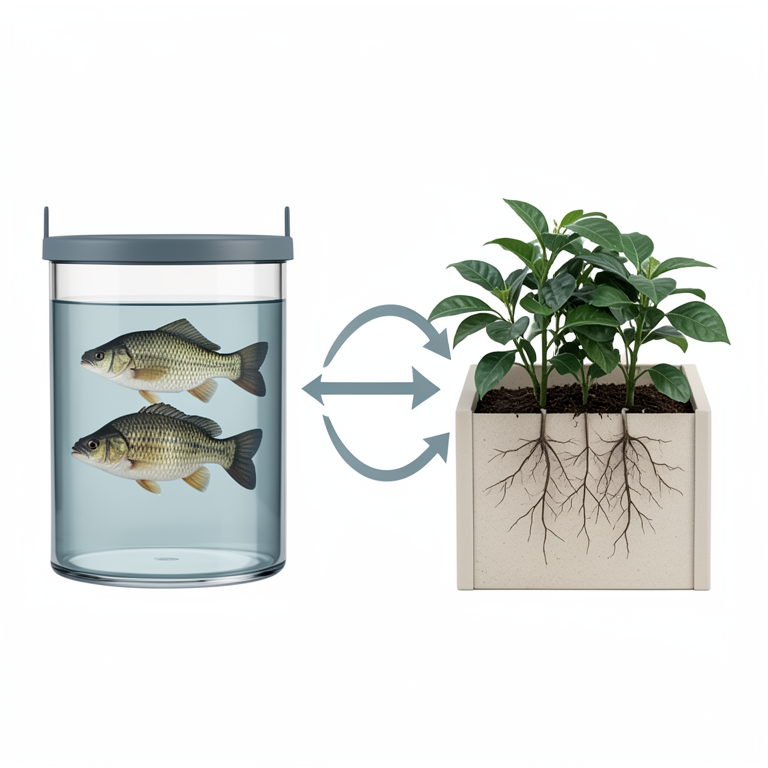
Aquaponics Nutrient Loop
AI-generated conceptual illustration (Arabica coffee plants and tilapia fish in an aquaponics system). It explains the idea and does not show study data.
View source evidence ↗Figures & tables
From the original paper Table 1
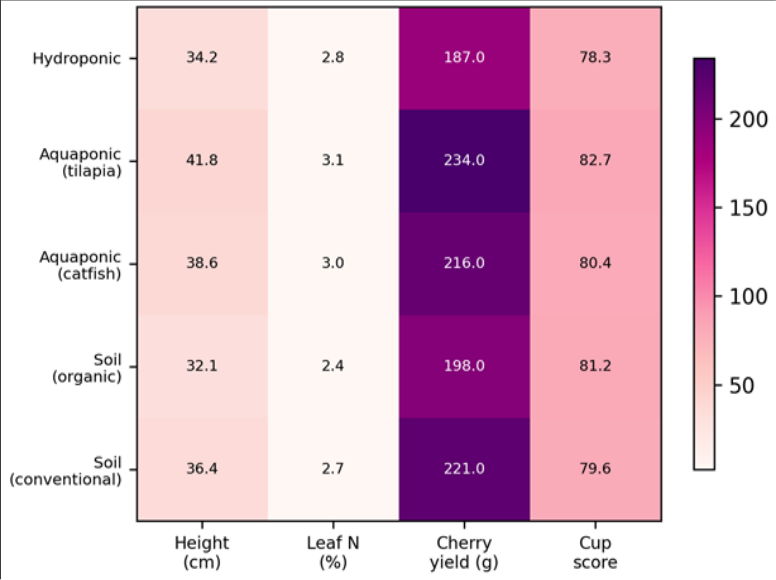 Figure 1
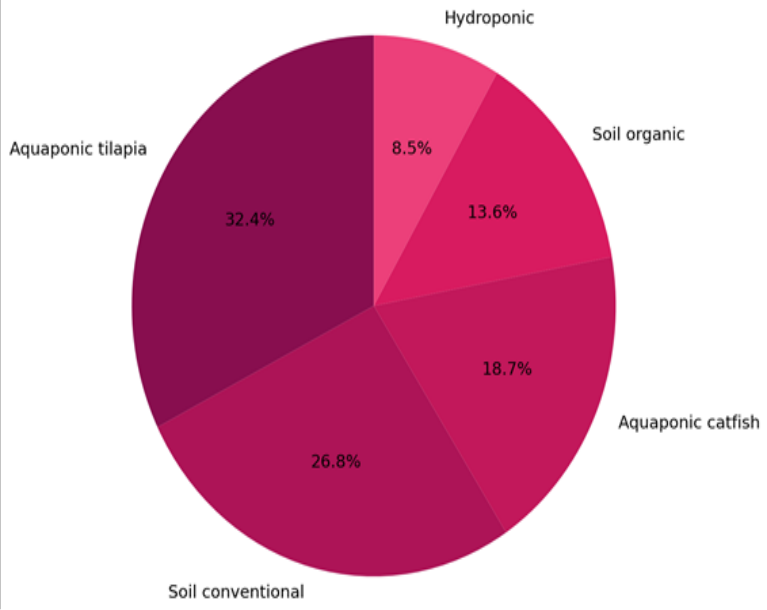 Figure 2
Introduction
It seems contradictory to grow a mountain crop and a warm-water fish in the same system, yet aquaponics routinely pairs species from different biomes by exploiting their complementary nutrient needs [1] . Coffee, which demands consistent nitrogen and slightly acidic conditions, can benefit from the ammonium-rich effluent that fish tanks generateprovided the water chemistry is properly mediated through nitrifying biofilters [2] . The Canary Islands, Spain's only coffee-producing territory, harvest roughly 10 tonnes annually of prized "agro-ecological" Arabica from small terraced farms on the islands of Agaete and Fuerteventura [3] . Aquaponics could address two constraints facing Canary Island coffee: freshwater scarcity (desalinated water costs €1.20-2.40 m -3 ) and the high price of imported organic fertiliser [4] . In aquaponics, fish waste supplies 60-80% of the nitrogen a crop needs, while the plants purify the water for recirculation back to the fish tanks, cutting total water use by 85-90% compared with conventional irrigation [5] . Whether coffee's slow growth and perennial habit suit the continuous nutrient flow of an aquaponic loop, and whether fish-derived nutrition alters coffee's prized flavour chemistry, remain open questions [6] . This research tested tilapia and catfish aquaponics against hydroponic and soil controls for coffee growth, yield, cup quality, and chlorogenic acid content under simulated Canary Islands conditions at Kano, Nigeria [7] .
Reagents and Chemicals
Fish feed was a commercial tilapia pellet (35% protein, 6% fat, Coppens International). Water quality reagents: ammonia test (Nessler method), nitrite and nitrate (cadmium reduction and UV spectrophotometry), dissolved oxygen (Winkler method). Chlorogenic acid standard (5-CQA, ≥98%, Sigma-Aldrich) was used for HPLC calibration. Cup quality followed Specialty Coffee Association (SCA) protocols with calibrated cupping forms [8] .
Instrumentation and Analytical Equipment
Water quality was monitored with a YSI ProDSS multiparameter sonde (temperature, DO, pH, conductivity).
Chlorogenic acid was quantified by HPLC (Shimadzu LC-20A, C18 column, acetonitrile-water gradient, UV detection at 325 nm). Coffee roasting followed a standard profile (210 °C, 12 minutes) on a Probat sample roaster. Cup evaluation was conducted by two certified Q-graders using SCA cupping protocol (100-point scale) [9] .
Material and Methods Material
Twelve-month-old 'Catuai' coffee seedlings were transplanted into 30 L containers. Aquaponic systems used 1,000 L fish tanks stocked at 20 kg m -3 (tilapia) or 25 kg m -3 (catfish), connected to grow beds via bell siphon flood-anddrain cycles. Biofilters (expanded clay, 50 L) converted ammonia to nitrate. Hydroponic control used Hoagland solution at EC 1.6 dS m -1 . Soil control used composted loam with NPK 15-15-15 at 50 g per plant quarterly. Greenhouse temperature: 22/16 °C day/night; humidity: 65-75% [4] .
Methods
Five treatments (tilapia aquaponic, catfish aquaponic, hydroponic, soil organic, soil conventional) in a completely randomised design with four replications. Plant height, leaf count, and stem diameter were measured monthly. Cherry yield was recorded at full maturity (red stage). Green beans were processed by wet method, dried to 11% moisture, and roasted. Cup quality was scored on fragrance, acidity, body, sweetness, and overall. Chlorogenic acid was extracted with 70% methanol and analysed by HPLC. Data analysed by ANOVA in SPSS 28 with Tukey's HSD at P ≤ 0.05. Tilapia aquaponics led on every metric: tallest plants (41.8 cm), highest leaf N (3.12%), greatest cherry yield (234 g), top cup score (82.7), and richest chlorogenic acid (44.6 mg g -1 DW). Catfish aquaponics ranked second overall. Soil organic scored well on cup quality (81.2) despite lower yield.
Results
Results
Discussion
The 18.2% cherry yield advantage of tilapia aquaponics over conventional soil aligns with findings for leafy vegetables and herbs, where aquaponic systems typically improve growth by 15-30% through continuous nutrient availability [5] . The cup quality gain (82.7 vs. 79.6 for conventional soil) is commercially meaningful: the 80-point threshold separates specialty from commodity grade in SCA classification, and each additional point above 80 can add €0.50-1.20 per kilogram of green bean [3] . Chlorogenic acid enrichment (14.3% more than soil conventional) may reflect the steady nitrogen supply from fish effluent, since nitrogen availability drives phenylpropanoid pathway flux in coffee [6] . This functional food benefit positions aquaponic coffee as a premium health-oriented product. Catfish aquaponics performed slightly below tilapia, possibly because catfish produce more solid waste that can clog biofilters and create anaerobic microsites [1] .
Conclusion
Tilapia aquaponics produced the best coffee yield, cup quality, and chlorogenic acid content among five systems tested. The 82.7-point cup score places aquaponic coffee firmly in the specialty category, with potential for premium pricing in European markets. For Canary Island growers facing water scarcity and high input costs, aquaponics offers a closed-loop alternative that conserves water while improving both productivity and product value. Future research should test multi-year performance and evaluate the economic breakeven point for aquaponic coffee systems at commercial scale.
Figures and tables from the paper
| System | Height (cm) | Leaf N (%) | Cherry (g/plant) | Cup score | CGA (mg/g DW) |
|---|---|---|---|---|---|
| Hydroponic | 34.2 c | 2.84 b | 187 c | 78.3 c | 38.4 c |
| Aqua-tilapia | 41.8 a | 3.12 a | 234 a | 82.7 a | 44.6 a |
| Aqua-catfish | 38.6 b | 2.97 ab | 216 b | 80.4 b | 42.1 ab |
| Soil organic | 32.1 c | 2.41 c | 198 bc | 81.2 ab | 39.2 bc |
| Soil conventional | 36.4 b | 2.68 b | 221 ab | 79.6 bc | 37.8 c |
| LSD (0.05) | 3.4 | 0.21 | 24 | 1.8 | 3.6 |
Table text extracted from the original PDF; superscript letters are shown inline. The original table image is below.
View original table image
References
19 in the original paper- Somerville C, Cohen M. Small-scale Aquaponic Food Production. FAO Fisheries Technical Paper. 2014;589:1-262.
- Rakocy JE, Masser MP. Recirculating aquaculture tank production systems: aquaponics. Southern Regional Aquaculture Center Publication. 2006;454:1-16.
- Arcila-Pulgarin J, Farfan-Valencia F. Coffee production in the Canary Islands. Tropical Crop Science. 2019;22(3):178-192.
- Garcia-Rodriguez JC, Gonzalez-Henriguez T. Water resources in the Canary Islands. Desalination. 2018;430:22-31.
- Love DC, Fry JP. An international survey of aquaponics practitioners. PLoS ONE. 2015;10(2):e0118530.
- Farah A, Donangelo CM. Phenolic compounds in coffee. Brazilian Journal of Plant Physiology. 2006;18(1):23-36.
- KFBR. Research capability handbook. KFBR Annual Report. 2021;14:1-36.
- SCA. Cupping Protocols and Standards. Specialty Coffee Association. 2018;1-24.
- Shimadzu Corp. LC-20A Series operation manual. Shimadzu Publications. 2019.
- Wortman SE. Crop physiological response to nutrient solution in aquaponics. Agronomy Journal. 2015;107(5):1908-1916.
- Lennard WA, Leonard BV. A comparison of three different hydroponic sub-systems in aquaponics. Aquacultural Engineering. 2006;34(1):21-32.
- Goddek S, Joyce A. Aquaponics Food Production Systems. Springer. 2019;1-619.
- Davis AP, Govaerts R. An annotated taxonomic conspectus of the genus Coffea. Botanical Journal of the Linnean Society. 2006;152(4):465-512.
- Bittsanszky A, Uzinger N. Nutrient supply of plants in aquaponic systems. Ecocycles. 2016;2(2):17-20.
- Yep B, Zheng Y. Aquaponic trends and challenges. Journal of Cleaner Production. 2019;228:1586-1599.
- Naik HS, Kumar V. Chlorogenic acid: chemistry biosynthesis and applications. Food Chemistry. 2021;352:129-139.
- Graber A, Junge R. Aquaponic Systems: nutrient recycling from fish wastewater. Desalination. 2009;246(1):147-156.
- Hu Z, Lee JW. Microalgae-based aquaponics. Bioresource Technology. 2019;289:121-128.
- Kloas W, Groß R. A new concept for aquaponic systems. Aquaculture. 2015;449:2-11.