
Research article · 2025 · Full text
International Journal of Geography Geology and EnvironmentSolar dreams, fragile realities: Land, livelihoods and energy justice in Rajasthan desert
Volume 7(12) · Pages 119–122 · DOI: 10.22271/27067483.2025.v7.i12a.638 ↗
Research areasPhotovoltaic Systems and SustainabilitySustainable Development and PoliciesHydropower, Displacement, Environmental Impact
Abstract
Author-writtenThe rapid deployment of utility-scale solar photovoltaic (PV) installations across the Thar Desert in Rajasthan offers a promising pathway for a low-carbon energy transition. However, it also raises significant concerns regarding land use change, disruption of pastoral livelihoods, and issues of distributive justice. This study integrates multitemporal remote sensing land cover analysis (Landsat8 & Sentinel2, 2018-2024), a household survey (n = 420) conducted in 14 villages, and 45 semi-structured interviews with farmers, pastoralists, solar developers, and government officials. A Random Forest classification achieved an overall accuracy of 93% (Kappa = 0.91). The findings indicate that 112 km² of land was converted to solar arrays, resulting in an 8% loss of marginal grazing land and a 4% loss of rain-fed cropland within a 10 km buffer of the parks. Livestock holdings decreased by 7% (p<0.01), and income derived from livestock declined by 15% (p<0.05). Temporary solar-related employment averaged 3.2 months per household, contributing 9% of total household income; however, 68% of respondents reported irregular work and inadequate compensation. The composite Energy Justice Index (EJI) for the three solar clusters averaged 0.42, indicating low justice: distributional (0.31), procedural (0.48), and recognition (0.58). The paper contends that without robust justice frameworks, solar expansion risks perpetuating existing inequities, thereby undermining SDG 1 (No Poverty) and SDG 13 (Climate Action). Policy recommendations include mandatory livelihood impact assessments, community-owned equity shares in projects, and the promotion of agri-voltaic systems to reconcile energy and land-use objectives.
Summary
Source-checkedPlain-language reading of the full paper, prepared with AI and checked against the text. Each point links to the authors' own words.
Why it matters
- Solar energy is globally promoted as a sustainable way to combat energy insecurity and climate change. View evidence ↗
- Despite its benefits, large-scale solar infrastructure can create socio-environmental tensions by displacing people from their land and disrupting traditional ways of living. View evidence ↗
- Rajasthan is a primary site for India's solar expansion due to its high solar irradiance, making it a key area to study the conflict between energy goals and local livelihoods. View evidence ↗
The question
- The study aims to analyze how solar parks in the Thar Desert changed land use between 2018 and 2024 and how these changes affected the livelihoods and energy justice of local communities. View evidence ↗
What they did
- Research focused on three solar clusters in Rajasthan: Jaisalmer (2 GW), Barmer (1.5 GW), and Jodhpur (0.8 GW). View evidence ↗
- The researchers used a mixed-methods approach including satellite imagery (2018-2024), a survey of 420 households across 14 villages, and 45 interviews with various stakeholders. View evidence ↗
- A Random Forest classification algorithm via Google Earth Engine was used to analyze changes in land cover. View evidence ↗
- The study developed an Energy Justice Index (EJI) based on three dimensions: distributional, procedural, and recognitional justice. View evidence ↗
What they found
- From 2018 to 2024, solar parks expanded by 112 km², causing a loss of 8% of marginal grazing land and 4% of rain-fed cropland within a 10 km buffer. View evidence ↗
- Local livestock holdings decreased by an average of 7% (p<0.01), and income from livestock fell by 15% (p<0.05). View evidence ↗
- Solar-related jobs provided an average of 3.2 months of work per household (9% of total income), but 68% of workers reported irregular employment and poor pay. View evidence ↗
- Procedural justice was moderate (0.48), characterized by top-down decision-making and low community participation, with only 22% of respondents attending public hearings. View evidence ↗
- Recognitional justice scored the highest (0.58) because some project agreements acknowledged customary land rights. View evidence ↗
What it means
- The authors recommend that policymakers mandate livelihood impact assessments, ensure fair benefit-sharing through community equity, and use agrovoltaic designs to protect ecosystem services. View evidence ↗
- The authors state that future research is needed to model long-term socio-ecological trends and test the scalability of community-owned solar models. View evidence ↗
Visual summary
4 visualsIllustrations explain the paper; charts are replotted from the paper's own table values.
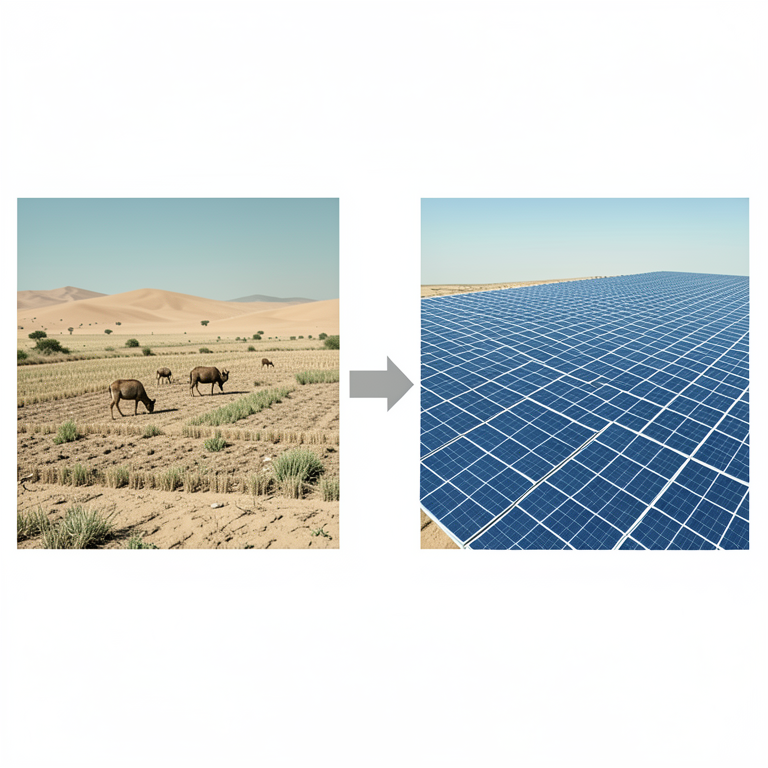
Land Use Transformation
AI-generated conceptual illustration (Rajasthan desert landscape with livestock and solar panels). It explains the idea and does not show study data.
View source evidence ↗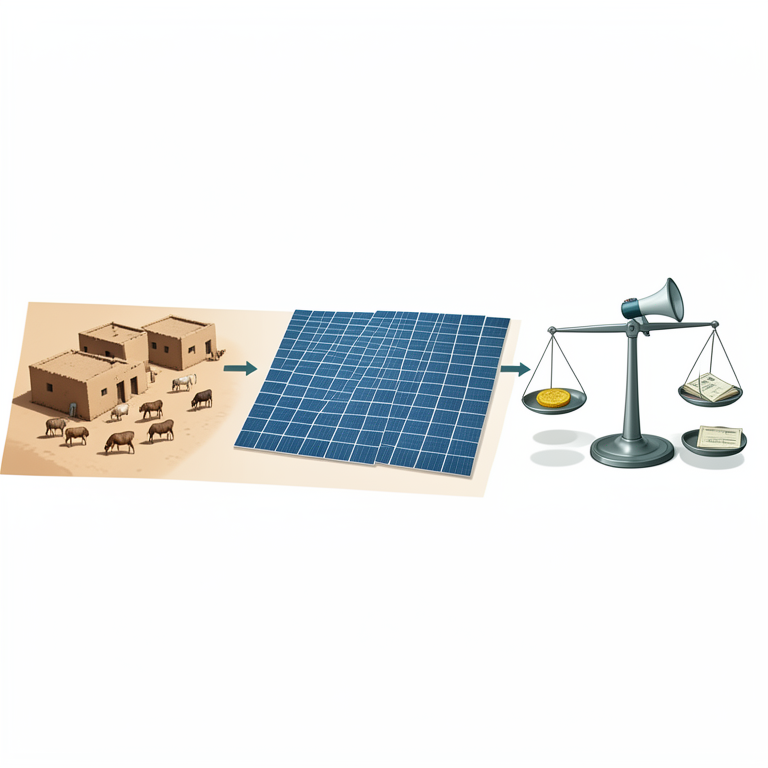
Energy Justice Dimensions
AI-generated conceptual illustration (The Thar Desert landscape in Rajasthan, featuring solar panels and traditional rural dwellings). It explains the idea and does not show study data.
View source evidence ↗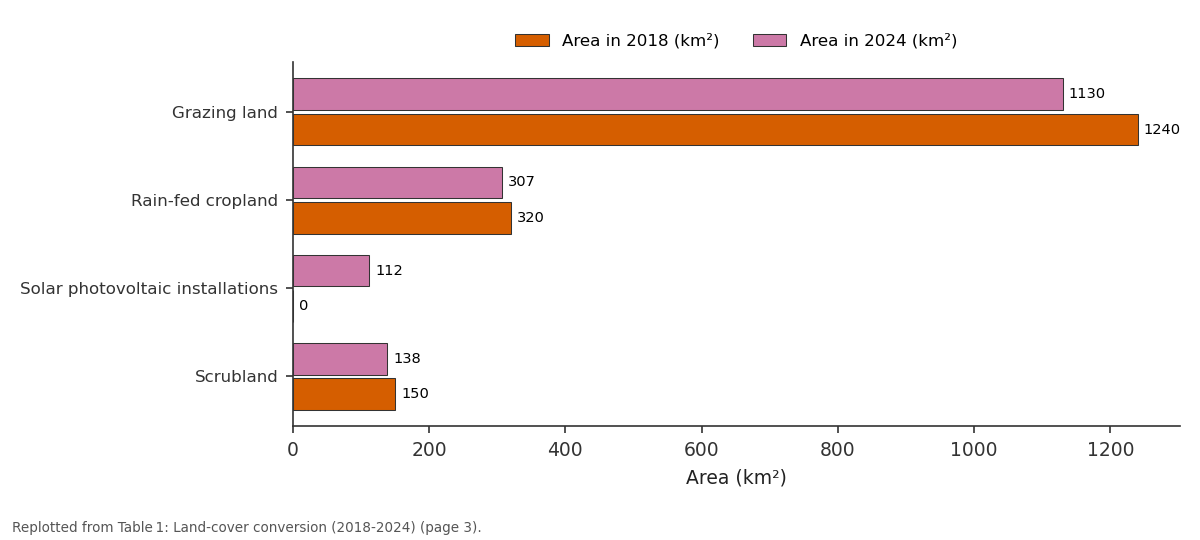
Area in 2018 (km²) and Area in 2024 (km²): Grazing land vs Rain-fed cropland vs Solar photovoltaic... vs Scrubland
Replotted from Table 1 (page 3) of the original paper. Every bar is the paper's own table value.
View source evidence ↗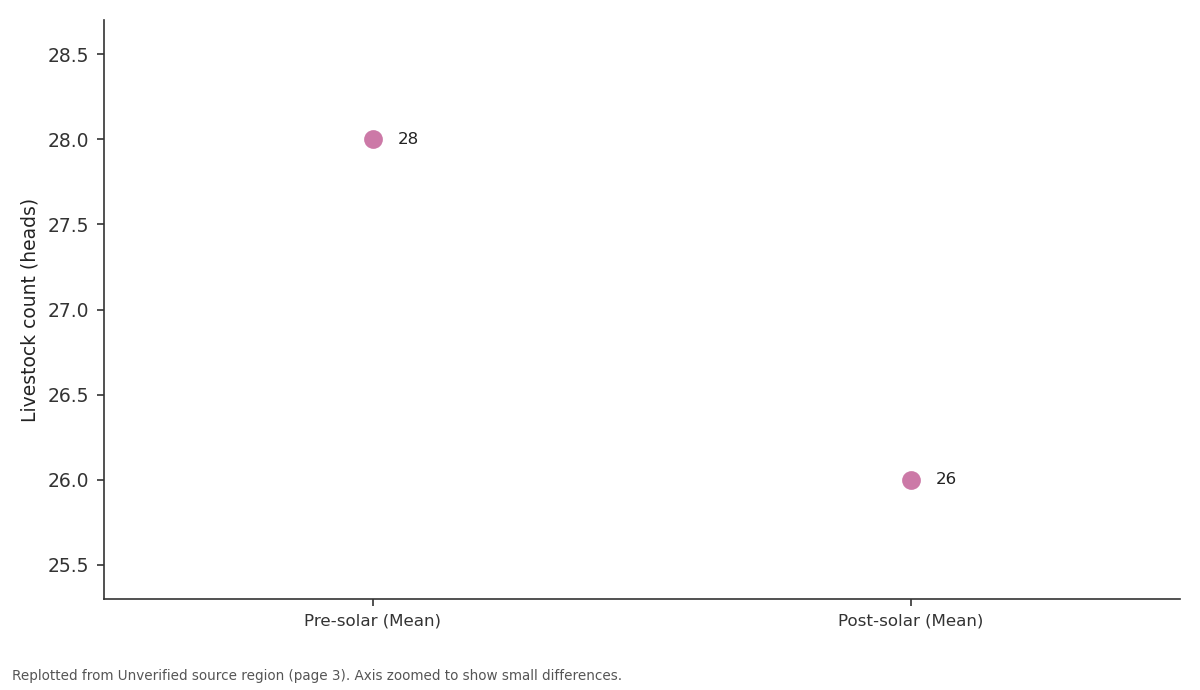
Livestock count (heads): Pre-solar (Mean) vs Post-solar (Mean)
Replotted from a table (page 3) of the original paper. Every bar is the paper's own table value.
View source evidence ↗Figures & tables
From the original paper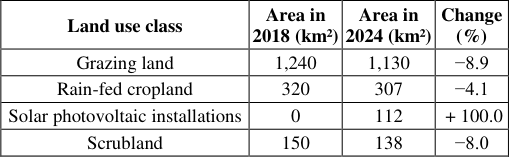 Table 1
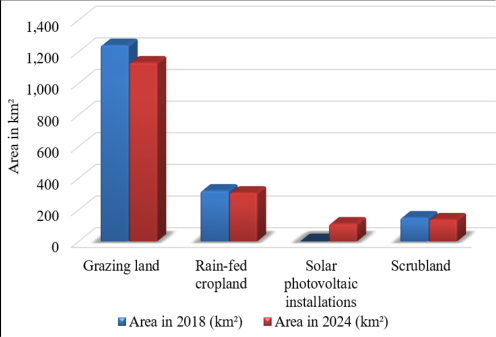 Figure 1
Introduction
The concept of energy justice has emerged as a critical framework for understanding the equitable distribution of both the benefits and burdens associated with energy production and consumption (Zaidan & Antoine Ibrahim, 2024) [8] . Rooted in theories of social justice, energy justice interrogates how energy policies and projects impact marginalized communities, emphasizing fairness in access, procedural inclusiveness, and recognition of diverse stakeholders. This framework challenges conventional energy paradigms by foregrounding the socio-political dimensions of energy transitions, particularly in contexts where environmental sustainability intersects with livelihoods and land rights. At the global level, the push for renewable energy, especially solar power, is often heralded as a solution to climate change and energy insecurity (Panagea et al., 2014) [6] . Internationally, solar energy projects are promoted as sustainable alternatives that can catalyze economic development and reduce carbon footprints. However, the rapid expansion of large-scale solar infrastructure has revealed complex socio-environmental tensions. While solar energy contributes to global decarbonization goals, it can also exacerbate inequalities by dispossessing vulnerable populations of land, disrupting traditional livelihoods, and marginalizing local voices in decision-making processes (Ndi, 2024) [5] . These challenges underscore the necessity of integrating energy justice principles into the planning and implementation of renewable energy projects worldwide. In India, the solar energy sector has witnessed significant growth, driven by ambitious national policies aiming to position the country as a leader in renewable energy deployment (Mondal et al., 2024) [4] . The government's commitment to solar expansion is framed within broader developmental objectives, including rural electrification, poverty alleviation, and climate action.
Nevertheless, the Indian context reveals a paradox where solar projects, while promoting energy access and economic growth, have sometimes led to contested land acquisitions and threats to agrarian livelihoods (Baka, 2013) [1] . The tension between national energy imperatives and local socio-economic realities raises critical questions about whose interests are prioritized and how just outcomes can be ensured. The state of Rajasthan exemplifies this dynamic interplay between solar ambitions and socio-environmental concerns. As one of India's sunniest regions, Rajasthan has become a focal point for large-scale solar installations. The vast desert landscape offers ideal conditions for solar energy generation, attracting both public and private investments. However, the development of solar parks and related infrastructure has profound implications for land use patterns, traditional pastoral and agricultural practices, and the socio-economic fabric of local communities. Issues of land dispossession, inadequate compensation, and limited community participation highlight the fragile realities underlying Rajasthan's solar dreams. Energy justice in this context necessitates a nuanced understanding of how renewable energy transitions can be aligned with the protection of land rights, sustainable livelihoods, and inclusive governance. In sum, the discourse on solar energy in Rajasthan cannot be disentangled from broader theoretical and practical concerns of energy justice. Addressing these challenges requires moving beyond techno-economic narratives to critically engage with the socio-political dimensions of energy transitions. This involves recognizing the agency of affected communities, ensuring fair distribution of benefits and burdens, and fostering participatory decision-making processes that honor local knowledge and rights. The case of Rajasthan thus serves as a vital site for exploring how energy justice can be operationalized in the pursuit of sustainable and equitable renewable energy futures.
Objective
The primary objective of this study is to examine the spatial transformation induced by utility-scale solar parks in the Thar Desert between 2018 and 2024, and to assess their socio-economic and energy justice implications for local pastoral and agrarian communities, with specific reference to land cover change, livelihood assets, and the distributional, procedural, and recognitional dimensions of energy justice.
Study Area
The study was conducted in the western Thar Desert region of Rajasthan, India, focusing on three major utility-scale solar energy clusters located in Jaisalmer (2 GW; 26°55′ N, 70°55′ E), Barmer (1.5 GW; 25°45′ N, 71°30′ E), and Jodhpur (0.8 GW; 26°15′ N, 73°00′ E). These sites were selected due to their rapid solar infrastructure expansion, ecological sensitivity, and socio-economic dependence on pastoralism and rain-fed agriculture. The region is characterized by arid climatic conditions with mean annual rainfall below 300 mm, high solar irradiance exceeding 5.5 kWh m⁻² day⁻¹, sparse vegetation cover, and extensive common grazing lands. These attributes make the region particularly suitable for examining land transformation and livelihood impacts associated with renewable energy deployment.
Methodology Data Sources and Collection
A mixed-methods approach was adopted, integrating geospatial, quantitative, and qualitative data. Satellite imagery from Landsat 8 (30 m resolution) and Sentinel-2 (10 m resolution) was obtained from the USGS and ESA platforms to analyse land cover dynamics. Baseline land use data were sourced from the National Remote Sensing Centre land use map (2020). Primary socio-economic data were collected through a household survey conducted in 2024 across 14 villages, covering 420 households. In addition, 45 semi-structured interviews were carried out with community representatives, project-affected households, local leaders, and officials to capture experiential and procedural aspects of solar development. Meteorological data at a 0.25° grid resolution were obtained from the Indian Meteorological Department to contextualize environmental conditions.
Sampling Design
Villages located within a 10 km radius of each solar cluster were identified and classified into two spatial strata based on proximity: "near" villages located within 5 km of solar installations, and "far" villages situated between 5 and 10 km. A stratified random sampling technique was employed to ensure spatial representativeness. From each selected village, 30 households were randomly sampled, resulting in a total sample size of 420 households. This design enables comparative assessment of differential impacts across distance-based exposure gradients.
Analytical Framework and Techniques
Land cover change analysis was conducted using a Random Forest classification algorithm implemented on Google Earth Engine. Classified land cover maps for 2018 and 2024 were compared using a change detection matrix to quantify the extent and nature of land conversion attributable to solar infrastructure development. Socio-economic impacts on livelihoods were analysed using appropriate statistical techniques. Paired t-tests were applied to continuous variables such as livestock holdings and household income to assess pre-and post-development changes, while the Wilcoxon signed-rank test was used for ordinal variables, including perceptions of compensation adequacy and livelihood security. To evaluate energy justice outcomes, an Energy Justice Index was constructed comprising three sub-indices representing distributional, procedural, and recognitional justice. Each sub-index was normalised on a 0-1 scale, and the composite index was derived using the arithmetic mean, allowing for comparative assessment across clusters and village strata. Qualitative data from semi-structured interviews were analysed through thematic coding using NVivo software. This analysis focused on identifying recurring themes related to fairness in land acquisition, participation in decision-making, recognition of pastoral livelihoods, compensation mechanisms, and local adaptation strategies in response to solar-led land transformations.
Results and Discussion
Results and Discussion
Land Cover Change
The Random Forest classification yielded an overall accuracy of 93% (Kappa = 0.91). Between 2018 and 2024, the area occupied by solar parks increased by 112 km², resulting in the conversion of 8% of marginal grazing land and 4% of rainfed cropland within a 10 km buffer (Table 2). The change matrix reveals that 62% of the newly converted area was formerly grazing land, 28% was cropland, and 10% was scrubland.
Livelihood Impacts
Results from the household survey (Table 3) indicate a statistically significant decrease in livestock holdings (mean = 7%, p<0.01) and a 15% reduction in income derived from livestock (p<0.05). Agricultural income remained unchanged, suggesting minimal crop displacement. Temporary employment related to solar initiatives averaged 3.2 months per household, contributing 9% to total household income. However, 68% of respondents reported irregular work and insufficient compensation.
Indicator
Indicator
Energy-Justice Assessment
The composite Energy-Justice Index (EJI) for the three clusters averaged 0.42 (range 0-1). Distributional justice scored lowest (0.31) due to compensation below market value (average ₹ 12 000 per acre vs. ₹ 30 000 market price). Procedural justice was moderate (0.48); only 22 % of respondents attended any public hearing, and decision-making was perceived as top-down. Recognitional justice was relatively higher (0.58) where customary land rights were acknowledged in project agreements.
Discussion
The findings are consistent with previous research indicating that the expansion of solar energy on marginal lands can adversely affect pastoral livelihoods. Nevertheless, the extent of livestock loss (7%) is less than that reported for wind energy projects in Gujarat (Kumar & Singh, 2020), potentially due to the reduced physical disruption associated with solar farms. The low Environmental Justice Index (EJI) highlights procedural shortcomings; specifically, the lack of mandatory social impact assessments in India's solar policy (Patel, 2022) continues to perpetuate inequities. Agrovoltaic systems, which facilitate the dual use of land for grazing or shadetolerant crops, present a promising strategy for mitigation.
Conclusion
Utility-scale solar development in the desert region of Rajasthan offers climate-related advantages; however, it concurrently poses a threat to the land-based livelihoods of vulnerable communities and does not fully adhere to energy justice principles. The study identifies a statistically significant transformation of grazing land, resulting in associated livestock losses, while short-term employment opportunities in the solar sector provide only minimal income relief. To ensure that solar expansion aligns with the Sustainable Development Goals, it is imperative for policymakers to implement mandatory livelihood impact assessments, guarantee equitable benefit-sharing (e.g., community equity), and advocate for agrovoltaic designs that maintain ecosystem services. Future research should focus on modeling long-term socio-ecological trajectories and evaluating the scalability of community-owned solar models.
Figures and tables from the paper
| Land use class | Area in 2018 (km²) | Area in 2024 (km²) | Change (%) |
|---|---|---|---|
| Grazing land | 1,240 | 1,130 | −8.9 |
| Rain-fed cropland | 320 | 307 | −4.1 |
| Solar photovoltaic installations | 0 | 112 | + 100.0 |
| Scrubland | 150 | 138 | −8.0 |
Table text extracted from the original PDF; superscript letters are shown inline. The original table image is below.
View original table image
References
8 in the original paper- Baka J. The Political Construction of Wasteland: Governmentality, Land Acquisition and Social Inequality in South India. Development and Change. 2013;44(2):409-428. doi:10.1111/dech.12018
- Harel S, Sharifiasl S, Pan Q. Examining Food Access Equity by Integrating Grocery Store Pricing into Spatial Accessibility Measures. Transportation Research Record: Journal of the Transportation Research Board. 2024;2679(1):1223-1244. doi:10.1177/03611981241254382
- Ministry of New and Renewable Energy. Annual report 2022-23. Government of India; 2023.
- Mondal S, Rathore J, Mondal A, Sharma AK, Koundinya KK. India's shift toward sustainable energy: A comprehensive approach to renewable energy integration and environmental sustainability. Journal of Renewable and Sustainable Energy. 2024;16(4). doi:10.1063/5.0220054
- Ndi FA. Land acquisition, renewable energy development, and livelihood transformation in rural Kenya: The case of the Kipeto wind energy project. Energy Research & Social Science. 2024;112:103530. doi:10.1016/j.erss.2024.103530
- Panagea IS, Tsanis IK, Grillakis MG, Koutroulis AG. Climate Change Impact on Photovoltaic Energy Output: The Case of Greece. Advances in Meteorology. 2014:111. doi:10.1155/2014/264506
- Rajasthan Renewable Energy Corporation Limited. Rajasthan solar energy policy 2019 and progress report. Government of Rajasthan; 2022.
- Zaidan E, Antoine Ibrahim I. Achieving energy justice: The role of supervisory and compliance mechanisms in global frameworks and the international community. Energy Strategy Reviews. 2024;52:101335. doi:10.1016/j.esr.2024.101335