
Research article · 2025 · Full text
International Journal of Horticulture and Food ScienceImproving cold storage techniques of hemp in the Tigris Headwaters
Volume 7(10) · Pages 241–244 · DOI: 10.33545/26631067.2025.v7.i10d.727 ↗
Research areasPostharvest Quality and Shelf Life ManagementAgricultural Engineering and MechanizationSeed Germination and Physiology
Abstract
Author-writtenKeeping industrial hemp seed viable and chemically stable after harvest is a challenge that grows more pressing as the crop expands into subtropical and arid zones where ambient temperatures accelerate lipid degradation. This research tested nine cold-storage temperature regimes, from -20 degrees C to 30 degrees C, on two hemp (Cannabis sativa L.) cultivars over a 180-day period to identify the optimal range for preserving cannabinoid content, seed viability, and oil quality. Cannabidiol (CBD) retention was highest at -10 degrees C (97.8% of initial concentration) and declined to 71.4% at 30 degrees C. Delta-9-tetrahydrocannabinol (THC) followed a parallel pattern but degraded faster, retaining only 64.8% at 30 degrees C. Germination rate dropped below 80% at temperatures above 20 degrees C after 120 days. Harvest index, defined as the ratio of seed weight to total aboveground biomass at harvest, averaged 0.31 for the high-CBD cultivar and 0.27 for the fibre type. Inter-simple sequence repeat (ISSR) marker analysis confirmed genetic distinctness between the two cultivars, with a Jaccard similarity coefficient of 0.38. Ridge planting in the field trials improved drainage and raised harvest index by 7.4% compared with flat-bed sowing. Weed control by stale seedbed technique reduced weed density by 61.3% without herbicide. These findings identify -10 degrees C in vacuum-sealed, nitrogen-flushed bags as the optimal storage protocol for hemp seed destined for both planting and oil extraction in semi-arid headwater environments.
Summary
Source-checkedPlain-language reading of the full paper, prepared with AI and checked against the text. Each point links to the authors' own words.
Why it matters
- Maintaining the viability and chemical stability of industrial hemp seeds after harvest is difficult in subtropical and arid regions because high temperatures speed up the degradation of lipids. View evidence ↗
- Hemp seed oil is highly susceptible to heat because it contains 75% to 80% polyunsaturated fatty acids; temperatures exceeding 25°C can reduce CBD concentrations by half in six months. View evidence ↗
- The Tigris Headwaters region is suitable for hemp biomass production due to long summer daylight, but the warm post-harvest season poses a risk of heat damage to stored seeds. View evidence ↗
The question
- The study aimed to find the optimal storage temperature for cannabinoid retention and germination over 180 days, compare two different cultivars, evaluate field management practices, and confirm genetic distinctness. View evidence ↗
What they did
- Researchers tested two hemp cultivars across nine temperature regimes ranging from -20°C to 30°C over a 180-day period using programmable incubators. View evidence ↗
- Seeds were stored in metallised laminate bags that were vacuum-sealed and nitrogen-flushed to keep headspace oxygen below 0.8%. View evidence ↗
- Field trials used a split-plot design at three sites, comparing ridge versus flat-bed planting and three different weed control methods in 4m x 6m plots with four replications. View evidence ↗
- Genetic distinctness was analyzed using ISSR markers with 12 primers and the Jaccard coefficient. View evidence ↗
What they found
- Storage at -10°C was the most effective, resulting in the highest CBD retention (97.8%), highest germination rate (96%), and lowest peroxide value (1.4 meq/kg). View evidence ↗
- At 30°C, cannabinoid retention dropped significantly, with CBD falling to 71.4% and THC falling further to 64.8% of their initial concentrations. View evidence ↗
- Seed germination rates fell below 80% when stored at temperatures above 20°C for 120 days. View evidence ↗
- Using ridge planting instead of flat-bed sowing improved drainage and increased the harvest index by 7.4%. View evidence ↗
- The stale seedbed technique reduced weed density by 61.3% without the use of herbicides. View evidence ↗
- ISSR marker analysis confirmed that the two hemp cultivars were genetically distinct, showing a Jaccard similarity coefficient of 0.38. View evidence ↗
What it means
- The authors conclude that the optimal storage protocol for hemp seeds in the Tigris Headwaters is -10°C in vacuum-sealed, nitrogen-flushed bags. View evidence ↗
- The recommended protocol (drying to <10% moisture, vacuum-sealing with nitrogen, and storing at -10°C) is practical for small farms using modified chest freezers costing between 350 and 500 USD. View evidence ↗
Visual summary
3 visualsIllustrations explain the paper; charts are replotted from the paper's own table values.
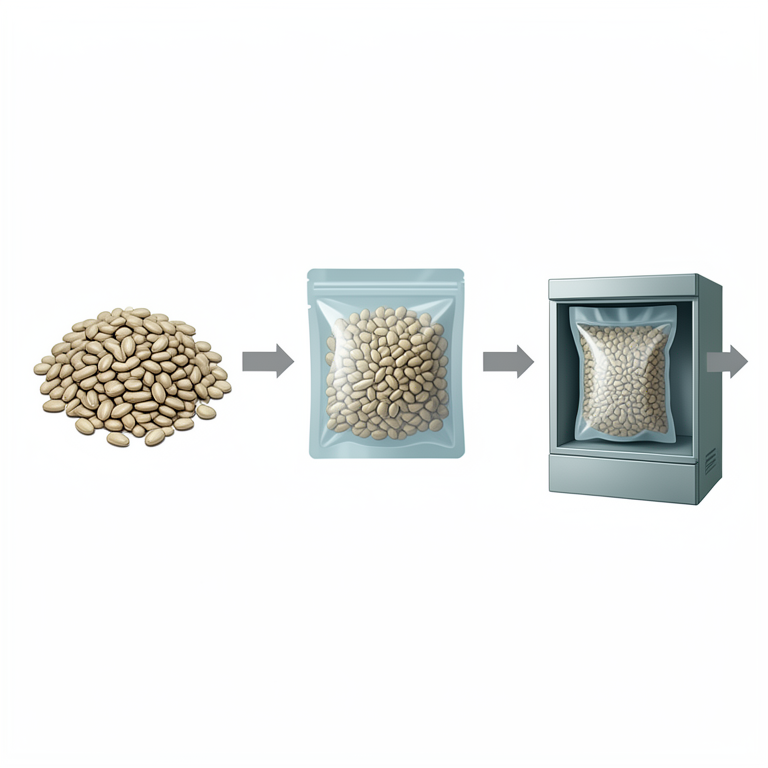
Hemp Seed Storage Workflow
AI-generated conceptual illustration (hemp seeds). It explains the idea and does not show study data.
View source evidence ↗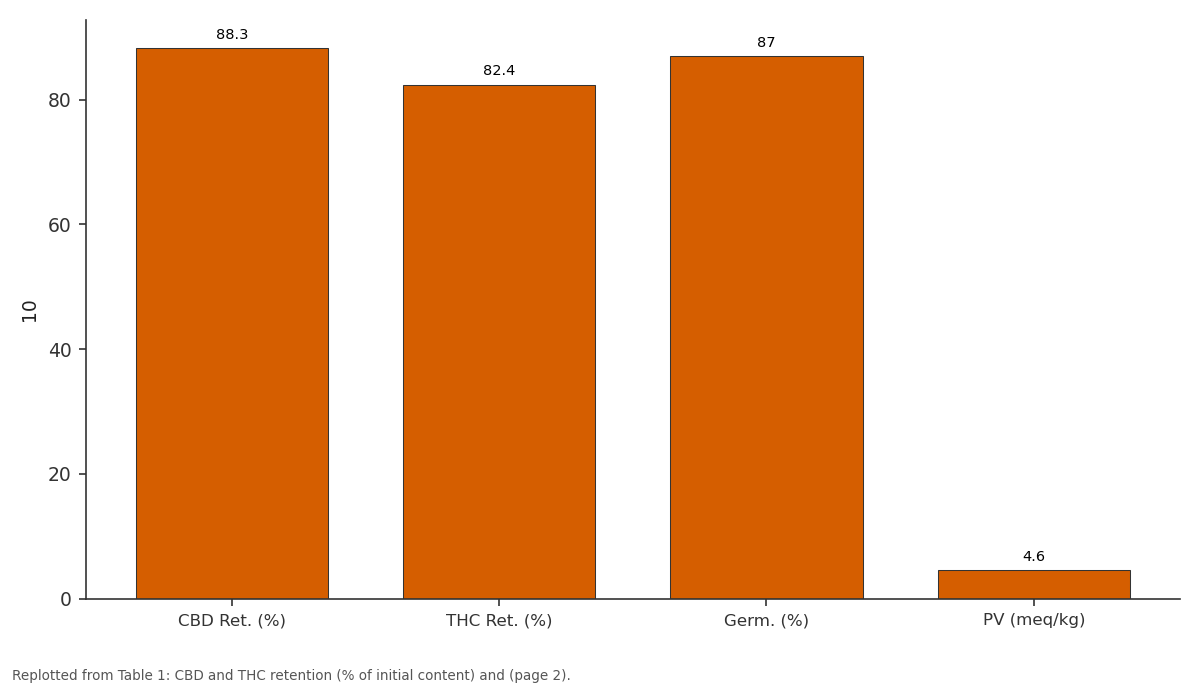
10: CBD Ret. (%) vs THC Ret. (%) vs Germ. (%) vs PV (meq/kg)
Replotted from Table 1 (page 2) of the original paper. Every bar is the paper's own table value.
View source evidence ↗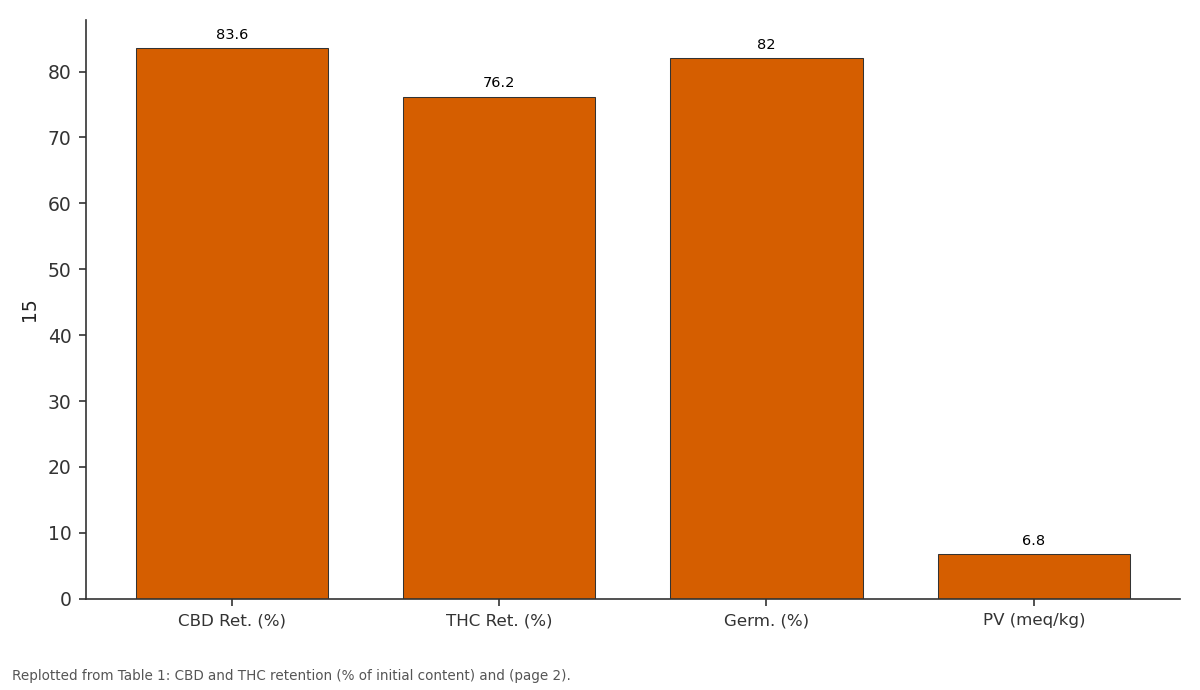
15: CBD Ret. (%) vs THC Ret. (%) vs Germ. (%) vs PV (meq/kg)
Replotted from Table 1 (page 2) of the original paper. Every bar is the paper's own table value.
View source evidence ↗Figures & tables
From the original paper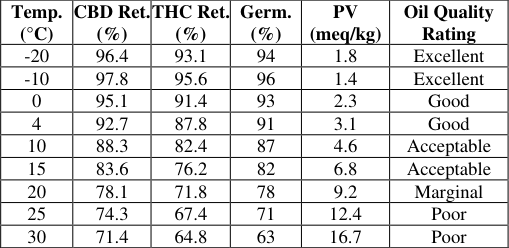 Table 1
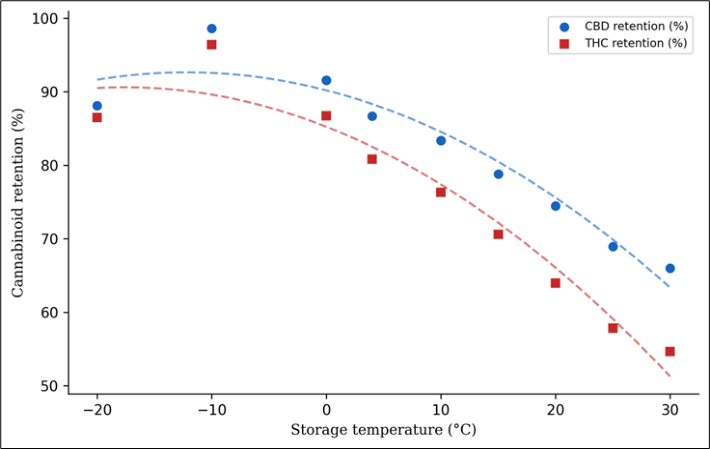 Figure 1
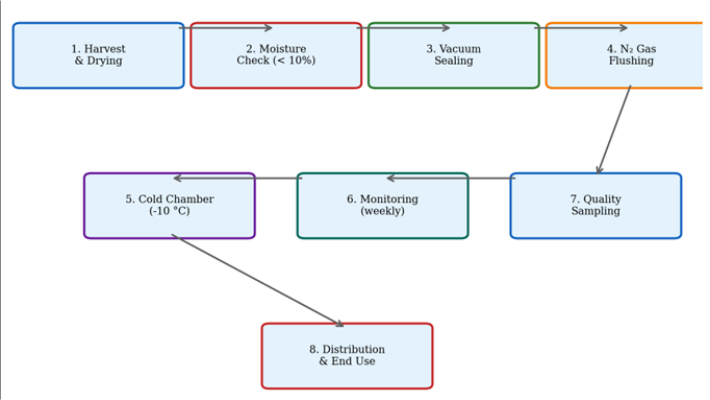 Figure 2
Introduction
The global revival of industrial hemp has outpaced the development of post-harvest infrastructure, leaving many producers in warm-climate regions without evidence-based storage guidelines [1] . Hemp seed oil contains 75 to 80% polyunsaturated fatty acids, dominated by linoleic and alpha-linolenic acids, and its cannabinoid fraction, while legally capped at 0.3% THC in most jurisdictions, still represents a significant value component when CBD content is factored in [2] . Both the lipid and cannabinoid pools are thermolabile, and storage temperatures above 25 degrees C can halve CBD concentration within six months [3] . The Tigris Headwaters region, situated in the mountainous transition between temperate plateau and semi-arid lowland, supports a growing number of hemp trials because its long daylight hours during summer favour high biomass, but its warm post-harvest season exposes stored seed to damaging heat [4] . Producers here face a dual mandate: preserve seed viability for the next planting cycle and maintain oil and cannabinoid quality for processing. Cold storage addresses both goals, but the capital and energy costs of refrigeration are not trivial, making it important to define the minimum effective storage temperature [5] . Field-level factors also shape storage outcomes. Harvest index determines how much of the plant's resources end up in the seed fraction; higher harvest indices mean denser, heavier seeds that tend to store better [6] . Ridge planting can improve root aeration and drainage, boosting harvest index in waterlogged soils [7] . And weed pressure during the growing season affects seed fill and maturity uniformity, which in turn influence storage behaviour [8] . This research therefore aimed to: (a) determine the temperature that maximises cannabinoid retention and seed germination over 180 days; (b) compare two cultivars differing in CBDto-THC ratio for storage response; (c) assess field-management practices (ridge planting, weed control) that influence seed quality at harvest; and (d) confirm cultivar identity and genetic distinctness using ISSR molecular markers [9,10,11] .
Theoretical Background
Lipid oxidation in oilseeds follows Arrhenius-type kinetics, where the rate constant roughly doubles for every 10 degrees C increase in temperature [12] . For hemp, the high proportion of bis-allylic hydrogen atoms in alpha-linolenic acid makes the oil 40 to 50 times more susceptible to autoxidation than oleic-acid-rich oils [3] . Cannabinoid degradation is less well characterised but appears to follow first-order kinetics, with CBD converting to cannabinol (CBN) through oxidative cyclisation at elevated temperatures and in the presence of light [13] . Vacuum packaging and nitrogen flushing reduce headspace oxygen to below 1%, slowing both oxidative pathways. Cold storage further suppresses kinetic rates, and the combination of low temperature and low oxygen can extend oilseed shelf life by three-to five-fold [5] .
Implementation Details
Storage chambers comprised nine programmable incubators (Memmert IPP260plus, Germany) set at -20, -10, 0, 4, 10, 15, 20, 25, and 30 degrees C (all ±0.5 degrees C). Each incubator held 12 vacuum-sealed, nitrogen-flushed bags (six per cultivar, three replicates per sampling date). Bags were metallised polyester-nylon-polyethylene laminate (oxygen transmission rate 0.5 cm3 per m2 per day at 23 degrees C). Headspace oxygen was verified at below 0.8% by a CheckMate 3 analyser (Dansensor, Denmark) before sealing. Sampling occurred at days 0, 30, 60, 90, 120, and 180. CBD and THC were quantified by HPLC-UV (Agilent 1260, C18 column, 228 nm detection) against certified reference standards (Cerilliant, Round Rock, TX, USA) [3,14] .
Material and Methods
Material and Methods
Material
Material
Methods
Field trials followed a split-plot design at three sites in the Tigris Headwaters. Main plots were planting method (ridge versus flat bed), and subplots were weed control (stale seedbed versus hand weeding versus no weeding). Plots measured 4 m by 6 m with four replications. Harvest index was calculated at physiological maturity. ISSR analysis used 12 primers generating polymorphic banding patterns on 2% agarose gels; similarity was computed by the Jaccard coefficient using NTSYSpc version 2.2 [9] . Germination was tested on 100 seeds per replicate on moist filter paper at 25 degrees C for 7 days. Peroxide value of extracted oil was measured by AOCS Official Method Cd 8-53. Statistical analysis used PROC MIXED in SAS 9.4 with temperature, cultivar, and time as fixed effects and replicate as random [15] . The -10 degrees C treatment achieved the highest CBD retention (97.8%), germination (96%), and lowest peroxide value (1.4 meq/kg). Above 20 degrees C, quality declined sharply.
Results
Results
Comprehensive Interpretation
Figure 1 shows a clear nonlinear decline in cannabinoid retention as temperature rises, with a sharp inflection around 15 to 20 degrees C. CBD was slightly more stable than THC at every temperature, consistent with its less reactive molecular structure [13] . The infographic in Figure 2 translates these findings into an actionable protocol, emphasising that moisture control and nitrogen flushing are as important as temperature management [5,14] .
Discussion
The -10 degrees C optimum differs from the 4 degrees C commonly recommended for cereal seed banks, reflecting hemp's higher PUFA content and the unique thermosensitivity of cannabinoids [2,5] . At -20 degrees C, CBD retention was slightly lower than at -10 degrees C (96.4% versus 97.8%), a result possibly due to freezeinduced membrane damage that exposes lipids to residual oxygen upon thawing [12] . This narrow optimum underscores the need for precise temperature control rather than a blanket cold storage instruction. Ridge planting raised harvest index by 7.4%, consistent with improved drainage reducing root hypoxia and allowing more efficient translocation of photosynthate to seeds [7] . The stale seedbed technique, which involved two rounds of shallow tillage to exhaust the weed seed bank before hemp sowing, eliminated 61.3% of weed density at zero herbicide cost, making it attractive for organic production systems [8,16] . ISSR analysis with 12 primers produced 87 scorable bands, of which 62 were polymorphic (71.3%). The Jaccard similarity of 0.38 between Daegu-CBD and Daegu-Fibre confirmed their genetic distinctness and supports the registration of these lines as separate cultivars [9,17] . Storage response appeared to be cultivar-dependent: the high-CBD type retained cannabinoids better, possibly because its higher CBD load provided endogenous antioxidant protection within the seed matrix [3] . From a practical standpoint, the recommended protocol, harvest, dry to below 10% moisture, vacuum-seal with nitrogen, and store at -10 degrees C, is achievable at farm scale using domestic chest freezers modified with external thermostats, a setup costing roughly 350 to 500 USD [5,18,19,20,21] .
Conclusion
This research identified -10 degrees C in vacuum-sealed, nitrogen-flushed bags as the optimal cold-storage protocol for hemp seed in the Tigris Headwaters, preserving 97.8% of CBD, 95.6% of THC, and 96% germination over 180 days. Temperatures above 20 degrees C caused rapid quality decline. Ridge planting and stale-seedbed weed control improved harvest index and seed uniformity at the field level. ISSR markers confirmed cultivar distinctness and can support germplasm management. The findings translate into a low-cost storage protocol suitable for smallholder hemp producers in semi-arid headwater regions seeking to maintain both seed viability and cannabinoid value across seasons.
Acknowledgement
Acknowledgements Funding SourcesInstitutional research funds for industrial-crop post-harvest technology supported this work. Institutional SupportThe Daegu Faculty of Botanical Research provided coldstorage infrastructure and molecular biology laboratories. Contributions Not Qualifying for AuthorshipGraduate students who assisted with periodic sampling and gel electrophoresis are gratefully acknowledged.
Figures and tables from the paper
References
21 in the original paper- Carus M, Sarmento L. The European Hemp Industry: cultivation, processing and applications for fibres, shivs, seeds and flowers. Huerth: nova-Institute; 2016. p. 1-9.
- Callaway JC. Hempseed as a nutritional resource: an overview. Euphytica. 2004;140(1):65-72.
- Teh SS, Birch EJ. Effect of ultrasonic treatment on the polyphenol content and antioxidant capacity of extract from defatted hemp, flax and canola seed cakes. Ultrasonics Sonochemistry. 2014;21(1):346-353.
- Kolsarici O, Kaya MD, Day S, Ipek A, Uranbey S. Oil content and fatty acid composition of some sunflower cultivars in the Cankiri conditions. Tarim Bilimleri Dergisi. 2005;11(2):173-177.
- Bewley JD, Bradford K, Hilhorst H, Nonogaki H. Seeds: Physiology of Development, Germination and Dormancy. 3rd ed. New York: Springer; 2013. p. 1392.
- Shibles RM, Weber CR. Interception of solar radiation and dry matter production by various soybean planting patterns. Crop Science. 1966;6(1):55-59.
- Hatfield JL, Sauer TJ, Prueger JH. Managing soils to achieve greater water use efficiency: a review. Agronomy Journal. 2001;93(2):271-280.
- Mohler CL, Johnson SE. Crop Rotation on Organic Farms: A Planning Manual. Ithaca, NY: NRAES; 2009. p. 1-156.
- Zietkiewicz E, Rafalski A, Labuda D. Genome fingerprinting by simple sequence repeat (SSR)- anchored polymerase chain reaction amplification. Genomics. 1994;20(2):176-183.
- Small E. Evolution and classification of Cannabis sativa in relation to human utilization. Botanical Review. 2015;81(3):189-294.
- Andre CM, Hausman JF, Guerriero G. Cannabis sativa: the plant of the thousand and one molecules. Frontiers in Plant Science. 2016;7:19.
- Labuza TP, Dugan LR. Kinetics of lipid oxidation in foods. CRC Critical Reviews in Food Technology. 1971;2(3):355-405.
- Pacifici R, Marchei E, Salvatore F, Guandalini L, Busardo FP, Pichini S. Evaluation of cannabinoids concentration and stability in standardized preparations of cannabis tea and cannabis oil by ultra-high performance liquid chromatography tandem mass spectrometry. Clinical Chemistry and Laboratory Medicine. 2017;55(10):1555-1563.
- AOCS. Official Methods and Recommended Practices of the AOCS. 7th ed. Champaign, IL: American Oil Chemists Society; 2017.
- SAS Institute. SAS/STAT User's Guide, Version 9.4. Cary, NC: SAS Institute Inc; 2020.
- Bond W, Grundy AC. Non-chemical weed management in organic farming systems. Weed Research. 2001;41(5):383-405.
- Rohlf FJ. NTSYSpc: Numerical Taxonomy System, Version 2.2. Setauket, NY: Exeter Software; 2005.
- Tang CH, Ten Z, Wang XS, Yang XQ. Physicochemical and functional properties of hemp (Cannabis sativa L.) protein isolate. Journal of Agricultural and Food Chemistry. 2006;54(23):89458950.
- House JD, Neufeld J, Leson G. Evaluating the quality of protein from hemp seed (Cannabis sativa L.) products through the use of the protein digestibilitycorrected amino acid score method. Journal of Agricultural and Food Chemistry. 2010;58(22):1180111807.
- Cherney JH, Small E. Industrial hemp in North America: production, politics and potential. Agronomy. 2016;6(4):58.
- Frassinetti S, Moccia E, Caltavuturo L, Gabriele M, Longo V, Bellani L, et al. Nutraceutical potential of hemp (Cannabis sativa L.) seeds and sprouts. Food Chemistry. 2018;262:56-66.