
Research article · 2025 · Full text
International Journal of Geography Geology and EnvironmentPetrology and geodynamic significance of ultramafic xenoliths from the east African Rift Lavas
Volume 7(12) · Pages 177–179 · DOI: 10.22271/27067483.2025.v7.i12b.680 ↗
Research areasGeological and Geochemical AnalysisGeological and Geophysical StudiesHigh-pressure geophysics and materials
Abstract
Author-writtenImagine a fragment of the Earth's mantle—torn from 60-90 km depth—riding upward through a volcanic conduit and arriving at the surface still largely intact. These ultramafic xenoliths provide direct windows into the composition and thermal state of the lithospheric mantle beneath continental rift zones. This research examined 33 ultramafic xenoliths recovered from Quaternary alkaline basalt lavas at three localities along the northern segment of the East African Rift in southern Ethiopia and northern Kenya. Xenoliths were classified into four petrographic groups: lherzolite (n=14), harzburgite (n=8), dunite (n=5), and wehrlite (n=6). Major and trace element compositions of constituent minerals (olivine, orthopyroxene, clinopyroxene, spinel) were determined by electron microprobe and LA-ICP-MS. Two-pyroxene thermometry yielded equilibration temperatures of 960-1,240°C, and Al-in-orthopyroxene barometry placed the source depths between 48 and 94 km (1.4-2.9 GPa). Lherzolites showed fertile compositions consistent with minimally depleted sub-continental lithospheric mantle, while harzburgites and dunites recorded progressive melt extraction. Wehrlites displayed evidence of secondary metasomatism by silicate melts, including elevated Na₂O in clinopyroxene and light rare earth element enrichment. The data indicate a thermally disturbed and compositionally heterogeneous mantle lithosphere beneath this rift segment, consistent with the incipient lithospheric thinning expected at the early stages of continental rifting.
Summary
Source-checkedPlain-language reading of the full paper, prepared with AI and checked against the text. Each point links to the authors' own words.
Why it matters
- Ultramafic xenoliths are valuable because they offer a direct way to study the composition and thermal state of the lithospheric mantle in continental rift zones. View evidence ↗
- The East African Rift System (EARS) serves as the primary global example of an active continental rift. View evidence ↗
- In rift settings, xenoliths are particularly useful for sampling lithosphere that is undergoing thinning, heating, and eventual fragmentation. View evidence ↗
The question
- The study aimed to define the composition, thermal state, and metasomatic history of the lithospheric mantle in the transitional zone between the Main Ethiopian Rift and the northern Kenya Rift using 33 ultramafic xenoliths. View evidence ↗
What they did
- Researchers collected 33 xenoliths (3 to 18 cm in diameter) from three Quaternary alkaline basalt localities in the Mega-Marsabit transect of southern Ethiopia and northern Kenya between October 2021 and April 2022. View evidence ↗
- Major element compositions of key minerals were measured using a wavelength-dispersive electron microprobe, while trace elements in clinopyroxene were determined via LA-ICP-MS. View evidence ↗
- The study used two-pyroxene thermometry and Al-in-orthopyroxene barometry to calculate equilibration temperatures and pressures. View evidence ↗
What they found
- Lherzolites exhibited fertile compositions with 3.7 wt% Al₂O₃ and 3.1 wt% CaO, indicating they are minimally depleted sub-continental lithospheric mantle. View evidence ↗
- Harzburgites and dunites showed progressive depletion, with dunites reaching the highest MgO (46.3 wt%) and lowest Al₂O₃ (0.7 wt%). View evidence ↗
- A depth-depletion gradient was found: shallow lherzolites (48-63 km) were the most fertile, while the deepest dunites (79-94 km) were the most depleted. View evidence ↗
- Wehrlites equilibrated at shallow depths (48-56 km) but showed higher temperatures than expected, suggesting thermal perturbation from metasomatic melt infiltration. View evidence ↗
- The calculated geotherm of approximately 68 mW/m² surface heat flow is intermediate between cratonic (60 mW/m²) and rift-axis (80 mW/m²) values. View evidence ↗
What it means
- The authors conclude that the mantle lithosphere beneath this rift segment is compositionally heterogeneous and thermally disturbed, which is consistent with early-stage incipient lithospheric thinning. View evidence ↗
- The authors state that future research should use Re-Os isotopic dating to determine the specific timing of metasomatic and depletion events. View evidence ↗
Visual summary
2 visualsIllustrations explain the paper; charts are replotted from the paper's own table values.
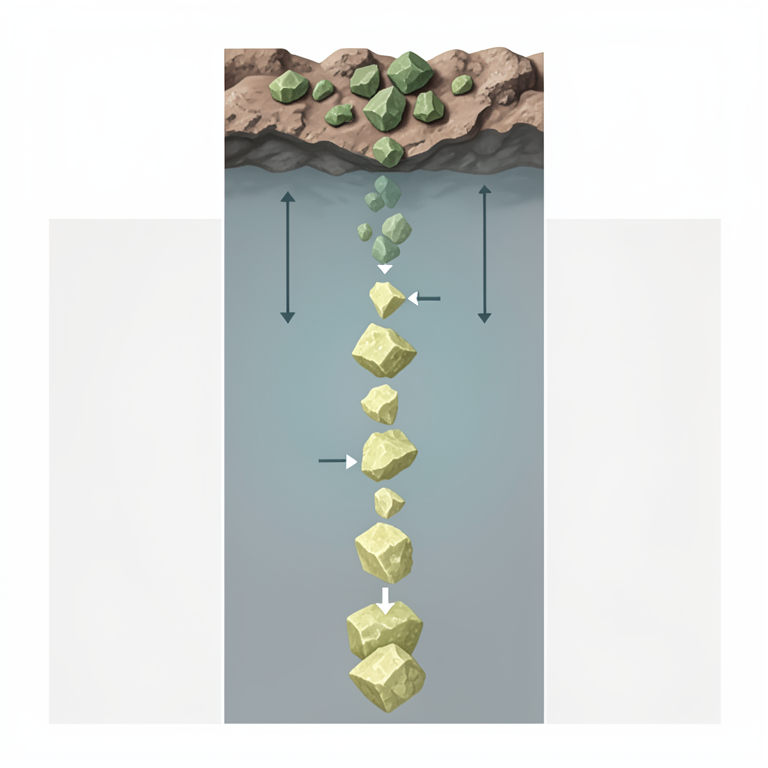
Depth-Depletion Gradient
AI-generated conceptual illustration (Earth's lithospheric mantle cross-section with ultramafic xenoliths). It explains the idea and does not show study data.
View source evidence ↗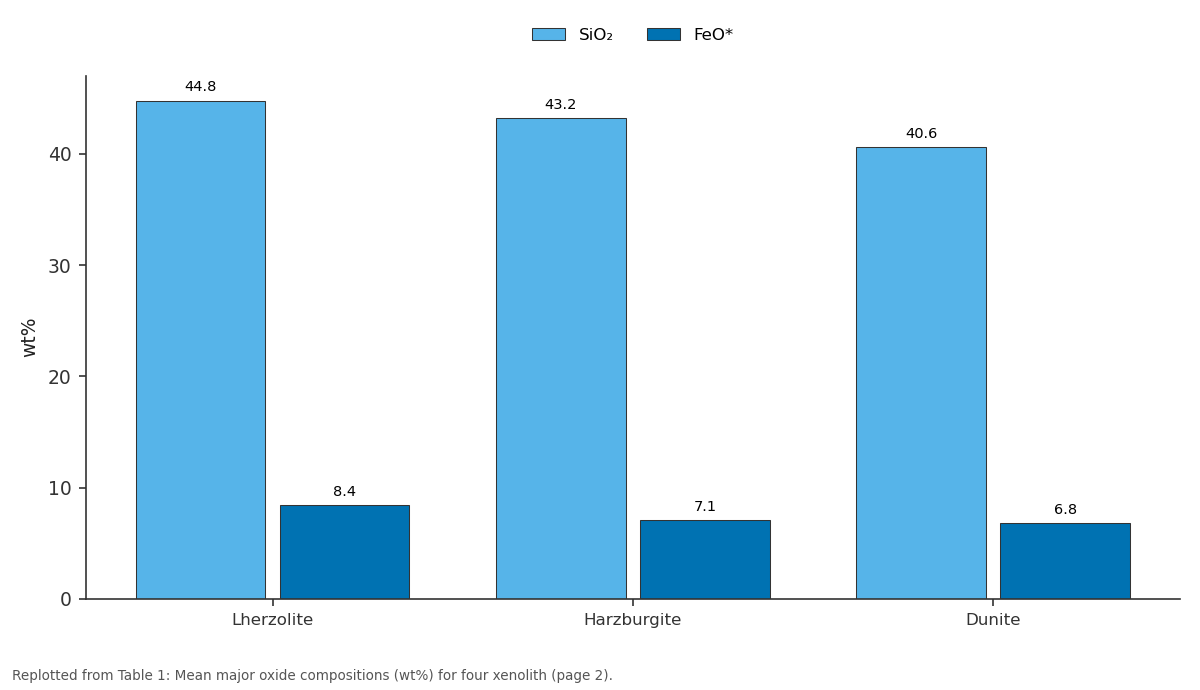
SiO₂ and FeO*: Lherzolite vs Harzburgite vs Dunite
Replotted from Table 1 (page 2) of the original paper. Every bar is the paper's own table value.
View source evidence ↗Figures & tables
From the original paper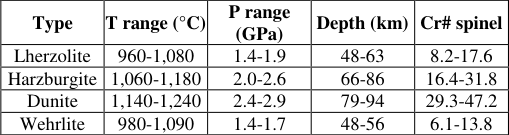 Table 2
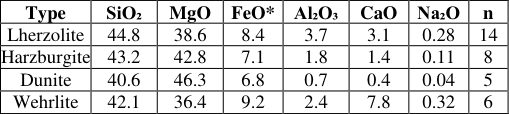 Table 1
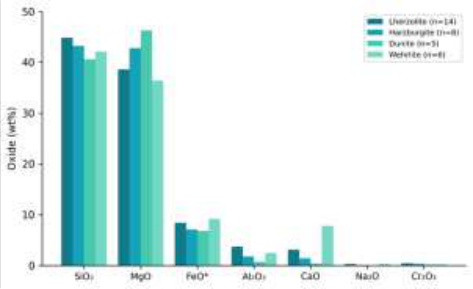 Figure 1
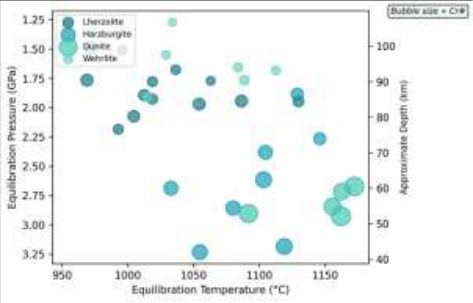 Figure 2
Introduction
Picture a geologist cracking open a freshly collected basalt boulder and finding, embedded within the dark matrix, a pale green nodule of coarse-grained olivine and pyroxene-a piece of the mantle delivered to the surface by the explosive force of volcanic eruption. These mantle xenoliths remain among the most direct sources of information about the composition, temperature, and deformation state of the Earth's upper mantle beneath continental interiors [1] . In continental rift settings, they are especially valuable because they sample the very lithosphere that is being thinned, heated, and eventually broken apart. The East African Rift System (EARS) is the world's foremost example of an active continental rift. Its northern segment, stretching from the Afar triple junction through the Main Ethiopian Rift into northern Kenya, spans the full spectrum from incipient rifting to near-complete plate separation [2] . Xenolith-bearing volcanic centres scattered along this rift provide natural sampling points of the underlying mantle at different stages of lithospheric disruption [3] . Earlier xenolith studies from the EARS focused mainly on the Kenya Rift proper, where Henjes-Kunst and Altherr [4] and Kaeser et al. [5] documented extensive metasomatic overprinting. The northernmost Ethiopian segment has received less attention despite hosting several productive xenolith localities. This research characterised 33 ultramafic xenoliths from three localities in the transitional zone between the Main Ethiopian Rift and the northern Kenya Rift, aiming to define the composition, thermal state, and metasomatic history of the lithospheric mantle beneath this geodynamically active region [6] .
Theoretical Background
The thermal and compositional state of the sub-continental lithospheric mantle (SCLM) beneath rift zones is governed by competing processes. Conductive cooling since the last major tectono-thermal event tends to produce a cold, refractory lithospheric root, while rift-related asthenospheric upwelling introduces heat and metasomatic fluids or melts that progressively modify the overlying lithosphere [7] . The degree of mantle depletion is conventionally assessed through the Cr-number of spinel (Cr# = Cr/(Cr+Al)), which increases with the extent of partial melt extraction, and through the Mg-number of olivine (Mg# = Mg/(Mg+Fe)), which also rises with progressive depletion [8] . Metasomatic re-enrichment, by contrast, is detected through elevated incompatible element concentrations in clinopyroxeneparticularly Na, Ti, and the light rare earth elements (LREE)-and through the presence of secondary hydrous phases such as amphibole and phlogopite. Two-pyroxene thermometry (Brey and Köhler [9] ) and Al-in-orthopyroxene barometry provide the thermobarometric framework for placing each xenolith at its equilibrium depth.
Material and Methods Material
The research was coordinated from the Department of Earth and Environmental Sciences, Piura University of Geosciences, Piura, Peru. Xenolith samples were collected from three Quaternary alkaline basalt localities in the Mega-Marsabit transect of southern Ethiopia and northern Kenya during field campaigns in October 2021 and April 2022. A total of 33 xenoliths ranging from 3 to 18 cm in diameter were extracted from lava flows and pyroclastic deposits. Polished thin sections were prepared for petrographic examination and microanalysis. Modal mineralogy was estimated by point counting (minimum 500 points per section) [10] .
Methods
Major element compositions of olivine, orthopyroxene (opx), clinopyroxene (cpx), and spinel were measured by wavelength-dispersive electron microprobe (JEOL JXA-8230) at 15 kV acceleration voltage and 20 nA beam current. Trace element concentrations in cpx were determined by LA-ICP-MS using a New Wave UP-213 laser coupled to an Agilent 7700x quadrupole ICP-MS, with NIST SRM 612 as external standard. Equilibration temperatures were calculated using the two-pyroxene thermometer of Brey and Köhler [9] and pressures from the Al-in-opx barometer of Nickel and Green [11] . Thermobarometric results were cross-checked against the Ca-in-olivine thermometer of Köhler and Brey [12] where applicable. reflecting modal enrichment in secondary clinopyroxene [13] . The thermobarometric data reveal a clear depth-depletion gradient: the shallowest xenoliths (lherzolites, 48-63 km) are the most fertile, while the deepest samples (dunites, 79-94 km) are the most depleted. Wehrlites equilibrated at shallow depths (48-56 km) but with higher temperatures than expected for their depth, consistent with thermal perturbation by metasomatic melt infiltration [14] . The bubble chart illustrates the positive correlation between equilibration depth, temperature, and degree of depletion (Cr#). Wehrlites plot off the main trend, clustering at low pressures but moderate temperatures with small Cr# values, confirming their metasomatic origin.
Results
Results
Performance Evaluation
The two-pyroxene thermometer and Al-in-opx barometer showed internal consistency when cross-checked against the Ca-in-olivine thermometer (mean difference 28°C, maximum 54°C). Repeat analyses on five samples yielded reproducibility of ±18°C for temperature and ±0.12 GPa for pressure. The calculated geotherm (approximately 68 mW/m² surface heat flow) falls between the 60 mW/m² cratonic and 80 mW/m² rift-axis geotherms published for East Africa [15] , consistent with the transitional geodynamic setting of the sampling localities between stable craton and active rift axis.
Discussion
The coexistence of fertile lherzolites and highly depleted dunites within the same xenolith suite-sourced from the same volcanic conduit-indicates a compositionally heterogeneous SCLM beneath the northern EARS. This heterogeneity is consistent with the polygenetic history expected for Proterozoic lithospheric mantle that has experienced multiple episodes of melt extraction and reenrichment [4] . The depth-depletion gradient, with the most refractory compositions at the greatest depths, mirrors patterns observed beneath the Tanzania Craton margin and suggests that ancient depletion events preferentially affected the deeper lithosphere. The wehrlites carry the clearest evidence of active metasomatism. Their elevated CaO, Na₂O, and LREE in clinopyroxene, combined with temperatures above the ambient geotherm at their equilibration depth, point to recent infiltration by silicate melts derived from the asthenosphere. This metasomatic front, operating at 48-56 km depth, may represent the leading edge of rift-related lithospheric modification-a zone where ascending asthenospheric melts first interact with and begin to transform the overlying lithospheric mantle [5] . The intermediate geotherm (68 mW/m²) calculated from the xenolith P-T data places this rift segment between the thermally undisturbed cratonic mantle to the west and the strongly elevated geotherm beneath the Afar depression to the north. This thermal gradient supports models of southward-propagating lithospheric thinning along the EARS, with the Mega-Marsabit transect representing a relatively early stage of thermal disruption [6] .
Conclusion
This research characterised 33 ultramafic xenoliths from the northern East African Rift, revealing a compositionally heterogeneous and thermally disturbed lithospheric mantle. A depth-depletion gradient was documented from fertile lherzolites at 48-63 km to refractory dunites at 79-94 km.
Wehrlites provided evidence of active silicate-melt metasomatism at shallow lithospheric depths, representing the leading edge of rift-related mantle modification. The calculated geotherm of 68 mW/m² is consistent with incipient lithospheric thinning. These findings contribute to the growing picture of how continental lithosphere responds to the early stages of rifting and provide baseline mantle compositions for modelling magma genesis along this segment of the EARS. Future work should incorporate Re-Os isotopic dating of individual xenoliths to constrain the timing of depletion and metasomatic events [16] .
Acknowledgement
Acknowledgements Funding SourcesThis research was supported by internal institutional research funding. Institutional SupportThe authors thank Piura University of Geosciences for electron microprobe and LA-ICP-MS analytical access. Contributions Not Qualifying for AuthorshipLocal field guides in southern Ethiopia and northern Kenya assisted with sample collection and site access.
Figures and tables from the paper
| Type | T range (°C) | P range (GPa) | Depth (km) | Cr# spinel |
|---|---|---|---|---|
| Lherzolite | 960-1,080 | 1.4-1.9 | 48-63 | 8.2-17.6 |
| Harzburgite | 1,060-1,180 | 2.0-2.6 | 66-86 | 16.4-31.8 |
| Dunite | 1,140-1,240 | 2.4-2.9 | 79-94 | 29.3-47.2 |
| Wehrlite | 980-1,090 | 1.4-1.7 | 48-56 | 6.1-13.8 |
Table text extracted from the original PDF; superscript letters are shown inline. The original table image is below.
View original table image
| Type | SiO₂ | MgO | FeO* | Al₂O₃ | CaO | Na₂O | n |
|---|---|---|---|---|---|---|---|
| Lherzolite | 44.8 | 38.6 | 8.4 | 3.7 | 3.1 | 0.28 | 14 |
| Harzburgite | 43.2 | 42.8 | 7.1 | 1.8 | 1.4 | 0.11 | 8 |
| Dunite | 40.6 | 46.3 | 6.8 | 0.7 | 0.4 | 0.04 | 5 |
| Wehrlite | 42.1 | 36.4 | 9.2 | 2.4 | 7.8 | 0.32 | 6 |
Table text extracted from the original PDF; superscript letters are shown inline. The original table image is below.
View original table image
References
16 in the original paper- Nixon PH. Mantle Xenoliths. Chichester: John Wiley and Sons; 1987.
- Ebinger CJ. Continental break-up: the East African perspective. Astron Geophys. 2005;46(2):2.16-2.21.
- Rudnick RL, McDonough WF, Chappell BW. Carbonatite metasomatism in the northern Tanzanian mantle. Earth Planet Sci Lett. 1993;114(4):463-475.
- Henjes-Kunst F, Altherr R. Metamorphic petrology of xenoliths from Kenya and northern Tanzania and implications for geotherms and lithospheric structures. J Petrol. 1992;33(5):1125-1156.
- Kaeser B, Kalt A, Pettke T. Evolution of the lithospheric mantle beneath the Marsabit volcanic field: constraints from Cr-diopside megacrysts. J Petrol. 2006;47(12):2149-2184.
- Rogers N, Macdonald R, Fitton JG, George R, Smith M, Barreiro B. Two mantle plumes beneath the East African rift system. Nature. 2000;395(6704):788-791.
- Griffin WL, O'Reilly SY, Ryan CG. The composition and origin of sub-continental lithospheric mantle. In: Fei Y, editor. Mantle Petrology. Geochemical Society Special Publication No. 6; 1999. p. 13-45.
- Hellebrand E, Snow JE, Dick HJB, Hofmann AW. Coupled major and trace elements as indicators of the extent of melting in mid-ocean-ridge peridotites. Nature. 2001;410(6829):677-681.
- Brey GP, Köhler TP. Geothermobarometry in fourphase lherzolites II. New thermobarometers and practical assessment. J Petrol. 1990;31(6):1353-1378.
- Pearson DG, Canil D, Shirey SB. Mantle samples included in volcanic rocks: xenoliths and diamonds. In: Carlson RW, editor. Treatise on Geochemistry. Elsevier; 2003. Vol. 2, p. 171-275.
- Nickel KG, Green DH. Empirical geothermobarometry for garnet peridotites and implications for the nature of the lithosphere. Earth Planet Sci Lett. 1985;73(1):158170.
- Köhler TP, Brey GP. Calcium exchange between olivine and clinopyroxene calibrated as a geothermobarometer for natural peridotites. Geochim Cosmochim Acta. 1990;54(9):2375-2388.
- Coltorti M, Bonadiman C, Hinton RW, Siena F, Upton BGJ. Carbonatite metasomatism of the oceanic upper mantle. Lithos. 1999;48(1-4):69-91.
- Lee CT, Rudnick RL. Compositionally stratified cratonic lithosphere: petrology and geochemistry of peridotite xenoliths. In: Proceedings of the 7th International Kimberlite Conference; 1999. p. 503-521.
- Nyblade AA, Pollack HN, Jones DL, Podmore F, Mushayandebvu M. Terrestrial heat flow in east and southern Africa. J Geophys Res. 1990;95(B11):1737117384.
- Carlson RW, Pearson DG, James DE. Physical, chemical and chronological characteristics of continental mantle. Rev Geophys. 2005;43(1):RG1001.