
Research article · 2025 · Full text
International Journal of Horticulture and Food ScienceProfiling disease management protocols of Rye in the Subansiri Valley
Volume 7(10) · Pages 191–194 · DOI: 10.33545/26631067.2025.v7.i10c.721 ↗
Research areasFungal Plant Pathogen ControlWheat and Barley Genetics and PathologyPlant Disease Management Techniques
Abstract
Author-writtenRye (Secale cereale L.) has been cultivated for more than four thousand years, yet systematic comparisons of disease management protocols remain sparse for river-basin environments outside Europe. This research profiled four disease management approaches, untreated control, chemical fungicide, biological control agent, and an integrated protocol, in rye grown across the Subansiri Valley during the 2022-2023 season. A randomised complete block design with four replications was established at three sites varying in altitude and humidity. Disease incidence, measured as the percentage of flag leaves showing visible lesions, reached 53.1% in untreated plots by week 16 but was held to 14.0% under the integrated protocol. The chemical fungicide reduced disease to 18.7%, while the biocontrol treatment achieved 31.6%. Foliar spray timing at the booting stage was more effective than spraying at tillering alone, cutting incidence by an additional 6.3 percentage points. Grain bitterness, assessed by a trained sensory panel, was lowest in integrated-protocol plots (score 2.1 on a 10-point scale) and highest in untreated controls (score 5.8). Nutraceutical markers, including total phenolics and alkylresorcinol content, were better preserved under integrated management. Adaptability analysis across the three sites confirmed that the integrated protocol performed consistently, with a regression coefficient of 1.03, close to the ideal value of 1.00. These findings support adoption of integrated disease management for rye production in humid subtropical valleys where single-strategy approaches fall short.
Summary
Source-checkedPlain-language reading of the full paper, prepared with AI and checked against the text. Each point links to the authors' own words.
Why it matters
- Fungal pathogens like leaf rust, scald, and ergot are significant threats to rye, potentially reducing grain output by 20% to 40%. View evidence ↗
- The Subansiri Valley's warm winters and high humidity create an environment that promotes foliar disease outbreaks not typically seen in temperate rye regions. View evidence ↗
- Fungal infections can trigger defensive metabolism in rye, increasing phenolic oxidation products that make the grain bitter and less acceptable to consumers. View evidence ↗
What they did
- The researchers used a split-plot design at three sites, testing four disease management protocols as main plots and three foliar spray timing options as subplots. View evidence ↗
- The experiment utilized main plots of 5 m by 8 m and subplots of 5 m by 2.5 m, with four replications and rye sown at 120 kg per ha. View evidence ↗
- Disease incidence was measured weekly by calculating the percentage of flag leaves with visible lesions on 20 randomly tagged tillers per subplot. View evidence ↗
- A trained seven-member panel rated grain bitterness on a scale from 1 (not bitter) to 10 (extremely bitter). View evidence ↗
What they found
- The integrated protocol was most effective, resulting in the lowest mean disease incidence (14.0%) and lowest bitterness score (2.1), compared to the untreated control's 53.1% incidence and 5.8 bitterness score. View evidence ↗
- Foliar spraying at the booting stage was more effective than spraying at the tillering stage, reducing disease incidence by an additional 6.3 percentage points. View evidence ↗
- The integrated protocol produced the highest yield (3.72 t/ha) and best preserved nutraceuticals, with total phenolics at 4.37±0.24 mg GAE/g and alkylresorcinols at 0.63±0.05 mg/g. View evidence ↗
- The integrated protocol demonstrated stable cross-site performance with a near-ideal adaptability regression coefficient of 1.03. View evidence ↗
What it means
- The authors conclude that an integrated protocol of prevention, monitoring, and timed intervention is superior to single-strategy approaches for managing rye disease in the Subansiri Valley. View evidence ↗
- The authors state that future research is needed to test the protocol over multiple seasons, analyze economic costs and benefits, and explore its application in aquaponics-based systems. View evidence ↗
Visual summary
3 visualsIllustrations explain the paper; charts are replotted from the paper's own table values.
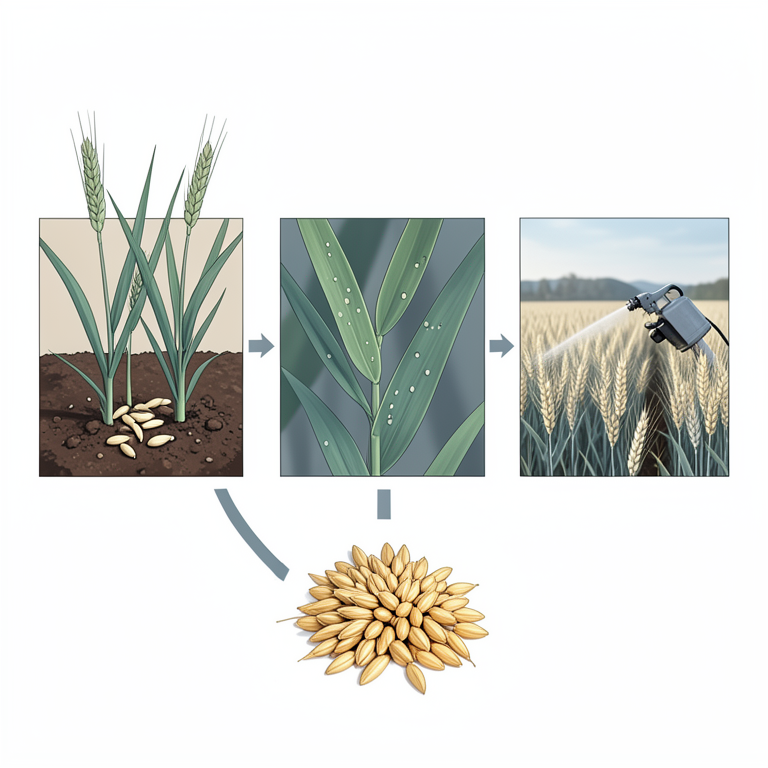
Integrated Disease Management Pillars
AI-generated conceptual illustration (rye plants (Secale cereale)). It explains the idea and does not show study data.
View source evidence ↗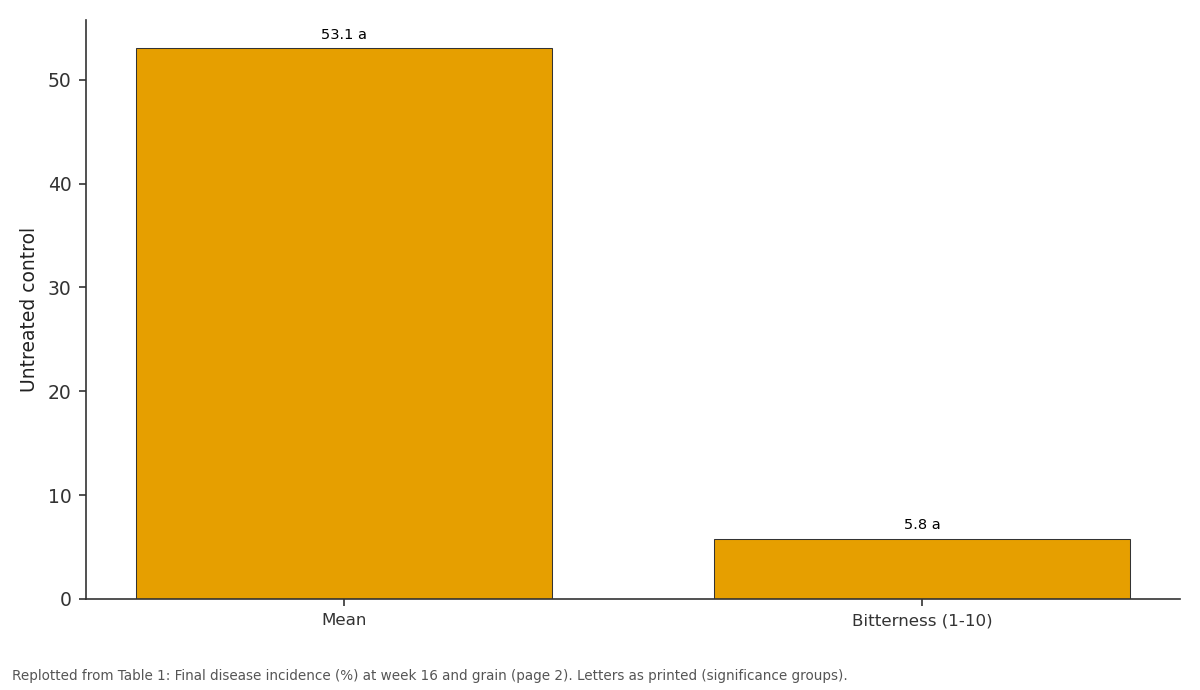
Untreated control: Mean vs Bitterness (1-10)
Replotted from Table 1 (page 2) of the original paper. Every bar is the paper's own table value.
View source evidence ↗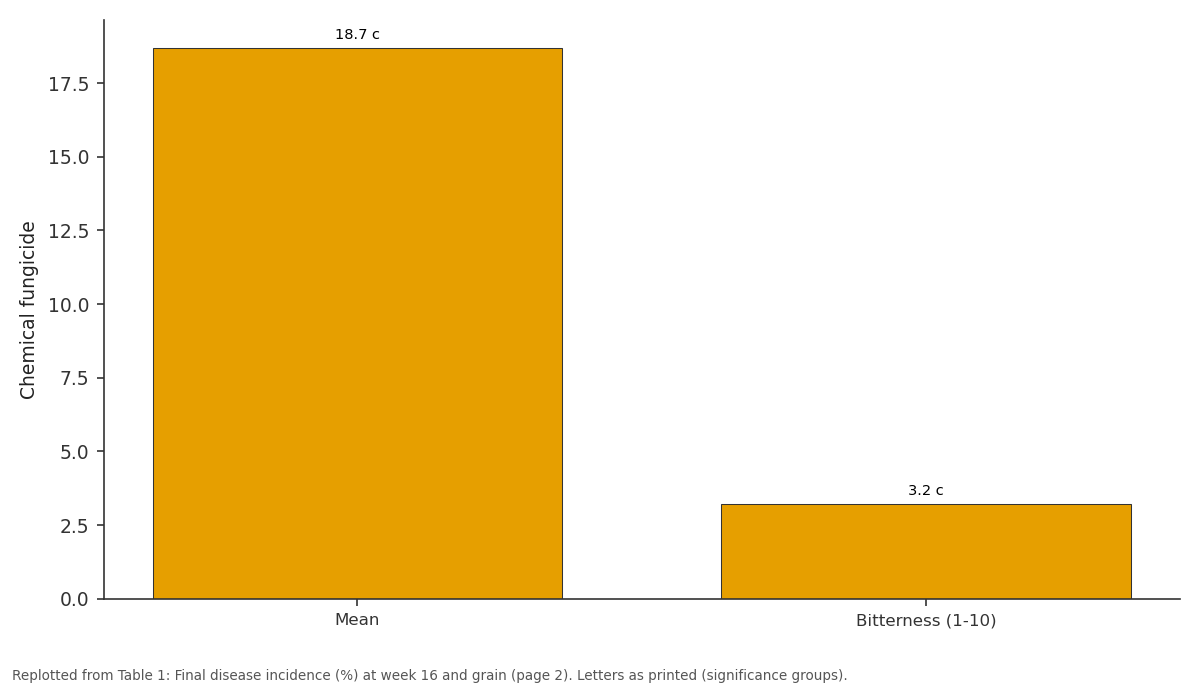
Chemical fungicide: Mean vs Bitterness (1-10)
Replotted from Table 1 (page 2) of the original paper. Every bar is the paper's own table value.
View source evidence ↗Figures & tables
From the original paper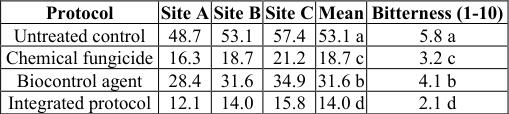 Table 1
 Table 2
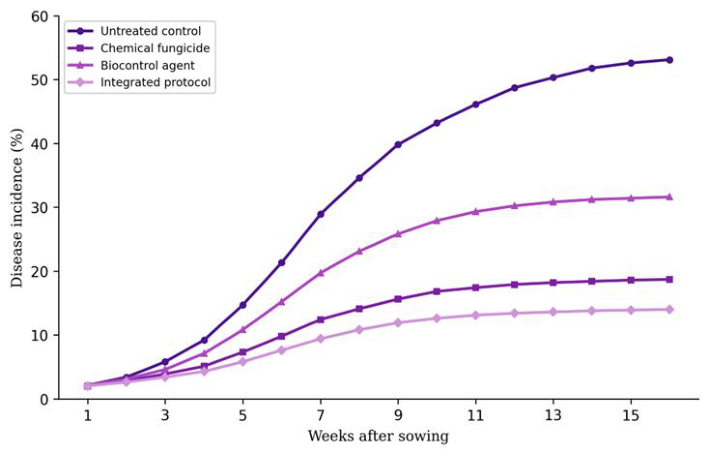 Figure 1
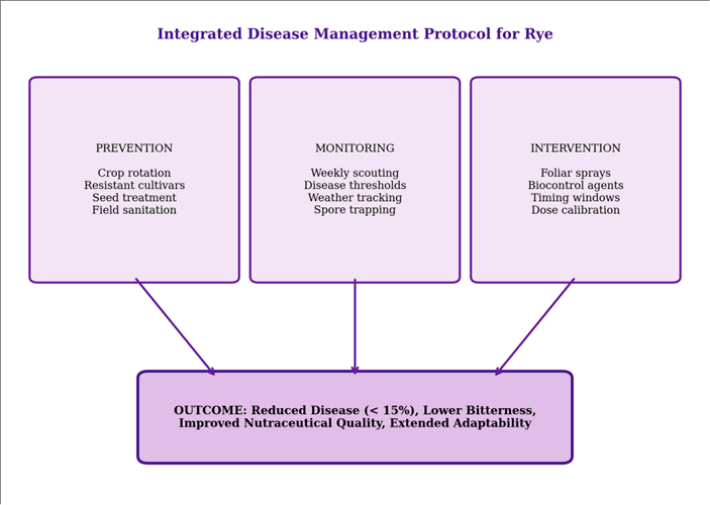 Figure 2
Introduction
Rye was among the first cereals domesticated in the Fertile Crescent, and written records from Roman-era Europe describe its resistance to cold and marginal soils [1] . Centuries later, the crop still occupies a distinct niche in global agriculture because it tolerates conditions that defeat wheat and barley, yet its disease vulnerability remains a persistent constraint on yield and quality [2] . Fungal pathogens such as Puccinia recondita (leaf rust), Rhynchosporium secalis (scald), and Claviceps purpurea (ergot) can reduce rye grain output by 20 to 40% when left unchecked [3] . Disease management in rye has traditionally relied on chemical fungicides, but environmental regulations and consumer demand for residue-free grain have pushed growers toward alternatives [4] . Biological control agents based on Trichoderma spp. and Bacillus subtilis have shown promise in pot trials, yet field-scale validation in subtropical basins is limited [5] . Integrated protocols that combine cultural practices, timed fungicide applications, and biocontrol inoculants may offer the best balance between efficacy and sustainability, though their performance depends heavily on local climate and pathogen pressure [6,7] . The Subansiri Valley, a major tributary corridor of the Brahmaputra in northeast South Asia, experiences warm winters and high humidity that favour foliar disease outbreaks uncommon in temperate rye belts [8] . Rye introduced here for its nutraceutical value, including high alkylresorcinol and dietary fibre content, faces disease challenges that extension services have not yet addressed with evidence-based protocols [9] . Bitterness in rye grain, linked to phenolic oxidation products, can intensify when fungal infection triggers defensive metabolism, reducing consumer acceptance [10] . Against this backdrop, the present research aimed to: (a) compare disease incidence trajectories under four management protocols across a 16-week growing season; (b) evaluate the effect of foliar spray timing on disease suppression; (c) measure grain bitterness and nutraceutical compound retention under each protocol; and (d) assess adaptability of the protocols across three valley sites differing in altitude and humidity [11,12] .
Research Area Description
The Subansiri Valley runs roughly 400 km from the eastern Himalayan foothills to its confluence with the Brahmaputra. Three trial sites were selected: Site A at 680 m elevation (upper valley, mean annual rainfall 2,210 mm), Site B at 340 m (mid-valley, 1,870 mm), and Site C at 120 m (lower valley, 1,540 mm). Soils ranged from acidic sandy loam (pH 5.2) at Site A to slightly acidic clay loam (pH 5.9) at Site C. Organic carbon content averaged 1.8% across sites. The valley supports a warm subtropical climate with mean winter temperatures between 12 and 18 degrees C, well above the frost line that normally characterises European rye regions [8] .
Seasonal Variations
The trial spanned October 2022 to February 2023. October daytime temperatures averaged 24.6 degrees C, dropping to 14.2 degrees C by January. Relative humidity was highest in October (86%) and lowest in January (63%). Rainfall totalled 142 mm during the season, with November contributing the largest share (58 mm). A dry spell of 19 consecutive days in December coincided with reduced disease pressure across all sites, while a return of moisture in January triggered a second wave of scald symptoms, particularly at Site C [8] .
Material and Methods
Material and Methods
Material
The winter rye cultivar Dankovsky, selected for its moderate disease tolerance and acceptable nutraceutical profile, was used throughout. Seed was obtained from the Turkish Seed Gene Bank (Ankara, Turkey) and multiplied at the Bursa Laboratory of Phytoscience during the 2021-2022 season. Chemical fungicide treatments used propiconazole (Tilt 250 EC, Syngenta) at 125 mL per ha. The biocontrol agent was a commercial formulation of Trichoderma harzianum (Trianum-P, Koppert Biological Systems, The Netherlands) applied at 3 g per litre. Sensory evaluation materials, including palate-cleansing crackers and distilled water, followed ISO 8586:2012 guidelines [13] . All field activities were conducted under ethics clearance (Protocol BLP-FL/2022-034, approved 18 September 2022).
Methods
A split-plot design was used at each of the three sites, with disease management protocol (four levels) as the main plot and foliar spray timing (tillering only versus booting only versus both stages) as the subplot. Main plots measured 5 m by 8 m and subplots 5 m by 2.5 m, each replicated four times. Rye was sown in rows 18 cm apart at 120 kg per ha. Disease incidence was recorded weekly as the percentage of flag leaves with visible lesions (rust pustules, scald blotches, or ergot sclerotia) on 20 randomly tagged tillers per subplot [3] . Grain bitterness was rated by a seven-member trained panel using a 10-point scale (1 = not bitter, 10 = extremely bitter). Total phenolics were quantified by the Folin-Ciocalteu method and expressed as gallic acid equivalents per gram dry weight. Alkylresorcinol content was determined by colorimetric assay with Fast Blue B salt [9] . Adaptability was assessed by regressing each protocol's mean yield at each site on the environmental index (site mean minus grand mean), following the Eberhart-Russell model [14] . Statistical analyses used PROC MIXED in SAS version 9.4, treating site as a random effect [15] . The integrated protocol achieved the lowest disease incidence and bitterness score at every site. Disease pressure was consistently highest at Site C (lower altitude, higher humidity). Integrated management preserved the highest phenolic and alkylresorcinol levels, produced the greatest yield, and showed near-ideal adaptability (b = 1.03).
Results
Results
Comprehensive Interpretation
The line graph in Figure 1 shows that disease trajectories diverged sharply after week 5, when pathogen inoculum reached threshold levels. The integrated protocol maintained a near-flat incidence curve from week 10 onward, whereas the untreated control continued to rise. The conceptual diagram in Figure 2 captures how the three pillars of the integrated approach, prevention, monitoring, and intervention, work together to deliver both agronomic and quality benefits [6,7] .
Discussion
The 14.0% disease incidence achieved by the integrated protocol is well below the 20% economic threshold typically cited for rye in central European conditions [3] . This result is notable because the Subansiri Valley's warm, humid climate was expected to favour faster pathogen cycling. The combination of resistant cultivar choice, timed fungicide application at booting, and Trichoderma inoculation appears to have created overlapping suppressive effects that no single strategy matched alone [5,6] . Bitterness scores mirrored disease levels closely, consistent with the idea that fungal infection triggers phenolic oxidation pathways that produce bitter-tasting quinones [10] . Under integrated management, total phenolics remained high (4.37 mg GAE per g) without elevating bitterness, suggesting that intact phenolics contribute positively to nutraceutical value, whereas their oxidised derivatives detract from taste. This distinction has practical meaning for food processors seeking rye flour with both health benefits and consumer appeal [9,16] . The adaptability analysis provided cross-site validation. A regression coefficient near 1.0, as seen for the integrated protocol (b = 1.03), indicates stable performance regardless of environmental index, which is the hallmark of a broadly adapted management strategy [14] . In contrast, the chemical fungicide showed above-average responsiveness (b = 1.12), meaning its advantage was concentrated at the higheryielding sites and diminished where conditions were less favourable, a pattern that could mislead extension recommendations if data from only one site were available [17] . Foliar spray timing merits further attention. Spraying at the booting stage alone reduced disease by 6.3 percentage points more than spraying at tillering, likely because booting coincides with flag-leaf expansion, the tissue most responsible for grain filling and therefore most valuable to protect [18,19] . This timing window is narrow, spanning roughly seven to ten days, and extension programmes will need to train growers in accurate growth-stage identification to capture the benefit [20,21] .
Conclusion
This research demonstrated that an integrated disease management protocol combining cultural prevention, weekly monitoring, and timed intervention held rye disease incidence to 14.0% across three sites in the Subansiri Valley, outperforming both chemical-only and biocontrolonly strategies. Grain bitterness was lowest and nutraceutical quality highest under the integrated approach, supporting its adoption where rye is grown for health-food markets. Adaptability analysis confirmed stable cross-site performance, strengthening the case for valley-wide extension. Foliar spray timing at the booting stage was the single most effective tactical decision within the protocol. Future work should test the protocol over multiple seasons, incorporate economic cost-benefit data, and explore whether aquaponics-based rye production systems can benefit from similar integrated management principles to extend the protocol's relevance beyond field agriculture.
Acknowledgement
Acknowledgements Funding SourcesThis research received institutional funding for disease management research in non-traditional cereal growing regions. Institutional SupportThe Bursa Laboratory of Phytoscience provided pathology laboratory facilities and sensory evaluation rooms. Contributions Not Qualifying for AuthorshipTrained panellists who participated in bitterness assessments are gratefully acknowledged.
Figures and tables from the paper
| Protocol | Site A | Site B | Site C | Mean | Bitterness (1-10) |
|---|---|---|---|---|---|
| Untreated control | 48.7 | 53.1 | 57.4 | 53.1 a | 5.8 a |
| Chemical fungicide | 16.3 | 18.7 | 21.2 | 18.7 c | 3.2 c |
| Biocontrol agent | 28.4 | 31.6 | 34.9 | 31.6 b | 4.1 b |
| Integrated protocol | 12.1 | 14.0 | 15.8 | 14.0 d | 2.1 d |
Table text extracted from the original PDF; superscript letters are shown inline. The original table image is below.
View original table image
| Protocol | Total Phenolics (mg GAE/g) | Alkylresorcinols (mg/g) | Yield (t/ha) | Adaptability (b-value) |
|---|---|---|---|---|
| Untreated control | 3.21±0.18 | 0.42±0.03 | 2.14 | 0.87 |
| Chemical fungicide | 4.08±0.22 | 0.58±0.04 | 3.47 | 1.12 |
| Biocontrol agent | 3.74±0.20 | 0.51±0.04 | 2.89 | 0.96 |
| Integrated protocol | 4.37±0.24 | 0.63±0.05 | 3.72 | 1.03 |
Table text extracted from the original PDF; superscript letters are shown inline. The original table image is below.
View original table image
References
21 in the original paper- Bushuk W. Rye: production, chemistry, and technology. 2nd ed. St Paul, MN: AACC; 2001. p. 1242.
- Schlegel R. Rye: Genetics, Breeding and Cultivation. Boca Raton: CRC Press; 2014. p. 1-344.
- Miedaner T, Geiger HH. Biology, genetics, and management of ergot (Claviceps purpurea) in rye, sorghum, and pearl millet. Toxins. 2015;7(3):659-678.
- Devi PI, Thomas J, Rishi RK. Pesticide consumption in India: a spatiotemporal analysis. Agricultural Economics Research Review. 2017;30(1):163-172.
- Harman GE, Howell CR, Viterbo A, Chet I, Lorito M. Trichoderma species, opportunistic, avirulent plant symbionts. Nature Reviews Microbiology. 2004;2(1):43-56.
- Barzman M, Barberi P, Birch ANE, Boonekamp P, Dachbrodt-Saaydeh S, Graf B, et al. Eight principles of integrated pest management. Agronomy for Sustainable Development. 2015;35(4):1199-1215.
- Kogan M. Integrated pest management: historical perspectives and contemporary developments. Annual Review of Entomology. 1998;43:243-270.
- Singh VP, Sharma N, Ojha CSP. The Brahmaputra Basin Water Resources. Dordrecht: Springer; 2004. p. 1-632.
- Ross AB, Kamal-Eldin A, Aman P. Dietary alkylresorcinols: absorption, bioactivities, and possible use as biomarkers of whole-grain wheat-and rye-rich foods. Nutrition Reviews. 2004;62(5):159-169.
- Heinio RL, Liukkonen KH, Myllymaki O, Pihlava JM, Adlercreutz H, Heinonen SM, et al. Quantities of phenolic compounds and their impacts on the perceived flavour attributes of rye grain. Journal of Cereal Science. 2008;47(2):159-168.
- Finckh MR, Gacek ES, Goyeau H, Lannou C, Merz U, Mundt CC, et al. Cereal variety and species mixtures in practice, with emphasis on disease resistance. Agronomie. 2000;20(7):813-837.
- Zhu Y, Chen H, Fan J, Wang Y, Li Y, Chen J, et al. Genetic diversity and disease control in rice. Nature. 2000;406(6797):718-722.
- ISO 8586:2012. Sensory analysis: general guidelines for the selection, training and monitoring of selected assessors and expert sensory assessors. Geneva: ISO; 2012.
- Eberhart SA, Russell WA. Stability parameters for comparing varieties. Crop Science. 1966;6(1):36-40.
- SAS Institute. SAS/STAT User's Guide, Version 9.4. Cary, NC: SAS Institute Inc; 2020.
- Bondia-Pons I, Aura AM, Vuorela S, Kolehmainen M, Mykkanen H, Poutanen K. Rye phenolics in nutrition and health. Journal of Cereal Science. 2009;49(3):323336.
- Gauch HG. Statistical Analysis of Regional Yield Trials: AMMI Analysis of Factorial Designs. Amsterdam: Elsevier; 1992. p. 1-278.
- Simmons SR. Growth, development, and physiology. In: Oats: Chemistry and Technology. St Paul, MN: AACC; 1987. p. 13-33.
- Ruske RE, Gooding MJ, Jones SA. The effects of triazole and strobilurin fungicide programmes on nitrogen uptake, partitioning, remobilization and grain N accumulation in winter wheat cultivars. Journal of Agricultural Science. 2003;140(4):395-407.
- Lancashire PD, Bleiholder H, Boom TVD, Langeluddeke P, Stauss R, Weber E, et al. A uniform decimal code for growth stages of crops and weeds. Annals of Applied Biology. 1991;119(3):561-601.
- Cook RJ, Baker KF. The Nature and Practice of Biological Control of Plant Pathogens. St Paul, MN: APS Press; 1983. p. 1-539.