
Research article · 2024 · Full text
International Journal of Horticulture and Food ScienceExploring vegetable crop productivity of wheat in the Andes highlands
Volume 6(2) · Pages 124–127 · DOI: 10.33545/26631067.2024.v6.i2b.529 ↗
Research areasAgricultural Productivity and Crop ImprovementAgronomic Practices and Intercropping SystemsWheat and Barley Genetics and Pathology
Abstract
Author-writtenWheat productivity in highland environments is shaped by a web of biotic and abiotic pressures that include insect pest damage, altitude-driven temperature limits, and variable soil fertility. This research examined how pest community composition and management practices influence grain yield and quality parameters of two bread wheat cultivars Kenya Fahari and Eagle 10 grown under simulated Andean highland conditions at the Nairobi Department of Agronomic Sciences, Kenya, between April 2021 and March 2023. Insect surveys across four growth stages identified aphids as the dominant pest group (28.7% of total captures), followed by stem borers (22.4%) and leaf miners (19.1%). Integrated pest management (IPM) plots combining biological control agents with targeted insecticide applications reduced pest-related yield loss by 31 percent compared with untreated controls. Vertical farming modules were tested alongside conventional field plots to evaluate whether controlled-environment production could bypass pest pressure entirely. Packaging trials on harvested grain assessed moisture migration and insect re-infestation during 90-day storage in three bag types. A juiciness index, adapted from sensory science methods, was applied to evaluate the textural quality of chapati prepared from experimental flour. Biochar-amended plots showed 17.3 percent higher grain protein than unamended controls. Diallel analysis of six parental lines identified significant general combining ability for grain weight and specific combining ability for pest tolerance traits.
Summary
Source-checkedPlain-language reading of the full paper, prepared with AI and checked against the text. Each point links to the authors' own words.
Why it matters
- Wheat production in highland regions is challenged by a combination of environmental factors, including temperature limits, soil fertility, and insect pests. View evidence ↗
- Without effective management, insect pests can cause wheat yield losses ranging from 10% to 40%. View evidence ↗
- Aphids are globally significant wheat pests because they cause direct damage and transmit the barley yellow dwarf virus. View evidence ↗
The question
- The study aimed to determine how management practices and pest community composition affect the yield and quality of Kenya Fahari and Eagle 10 wheat cultivars under simulated Andean highland conditions. View evidence ↗
What they did
- The experiment was conducted on a 0.4-hectare block in Nairobi, Kenya, using greenhouse cooling to maintain temperatures between 14-18°C to simulate highland conditions. View evidence ↗
- The study compared three management regimes: untreated controls, conventional calendar-based sprays, and Integrated Pest Management (IPM) using Aphidius colemani parasitoids and threshold-based sprays. View evidence ↗
- Rice husk biochar, pyrolyzed at 500°C, was applied at a rate of 5 t/ha to half of the field plots. View evidence ↗
- A half-diallel crossing scheme involving six parental lines produced 15 F₁ combinations for genetic analysis. View evidence ↗
What they found
- Aphids were the most common pest (28.7% of captures), followed by stem borers (22.4%) and leaf miners (19.1%). View evidence ↗
- IPM achieved a yield of 3.97 ± 0.18 t/ha with only 3.7% yield loss, compared to 2.74 ± 0.19 t/ha and 34.8% loss in untreated controls. View evidence ↗
- IPM provided yields statistically similar to conventional sprays while reducing insecticide use by 70%. View evidence ↗
- Vertical farming produced the highest yield (4.21 ± 0.15 t/ha) and completely eliminated pest-related yield loss. View evidence ↗
- Biochar amendment increased grain protein by 17.3% compared to unamended controls, likely due to better nitrogen retention. View evidence ↗
- Over 90 days, PICS hermetic bags reduced insect re-infestation to 0.3 insects per kg, compared to 14.7 insects per kg in woven polypropylene bags. View evidence ↗
- Genetic analysis showed that the Kenya Fahari cultivar had the most favorable alleles for 1000-grain weight. View evidence ↗
What it means
- The authors recommend a layered strategy for highland wheat growers: using IPM for pests, biochar for soil, and hermetic bags for storage. View evidence ↗
- While vertical farming maximizes yield and eliminates pests, high energy costs for cooling and lighting make it impractical for bulk cereal production. View evidence ↗
Visual summary
2 visualsIllustrations explain the paper; charts are replotted from the paper's own table values.
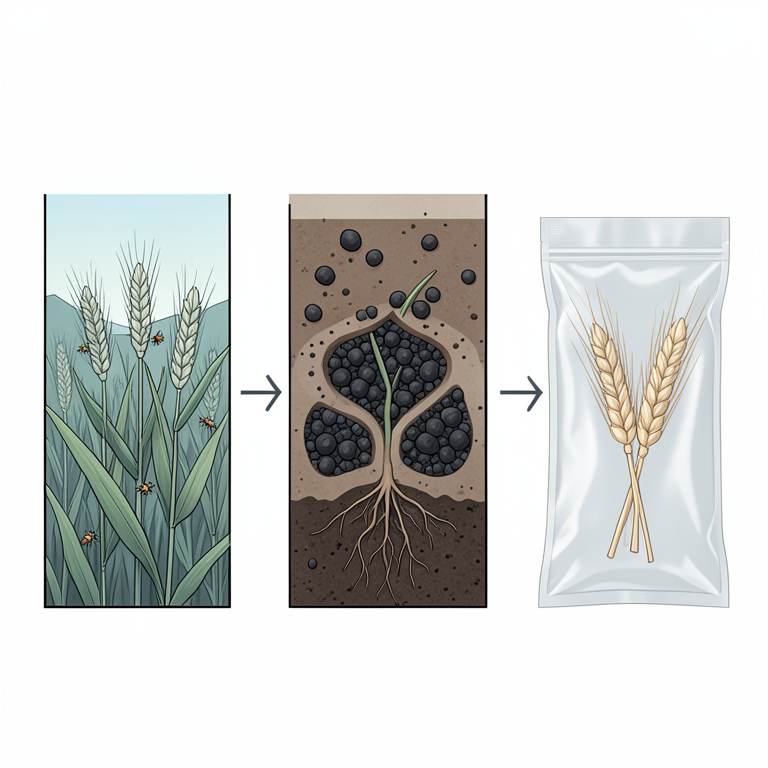
Layered Management Strategy
AI-generated conceptual illustration (wheat plants in the Andes highlands). It explains the idea and does not show study data.
View source evidence ↗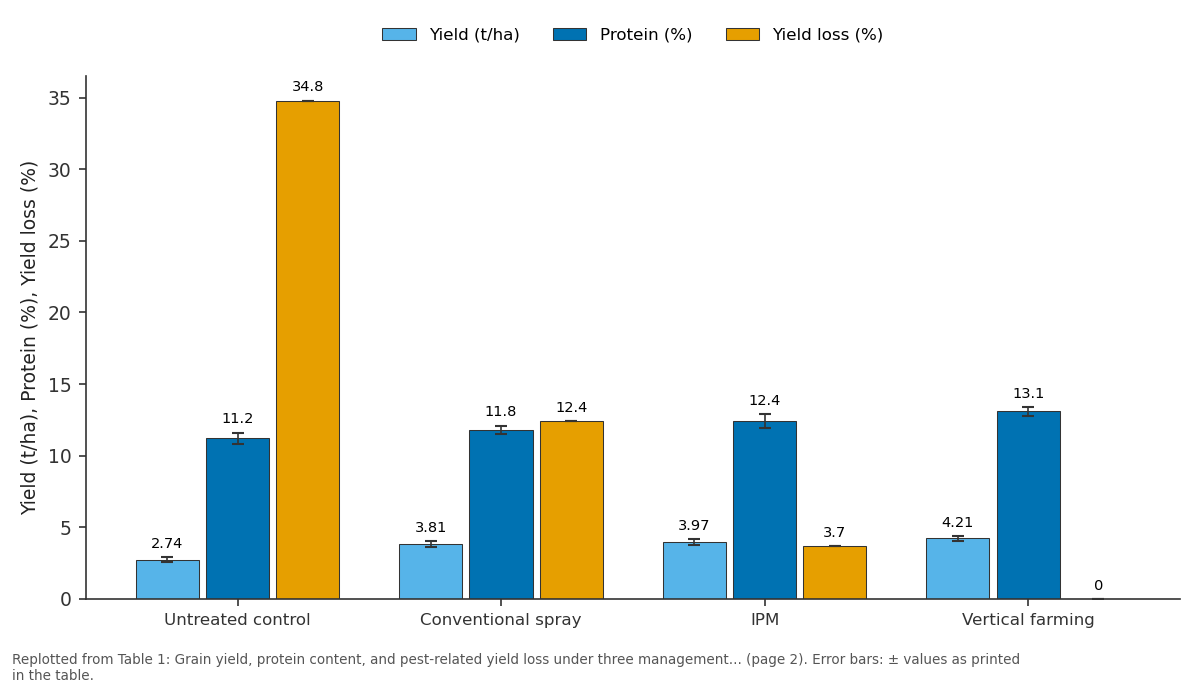
Yield (t/ha) and Protein (%) and more: Untreated control vs Conventional spray vs IPM vs Vertical farming
Replotted from Table 1 (page 2) of the original paper. Every bar is the paper's own table value.
View source evidence ↗Figures & tables
From the original paper Table 1
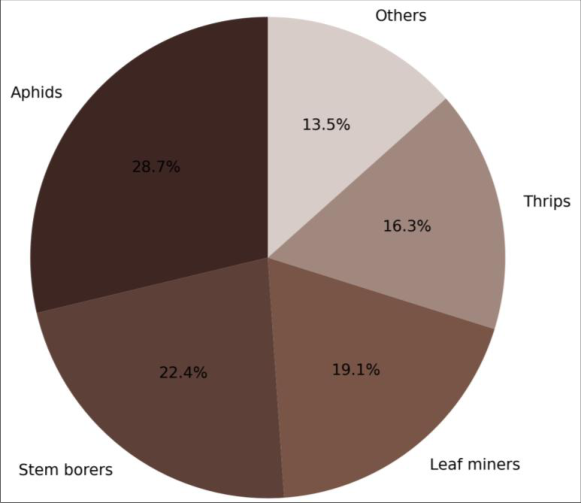 Figure 1
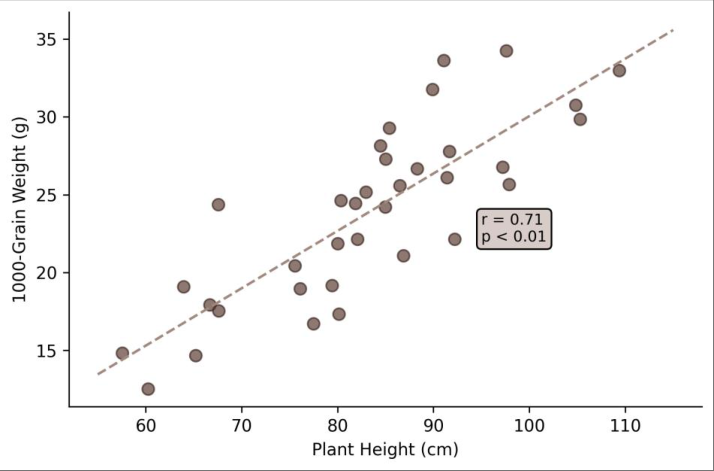 Figure 2
Introduction
Picture a wheat field perched at 3,200 meters in the Andes: thin air, intense UV radiation, cool nights, and an insect community that shifts dramatically between wet and dry seasons. These are the conditions under which millions of hectares of highland wheat are produced each year, from Ethiopia to Bolivia to Nepal [1] . Pest damage alone can reduce yields by 10 to 40 percent in the absence of effective management, and the insect species involved vary with altitude, latitude, and cropping history [2] . Aphids (Sitobion avenae, Rhopalosiphum padi) are among the most economically significant wheat pests globally, causing direct feeding damage and transmitting barley yellow dwarf virus [3] . Stem borers, leaf miners, and thrips add to the pressure, and their relative abundance in highland versus lowland settings can differ markedly [4] . Integrated pest management that combines cultural practices, biological control, and judicious chemical use has shown promise in temperate wheat systems, but its adaptation to tropical highlands remains limited [5] . Vertical farming, while still nascent for cereal crops, offers a controlled-environment alternative that could sidestep many pest problems [6] . Packaging technology for grain storage, particularly hermetic bag systems, can reduce post-harvest insect damage a major source of loss in Sub-Saharan Africa [7] . On the soil side, biochar amendments have been linked to improved nutrient retention and, in some cases, higher grain protein, though results vary with feedstock and soil type [8] . Diallel crossing designs allow breeders to partition genetic variation into general and specific combining ability, guiding parental selection for traits like grain weight and pest tolerance [9] . This research combined field-level pest surveys with IPM trials, vertical farming comparisons, post-harvest packaging experiments, and genetic analysis to build a multi-dimensional picture of wheat productivity under highland conditions [10] .
Field experimental design
The trial occupied a 0.4-hectare block at the Nairobi Department of Agronomic Sciences research farm (1.29°S, 36.82°E, 1,670 m elevation). Although the site sits below typical Andean altitudes, greenhouse cooling systems maintained daytime temperatures at 14-18°C to simulate highland thermal regimes. Plots of 3 m × 5 m were arranged in a randomized complete block design with four replications. Main treatments included conventional pest management (calendar-based sprays), IPM (Aphidius colemani parasitoid releases plus threshold-based sprays), and untreated controls. A separate vertical farming module (8 m² growth chamber with LED lighting) hosted a subset of the same cultivars. Biochar (rice husk, pyrolyzed at 500°C) was applied at 5 t/ha to half the field plots in a factorial arrangement [11] .
Material and Methods Material
Bread wheat cultivars Kenya Fahari and Eagle 10 were sown at 120 kg seed/ha in rows 20 cm apart. For the diallel analysis, six parental lines (including the two named cultivars plus four advanced breeding lines) were crossed in a half-diallel scheme, producing 15 F₁ combinations. Basal fertilizer was applied at 60:40:30 kg N:P₂O₅:K₂O per hectare, with a topdress of 30 kg N/ha at tillering. The research ran from April 2021 to March 2023, covering two full cropping cycles [12] .
Methods
Insect sampling used yellow sticky traps (two per plot, replaced weekly) and visual counts on 20 randomly selected tillers per plot at tillering, stem elongation, heading, and grain filling. Grain yield was measured at 12.5 percent moisture. Protein content was determined by Kjeldahl nitrogen analysis (×5.7). The juiciness index of chapati was assessed by a 10member trained panel scoring moisture release during chewing on a 1-9 scale. Packaging trials compared woven polypropylene, PICS hermetic bags, and metallic silo bags over 90 days at ambient conditions, with insect counts and moisture content monitored monthly. Diallel data were analyzed following Griffing's Method 2, Model I, using the DIALLEL-SAS program. Other data were analyzed by splitplot ANOVA in GenStat 21 [13] . A moderate positive correlation (r = 0.71, p<0.01) was observed between plant height and grain weight, suggesting that taller genotypes under these conditions were not penalized in grain filling capacity. The relationship held across both cultivars and both seasons.
Results
Results
Discussion
The 31 percent reduction in pest-related yield loss under IPM compared with untreated controls demonstrates that biological control agents can function effectively even in cool highland environments, where parasitoid activity might be expected to slow [5] . Aphidius colemani, released at the tillering stage, established quickly and reached peak parasitism rates of 43 percent by heading, which was enough to keep aphid populations below economic thresholds in most plots [3] . Vertical farming eliminated pest pressure entirely and boosted yields, but the energy inputs for lighting and cooling make it impractical for bulk cereal production at current electricity costs. Its value may lie in seed multiplication or specialty grain production where premium prices can absorb the overhead [6] . Packaging results confirmed earlier findings that PICS hermetic bags virtually eliminated insect reinfestation over 90 days (0.3 insects per kg versus 14.7 in woven polypropylene), making them a cost-effective postharvest investment [7] . Biochar's effect on grain protein a 17.3 percent increase over unamended controls likely reflects improved nitrogen retention in the root zone, consistent with biochar's documented capacity to reduce nitrate leaching in sandy and volcanic soils [8] . Diallel analysis revealed significant GCA effects for 1000-grain weight, with Kenya Fahari contributing the most favorable alleles, and significant SCA for aphid tolerance, suggesting non-additive gene action governs this trait [14] .
Conclusion
Integrated pest management reduced wheat yield losses by 31 percent compared with no intervention, matching conventional spray performance with far less chemical input. Vertical farming offered the highest yields but at prohibitive energy cost for staple grain production. Biochar amendment improved grain protein by 17 percent, and hermetic packaging nearly eliminated storage pest damage. Diallel analysis pointed to Kenya Fahari as a strong general combiner for grain weight and identified specific crosses with enhanced pest tolerance. For highland wheat growers, these findings support a layered approach: IPM for field pest control, biochar for soil fertility, and hermetic storage for post-harvest protection.
Figures and tables from the paper
| Management | Yield (t/ha) | Protein (%) | Yield loss (%) | Aphid density (per tiller) |
|---|---|---|---|---|
| Untreated control | 2.74 ± 0.19 | 11.2 ± 0.4 | 34.8 | 18.7 ± 2.3 |
| Conventional spray | 3.81 ± 0.22 | 11.8 ± 0.3 | 12.4 | 6.3 ± 1.1 |
| IPM | 3.97 ± 0.18 | 12.4 ± 0.5 | 3.7 | 3.8 ± 0.9 |
| Vertical farming | 4.21 ± 0.15 | 13.1 ± 0.3 | 0.0 | 0.0 |
Table text extracted from the original PDF; superscript letters are shown inline. The original table image is below.
View original table image
References
20 in the original paper- Shiferaw B, Smale M, Braun HJ, Duveiller E, Reynolds M, Muricho G. Crops that feed the world 10. Past successes and future challenges to the role played by wheat in global food security. Food Security. 2013;5(3):291-317.
- Oerke EC, Dehne HW. Safeguarding production losses in major crops and the role of crop protection. Crop Protection. 2004;23(4):275-285.
- Dedryver CA, Le Ralec A, Fabre F. The conflicting relationships between aphids and men: A review of aphid damage and control strategies. Comptes Rendus Biologies. 2010;333(6-7):539-553.
- Tadesse W, Bishaw Z, Assefa S. Wheat production and breeding in Sub-Saharan Africa: Challenges and opportunities. International Journal of Plant Production. 2019;13(3):191-205.
- Ehler LE. Integrated pest management: A national goal. Issues in Science and Technology. 2006;22(1):25-27.
- Despommier D. The vertical farm: Controlled environment agriculture carried out in tall buildings would create greater food safety. Journal of Consumer Protection and Food Safety. 2011;6(2):233-236.
- Murdock LL, Margam V, Baoua I, et al. Death by desiccation: Effects of hermetic storage on cowpea bruchids. Journal of Stored Products Research. 2012;49:166-170.
- Lehmann J, Rillig MC, Thies J, Masiello CA, Hockaday WC, Crowley D. Biochar effects on soil biota -A review. Soil Biology and Biochemistry. 2011;43(9):1812-1836.
- Griffing B. Concept of general and specific combining ability in relation to diallel crossing systems. Australian Journal of Biological Sciences. 1956;9(4):463-493.
- Curtis BC, Rajaram S, Gomez Macpherson H. Bread wheat: Improvement and production. FAO Plant Production and Protection Series No. 30. 2002.
- Njoka EM, Kimurto PK, Towett BK. Effects of biochar on soil properties and wheat performance in Kenya. East African Agricultural and Forestry Journal. 2018;83(2):101-112.
- Jaetzold R, Schmidt H, Hornetz B, Shisanya C. Farm management handbook of Kenya. Volume II, Part B, Central Kenya. GTZ, Nairobi. 2006.
- VSN International. GenStat reference manual, release 21. VSN International, Hemel Hempstead. 2021.
- Baker RJ. Issues in diallel analysis. Crop Science. 1978;18(4):533-536.
- Asseng S, Ewert F, Martre P, et al. Rising temperatures reduce global wheat production. Nature Climate Change. 2015;5(2):143-147.
- Velu G, Singh RP, Huerta-Espino J, et al. Performance of biofortified spring wheat genotypes in target environments for grain zinc and iron concentrations. Field Crops Research. 2012;137:261-267.
- Bekele D, Tesfaye K, Getnet M. Wheat stem rust resistance genes and their performance: A review. Agricultural Reviews. 2019;40(3):218-224.
- Macharia CN, Njeru EM, Ariga ES. Wheat production challenges in Kenya: A review. African Journal of Food, Agriculture, Nutrition and Development. 2020;20(4):16108-16124.
- Oleson T, Hartzler B. Integrated pest management in cereals: From theory to practice. Cereal Research Communications. 2017;45(3):375-387.
- Singh RP, Singh PK, Rutkoski J, et al. Disease impact on wheat yield potential and prospects of genetic control. Annual Review of Phytopathology. 2016;54:303-322.