
Research article · 2026 · Full text
International Journal of Horticulture and Food ScienceEffect of pre-sowing treatments on germination speed, seed vigour and biochemical attributes of fresh and aged Ber (Ziziphus mauritiana Lam.) seeds
Volume 8(4) · Pages 48–51 · DOI: 10.33545/26631067.2026.v8.i4a.523 ↗
Research areasSeed Germination and PhysiologyZiziphus Jujuba Studies and ApplicationsPlant Physiology and Cultivation Studies
Abstract
Author-writtenA laboratory experiment was conducted during the academic year 2024-25 at the Horticulture Laboratory, Faculty of Agricultural Sciences, Shree Guru Gobind Singh Tricentenary (SGT) University, Gurugram, Haryana, to evaluate the effect of different pre-sowing treatments on germination behaviour, seed vigour, enzymatic activity, and membrane stability of ber (Ziziphus mauritiana Lam.) seeds. The experiment was laid out in a Completely Randomized Design with ten pre-sowing treatments and three replications, using two seed lots differing in age, namely fresh and one-year-old seeds. The treatments included water soaking, hot water soaking, sulphuric acid scarification, gibberellic acid (GA₃) soaking, and potassium nitrate (KNO₃) soaking. Significant variation was observed among treatments for speed of germination, accelerated ageing vigour, peroxidase activity, dehydrogenase activity, and electrical conductivity. Fresh seeds consistently exhibited superior performance compared to one-year-old seeds across all treatments. Soaking seeds in GA₃ @ 400 ppm for 24 hours recorded the highest speed of germination, seed vigour, enzymatic activity, and lowest electrical conductivity in both seed lots, followed by GA₃ @ 200 ppm and KNO₃ @ 1.0%. The control treatment recorded the poorest performance. The enhanced performance under GA₃ treatments may be attributed to improved metabolic activity, antioxidant defense, and membrane integrity. The study concludes that GA₃ @ 400 ppm is the most effective pre-sowing treatment for improving seed quality and rootstock production in ber.
Summary
Source-checkedPlain-language reading of the full paper, prepared with AI and checked against the text. Each point links to the authors' own words.
Why it matters
- Ber (Ziziphus mauritiana Lam.) is a valuable fruit crop for dryland horticulture in India due to its drought tolerance and ability to grow in poor soils. View evidence ↗
- The large-scale propagation of ber is hindered by poor seed germination caused by a hard, stony seed coat that creates physical dormancy. View evidence ↗
The question
- The study aimed to evaluate various pre-sowing treatments on the germination behavior and seed quality of ber to identify an effective method for improving rootstock production. View evidence ↗
What they did
- Pre-sowing treatments included a control, water soaking, hot water soaking (70°C and 80°C), sulphuric acid dips (10% and 20%), gibberellic acid (GA₃) soaking (200 and 400 ppm), and potassium nitrate (KNO₃) soaking (1.0% and 2.0%). View evidence ↗
- The researchers measured germination behavior, seed vigour, enzymatic activity, and membrane stability. View evidence ↗
What they found
- Soaking seeds in GA₃ @ 400 ppm for 24 hours resulted in the highest speed of germination for both fresh (2.40) and one-year-old seeds (1.82). View evidence ↗
- GA₃ @ 400 ppm produced the maximum seed vigour at 24 hours (19.01 fresh, 18.34 aged) and 48 hours (11.21 fresh, 9.01 aged). View evidence ↗
- GA₃ @ 400 ppm led to the maximum dehydrogenase activity in both fresh (0.87) and one-year-old seeds (0.61). View evidence ↗
- Fresh seeds consistently performed better than one-year-old seeds across all tested treatments. View evidence ↗
What it means
- The authors recommend treating ber seeds with GA₃ @ 400 ppm for 24 hours to produce uniform, vigorous seedlings and quality rootstocks. View evidence ↗
Visual summary
3 visualsIllustrations explain the paper; charts are replotted from the paper's own table values.
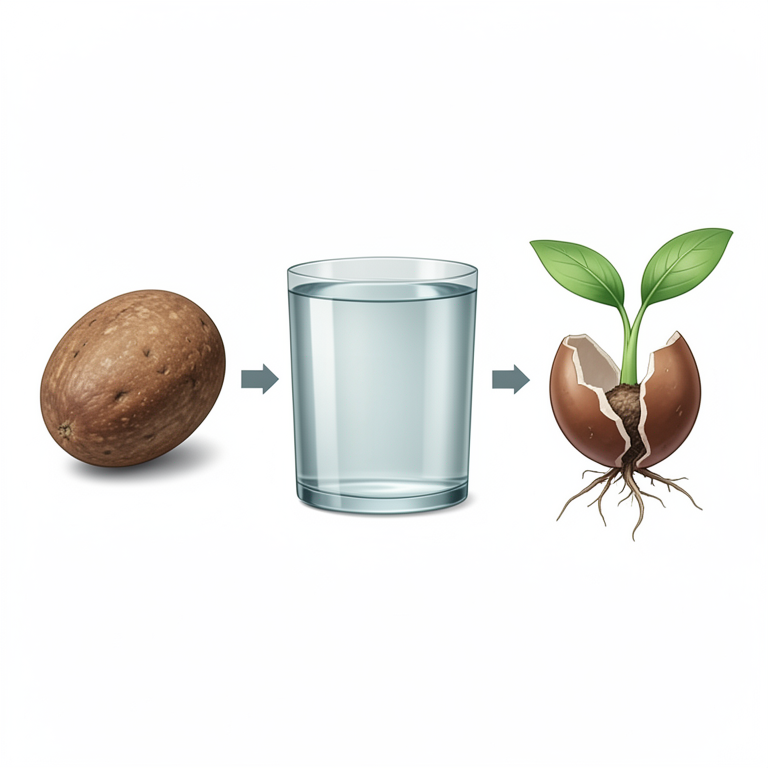
Mechanism of Seed Treatment
AI-generated conceptual illustration (Ber (Ziziphus mauritiana) seeds). It explains the idea and does not show study data.
View source evidence ↗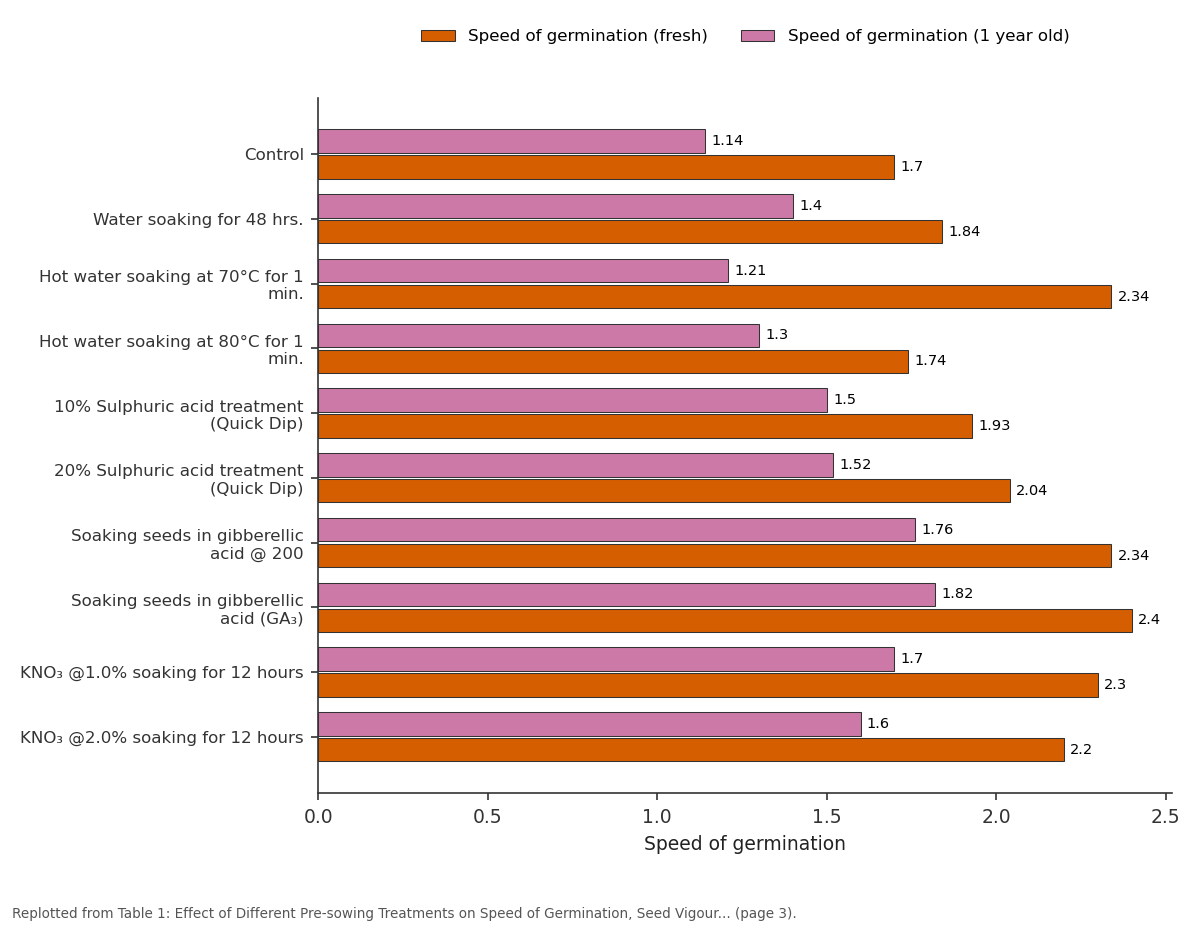
Speed of germination (fresh) and Speed of germination (1 year old): Control vs Water soaking for 48... vs Hot water soaking at... vs Hot water soaking at... vs 10% Sulphuric acid...
Replotted from Table 1 (page 3) of the original paper. Every bar is the paper's own table value.
View source evidence ↗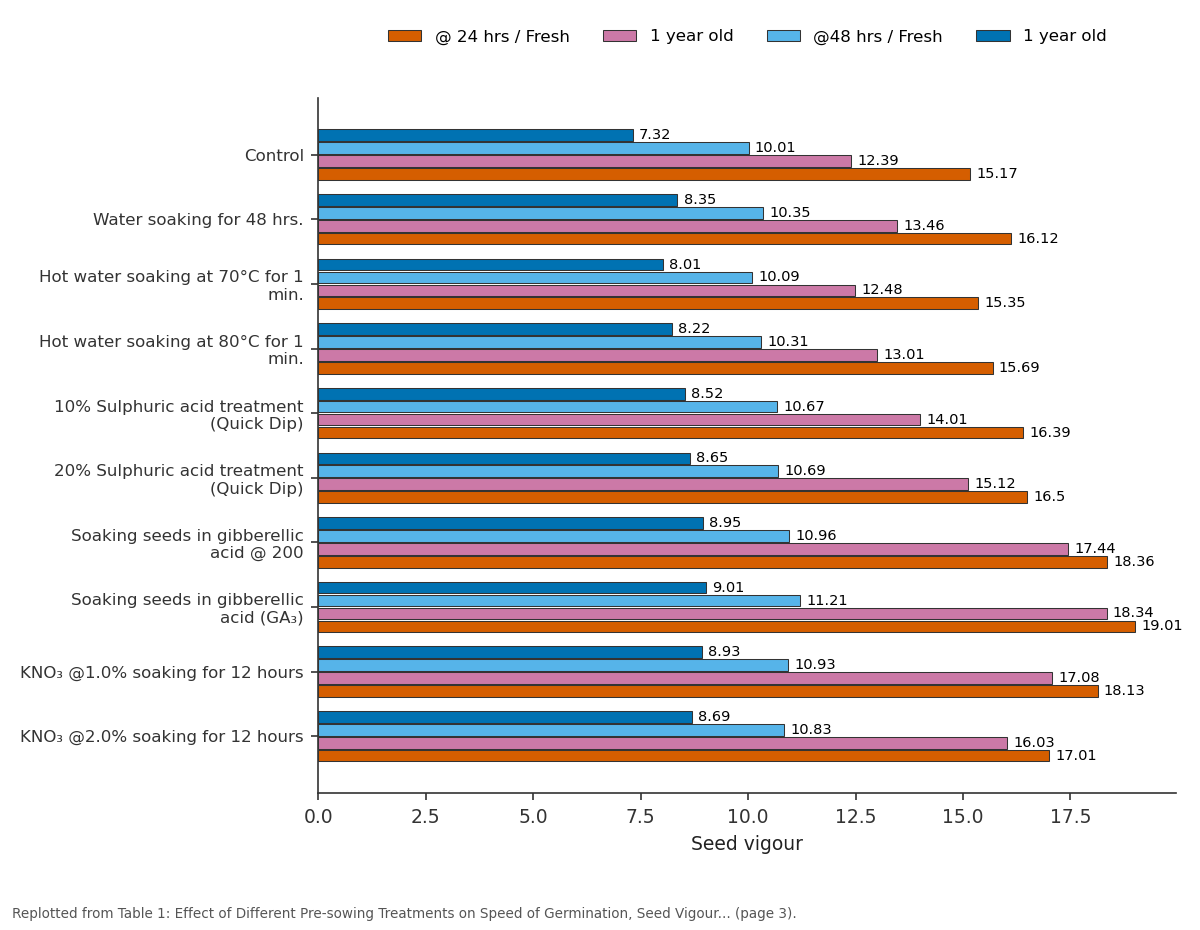
@ 24 hrs / Fresh and 1 year old and more: Control vs Water soaking for 48... vs Hot water soaking at... vs Hot water soaking at... vs 10% Sulphuric acid...
Replotted from Table 1 (page 3) of the original paper. Every bar is the paper's own table value.
View source evidence ↗Figures & tables
From the original paper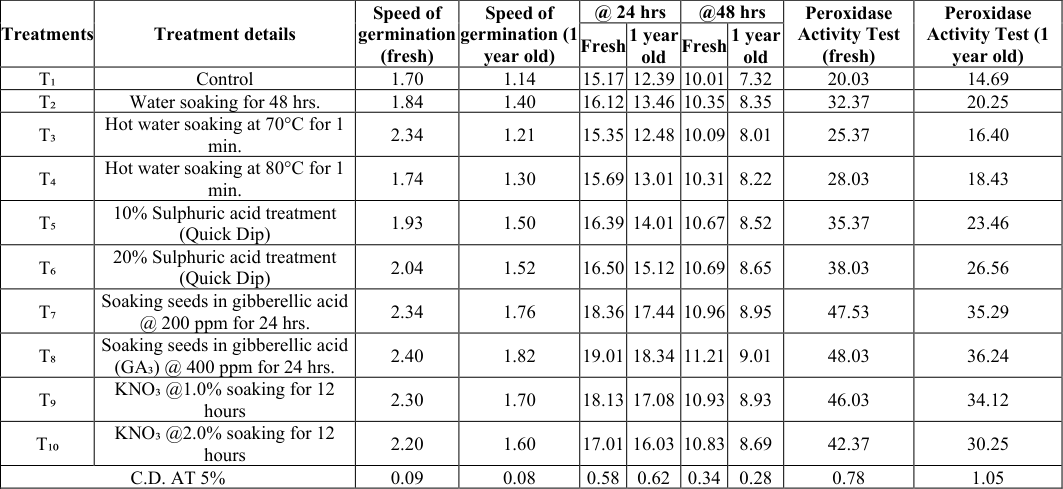 Table 1
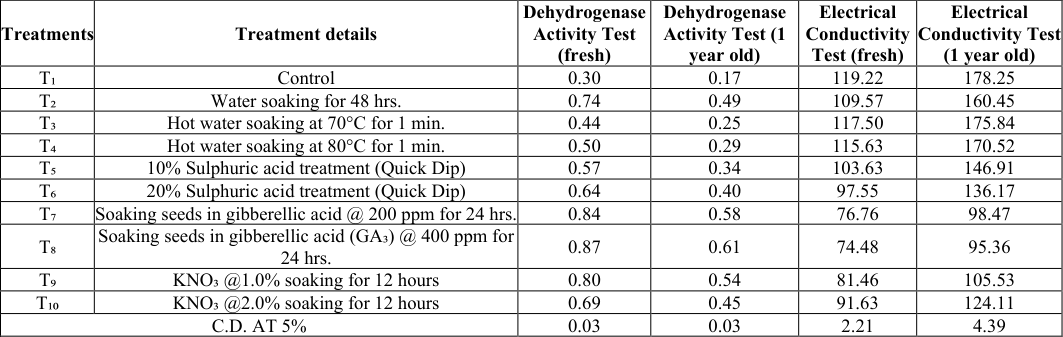 Table 2
Introduction
Ber (Ziziphus mauritiana Lam.), commonly known as Indian jujube, Indian plum, Chinese date, Chinese apple, ber, or dunks, is an important tropical fruit tree belonging to the family Rhamnaceae. The species is frequently confused with Chinese jujube (Ziziphus jujuba), but the two differ distinctly in their ecological adaptation. While Z. jujuba is well suited to temperate climates, Z. mauritiana thrives under tropical to subtropical conditions and is particularly adapted to arid and semi-arid regions. Owing to its hardiness, drought tolerance, and ability to grow on poor and marginal soils, ber has emerged as a valuable fruit crop for dryland horticulture in India. The origin of Z. mauritiana has been traced to a region extending from India to southwestern China and Malaya (Vavilov, 1951) [13] . India is one of the leading producers of ber. According to the National Horticulture Board, the total production of ber in India during 2021-22 was approximately 544,340 metric tonnes. Haryana alone contributed about 45,540 metric tonnes, accounting for nearly 8.4 per cent of the national production (NHB, 2022). In Haryana, ber cultivation is concentrated mainly in districts such as Hisar, Rohtak, Jind, and Panipat. Several improved cultivars including Umran, Sanaur-2, Wallaiti, Kaithli, Z.G.-2, and Gola are commercially cultivated in the state (Bal et al., 2016) [1] . Across India, varieties such as Gola, Seb, Umran, Banarasi Karaka, Thornless, Ilayachi (Elaichi), Kadaka, and Z.G.-2 are popular for their adaptability, yield potential, and fruit quality (Rajpoot et al., 2025) [9] . Ber fruits and seeds possess significant medicinal value and are traditionally used for the treatment of fatigue, digestive disorders, anemia, insomnia, and nervous exhaustion.
The fruit is also recognized for its antioxidant, hepatoprotective, and health-promoting properties and is nutritionally rich in carbohydrates, vitamin C, minerals, and essential vitamins (Sishu et al., 2023) [12] . Despite its economic and nutritional importance, large-scale propagation of ber is constrained by poor seed germination. Commercial multiplication is mainly carried out through Ior T-budding, which requires a continuous supply of healthy and vigorous rootstocks raised from seeds. However, wild ber seeds exhibit poor, slow, and uneven germination due to the presence of a hard, stony seed coat. This impermeable seed coat imposes physical dormancy by restricting water absorption and gaseous exchange, resulting in delayed germination and weak seedling establishment (Boora, 2016) [2] . Various pre-sowing treatments such as mechanical and chemical scarification, hot water treatment, soaking in growth regulators, and nutrient solutions have been reported to improve germination and seedling vigour in ber. However, the effectiveness of these treatments varies widely with concentration and duration, and standardized recommendations are still lacking. Therefore, the present study was undertaken to evaluate the effect of different presowing treatments on germination behaviour and seed quality of ber seeds, with the objective of identifying an effective treatment for improving rootstock production.
Method and Material
A laboratory experiment was conducted during the academic year 2024-25 at the Horticulture Laboratory, Faculty of Agricultural Sciences, Shree Guru Gobind Singh Tricentenary (SGT) University, Gurugram, Haryana, to study the effect of different pre-sowing treatments on the speed of germination of ber (Ziziphus mauritiana Lam.) seeds. The experimental site is geographically located at 28° N latitude and 77° E longitude, with an elevation of 217 m above mean sea level, and falls under the semi-arid agroclimatic zone of Haryana. The region experiences hot summers, cool winters, low to moderate rainfall, and extended sunshine hours, which are suitable for conducting seed germination studies under controlled laboratory conditions. The experiment was laid out in a Completely Randomized Design (CRD) comprising ten pre-sowing seed treatments with three replications. Two seed lots differing in age, namely fresh seeds and one-year-old seeds, were used for the study. Each treatment in each replication consisted of ten seeds, resulting in a total of thirty seeds per treatment per seed lot. The treatments included: T₁ Control (untreated seeds), T₂ Water soaking for 48 hours, T₃ Hot water soaking at 70°C for 1 minute, T₄ Hot water soaking at 80°C for 1 minute, T₅ Sulphuric acid (H₂SO₄) 10% quick dip, T₆ Sulphuric acid (H₂SO₄) 20% quick dip, T₇ Soaking in gibberellic acid (GA₃) @ 200 ppm for 24 hours, T₈ Soaking in gibberellic acid (GA₃) @ 400 ppm for 24 hours, T₉ KNO₃ @ 1.0% soaking for 12 hours, and T₁₀ KNO₃ @ 2.0% soaking for 12 hours. Healthy, bold, and uniform seeds of wild ber were selected manually and counted carefully to maintain uniformity. The seeds were subjected to their respective pre-sowing treatments as per treatment specifications. After treatment, the seeds were thoroughly washed (in case of chemical treatments), surface-dried, and air-dried under shade to remove excess moisture. The treated and untreated seeds were sown under controlled laboratory conditions using standard germination procedures. Germination counts were recorded daily until the completion of the germination period. The data obtained on speed of germination for both fresh and one-year-old seed lots were subjected to analysis of variance (ANOVA) appropriate for the Completely Randomized Design. The critical difference (CD) at 5 per cent level of significance was calculated to test the statistical significance among treatment means.
Results and Discussion
Pre-sowing treatments significantly influenced the speed of germination of ber seeds in both fresh and one-year-old seed lots (Table 1). In general, fresh seeds exhibited a higher speed of germination compared to one-year-old seeds across all treatments. Among the treatments, soaking seeds in GA₃ @ 400 ppm for 24 hours (T₈) recorded the highest speed of germination in both fresh (2.40) and one-year-old seeds (1.82), followed closely by GA₃ @ 200 ppm (T₇) and KNO₃ @ 1.0% (T₉), which were statistically comparable. The lowest speed of germination was observed in the control treatment (T₁). The enhanced speed of germination under GA₃ treatments may be attributed to the stimulation of enzymatic activity and mobilization of stored food reserves, leading to faster embryo growth and early seedling emergence. Similar findings were reported by Boora (2016) [2] and Singh et al. (2014) [11] . Accelerated ageing test results clearly indicated that presowing treatments had a significant effect on seed vigour under both ageing durations (Table 1). At both 24 and 48 hours of ageing, fresh seeds consistently showed higher vigour values than one-year-old seeds. Treatment T₈ (GA₃ @ 400 ppm) recorded the maximum vigour values at 24 hours (19.01 in fresh seeds and 18.34 in one-year-old seeds) and at 48 hours (11.21 and 9.01, respectively). This was followed by T₇ (GA₃ @ 200 ppm) and T₉ (KNO₃ @ 1.0%), which were statistically at par. The control recorded the lowest values under all ageing conditions. Higher vigour under GA₃ treatments may be due to improved membrane stability and enhanced metabolic efficiency, enabling seeds to tolerate ageing stress. These results are in conformity with the findings of Singh et al. (2014) [11] and Kumar et al. (2018) [4] . Peroxidase activity was significantly influenced by different pre-sowing treatments in both fresh and one-year-old ber seeds (Table 1). The highest peroxidase activity was observed in T₈ (48.03 and 36.24), followed by T₇ and T₉, whereas the lowest enzyme activity was recorded in the control. Increased peroxidase activity under GA₃ and KNO₃ treatments indicates enhanced antioxidant defense mechanisms, which help in scavenging reactive oxygen species and improving seed vigour. Acid scarification treatments also resulted in higher enzyme activity compared to untreated seeds. Similar enhancement of antioxidant enzyme activity due to growth regulator treatments has been reported by Boora (2016) [2] , Mor et al. (2022) [5] and Awasthi et al. (2020) [3] . The dehydrogenase activity test further confirmed the positive influence of pre-sowing treatments on seed metabolic activity (Table 2). Maximum dehydrogenase activity was recorded in GA₃ @ 400 ppm (T₈) for both fresh (0.87) and one-year-old seeds (0.61), followed by GA₃ @ 200 ppm (T₇) and KNO₃ @ 1.0% (T₉). The control exhibited the lowest enzyme activity. Higher dehydrogenase activity reflects increased respiratory activity and cellular viability, indicating superior seed quality under GA₃ treatments.
| Treatments | Treatment details | Dehydrogenase Activity Test (fresh) | Dehydrogenase Activity Test (1 year old) | Electrical Conductivity Test (fresh) | Electrical Conductivity Test (1 year old) |
|---|---|---|---|---|---|
| T₁ | Control | 0.30 | 0.17 | 119.22 | 178.25 |
| T₂ | Water soaking for 48 hrs. | 0.74 | 0.49 | 109.57 | 160.45 |
| T₃ | Hot water soaking at 70°C for 1 min. | 0.44 | 0.25 | 117.50 | 175.84 |
| T₄ | Hot water soaking at 80°C for 1 min. | 0.50 | 0.29 | 115.63 | 170.52 |
| T₅ | 10% Sulphuric acid treatment (Quick Dip) | 0.57 | 0.34 | 103.63 | 146.91 |
| T₆ | 20% Sulphuric acid treatment (Quick Dip) | 0.64 | 0.40 | 97.55 | 136.17 |
| T₇ | Soaking seeds in gibberellic acid @ 200 ppm for 24 hrs. | 0.84 | 0.58 | 76.76 | 98.47 |
| T₈ | Soaking seeds in gibberellic acid (GA₃) @ 400 ppm for 24 hrs. | 0.87 | 0.61 | 74.48 | 95.36 |
| T₉ | KNO₃ @1.0% soaking for 12 hours | 0.80 | 0.54 | 81.46 | 105.53 |
| T₁₀ | KNO₃ @2.0% soaking for 12 hours | 0.69 | 0.45 | 91.63 | 124.11 |
| C.D. AT 5% | 0.03 | 0.03 | 2.21 | 4.39 |
Table text extracted from the original PDF; superscript letters are shown inline. The original table image is below.
View original table image
| Treatments | Treatment details | Speed of germination (fresh) | Speed of germination (1 year old) | @ 24 hrs | — | @48 hrs | — | Peroxidase Activity Test (fresh) | Peroxidase Activity Test (1 year old) |
|---|---|---|---|---|---|---|---|---|---|
| Fresh | 1 year old | Fresh | 1 year old | ||||||
| T₁ | Control | 1.70 | 1.14 | 15.17 | 12.39 | 10.01 | 7.32 | 20.03 | 14.69 |
| T₂ | Water soaking for 48 hrs. | 1.84 | 1.40 | 16.12 | 13.46 | 10.35 | 8.35 | 32.37 | 20.25 |
| T₃ | Hot water soaking at 70°C for 1 min. | 2.34 | 1.21 | 15.35 | 12.48 | 10.09 | 8.01 | 25.37 | 16.40 |
| T₄ | Hot water soaking at 80°C for 1 min. | 1.74 | 1.30 | 15.69 | 13.01 | 10.31 | 8.22 | 28.03 | 18.43 |
| T₅ | 10% Sulphuric acid treatment (Quick Dip) | 1.93 | 1.50 | 16.39 | 14.01 | 10.67 | 8.52 | 35.37 | 23.46 |
| T₆ | 20% Sulphuric acid treatment (Quick Dip) | 2.04 | 1.52 | 16.50 | 15.12 | 10.69 | 8.65 | 38.03 | 26.56 |
| T₇ | Soaking seeds in gibberellic acid @ 200 ppm for 24 hrs. | 2.34 | 1.76 | 18.36 | 17.44 | 10.96 | 8.95 | 47.53 | 35.29 |
| T₈ | Soaking seeds in gibberellic acid (GA₃) @ 400 ppm for 24 hrs. | 2.40 | 1.82 | 19.01 | 18.34 | 11.21 | 9.01 | 48.03 | 36.24 |
| T₉ | KNO₃ @1.0% soaking for 12 hours | 2.30 | 1.70 | 18.13 | 17.08 | 10.93 | 8.93 | 46.03 | 34.12 |
| T₁₀ | KNO₃ @2.0% soaking for 12 hours | 2.20 | 1.60 | 17.01 | 16.03 | 10.83 | 8.69 | 42.37 | 30.25 |
| C.D. AT 5% | 0.09 | 0.08 | 0.58 | 0.62 | 0.34 | 0.28 | 0.78 | 1.05 |
Table text extracted from the original PDF; superscript letters are shown inline. The original table image is below.
View original table image
These results corroborate earlier findings of Singh et al. (2014) [11] , Mor et al. (2024) [6] and Kumar et al. (2018) [4] . Electrical conductivity values, which indicate membrane integrity, were significantly reduced by pre-sowing treatments (Table 2). The lowest electrical conductivity was recorded in T₈ (74.48 µS cm⁻¹ in fresh seeds and 95.36 µS cm⁻¹ in one-year-old seeds), followed by T₇ and T₉. The highest electrical conductivity was observed in the control, indicating greater leaching of electrolytes due to membrane deterioration. Lower conductivity values under GA₃ treatments suggest improved membrane stability and reduced solute leakage, which is a characteristic of highvigour seeds. Similar observations were reported by Boora (2016) [2] , Mor et al. (2025) [7] and Singh et al. (2014) [11] .
Conclusion
The present investigation clearly demonstrated that presowing treatments significantly influence the germination speed, seed vigour, biochemical activity, and membrane stability of ber seeds. Fresh seeds showed consistently higher performance than one-year-old seeds, indicating the adverse effect of ageing on seed quality. Among the different treatments evaluated, soaking seeds in gibberellic acid (GA₃) @ 400 ppm for 24 hours proved to be the most effective in enhancing speed of germination, vigour under accelerated ageing, peroxidase and dehydrogenase activities, and in reducing electrical conductivity values in both fresh and aged seed lots. GA₃ @ 200 ppm and KNO₃ @ 1.0% also showed significant improvement over the control and were statistically comparable for several parameters. The improved seed performance under GA₃ treatments can be attributed to enhanced enzymatic activity, efficient mobilization of food reserves, improved membrane stability, and increased metabolic efficiency. Therefore, pre-sowing treatment of ber seeds with GA₃ @ 400 ppm for 24 hours is recommended for obtaining uniform, vigorous seedlings and for the efficient production of quality rootstocks in ber cultivation.
References
13 in the original paper- Bal JS, Singh S, Dhillon WS. Performance of ber (Ziziphus mauritiana Lam.) cultivars under semi-arid conditions of northern India. Indian Journal of Horticulture. 2016;73(2):245-249.
- Boora RS. Seed dormancy and germination behaviour in ber (Ziziphus mauritiana Lam.). International Journal of Agricultural Sciences. 2016;8(52):2431-2434.
- Awasthi P, Lal S, Singh AK. Effect of growth regulators and bio-stimulants on seed quality and antioxidant enzyme activity in horticultural crops. Journal of Plant Physiology and Biochemistry. 2020;12(3):215-222.
- Kumar R, Singh S. Influence of seed treatments on seed vigour, enzymatic activity and storage potential of fruit crops. Indian Journal of Seed Science. 2018;28(1):4551.
- Mor R, Kumar M, Kumar S, Kumari S, Soni JB. Assessment of phalsa (Grewia subinaequalis DC.) germplasm for distinction in yield, quality and shelf life under semi-arid region of Haryana. Progressive Horticulture. 2022;54(1):39-45.
- Mor R, Rana GS, Kumar S, Kumari S, Jat ML. Influence of foliar application of boron, iron and magnesium on quality attributes and leaf nutrient status of guava cv. Hisar Surkha. Journal of Plant Nutrition. 2024;47(3):423-432.
- Mor R, Rana G, Kumari S, Kumar S, Jat MI. Impact of foliar application of boron, iron and magnesium on yield and seed quality of guava CV. Hisar Surkha. Bangladesh Journal of Botany. 2025;54(3):531-536.
- National Horticulture Board. Horticulture statistics at a glance 2022. New Delhi: Ministry of Agriculture and Farmers Welfare, Government of India; 2022.
- Rajpoot S, Kumar R, Singh A, Yadav R. Evaluation of ber (Ziziphus mauritiana Lam.) varieties for growth, yield and quality under arid and semi-arid conditions. Journal of Fruit Science. 2025;42(1):45-52.
- Rajpoot S, Yadav RK, Meena HR. Varietal diversity and cultivation status of ber (Ziziphus mauritiana Lam.) in India. Journal of Horticultural Sciences. 2025;20(1):35-42.
- Singh D, Kumar P, Yadav RK. Effect of pre-sowing treatments on germination, vigour and biochemical parameters of ber seeds. Indian Journal of Horticulture. 2014;71(2):256-260.
- Sishu NK, Sharma P, Verma R. Nutritional and medicinal properties of ber (Ziziphus mauritiana Lam.). Journal of Pharmacognosy and Phytochemistry. 2023;12(2):189-195.
- Vavilov NI. The origin, variation, immunity and breeding of cultivated plants. Chronica Botanica. 1951;13:1-366.