
Research article · 2026 · Full text
International Journal of Biology SciencesAcute Effect of Ciprofloxacin on Sperm Concentration and Quality in Adult Male Wistar Rats
Volume 8(4) · Pages 201–206 · DOI: 10.33545/26649926.2026.v8.i4c.816 ↗
Research areasSperm and Testicular FunctionPharmacological Effects and Toxicity StudiesReproductive Biology and Fertility
Abstract
Author-writtenThis study evaluated the short-term effects of ciprofloxacin on sperm concentration, morphology, motility and testicular structure in adult male rats. Fifteen rats were assigned to control, low-dose, and high-dose groups and treated orally for four days. Sperm parameters were analyzed using standard microscopic techniques, and testes were examined histologically. Ciprofloxacin increased sperm concentration and reduced the incidence of selected morphological defects in a dose-dependent manner, while motility shifted toward slower progressive movement. Histology revealed dose-related distortion of seminiferous architecture. These findings show that brief ciprofloxacin exposure enhances certain sperm characteristics while inducing structural testicular stress.
Summary
Source-checkedPlain-language reading of the full paper, prepared with AI and checked against the text. Each point links to the authors' own words.
Why it matters
- Global male reproductive health has declined significantly, with some studies showing a 50-60% drop in sperm concentration from 1973 to 2011. View evidence ↗
- Infertility is a major global health issue affecting approximately 15% of couples. View evidence ↗
- Ciprofloxacin is a widely used broad-spectrum fluoroquinolone antibiotic prescribed for various systemic and localized bacterial infections. View evidence ↗
The question
- The study aimed to determine how short-term ciprofloxacin administration affects sperm concentration, quality, and the histology of the testes in adult male Wistar rats. View evidence ↗
What they did
- Rats were split into three groups of five: a control group (distilled water), a low-dose group (22.15 mg/kg/day), and a high-dose group (44.3 mg/kg/day). View evidence ↗
- The ciprofloxacin treatments were administered orally for a period of four consecutive days. View evidence ↗
- Testicular tissue was processed using Bouin's solution, paraffin embedding, and H&E staining for histological analysis. View evidence ↗
What they found
- Histological analysis showed that ciprofloxacin caused spermatogonial hypertrophy, disrupted germ cell layering, and vascular congestion in the testes. View evidence ↗
What it means
- The authors conclude that short-term ciprofloxacin use increases sperm concentration and improves certain morphological parameters in a dose-dependent manner. View evidence ↗
- Despite functional improvements in sperm, the authors state that histological changes indicate the drug induces underlying testicular stress. View evidence ↗
- The authors suggest that the complex reproductive effects of ciprofloxacin necessitate further mechanistic investigation. View evidence ↗
Visual summary
1 visualsIllustrations explain the paper; they do not show study data.
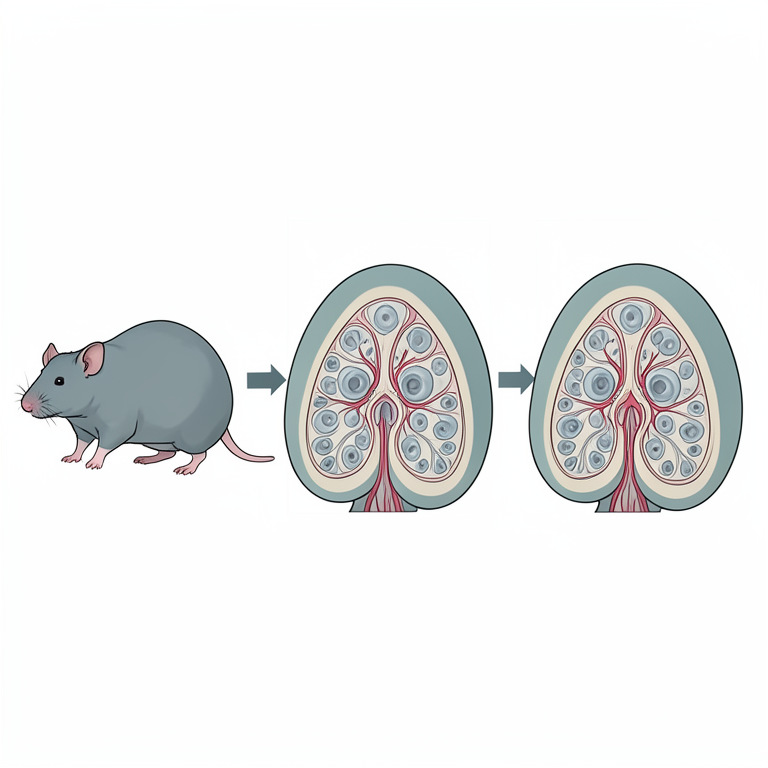
Dose-Response Summary
AI-generated conceptual illustration (adult male Wistar rats). It explains the idea and does not show study data.
View source evidence ↗Figures & tables
From the original paper Table 1
 Table 2
 Table 3
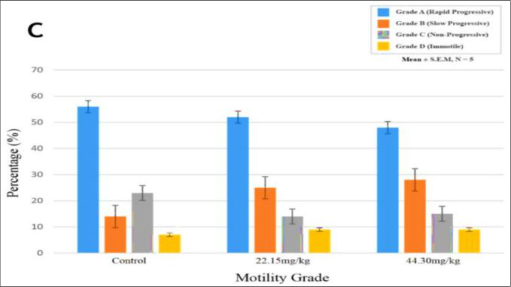 Figure 1
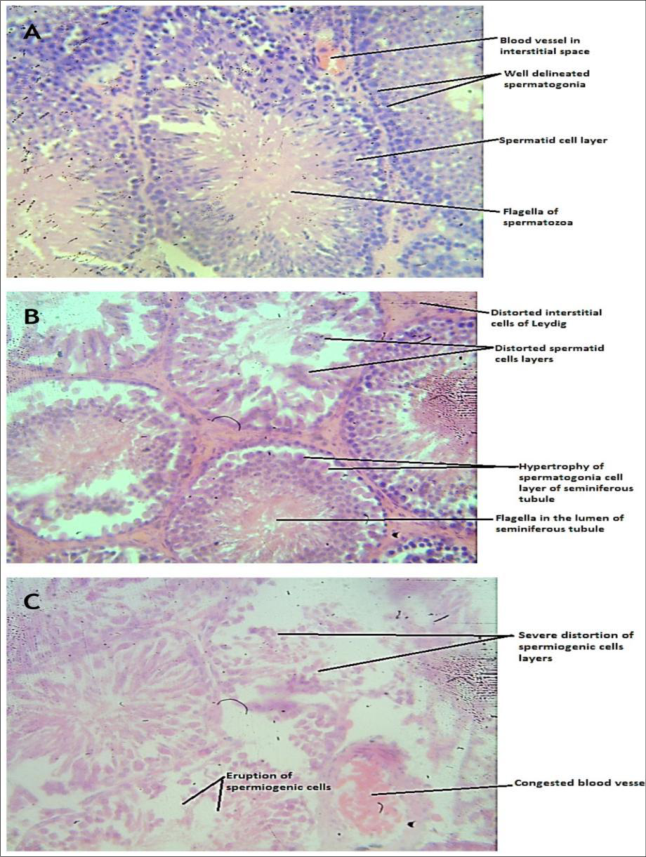 Figure 2
Introduction
Male reproductive health has undergone a significant global decline over the past several decades. Several epidemiological studies have reported a marked reduction in semen quality, including a 50-60% decrease in sperm concentration between 1973 and 2011 (Levine et al., 2017; Sweeney et al., 2019; Jørgensen et al., 2001) [16,25] . This decline is largely attributed to environmental exposures, endocrine-disrupting chemicals, and the frequent misuse of various drugs (Gore et al., 2015; Kristensen et al., 2016) [8] . Such factors may disrupt hormonal regulation, impair spermatogenesis, or directly induce oxidative damage to germ cells. Spermatogenesis is a highly organized process that takes place within the seminiferous tubules of the testes and is essential for the continuous production of viable spermatozoa (O'Donnell et al., 2011) [21] . In humans, this process spans approximately 64 days, with millions of spermatozoa produced daily to support male fertility (Amann & Howards, 1980) [3] . The resulting sperm count, typically expressed in millions per milliliter, is a major determinant of male reproductive capacity, with values above fifteen million per milliliter considered normal by the World Health Organization (WHO, 2010) [28] . Disruptions in this process may lead to decreased sperm number, impaired motility, and increased morphological abnormalities, all of which contribute to malefactor infertility. Infertility affects an estimated 15% of couples worldwide, representing a substantial global health burden with significant emotional, psychological, and socioeconomic consequences (Sharlip et al., 2002; WHO, 2020) [24] . Male factors alone account for approximately twenty percent of infertility cases and contribute to an additional 30-40% of cases in combination with female factors (Thonneau et al., 1991) [26] . In African populations, male infertility remains a critical issue, with reports indicating sperm-related abnormalities contributing to a large proportion of infertility cases (Agarwal et al., 2015; Uadia et al., 2015) [1,27] . These concerns underscore the importance of understanding how widely used medications may affect male reproductive health. Ciprofloxacin, a broad-spectrum antimicrobial agent belonging to the fluoroquinolone class, is widely prescribed for urinary tract infections, respiratory diseases, gastrointestinal infections, and several systemic bacterial conditions (Gupta et al., 2011; Mandell et al., 2007) [9, 17]. Although it is approved for use in more than one hundred countries, its safety profile has come under scrutiny due to reports of adverse reproductive outcomes. Experimental findings suggest that ciprofloxacin may induce oxidative stress and cause structural alterations in testicular tissue, leading to reductions in sperm number and motility, as well as increased morphological abnormalities (Mokhimar et al., 2020) [18] . Ciprofloxacin, a broad-spectrum antimicrobial agent belonging to the fluoroquinolone class, is widely prescribed for urinary tract infections, respiratory diseases, gastrointestinal infections, and several systemic bacterial conditions (Gupta et al., 2011; Mandell et al., 2007) [9,17] . Although it is approved for use in more than one hundred countries, its safety profile has come under scrutiny due to reports of adverse reproductive outcomes. Experimental findings suggest that ciprofloxacin may induce oxidative stress and cause structural alterations in testicular tissue, leading to reductions in sperm number and motility, as well as increased morphological abnormalities (Mokhimar et al., 2020) [18] . Additional studies have demonstrated that ciprofloxacin exposure may disrupt hormonal homeostasis, including testosterone levels that are essential for normal spermatogenesis (Khan & Sinha, 2012) [12] . These observations raise concern about the possible reproductive toxicity of ciprofloxacin, particularly with regard to shortterm exposure during active spermatogenic cycles. Despite these findings, most available studies focus on long-term or high-dose exposure, leaving a gap in understanding the acute effects of ciprofloxacin on sperm profiles and testicular structure. Short-term exposure is clinically relevant, as ciprofloxacin is commonly prescribed in brief therapeutic regimens, yet its potential immediate impact on male fertility remains insufficiently characterized. Therefore, the present study aimed to investigate the shortterm effects of ciprofloxacin administration on sperm concentration, sperm quality parameters, and testicular histomorphology in adult male Wistar rats.
Materials and Methods
Materials and Methods
Animal Care
Fifteen adult male Wistar rats (Rattus norvegicus Berkenhout, 1769) [5] were used for this study, with an average body weight of 127 g. The rats were obtained from a reputable breeder in Yenagoa, Bayelsa state, Nigeria. The rats were acclimatized for two weeks and housed in cages under good ventilation and illumination conditions at room temperature (24°C ± 2°C) , humidity (68%), under a 12hour light-dark cycle during the period of the experiment and provided with access to water and a good diet. Care and experimentation were conducted according to the National Research Council guidelines (USA) for the care and use of laboratory animals (National Research Council, 2020) [20] .
Experimental Design
The rats were randomly divided into three groups of five animals each. Group I served as the control and received distilled water (1 ml). Group II received the low dose, which was administered 22.15 mg/kg body weight per day of ciprofloxacin dissolved in 75 mL of distilled water. Group III (high-dose group) received ciprofloxacin at 44.3 mg/kg body weight per day. The solution was prepared by dissolving ciprofloxacin in 75 mL of distilled water. Treatments were administered orally for four consecutive days. The dose was derived using the body surface area normalization method, based on a human equivalent dose of 500 mg/70 kg, multiplied by the conversion factor of 6.2 for rats (Reagan-Shaw et al., 2008) [22] .
Sample Collection and Sacrifice Procedure
Rats were sacrificed by chloroform inhalation, followed by bilateral orchiectomy (National Research Council, 2010) [19] . The caudal epididymis was dissected and lacerated to release spermatozoa, following established protocols (Salawu et al. 2019; Jahan et al. 2021) [10,23] .
Sperm Motility Evaluation
Fresh semen was expressed onto a pre-warmed microscope slide (27 °C) and mixed with two drops of pre-warmed 2.9% sodium citrate. The preparation was covered with a warm coverslip and examined under ×400 magnification. Ten microscopic fields were selected randomly and 100 sperm cells (10 per field) were evaluated. Sperm were classified as motile, sluggish or immotile. Motility percentage was calculated according to WHO criteria (WHO, 2021) [29] and methodologies applied in rodent studies.
Sperm Viability Test
Sperm viability was determined using the Eosin/Nigrosin staining method. Two drops of warm stain were mixed with semen on a pre-warmed slide, smeared, and air-dried. Under ×400 magnification, viable sperm excluded stain and appeared unstained, while dead sperm absorbed the dye. Viability percentage was calculated based on the proportion of unstained spermatozoa (WHO, 2021) [29] .
Sperm Morphology Evaluation
Morphological assessment was performed by mixing semen with Walls and Ewas stain. Air-dried smears were examined under ×400 magnification. Sperm abnormalities involving the head, midpiece, tail and presence of cytoplasmic droplets were counted across randomly selected fields and expressed as a percentage of total sperm observed.
Sperm Count Determination
The right caudal epididymis was dissected, blotted dry and immersed in 5 mL formalin-saline in a graduated test tube. The displaced volume was recorded. The tissue was then homogenized thoroughly, and a portion of the homogenate was loaded into a Neubauer haemocytometer. Total sperm concentration was determined using standard counting protocols widely used in rodent reproductive studies (Cardoso et al., 2023) [6] .
Histological Processing of Testicular Tissue
Testes were fixed immediately in Bouin's solution for 12 hours and rinsed thoroughly with 70% ethanol. Tissues were dehydrated through ascending grades of ethanol, cleared in xylene, embedded in paraffin, sectioned at 5 μm, and stained with H&E. Photomicrographs were obtained at ×400 magnification.
Statistical Analysis
All data were expressed as mean ± standard error of the mean (SEM). Differences among groups were analyzed using one-way analysis of variance (ANOVA), followed by Tukey's HSD Test for post-hoc comparison. A p-value < 0.05 was considered statistically significant.
Results
Results
Sperm Concentration
Sperm Concentration
Sperm Morphology
Sperm Morphology
Histological outcomes
Control seminiferous tubules appeared normal, while treated groups showed increasing degrees of spermatogonial hypertrophy, disrupted germ cell layering, and vascular congestion (Figure 2).
Discussion
The results from this study provide important insights into the effects of ciprofloxacin administration on sperm parameters and testicular histology in adult male Wistar rats. Contrary to the initial hypothesis that ciprofloxacin might reduce sperm concentration and quality due to its potential toxicity, a dose-dependent increase in sperm concentration was observed, from 40.0 × 10⁶ cells/ml in the control group to 65.40 × 10⁶ / ml in the high-dose group, suggesting a potential stimulatory effect on spermatogenesis. This finding contrasts with several reports of adverse effects. For example, Abd-Allah et al. (2013) administered ciprofloxacin at a dose of 12.5 mg/kg twice daily for 14 days and reported significant reductions in sperm count and motility, indicating gonadotoxicity. Similarly, Khaki et al. (2011) [13] treated rats with 10 mg/kg/day of ciprofloxacin for 60 days and observed decreased sperm concentration and motility. These discrepancies may partly be explained by differences in treatment duration and administration frequency; in the present study, ciprofloxacin was administered once daily over a shorter period. Moreover, species-specific differences and potential adaptive physiological responses to different dosing regimens may account for the contrasting outcomes. Importantly, other studies support the possibility of dose-or time-dependent hormetic effects of antibiotics on the reproductive system. For instance, Ahmad et al. (2014) [2] reported that low doses of ciprofloxacin did not significantly impair testicular function in rats, and even showed mild improvements in some sperm parameters. This aligns with the dose-dependent enhancement of sperm concentration observed in the current study. Sperm morphology analysis provided further evidence of ciprofloxacin's nuanced effects on sperm structure. As presented in Table 2, the reductions in tail and cytoplasmic defects suggest potential compensatory mechanisms at higher doses, possibly promoting structural repair or reducing oxidative stress. A study by Farombi et al. (2008) [7] similarly observed reduced abnormalities in sperm morphology following antioxidant co-administration with an antibiotic, indicating that some interventions, or specific conditions, may mitigate damage. In contrast, Zobeiri et al. (2013) [30] reported increased sperm DNA damage in rodents treated with ciprofloxacin (12.5 mg/kg twice daily for 14 days), indicating spermatotoxic effects. Again, the higher administration frequency and possible cumulative toxicity in that study differ from the current protocol, where ciprofloxacin was given once daily, allowing more recovery time. Sperm motility, evaluated using WHO-defined categories, also demonstrated dose-responsive trends (Table 3). These results suggest a shift from rapid to slower motility types with increasing dosage, potentially reflecting altered energy metabolism or structural adaptation in the spermatozoa. However, the absence of a rise in immotility indicates that motility was not fully impaired. Supporting this, Ahmad et al. (2014) [2] found that short-term ciprofloxacin administration did not significantly impact sperm motility, reinforcing the notion that dose and duration critically influence the drug's reproductive effects. Histological examination revealed ciprofloxacin-induced alterations in testicular architecture, including spermatogonial hypertrophy, disruption of spermatid layers, and vascular congestion. These findings suggest a degree of testicular toxicity. Supporting evidence comes from Kheirandish et al. (2020) [14] , who observed degenerative changes in the seminiferous tubules of rats treated with 20 mg/kg/day ciprofloxacin for 60 days. Similarly, Abd-Allah et al. (2013) reported histochemical disruptions following repeated dosing. While these findings align with the structural changes observed in this study, the extent of damage may differ due to variations in dose, duration, and species. In conclusion, this study demonstrates that short-term ciprofloxacin administration produces a dose-dependent increase in sperm concentration and improvements in selected morphological parameters in adult male Wistar rats. Although motility patterns shifted from rapid to slow progressive movement, overall sperm function was maintained.
| Groups | Motility Grade | — | — | — |
|---|---|---|---|---|
| Grade A (Rapid Progressive) | Grade B (Slow Progressive) | Grade C (Non-Progressive) | Grade D (Immotile) | |
| Control (%) | $56.0 \pm 2.0^a$ | $14.0 \pm 1.0^a$ | $23.0 \pm 1.2^a$ | $7.0 \pm 0.8^a$ |
| $22.15mg/kg^{-1}$ | $52.0 \pm 1.5^b$ | $25.0 \pm 1.4^b$ | $14.0 \pm 1.1^b$ | $9.0 \pm 0.9^a$ |
| $44.3 mg/kg^{-1}$ | $48.0 \pm 1.8^c$ | $28.0 \pm 1.7^b$ | $15.0 \pm 1.3^b$ | $9.0 \pm 1.0^a$ |
Table text extracted from the original PDF; superscript letters are shown inline. The original table image is below.
View original table image
| Groups | Defect Type | — | — | — |
|---|---|---|---|---|
| Head (%) | Neck (%) | Tail (%) | Cytoplasmic droplets (%) | |
| Control (%) | $27.17 \pm 1.53^a$ | $24.25 \pm 1.99^a$ | $25.90 \pm 1.89^a$ | $21.08 \pm 0.92^a$ |
| Low dose(22.15 mg/kg) | $30.41 \pm 1.22^a$ | $25.11 \pm 0.76^a$ | $20.02 \pm 0.22^b$ | $23.90 \pm 1.37^a$ |
| High dose(44.3 mg/kg) | $29.95 \pm 1.38^a$ | $21.43 \pm 1.36^a$ | $18.95 \pm 0.69^b$ | $12.12 \pm 0.36^b$ |
Table text extracted from the original PDF; superscript letters are shown inline. The original table image is below.
View original table image
Histological alterations, including hypertrophied spermatogonia and disrupted seminiferous architecture, indicate underlying testicular stress despite these functional enhancements. These findings challenge the presumed spermatotoxic profile of ciprofloxacin and provide experimental evidence that its reproductive effects are more complex than previously assumed, underscoring the need for further mechanistic investigation.
Acknowledgement
AcknowledgementsThe authors acknowledge the technical support provided by the Department of Human Anatomy, Niger Delta University. No external funding was received.
Figures and tables from the paper
| Groups | Mean Sperm Concentration ( $\times 10^{6}$ ) |
|---|---|
| Control (distilled water) | $40.00 \pm 4.18^{a}$ |
| Low dose (22.15 mg/kg) | $50.40 \pm 2.30^{b}$ |
| High dose (44.3 mg/kg) | $65.40 \pm 4.63^{c}$ |
Table text extracted from the original PDF; superscript letters are shown inline. The original table image is below.
View original table image
References
29 in the original paper- Agarwal A, Mulgund A, Hamada A, Chyatte MR. A unique view on male infertility around the globe. Reproductive Biology and Endocrinology. 2015;13:37.
- Ahmad L, Khan A, Khan MZ. Toxicity of ciprofloxacin and trimethoprim on testicular tissue and sperm parameters in male albino rats. Journal of the College of Physicians and Surgeons Pakistan. 2014;24:165-169.
- Amann RP, Howards SS. Daily spermatozoal production and epididymal spermatozoal reserves of the human male. Journal of Urology. 1980;124:211-215.
- Azu DEO, Nweke P, Essien BA. Soil fertility properties, growth and yield of groundnut (Arachis hypogaea L.) as influenced by wood ash and NPK fertilizers in an Ultisol of Southeastern Nigeria. East African Scholars Journal of Agriculture and Life Sciences. 2019;2:98-103.
- Cardoso E, Mathias MDL, Monarca RI, Gabriel SI. Assessing Optimal Cell Counts in Sperm Shape Abnormality Assays in Rodents. Animals. 2023;13(21):3324.
- Farombi EO, Ugwuezunmba MC, Ezenwadu TT, Oyeyemi MO, Ekor M. Tetracycline-induced reproductive toxicity in male rats: Effects of vitamin C and N-acetylcysteine. Experimental and Toxicologic Pathology. 2008;60:77-85.
- Gore AC, Chappell VA, Fenton SE, Flaws JA, Nadal A, Prins GS, et al. EDC-2: The Endocrine Society's second scientific statement on endocrinedisrupting chemicals. Endocrine Reviews. 2015;36:E1-E150.
- Gupta K, Hooton TM, Naber KG. International clinical practice guidelines for the treatment of acute uncomplicated cystitis and pyelonephritis in women. Clinical Infectious Diseases. 2011;52:e103-e120.
- Jahan I, Uddin ABMN, Reza ASMA, Uddin MG, Hossain MS, Nasrin MS, et al. Tendencies and attitudes towards dietary supplements use among undergraduate female students in Bangladesh. PLoS ONE. 2021;16:e0249897.
- Virtanen H, Skakkebaek NE. Regional differences in semen quality in Europe. Human Reproduction. 2001;16:1012-1019.
- Khan S, Sinha P. Effect of ciprofloxacin on the reproductive system of male rats. Journal of Pharmacy Research. 2012;5:4176-4179.
- Khaki A, Fathiazad F, Nouri M, Khaki AA, Maleki NA. Antioxidant effect of ginger to prevent testicular damage induced by dimethylhydrazine in rats. Journal of Medicinal Plants Research. 2011;5:290-294.
- Kheirandish F, Ebrahimi M, Azami S. Effect of ciprofloxacin on sperm parameters and testicular tissue structure in adult male rats. International Journal of Reproductive Biomedicine. 2020;18:947-958.
- Kristensen DM, Hass U, Lesné L, Lottrup G, Jacobsen PR, Desdoits-Lethimonier C, et al. Intrauterine exposure to mild analgesics is a risk factor for development of male reproductive disorders in humans and rats. Human Reproduction. 2011;26:235-244.
- Levine H, Jørgensen N, Martino-Andrade A, Mendiola J, Weksler-Derri D, Mindlis I, et al. Temporal trends in sperm count: A systematic review and metaregression analysis. Human Reproduction Update. 2017;23(6):646-659.
- Mandell LA, Wunderink RG, Anzueto A, Bartlett JG, Campbell GD, Dean NC, et al. Infectious Diseases Society of America/American Thoracic Society consensus guidelines on the management of community-acquired pneumonia. Clinical Infectious Diseases. 2007;44:S27-S72.
- Mokhimar HM, Kandiel MM, Amin AA, Elsawah HK, El Mahmoudy AM. Ciprofloxacin and levofloxacin adversely affect male infertility indicated by pharmacological, andrological and pathological evidence. International Journal of Basic & Clinical Pharmacology. 2020;9(2):353.
- National Research Council. Guide for the care and use of laboratory animals (8th ed.). National Academies Press. 2010.
- National Research Council. Guide for the care and use of laboratory animals (Updated ed.). National Academies Press. 2020.
- O'Donnell L, Nicholls PK, O'Bryan MK, McLachlan RI, Stanton PG. Spermiation: The process of sperm release. Spermatogenesis. 2011;1:14-35.
- Reagan-Shaw S, Nihal M, Ahmad N. Dose translation from animal to human studies revisited. FASEB Journal. 2008;22:659-661.
- Salawu EY, Ajayi OO, Inegbenebor AO, Afolalu SA. Constitutive model to analyse the effect of variation in temperature distribution on the rate of heat transfer around a spur gear tooth. Procedia Manufacturing. 2019;35:236-241.
- Sharlip ID, Jarow JP, Belker AM, Lipshultz LI, Sigman M, Thomas AJ, et al. Best practice policies for male infertility. Fertility and Sterility. 2002;77:873-882.
- Sweeney MF, Hasan N, Soto AM, Sonnenschein C. Human exposure to bisphenol A and other endocrine disruptors: A review. Environmental Health Perspectives. 2019;127:065001.
- Thonneau P, Marchand S, Tallec A, Ferial ML, Ducot B, Lansac J, a. Incidence and main causes of infertility in a population of three French regions (1988-1989). Human Reproduction. 1991;6:811-816.
- Uadia PO, Emokpae MA. Male factor infertility: Etiology and management. Journal of Reproduction and Infertility. 2015;16:93-98.
- World Health Organization. WHO laboratory manual for the examination and processing of human semen (5th ed.). WHO Press. 2010.
- World Health Organization. WHO laboratory manual for the examination and processing of human semen (6th ed.). WHO Press. 2021.
- Zobeiri F, Sadrkhanlou RA, Salami S, Mardani K. Long-term effect of ciprofloxacin on testicular tissue: Evidence for biochemical and histochemical changes. International Journal of Fertility & Sterility. 2013;6:294-303.