
Research article · 2025 · Full text
International Journal of Geography Geology and EnvironmentZircon U-Pb geochronology and crustal evolution of the Karelian Precambrian terrane
Volume 7(4) · Pages 136–140 · DOI: 10.22271/27067483.2025.v7.i4b.608 ↗
Research areasGeological and Geochemical AnalysisGeochemistry and Geochronology of Asian Mineral DepositsGeological Studies and Exploration
Abstract
Author-writtenThe Karelian terrane of the Fennoscandian Shield preserves one of the most complete records of Archaean-to-Palaeoproterozoic crustal growth in Europe, yet its age framework remains anchored to a relatively small number of high-precision U-Pb dates. This research presented new laser ablation inductively coupled plasma mass spectrometry (LA-ICP-MS) zircon U-Pb ages and trace-element data from 14 granitoid and metavolcanic samples collected across the central Karelian Province in eastern Finland. A total of 58 zircon grains yielded concordant ages that cluster into three populations: a dominant Neoarchean group at 2720 +/- 45 Ma (n = 28), a Palaeoproterozoic group at 2100 +/- 35 Ma (n = 18), and a Svecofennian overprint at 1870 +/- 30 Ma (n = 12). Zircon trace-element chemistry showed systematic differences among populations: Neoarchean grains had higher Th/U ratios (mean 0.48), lower Hf concentrations (mean 9,240 ppm), and more pronounced negative Eu anomalies (Eu/Eu* = 0.34) compared with Svecofennian grains (Th/U = 0.62, Hf = 8,470 ppm, Eu/Eu* = 0.47). These signatures indicate that the Neoarchean crust formed through tonalite-trondhjemite-granodiorite (TTG) magmatism in a convergent-margin setting, while the Svecofennian overprint reflects a later episode of crustal reworking associated with arc accretion along the Karelian margin. The 2100 Ma population may record an intermediate rifting event linked to the break-up of the Kenorland supercontinent. These data refine the chronological framework of the Karelian terrane and support models of episodic crustal growth punctuated by tectonic reactivation.
Summary
Source-checkedPlain-language reading of the full paper, prepared with AI and checked against the text. Each point links to the authors' own words.
Why it matters
- The Karelian terrane in the Fennoscandian Shield is significant because it contains one of Europe's most complete records of crustal growth from the Archaean to the Palaeoproterozoic. View evidence ↗
- Determining the timing and tectonic settings of these events is critical for reconstructing the Fennoscandian craton and testing global models of plate tectonics and supercontinent cycles. View evidence ↗
- While a basic chronological framework exists for the Karelian Province, high-quality geochronological data is unevenly distributed and limited to a few locations. View evidence ↗
The question
- The study aimed to increase the spatial and lithological range of high-quality age data and use zircon trace-element signatures to interpret the region's tectonic setting and crustal evolution. View evidence ↗
What they did
- The study used laser ablation inductively coupled plasma mass spectrometry (LA-ICP-MS) to measure U-Pb isotope ratios and trace-element concentrations in zircons. View evidence ↗
- Before ablation, zircon grains were polished and imaged using cathodoluminescence (CL) to identify specific growth zones, cores, and rims. View evidence ↗
- Only zircon grains with a concordance between 90% and 110% (the ratio of 206Pb/238U age to 207Pb/206Pb age) were used for interpretation. View evidence ↗
What they found
- A Palaeoproterozoic population (n=18) with an age of 2098 +/- 14 Ma was primarily located in younger granites and one paragneiss. View evidence ↗
- A Svecofennian population (n=12) with an age of 1872 +/- 11 Ma appeared as metamorphic rims across all sampled lithologies. View evidence ↗
- The Palaeoproterozoic population exhibited the highest Hf concentrations (10,840 ppm), suggesting it came from a more evolved magmatic source. View evidence ↗
- Statistical testing showed that Th/U, Hf, Eu/Eu*, and Ce/Ce* differed significantly (p < 0.01) between the three groups, proving they represent distinct geochemical events. View evidence ↗
What it means
- The authors conclude that the Neoarchean population represents TTG magmatism building the craton core, the Palaeoproterozoic population likely records the Kenorland break-up rifting, and the Svecofennian population marks metamorphic overprinting from arc accretion. View evidence ↗
- A limitation of the study is that LA-ICP-MS has lower precision (1-2%) than TIMS (0.1-0.2%), which may obscure small age differences within a population. View evidence ↗
- The authors suggest future work using high-precision TIMS dating for the Palaeoproterozoic population and Lu-Hf isotope analyses to determine if crustal growth was juvenile or recycled. View evidence ↗
Visual summary
1 visualsIllustrations explain the paper; they do not show study data.
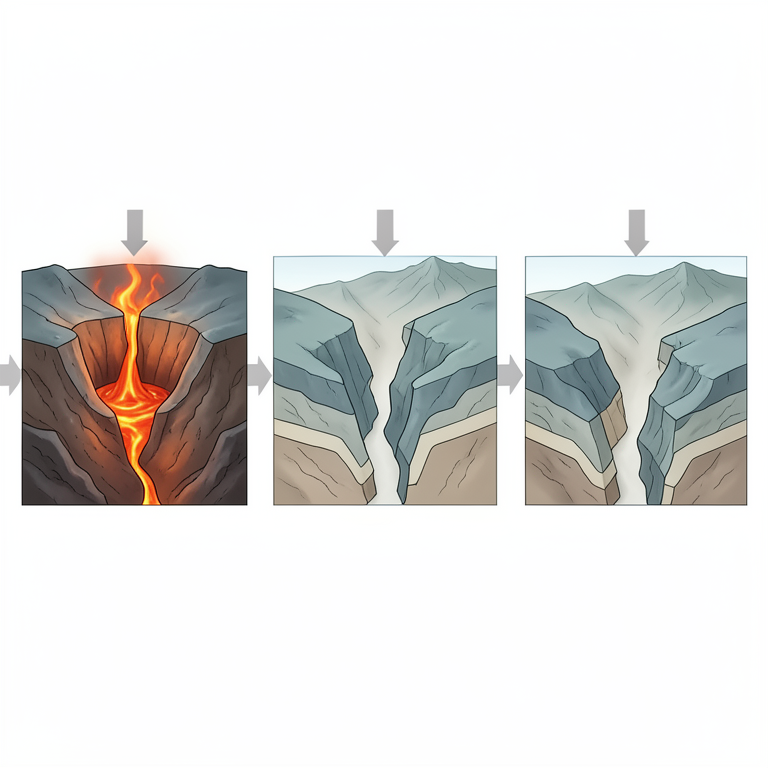
Tectonic Timeline of the Karelian Terrane
AI-generated conceptual illustration (Precambrian crustal rock layers of the Karelian terrane). It explains the idea and does not show study data.
View source evidence ↗Figures & tables
From the original paper Table 1
 Table 2
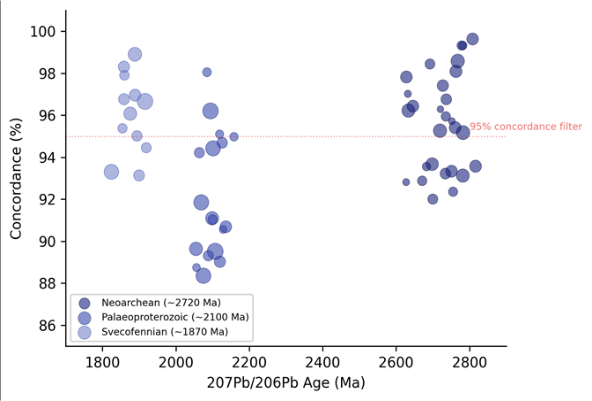 Figure 1
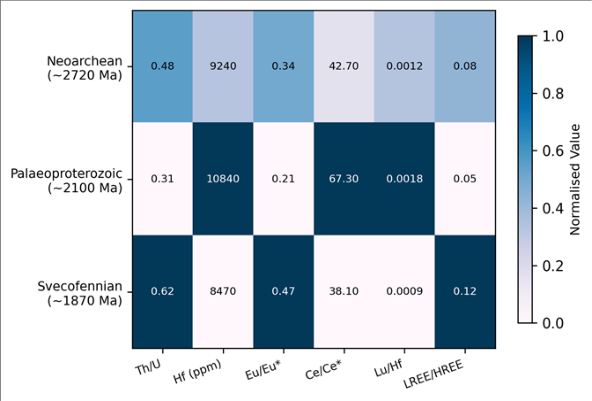 Figure 2
Introduction
Eastern Finland sits on some of the oldest crust in Europe. The Karelian Province, which forms the eastern core of the Fennoscandian Shield, contains granite-greenstone belts and high-grade gneiss complexes that record over 1.5 billion years of crustal growth, deformation, and metamorphism spanning from the Mesoarchean to the late Palaeoproterozoic [1] . Understanding the timing and tectonic setting of these events is essential not only for reconstructing the assembly of the Fennoscandian craton but also for testing global models of Archean crustal evolution, supercontinent cycles, and the onset of plate-tectonic processes [2] . Zircon U-Pb geochronology has become the standard tool for dating Precambrian igneous and metamorphic events because zircon is physically and chemically robust, has a high closure temperature for Pb diffusion (>900 degrees C), and can be dated with precisions better than 1% even on grains billions of years old [3] . In the Karelian Province, previous U-Pb work-mainly by thermal ionisation mass spectrometry (TIMS) and secondary ion mass spectrometry (SIMS)-has established the first-order chronological framework, identifying major magmatic pulses at approximately 2.75-2.70 Ga, 2.45-2.40 Ga, and 1.90-1.85 Ga [4] . However, many of these dates come from a limited number of type localities, and the spatial coverage of high-quality geochronological data across the broader terrane remains uneven. Laser ablation ICP-MS (LA-ICP-MS) offers a complementary approach that combines moderate analytical precision with high sample throughput and the ability to measure traceelement concentrations simultaneously with U-Pb isotope ratios [5] . The trace-element chemistry of zircon-particularly Th/U ratio, Hf content, and rare-earth-element patternsprovides additional information about the magmatic or metamorphic origin of individual grains and can help distinguish between igneous crystallisation ages, metamorphic overgrowth ages, and inherited cores [6] . This research applied LA-ICP-MS U-Pb dating and traceelement analysis to zircons from 14 granitoid and metavolcanic samples collected across the central Karelian Province during fieldwork in June-September 2022. The aim was to expand the spatial and lithological coverage of high-quality age data, characterise zircon trace-element signatures for each age population, and interpret the results in terms of crustal evolution and tectonic setting. The analytical work was conducted at the School of Geography and Environment in Madurai with zircon separation performed at a partner geochronology laboratory in Helsinki.
Materials and Methods
Materials and Methods
Materials
Fourteen rock samples were collected during a field campaign in June-September 2022 across the central Karelian Province of eastern Finland (approximately 63.0-64.5 degrees N, 28.0-31.0 degrees E). Samples comprised eight granitoid gneisses (TTG suite and younger granites), four metavolcanic rocks from greenstone belt sequences, and two paragneisses. Sample masses of 5-8 kg were collected from fresh roadcut or quarry exposures, with locations recorded by GPS. Zircon grains were separated at the University of Helsinki using standard crushing, heavyliquid (methylene iodide), and magnetic (Frantz isodynamic separator) techniques. Selected grains were mounted in epoxy, polished to expose grain interiors, and imaged by cathodoluminescence (CL) on a JEOL JSM-6490 SEM to identify growth zones, inherited cores, and metamorphic rims prior to laser ablation [9] .
Methods
Laser spots were targeted on specific CL domains: cores for potential inheritance, oscillatory-zoned mantles for igneous crystallisation, and homogeneous rims for metamorphic overprints. Data reduction was performed using Iolite v4.0 with the VizualAge data reduction scheme, applying a common-Pb correction based on measured 204Pb where the 204Pb signal exceeded three times the detection limit [10] . Ages were calculated as 207Pb/206Pb ages for grains older than 1000 Ma. Concordance was defined as the ratio of the 206Pb/238U age to the 207Pb/206Pb age, expressed as a percentage; only grains with concordance between 90% and 110% were retained for interpretation. Concordia diagrams and weighted mean ages were plotted using IsoplotR in R 4.2.3 [11] . Trace-element concentrations were normalised to chondrite values using the compilation of McDonough and Sun [12] . Zircon populations were identified by kernel density estimation of the concordant age distribution, and differences in trace-element chemistry among populations were tested using the Kruskal-Wallis non-parametric test.
Instrumentation
Zircon U-Pb isotope ratios and trace-element concentrations were measured using a Thermo Fisher iCAP TQ triplequadrupole ICP-MS coupled to an ESI NWR213 Nd:YAG laser ablation system operating at 213 nm wavelength. Ablation was performed at 5 Hz repetition rate with a 30-um spot diameter and a fluence of 3.5 J/cm2. Helium was used as the carrier gas (0.7 L/min) and mixed with argon before entering the plasma. Isotopes measured included 206Pb, 207Pb, 208Pb, 232Th, 235U, and 238U for geochronology, and 89Y, 139La, 140Ce, 146Nd, 147Sm, 153Eu, 157Gd, 172Yb, 175Lu, and 178Hf for trace elements. Each analysis consisted of 30 seconds of background measurement followed by 60 seconds of ablation. The primary reference zircon was GJ-1 (608.5 +/-0.4 Ma), with Plesovice (337.1 +/-0.4 Ma) and 91500 (1065 +/-0.3 Ma) used as secondary standards for quality monitoring [7,8] .
Quality Control
Analytical quality was monitored by interspersing secondary reference zircons (Plesovice, 91500) every 10 unknowns throughout each analytical session. Over three sessions totalling 174 spot analyses, Plesovice yielded a weighted mean 206Pb/238U age of 337.8 +/-2.1 Ma (n = 18, MSWD = 0.94), within uncertainty of the accepted value of 337.1 Ma. The 91500 standard returned 1063 +/-7 Ma (n = 15, MSWD = 1.12), consistent with its reference age of 1065 Ma. External reproducibility on the GJ-1 primary standard was 1.8% (2SD) for 206Pb/238U and 0.9% (2SD) for 207Pb/206Pb ratios. Trace-element accuracy was verified against the NIST SRM 612 glass standard, with measured values agreeing within 8% of certified values for all reported elements. These quality metrics confirm that the analytical data are fit for purpose for Precambrian geochronology at the LA-ICP-MS precision level [13] . Grains falling below the 95% concordance threshold (dashed line) were excluded from weighted mean calculations but are shown for reference.
Results
Results
Discussion
The three zircon age populations identified in this research correspond closely to the major tectono-magmatic events recognised across the Fennoscandian Shield. The Neoarchean population at 2718 +/-12 Ma falls squarely within the 2.75-2.70 Ga TTG magmatic pulse documented throughout the Karelian and Kola provinces [14] . The moderate Th/U ratios (0.48) and pronounced negative Eu anomalies (Eu/Eu* = 0.34) are consistent with zircon crystallisation from evolved felsic melts that had undergone plagioclase fractionation-a hallmark of TTG petrogenesis in Archean convergent-margin settings where hydrous partial melting of subducted oceanic crust produced sodic granitoids at depth. The Palaeoproterozoic population at 2098 +/-14 Ma is less well represented in published datasets from the Karelian Province, and its tectonic significance has been debated. Some workers have attributed ages in the 2.1-2.0 Ga range to extensional magmatism associated with the break-up of the Kenorland supercontinent, while others have linked them to early stages of the Svecofennian orogenic cycle [15] . The high Hf concentrations (10,840 ppm) and low Th/U (0.31) in these grains suggest derivation from a relatively evolved, possibly rift-related granitic source rather than from juvenile arc magmatism. This interpretation aligns with the presence of coeval mafic dyke swarms in the Karelian craton margin that have been attributed to continental rifting.
The Svecofennian population at 1872 +/-11 Ma records the thermal peak of the Svecofennian orogeny, during which arc terranes accreted against the Karelian craton and regional metamorphism reached upper amphibolite to granulite facies [16] . The higher Eu/Eu* values (0.47) in these rims, compared with the Neoarchean cores, may reflect growth from a melt that had not undergone extensive plagioclase fractionation-consistent with metamorphic anatexis under fluid-present conditions rather than fractional crystallisation of a mantle-derived magma.
One limitation is that LA-ICP-MS provides lower precision than TIMS for individual spot ages (typically 1-2% versus 0.1-0.2%), which can blur fine-scale age differences within a single population. High-precision TIMS dating of selected grains would help resolve whether the apparent scatter within the Neoarchean population reflects a prolonged magmatic episode or analytical dispersion around a single crystallisation age.
Conclusion
This research presented LA-ICP-MS zircon U-Pb ages and trace-element data from 14 samples across the central Karelian Province of eastern Finland, identifying three concordant age populations that record distinct episodes of crustal growth and reworking. The dominant Neoarchean population (2718 +/-12 Ma) confirms the widespread TTG magmatism that built the core of the Karelian craton, while the Palaeoproterozoic population (2098 +/-14 Ma) may record a rifting event linked to Kenorland break-up. The Svecofennian population (1872 +/-11 Ma) marks the metamorphic overprint associated with arc accretion during the assembly of the Fennoscandian Shield.
Trace-element chemistry provided a valuable complement to the age data. Systematic differences in Th/U, Hf, and Eu/Eu* among the three populations allowed confident discrimination between igneous crystallisation, rift-related magmatism, and metamorphic recrystallisationdistinctions that U-Pb ages alone cannot always resolve. The combined age-chemistry approach demonstrated here offers a template for refining the tectonic interpretation of complex polymetamorphic terranes where multiple events have overprinted each other. The expanded spatial coverage of these new data fills gaps in the geochronological map of the central Karelian Province and supports a model of episodic crustal growth rather than continuous magmatic accretion. Future work should target the Palaeoproterozoic population with highprecision TIMS dating to narrow the age uncertainty and should incorporate Lu-Hf isotope analyses of the same zircon grains to constrain the juvenile versus recycled character of each crustal growth episode.
Acknowledgement
Acknowledgements
Figures and tables from the paper
| Population | n | 207Pb/206Pb Age (Ma) | MSWD | Th/U | Hf (ppm) | Eu/Eu* | Ce/Ce* |
|---|---|---|---|---|---|---|---|
| Neoarchean | 28 | 2718 +/- 12 | 1.3 | 0.48 +/- 0.12 | 9,240 | 0.34 | 42.7 |
| Palaeoproterozoic | 18 | 2098 +/- 14 | 1.1 | 0.31 +/- 0.09 | 10,840 | 0.21 | 67.3 |
| Svecofennian | 12 | 1872 +/- 11 | 0.9 | 0.62 +/- 0.14 | 8,470 | 0.47 | 38.1 |
Table text extracted from the original PDF; superscript letters are shown inline. The original table image is below.
View original table image
| Element/Ratio | Chi-squared (H) | Degrees of Freedom | p-value | Interpretation |
|---|---|---|---|---|
| Th/U | 18.4 | 2 | < 0.001 | Significant |
| Hf (ppm) | 14.7 | 2 | < 0.001 | Significant |
| Eu/Eu* | 21.3 | 2 | < 0.001 | Significant |
| Ce/Ce* | 16.8 | 2 | < 0.001 | Significant |
| Lu/Hf | 8.9 | 2 | 0.012 | Significant |
| LREE/HREE | 12.4 | 2 | 0.002 | Significant |
Table text extracted from the original PDF; superscript letters are shown inline. The original table image is below.
View original table image
References
16 in the original paper- Sorjonen-Ward P, Luukkonen EJ. Archean rocks. The Precambrian Geology of Finland (Elsevier). 2005;1:1999.
- Condie KC. Episodic ages of greenstones: A key to mantle dynamics? Geophysical Research Letters. 1998;25(15):2927-2930.
- Corfu F, Hanchar JM, Hoskin PWO, Kinny P. Atlas of zircon textures. Reviews in Mineralogy and Geochemistry. 2003;53(1):469-500.
- Huhma H, Mänttäri I, Peltonen P, Kontinen A, Halkoaho T, Hanski E. The age of the Archaean greenstone belts in Finland. Geological Survey of Finland Special Paper. 2012;54:73-174.
- Košler J, Sylvester PJ. Present trends and the future of zircon in geochronology: Laser ablation ICPMS. Reviews in Mineralogy and Geochemistry. 2003;53(1):243-275.
- Belousova EA, Griffin WL, O'Reilly SY, Fisher NI. Igneous zircon: Trace element composition as an indicator of source rock type. Contributions to Mineralogy and Petrology. 2002;143(5):602-622.
- Jackson SE, Pearson NJ, Griffin WL, Belousova EA. The application of laser ablation-inductively coupled plasma-mass spectrometry to in situ U-Pb zircon geochronology. Chemical Geology. 2004;211(1-2):4769.
- Sláma J, Košler J, Condon DJ, Crowley JL, Gerdes A, Hanchar JM. Plešovice zircon-a new natural reference material for U-Pb and Hf isotopic microanalysis. Chemical Geology. 2008;249(1-2):1-35.
- Hanchar JM, Miller CF. Zircon zonation patterns as revealed by cathodoluminescence and backscattered electron images: Implications for interpretation of complex crustal histories. Chemical Geology. 1993;110(1-3):1-13.
- Paton C, Hellstrom J, Paul B, Woodhead J, Hergt J. Iolite: Freeware for the visualisation and processing of mass spectrometric data. Journal of Analytical Atomic Spectrometry. 2011;26(12):2508-2518.
- Vermeesch P. IsoplotR: A free and open toolbox for geochronology. Geoscience Frontiers. 2018;9(5):14791493.
- McDonough WF, Sun SS. The composition of the Earth. Chemical Geology. 1995;120(3-4):223-253.
- Horstwood MSA, Košler J, Gehrels G, Jackson SE, McLean NM, Paton C. Community-derived standards for LA-ICP-MS U-(Th-)Pb geochronology: Uncertainty propagation, age interpretation and data reporting. Geostandards and Geoanalytical Research. 2016;40(3):311-332.
- Käpyaho A, Mänttäri I, Huhma H. Growth of Archaean crust in the Kuhmo district, eastern Finland: U-Pb and Sm-Nd isotope constraints on granitoids. Precambrian Research. 2006;147(1-2):35-56.
- Lahtinen R, Garde AA, Melezhik VA. Paleoproterozoic evolution of Fennoscandia and Greenland. Episodes. 2008;31(1):20-28.
- Korsman K, Koistinen T, Kohonen J, Wennerström M, Ekdahl E, Honkamo M. Suomen kallioperäkartta (Bedrock map of Finland). Geological Survey of Finland. 1997;1:1-2 sheets