
Research article · 2026 · Full text
International Journal of Biology SciencesEvaluation of Cocopeat-Based Substrate Combinations for Enhancing Growth, Yield and Fruit Quality of Brinjal (Solanum melongena L.) under Soilless Cultivation
Volume 8(4) · Pages 194–200 · DOI: 10.33545/26649926.2026.v8.i4c.815 ↗
Research areasGrowth and nutrition in plantsPlant Growth and Agriculture TechniquesAgricultural Science and Fertilization
Abstract
Author-writtenBrinjal (Solanum melongena L.) is an important vegetable crop widely cultivated in Asia, with India being one of the leading producers. However, increasing population pressure, climate change, and limited land availability have highlighted the need for alternative cultivation methods such as soilless culture. Cocopeat, a by-product of the coconut industry, is widely used as a growing medium due to its high moisture retention and favorable physicochemical properties, though it is not suitable when used alone. The present study aimed to evaluate the effect of cocopeat-based substrates on the growth, yield, and quality of brinjal. Two treatments were tested: T1 (cocopeat + neem powder) and T2 (cocopeat + farmyard manure + neem powder). The experiment was conducted in plastic containers under open conditions. Growth parameters such as plant height, number of leaves, and yield attributes were recorded. Results indicated that the combination of cocopeat with farmyard manure (T2) significantly improved plant growth, yield, and quality compared to cocopeat alone (T1). The study concludes that enriching cocopeat with organic manure enhances its suitability as a growing medium for brinjal cultivation under soilless conditions.
Summary
Source-checkedPlain-language reading of the full paper, prepared with AI and checked against the text. Each point links to the authors' own words.
Why it matters
- Brinjal is a significant vegetable crop in Asia, and India is one of its primary producers. View evidence ↗
- Factors like climate change, population growth, and limited land have created a need for soilless cultivation alternatives. View evidence ↗
- Using cocopeat alone is limited because its high lignin content and wide carbon-to-nitrogen ratio slow down decomposition. View evidence ↗
The question
- The study aimed to evaluate how different cocopeat-based substrates affect the growth, yield, and quality of brinjal. View evidence ↗
What they did
- The researchers tested two treatments: T1 (cocopeat and neem powder in a 9:1 ratio) and T2 (cocopeat, farmyard manure, and neem powder in a 6:3:1 ratio). View evidence ↗
- Plants were watered daily with an average of 0.4 litres of water per plant until harvest. View evidence ↗
What they found
- Treatment T2 (cocopeat + FYM + neem powder) resulted in a maximum plant height of 74.8 cm, which was higher than that of T1. View evidence ↗
- The average fruit weight was significantly higher in T2 (89.4g) compared to T1 (32.2g). View evidence ↗
- Fruit length was greater in T2 (7.8 cm) than in T1 (6.4 cm). View evidence ↗
- T2 produced fruits with a maximum diameter of 6.47 cm, while T1 produced fruits with a minimum diameter of 3.76 cm. View evidence ↗
- The number of fruits per plant was higher in T2 (34 fruits) than in T1 (13 fruits). View evidence ↗
- T2 achieved a highest yield of 3.78 kg per plant, compared to 0.64 kg per plant for T1. View evidence ↗
- In organoleptic tests, T2 received the highest average quality score of 4.86, while T1 received the lowest score of 3.19. View evidence ↗
What it means
- The authors conclude that while cocopeat alone is insufficient, combining it with farmyard manure significantly improves growth, yield, and quality, making it a suitable substrate for vegetables. View evidence ↗
Visual summary
1 visualsIllustrations explain the paper; they do not show study data.
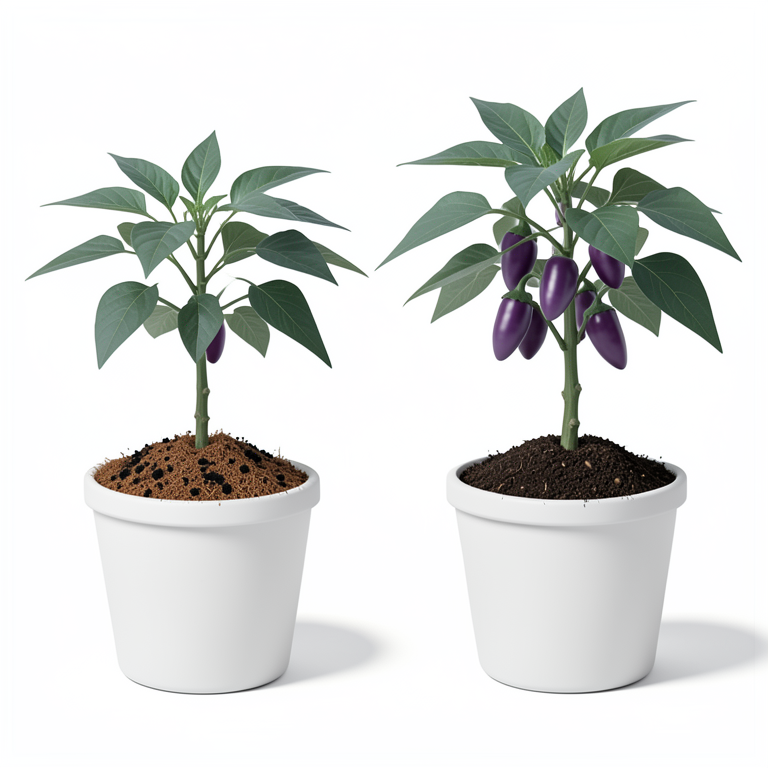
Substrate Composition Comparison
AI-generated conceptual illustration (Brinjal plants (Solanum melongena L.) in soilless cocopeat substrates). It explains the idea and does not show study data.
View source evidence ↗Figures & tables
From the original paper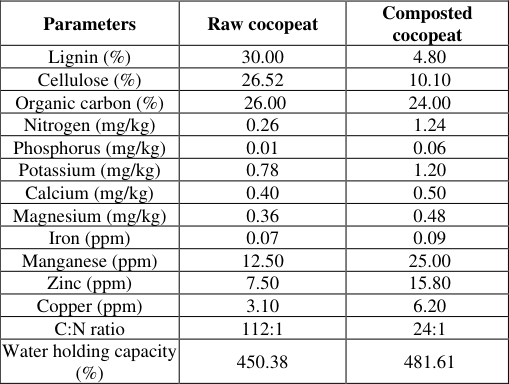 Table 1
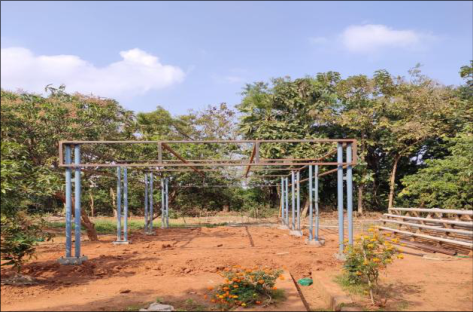 Figure 1
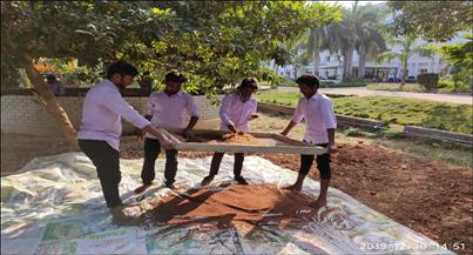 Figure 2
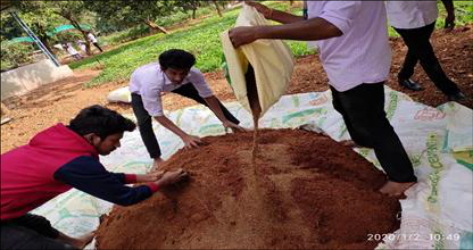 Figure 3
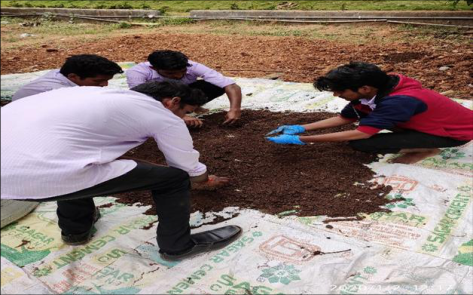 Figure 4
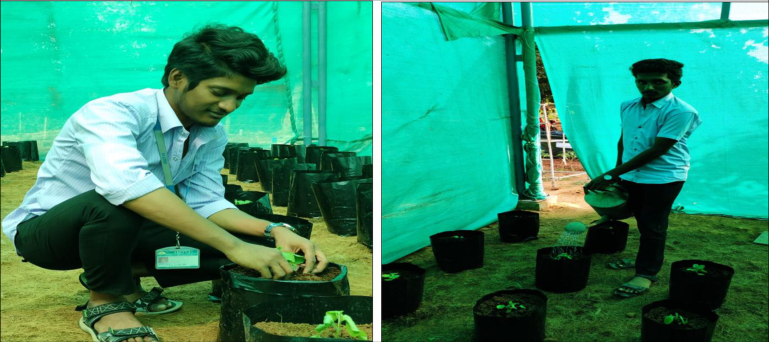 Figure 5
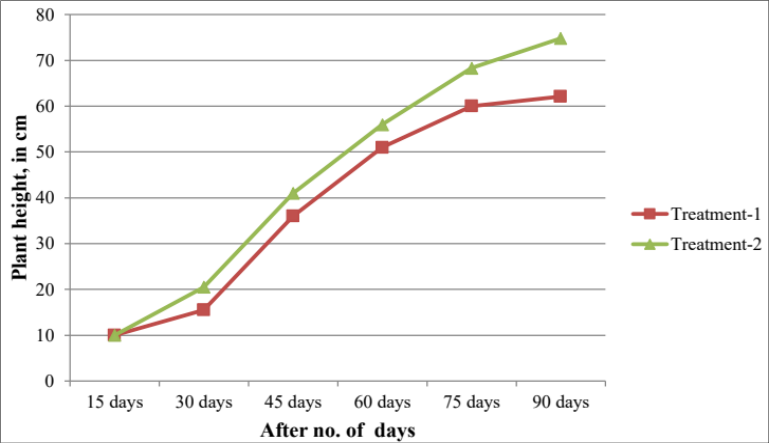 Figure 6
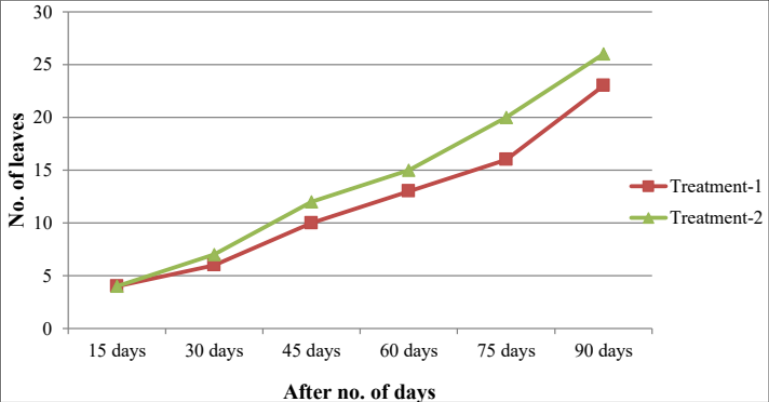 Figure 7
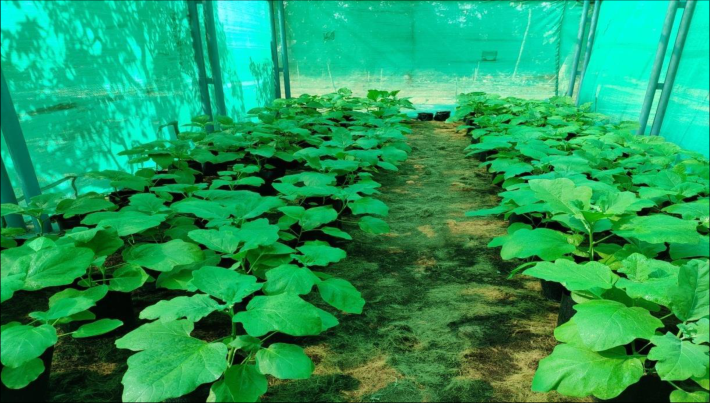 Figure 8
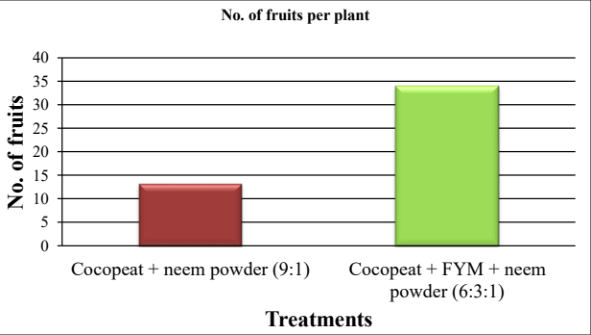 Figure 9
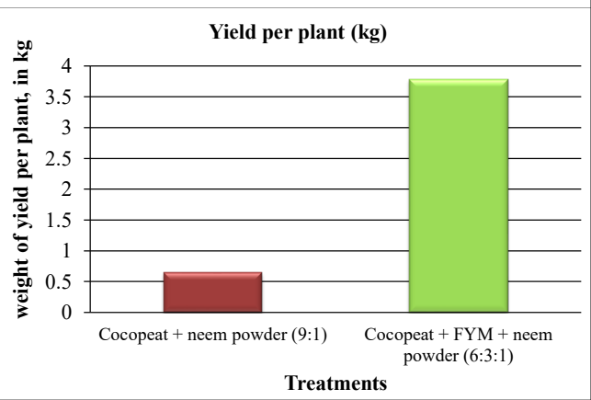 Figure 10
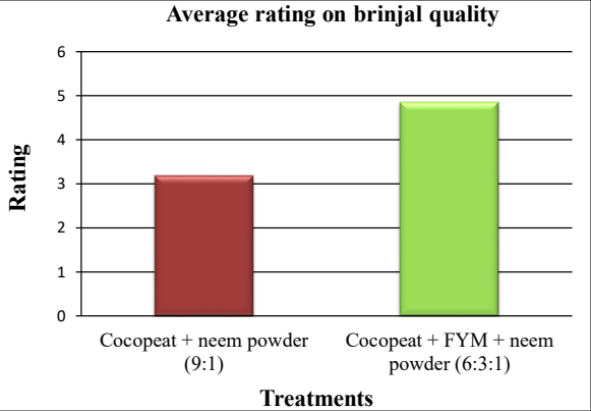 Figure 11
Introduction
Brinjal (Solanum melongena L.), commonly known as eggplant or aubergine, is an important solanaceous vegetable crop cultivated for its edible fruit. It is the second most important solanaceous vegetable after tomato in the genus Solanum [1] . The crop is widely grown in tropical and subtropical regions including India, China, Bangladesh, Pakistan, and the Philippines, and is also popular in Mediterranean countries and the United States [2] . In India, brinjal is one of the most common and widely cultivated vegetable crops, grown across diverse agro-climatic regions except at higher altitudes. Although botanically perennial, it is commercially cultivated as an annual crop. Numerous cultivars are grown across the country with considerable variation in fruit size, shape, and color depending on consumer preference [3] . Brinjal has been cultivated in India for more than 4000 years and plays a significant role in vegetable production and food security [2] . Globally, eggplant is cultivated on approximately 1.9 million hectares with an annual production exceeding 60 million tonnes. China is the largest producer, followed by India. In India, brinjal is grown on nearly 0.68 million hectares with a production of around 12.8 million tonnes, contributing substantially to the total vegetable production of the country [4] . Major brinjal-producing states include West Bengal, Odisha, Bihar, Gujarat, Maharashtra, Karnataka, Uttar Pradesh, and Andhra Pradesh. Brinjal is a warm-season crop and performs best under a long and warm growing season. The crop is highly sensitive to frost and low temperatures, which may lead to poor fruit set and deformation. An optimum temperature range of 13-21°C is favorable for growth and yield, while seed germination occurs best at around 25°C [5] .
The crop can be grown in a wide range of soils from sandy loam to clay loam, provided the soil is well-drained and rich in organic matter with a pH range of 6.5-7.5 [6] . Brinjal is nutritionally important due to the presence of essential minerals such as potassium, calcium, sodium, and iron [7] . The fruit contains about 92.7% water, 4% carbohydrates, 1.4% protein, 1.3% fiber, and 0.3% fat, along with small quantities of vitamins and minerals [8] . The fruits also contain polyunsaturated fatty acids such as linoleic and linolenic acids, which are associated with cholesterolreducing properties. Due to its medicinal value, brinjal has been used in traditional medicine for the treatment of liver disorders, allergies, rheumatism, and digestive problems [9] . Despite its importance, conventional soil-based agriculture is facing several challenges, including declining per-capita land availability, soil degradation, urbanization, industrialization, and climate change. These challenges are expected to intensify in the future, making it increasingly difficult to meet the food demand of a growing population using traditional soil cultivation systems. Under such circumstances, soilless cultivation systems are gaining attention as a sustainable alternative for crop production [10] . Soilless culture involves growing plants in various organic or inorganic substrates without the use of natural soil. This technology offers several advantages, including improved water and nutrient use efficiency, higher yields, better crop quality, and reduced incidence of soil-borne diseases [11] . Coconut (Cocos nucifera L.) is one of the most important plantation crops in tropical regions of the world. According to FAOSTAT, coconut is cultivated in more than 90 countries with global production exceeding 60 million tonnes annually [4] . India is one of the leading coconutproducing countries, with a cultivation area of about 2.18 million hectares and production exceeding 21 billion nuts annually [12] . One of the major by-products of coconut processing is coir pith (cocopeat), obtained from coconut husk during fiber extraction. India generates nearly 7.5 million tonnes of coir pith annually, which often accumulates as agricultural waste and creates environmental concerns [13] . Coir pith has gained considerable importance as a growing medium in horticulture due to its favorable physical and chemical properties. It possesses high water holding capacity, good aeration, and high cation exchange capacity, making it suitable for plant growth [14] . However, the direct use of cocopeat alone in agriculture is limited because of its high lignin content and wide carbon-to-nitrogen ratio, which slows down decomposition. Therefore, cocopeat is often combined with organic manures such as farmyard manure, vermicompost, or neem powder to improve its nutrient availability and biological properties [15] . Such combinations can serve as effective substitutes for soil in modern soilless cultivation systems. Considering the growing demand for sustainable agricultural practices and efficient utilization of agricultural waste, the use of cocopeat as a substrate in soilless cultivation offers a promising opportunity. Therefore, the present study was undertaken to evaluate the effect of cocopeat-based substrate combinations on the growth, yield, and quality of brinjal under protected cultivation (Verhagen, 2009).
Methodology Site
The present investigation was conducted at the Research Farm, Department of Agricultural Engineering, Aditya University, Surampalem, East Godavari district. Geographically Surampalem is situated at 6 meter above mean sea level. The average temperature in Surampalem was 27.7 ºC and although it is very warming in May with maximum temperature of 39℃. The mean annual rainfall is around 1161mm per year. More than half of the annual rainfall brought by south west monsoon while the large portion of thirst received during the north east monsoon period. The humidity is 58% and the wind blows with a velocity of 3.1 m/s from the south east direction.
Coco peat
Coconut palm is an important plantation crop grown in 1.89 million ha in India supporting livelihood of many Indians (Tiwari, 2015). Cocopeat is basically coir dust, a by-product from the coir industry. Cocopeat is a multipurpose growing medium out of coconut husk. Coconut fiber is granulated or crushed and then sieved to a certain particle size to obtain the cocopeat. It is hundred percentage organic and ecofriendly. Cocopeat is used for horticulture and agricultural applications. From the nearest coconut coir industry, the required amount of cocopeat which is not composted was collected for the present study.
Neem powder
The neem seed kernels are pressed through expeller to obtain a neem seed oil and a by-product obtained at the end of this process in the form of cake is known as Neem powder which can be used as natural fertilizer provides antimicrobial property which helps in reducing fungal growth and root borne diseases. A pure neem powder bag of 25 kg was bought from the Gromour shop which is located in Peddapuram, East Godavari district, Andhra Pradesh.
Farm Yard Manure
Farm Yard Manure (FYM) refers to the decomposed mixture of dung and urine of farm animals along with litter and left over material from fodder fed to the animals. The FYM prepared in the farm shed at Aditya University was collected in the required amount for the present study. A Green net or shade net is generally a synthetic fiber net made up of HDPE plastic, which reduces the intensity of direct sunlight according to the necessity of crops or others. Shade nets are used to protect agro products such as plants, vegetables, fruits, and flowers from birds, insects, weather, etc. This shade net is available in densities ranging from 30% to 90% to suit the unique needs of different types of plants, flowers and crops (For example, if the density of the shade net is said to be 40% that means it will cut off 40% of light intensity and allows the 60% of light intensity through it into the green house). Seedlings of Brinjal variety were collected from the nursery of Kadiyam where the seedlings are germinated in a cocopeat mixture.
Experimental Procedure
Coco peat is also known as coir pith, made from coconut husk which are byproducts of coir industry. Coir waste from coir industry is processed into coco peat, which is then used for horticultural and agricultural application. Coco peat in combination with Farm Yard Manure, and Neem powder formed suitable media for soil substitute. The experiment was performed in various stages in poly bags covered with agronet in open condition. The two treatments were: T1-Coco peat alone + Neem powder (9:1), T2-Coco peat + Farm Yard Manure + Neem Powder (6:3:1).
Preparation of growing media mixture
Coir waste, in the form of granulated or crushed coconut fiber obtained from coconut husk, was collected from the nearest coir industry. The collected material was processed by sieving to obtain a uniform particle size, ensuring consistency in the growing media.
For Treatment 1 (T1), the processed cocopeat was mixed with neem powder in a ratio of 9:1 (w/w). Specifically, nine kilograms of cocopeat were thoroughly blended with one kilogram of neem powder to prepare the growing medium.
The mixture was prepared in sufficient quantity to fill a total of fifty polybags. For Treatment 2 (T2), the growing medium was prepared by mixing cocopeat, farmyard manure, and neem powder in a ratio of 6:3:1 (w/w). In this formulation, six kilograms of cocopeat were combined with three kilograms of farmyard manure and one kilogram of neem powder. The components were mixed uniformly to ensure homogeneity. The prepared medium was produced in adequate quantity to fill fifty polybags.
Transplanting & Irrigation
A fully germinated seedlings of brinjal are bought from the nearest nursery in which seedlings are germinated in cocopeat substrate only. Now the collected brinjal seedlings are replanted at 2 inches depth in 100 poly bags of two different treatment mixtures. Two seedlings are planted per each poly bag. According to Basavarajappah. Bhogi, the total water requirement of brinjal from planting to harvesting was found to be 41.943 litres per plant, 55.894 litres per plant, 69.916 liters per plant and 83.858 liters per plant under drip irrigation levels of 60, 80, 100 and120 per cent crop ET, respectively and it was 86.30 liters per plant in case of furrow irrigation system (Karnataka, J.Agric, 2010). But, in the present study instead of water giving through drip and furrow methods, watering in a normal way with rose cans of capacity 10 litres. Immediately after transplanting, small amount of water was given per each bag and continued for 3 days. Thereafter, daily 8 rose cans of water took per 200 plants that means on average 0.4 litres of water per each plant is given daily upto harvesting.
Results and Discussion Pre & Post Harvest Observations
The height was measured after 15 days from transplanting and followed with that interval. The maximum height (i.e., 74.8 cm) of the plant was recorded in treatment-2 (cocopeat + farm yard manure + neem powder in the ratio 6:3:1) than that in the treatment -1 (cocopeat + neem powder in the ratio 9:1). This might be attributed to farm yard manure contains 33 per cent nitrogen form causing its immediate and efficient utilization for better growth and development and improvement in plant growth. With 15 days interval from transplanting, the no. of leaves counted for five observational plants separately for two treatments and average was recorded as shown in the Fig. 8. The maximum no. of leaves per plant was recorded in treatment-2 (cocpeat + farm yard manure + neem powder in the ratio 6:3:1) than that in the treatment-1(cocopeat + neem powder in the ratio 9:1). This might be attributed to the release of nitrogen from farm yard manure in comparison to other nutrient sources, efficient utilized for better growth. The five randomly picked brinjals in two treatments are weighed separately. It was observed that average weight of the fruit in T-2(cocopeat + FYM + neem powder) is 89.4g which is higher than the average fruit weight of 32.2g in T-1(cocopeat + neem powder). This might be obtained due to the release of more nitrogen trough the FYM in T-2. By using the vernier callipers the length of five observational brinjals was measured and average was worked out for both treatments.
In T-1, the length (6.4 cm) of the fruit was recorded which is less than the fruit length (7.8 cm) observed in the T-2 which could be due to absence of FYM in T-1 leads to low amount of nitrogen release which may affect the fruit length.
Yield parameters
The harvesting is done at three times with an interval of ten days from the fruit maturity date. At each time of harvesting the number of fruits for five observational plants were counted and average was computed which was given in Fig. The scoring was done for each character out of 5 marks, in which five score was given for excellent, four for better, three for good, two for average and one for poor and average ratings were converted to 5 points scale.
Conclusions
The present study demonstrated that the composition of cocopeat-based growing media significantly influences the growth, yield, and quality parameters of brinjal. Among the treatments, cocopeat combined with farmyard manure (FYM) and neem powder in the ratio of 6:3:1 (T2) consistently produced superior results, recording maximum plant height (74.8 cm), number of leaves per plant (26), fruit weight (89.4 g), fruit length (7.8 cm), and fruit diameter (6.47 cm). In contrast, the treatment with cocopeat and neem powder alone in the ratio of 9:1 (T1) showed comparatively lower performance across all parameters. Organoleptic evaluation also supported these findings, with T2 achieving the highest average score (4.86), while T1 recorded the lowest (3.19). The improved performance of T2 can be attributed to the enhanced availability of macro (N, P, K) and micro (Mg, Ca) nutrients, along with better physicochemical properties provided by the addition of FYM. Overall, the study concludes that cocopeat alone is not sufficient as a growing medium; however, its combination with farmyard manure significantly enhances plant growth, yield, and quality, making it a more suitable substrate for vegetable cultivation.
Figures and tables from the paper
| Parameters | Raw cocopeat | Composted cocopeat |
|---|---|---|
| Lignin (%) | 30.00 | 4.80 |
| Cellulose (%) | 26.52 | 10.10 |
| Organic carbon (%) | 26.00 | 24.00 |
| Nitrogen (mg/kg) | 0.26 | 1.24 |
| Phosphorus (mg/kg) | 0.01 | 0.06 |
| Potassium (mg/kg) | 0.78 | 1.20 |
| Calcium (mg/kg) | 0.40 | 0.50 |
| Magnesium (mg/kg) | 0.36 | 0.48 |
| Iron (ppm) | 0.07 | 0.09 |
| Manganese (ppm) | 12.50 | 25.00 |
| Zinc (ppm) | 7.50 | 15.80 |
| Copper (ppm) | 3.10 | 6.20 |
| C:N ratio | 112:1 | 24:1 |
| Water holding capacity (%) | 450.38 | 481.61 |
Table text extracted from the original PDF; superscript letters are shown inline. The original table image is below.
View original table image
References
19 in the original paper- Alzorg MA, Mohammad AS. Effect of planting media (rice husk and cocopeat) on the uptake of cadmium and some micronutrients in chilli (Capsicum annuum L.). Journal of Pure and Applied Biology. 2013;2(3):76-82.
- Ghaemi AA, Rafiee MR. Evaporation and yield of eggplant under salinity and water deficit: a comparison between greenhouse and outdoor cultivation. Modern Applied Science. 2016;10(11).
- Baradwaz A, Goswami BK. Effect of organic amendments and growing media on plant attributes of brinjal nursery. Plant Archives. 2019;19.
- Kumar AD, Kumar KS. Comparative studies on the growth and yield of brinjal (Solanum melongena L.) var. PLR2 based on bioinoculants and inorganic fertilizers. International Journal of Research and Scientific Innovation. 2018.
- Basavarajappah B, Poilsgowdar BS, Patil MG. Study on the water requirement of brinjal (Solanum melongena L.) in Dharwad. Karnataka Journal of Agricultural Sciences. 2010;23(4):666-667.
- Farzad N, Farahmand H, Khosh-Khui M, Hassan S. Effects of coir as a component of potting media on growth, flowering and physiological characteristics of hyacinth. International Journal of Agricultural and Food Science. 2011.
- Aktas H, Daler S. The effect of some growing substrate media on yield and fruit quality of eggplant (Solanum melongena L.) grown and irrigated by drip irrigation system in greenhouse. Journal of Infrastructure and Ecology of Rural Areas. 2013.
- Urayama H, Maruyama S. Growth of rice seedlings for manual transplanting by hydroponics using coconut coir as culture medium. Journal of Tropical Agriculture and Development. 2009;53(4):97-102.
- Evans MR, Konduru S. Source variation in physical and chemical properties of coconut coir dust. HortScience. 1996;31(6):965-967.
- Noguera P, Abad M, Puchades R, Maquieira A, Noguera V. Influence of particle size on physical and chemical properties of coconut coir dust as container medium. Communications in Soil Science and Plant Analysis. 2003;34(3-4):593-605.
- Tiwari P. Coco peat: a new era of soilless urban farming. International Journal of Researches in Biosciences, Agriculture and Technology. 2015;2(7):287-289.
- Raghavi MD, Balaa MS. Review on area, production and productivity of coconut in India. International Journal of Research in Business Management. 2019.
- Uzun S. Effect of light and temperature on the phenology and maturation of the fruit of eggplant (Solanum melongena) grown in greenhouses. New Zealand Journal of Crop and Horticultural Science. 2007;35:51-59.
- Udayana SK, Kumar AN, Arunkumar SN. The multipurpose utilization of coconut by-products in agriculture: prospects and concerns. International Journal of Current Microbiology and Applied Sciences. 2017;6(7):1408-1417.
- Ullah S, Ijaz U. Association and genetic assessment in brinjal. European Journal of Biotechnology and Bioscience. 2014;2(5):38-40.
- Sujatha G, Kanth BK, Sinha J, Kalyani MS, Lakshmi TV, Srinu M. Comparative study of the impact of saline water irrigation on tomato yield, quality and growth in Andhra Pradesh, India. International Journal of Plant & Soil Science. 2023;35(20):1076-1085.
- Radha TK, Ganeshamurthy AN. Feasibility of substituting cocopeat with rice husk and saw dust compost as a nursery medium for growing vegetable seedlings. Journal of Life Sciences. 2018;13(2):659663.
- Krishna VS, Jain SK, Panwar NL, Wadhawan N. Emergence of IoT in the field of food and agricultural sector. Journal of Food Process Engineering. 2024;47(8):e14698.
- Krishna VS, Jain SK, Panwar NL, Sree R. An overview on phase change material incorporated in convective solar dryers. Journal of Energy Storage. 2025;131.