
Research article · 2026 · Full text
International Journal of Geography Geology and EnvironmentMarriage and Fertility: Exploring the Age Connection
Volume 8(4) · Pages 185–193 · DOI: 10.22271/27067483.2026.v8.i4b.616 ↗
Research areasFamily Dynamics and RelationshipsMarriage and Family DynamicsDemographic Trends and Gender Preferences
Abstract
Author-writtenThis research explores the evolving dynamics of marriage and fertility in India, focusing specifically on the increasing mean age of marriage and its impact on fertility rates. Over the past few decades, India has witnessed a significant shift in societal norms, with a noticeable delay in the age at which individuals—especially women—are entering into marriage. This trend has been driven by several interconnected factors, such as rising educational attainment, rapid urbanization, economic uncertainty, and shifting gender roles and expectations. Education has empowered individuals, particularly women, to pursue academic and career goals, often leading to postponed marriage and childbearing.Simultaneously, economic pressures and job insecurities have compelled men to delay marriage until they feel financially secure. According to data from the National Family Health Survey (NFHS-5, 2019-21), the average age of marriage for women in India has increased to 21.2 years, up from 18.3 years in 1992, while for men, it has risen from 23.3 to26.5 years in the same period. This gradual increase in the mean age of marriage correlates with a decline in fertility rates across the country. The study analyzes this relationship in depth, drawing connections between age, reproductive potential, and changing societal patterns. Fertility rates are biologically influenced by age, with peak fertility for women occurring between 20-24 years and for men between 20-30 years. As marriage is delayed beyond these biological windows, fertility naturally declines. In women, fertility diminishes sharply after age 35, largely due to the decline in egg quality and quantity, and an increased risk of miscarriage and chromosomal abnormalities. Similarly, men experience a gradual decline in sperm quality, count, and testosterone levels, affecting overall reproductive health. The study also highlights regional disparities in marriage and fertility trends, showing that urban areas tend to have higher average marriage ages and lower fertility rates compared to rural regions. This reflects the uneven pace of socio-economic development and varying cultural norms across different parts of the country. Importantly, while delayed marriage may reflect social progress and greater autonomy, it also raises concerns about future population demographics, family planning, and reproductive health. To address these emerging issues, the paper proposes a set of policy recommendations, including awareness campaigns on reproductive health, integration of fertility education in higher secondary and college curricula, and support systems for working women who wish to balance career and family life. Overall, this research underscores the need to recognize the complex interplay between social change and biological realities, and to develop nuanced, region-specific strategies to ensure that individual choices align with long-term national health and demographic goals.
Summary
Source-checkedPlain-language reading of the full paper, prepared with AI and checked against the text. Each point links to the authors' own words.
Why it matters
- India has experienced a significant shift in societal norms, leading to a noticeable delay in the age at which people, particularly women, get married. View evidence ↗
- The delay in marriage is driven by interconnected factors including increased education, rapid urbanization, economic uncertainty, and evolving gender roles. View evidence ↗
- When marriage is postponed beyond peak biological reproductive windows, fertility rates naturally decline. View evidence ↗
The question
- The study aims to examine the relationship between the increasing age of marriage and fertility rates in India using demographic analysis. View evidence ↗
What they did
- The researchers used the Singulate Mean Age at Marriage (SMAM) statistical measure to accurately analyze marriage timing. View evidence ↗
- The study relied on secondary data from multiple sources, including the National Family Health Survey (NFHS-4 and NFHS-5), the Census of India, and UN Population Division Reports. View evidence ↗
- A purposive sampling of states was used to compare diverse regions, such as Kerala and Tamil Nadu against Bihar and Uttar Pradesh. View evidence ↗
What they found
- NFHS-5 data (2019-21) shows the average marriage age for women rose from 18.3 years in 1992 to 21.2 years, and for men from 23.3 to 26.5 years. View evidence ↗
- Census data indicates that between 1961 and 2011, the mean marriage age increased from 18.3 to 21.2 years for women and from 23.3 to 26.5 years for men. View evidence ↗
- India's Total Fertility Rate (TFR) fell to 2.0 in 2021-22, dropping below the replacement level of 2.1 children per woman. View evidence ↗
- The risk of Down syndrome increases significantly with maternal age, rising from 1 in 1,250 for a 25-year-old woman to 1 in 100 by age 40. View evidence ↗
- Urban areas in India generally exhibit higher average marriage ages and lower fertility rates than rural regions. View evidence ↗
What it means
- The authors recommend implementing reproductive health awareness campaigns, integrating fertility education into school curricula, and creating support systems for working women. View evidence ↗
- The authors conclude that India's demographic stability depends on balancing progressive social changes, such as delayed marriage, with biological reproductive realities. View evidence ↗
- The study's reliance on secondary data may have limited the ability to obtain primary field-level insights. View evidence ↗
Figures & tables
From the original paper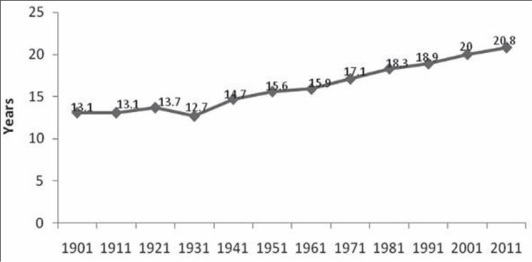 Figure 1
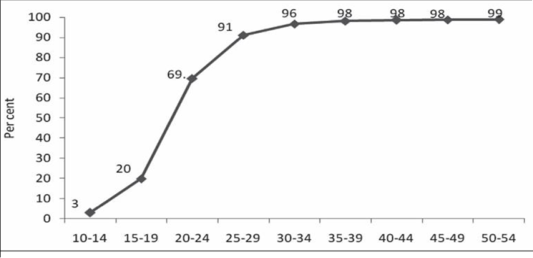 Figure 2
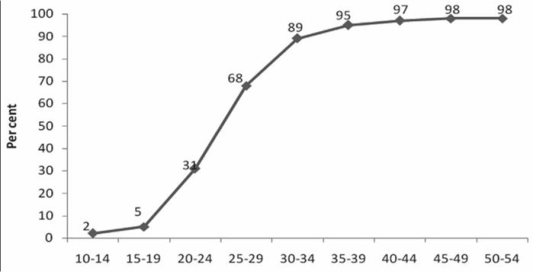 Figure 3
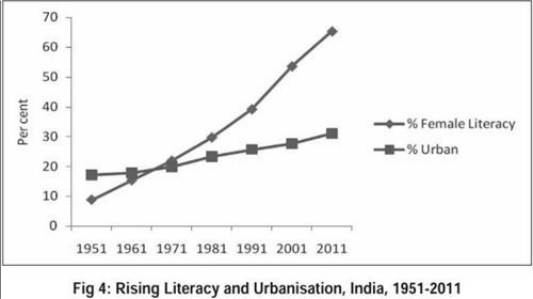 Figure 4
Introduction
The institution of marriage has witnessed considerable evolution over recent decades, particularly in terms of age at which individuals are entering into marital unions. One of the most notable global trends-especially evident in India-is the gradual increase in the mean age of marriage. This transformation has profound social, economic, and demographic implications, particularly in relation to fertility patterns, family structures, and reproductive health. As individuals postpone marriage, fertility rates are observed to decline, raising important questions for demographers, public health officials, and policymakers alike. India, with its vast cultural diversity and socio-economic heterogeneity, provides a compelling case study for analyzing these changes. Over time, the mean age of marriage has steadily increased, reflecting broader societal shifts. According to historical data, the average age of marriage in 1961 was 18.3 years for women and 23.3 years for men. By 2011, it rose to 21.3 years for women and 26.5 years for men. The trend continued in 2021, with the mean age reaching 22.3 years for women and 28.4 years for men. These figures highlight a clear and consistent rise over time. Several interrelated factors contribute to this upward trend in marriage age. First, increased access to education-particularly for women-has enabled individuals to pursue academic and career aspirations before marriage. Second, rapid urbanization and evolving lifestyles have shifted priorities away from early marriage toward personal development and financial stability.
Third, economic uncertainties, rising unemployment, and the desire for career advancement have led many to delay marriage. Finally, the cultural transition from traditional arranged marriages to more self-arranged or love marriages has also contributed to postponed marital decisions, allowing individuals greater autonomy over their life choices. Despite widespread attention to the causes of delayed marriage, its direct impact on fertility remains relatively underexplored in the Indian context. This research aims to bridge that gap by examining the relationship between rising marriage age and fertility rates, drawing upon demographic methods to analyze patterns over time.
To understand marriage timing more accurately, this study utilizes the Singulate Mean Age at Marriage (SMAM)-a statistical measure first proposed by demographer Hajnal in 1953. SMAM is calculated based on the proportion of individuals who remain single across age groups, offering a more detailed understanding of marriage patterns within a population. The formula is as follows: SMAM = ∑ (nSx) -Sk (K) / 1 -Sk Where: nSx = Proportion single in the age group x to x+n (starting from age 10), Sk = Proportion single at upper limit age k, K = Cutoff age (commonly 50 years), n = Width of the age group interval. By applying this method, the study examines trends among the female population in India and its major states. Understanding this demographic behavior is crucial for developing targeted reproductive health policies and strategies to manage fertility outcomes, especially in a country undergoing rapid social change.
Statement of the Problem:
In recent decades, India has witnessed a significant shift in marriage patterns, most notably the steady increase in the mean age at which individuals enter into marriage. This trend is reflective of broader socio-economic transformations, including expanded educational opportunities, urbanization, delayed financial independence, and changing cultural values. While this shift is often celebrated as a sign of progress and empowerment-particularly for women-it brings with it complex demographic implications, most prominently in relation to fertility rates. The postponement of marriage is closely linked with a decline in fertility, raising concerns about reproductive health, population dynamics, and long-term demographic balance. Although global studies have examined the relationship between delayed marriage and fertility decline, there remains a notable gap in the Indian context. The nuanced interplay of tradition, modernity, and regional diversity in India demands a context-specific exploration of how rising marriage age is shaping reproductive outcomes.
Furthermore, while indicators such as the Singulate Mean Age at Marriage (SMAM) provide valuable demographic insights, they are underutilized in mainstream policy discourse. There is a pressing need to integrate such analytical tools to better understand and anticipate the implications of changing marriage norms. The lack of comprehensive research on this subject limit the ability of policymakers and public health planners to design effective interventions aimed at balancing individual autonomy with national demographic goals. This study, therefore, seeks to investigate the trends, causes, and consequences of increasing marriage age in India, with a particular focus on its impact on fertility. It aims to fill the existing research gap by analysing demographic data, exploring regional variations, and considering biological factors that influence reproductive health. In doing so, the research hopes to provide evidence-based insights that can inform population policy, health education, and social planning in a rapidly changing society.
Literature Review
The age at marriage has long been considered a key demographic indicator, closely tied to fertility patterns, family formation, and socio-cultural transitions. In India, where early marriage was historically the norm, a gradual increase in the average age at first marriage has been observed over the past few decades. This section reviews the major strands of literature relevant to understanding the implications of this shift.
Trends and Patterns in Marriage Age
Several studies have highlighted the steady rise in the mean age at marriage in India. According to Bhat and Halli (1999), the trend is influenced primarily by rising educational attainment and delayed economic independence. Recent data from the National Family Health Survey (NFHS-5, 2019-21) confirms this shift, reporting the average age of marriage for women has risen to 22.3 years, up from 18.3 in 1961. Men's average marriage age also increased, from 23.3 to 28.4 years during the same period. This trend is more pronounced in urban areas due to better access to education, employment, and autonomy in decision-making.
Socio-Economic Drivers
Education is frequently cited as a powerful determinant of delayed marriage. Jejeebhoy (1995) argued that with increased years of schooling, particularly for girls, the age at marriage tends to rise, as women prioritize higher education and careers. Similarly, Desai and Andrist (2010) found that economic transitions, including employment insecurity and the aspiration for financial independence, have led both men and women to defer marriage. Urbanization, exposure to global cultures, and rising aspirations are seen as accelerators of this trend.
Cultural Shifts and Autonomy
There is growing evidence that social values regarding marriage and gender roles are changing. The traditional model of early, arranged marriages is increasingly being replaced by self-choice marriages in urban and semi-urban areas. Allendorf (2013) observed that the desire for personal choice and emotional compatibility is pushing marriage to a later stage in life. Cultural expectations that once emphasized early marriage are being challenged by modern ideals of individual agency and personal fulfilment.
Biological and Health Implications
From a biomedical standpoint, delayed marriage and subsequently delayed childbearing have been associated with reduced fertility. Maheshwari et al. (2008) noted that female fertility begins to decline markedly after age 35, largely due to decreased egg quality and increased risk of miscarriage or chromosomal anomalies. Male fertility, though more gradual in its decline, also shows reductions in sperm quality and testosterone levels after age 40. These biological realities contrast with the social trend of late marriage and contribute to concerns over increasing infertility.
Fertility Trends and Regional Variation
Fertility decline is well-documented in Indian demographic studies. Dyson and Moore (1983) suggested that North-South differences in kinship systems and gender norms impact both marriage timing and fertility behaviour. Southern states, which generally have higher female literacy and autonomy, tend to show delayed marriage and lower fertility rates. In contrast, northern and central states often reflect traditional structures where early marriage and higher fertility persist, though even these areas are gradually changing.
Methodological Approaches
Many demographic studies rely on the Singulate Mean Age at Marriage (SMAM) developed by Hajnal (1953), which estimates average marriage age using the proportion of unmarried individuals in each age cohort. This method has been effectively used to analyze time trends and regional disparities in marriage patterns in India, as seen in the work of Registrar General & Census Reports and various UN publications. The literature clearly suggests that rising marriage age in India is a multi-dimensional phenomenon driven by education, urbanization, economic change, and shifting cultural values. While this trend is often seen as progressive, it has direct implications for fertility, both biologically and demographically. However, a comprehensive and contextspecific understanding of these linkages remains limited, particularly with respect to regional disparities and longterm population policy. This study aims to address this gap by synthesizing demographic data with socio-cultural insights to assess the broader impact of delayed marriage on fertility in India. The methodology of this study is designed to systematically investigate the relationship between the increasing mean age of marriage and declining fertility rates in India. Given the socio-demographic nature of the topic, the research follows a mixed-method approach involving both quantitative data analysis and qualitative contextual understanding to ensure a comprehensive and evidence-based analysis.
Research Methodology Research Design
This study adopts a descriptive and analytical research design. It is descriptive in that it outlines existing trends and patterns in marriage and fertility using statistical data, and analytical in its examination of how rising marriage age correlates with changes in fertility behaviour.
Data Sources
This research relies primarily on secondary data obtained from the following credible sources: 1. National Family Health Survey (NFHS-4 and NFHS-5) 2. Census of India (2001, 2011, and 2021 Projections) 3. Sample Registration System (SRS) Reports 4. National Sample Survey Office (NSSO) data 5. United Nations Population Division Reports 6. Ministry of Health and Family Welfare These sources provide essential demographic, social, and health indicators including mean age at marriage, fertility rates, education levels, and regional disparities.
7. Sampling Framework: Though the study is secondary in nature, a comparative state-wise sampling technique is employed for in-depth analysis. A purposive selection of Indian states is done to reflect regional diversity. For instance:
Kerala and Tamil Nadu (higher literacy, late marriage, low fertility) Bihar and Uttar Pradesh (low literacy, early marriage, high fertility) This allows for comparative analysis across sociocultural settings.
Tools and Techniques of Data Analysis
The following statistical tools and methods are used:
Singulate Mean Age at Marriage (SMAM)
Applied to estimate the average age of marriage for women and men across different census periods using the formula:
Descriptive Statistics
To analyze central tendencies (mean, median), variation, and trends in marriage and fertility indicators.
Correlation and Regression Analysis
To determine the strength and nature of the relationship between age at marriage and fertility rates.
Trend Analysis
Using decadal NFHS and Census data to examine how these variables have evolved over time.
Regional Mapping (GIS-based visualization, if applicable)
To show spatial distribution of mean marriage age and fertility levels across states.
Ethical Considerations
As this study uses secondary data from publicly available government and institutional sources, ethical concerns are minimal. However, due acknowledgment of data sources is ensured to maintain academic integrity.
Limitations of the Study
a) Reliance on secondary data may limit the scope for primary field-level insights. b) Regional data inconsistencies or underreporting in certain states may affect the accuracy of comparison.
Analysis
Investigate trends and patterns of increasing marriage age in India: Over the past several decades, India has witnessed a gradual yet significant shift in the age at which individuals enter into marriage. This trend marks a departure from historical patterns of early marriage, particularly for women. According to the 1961 Census, the average age of marriage in India was 18.3 years for women and 23.3 years for men. This early marriage age was reflective of deeply rooted cultural norms, social expectations, and limited educational and economic opportunities, especially for girls. However, by the time of the 2011 Census, this scenario had changed notably. The mean age at marriage rose to 21.2 years for women and 26.5 years for men. This upward trend continued into the following decade. As per recent demographic estimates and surveys, the current average age at first marriage in India is approximately 30 years for men and 27.2 years for women, resulting in an overall average of about 28.6 years. These figures signify a substantial delay in the age of marriage compared to earlier decades, indicating a transformation in the socio-cultural and economic fabric of Indian society. One of the significant observations from the 2011 Census is that over 98% of Indian women were married by the age of 35, with only slight differences observed between rural and urban populations. This suggests that while early marriage still occurs, particularly in certain rural or conservative regions, there is a broad national trend toward delayed marriage. Several factors contribute to this shift, including expanded access to education, increasing female participation in the workforce, rising aspirations among youth, and the growing acceptability of late marriages in urban and semi-urban India. An important sociological factor influencing the age gap between male and female partners is the long-standing tradition of age-based hypergamy. This concept is rooted in the belief that a husband should be older than his wife, often by a significant margin. As noted by scholars such as Billig (1991), hypergamy historically motivated families to marry their daughters into households with higher social or economic status. This not only reinforced patriarchal structures but also led to a systemic expectation that women should marry at a younger age than men. Even as India modernizes and gender roles evolve, the remnants of this cultural norm still influence marital age patterns, especially in rural areas and traditional households. Furthermore, increased urbanization, delayed financial stability, and changing personal priorities among the younger generation have also contributed to the postponement of marriage. Many young adults now seek to establish careers, achieve financial independence, or complete higher education before considering marriage. These changes reflect a broader societal shift from collective family decision-making to individual autonomy in personal life choices. In summary, the rise in the average age at marriage in India is not merely a statistical change but a reflection of deeper transformations in education, gender roles, economic aspirations, and social values. While regional and cultural disparities persist, the national trend indicates a clear movement toward later marriages, with implications for fertility, family planning, and gender dynamics in the country. The mean age of marriage in India has been steadily rising due to a complex mix of social, economic, cultural, demographic, legal, and global influences. Socially, the expansion of educational opportunities-especially for women-has played a pivotal role. With more young people pursuing higher education and career goals, marriage is increasingly being postponed. Urbanization has also contributed, bringing with it changing lifestyles, greater autonomy, and a shift in values. The transformation of family structures from joint to nuclear families has further reinforced independence and delayed matrimonial commitments. In addition, the rise in women's empowerment-through financial independence and increased decision-making capabilities-has significantly influenced the timing of marriage. Economically, the pursuit of financial stability before entering into marriage is becoming more common. With a greater emphasis on career development and the burden of rising living costs, young adults are choosing to delay marriage to ensure economic readiness. Employment prospects, especially in urban centers, have shifted the priorities of many, making personal development and financial growth key milestones before settling down. Cultural shifts also play a role in this demographic transition. Traditional arranged marriages are gradually giving way to self-arranged unions where individuals take longer to find partners who align with their personal values and aspirations. The perception of marriage has changed from being a social obligation to a matter of personal choice. Western cultural influences have encouraged individuality, personal freedom, and the idea that marriage need not be an early-life priority. Demographically, factors such as rising life expectancy and imbalanced gender ratios in certain regions of India have contributed to the delay. Legislatively, the legal minimum age for marriage-18 years for women and 21 years for men-has played a role in discouraging early marriages. Moreover, laws like the Dowry Prohibition Act have reduced the pressure for early marriage, especially for girls. Other globalizing forces, such as exposure to international lifestyles and values through globalization and media, have reshaped aspirations and perceptions about the ideal age for marriage. All of these factor's interconnect, reinforcing each other and collectively contributing to the upward trend in the mean age of marriage in India.
A Conceptual Model explaining factors influencing marital union of females in India Fertility Rate and Age relations
The relationship between fertility rate and age is a critical demographic and public health concern, especially in countries like India where socio-cultural and economic shifts are contributing to delayed marriages and later childbearing. Fertility, defined as the natural capacity to conceive and reproduce, is intricately tied to age, particularly in women. Over the years, India's total fertility rate (TFR) has seen a significant decline. According to the National Family Health Survey-5 (NFHS-5), India's TFR fell to 2.0 in 2021-22, which is below the replacement level of 2.1 children per woman. While this decline is viewed as a success of family planning and population control policies, it also indicates a transition in reproductive behaviour driven largely by the rising age of marriage and delayed childbearing. One of the primary reasons for this change is the increasing educational attainment and professional engagement of women. As more women pursue higher education and stable careers, they tend to postpone marriage and parenthood. Consequently, the biological window for optimum fertility narrows. Female fertility peaks in the early to mid-20s and starts to decline gradually after age 30, with a more significant decrease after 35. By the time a woman reaches her 40s, natural conception becomes increasingly challenging. This decline is largely attributed to both the quantity and quality of oocytes (eggs), which diminish over time. At birth, a female has about one to two million oocytes. By puberty, this number reduces to around 300,000-500,000. With each menstrual cycle, a portion of these eggs is lost through a process called atresia. By the age of 37, the number of oocytes falls to approximately 25,000, and by age 51-around the time most women experience menopauseonly about 1,000 remain. These figures highlight the critical importance of reproductive age in determining fertility outcomes. While assisted reproductive technologies (ART) such as IVF can offer support to older women, these methods do not fully compensate for age-related declines in egg quality. One of the most significant consequences of advanced maternal age is the increased risk of chromosomal abnormalities in the fetus. As women age, the risk of conditions such as Down syndrome (Trisomy 21) rises considerably. For instance, the likelihood of giving birth to a child with Down syndrome is about 1 in 1,250 for a 25year-old woman, but rises to 1 in 100 by age 40. This rise is due to a biological phenomenon called aneuploidy-an incorrect number of chromosomes-which becomes more common in eggs as women age. Aneuploidy can lead to miscarriage, stillbirths, or genetic disorders in the offspring. Age also impacts the uterine environment and hormonal balance, both of which are essential for conception and maintaining pregnancy. Older women often experience changes in the ovulatory cycle, a decline in the quality of cervical mucus, and increased chances of uterine fibroids or endometriosis. These conditions can hinder implantation or contribute to complications during pregnancy. Hormonal shifts such as rising levels of follicle-stimulating hormone (FSH) and falling levels of anti-Müllerian hormone (AMH) reflect a decline in ovarian reserve, indicating reduced fertility potential. In India, where societal norms have historically encouraged early marriage and childbearing, this shift toward delayed parenthood represents a significant cultural transformation. Previously, women conceiving in their late 30s or 40s were considered unusual, but now it is increasingly common, especially in urban areas. However, many women remain unaware of the biological limitations imposed by age, often overestimating the capabilities of medical technologies to overcome natural fertility barriers. This misinformation can lead to unintended childlessness or the emotional and financial strain of fertility treatments. Furthermore, the decline in fertility with age is not solely a female issue. Although male fertility does not decline as rapidly, it is not immune to the effects of aging. Sperm quality-measured in terms of motility, volume, and DNA integrity-also deteriorates over time. Men over the age of 40 have a higher risk of fathering children with genetic disorders or experiencing delays in conception. Hence, reproductive age and fertility need to be viewed as a concern for both genders. In conclusion, the connection between fertility and age is a multifaceted issue involving biological, social, and cultural dimensions. As India continues to progress economically and socially, trends such as increasing age at marriage and delayed childbirth are inevitable. While these trends reflect positive shifts in education, empowerment, and individual choice, they also bring challenges that must be addressed through better reproductive health awareness, access to fertility counseling, and inclusive healthcare policies. Acknowledging and preparing for the impact of age on fertility is essential to ensure that individuals and couples can make informed decisions about family planning and parenthood.
Pathophysiology
The pathophysiology of age-related fertility decline in females is multifactorial. A decrease in the number of gametes and the integrity of those gametes is affected by
Possible Solutions to Rising Mean Age of Marriage and Fertility Challenges in India
The increasing mean age of marriage in India, while indicative of progressive changes in education, career aspirations, and gender equality, has brought with it challenges related to declining fertility rates and delayed parenthood. Tackling this issue requires a comprehensive approach that spans social, economic, cultural, healthcare, and technological domains. Various policy interventions and awareness programs must be introduced and scaled up to counter the adverse effects of late marriages, especially among women, whose fertility declines more sharply with age. One of the foremost areas of intervention lies in the social and cultural landscape. It is essential to promote awareness about the ideal reproductive age and integrate family planning education at the community level. Encouraging conversations about early marriage-within legal boundaries-and responsible family planning can help in shifting public attitudes. This does not mean promoting child marriage but instead supporting timely, informed decisions around marriage and childbearing. Communitybased initiatives that foster positive perceptions of marriage and parenthood, and address social norms that delay marriage, such as the pursuit of hypergamy or societal pressure for lavish weddings, can contribute to changing behaviour on a broader scale. Economic empowerment plays a crucial role in determining when individuals choose to marry. Young couples often delay marriage and parenthood due to concerns around financial security, stable employment, and affordability of raising children. To alleviate these concerns, the government could introduce targeted policies that promote financial stability for newly married couples. For instance, offering tax rebates, marriage subsidies, or housing support could incentivize younger individuals to consider starting families earlier. Additionally, improving access to affordable housing, childcare facilities, and workplace flexibility can create a more conducive environment for young couples to plan for children without compromising their career or financial goals. A critical pillar of this strategy must include education and awareness. Fertility education needs to be included as part of school and college curricula to ensure that young people, particularly women, understand the biological limitations related to reproductive age. Public campaigns should be initiated to raise awareness about age-related fertility decline and encourage timely family planning. Reproductive health counselling services must be made available and easily accessible, particularly in rural and semi-urban areas, to guide couples on fertility preservation options and healthy reproductive practices. In the realm of healthcare and family planning, expanding access to fertility treatments and Assisted Reproductive Technologies (ART) such as IVF is essential. Government investment in fertility clinics, pre-conception counselling, and reproductive health infrastructure would ensure timely intervention for couples facing difficulties conceiving due to age or other medical reasons. Promoting healthy lifestyle choices, including stress management, proper nutrition, and physical fitness, can also play a vital role in improving fertility outcomes across age groups. From a government policy standpoint, efforts to support work-life balance are critical. Introducing parental leave policies, flexible work hours, and employer-sponsored childcare can help couples, especially working women, to manage careers alongside family life. Financial incentives such as child support allowances, subsidized education, and healthcare benefits for children could encourage couples to consider earlier parenthood. Furthermore, setting up government-run fertility centers and expanding ART services under public health schemes can reduce financial barriers to fertility treatment. Technological innovations in the fertility sector offer promising avenues for addressing age-related reproductive challenges. Egg freezing and sperm preservation techniques can provide options for individuals who want to delay parenthood without compromising future fertility. Additionally, improving the success rates of ART through advanced research and diagnostics will give couples better chances of conception. Digital tools such as fertilitytracking apps, AI-based ovulation predictors, and online counselling services can further support informed and timely reproductive decisions. Community-based efforts should not be overlooked. Establishing peer support groups for couples undergoing fertility struggles can reduce stigma and offer emotional relief. Organizing workshops and community outreach programs on topics such as early marriage, family planning, and reproductive health can reinforce the importance of timely decisions around marriage and childbirth. Collaborating with social influencers, medical professionals, and religious leaders can help spread these messages more effectively across diverse social strata. Lastly, ongoing research and development in reproductive health is vital to tackle this issue in a sustainable way. Scientific studies exploring the causes of fertility decline, both biological and environmental, can pave the way for innovative treatment options. Further investment is needed in developing advanced fertility treatments, such as gene editing and stem cell therapy, and in exploring safer and more effective reproductive technologies. Monitoring fertility trends across age groups will also help in designing more accurate and evidence-based policy responses. International examples provide useful templates. Singapore's "Marriage and Parenthood Package" includes financial incentives, housing benefits, and parental leave, while South Korea's "Birth Rate Boosting Policies" focus on government-supported childcare and work-life balance. India can learn from these models and customize them according to its unique social and cultural contexts. In conclusion, the rising mean age of marriage and its subsequent effect on fertility requires a multifaceted and collaborative approach. A combination of education, healthcare accessibility, policy support, and social awareness is key to empowering individuals to make informed decisions about marriage and reproduction without facing unintended consequences later in life.
Conclusion
Addressing the rising age of marriage and its implications for fertility in India necessitates a comprehensive and collaborative approach. The intersection of social, economic, cultural, health-related, and policy-driven factors influencing both marriage patterns and reproductive behaviours highlights the complexity of the issue. To safeguard India's demographic stability and ensure the wellbeing of its young population, it is essential to move beyond a narrow focus and instead adopt a multifaceted strategy that engages all key stakeholders-government policymakers, healthcare providers, educators, and community leaders. The shift in the average age of marriage in India has been shaped by significant transformations in society. Educational advancement, economic empowerment, urbanization, and increased autonomy, especially for women, have contributed to a later onset of marriage. While these changes are welcome indicators of social progress, they have also introduced challenges such as delayed childbearing and reduced fertility rates. Women's biological clocks, unlike many of their social timelines, remain largely unchanged. As fertility tends to decline with ageparticularly after the mid-30s-it becomes important to bridge the gap between personal goals and biological realities through education, healthcare access, and policy reform. Understanding the root causes behind this delay in marriage is crucial. For many individuals, financial insecurity, prolonged education, career aspirations, and high living costs act as deterrents to early family formation. Simultaneously, changing cultural norms have encouraged individuals to seek personal growth, autonomy, and emotional readiness before committing to marriage and parenthood. Therefore, the solutions to these challenges must not aim to reverse progress, but to support individuals in making informed decisions without compromising their future reproductive health. One of the most important areas for intervention is education. Awareness about reproductive health, age-related fertility decline, and available options such as fertility preservation techniques must be integrated into school and college-level health education. This knowledge will empower individuals to make timely and informed decisions about marriage and parenthood. Furthermore, public health campaigns, particularly in rural and semi-urban areas, should promote balanced discussions around marriage, emphasizing neither haste nor indefinite delay, but informed readiness. Policy support is equally vital. Governments should consider enacting laws and incentives that make it easier for young couples to start families. These could include subsidized housing, parental leave, financial assistance for child-rearing, and improved access to childcare. Moreover, investment in public fertility clinics and subsidized assisted reproductive technologies (ART) would ensure that fertility treatments are accessible across income groups. Promoting a work-life balance, especially for women, can also create a supportive environment for those navigating careers and family life. Healthcare professionals must be proactive in initiating conversations around fertility during routine check-ups. Integrating fertility counselling into reproductive health services can help individuals assess their fertility status and plan accordingly. Improved access to pre-marital and preconception care, including nutritional guidance and screenings for reproductive health issues, can go a long way in supporting healthy pregnancies and positive outcomes. Community leaders and influencers also have a crucial role to play in shaping public attitudes. By advocating for timely, respectful, and health-conscious family planning, they can help dismantle outdated social pressures that either promote premature marriage or discourage timely family formation due to unrealistic cultural ideals. India's demographic future depends on the ability to maintain a balance between progressive social change and biological realities. While rising marriage ages reflect educational and economic achievements, they also signal a need for greater awareness and proactive planning. By addressing the issue holistically-through education, healthcare access, economic support, and cultural dialogue-we can build an environment that respects individual choices while ensuring reproductive health is not compromised. In conclusion, solving the challenges posed by delayed marriage and fertility decline requires an inclusive approach. Policymakers must create enabling conditions; healthcare professionals must provide guidance; educators must spread awareness; and communities must foster openness. Together, these efforts will ensure that young couples in India are empowered to make informed life decisions, leading to healthier families and a resilient demographic structure for generations to come.
Figures and tables from the paper
References
13 in the original paper- Banga, R. E-commerce and Developing Countries: An Overview of Trade and Development Issues. J World Trade. 2021;51(6):879-904.
- Chandran, A. India and the WTO's E-commerce Work Programme: Challenges and Opportunities. Econ Pol Weekly. 2022;51(30):65-73.
- Das, S. The WTO, E-commerce, and Development: The Role of Developing Countries. Cambridge Univ Press. 2023.
- Herman, R. The Spaghetti Bowl of E-commerce: Can WTO Rulemaking Address Emerging Issues? J World Trade. 2021;51(7):845-859.
- Kaur, P., Singh, S. Fertility and Reproductive Health in the Age of Delayed Marriages: Challenges and Solutions. Indian J Reprod Health. 2023;36(2):112-118.
- Patel, V., Bhatti, M. Fertility Preservation Techniques and Their Role in Empowering Women. Reprod Sci. 2022;29(4):678-687.
- Sharma, A., Kumar, R. Policy Implications for Addressing Fertility Decline in India. Health Policy. 2023;57(3):200-210.
- Singh, R., Gupta, S. Promoting Fertility Awareness and Education in Schools: A Necessity for the Future. Public Health Educ. 2021;54(6):1370-1380.
- Joshi, S., Rao, A. Public Health Campaigns and Their Effectiveness in Raising Fertility Awareness in Rural Areas. J Public Health Pol. 2024;41(1):23-30.
- Sharma, P., Mehta, S. Fertility Counseling as Part of Routine Healthcare: A Need for Change in Practice. Indian Med J. 2023;117(8):1532-1540.
- Kapoor, V., Singh, M. Creating Work-Life Balance Policies for Women to Support Family Planning. Women's Health. 2023;21(3):123-130.
- Verma, R., Gupta, H. Role of Community Leaders in Promoting Timely Family Planning Decisions. J Soc Health. 2022;12(4):210-218.
- Sharma, A., Gupta, S. Impact of Government Policies on Fertility and Family Planning in India. Indian J Fam Plan. 2024;36(2):112-119.