
Research article · 2026 · Full text
International Journal of Biology SciencesGenetic strategies for improving silk yield and quality in the silkworm (Bombyx mori L.)
Volume 8(4) · Pages 137–143 · DOI: 10.33545/26649926.2026.v8.i4b.809 ↗
Research areasSilkworms and Sericulture ResearchSilk-based biomaterials and applicationsGenetic and phenotypic traits in livestock
Abstract
Author-writtenSericulture, the cultivation of silkworms for silk production, is an important agro-based industry that supports rural livelihoods and contributes significantly to the global textile sector. The domesticated silkworm Bombyx mori is widely used for commercial silk production due to its ability to produce high-quality fibers with exceptional mechanical strength, elasticity and biocompatibility. Increasing demand for superior-quality silk has driven the need for advanced genetic improvement strategies to enhance silk yield and fiber properties. This review summarizes current genetic approaches used to improve silk production traits in B. mori. The biological and genetic basis of silk synthesis is discussed with emphasis on the role of silk glands and major silk proteins such as fibroin and sericin. Conventional breeding strategies, including selection and hybridization, which have historically contributed to the development of productive silkworm strains, are also examined. In addition, recent advances in molecular and genomic tools such as molecular markers, quantitative trait loci (QTL) mapping, marker-assisted selection and genome-wide association studies are highlighted for their role in accelerating silkworm breeding programs. Emerging biotechnological approaches including transgenic technologies, RNA interference and CRISPR-Cas9 genome editing are also discussed as powerful tools for precise genetic manipulation. Integration of conventional breeding with modern genomic technologies offers significant potential for developing high-yielding, disease-resistant and climate-resilient silkworm strains to ensure sustainable silk production.
Summary
Source-checkedPlain-language reading of the full paper, prepared with AI and checked against the text. Each point links to the authors' own words.
Why it matters
- Sericulture is a vital agro-based industry that supports rural livelihoods and the global textile market. View evidence ↗
- Bombyx mori is the primary species for commercial silk because its fibers possess high biocompatibility, elasticity, and mechanical strength. View evidence ↗
- The rising demand for high-quality silk necessitates the development of advanced genetic strategies to improve fiber properties and overall yield. View evidence ↗
The question
- The objective of this review is to summarize the current genetic approaches employed to improve silk production traits in B. mori. View evidence ↗
What they did
- The review examines the biological basis of silk synthesis, focusing on the function of silk glands and the proteins fibroin and sericin. View evidence ↗
- The authors review conventional breeding methods, specifically hybridization and selection, used to develop productive strains. View evidence ↗
- The review highlights modern genomic tools, including GWAS, QTL mapping, molecular markers, and marker-assisted selection. View evidence ↗
- The paper discusses biotechnological tools for precise genetic manipulation, such as CRISPR-Cas9, RNA interference, and transgenic technologies. View evidence ↗
What they found
- Silk fibroin is the primary component of the cocoon filament, making up approximately 70-80% of it. View evidence ↗
- Sericin proteins, which account for 20-30% of silk, are encoded by the Ser1, Ser2, and Ser3 genes. View evidence ↗
- The B. mori genome contains approximately 14,000-18,000 genes, providing a map for those involved in silk gland development and protein synthesis. View evidence ↗
- Genetic engineering has enabled the production of hybrid silk fibers containing spider silk proteins, which significantly increases mechanical strength. View evidence ↗
- Transgenic strains with improved resistance to viral infections have been developed by introducing antiviral genes or editing host-virus interaction genes. View evidence ↗
- Conventional breeding is limited by long cycles, environmental influences, and the polygenic nature of key economic traits. View evidence ↗
What it means
- The authors conclude that integrating conventional breeding with modern biotechnology will accelerate the creation of climate-resilient, disease-resistant, and high-yielding silkworm strains. View evidence ↗
- Challenges remaining in genetic engineering include off-target effects of genome editing, stable transgene expression, and efficient gene delivery. View evidence ↗
Visual summary
1 visualsIllustrations explain the paper; they do not show study data.
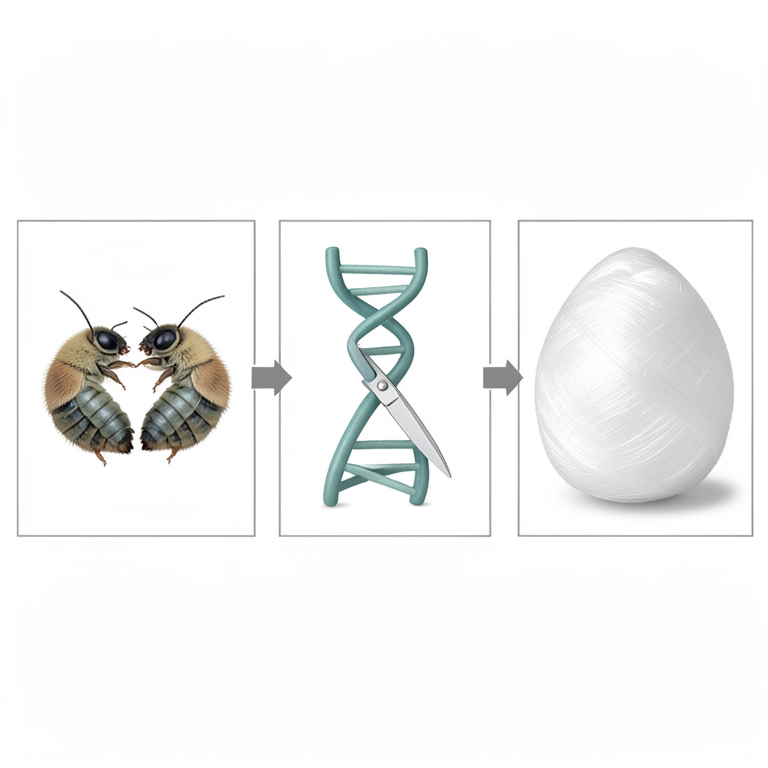
Integrated Breeding Framework
AI-generated conceptual illustration (Bombyx mori silkworms and cocoons). It explains the idea and does not show study data.
View source evidence ↗Figures & tables
From the original paper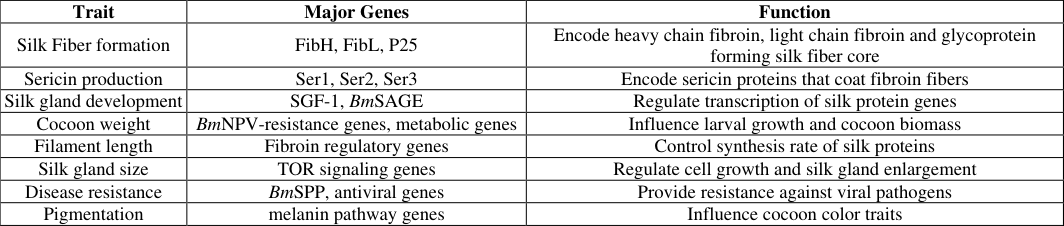 Table 1
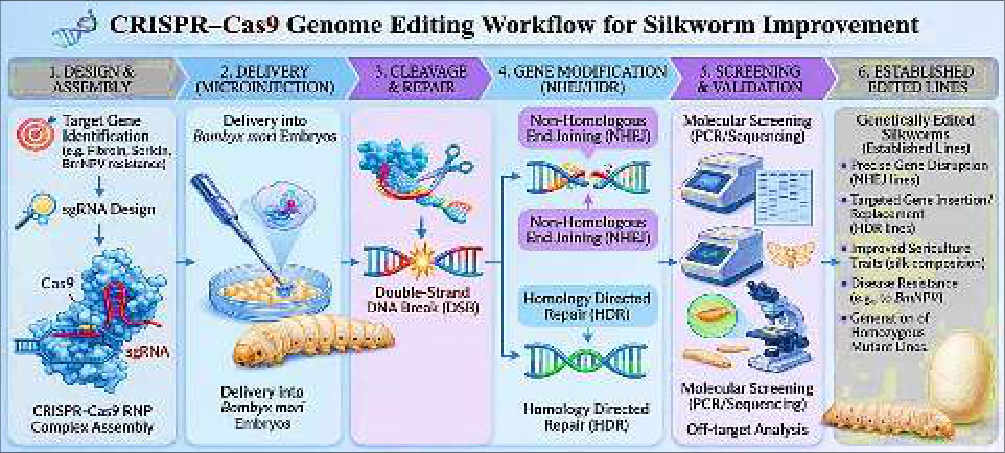 Figure 1
Introduction
Silk fibers produced by Bombyx mori are primarily composed of two major proteins, fibroin and sericin, which together determine the structural and functional properties of silk. Fibroin forms the core filament, providing strength and elasticity, while sericin acts as a gummy coating that binds fibroin fibers during cocoon formation. The economic value of silk largely depends on quantitative traits such as cocoon weight, shell ratio, filament length, and denier, all of which are influenced by complex interactions between genetic makeup and environmental conditions. These traits are typically polygenic, making their inheritance patterns intricate and challenging to manipulate. Understanding the genetic architecture underlying these characteristics is therefore essential for improving silk yield and quality. Advances in silkworm genomics have revealed that genes regulating fibroin and sericin synthesis, along with those controlling silk gland development, play critical roles in determining overall silk productivity and performance (Sivaprasad et al., 2022; Rafiqui et al., 2025) [35,43] . Traditionally, silkworm improvement has relied on classical breeding approaches such as selection, hybridization, and mutation breeding. These methods have successfully produced numerous high-yielding strains and commercial hybrids with enhanced cocoon traits and silk productivity. Among them, hybrid breeding has been particularly effective due to its ability to exploit heterosis, resulting in offspring that outperform their parental lines in growth and yield characteristics. However, despite these achievements, conventional breeding strategies face several limitations. Long breeding cycles, the polygenic nature of economically important traits, and strong environmental influences on phenotype expression reduce the efficiency and predictability of selection.
Moreover, phenotypic selection alone often fails to accurately identify superior genotypes, especially when traits are influenced by multiple genes with small effects (Hasan et al., 2025; Chandrakanth et al., 2024) [19,8] . Recent advances in molecular biology and biotechnology have significantly accelerated silkworm improvement programs. The availability of the B. mori genome has enabled the identification of genes associated with silk production, development, and disease resistance. Molecular markers such as simple sequence repeats (SSRs) and single nucleotide polymorphisms (SNPs) have facilitated the mapping of quantitative trait loci (QTLs), allowing markerassisted selection for desirable traits with greater precision and efficiency. Furthermore, genetic engineering and genome-editing technologies, particularly CRISPR-Cas9, have emerged as powerful tools for targeted gene modification. These approaches enable precise manipulation of genes involved in silk protein synthesis and silk gland function, leading to improved silk quality and yield. Transgenic systems, including piggyBac-based vectors, have also been used to introduce novel traits and enhance mechanical properties of silk fibers. Collectively, these innovations are paving the way for the development of nextgeneration silkworm strains with superior productivity, resilience, and adaptability, thereby supporting sustainable sericulture (Fan et al., 2025; Pavithra et al., 2024) [12] .
Biology and genetic basis of silk production in Bombyx mori
The domesticated silkworm Bombyx mori is a holometabolous insect belonging to the order Lepidoptera and is widely used as a model organism in studies of genetics, physiology, and biotechnology. Its ability to synthesize and secrete large quantities of silk proteins during the larval stage makes it highly valuable for sericulture and molecular research (Sehnal & Sutherland, 2008; Xia et al., 2014) [39,55] . Silk production occurs in the silk gland, a specialized organ derived from modified labial glands that undergo extensive growth and differentiation during larval development (Fedic et al., 2002) [14] . Anatomically, the silk gland is divided into three regions: anterior silk gland (ASG), middle silk gland (MSG), and posterior silk gland (PSG), each performing distinct roles. The PSG synthesizes fibroin, the structural core protein of silk, while the MSG produces sericin, which coats fibroin filaments. The ASG functions as a duct where silk proteins are aligned and processed before extrusion through the spinneret during cocoon formation (Shi et al., 2019) [41] . Silk fibroin constitutes approximately 70-80% of the cocoon filament and is composed of a heavy chain (Fib-H), light chain (Fib-L), and glycoprotein P25, forming a stable complex essential for fiber assembly (Naik et al., 2023) [32] . The Fib-H gene encodes repetitive amino acid sequences responsible for β-sheet crystalline structures that impart mechanical strength to silk fibers (Grzelak, 1995) [18] . Sericin proteins, accounting for 20-30% of silk, are encoded by genes such as Ser1, Ser2, and Ser3, and function as adhesive and protective components (Takasu et al., 2007) [46] . The relationships between these genes and key silk production traits including fiber formation, gland development, cocoon weight, and disease resistance are summarized in Table 1, illustrating how multiple genes collectively regulate economically important characteristics. The silk gland's exceptional protein synthesis capacity is supported by extensive cellular growth and endoreplication, leading to polyploid nuclei that enable high transcriptional activity (Nagaraju et al., 2014) [30] . During the fifth instar larval stage, the PSG exhibits intense metabolic activity, producing large quantities of fibroin that accumulate prior to spinning (Li et al., 2011) [22] . Regulation of silk protein gene expression involves complex interactions among transcription factors, hormonal signals, and developmental regulators. Homeobox genes and other regulatory elements control region-specific expression of fibroin and sericin genes, while transcriptomic studies reveal coordinated expression of genes involved in protein synthesis, secretion pathways, and metabolism (Shi et al., 2019) [41] . These findings demonstrate that silk production is governed by an intricate genetic network, providing a strong foundation for molecular breeding and genetic engineering aimed at improving silk yield and quality. Recent advances in genomics and transcriptomics have significantly improved understanding of the molecular mechanisms governing silk biosynthesis. High-capacity sequencing analyses the identified key regulatory pathways and gene networks involved in silk gland development and silk protein synthesis (Shi et al., 2019) [41] . Such knowledge provides a foundation for genetic improvement strategies aimed at enhancing silk yield, fiber strength and overall cocoon productivity in silkworm breeding programs. [30,37] . [37,42] . Hybridization is another widely adopted breeding strategy aimed at exploiting genetic divergence between parental lines to produce superior hybrids. The phenomenon of hybrid vigor (heterosis) has been extensively utilized in sericulture to enhance traits such as larval growth, cocoon weight, filament length and disease resistance (Gowda et al., 2025) [17] . Crossbreeding between genetically diverse strains, particularly between bivoltine and multivoltine races, has led to the development of hybrid varieties that combine high silk productivity with greater adaptability to tropical environments (Nagaraju et al., 2014) [30] . These hybrid silkworms often exhibit improved survival rates, faster larval growth and enhanced silk gland development, ultimately contributing to increased raw silk yield. In commercial sericulture, bivoltine × multivoltine hybridization systems are commonly employed to balance productivity and environmental tolerance. Bivoltine strains are known for producing superior silk quality and longer filament length, whereas multivoltine strains possess greater tolerance to fluctuating climatic conditions and diseases (Trochez-Solarte & Ruiz-Erazo, 2019) [52] . Hybridization between these strains has enabled the development of highyielding hybrids suitable for tropical and subtropical regions where environmental stress may limit productivity (Gonzalez-Munoz & Lopez-Gutierrez, 2025) [16] . The success of hybrid breeding largely depends on the identification of parental lines with strong combining ability. General combining ability (GCA) and specific combining ability (SCA) was widely used to evaluate the genetic potential of silkworm strains in breeding programs (Sahan, 2020) [38] . Studies have shown that crosses involving genetically diverse parents frequently exhibit higher heterosis for economically important traits such as cocoon weight, shell ratio and raw silk yield (Bajwa et al., 2023) [5] . Consequently, maintaining a broad and diverse germplasm base is essential for sustained breeding progress. Conventional breeding programs also depends more on the conservation and utilization of genetic diversity preserved in global silkworm germplasm collections. Thousands of silkworm strains maintained in gene banks, particularly in China, India and Japan, represent valuable genetic resources differing in voltinism, cocoon color, filament length and stress tolerance (Nagaraju et al., 2014; Trochez-Solarte & Ruiz-Erazo, 2019) [30,52] . Evaluation and characterization of these resources provide important genetic material for breeding programs aimed at improving silk yield and quality.
| Trait | Major Genes | Function |
|---|---|---|
| Silk Fiber formation | FibH, FibL, P25 | Encode heavy chain fibroin, light chain fibroin and glycoprotein forming silk fiber core |
| Sericin production | Ser1, Ser2, Ser3 | Encode sericin proteins that coat fibroin fibers |
| Silk gland development | SGF-1, BmSAGE | Regulate transcription of silk protein genes |
| Cocoon weight | BmNPV-resistance genes, metabolic genes | Influence larval growth and cocoon biomass |
| Filament length | Fibroin regulatory genes | Control synthesis rate of silk proteins |
| Silk gland size | TOR signaling genes | Regulate cell growth and silk gland enlargement |
| Disease resistance | BmSPP, antiviral genes | Provide resistance against viral pathogens |
| Pigmentation | melanin pathway genes | Influence cocoon color traits |
Table text extracted from the original PDF; superscript letters are shown inline. The original table image is below.
View original table image
Despite the considerable progress achieved through conventional breeding approaches, the improvement of complex economic traits remains challenging due to long breeding cycles, polygenic inheritance and environmental influences on phenotype expression. The improvement of complex quantitative traits often requires multiple generations of selection and may be constrained by environmental influences and limited genetic variation (Buhroo et al., 2016) [7] . Therefore, integrating molecular and genomic tools with conventional breeding strategies has become increasingly important for accelerating genetic improvement in silkworms. [55] . Genome sequencing has enabled researchers to identify candidate genes associated with silk production and facilitated the development of molecular markers that can be used in breeding programs. These genomic resources have also improved our understanding of the molecular mechanisms underlying silk synthesis and larval development (Nagaraju & Goldsmith, 2002) [31] . One of the most widely used molecular tools in silkworm genetics is the molecular marker system, which includes markers such as RAPD (Random Amplified Polymorphic DNA), AFLP (Amplified Fragment Length Polymorphism), SSR (Simple Sequence Repeat) and SNP (Single Nucleotide Polymorphism). These markers enable the detection of genetic variation among silkworm strains and are widely used for genetic mapping, germplasm characterization, and marker-assisted selection (Buhroo et al., 2016) [7] . Among these markers, SSRs are particularly valuable because of their high polymorphism, codominant inheritance and reproducibility, making them useful for evaluating genetic diversity and identifying superior breeding lines (Trochez-Solarte & Ruiz-Erazo, 2019) [52] .
Molecular and genomic approaches for silkworm genetic improvement
Molecular and genomic approaches for silkworm genetic improvement
Single nucleotide polymorphisms (SNPs):
Represent the most abundant form of genetic variation in the silkworm genome and have become powerful tools for high-resolution genetic analysis. SNP markers allow precise mapping of genes associated with silk production traits and enable largescale genomic studies. For instance, SNP-based linkage maps containing thousands of markers have been developed
to identify quantitative trait loci (QTLs) controlling cocoon yield and silk quality traits (Fang et al., 2020) [13] . Highdensity SNP arrays such as the Silk 40K platform have further enhanced genomic prediction and breeding efficiency by enabling genome-wide analysis of economically important traits (Li et al., 2025) [21] .
Quantitative trait loci (QTL) mapping:
Which aims to identify specific genomic regions controlling complex traits such as cocoon weight, shell weight, filament length and larval growth rate. These traits are typically polygenic and influenced by multiple loci. QTL mapping studies have identified numerous genomic regions associated with silk productivity traits in B. mori. For example, Fang et al.
(2020) [13] constructed a high-density linkage map containing over 9,000 SNP markers and identified several QTLs associated with cocoon yield traits. Such findings provide valuable information for selecting favorable alleles and improving breeding efficiency.
Marker-assisted selection (MAS):
The identification of QTLs has facilitated the way for MAS in silkworm breeding. MAS involves selecting individuals carrying desirable genetic markers linked to target traits rather than relying solely on phenotypic performance. This approach increases the accuracy and speed of breeding programs by enabling early selection of superior genotypes. Several studies have demonstrated the successful use of SSR and SNP markers linked to cocoon yield, silk filament length and disease resistance traits in breeding programs (Mundkur & Muniraju, 2017; Ruiz & Almanza, 2018) [29,37] . Markerassisted selection also helps maintain genetic purity of parental lines used for hybrid seed production.
Genome-wide association studies (GWAS) and genomic selection:
Recently evolved to identify complex genetic interactions affecting silk production traits. GWAS uses high-density molecular markers distributed across the genome to identify associations between genetic variants and phenotypic traits. This method enables the identification of candidate genes controlling silk yield and stress tolerance. Genomic selection further improves breeding efficiency by predicting the genetic value of individuals using genome-wide marker data (Duo et al., 2023) [11] . These approaches are particularly useful for improving polygenic traits where conventional selection methods are less effective.
In addition to genomic mapping approaches, functional genomics techniques such as transcriptomics and proteomics have provided important insights into the molecular mechanisms controlling silk synthesis. Transcriptomic analyses have identified numerous genes involved in fibroin and sericin protein production, which are the primary components of silk fibers (Xia et al., 2014) [55] . Proteomic studies have also revealed the complex network of proteins involved in silk gland development and silk fiber formation. These findings contribute to the identification of key regulatory genes that can be targeted in breeding or genetic engineering strategies aimed at improving silk quality.
Genetic engineering and genome editing approaches in silkworm improvement
Genetic engineering has emerged as a powerful approach for improving silk yield, fiber quality, and disease resistance in the silkworm B. mori. Unlike conventional breeding and marker-assisted approaches, genetic engineering allows the precise modification of specific genes involved in silk production, metabolism and immunity. The development of transgenic technologies and genome editing systems such as CRISPR/Cas9 has revolutionized functional genomics studies and opened new possibilities for producing highperformance silk and recombinant proteins (Xu & O'Brochta, 2015; Ma et al., 2019) [25,56] . One of the earliest genetic engineering approaches in silkworms involved the development of transgenic silkworm lines using transposon-based transformation systems. The piggyBac transposon system has been widely used for introducing foreign genes into the silkworm genome. Through this method, researchers have successfully integrated genes encoding fluorescent proteins, therapeutic molecules and modified silk proteins into the silkworm genome (Sezutsu & Tamura, 2022) [40] . Transgenic silkworms have been engineered to express recombinant proteins within the silk gland, allowing the production of functional biomaterials and pharmaceutical proteins. This technology has positioned B. mori as an attractive bioreactor for large-scale protein production (Aramwit et al., 2023) [2] .
A key focus of transgenic research in silkworms is the modification of silk fibroin genes, which play a crucial role in determining silk fiber properties. Silk fibroin is primarily composed of heavy-chain fibroin (FibH), light-chain fibroin (FibL) and P25 glycoprotein. By introducing modified fibroin genes or replacing native sequences with alternative silk proteins, researchers have been able to alter the mechanical properties of silk fibers (Mori & Tsukada, 2000) [28] . A notable advancement in silk protein engineering is the production of spider silk-like fibers in transgenic silkworms. Spider silk possesses exceptional mechanical strength and but large-scale production of spider silk is difficult due to the aggressive and cannibalistic behavior of spiders. To overcome this limitation, scientists have introduced spider silk protein genes into the silkworm genome. Using targeted gene replacement strategies, researchers successfully produced hybrid silk fibers containing spider silk proteins, significantly improving the mechanical strength of the silk produced (Xu et al., 2018) [57] . These findings demonstrate the potential of genetic engineering to create novel silk materials with enhanced properties. In addition to transgenic technologies, RNA interference (RNAi) has been widely used as a gene-silencing tool in silkworm functional genomics. RNAi enables researchers to suppress the expression of specific genes involved in silk gland development, metabolism and disease susceptibility. By knocking down target genes, scientists can investigate their roles in silk protein synthesis and larval physiology. RNAi has been applied to study genes regulating fibroin synthesis, silk gland growth and immune responses, providing valuable insights for silkworm improvement (Daimon et al., 2014) [10] . More recently, the development of CRISPR/Cas9 genome editing technology has transformed silkworm genetic research. CRISPR/Cas9 enables precise gene knockout, gene insertion and targeted sequence modification with high efficiency. Compared with earlier genome editing tools such as TALENs and zinc-finger nucleases, CRISPR/Cas9 is easier to design and more cost-effective. The first successful demonstration of heritable genome editing in B. mori using CRISPR/Cas9 provided a powerful platform for functional genomics studies and genetic improvement (Wei et al., 2014) [54] . CRISPR/Cas9 technology has been applied to manipulate genes involved in silk gland development and silk protein production. For instance, targeted editing of genes regulating fibroin synthesis can influence silk yield and fiber characteristics. Studies have shown that disruption or activation of specific genes in the silk gland can significantly alter silk protein expression and cocoon characteristics (Hu et al., 2021) [20] . Additionally, genome editing has enabled the identification of genes responsible for silk gland growth and protein secretion, which are critical factors affecting silk productivity.
Another important application of CRISPR-based genome editing is the development of disease-resistant silkworm strains. Viral diseases such as B. mori nucleopolyhedrovirus (BmNPV) cause major economic losses in sericulture. By editing genes involved in host-virus interactions or introducing antiviral genes, researchers have developed transgenic silkworm strains with enhanced resistance to viral infections (Li et al., 2023) [23] . Such strategies contribute to improved survival rates and stable silk production in commercial sericulture. The workflow of CRISPR-Cas9-mediated genome editing in B. mori, including target gene identification, sgRNA design, embryo microinjection and DNA repair-mediated genetic modification, is illustrated in Figure 1. Despite the significant progress achieved in silkworm genetic engineering, several challenges remain. Efficient gene delivery, stable expression of transgenes and potential off-target effects of genome editing are important issues that require further investigation. Additionally, regulatory concerns and biosafety considerations must be addressed before genetically modified silkworm strains can be widely adopted in sericulture (Sun et al., 2026) [44] . Overall, genetic engineering and genome editing technologies have provided powerful tools for improving silkworm productivity and silk quality. The integration of transgenic technologies, RNA interference and CRISPRbased genome editing with genomic selection and molecular breeding approaches offers enormous potential for the development of next-generation silkworm strains. Continued research in these areas is expected to enhance the efficiency, sustainability and economic value of sericulture.
Future prospects and emerging directions in genetic improvement of silkworm
Rapid advances in genomics, biotechnology, and molecular breeding tools have created new opportunities for the genetic improvement of Bombyx mori. While traditional breeding has produced high-yielding and disease-resistant hybrids, future sericulture demands more precise and climate-resilient strategies. Genome-assisted breeding integrates genomic data with conventional methods, enabling faster and more accurate strain development. The availability of the B. mori genome has facilitated the identification of genes associated with economically important traits such as cocoon weight, shell ratio, filament length, and disease resistance (Xia et al., 2004; International Silkworm Genome Consortium, 2008). In addition, genomewide association studies (GWAS) and quantitative trait locus (QTL) mapping have enabled the identification of genomic regions controlling silk productivity and physiological traits, thereby improving selection efficiency (Sivaprasad & Chandrakanth, 2022; Fang et al., 2020) [13,43] . Genome-editing technologies, particularly CRISPR-Cas systems, have emerged as powerful tools for targeted modification of genes involved in silk production, immunity, and stress tolerance (Ma et al., 2019; Baci et al., 2021) [4,25] . Transgenic approaches using piggyBac vectors further enable the introduction of foreign genes, allowing the production of modified silk fibers and recombinant biomaterials with applications beyond textiles, including biomedicine and tissue engineering (Tamura et al., 2000; Tomita et al., 2003; Fan et al., 2025) [12,48] . Future breeding strategies also emphasize the development of climateresilient silkworm strains, as silk production is highly sensitive to environmental factors such as temperature and humidity (Rahmathulla, 2012) [36] . Molecular markers, genomic selection, and emerging multi-omics approaches including transcriptomics, proteomics, and metabolomics are providing deeper insights into regulatory networks governing silk synthesis and development (Alam et al., 2022) [1] . Despite challenges such as regulatory constraints and limited resources, integrating conventional and modern genomic approaches is expected to significantly enhance the efficiency, sustainability, and productivity of silkworm improvement programs.
Conclusion
Genetic improvement of B. mori has progressed significantly through the integration of conventional breeding, molecular genetics and advanced genome-editing technologies. Traditional approaches such as selection and hybridization have successfully enhanced cocoon yield and silk quality, while modern genomic tools, including molecular markers, QTL mapping and genome-wide association studies, have improved the precision and efficiency of silkworm breeding. Recent developments in transgenic technology, RNA interference and CRISPR-Cas9 genome editing provide powerful methods for targeted manipulation of genes associated with silk production, disease resistance and stress tolerance. Overall, the integration of conventional and modern biotechnological approaches is expected to accelerate the development of high-yielding, disease-resistant and climate-resilient silkworm strains, thereby supporting sustainable sericulture and meeting the growing global demand for high-quality silk.
References
55 in the original paper- Alam K, Raviraj VS, Chowdhury T, Bhuimali A, Ghosh P, Saha S. Application of biotechnology in sericulture: progress, scope and prospect. The Nucleus. 2022;65(1):129-150.
- Aramwit P, Jiang Q, Muppuri S, Reddy N. Transgenic modifications of silkworms as a means to obtain therapeutic biomolecules and protein fibers with exceptional properties. Biotechnol Bioeng. 2023;120(10):2827-2839.
- Ashraf H, Qamar A. A review on heat stress altering the insect life history strategies and underlying mechanisms: special reference to an economically important Lepidoptera, Bombyx mori (Linnaeus, 1758). SHILAP Revista de Lepidopterología. 2023;51(202):339-357.
- Baci GM, Cucu AA, Giurgiu AI, Musca AS, Bagameri L, Moise AR, et al. Advances in editing silkworms (Bombyx mori) genome by using the CRISPR-Cas system. Insects. 2021;13(1):28.
- Bajwa GA, Rizwan Z, Majeed MA. Identifying hybrid genotypes of mulberry silkworm (Bombyx mori) using heterosis for biological and silk yielding traits. Pak J Zool. 2023;55(1):85.
- Borgohain A. Silk and its biosynthesis in silkworm Bombyx mori. J Acad Indus Res. 2015;3(12):626.
- Buhroo Z, Ganai N, Bhat M. Molecular marker systems with special reference to the silkworm Bombyx mori L. Int J Bioassays. 2016;5(11):5025-5040.
- Chandrakanth N, Alam K, Ranjini MS, Moorthy SM. Mutation breeding in Bombyx mori: current trends and future avenues. In: Biotechnology for Silkworm Crop Enhancement. Singapore: Springer Nature; 2024. p. 97107.
- Chang H, Cheng T, Wu Y, Hu W, Long R, Liu C, et al. Transcriptomic analysis of the anterior silk gland in the domestic silkworm (Bombyx mori). PLoS One. 2015;10(9):e0139424.
- Daimon T, Kiuchi T, Takasu Y. Recent progress in genome engineering techniques in the silkworm, Bombyx mori. Dev Growth Differ. 2014;56(1):14-25.
- Duo H, Dorjee L, Raising LP, Zhipao RR. Genomic assisted breeding and holistic management of abiotic and biotic stress in silkworm host cultivation: a review. Indian J Agric Sci. 2023;93(7):691-698.
- Fan X, Wei M, Li Y, Xia Q, Wang X. Genetic engineering of silkworm for enhanced silk mechanical properties: a review. Materials & Design. 2025;115031.
- Fang SM, Zhou QZ, Yu QY, Zhang Z. Genetic and genomic analysis for cocoon yield traits in silkworm. Sci Rep. 2020;10(1):5682.
- Fedic R, Zurovec M, Sehnal F. The silk of Lepidoptera. J Insect Biotechnol Sericol. 2002;71(1):1-15.
- Goldsmith MR, Shimada T, Abe H. The genetics and genomics of the silkworm, Bombyx mori. Annu Rev Entomol. 2005;50(1):71-100.
- Gonzalez-Munoz JC, Lopez-Gutierrez AM, SepulvedaArias JC. Genetic and morphological variation in the Colombian Bombyx mori germplasm: a first SSR-based assessment. PLoS One. 2025;20(8):e0330183.
- Gowda KB, Jerry DR, Zenger KR. Genetic improvement of farmed insect species: programmes, progress, and prospects. J Insect Food Feed. 2025;11(8):1357-1384.
- Grzelak K. Control of expression of silk protein genes. Comp Biochem Physiol B Biochem Mol Biol. 1995;110(4):671-681.
- Hasan W, Bashir M, Ashaq M, Abhishek GJ. Silkworm Breeding. In: Sericulture. Boca Raton: CRC Press; 2025. p. 274-324.
- Hu W, Wang X, Ma S, Peng Z, Cao Y, Xia Q. CRISPR-mediated endogenous activation of fibroin heavy chain gene triggers cellular stress responses in Bombyx mori embryonic cells. Insects. 2021;12(6):552.
- Li C, Tong X, Gao R, Jiang J, Hu D, Zhou A, et al. Silk_40K SNP array facilitates the genomic prediction of complex traits in silkworm (Bombyx mori). J Adv Res. 2025. doi: 10.1016/j.jare.2025.xx.xxx.
- Li JY, Yang HJ, Lan TY, Wei H, Zhang HR, Chen M, et al. Expression profiling and regulation of genes related to silkworm posterior silk gland development and fibroin synthesis. J Proteome Res. 2011;10(8):3551-3564.
- Li K, Dong Z, Pan M. Common strategies in silkworm disease resistance breeding research. Pest Manag Sci. 2023;79(7):2287-2298.
- Li S, Lao J, Sun Y, Hua X, Lin P, Wang F, et al. CRISPR/Cas9-mediated editing of BmEcKL1 gene sequence affected silk gland development of silkworms (Bombyx mori). Int J Mol Sci. 2024;25(3):1907.
- Ma SY, Smagghe G, Xia QY. Genome editing in Bombyx mori: new opportunities for silkworm functional genomics and the sericulture industry. Insect Sci. 2019;26(6):964-972.
- Ma S, Chang J, Wang X, Liu Y, Zhang J, Lu W, et al. CRISPR/Cas9 mediated multiplex genome editing and heritable mutagenesis of BmKu70 in Bombyx mori. Sci Rep. 2014;4(1):4489.
- Mondal M, Trivedy K, Kumar SN. The silk proteins, sericin and fibroin in silkworm, Bombyx mori Linn. -a review. Casp J Environ Sci. 2007;5(2):63-76.
- Mori H, Tsukada M. New silk protein: modification of silk protein by gene engineering for production of biomaterials. Rev Mol Biotechnol. 2000;74(2):95-103.
- Mundkur R, Muniraju E. Molecular marker-assisted selection breeding in silkworm, Bombyx mori. Trends Insect Mol Biol Biotechnol. 2017;3-34.
- Nagaraju J, Goldsmith MR. Silkworm genomicsprogress and prospects. Curr Sci. 2002;83(4):415-425.
- Naik KT, Ismail S, Pradeep AR, Mishra RK. Molecular characterization of the functional genes associated with silk assembly, transport, and protection in the silk glands of popular multivoltine breeds of silkworm Bombyx mori L. Appl Biochem Biotechnol. 2023;195(4):2371-2394.
- Neshagaran Hemmatabadi R, Seidavi A, Gharahveysi S. A review on correlation, heritability and selection in silkworm breeding. J Appl Anim Res. 2016;44(1):9-23.
- Pereira RF, Silva MM, de Zea Bermudez V. Bombyx mori silk fibers: an outstanding family of materials. Macromol Mater Eng. 2015;300(12):1171-1198.
- Rafiqui AR, Bashir M, Hasan W, Belagalla N. Selection Methods in Silkworm Breeding. In: Sericulture. Boca Raton: CRC Press; 2025. p. 325-366.
- Rahmathulla VK. Management of climatic factors for successful silkworm (Bombyx mori L.) crop and higher production: a review. Psyche (Stuttg). 2012;2012:121234.
- Ruiz X, Almanza M. Implications of genetic diversity in the improvement of silkworm Bombyx mori L. Chil J Agr Res. 2018;78(4):569-579.
- Sahan U. Identifying parents and generating hybrids with high combining ability for yielding fresh cocoon and raw silk in silkworm (Bombyx mori L.). Rev Bras Zootec. 2020;49:e20180278.
- Sehnal F, Sutherland T. Silks produced by insect labial glands. Prion. 2008;2(4):145-153.
- Sezutsu H, Tamura T. Silkworm transgenesis and its applications. In: Transgenic Insects: Techniques and Applications. Wallingford: CABI; 2022. p. 395-415.
- Shi R, Ma S, He T, Peng J, Zhang T, Chen X, et al. Deep insight into the transcriptome of the single silk gland of Bombyx mori. J Mol Sci. 2019;20(10):2491.
- Singh T, Saratchandra B, Murthy GN. An analysis of heterosis in the silkworm, Bombyx mori (L.). Int J Ind Entomol. 2002;5(1):23-32.
- Sun Q, Guo Y, Wang L, Jia L, Wei P, Ma S. CRISPRmediated silkworm: the oncoming agricultural revolutions and a rising model organism. Genes (Basel). 2026;17(2):230.
- Takasu Y, Yamada H, Tamura T, Sezutsu H, Mita K, Tsubouchi K. Identification and characterization of a novel sericin gene expressed in the anterior middle silk gland of the silkworm Bombyx mori. Insect Biochem Mol Biol. 2007;37(11):1234-1240.
- Takiya S, Tsubota T, Kimoto M. Regulation of silk genes by Hox and homeodomain proteins in the terminal differentiated silk gland of the silkworm Bombyx mori. J Dev Biol. 2016;4(2):19.
- Tamura T, Thibert C, Royer C, Kanda T, Eappen A, Kamba M, et al. Germline transformation of the silkworm Bombyx mori L. using a piggyBac transposon-derived vector. Nat Biotechnol. 2000;18(1):81-84.
- Tashiro Y, Morimoto T, Matsuura S, Nagata S. Studies on the posterior silk gland of the silkworm, Bombyx mori: I. Growth of posterior silk gland cells and biosynthesis of fibroin during the fifth larval instar. J Cell Biol. 1968;38(3):574-588.
- Teule F, Cooper AR, Furin WA, Bittencourt D, Rech EL, Brooks A, et al. A protocol to produce recombinant spider silk-like proteins for artificial fiber spinning. Nat Protoc. 2009;4(3):341-355.
- Thrilekha D, Mala H, Reddy NC, Kumar TS, Manideep S, Sathish K. Sericulture in the 21st century: global trends and future prospects. Int J Adv Biochem Res. 2024;8(8):1057-1061.
- Trochez-Solarte JD, Ruiz-Erazo X, Almanza-Pinzon M, Zambrano-Gonzalez G. Role of microsatellites in genetic analysis of Bombyx mori silkworm: a review. F1000Res. 2019;8:1424.
- Vijayan K. Single Nucleotide Polymorphisms (SNPs) for advanced genomic research in sericulture. Int J Ind Entomol. 2009;19(1):143-154.
- Wei W, Xin H, Roy B, Dai J, Miao Y, Gao G. Heritable genome editing with CRISPR/Cas9 in the silkworm, Bombyx mori. PLoS One. 2014;9(7):e101210.
- Xia Q, Li S, Feng Q. Advances in silkworm studies accelerated by the genome sequencing of Bombyx mori. Annu Rev Entomol. 2014;59:513-536.
- Xu H, O'Brochta DA. Advanced technologies for genetically manipulating the silkworm Bombyx mori, a model Lepidopteran insect. Proc R Soc B Biol Sci. 2015;282(1810):20150487.
- Xu J, Dong Q, Yu Y, Niu B, Ji D, Li M, et al. Mass spider silk production through targeted gene replacement in Bombyx mori. Proc Natl Acad Sci USA. 2018;115(35):8757-8762.
- Zhu L, Mon H, Xu J, Lee JM, Kusakabe T. CRISPR/Cas9-mediated knockout of factors in nonhomologous end joining pathway enhances gene targeting in silkworm cells. Sci Rep. 2015;5(1):1-13.