
Research article · 2026 · Full text
International Journal of Biology SciencesMulching practices in mulberry: Implications for weed suppression, soil moisture conservation and leaf productivity
Volume 8(4) · Pages 144–149 · DOI: 10.33545/26649926.2026.v8.i4b.810 ↗
Research areasSilkworms and Sericulture ResearchIrrigation Practices and Water ManagementPlant and soil sciences
Abstract
Author-writtenMulberry (Morus alba L.) is the principal host plant for the silkworm Bombyx mori and the productivity and quality of mulberry leaves directly determine the success of cocoon production and silk yield. However, mulberry cultivation is often challenged by intense weed competition, soil moisture depletion and increasing labor costs associated with conventional weed management practices. Mulching has emerged as a sustainable agronomic strategy that addresses multiple constraints simultaneously by suppressing weeds, conserving soil moisture, regulating soil temperature and improving plant growth and leaf yield. Evidence from experimental and field studies indicates that both organic and synthetic mulches significantly reduce weed density and biomass while enhancing soil moisture retention and improving growth parameters such as plant height, leaf area and leaf yield. Black polyethylene mulch has been reported to reduce weed infestation by up to 97 % and increase mulberry leaf yield by more than 50 % compared with non-mulched conditions. Organic mulches, including crop residues, green manures and leguminous cover crops further enhance soil fertility, microbial activity and soil organic matter content, thereby supporting sustainable mulberry production. Additionally, mulching reduces labour requirements and contributes to economic profitability for sericulture farmers. Despite these benefits, challenges such as plastic waste accumulation and inconsistent adoption among farmers remain important concerns. This review consolidates current knowledge on mulching in mulberry systems and emphasizes the need for future research aimed at developing biodegradable mulching materials and environmentally sustainable, economically viable mulching strategies for sericulture production.
Summary
Source-checkedPlain-language reading of the full paper, prepared with AI and checked against the text. Each point links to the authors' own words.
Why it matters
- Mulberry is the primary host plant for silkworms, and the quality and productivity of its leaves are critical for successful silk and cocoon production. View evidence ↗
- Mulberry farming faces significant challenges from soil moisture loss, high labor costs for weed control, and intense competition from weeds. View evidence ↗
The question
- The paper aims to consolidate existing knowledge on how mulching affects weed suppression, soil moisture, and leaf productivity in mulberry systems. View evidence ↗
What they did
- The review categorizes mulching practices into two main types: organic mulches (such as crop residues) and synthetic mulches (such as plastic sheets). View evidence ↗
- Organic materials evaluated in the reviewed studies include coir pith, mulberry twigs, dry weeds, green manure crops, sorghum straw, and paddy straw. View evidence ↗
- Black polyethylene sheets are the primary synthetic mulch material investigated for their ability to conserve moisture and suppress weeds. View evidence ↗
What they found
- Black polyethylene mulch significantly reduces weed density to 13.86 plants m⁻², compared to 128.25 plants m⁻² with hand weeding and 385.66 plants m⁻² in unweeded plots. View evidence ↗
- Black polyethylene mulch achieves a weed control efficiency of 97.06% against unweeded plots and 93.42% against manually weeded plots. View evidence ↗
- Black polyethylene mulch increases average soil moisture to 17.19%, compared to 11.27% in manually weeded plots and 10.73% in non-weeded plots. View evidence ↗
- Black polythene mulch can increase leaf yield to 12.6 t ha⁻¹ per harvest, compared to 9.4 t ha⁻¹ in control plots. View evidence ↗
- Black polyethylene mulch improves growth parameters, resulting in a plant height of 226.49 cm and leaf area of 198.63 cm², versus 155.30 cm and 165.92 cm² in control plots. View evidence ↗
- Mulching increases the moisture content of mulberry leaves to 78.55%, compared to 57.66% in unweeded plots. View evidence ↗
- The use of black polyethylene mulch increases net economic returns by approximately ₹8,950 per hectare over manual weeding. View evidence ↗
- Polythene mulching and integrated weed management (IWM) significantly lower labor requirements compared to traditional manual weeding. View evidence ↗
What it means
- The authors conclude that mulching is an effective practice for improving mulberry cultivation by enhancing growth and yield while suppressing weeds and conserving moisture. View evidence ↗
- A significant limitation of synthetic mulching is the environmental pollution and soil contamination caused by the disposal of plastic residues. View evidence ↗
- The authors state that future research is needed to develop biodegradable mulch materials and integrated mulching systems. View evidence ↗
Visual summary
2 visualsIllustrations explain the paper; charts are replotted from the paper's own table values.
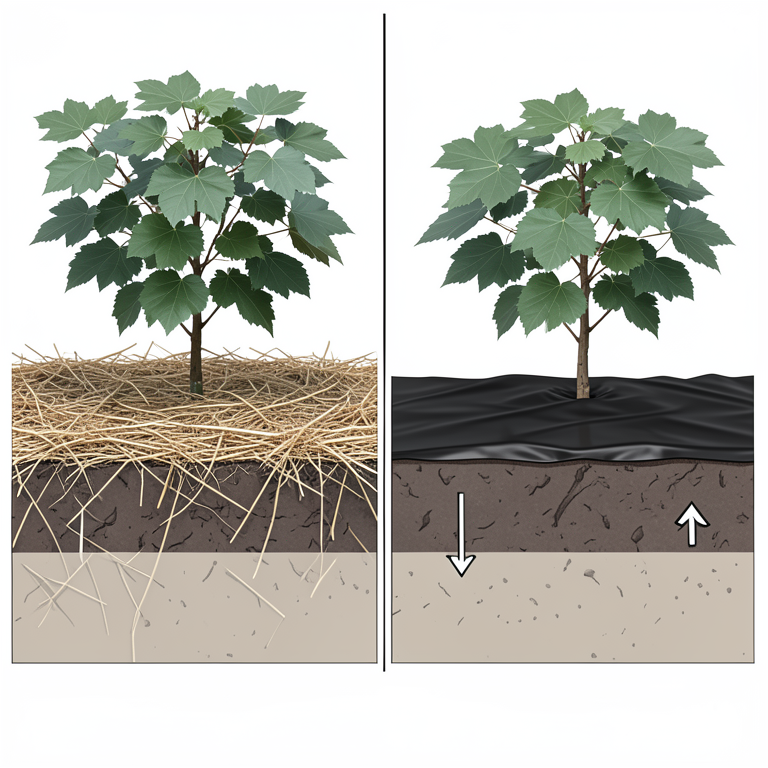
Types of Mulching Materials
AI-generated conceptual illustration (mulberry plants in soil). It explains the idea and does not show study data.
View source evidence ↗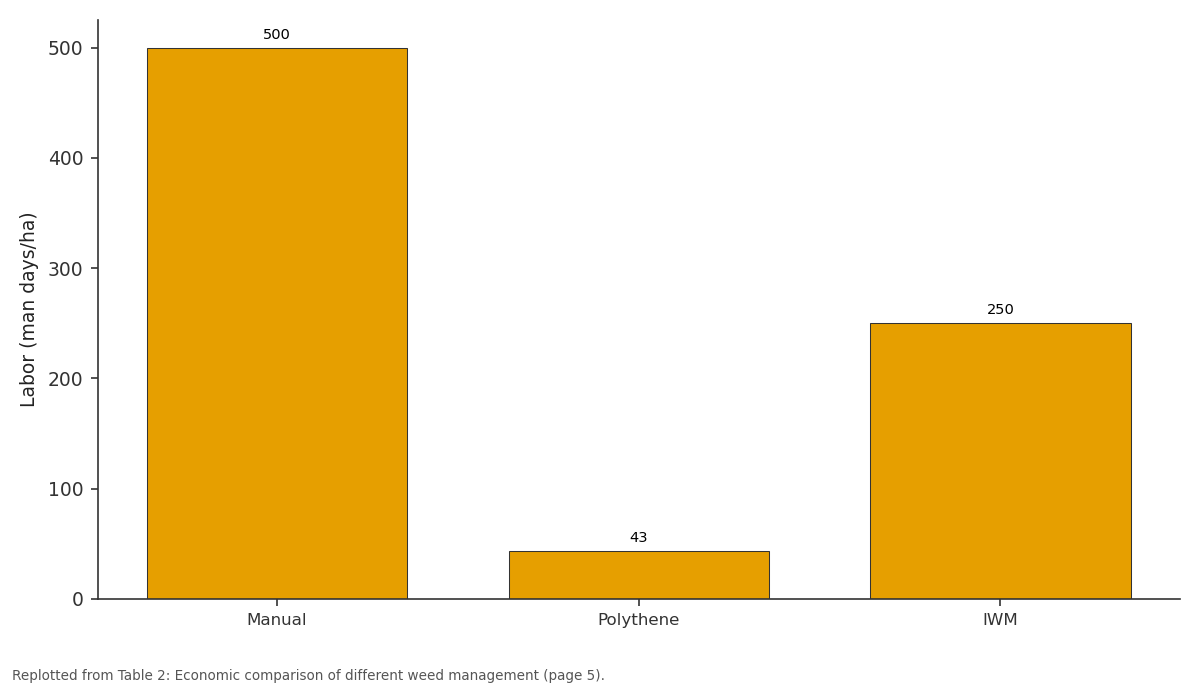
Labor (man days/ha): Manual vs Polythene vs IWM
Replotted from Table 2 (page 5) of the original paper. Every bar is the paper's own table value.
View source evidence ↗Figures & tables
From the original paper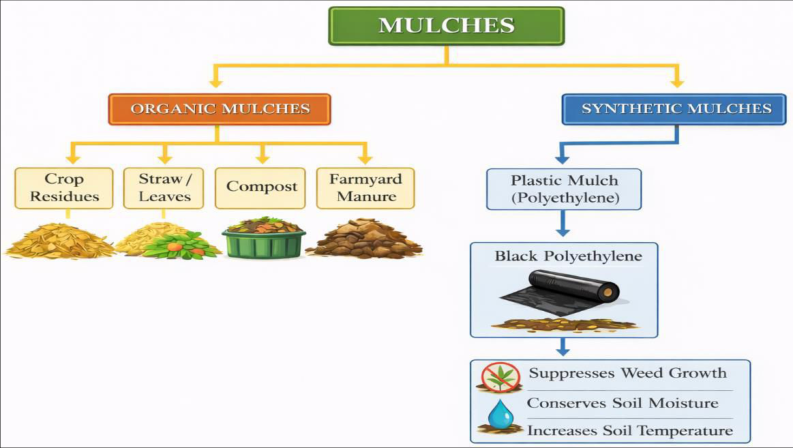 Figure 1
 Table 1
 Table 2
Introduction
Mulberry (Morus alba L.) is the primary host plant of the silkworm Bombyx mori and forms the backbone of the sericulture industry (Dandin & Giridhar, 2014) [8] . The productivity and nutritional quality of mulberry leaves directly influence cocoon yield and silk quality, making mulberry cultivation central to sustainable silk production (Muniyappa, 1990; Bali & Pandit, 2014) [2,26] . Sericulture supports millions of rural households, particularly in Asian countries such as China and India. India remains the second-largest silk producer globally, with a total production of 38,913 MT in 2023-24, of which 76.82% is mulberry silk. Mulberry is cultivated on approximately 2.63 lakh hectares under irrigated conditions (Ministry of Textiles, 2025) [23] . Mulberry is a perennial crop maintained for 15-25 years and subjected to frequent pruning to ensure continuous leaf supply (Dandin & Giridhar, 2014) [8] . Under tropical conditions, plants are pruned five to six times annually, leading to rapid regrowth and high nutrient demand. Such intensive cultivation practices create favorable conditions for weed proliferation (Shanmugam et al., 2012). Weeds compete with mulberry for water, nutrients, light and space, significantly reducing plant growth and leaf yield. Yield losses of 30-40% due to severe weed infestation has been reported, ultimately affecting cocoon production and silk output (Sikdar et al., 1981; Khare et al., 2023) [18] . Additionally, weeds may act as alternate hosts for pests and pathogens, posing further risks to crop and silkworm health (Reddy et al., 2000). Weed management in mulberry plantations traditionally relies on manual weeding and chemical herbicides. Manual weeding is effective but labour-intensive and increasingly costly due to labour shortages (Krishna et al., 2013; Khare et al., 2023) [18,20] . Herbicides provide quick control but raise concerns regarding environmental contamination, phytotoxicity and potential toxicity to silkworms through treated leaves (Das & Prasad, 1972; Chandrasekaran & Venkatakrishnan, 1991) [5, 10] . These limitations highlight the need for sustainable alternatives. Mulching has emerged as an eco-friendly and effective weed management strategy. It involves covering the soil surface with organic or synthetic materials to conserve moisture, regulate temperature and suppress weed emergence by limiting light (Mohler & Calloway, 1992) [25] . Organic mulches improve soil structure and microbial activity, while synthetic mulches such as black polyethylene are highly efficient in weed control and moisture conservation. Studies indicate that black polyethylene mulch can reduce weed populations by over 90% and significantly enhance soil moisture, plant growth and leaf yield (Sakthivel, 2019; Khare et al., 2023) [18] . Mulching has been reported to increase leaf yield substantially compared to unweeded and conventionally weeded plots. However, its adoption is constrained by cost, material availability and environmental concerns related to plastic waste disposal.
Weed dynamics in mulberry cultivation
Mulberry (Morus alba L.) is a perennial woody plant widely cultivated for sericulture as it serves as the sole food source for the silkworm Bombyx mori. The productivity of the sericulture industry largely depends on the availability of high-quality mulberry leaves, which directly influence cocoon yield and silk production (Muniyappa, 1990; Muniyappa & Shivakumar, 1994; Bali & Pandit, 2014) [2,26] . Due to intensive cultivation practices involving repeated pruning, fertilization and irrigation, mulberry plantations provide favorable conditions for weed growth, making weed infestation a major constraint affecting mulberry productivity. Weeds are unwanted plants that compete with crops for essential resources such as light, nutrients, water and space (Holm et al., 1979) [15] . Globally, more than 250,000 plant species have been identified, of which approximately 8,000 species are recognized as weeds, although only about 200-250 species are considered major weeds affecting agricultural productivity worldwide (Holm et al., 1977; Holm et al., 1979; Chauhan, 2019) [6,14] . In India, over 800 weed species have been reported, with around 80 species posing serious threats to agricultural crops (Singh et al., 2019). In mulberry plantations, weed infestation is particularly severe due to the perennial nature of the crop, continuous monocropping and regular fertilizer application (Das et al., 1971; Bhalerao et al., 2011; Shanmugam et al., 2012) [3] . Weed flora in mulberry fields is diverse, with studies reporting 57-141 species belonging to 28-44 plant families across different agro-climatic regions in India (Khare et al., 2023) [18] . Dominant families include Poaceae, Asteraceae, Fabaceae and Amaranthaceae (Bindroo et al., 2013; Bali & Pandit, 2014) [2,4] . Among monocots, Cynodon dactylon and Cyperus rotundus are the most problematic perennial weeds due to their extensive rhizome systems and rapid vegetative propagation. These two species alone may account for nearly 79% of the total weed population in mulberry fields (Sikdar & Madhava Rao, 1977; Kasiviswanathan et al., 1978; Shanmugam et al., 2009) [17] . In addition, several dicot weeds such as Parthenium hysterophorus, Tridax procumbens, Phyllanthus niruri, Achyranthes aspera, Ageratum conyzoides and Amaranthus viridis commonly occur in mulberry plantations and compete vigorously with the crop during early growth stages (Das et al., 1971; Bhalerao et al., 2011; Bali & Pandit, 2014) [2,3,9] . Weed infestation can reduce mulberry leaf yield by 30-40%, thereby affecting cocoon production and overall sericulture productivity (Khare et al., 2023) [18] . The first 30-45 days after planting or pruning have been identified as the critical period of weed competition, during which effective weed control is essential to maintain optimum mulberry growth and leaf production (Setua, 2009; Shanmugam et al., 2012). Considering the significant yield losses caused by weeds and the limitations of conventional weed management practices, sustainable alternatives such as mulching have gained increasing attention in mulberry cultivation systems.
Importance of mulching in agriculture
Mulching is a widely used agronomic practice aimed at conserving soil moisture, regulating soil temperature, suppressing weed growth and improving crop productivity. The term "mulch" refers to any material placed on the soil surface to protect the soil and modify the microenvironment around the plant root zone (Patil et al., 2013) [29] . Mulching improves soil-plant relationships by reducing soil evaporation, minimizing temperature fluctuations and enhancing soil biological activity. By forming a protective barrier between the soil and atmosphere, mulch layers reduce moisture loss and improve water use efficiency in crop production systems (Ramakrishna et al., 2006). The benefits of mulching have been widely reported in crops such as rose (Rodrigues et al., 1999), garlic (Haque et al., 2003), strawberry (Singh et al., 2006), groundnut (Ramakrishna et al., 2006) [13] , tomato (Rajablariani et al., 2012) and chilli (Sathiyamurthy et al., 2017), where it improves soil moisture availability, nutrient uptake and crop yield. In addition to organic and plastic mulches, some farming systems also utilize living mulches or cover crops, where low-growing plants are cultivated between crop rows to suppress weed growth. In mulberry cultivation, certain leguminous intercrops have been reported to reduce weed populations through shading effects that inhibit weed germination (Setua et al., 2009). The effectiveness of mulching depends on factors such as mulch type, thickness, climatic conditions, soil properties and crop management practices. While synthetic mulches provide rapid weed suppression and moisture conservation, organic mulches contribute to long-term soil fertility and sustainability. In mulberry cultivation, mulching has gained increasing attention as a promising practice for improving soil moisture conservation, reducing weed competition and enhancing leaf productivity.
Mulching practices in mulberry cultivation
Mulching in mulberry plantations generally involves the application of organic residues, crop by-products, or synthetic materials on the soil surface between crop rows. These materials create a protective layer over the soil surface, which reduces direct exposure to sunlight, minimizes evaporation losses and suppresses the germination and growth of weeds. Mulches also modify the microclimatic conditions of the root zone by regulating soil temperature and moisture availability (Mohler & Calloway, 1992) [25] . Based on the type of material used, mulching practices in mulberry cultivation can be broadly classified into organic mulches and synthetic mulches (Fig. 1). Organic mulches include materials such as paddy straw, sorghum straw, dry weeds, mulberry twigs, green manure crops and coir pith (Shashidhar et al., 2009). These materials are widely used in sericulture farming systems due to their low cost, easy availability and beneficial effects on soil fertility. During decomposition, organic mulches release essential nutrients into the soil and improve soil structure, thereby enhancing root growth and nutrient uptake by mulberry plants (Das et al., 1990; Gangawar et al., 2000) [11,12] . Several studies have evaluated the performance of different organic mulching materials in mulberry plantations. For instance, Gangawar et al. (2000) [12] reported that paddy straw mulch resulted in a 46% increase in mulberry leaf yield, compared with 32.4 and 23.08% increases observed with sorghum straw and black gram residues, respectively, over the control treatment. Similarly, Mir et al. (2015) [24] observed that mulching with phyto-mulches like mulberry twigs, dried weeds and paddy grass improved weed control efficiency by 54, 62, and 55%, respectively, under rainfed conditions, while also enhancing mulberry leaf yield by approximately 10-12%. Synthetic mulches, particularly black polyethylene sheets, have also been widely investigated for mulberry cultivation due to their superior ability to suppress weeds and conserve soil moisture. Plastic mulches act as a physical barrier that blocks sunlight from reaching the soil surface, thereby inhibiting weed seed germination and growth (Lourduraj et al., 1996) [22] . Additionally, the impermeable nature of plastic mulch reduces soil evaporation and helps maintain adequate soil moisture levels for crop growth (Kasiviswanathan et al., 1978; Sakthivel, 2019) [17] . Furthermore, integrated approaches combining mulching with other weed management practices have also shown promising results. Shanmugam et al. (2012) reported that manual weeding followed by mulching with coir pith significantly reduced weed biomass compared with repeated manual weeding alone. Such integrated strategies can provide long-term weed suppression while minimizing labor requirements and production costs.
Effect of mulching on weed suppression
Weed suppression is one of the most significant benefits associated with mulching in agricultural production systems. In mulberry plantations, uncontrolled weed growth can severely reduce crop productivity by competing with mulberry plants for essential resources such as nutrients, water, and light. Weeds also act as alternate hosts for insect pests and plant pathogens, thereby posing additional risks to crop health. Therefore, effective weed management is essential for maintaining high mulberry leaf yield and quality. Mulching suppresses weeds primarily through physical and biochemical mechanisms. The physical effect of mulch involves blocking sunlight from reaching the soil surface, thereby inhibiting the germination and emergence of weed seedlings. In addition, certain organic mulches may release allelopathic compounds during decomposition, which can further inhibit weed growth (Mohler & Calloway, 1992) [25] . Experimental studies have demonstrated the high efficiency of mulching in controlling weeds in mulberry plantations. Similarly, the weed control efficiency of black polyethylene mulch was reported to be 97.06% compared with unweeded control plots and 93.42% compared with manually weeded plots (Sakthivel, 2019). The superior performance of plastic mulch is primarily attributed to its opaque nature, which prevents sunlight penetration and thus inhibits weed germination and growth. Organic mulches have also been shown to effectively suppress weeds in mulberry fields. Gangawar et al. (2000) [12] demonstrated that paddy straw mulch significantly reduced weed density and improved mulberry leaf yield compared with non-mulched plots. Similarly, Shivakumar et al. (2001) reported that the incorporation of ragi straw at a rate of 10 t ha⁻¹ enhanced weed control efficiency and resulted in an additional 18% increase in mulberry leaf yield. The weed suppression efficiency of organic mulches largely depends on the thickness of the mulch layer and the type of material used. Thick mulch layers create a physical barrier that prevents weed seedlings from emerging through the soil surface (Sarolia & Bhardwaj, 2012). In addition, mulches improve soil moisture retention and microbial activity, which can influence the germination dynamics of weed seeds.
Effect of mulching on soil moisture and soil health
Soil moisture conservation is a critical factor influencing the growth and productivity of mulberry plantations (Sakthivel, 2019). Since mulberry is harvested several times annually for leaf production, the crop requires a consistent supply of soil moisture to support continuous vegetative growth. In many sericulture-growing regions, water scarcity and high evaporation rates often limit mulberry productivity. Mulching plays a vital role in conserving soil moisture and improving soil health in such conditions. Mulch materials act as protective barriers that reduce direct exposure of the soil surface to solar radiation and wind. As a result, evaporation losses are minimized and soil moisture is retained for longer periods (Bakshi et al., 2015) [1] . Several studies have reported that mulched plots maintain significantly higher soil moisture levels compared with nonmulched plots (Ramakrishna et al., 2006). Field experiments conducted in mulberry plantations have confirmed the effectiveness of mulching in conserving soil moisture. Sakthivel et al. (2019) reported that plots mulched with black polyethylene sheets recorded an average soil moisture content of 17.19%, whereas manually weeded and non-weeded plots recorded only 11.27 and 10.73% soil moisture, respectively. The increased soil moisture under mulched conditions can be attributed to reduced evaporation from the soil surface and improved water retention in the root zone. In addition to moisture conservation, mulching also contributes to improved soil health (Das et al., 1990; Patil et al., 2003) [11,29] . Organic mulches decompose gradually and enrich the soil with organic matter, which enhances soil structure, nutrient availability and microbial activity. For example, Das et al. (1990) [11] reported that green manure mulches such as cowpea and horse gram increased the nitrogen content of mulberry leaves by 17.9 and 22.2%, respectively, compared with non-mulched plots. Mulching also moderates soil temperature fluctuations by insulating the soil surface (Ramakrishna et al., 2006). During hot weather conditions, mulch layers reduce soil temperature, while during cooler periods they help retain heat within the soil. Such temperature regulation promotes root growth and enhances nutrient uptake by mulberry plants.
In addition, improved soil moisture and nutrient availability under mulched conditions contribute to enhanced microbial activity in the rhizosphere. Soil microorganisms play an essential role in nutrient cycling and organic matter decomposition, thereby improving overall soil fertility and crop productivity (Lal, 2004; Ramakrishna et al., 2006; Bakshi et al., 2015) [1,21] .
Influence of mulching on growth and leaf yield of mulberry
Mulberry leaf production is the most critical component of sericulture because the quality and quantity of leaves directly influence silkworm growth, cocoon yield and silk production (Dandin & Giridhar, 2014) [8] . Consequently, agronomic practices that enhance leaf yield are significant in mulberry cultivation. Mulching has been widely reported to improve mulberry growth parameters and leaf productivity by creating favorable soil and microclimatic conditions. One of the primary mechanisms through which mulching improves mulberry growth is by enhancing soil moisture availability (Das et al., 1990; Gangawar et al., 2000) [11,12] . Adequate soil moisture promotes root development, increases nutrient uptake and supports vigorous vegetative growth in mulberry plants (Sakthivel, 2019). Studies have shown that mulched plots exhibit significantly higher plant height, number of shoots per plant and leaf area index compared with non-mulched plots (Lourduraj et al., 1996; Nagalakshmi et al., 2002) [22,28] . Plastic mulches, particularly black polyethylene, significantly enhance mulberry leaf yield by reducing weed competition and improving soil moisture and nutrient uptake (Kasiviswanathan et al., 1971; Das et al., 1990) [11,16] Studies have reported leaf yields of 12.6 t ha⁻¹ per harvest under black polythene mulch compared with 9.4 t ha⁻¹ in control plots. Organic mulches such as paddy straw also improve productivity, increasing leaf yield by 15-25% through gradual nutrient release during decomposition (Das et al., 1990; Gangawar et al., 2000; Bakshi et al., 2015) [1,11,12] . In addition to yield improvement, mulching enhances leaf quality parameters, including moisture content, protein and carbohydrate levels, which improve silkworm feeding efficiency and ultimately lead to higher cocoon yield and better silk quality (Setua et al., 2009). Additionally, mulching plays a significant role in improving mulberry growth and productivity by maintaining favourable soil temperature, moisture and aeration conditions that promote better root development (Purohit et al., 1990; Sakthivel et al., 2011; Sakthivel, 2019) [30] . Enhanced root growth increases the plant's capacity to absorb water and nutrients from deeper soil layers, resulting in improved vegetative growth and higher leaf biomass. In addition, it reduces plant stress during dry periods by conserving soil moisture and minimizing evapotranspiration losses, which is particularly beneficial in rainfed sericulture regions where water scarcity limits productivity (Purohit et al., 1990) [30] . Since the primary objective of mulberry cultivation is to produce high-quality leaves for silkworm feeding, the improvement in plant growth, leaf yield and leaf quality under mulched conditions ultimately contributes to enhanced silkworm performance and greater economic returns in sericulture systems (Das et al.,1990 [7,11,12,19] .
Experimental studies show that mulching significantly improves mulberry growth, leaf moisture and yield. Plants grown under black polyethylene mulch recorded higher plant height (226.49 cm) and leaf area (198.63 cm²) compared with control plots (155.30 cm and 165.92 cm²). Mulching also increased leaf moisture content to 78.55% compared with 57.66% in unweeded plots (Sakthivel, 2019). Moreover, leaf yield increased by 24-48% under mulching (Purohit et al., 1990) [30] , with black polyethylene mulch improving yield by 58.14% over weedy check and 25.89% over manual weeding (Sakthivel, 2019). Similarly, paddy straw mulch increased leaf yield by about 46% compared with control treatments (Gangawar et al., 2000) [12] . These findings demonstrate the effectiveness of mulching in enhancing mulberry productivity in sericulture systems. (Gangawar et al., 2000 [12] ; Sahida et al., 2019)
Table 1 shows that different mulching materials significantly influenced weed control, soil moisture and mulberry leaf yield. Black polythene mulch provided the highest weed suppression (93-97%) and moisture gain (60%), resulting in a 25-58% increase in yield. Organic mulches such as paddy straw, Gliricidia, coir pith and cowpea intercrop also improved yield (11-47%) by conserving soil moisture and reducing weed competition, though less effectively than plastic mulch.
| Mulch type | Application rate | Weed efficiency (%) | Moisture gain (%) | Yield increase (%) |
|---|---|---|---|---|
| Paddy straw | 10 t/ha | 55 | 52-60 | 11-46 |
| Gliricidia | 5-10 t/ha | 54-62 | 1-3 (leaf) | 47 |
| Black polythene | 300-400 kg/ha (50 μm film) | 93-97 | 60 | 25-58 |
| Coir pith | 12.5 t/ha | 33 | 45 | 16-48 |
| Cowpea intercrop | 10-15 kg seeds/ha | 32-38 | 55 | 47 |
Table text extracted from the original PDF; superscript letters are shown inline. The original table image is below.
View original table image
Economic benefits of mulching in sericulture
Economic sustainability is a key consideration in mulberry cultivation and sericulture production systems. Weed management in mulberry plantations traditionally relies heavily on manual labor, which significantly increases the cost of cultivation. Studies have reported that manual weeding in mulberry requires approximately 457-500 mandays per hectare per year, making it one of the most laborintensive operations in sericulture farming (Das et al., 1990; Krishna et al., 2013) [11,20] . Mulching offers a cost-effective alternative to conventional weed management practices by reducing the need for repeated manual weeding (Das et al., 1990; Lourduraj et al., 1996) [11,22] . By suppressing weed growth and conserving soil moisture, mulching reduces labor requirements and irrigation costs while improving crop productivity (Nagalakshmi et al., 2002; Sathiyamurthy et al., 2017) [28] . Economic analyses have demonstrated that mulching can significantly increase farmers' income from mulberry [12] found that mulching improved both leaf yield and economic returns from sericulture production systems. Furthermore, increased mulberry leaf production resulting from effective weed management can significantly enhance cocoon yield and silk production. Studies have estimated that weeds can reduce mulberry leaf yield by 30-40%, which in turn limits cocoon production and silk output (Bali & Pandit, 2014) [2] . Therefore, the adoption of mulching practices can play a crucial role in improving the profitability and sustainability of sericulture farming.
In addition to economic benefits, mulching also contributes to environmental sustainability by reducing dependence on chemical herbicides and promoting efficient use of natural [1] . [11] ; Gangawar et al., 2000 [12] ; Chinnaswamy et al., 2003) [7] .
The table 2 shows that polythene mulching and integrated weed management (IWM) significantly reduce labor requirements compared with manual weeding. Both practices also provide higher net returns and better benefitcost (B:C) ratios. Among the methods, IWM recorded the highest economic benefit, indicating its efficiency for sustainable mulberry cultivation.
| Practice | Labor (man days/ha) | Net return (₹/ha) | B:C |
|---|---|---|---|
| Manual | 500 | Baseline | 2.5:1 |
| Polythene | 43 | +8,950 | 3.5:1 |
| IWM | 250 | +12,000 | 4:1 |
Table text extracted from the original PDF; superscript letters are shown inline. The original table image is below.
View original table image
Challenges and future research directions
Regardless of its numerous benefits, the adoption of mulching in mulberry cultivation faces several challenges. The high cost and limited availability of plastic mulch materials often discourage smallholder farmers from using them. In addition, the disposal of plastic residues can cause environmental pollution and soil contamination. Although organic mulches are environmentally friendly, their use may be limited by insufficient biomass availability, variable decomposition rates and possible pest or disease development if not managed properly. Future research should focus on the development of biodegradable mulch materials and integrated mulching systems that combine organic residues, cover crops and ecofriendly plastics. Long-term studies are also required to evaluate the effects of mulching on soil health, moisture conservation and mulberry productivity under different climatic conditions. Such research will help improve the sustainability and wider adoption of mulching practices in sericulture systems.
Conclusion
Mulberry cultivation is fundamental to the success of the sericulture industry because the quality and quantity of mulberry leaves directly influence silkworm growth and silk production. Mulching has proven to be an effective agronomic practice for improving mulberry cultivation by suppressing weeds, conserving soil moisture, regulating soil temperature and enhancing plant growth and leaf yield. Both organic and synthetic mulches significantly improve mulberry productivity and contribute to better silkworm performance. In addition to improving crop yield, mulching reduces labour requirements and increases economic returns for sericulture farmers. However, issues such as plastic waste and limited farmer awareness still restrict its widespread adoption. Therefore, the development of sustainable and cost-effective mulching strategies will be essential for improving mulberry productivity and ensuring the long-term sustainability of sericulture production systems.
References
30 in the original paper- Bakshi P, Wali VK, Iqbal M, Jasrotia A, Kour K, Ahmed R, Bakshi M. Sustainable fruit production by soil moisture conservation with different mulches: A review. African Journal of Agricultural Research. 2015;10(52):4718-4729.
- Bali PK, Pandit RK. Weed flora of mulberry gardens in Jammu and Kashmir, India. Pakistan Journal of Weed Science Research. 2014;20(3):375-384.
- Bhalerao RS, Hiware CJ, Avahad SB. Weed infestation in mulberry garden. Bangladesh Journal of Agricultural Research. 2011;36(1):183-188.
- Bindroo BB, Sakthivel N, Isaiarasu L, Kirsur MV. Competitive weed flora of mulberry under irrigated conditions in southern Tamil Nadu. Indian Journal of Sericulture. 2013;52(2):86-90.
- Chandrasekaran C, Venkatakrishnan AS. Chemical weed control in mulberry nursery. Pestology. 1991;15(3):11-13.
- Chauhan BS. Grand challenges in weed management. Frontiers in Agronomy. 2019;1:3-3.
- Chinnaswamy KP, Jolly MS, Dandin SB. Weed management in mulberry plantations: An integrated approach. Indian Silk. 2003;42(11):15-18.
- Dandin SB, Giridhar K. Handbook of sericulture technologies. Bangalore: Central Silk Board; 2014.
- Das BC, Prasad DN, Raju R, Krishnaswami S. A survey of common weeds occurring in the mulberry farms of West Bengal. Indian Journal of Sericulture. 1971;10(1):28-36.
- Das BC, Prasad DN. Chemical herbicides for the eradication of weeds of mulberry field of West Bengal. Indian Journal of Sericulture. 1972;11(1):47-51.
- Das DK, Choudhury DC, Ghosh A, Mallikarjuna B, Suryanarayana N, Sengupta K. Effect of green manuring, dry weed and black polythene mulching on soil moisture conservation, growth and yield of mulberry and their economics under rainfed condition. Indian Journal of Sericulture. 1990;29(2):263-272.
- Gangawar SK, Sinha PS, Singh BD, Jayaswal RJ, Ghey UP. Maximization of leaf yield of mulberry (Morus alba L.) and economic return per unit area of land from sericulture through mulching. Sericologia. 2000;40(3):491-497.
- Haque MS, Islam MR, Karim MA, Khan MAH. Effect of natural and synthetic mulches on garlic (Allium sativum L.). Asian Journal of Plant Sciences. 2003;2(1):83-89.
- Holm LG, Plucknett DL, Pancho JV, Herberger JP. The world's worst weeds: Distribution and biology. Honolulu: University Press of Hawaii; 1977.
- Holm LG, Pancho JV, Herberger JP, Plucknett DL. A geographical atlas of world weeds. New York: John Wiley & Sons; 1979.
- Kasiviswanathan K, Iyengar MNS, Krishnaswami S. Effect of black polythene mulch on soil temperature, soil moisture, weed density and yield of mulberry leaf under dry farming condition in Mysore State. Indian Journal of Sericulture. 1971;10:90-95.
- Kasiviswanathan K, Chowdhary PC, Venkataramu CV, Verma RS. Screening herbicides for weed control in mulberry field. Indian Journal of Sericulture. 1978;17:15-22.
- Khare TR, Sobhana V, Kalpana GV. Weed management in mulberry (Morus alba): A review. Agricultural Reviews. 2023;44(1):60-65.
- Krishna KS. Integrated weed management in mulberry and its effect on silkworm rearing [PhD Thesis]. Bangalore: University of Agricultural Sciences; 2012.
- Krishna KS, Narayanaswamy TK, Shahsidhar KR, Mangammal P. Impact of crop weed competition on growth and yield of mulberry. Madras Agricultural Journal. 2013;100(5):407-409.
- Lal R. Soil carbon sequestration to mitigate climate change. Geoderma. 2004;123(1-2):1-22.
- Lourduraj AC, Sreenarayanan VV, Rajendran R, Ravi V, Padmini K, Pandiarajan T. Effect of plastic mulching on tomato yield and economics. South Indian Horticulture. 1996;44:139-142.
- Ministry of Textiles. Annual report 2024-2025. New Delhi: Government of India; 2025.
- Mir MR, Baqual MF, Din NS, Khan IL, Malik MA. Use of phyto-mulches for improved productivity in mulberry under rainfed conditions in Kashmir. International Journal of Advanced Biological Research. 2015;5(4):299-302.
- Mohler CL, Callaway MB. Weed control using crop residues for weed suppression. Weed Technology. 1992;6(1):1-5.
- Muniyappa TV. Agronomic investigations on the effects of cultural and chemical methods of weed control on mulberry growth, leaf yield, leaf quality, silkworms (Bombyx mori L.), cocoon yield and silk quality [PhD Thesis]. Bangalore: University of Agricultural Sciences; 1990.
- Muniyappa TV, Shivakumar HR. Nutrient uptake by mulberry and associated weeds under different weed management practices. Indian Journal of Weed Science. 1994;26:143-147.
- Nagalakshmi S, Reddy MP, Suryanarayana N. Effect of mulching on growth and yield of mulberry (Morus alba L.). Indian Silk. 2002;41(6):9-11.
- Patil SS, Kelkar TS, Bhalerao SA. Mulching: A soil and water conservation practice. Research Journal of Agriculture and Forestry Sciences. 2013;1(3):26-29.
- Purohit KM, Ray D, Subbarao G. Effect of mulches on soil temperature, soil moisture, growth and yield of mulberry during winter and rainfed condition in West Bengal. Indian Journal of Sericulture. 1990;29:64-71.