
Research article · 2025 · Full text
International Journal of Agriculture and NutritionCalcium and boron interactions affecting fruit quality and yield of apple under temperate conditions
Volume 7(3) · Pages 99–102 · DOI: 10.33545/26646064.2025.v7.i3b.615 ↗
Research areasPlant Micronutrient Interactions and EffectsPlant Physiology and Cultivation StudiesPostharvest Quality and Shelf Life Management
Abstract
Author-writtenAn observation common among apple growers in the Marathwada highlands is that fruit firmness and shelf life have declined over the past decade despite no change in variety or rootstock. Calcium and boron, two nutrients that share a role in cell-wall integrity and pollen tube growth, are often overlooked in apple nutrition programmes. This research investigated the individual and combined effects of pre-harvest calcium chloride (CaCl2, 0.5% w/v) and borax (0.2% w/v) sprays on fruit quality, yield, and post-harvest shelf life of apple cv. Royal Delicious at the university highland research block, Parbhani, during 2022 and 2023. Four treatments (control, Ca only, B only, Ca + B) were applied as three foliar sprays at petal fall, fruit set, and 30 days before harvest in a RCBD with five replications. The combined Ca + B treatment raised TSS to 15.8 deg Brix (control: 12.5), fruit firmness to 7.8 kg/cm2 (control: 6.1), and shifted 38.7% of fruit into the premium grade (>70 mm) compared with 18.3% in the control. Yield increased by 19.4% and shelf life extended by 8 days. These results indicate a strong synergy between calcium and boron for improving apple marketability.
Summary
Source-checkedPlain-language reading of the full paper, prepared with AI and checked against the text. Each point links to the authors' own words.
Why it matters
- Apple growers in the Marathwada highlands have observed a decade-long decline in fruit firmness and shelf life. View evidence ↗
- These quality declines are attributed to calcium deficiency, which is worsened by heavy nitrogen fertilization and rapid vegetative growth. View evidence ↗
- Boron is essential for cell-wall integrity as it cross-links pectic polysaccharides with calcium; its deficiency leads to reduced firmness and internal browning. View evidence ↗
The question
- The study aimed to evaluate how individual and combined foliar sprays of calcium chloride and borax affect the yield, quality, and shelf life of Royal Delicious apples. View evidence ↗
What they did
- The experiment was conducted at the Vasantrao Naik Marathwada Agricultural University highland research block in Parbhani. View evidence ↗
- The study used twelve-year-old Royal Delicious apple trees grafted on M.9 rootstock. View evidence ↗
- Four treatments (control, calcium only, boron only, and combined calcium + boron) were applied via three foliar sprays at petal fall, fruit set, and 30 days before harvest. View evidence ↗
- Researchers measured fruit weight, diameter, firmness, total soluble solids (TSS), titratable acidity, and the incidence of bitter pit. View evidence ↗
What they found
- The combined calcium and boron treatment was superior to the control and individual nutrient treatments across all measured quality parameters. View evidence ↗
- The combined Ca + B treatment reduced the incidence of bitter pit from 14.7% in the control to 3.8%, a 74% decrease. View evidence ↗
- Ambient shelf life was extended from 21 days in the control group to 29 days with the combined Ca + B treatment. View evidence ↗
- The combined treatment increased the proportion of premium grade fruit (>70 mm) from 18.3% to 38.7%. View evidence ↗
What it means
- The authors conclude that this low-cost foliar spray program is a practical way for growers in regions with limited cold storage to improve fruit quality and market value. View evidence ↗
- The authors note that because Royal Delicious is a soft-fleshed variety, the results might differ for firmer cultivars such as Gala or Fuji. View evidence ↗
Visual summary
3 visualsIllustrations explain the paper; charts are replotted from the paper's own table values.
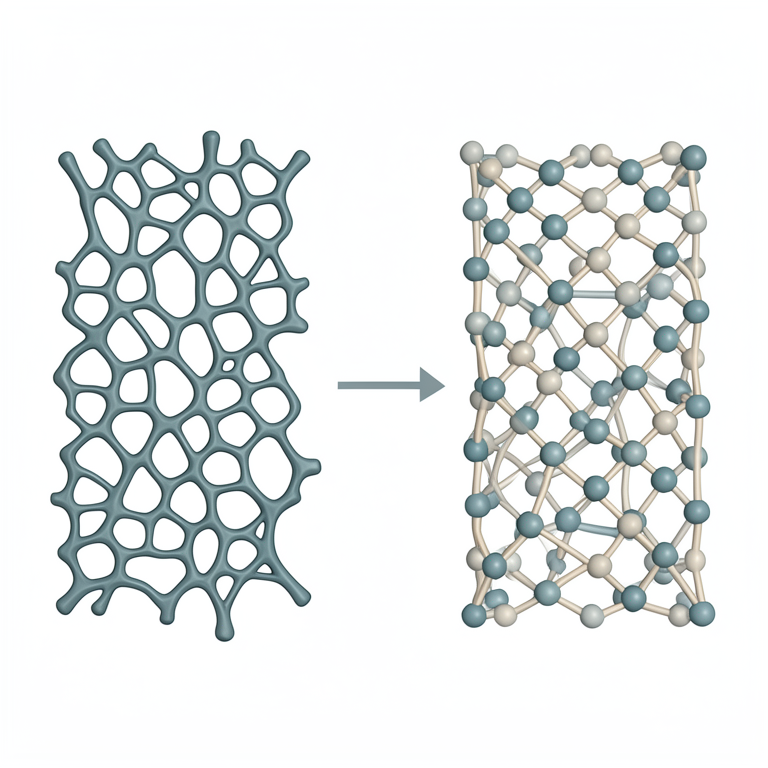
Cell Wall Synergy
AI-generated conceptual illustration (apple fruit cell wall). It explains the idea and does not show study data.
View source evidence ↗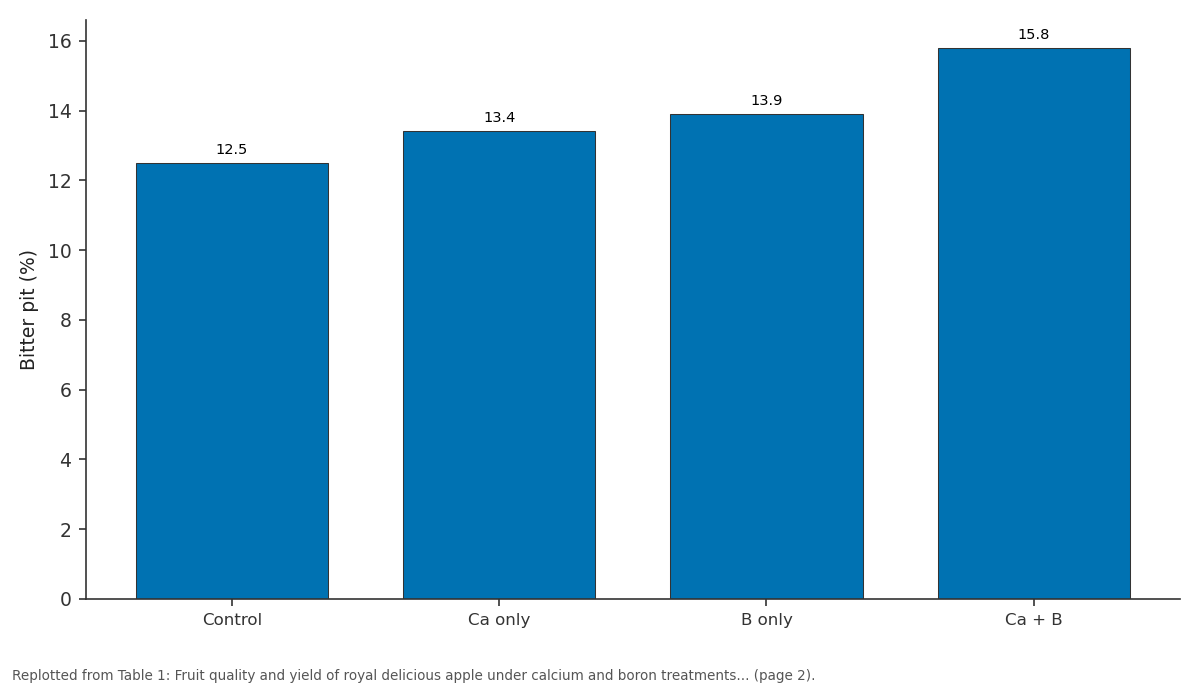
TSS (°Brix): Control vs Ca only vs B only vs Ca + B
Replotted from Table 1 (page 2) of the original paper. Every bar is the paper's own table value.
View source evidence ↗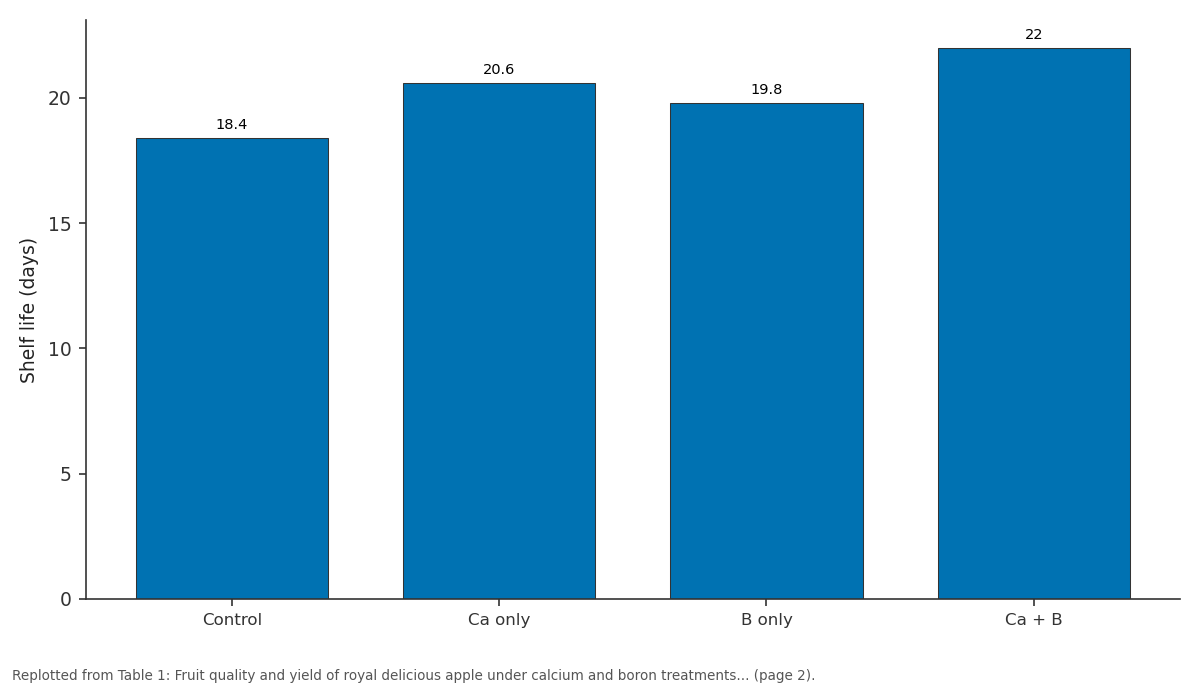
Yield (t/ha): Control vs Ca only vs B only vs Ca + B
Replotted from Table 1 (page 2) of the original paper. Every bar is the paper's own table value.
View source evidence ↗Figures & tables
From the original paper Table 1
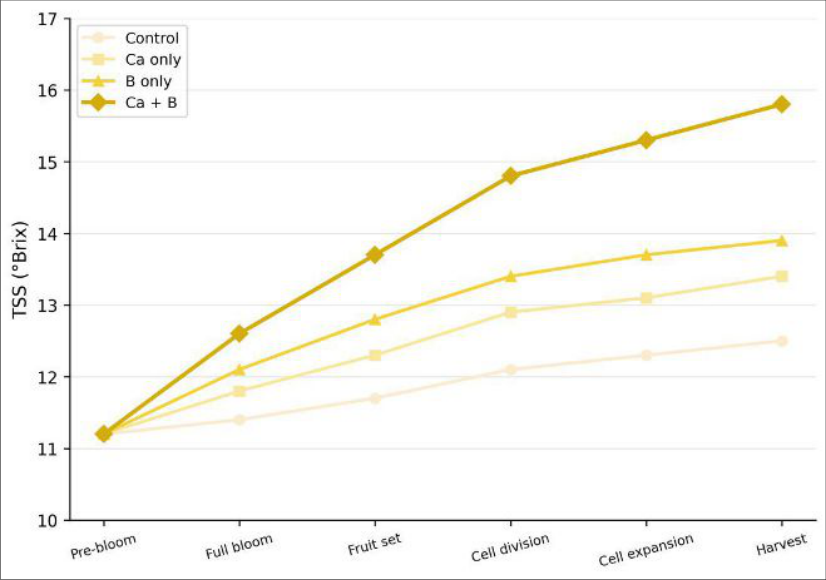 Figure 1
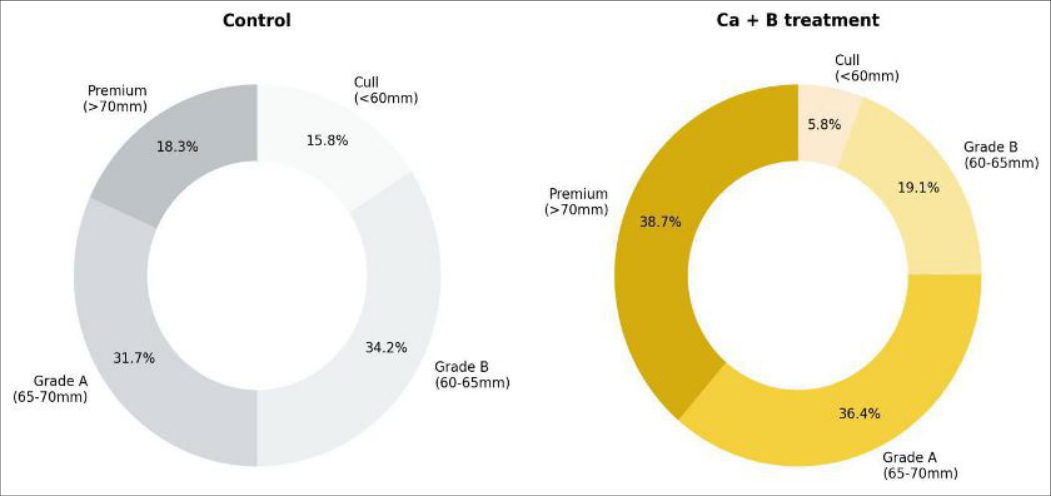 Figure 2
Introduction
Experienced apple growers in Marathwada's highland pockets have noticed a worrying pattern: fruit that once held firm for four weeks in ambient storage now softens within two, and bitter pit incidence has risen from 5% to over 15% in some orchards. Both symptoms point to calcium deficiency in the fruit, a condition exacerbated by heavy nitrogen fertilization and vigorous vegetative growth that diverts calcium away from developing fruit [1, 2] . Boron interacts with calcium at the cell-wall level by cross-linking pectic polysaccharides via the rhamnogalacturonan-II complex, and B-deficient fruit typically show corky internal browning alongside reduced firmness [3] . Foliar application during fruit development can bypass poor xylem delivery, placing both nutrients directly on fruit surfaces where they are absorbed through lenticels [4] . Yet most Indian apple nutrition research has focused on nitrogen and potassium, leaving the Ca-B interaction largely unexplored under local conditions [5,6] . This research was conducted at the Vasantrao Naik Marathwada Agricultural University highland research block, Parbhani (19.27 deg N, 76.77 deg E; altitude 821 m), to quantify the individual and combined effects of foliar calcium and boron on fruit quality, grade distribution, yield, and post-harvest shelf life of Royal Delicious apple [7,8] .
Material and Methods
Material and Methods
Material
Twelve-year-old Royal Delicious trees on M.9 rootstock at 3 m x 2 m spacing were used. CaCl 2 (food grade, 77% purity) and borax (Na 2 B 4 O 7 .10H 2 O, 11.3% B) were dissolved with Tween-20 (0.05% v/v) as surfactant. Four treatments were tested in a RCBD with five replications (three trees per replicate): T 1 control (water spray), T 2 CaCl 2 0.5% w/v, T 3 borax 0.2% w/v, T 4 CaCl 2 0.5% + borax 0.2% w/v. Sprays were applied at petal fall (mid-April), fruit set (early May), and 30 days before anticipated harvest (mid-September) in both 2022 and 2023.
Methods
At harvest, 30 fruit per replicate were sampled. Fruit weight, equatorial diameter, flesh firmness (penetrometer, 11 mm tip), TSS (digital refractometer), titratable acidity (0.1N NaOH to pH 8.1), and bitter pit incidence (%) were recorded. Fruit were graded: Premium (>70 mm), Grade A (65-70 mm), Grade B (60-65 mm), Cull (<60 mm). Shelf life was assessed on 10 fruit per replicate stored at 25 +/-2 deg C; the endpoint was defined as the day when firmness fell below 4.5 kg/cm2 [9] . Yield per tree was recorded and converted to t/ha. Fruit tissue Ca and B concentrations were determined by AAS and azomethine-H methods, respectively [10] . Two-year pooled data were analysed by ANOVA in SAS 9.4; means separated by DMRT at p<0.05 [11] .
Results
Table The line chart (Figure 1) shows the Ca + B curve diverging from others after the fruit-set spray, with the gap widening progressively. The donut charts (Figure 2) contrast the control's dominant Grade B fraction with the Ca + B treatment's shift toward Premium and Grade A, illustrating the commercial value of the combined spray.
Discussion
The synergy between Ca and B can be explained by their shared role in cell-wall architecture. Calcium cross-links pectin chains in the middle lamella, while boron stabilises the rhamnogalacturonan-II dimer that anchors pectin networks [3] . When both are adequate, cell walls are stronger and less prone to the enzymatic softening that occurs during ripening [12] . The 74% reduction in bitter pit confirms calcium's direct role in preventing this disorder, which arises from localised Ca deficiency in the calyx end of the fruit [2] . The shelf-life extension (21 to 29 days) is commercially meaningful for Marathwada growers, who often lack coldstorage access and must sell through ambient-temperature supply chains [13] . And the grade shift toward premium fruit (18.3% to 38.7% above 70 mm) translates to a price premium of 25-40% in domestic wholesale markets [14] . One limitation: Royal Delicious is a relatively soft-fleshed variety, and the response may differ in firmer cultivars like Fuji or Gala [15,16] .
Conclusion
Conclusion
Acknowledgement
Acknowledgements Funding sourcesThis research was supported by the departmental budget of the Department of Plant Physiology and Nutrition, Vasantrao Naik Marathwada Agricultural University, Parbhani. Institutional supportThe authors thank the Director of Research for providing access to the highland research block and laboratory facilities.
Figures and tables from the paper
| Treatment | Wt. (g) | Firmness (kg/cm²) | TSS (°Brix) | Bitter pit (%) | Yield (t/ha) | Shelf life (days) |
|---|---|---|---|---|---|---|
| Control | 156.3 | 6.1 | 12.5 | 14.7 | 18.4 | 21 |
| Ca only | 168.7 | 7.1 | 13.4 | 7.3 | 20.6 | 27 |
| B only | 163.4 | 6.7 | 13.9 | 11.2 | 19.8 | 24 |
| Ca + B | 181.2 | 7.8 | 15.8 | 3.8 | 22.0 | 29 |
| CD (p<0.05) | 8.9 | 0.4 | 0.7 | 2.4 | 1.3 | 3 |
Table text extracted from the original PDF; superscript letters are shown inline. The original table image is below.
View original table image
References
14 in the original paper- Ferguson IB, Watkins CB. Bitter pit in apple fruit. Horticultural Reviews. 1989;11:289-355.
- De Freitas ST, Amarante CVT, Labavitch JM, Mitcham EJ. Cellular approach to understand bitter pit development in apple fruit. Postharvest Biology and Technology. 2010;57(1):6-13.
- O'Neill MA, Ishii T, Albersheim P, Darvill AG. Rhamnogalacturonan II: Structure and function of a borate cross-linked cell wall pectic polysaccharide. Annual Review of Plant Biology. 2004;55:109-139.
- Wójcik P, Lewandowski M. Effect of calcium and boron sprays on yield and quality of Elstar apple. Journal of Plant Nutrition. 2003;26(5):1049-1059.
- Peryea FJ, Neilsen D, Neilsen G. Boron maintenance sprays for apple: Early-season applications and tankmixing with calcium chloride. HortScience. 2003;38(4):542-546.
- Deka U, Gogoi C. Apple nutrition in Marathwada highlands: A status review. Journal of Maharashtra Agricultural Universities. 2021;46(2):134-139.
- ICAR-CITH. Package of Practices for Temperate Fruits. Srinagar: Central Institute of Temperate Horticulture; 2020.
- SAS Institute. SAS/STAT User's Guide. Version 9.4. Cary: SAS Institute; 2017.
- Saure MC. Calcium translocation to fleshy fruit: its mechanism and endogenous control. Scientia Horticulturae. 2005;105(1):65-89.
- Kader AA. Postharvest Technology of Horticultural Crops. 3rd ed. Oakland: UC Agriculture and Natural Resources; 2002.
- APEDA. Export Statistics for Fresh Fruits 2022-23. New Delhi: Agricultural and Processed Food Products Export Development Authority; 2023.
- Fallahi E, Conway WS, Hickey KD, Sams CE. The role of calcium and nitrogen in postharvest quality and disease resistance of apples. HortScience. 1997;32(5):831-835.
- Wojcik P, Wojcik M. Effects of boron fertilization on Conference pear tree vigor, nutrition, and fruit yield and storability. Plant and Soil. 2003;256(2):413-421.
- Shear CB, Faust M. Nutritional ranges in deciduous tree fruits and nuts. Horticultural Reviews. 1980;2:142-163.