
Research article · 2026 · Full text
International Journal of Biology SciencesEstrus induction in repeat breeding dairy cow with transdermal progesterone cream
Volume 8(4) · Pages 150–153 · DOI: 10.33545/26649926.2026.v8.i4b.811 ↗
Research areasReproductive Physiology in LivestockReproductive Biology and FertilityAnimal Genetics and Reproduction
Abstract
Author-writtenReproductive efficiency is of critical importance in the dairy industry. Repeat breeding in cattle is a common reproductive inefficiency faced by dairy farmers, which leads to serious economic losses in terms of milk production and lower calf crop. Supra basal concentration of progesterone at estrus is thought to be an important contributing factor for repeat breeding. Estrus synchronization using progesterone based protocols has been essentially used in cattle. This On Farm Trial (OFT) was carried out to study the effect of administration of progesterone in the form of a transdermal cream in the induction of estrus in dairy animals. The overall proportion of the dairy cattle that evinced estrus after treatment with transdermal progesterone cream was 72.22% among these that evinced estrus after 72 hours of treatment was 76.92%, out of which 40% were found pregnant at 60 days post insemination. Remaining 23.08% of the animals evinced estrus within 72 hours of treatment and all of them were found pregnant at 60 days post insemination.
Summary
Source-checkedPlain-language reading of the full paper, prepared with AI and checked against the text. Each point links to the authors' own words.
Why it matters
- Repeat breeding in cattle is a frequent reproductive issue that causes significant economic losses for dairy farmers by reducing milk production and the number of calves produced. View evidence ↗
- Approximately 40.1% of repeat breeding cases are attributed to hormonal dysfunction or insufficiency. View evidence ↗
- Progesterone concentrations that are higher than basal levels during estrus are believed to contribute to repeat breeding. View evidence ↗
The question
- The study aimed to evaluate how effective the transdermal progesterone cream 'TANUVAS Prosync-NC' is at inducing estrus in cattle suffering from repeat breeding. View evidence ↗
What they did
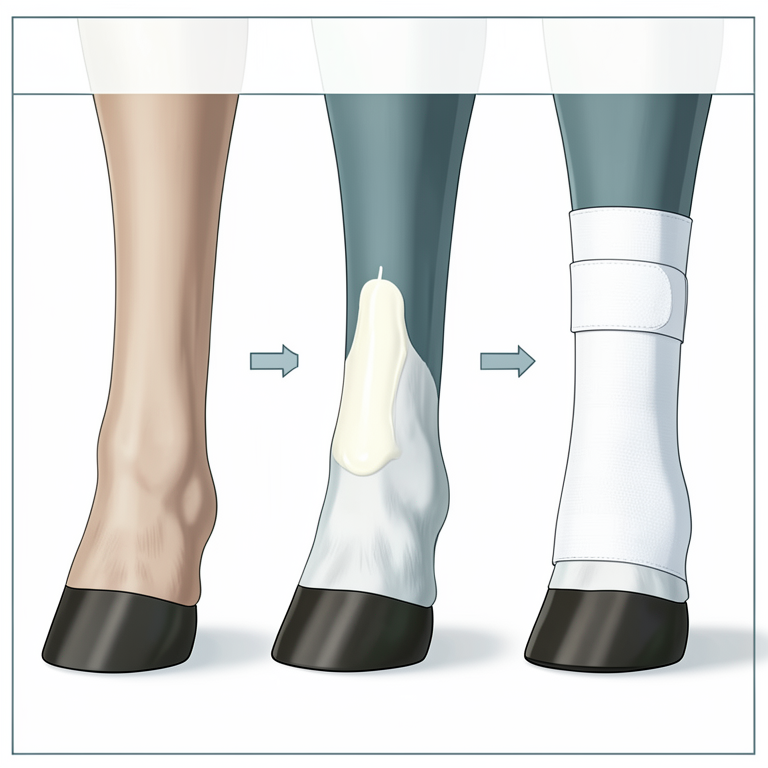
- The TANUVAS Prosync-NC cream was applied to the depilated lower fetlock region on the 7th day of estrus and held with a bandage for 5 days, then removed on the 6th day. View evidence ↗
- Pregnancy was verified and recorded 60 days after artificial insemination. View evidence ↗
What they found
- Among the cows that showed estrus, 3 (23.08%) did so within 72 hours of the bandage being removed. View evidence ↗
- The majority of cows that showed estrus, 10 (76.92%), did so more than 72 hours after bandage removal. View evidence ↗
- Overall, 7 out of the 18 treated cows (38.89%) successfully conceived. View evidence ↗
What it means
- The authors conclude that progesterone dermal cream is a viable technique that farmers can use themselves to induce estrus in repeat breeding cattle. View evidence ↗
- The authors state that this method is simple, does not require technical supervision, and avoids clinical complications like vaginitis associated with intravaginal devices. View evidence ↗
- The authors note that cows failing to show estrus after treatment may have underlying uterine or ovarian pathologies, such as a non-functional corpus luteum, requiring veterinary intervention. View evidence ↗
Visual summary
1 visualsIllustrations explain the paper; they do not show study data.
Treatment Application Process
AI-generated conceptual illustration (dairy cow). It explains the idea and does not show study data.
View source evidence ↗Figures & tables
From the original paper Table 1
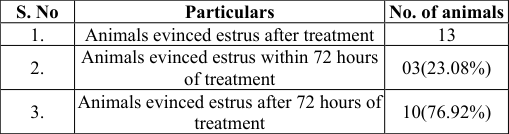 Table 2
 Table 3
Introduction
Reproductive inefficiency due to repeat breeding syndrome is an expensive hitch in profitable dairy farming due to delayed age at first calving in heifers and delayed intercalving interval, thus leading to lower calf crop (Thakur et al., 2006) [21] . The costs of herd management and rearing are increased due to the incremental expenses on repeated unsuccessful artificial insemination, culling costs and replacement of these cows that cannot conceive (Ahmadi and Dehghan, 2007) [1] . The cause of repeat breeding is unclear and multi factorial. Prolonged duration of estrus, extended follicular phase, delayed luteinizing hormone surge and delayed ovulation, late post ovulatory rise in plasma progesterone are considered to be most prominent factors responsible for repeat breeding (Bage et al., 2002) [2] . Hormonal insufficiency and dysfunction contribute about 40.1% causes of repeat breeding (Maurer et al., 1985) [17] . There is a failure of conception even in normal cyclic repeat breeding buffaloes and this has led to an increase in calving interval and hence reduces the annual birth rate of calves (Barlett et al., 1986) [4] . Regardless of the causative factor, treatment with progesterone supplementation initiated during early diestrus was found to be effective for increasing the conception rate in repeat breeding cows, lactating cows and anestrus cows (Mann and Lamming 1999, Keskin et al., 2010 and Paul et al., 2015) [16,13,18] . This study is aimed to evaluate the efficiency of transdermal progesterone cream "TANUVAS Prosync-NC" on estrus induction in repeat breeding cattle.
Materials and Methods
Eighteen dairy cattle that were showing signs of repeat breeding, i.e. cows with regular estrus interval that have not conceived after three consecutive inseminations were selected for the trial with administration of TANUVAS Prosync-NC. The selected cows belonged to ten farmers in Tirupur district. Pluriparous cows and heifers (n=18) were selected for the On Farm Trial. The farmer was instructed to watch the cows for signs of heat. On the 7 th day of estrus, TANUVAS Prosync-NC cream was applied to the lower fetlock region after depilation of the area. Protective adhesive bandage was applied over the area of application of the cream and demonstration was carried out for the farmers to perform this procedure on their own. The cream was left in place for 5 days and the plaster was removed on the 6 th day. The farmer was instructed to watch for signs of heat from the next day of removal of the bandage. Deworming was done on the day of appearance of the estrus symptoms. The cows were also supplemented with 50g of mineral mixture daily from the day of onset of estrus signs. Artificial insemination was done to the cows in estrum. The inseminated cows were watched for signs of estrum from day 18 to 24 after insemination and the cows in subsequent estrus were inseminated again. The inseminated cows were checked for pregnancy at 60 days after insemination and the data was recorded.
Results and Discussion
It was observed that thirteen (72.22%) out of eighteen cows evinced estrus after the treatment. Out of thirteen, three cows (23.08%) showed estrus within 72 h of bandage removal and ten animals (76.92%) showed estrus at more than 72 h of bandage removal. The mechanism behind the induction of heat was explained by Bakr et al., (2015) [3] , who stated that the progesterone released by the exogenous device elevates the level of progesterone in the serum of cows. This exerts a negative feedback on hypothalamus and pituitary. The removal of the adhesive plasters results in rapid drop in circulating progesterone associated with removal of progesterone block on hypothalamus and pituitary and consequently GnRH release followed by FSH and LH release and resumption of ovarian activity, bringing the animal to ovulatory heat. It has been reported that progesterone treatment increased concentrations of estradiol receptors in the ventromedial hypothalamus of the ewe, suggesting a possible priming effect of progesterone in the brain for various estradiol -mediated functions (Caraty and Skinner, 1999) [5] .
On pregnancy verification, it was found that all the three animals that showed estrus signs within 72 h of bandage removal were pregnant. Out of ten cows that evinced estrus after 72 h of bandage removal, four cows (40%) were positive for pregnancy 60 days post insemination. Six cows returned to the next estrus, out of which four cows (66.67%) were inseminated again. Out of 18 cows treated with TANUVAS Prosync-NC cream, 7 cows (38.89%) conceived. All the three cows that evinced estrus within 72 h of treatment were conceived, which is indicative of 100% fertile estrus induction, Hence, it can be concluded that 72.22 per cent of the dairy cows that were treated with TANUVAS Prosync-NC cream evinced estrus after treatment. The conception rate was 100 per cent in the cows that evinced estrus within 72 h of bandage removal. This finding correlated to that of Folman et al., (1993) [10] , who stated that progesterone level during the estrous cycle preceding insemination was closely related to the occurrence of conception. This increase in the progesterone level in cows treated with exogenous progesterone during early diestrus and increased conception rate has been demonstrated by Folman et al., (1990) [9] , Macmillan et al., (1991) [14] , Villaroel et al., (2004) [23] , Mann et al., (2006) [15] and Wm et al., (2010) [24] . The results of this study coincided with Kajaysri et al., (2017) [12] , who concluded that transdermal progestin patch was equally effective in estrus synchronization as compared with traditional CIDR and therefore be considered as an alternative method for estrus synchronization in postpartum beef cattle. Mann and Lamming, (1999) [16] stated that progesterone supplementation initiated during early diestrus using intravaginal progesterone inserts with lactating cows could reliably be expected to increase conception rate. The progesterone released by the exogenous device elevates the level of progesterone in the serum of the cows. This exerts a negative feedback on hypothalamus and pituitary. The removal of the adhesive plaster results in rapid drop in circulating progesterone associated with removal of progesterone block on hypothalamus and pituitary and consequently GnRH release followed by FSH and LH release and resumption of ovarian activity, bringing the animal to ovulatory heat (Bakr et al., 2015) [3] . It has been reported that progesterone treatment increased concentrations of estradiol receptors in the ventromedial hypothalamus of the ewe (Caraty and Skinner, 1999) [5] , suggesting a possible priming effect of progesterone in the brain for various estradiol -mediated functions. Rudolph et al., (2011) [20] demonstrated that in small herds with intensive observation periods to detect estrus, the CIDR-Select Synch protocol produced a pregnancy rate of 50.4% in multiparous dairy cows. The milk progesterone value at the beginning of the protocol did not significantly influence the outcome. Treatment of cows not previously detected in estrus with a CIDR insert during a TAI protocol increased proportion of cows with functional CL after Artificial Insemination and Pregnancies per Artificial Insemination. An ovular cows treated with intravaginal controlled internal drug release (CIDR) inserts containing 1.38 g of progesterone were more likely to resume cyclicity compared with untreated cows (Gumen and Wiltbank, 2005;
Acknowledgement
AcknowledgementThe authors are grateful to The Director, TRPVB, TANUVAS, Chennai for providing materials for this On Farm Trial and permitting to publish this paper.
Figures and tables from the paper
| S. No | Particulars | No. of animals |
|---|---|---|
| 1. | Total cows treated | 18 |
| 2. | Animals evinced estrus after treatment | 13(72.22%) |
| 3. | Animals not evinced estrus after treat | 05(27.78%) |
Table text extracted from the original PDF; superscript letters are shown inline. The original table image is below.
View original table image
| S. No | Particulars | No. of animals |
|---|---|---|
| 1. | Animals evinced estrus after treatment | 13 |
| 2. | Animals evinced estrus within 72 hours of treatment | 03(23.08%) |
| 3. | Animals evinced estrus after 72 hours of treatment | 10(76.92%) |
Table text extracted from the original PDF; superscript letters are shown inline. The original table image is below.
View original table image
| S. No | Particulars | No. of animals |
|---|---|---|
| 1. | Animals evinced estrus within 72 hours of treatment Animals positive for pregnancy 60 days post insemination | 03 03(100%) |
| 2. | Animals evinced estrus after 72 hours of treatment Animals positive for pregnancy 60 days post insemination Animals negative for pregnancy 60 days post insemination | 10 04(40%) 06(60%) |
Table text extracted from the original PDF; superscript letters are shown inline. The original table image is below.
View original table image
References
25 in the original paper- Ahmadi MR, Dehghan SA. Evaluation of the treatment of repeat breeder dairy cows with uterine lavage plus PGF2α, with and without cephapirin. Turkish J Vet Anim Sci. 2007;31:125-129.
- Bage R, Gustafsson H, Larson B, Forsberg M, Rodriguez-Martinez H. Repeat breeding in dairy heifers: follicular dynamics and oestrous cycle characteristics in relation to sexual hormone patterns. Theriogenology. 2002;57:2257-2269.
- Bakr Mohamed M, Noseir MB, Gamal Amrawi A. Effect of exogenous progesterone in treatment of ovarian inactivity in Egyptian dairy parturient buffalo cows. Alex J Vet Sci. 2015;47:191-200.
- Barlett PC, Kirk JH, Mather EC. Repeated insemination in Michigan Holstein-Friesian cattle: incidence, descriptive epidemiology and estimated economic impact. Theriogenology. 1986;26:309-332.
- Caraty A, Skinner DC. Progesterone priming is essential for full expression of the positive feedback effect of estradiol in inducing the preovulatory gonadotropin-releasing hormone surge in the ewe. Endocrinology. 1999;140(1):165-170.
- Cerri RLA, Rutigliano HM, Bruno RGS, Santos JEP. Progesterone concentration, follicular development and induction of cyclicity in dairy cows receiving intravaginal progesterone inserts. Anim Reprod Sci. 2009;110:56-70.
- Chebel RC, Santos JEP, Cerri RLA, Rutigliano HM, Bruno RGS. Reproduction in dairy cows following progesterone insert presynchronization and resynchronization protocols. J Dairy Sci. 2006;89:42054219.
- Card C. Equine breeding management and artificial insemination. 2nd ed. 2009.
- Folman Y, Kaim M, Herz Z, Rosenberg M. Comparison of methods for the synchronization of estrous cycles in dairy cows: effects of progesterone and parity on conception. J Dairy Sci. 1990;73:2817-2825.
- Folman Y, Rosenberg M, Herz Z, Davidson M. The relationship between plasma progesterone concentration and conception in post-partum dairy cows maintained on two levels of nutrition. J Reprod Fertil. 1993;34(2):267-278.
- Gumen A, Wiltbank MC. Length of progesterone exposure needed to resolve large follicle anovular condition in dairy cows. Theriogenology. 2005;63:202218.
- Jatuporn K, Chumchoung C, Wutthiwitthayaphong S, Suthikrai W, Sangkamanee P. Comparison of estrus synchronization by controlled internal drug release device (CIDR) and adhesive transdermal progestin patch in postpartum beef cows. Theriogenology. 2017;100:66-71.
- Keskin A, Gumen A, Yilmazbas-Mecitoglu G, Karakaya E, Tasdemir U, Celik Y, et al. Effect of progesterone-based Ovsynch protocol and GnRH treatment after artificial insemination on conception rate in repeat breeder cows. J Vet Med Res. 2010;29:65-70.
- Macmillan KL, Taufa VK, Barnes DR, Day AM. Plasma progesterone concentrations in heifers and cows treated with a new intravaginal device. Anim Reprod Sci. 1991;26:25-40.
- Mann GE, Fray MD, Lamming GE. Effects of time of progesterone supplementation on embryo development and interferon-τ production in cows. Vet J. 2006;171:500-503.
- Mann GE, Lamming GE. Influence of progesterone during early pregnancy in cattle. Reprod Domest Anim. 1999;34:269-274.
- Maurer RR, Echternkamp SE. Causes and influences of repeat breeding in beef cattle. Beef Research Program Progress Report. 1985;2:49-51.
- Paul AK, Yoisungnern T, Bunaparte N. Hormonal treatment and estrus synchronization in cows: a mini review. J Adv Vet Anim Res. 2015;2(1):10-17.
- Rhodes FM, McDougall S, Burke CR, Verkerk GA, Macmillan KL. Treatment of cows with an extended postpartum anestrous interval. J Dairy Sci. 2003;86:1876-1894.
- Rudolph J, Bruckmaier RM, Kasimanickam R, Steiner A, Kirchhofer M, Husler J, et al. Comparison of CIDRSelect Synch versus long-term CIDR-based AI protocol on reproductive performance in multiparous dairy cows in Swiss dairy farms. Reprod Biol Endocrinol. 2011;9:151.
- Thakur S, Singh M, Vasishta NK. Study on etiology of repeat breeding in Himachal Pradesh. Punjab Vet J. 2006;4:27-29.
- Tiwari I, Shah R, Kaphle K, Gautam M. Treatment approach of different hormonal therapy for repeat International Journal of Biology Sciences https://www.biologyjournal.net breeding dairy animals in Nepal. Arch Vet Sci. 2019;2(3):28-40.
- Villarroel A, Martino A, BonDurant RH, Deletang F, Sischo WM. Effect of post-insemination supplementation with PRID on pregnancy in repeatbreeder Holstein cows. Theriogenology. 2004;61:15131520.
- Wm A, Hh EK, Hanafi EM, Ali AH, Sa S. Clinical perspective of repeat breeding syndrome in buffaloes. Am J Sci. 2010;6:661-666.
- Zulu VC, Nakao T, Yamada K, Moriyoshi M, Nakada K, Sawamukai Y. Clinical response of ovarian cysts in dairy cows after PRID treatment. Vet Med Sci. 2003;65:57-62.