
Research article · 2026 · Full text
International Journal of Geography Geology and EnvironmentTransformation of traditional agricultural practices under climate change in the Western Himalayas, India: A systematic review
Volume 8(4) · Pages 72–88 · DOI: 10.22271/27067483.2026.v8.i4a.513 ↗
Research areasClimate change impacts on agricultureIndigenous Knowledge Systems and AgricultureAgriculture, Land Use, Rural Development
Abstract
Author-writtenAgriculture in the Western Himalayas of India, which includes Jammu and Kashmir, Himachal Pradesh and Uttarakhand, is mostly traditional. It is very sensitive to changes in climate and the economy. This review looks at existing studies on how traditional farming is changing because of climate change, market pressures and government policies. The studies looked at things like what cropsre grown, how land is used, farming systems and how people make a living. The results show that because of rising temperatures, unpredictable rain, less snow and soil getting worse, farmers are growing crops, planting more fruit trees, using trees in farming, and some are even leaving their land. Even though traditional farming helps farmers deal with changes, they still have trouble selling their products and getting help from the government. The study says that the government needs to make special plans for this area that use farming knowledge and new ideas to help farming in the mountains be more sustainable. Agriculture in the Western Himalayas needs help to make sure it can keep going. The farmers in the Western Himalayas of India need support for their agriculture.
Summary
Source-checkedPlain-language reading of the full paper, prepared with AI and checked against the text. Each point links to the authors' own words.
Why it matters
- Mountain agriculture in the Himalayan region is essential for maintaining ecological balance, food security, and the livelihoods of local populations. View evidence ↗
- The Western Himalayas, which include Uttarakhand, Himachal Pradesh, and Jammu and Kashmir, are characterized by fragile ecosystems and steep terrain with high climatic and altitudinal variability. View evidence ↗
- Traditional agricultural systems in this region rely on indigenous knowledge and include agroforestry, terraced farming, and mixed crop-livestock systems adapted to the local environment. View evidence ↗
The question
- The study aims to address the lack of integrated understanding regarding how socio-economic drivers and climate change combinedly affect traditional agricultural systems. View evidence ↗
What they did
- The researchers employed a narrative review method to summarize existing literature on the influence of socio-economic factors and climate change on conventional agriculture in the Western Himalayas. View evidence ↗
- The literature search was conducted systematically across major academic databases, including ResearchGate, Web of Science, Scopus, and Google Scholar. View evidence ↗
- Studies were included if they focused on the Western Himalayan region (or comparable Indian Himalayan systems), dealt with traditional or evolving agricultural practices, and examined the intersection of policy, land use, socio-economics, or climate change. View evidence ↗
What they found
- Climate data from recent decades indicate a consistent decrease in cloud cover and precipitation, alongside rising minimum, maximum, and seasonal mean temperatures across most ranges. View evidence ↗
- In Uttarakhand's Kumaun region, climate variability over the last 25 years has led to major yield declines for pulses, apples, and potatoes. View evidence ↗
- In the Central Garhwal Himalaya, the northern aspect showed an average grain yield decrease of 45.05% and a biological yield decrease of 29.53% compared to non-agricultural cropping, while the southern aspect had smaller decreases (29.08% and 28.77% respectively). View evidence ↗
- In rainfed conditions, monocropping maize, wheat, and rice yields net returns of Rs 9,000 to 10,000 per hectare, which increases to approximately Rs 12,000 per hectare when rabi oilseeds and pulses are added. View evidence ↗
- In Himachal Pradesh, maize and peas provide higher yields (Rs 71,239/ha) than common rainfed maize and wheat, while tomato-tomato-peas is the most profitable irrigated crop at Rs 502,378/ha. View evidence ↗
- In Jammu and Kashmir, the economic share of the agricultural sector declined from 23.56% in 2010 to 13.36% in 2020. View evidence ↗
- Infrastructure and market integration have expanded commercial farming and horticulture, which has increased incomes but also increased dependence on markets. View evidence ↗
What it means
- The authors conclude that sustainable agriculture in the mountains requires an integrated framework that aligns climate adaptation with local socio-economic conditions and values traditional knowledge and agroecological practices. View evidence ↗
- The authors recommend developing region-specific plans that combine local knowledge with climate-resilient farming methods to ensure food security and livelihoods. View evidence ↗
- The authors note that estimating the effects of climate change in the Himalayas is difficult because of a lack of models and data. View evidence ↗
Visual summary
1 visualsIllustrations explain the paper; they do not show study data.
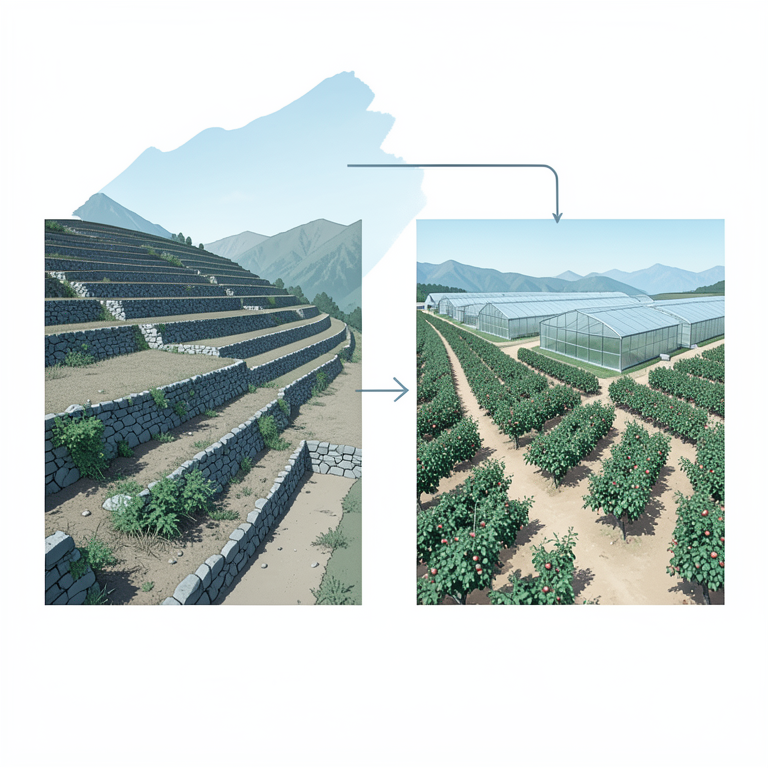
Drivers of Agricultural Transformation
AI-generated conceptual illustration (Terraced farmland in the Western Himalayas). It explains the idea and does not show study data.
View source evidence ↗Figures & tables
From the original paper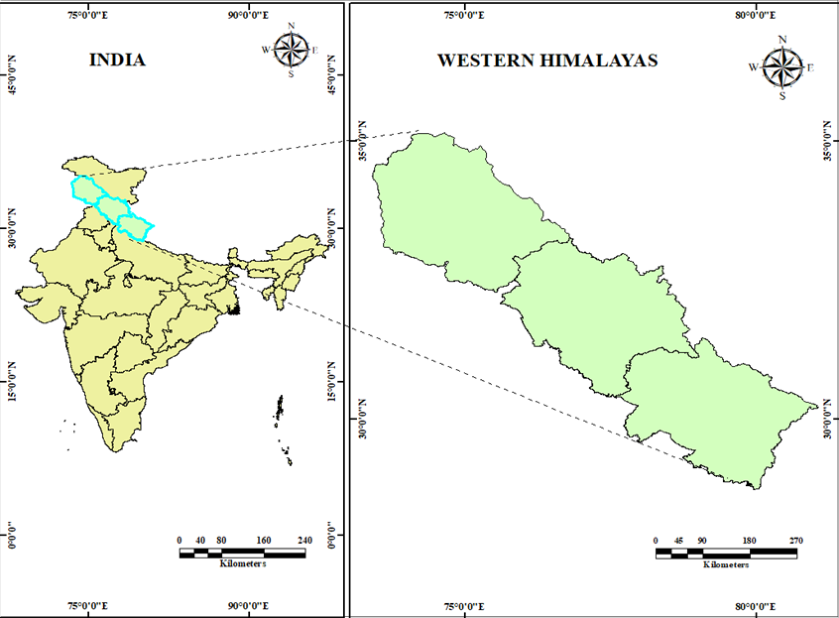 Figure 1
 Table 1
Introduction
In the Himalayan region, mountain agriculture is vital for sustaining people's livelihoods, food security, and ecological balance. The Western Himalayas, comprising Jammu and Kashmir, Himachal Pradesh, and Uttarakhand, have steep terrain, fragile ecosystems, and significant variability in altitude and climate. Agricultural systems in the region are defined by indigenous knowledge, subsistence farming, mixed crop-livestock systems, terraced farming and agroforestry, which is finely adapted to the local environment. These systems have enabled the community to deal with climatic unpredictability and resource scarcity.In recent years, the Western Himalayan regions have seen rapid environmental changes, mainly due to climate change. We see increasing temperatures, changing patterns of precipitation, reduced snowfall, glacier retreat and also a greater incidence of extreme weather events, which in turn has a great impact on agricultural productivity and land use stability. Climate change has disrupted crop calendars, shortened growing seasons, increased soil erosion and put more pressure on water resources, which in particular affect rain-fed and high altitude farming systems. Also, we see that which, for long made traditional agricultural practices a success in the face of environmental variability, is today put to the test by environmental uncertainty. In the Western Himalayas, substantial changes have occurred in the agricultural landscape thanks to the socio-economic changes taking place all over the region. Changes in cropping and farming systems have been accelerated by the integration of markets, improvements in infrastructure, population pressures, the fragmentation of land, labour shortages caused by the out-migration of workers, and policies aimed at intensifying farming. While the cultivation of commercially viable crops and the horticulture industry has increased income in remote and inaccessible areas, the cultivation of high-value crops has also had a positive impact on income in increasingly accessible areas. The abandonment of farmlands and the loss of agricultural viability have been experienced in the further backwards and economically underdeveloped areas. It is important to note that these changes have also had several far-reaching impacts beyond the production systems, including on ecosystems.
Despite there being plenty of studies regarding the impact of climate change, land-use change, and agricultural transformation in the Himalayan region, the studies remain fragmented across different disciplines and themes. Many studies address distinct parts such as climate variability, crop productivity, or socio-economic change, and often do so in isolation. Most literature overlooks the traditional agricultural practices, new adaptation strategies, land-use policies, and change frameworks in a single analysis for the Western Himalayas. Consequently, the understanding of the combined and interrelated effects of climate change as the socio-economic drivers on traditional agricultural systems is lacking. (i) The issue of how climate change is affecting traditional farming practices; (ii) changes in land use, cropping patterns and farming systems; (iii) what these changes mean for food security and nutrition; and (iv) main social and economic issues as well as policy problems related to sustainable mountain agriculture. Through analysis of empirical data and thematic results from past studies, we have put together a picture of agricultural transition in the Western Himalayas and put forth what we see as the ways forward for the development of climate-resistant and sustainable agriculture in fragile mountain environments.
Methodology
This study uses a narrative review method to summarise the existing literature on the changing patterns of conventional forms of agriculture in the Western Himalayas and the influence of climate change and socio-economic factors. The review analyses peer-reviewed literature, government documents, and policy papers on agricultural systems, land use and climate change, food security, and sustainable agriculture in the Western Himalayas, specifically in the Indian states of Jammu and Kashmir, Himachal Pradesh, and Uttarakhand.
Study Area
The study focuses on the Western Himalayan region (Figure 1) of India, covering Jammu and Kashmir, Himachal Pradesh, and Uttarakhand. The area features diverse altitudinal zones from low valleys to high mountains, steep terrain, fragile ecosystems, and heterogeneous climatic conditions. Agriculture is predominantly smallholder and rainfed, with traditional systems such as terrace cultivation, mixed crop-livestock farming, and home gardens. The region's agro-biodiversity and vulnerability to climate change make it a relevant context for examining transformations in traditional agricultural practices.
Literature Search Strategy
A search of the major academic databases: Google Scholar, Scopus, Web of Science, and ResearchGate, was conducted systematically. Some search strings and their combinations included: 'Western Himalayas agriculture', 'traditional farming systems', 'impacts of climate change', 'diversification of crops', 'agroforestry', 'land use and land cover change', 'food security', and 'sustainable mountain agriculture.' Other relevant studies were obtained by tracking both backward and forward citations of the relevant key studies. agriculture, those conducted outside mountainous areas, and those lacking a sufficient empirical and/or analytical basis were not included.
Data Extraction and Thematic Analysis
The review of the selected studies focused on the extraction of the pertinent data regarding climate trends, agriculture, practices, land use, adaptation, socio-economics, impacts, and policies. The extracted data were organised into themes and analysed qualitatively to discern patterns, trends, and the drivers of change in agriculture in specific regions. The interplay of the innovative practices of modern agriculture and the traditional knowledge systems was of particular interest.
Synthesis and Interpretation
The review synthesises findings from multiple disciplines to understand the agricultural transformation in the Western Himalayas. Comparative analysis was utilised to understand the similarities and differences across altitudinal zones and states. The synthesis emphasises adaptive strategies that bolster resilience and structural challenges that hinder sustainable agricultural development. The shortcomings of existing studies and the voids in research were also pointed out to assist in outlining future research.
Results
The review of existing literature reveals substantial transformations in traditional agricultural practices across the Western Himalayas, driven by climate change, socioeconomic transitions, and policy interventions. The findings are synthesised thematically to highlight dominant patterns, regional trends, and recurring challenges reported across studies.
Climate Change Impacts on Agriculture
The Himalayas are significantly impacted by climate change, but estimating these effects has proven difficult due to a paucity of data and models. (Wani et al., 2015) [29] Therefore, to comprehend and lessen climate change, this study depended on important climate variables and farmers' perspectives. Data from 270 respondents in Kashmir (2013-15) were categorised by altitude and examined. Talking in groups with specialists, scientists, and farmers was essential. Analysis was done using percentages and averages. Climate change is a global issue that has serious repercussions for agriculture, ecology, and human welfare. Millions of people's livelihoods and food security are at jeopardy, especially in countries that rely heavily on agriculture. However, carbon fertilisation may result in better growth conditions and higher agricultural yields in some temperate zones. By using early adaptation techniques, losses can be reduced with an understanding of climate change. This study uses long-term macroclimatic patterns and farmers' perspectives to investigate climate change in Kashmir. By changing agricultural techniques, such as turning rice fields and maize into orchards and introducing new crops, farmers have responded to climate change. There's climate change that poses a threat to agriculture and food security, and the urgent need for efficient adaptation and mitigation measures. (Lama et al., 2017) [18] The biodiversity-rich Indian Himalayan Region (IHR) harbours diverse cultures in the lifestyle of people residing therein, who have adapted to the geographic toughness and climate uncertainties over a period. Sustaining these humans with food and nutrition calls for a focused understanding of food production systems in the ecologically fragile environment. Further, the growing impact of climate change is marginalising people's lives despite the abundance of natural resources. The paper focuses on the ecological characteristics, socio-cultural aspects, and challenges of agriculture in three physiographic divisions of the IHR, viz., the northwestern Himalaya, the central Himalaya, and the northeastern Himalayan region. This paper has also discussed initiatives to promote climateresilient agriculture to sustain Himalayan agriculture. Shekhar, M. S., Chand, H., Kumar, S., Srinivasan, K., & Ganju, A. (2010) [32] . The Western Himalayas play a critical role in shaping the climate of northern India. Recent decades show rising seasonal mean, maximum, and minimum temperatures across most ranges. Precipitation and cloud cover exhibit a consistent decreasing trend, intensifying regional dryness. Snowfall days during peak winter months have declined, despite no major change in western disturbances. The Karakoram range shows a contrasting cooling trend compared to other Himalayan ranges. Such climatic shifts threaten water resources, agriculture, and livelihoods in the region. Patseo station reflects the clearest signals of climate change among observed sites. Robust long-term monitoring and regional climate modelling are essential to link global warming with local impacts. Negi, G. C. S., Samal, P. K., Kuniyal, J. C., Kothyari, B. P., Sharma, R. K., & Dhyani, P. P. (2012) [33] . Climate change is severely affecting agriculture, water, and forest ecosystems in the western Himalaya. Research exists but remains fragmented, with weak data networks and unreliable methodologies limiting clarity. Key concerns include rising temperatures, altered rainfall, and reduced snowfall, which affect livelihoods and biodiversity. Critical research areas include drought and flood cycles, plant vulnerability, shifts in the snowline, and species migration corridors. Pollutants, invasive weeds, and eco-physiological stress on crops, timber, and medicinal plants threaten food security. Strengthening data collection, validating indigenous coping strategies, and balancing ecology with economy are essential for adaptation. Khan, S. M., Page, S., Ahmad, H. A. B. I. B., Shaheen, H. A. M. A. Y. U. N., & Harper, D. M. (2012) [34] . Vegetation forms the first trophic level in Himalayan mountain ecosystems and requires systematic documentation. Modern statistical tools (CANOCO) were used to quantify diversity indices across trees, shrubs, and herbs. Results showed biodiversity decreases with altitude, but north-facing middle slopes had the highest diversity. Global warming, deforestation, and land-use changes threaten fragile mountain ecosystems and reduce species richness. Effective conservation demands interdisciplinary approaches, indicator species identification, and better Red List documentation. These mountain ranges provide vital ecosystem services provisioning, regulating, supporting, and cultural benefiting millions across South and Central Asia. Shah, Pandey, Sekar, Arya, & Thapliyal, et al (2026) [36] . The study highlights how climate variability over the past 25 years has severely reduced agricultural productivity in Uttarakhand's Kumaun region, with major declines in potato, apple, and pulse yields due to rising temperatures, erratic rainfall, and higher humidity. Increased extreme weather events and pest outbreaks have worsened soil degradation and crop losses. It stresses the urgent need for climate-resilient crops, better water and land management, and integrated pest control. The research supports SDGs 2, 13, and 15, calling for policy support and region-specific adaptation strategies for mountain farming systems. Rana, Bisht, & Ram, et al. (2026) [37] . He climate change in the Byans Valley is really messing with the way people have been farming for a time. It is getting warmer and warmer there is snow and the seasons are not like they used to be. Farmers in the Byans Valley are seeing changes. They are saying that their crops are flowering at times the medicinal plants are not growing as well and there are more pests and diseases that are hurting their crops. Also animals are damaging their crops often. If you look at the NDVI trends you can see that the plants are growing at times of the year in different areas of the Byans Valley. This means that the farmers have to change when they plant and harvest their crops. They also have to change how they use the land for their animals to eat. The climate change is making it harder for the farmers in the Byans Valley to grow their crops and take care of their farms. The climate stress is affecting the productivity and stability of the farms, in the Byans Valley. Kumar, & Kumar, et al. Climate change is increasingly threatening the Himalayan ecosystem and traditional crops by altering temperature, rainfall patterns, water availability, soil health, and pest dynamics. These environmental shifts are reducing crop productivity, disrupting growing seasons, and influencing the distribution of key crops such as rice, wheat, barley, and millets. The review also highlights major socioeconomic impacts on mountain communities, including risks to food security, livelihoods, and loss of indigenous knowledge. It stresses the importance of climate-resilient crops, improved water management, and community-based adaptation supported through collaboration among scientists, policymakers, and local communities. Negi, Samal, Kuniyal, Kothyari, Sharma, & Dhyani, et al. (2012) [33] . Climate change is destabilising agriculture, water resources, and forest ecosystems in the western Himalaya, while the lack of accurate and standardised climate data remains a major barrier to understanding its full impacts. Rapid glacier melt, shifting snowmelt patterns, and rising black carbon concentrations are directly affecting river flows and long-term water security. Drying springs, erratic monsoons, declining snowfall, increasing soil erosion, and higher sediment loads are intensifying water stress and land degradation in mountain regions. The study emphasises coordinated adaptation strategies, recognition of indigenous knowledge, stronger research collaboration, and policies that protect both ecological balance and the livelihoods of mountain communities. Aggarwal et al. (2007) [39] . In agriculture, the IPCC projects a global temperature rise of 2.0-4.5°C by 2100, along with increased climate variability, leading to erratic monsoons, droughts, and floods that can severely impact water resources and crop production. These changes pose significant risks to farmer livelihoods, crop yields, and national food security, making it essential to adopt climate-resilient crops, improved water and land management, weather forecasting, insurance, and community-based risk management strategies. Additionally, agricultural mitigation measures-such as improving nitrogen-use efficiency, reducing N₂O emissions, better livestock management, and providing financial incentives for resource conservation are crucial for sustainable farming and long-term food security. Bhatt, Arunkumar, & Stanley et al. (2015) [40] . The Northwest Himalayan agriculture is really sensitive to climate change. This is because of rising temperatures and changes in rainfall. The glaciers are also melting which affects the environment around the crops. This change in the environment is affecting the pests and diseases that attack the crops. For example rice brown plant hopper and maize Phyllosticta are becoming problems. The changing seasons are also affecting the crops that need pollination from plants.We have had bad weather like droughts, cold snaps and heat waves that have damaged crops, like rice, wheat, pulses and vegetables. So the changing climate is making it really hard to predict how well the crops will do. This is why we really need to find ways to keep the Himalayan agriculture going. Tewari [42] . In the Kumaon and Garhwal regions of In the Kumaon and Garhwal regions of the Himalayan ecosystems climate change is having a big impact. The temperature is. The rain is not coming at the same time every year. The glaciers are also. We are seeing really bad weather a lot more often. These changes are affecting the animals and plants that live in the Himalayan ecosystems. The forests are not as healthy as they used to be. We are also seeing problems with the water and the crops that people grow. This is making life very hard for the people who live in the mountains. The study is saying that we need to find ways to deal with climate change. We need to grow crops that can handle the changing weather. We need to take care of the forests and the water in a way that's good, for the environment. Uttarakhand, geohazards such as landslides, soil erosion, floods, and earthquakes have significant impacts on agriculture. These hazards reduce crop yields and disrupt irrigation systems, putting farmers' livelihoods at risk. Therefore, to protect agriculture and maintain stable production, it is essential to adopt hazardinformed land management, soil and water conservation, and resilient farming practices Changmai, Patidar, Kothyari, & Bhatt, et al. (2026) [42] . The Uttarakhand Himalayas, the Kumaon and Garhwal regions are dealing with a lot of geohazard dynamics. We are talking about things like landslides and soil erosion and floods and seismic activity. These things are really bad for agriculture in the Uttarakhand Himalayas. They can damage the farmland in the Kumaon and Garhwal regions. Make the soil not as good. They can also mess up the irrigation systems in the Kumaon and Garhwal regions, which means the crops do not grow well. The geohazard dynamics in the Kumaon and Garhwal regions of the Uttarakhand Himalayas affect the people who live there too. The landslides and soil erosion and floods and seismic activity in the Uttarakhand Himalayas make the people in the Kumaon and Garhwal regionsmore vulnerable. We need to do something about the geohazard dynamics in the Kumaon and Garhwal regions of the Uttarakhand Himalayas. We need to plan how we use the land in the Kumaon and Garhwal regions in a way that takes into account the landslides and soil erosion and floods and seismic activity. We need to find ways to conserve the soil and water, in the Kumaon and Garhwal regions. We need to grow crops in the Uttarakhand Himalayas in a way that can handle the geohazard dynamics. Bhatla, & Singh, et al (2025) [43] Let us look at what's happening to the Western Himalayan glaciers. These glaciers are melting fast because of climate change. The main reasons for this are that the temperature is going up the rain and snow are coming at times and more black carbon is being deposited on the glaciers. When the glaciers get smaller it affects the rivers and the water that people can use. It also changes the way water flows at times of the year. This has an effect on farming, hydropower and how people make a living. The Western Himalayan glaciers are also very important for the environment. As they melt some animals and plants are losing their homes. The soil is also getting drier and the kinds of plants and animals that live in the mountains are changing. We need to keep an eye on what is happening to the Western Himalayan glaciers. We also need to come up with plans to deal with the effects of climate change. This includes using water and land in a way that's good, for the environment and does not hurt the Western Himalayan glaciers or the people who live nearby.
Transformation of Cropping Patterns and Farming Systems
Using a traditional village landscape in Garhwal, Indian Himalaya (900-1,000 m AMSL), investigate the ecological, socioeconomic, and policy implications of the utilisation of land diversity. Forests, moving farmland, and established agriculture are all features of the landscape. Home garden systems (HGS), rain-fed agroforestry systems (RAS), rainfed crop systems (RCS), and irrigated crop systems (ICS) are several categories of settled agriculture. While woods are divided into community woods (CF) and reserve forests (RF), shifting agriculture (SAS) consists of a 4-year cropping phase and a 7-year fallow phase. With more nutrients and soil organic carbon, HGS is the most productive. Crop diversification helps farmers control the hazards associated with the monsoon climate. SAS provides excellent labour productivity and high-quality fuelwood despite being less well organised. Policies restricting forest fodder are the cause of RAS's fodder trees. By limiting our lab's hiring of village residents and providing non-timber forest products to the less fortunate, cultural norms foster fairness. Irrigation made possible by the government enhances output, but because it uses more manure, it puts more strain on forests. Substantial basal areas, the diversity of species, soil fertility, and immunity to invading species are not maintained by current forest management. Policies for integrated sustainable development are required to enhance the functioning of forest ecosystems and agricultural productivity. The report emphasises the necessity of environmental preservation and socioeconomic growth in the Himalayas. The following are important conclusions: (i) HGS is the most effective system with higher soil organic carbon and nutrients; (ii) farmers use crop diversity to reduce environmental risks; (iii) SAS offers high labor productivity and high-quality fuelwood; (iv) cultural norms integrate socio-economic classes; (v) policy interventions result in fodder trees from RAS; (vi) current forest management is ineffective; (vii) governmentsupported irrigation enhances forest pressure; and (viii) farmers invest a significant amount of labor in manure production and livestock management. For sustainable development, integrated policies should encourage institutional and technological advancements that improve agroforestry systems, traditional soil fertility techniques, and the financial gains from forest resources. To create environmentally conscious policies for the Himalayan region, further research is required. Examined the production methods in the highlands of Himachal Pradesh and suggested improvements to help farmers survive. It is based on data from 160 farmers and was conducted in the low and mid hills. While maize wheat is common in rainfed cultivation, maize peas produce higher yields (Rs 71,239/ha). The most profitable crop in irrigated areas is tomato-tomatopeas (Rs 502,378/ha). Across all farmer types, a notable disparity in fat consumption was observed. (Bijalwan, 2011) [4] In the mid-hills of the Central Western Garhwal Himalaya, specifically within the Narendra Nagar block of Tehri Garhwal in Uttarakhand, India, the elevation ranges from 1000 to 2000 meters above sea level during the winter (Rabi) and summer (Kharif) seasons. The productivity of various crops under the current electrical agri horti silviculture system is clarified in this paper. Superior forest crops and agricultural productivity were found on the northern aspect, which was defined by various kinds of plants. At least 18 tree species were reported in the northern aspect, compared to 13 in the southern aspect, suggesting increased tree diversity and richness. In both groups, Grewia optivar was the dominating tree species, whereas Citrus sinensis was the co-dominant species. Both Rabi and Kharif crops showed greater grain production under tree (1326 kg/ha/year) and solo cropping (2471 kg/ha/year) in the northern aspect, as well as greater straw productivity under tree (3587 kg/ha/year) and treeless (4510 kg/ha/year) circumstances. In comparison to non-agricultural cropping, the northern aspect had an average decrease in grain yield of 45.05% and biological yield of 29.53%, while the southern aspect saw smaller decreases in both traits (29.08% and 28.77%). This study examines the productivity of a range of crops grown under the current Agri-Horti-silviculture (AHS) system in the mid-hill regions of the Central Garhwal Himalaya Narendra Nagar block, Tehri Garhwal, Uttarakhand, India, between 1000 and 2000 meters above sea level during the winter months of Rabi and the summer months of Kharif. Superior forest crops and agricultural productivity were proven by the northern aspect, which was distinguished by a variety of plants. According to the study, conventional agroforestry systems play a major role in the region's ecological and economic sustainability. More than 50% of the total IVI values were explained by the analytical characteristics of woody vegetation in traditional systems, which supported results from related research conducted in the Chhattisgarh districts of Bilaspur and Raipur. (Maikhuri et al., 2015a) [29] An extensive review of Uttarakhand, India's organic agricultural initiatives, is provided in this report. Market factors, male outmigration, and fragmented rural land all affect how viable farming will be in the area in the future. Based on the opinions of farmers taking part in organic farming training and development, the report highlights the main issues, their root causes, and possible remedies. Current policies promote farmers with subsidies, but once subsidies are removed, capacity building for sustainable organic farming is required. Instead of value addition, which would extend shelf life and boost export potential, current policies concentrate on exporting raw commodities. To maintain organic farming, it is recommended that farmers improve their skills in marketing, value addition, food quality, storage, and production. Due to its inability to provide necessities like comfortable living conditions, high-quality healthcare, and education, farming is becoming less appealing to upland people. Effective solutions to lower labour and time inputs in farming are scarce. Growing the area used for organic farming alone won't meet the demands and goals of farmers. To guarantee long-term gains, policies must improve farmers' capacity in several areas. Public pressure on the government to require the use of organic food at funded events, direct consumer ties through organic restaurants, and the creation of participatory assurance systems might all be advantageous to farmers. For ongoing organic agricultural system improvement, it is also advised to set up participatory research stations. To ensure that farmers are not negatively impacted when policy assistance is removed, this article emphasises the necessity of policies that adjust to shifting national and international political and economic circumstances. Rural agriculture has given way to commercial farming, resulting in major changes to Uttarakhand's agricultural economy. Increased facilities or availability of markets have fueled this change, allowing producers to diversify their crops and investigate more profitable opportunities. The cultivation of vegetables, flowers, and fruit has made horticulture an important sector that has increased agricultural output and created opportunities for labour. Uttarakhand's agriculture has developed remarkably, as seen by increased agricultural exports, increasing farmer earnings, and general economic development. But the industry continues to face obstacles, including erosion of soil, climate change, and restricted access to markets. Authorities and other participants must work together to find solutions to these problems, help farmers, enhance market accessibility, and encourage methods of sustainable agriculture to guarantee the agricultural sector's long-term survival and success in Uttarakhand. (Chand & Chauhan, 2002) [32] , (Sharma, 2005), (Verma et al., 2024), (Bisht, A.S., & Sharma, S., 2018) [70] . Organic Farming in the Himalayan Region, n.d.), ("Prospects of Organic and Natural Farming in Himalayan Fruit Culture | Request PDF," 2024). ("Agroforestry Systems in the Mid-Hills of the North-Western Himalaya," 2025) Thaakur, et al. This paper reviews the dynamics of crop diversification in Himachal Pradesh, highlighting how farmers are shifting from traditional monocropping to diversified cropping systems to adapt to climate variability, market demands, and resource constraints. Diversification has improved food security, income stability, and resilience against pests, diseases, and extreme weather events. The study emphasises the role of policy support, extension services, and climate-resilient crop varieties in promoting sustainable and adaptive farming systems in the region. Choudhary, Rajpoot, Tripathi, Choudhary, Radha, & Sen, et al. (2026) [45] . This paper reviews the role of diversified cropping systems in enhancing crop productivity and soil health in dryland ecosystems. It highlights that integrating multiple crops, including cereals, legumes, and horticultural species, improves nutrient cycling, reduces soil degradation, and enhances resilience to climate variability. The study shows that crop diversification not only increases yield stability but also supports sustainable land management and long-term agricultural productivity in water-limited regions. Policy support, farmer awareness, and adoption of climateresilient crop combinations are emphasised as key strategies for scaling up these benefits. Kumar, Garhwal, Prakash, Dhaliwal, Walia, Dubey, & Yadav, et al (2026) [46] . This review looks at how crop residue recycling and chemical fertilisers affect the health of the soil and how plants take in nutrients when we grow crops. It shows that when we use crop residues along with fertilisers the soil gets better because it has more organic carbon the nutrients are easier to get and the soil can support plants better than if we only use chemical fertilisers. Crop residue recycling is also good because it helps crops grow stronger makes use of nutrients and makes sure that our cropping systems can keep working well for a long time. The study says we should use a combination of ways to manage nutrients in the soil so that the soil stays healthy for a long time and we can keep growing food without hurting the earth. Crop residue recycling and chemical fertilisers are important for soil health and nutrient uptake, in cropping systems. Lidder, Cattaneo, & Chaya, et al. (2025) [47] This study looks at how innovation and technology can help areas by making farming better helping people sell their products and giving them more ways to make a living. It talks about how digital tools, precision farming and technologies that help with the climate can make farms work better and reduce the risks from climate change. The study says that we should involve the people who live in these areas help them learn things and make sure that women are included too so that everyone in the rural areas can benefit. The people who wrote this study think that we need to use technology and new ways of doing things together to make sure that rural areas can develop in a sustainable way and be ready for climate change. Innovation and technology are important, for this. Rural development and climate resilience are the goals and innovation and technology can drive this. Kar, Singh, Patra, Sankar, Kumar, & Singh, et al. (2023) [48] . hanges in how people use land in the North-Himalayan region of India are causing problems. For example when people stop using terraces to grow crops and start growing things the soil gets eroded and is not as good for growing things. This is bad for the land. If we use ways to take care of the soil like not digging it up too much and keeping the leftover crop parts on the soil and changing what crops we grow the soil will get better. This helps keep the soil healthy and strong. It stops erosion. We need to think about how to use the land in a way that helps the soil and the environment when we make plans for the North-Himalayan region of India. This will help the land stay good for growing crops and keep the mountains healthy. Conservation agriculture practices like tillage and crop rotation are good for the North-West Himalayan region of India. These practices help the soil in the North-Himalayan region of India and the environment in the North-West Himalayan region of India. The North-West Himalayan region of India is a place so we need to be careful with the land, in the North-West Himalayan region of India. We need to use conservation agriculture in the North-Himalayan region of India to keep the land in the North-West Himalayan region of India healthy. Lowder, Bhalla & Davis, et al. (2025) [49] . The trend of farm sizes getting smaller is a problem for smallholder farmers. Small farms have a time being productive and making money because they cannot access markets easily. They also struggle to make a living. The paper says that we need to help farmers by giving them technology, money and policies that work for them. This is very important for making sure that rural areas are okay and that everyone has a chance to grow. We need to come up with plans that help farms so that everyone has food the economy grows fairly and farming is good for the environment, in places where small farms are common. Smallholder farmers need our help to make sure that small farms keep running.. Meena, & Maikhuri, et al. (2024) [50] . The Urgam Valley in the Himalayan region has a lot of traditional hill agriculture. This type of farming has some problems. For example the land is broken up into pieces the soil is getting eroded the weather is changing and it is hard to get things to market. These problems make it hard to grow a lot of food. The people who live there still use ways of farming that work well. These old ways help keep the environment healthy and make sure people have food to eat. The research found some things that could help. People could grow kinds of crops find better ways to get water to their fields and plant trees with their crops. This would make farming more sustainable. The paper says we need to do things that're specific to this area to help people make a good living without hurting the environment. We need to help the people, in the Urgam Valley and the Himalayan region in a way that works for them and does not hurt the earth. The Urgam Valley and the Himalayan region are very special places that need our help. Thaakur, et al. Farmers in Himachal Pradesh are doing something with crop diversification. This is because the weather and other things like the economy and markets are changing. Crop diversification in Himachal Pradesh is a thing. It means farmers are not just growing one crop anymore. They are growing different crops. This helps the farmers in Himachal Pradesh because they have food and their income is more stable. Crop diversification in Himachal Pradesh also helps with problems like pests and bad weather. Farmers in Himachal Pradesh can use their land and water better when they have crop diversification. The government and other people need to help the farmers in Himachal Pradesh with crop diversification. They need to make sure the farmers have the kind of seeds and the right kind of help. This will make sure that crop diversification, in Himachal Pradesh keeps working. Ahmed, Ahmad, Wani, Ahmed, Mir, & Singh, et al. (2022) [1] The Kashmir Valley is seeing changes in how the land is used and what covers it. A lot of land that was used for farming is now being used for cities is barren or is covered with forests. This is happening because more people are living in the area cities are growing trees are being cut down and the weather is changing. These changes are affecting the health of the environment and the food that is grown. The study looks at how these changesre hurting the land and the people who live there including the soil getting worse good farmland being lost and changes in the water. The Kashmir Valley needs to find a way to use the land in a way protect the environment and make sure that development does not hurt the land. The land-use and landcover changes, in the Kashmir Valley are very important. Need to be managed carefully to balance the needs of the people and the environment.
Land-Use Change and Farmland Abandonment
Globally, anthropogenic activities have significantly changed land use and land cover (LULC), and the Kashmir Valley and Himalayas are no exception. Rapid changes over the past twenty years are shown by the study's thorough evaluation of the literature (Ahmed et al., 2022b) [1] , which examines LULC patterns in the Kashmir Valley. Major land use types, such as water, snow, glaciers, forests, and farmland, have decreased, while built-up areas and horticulture are increasing. Climate change, population expansion, financial strain, and unplanned development are the main causes of these changes, which have a big effect on the local economy. Shrunk because it transitioned to horticulture and to commercial, residential, and tourism uses. Areas of water, snow, glaciers, and forests are also shrinking. Forestland conversions have escalated due to increasing population and the need for firewood and lumber. The water, snow, and glaciers region has decreased due to climate change. Financial advantages have led to an expansion in horticultural acreage, as conventional crops have given way to fruits that are drought-resistant and rainfed. Unrest in politics and a lack of comprehensive land-use policy might hurt the local economy. For the region's natural resource management and sustainable land use, geographic information system (GIS) technology is crucial for the efficient monitoring and evaluation of LULC. (Chand, 1996) [6] The Western Himalayan Region, which is defined by ecological fragility and economic underdevelopment, has a low per capita net sown area, primarily due to its high proportion of wastelands, pastures, grazing, and forests. From small and marginal holdings accounting for more than 85% of all holdings and traditional crops commanding the landscape, the region faces challenges with declining productivity as well as inadequate revenue and employment opportunities. The situation decreases as the population accumulates and there are fewer alternative work opportunities. However, the region's distinct climatic advantages offer a wealth of opportunities to produce highvalue horticultural crops that should boost employment and revenue. The influence of institutional, socioeconomic, and infrastructure variables on crop diversification is examined in this study, along with the potential for income and employment growth across different landholdings through off-season fruit and vegetable farming in the mid-hill zone. The feasibility and profitability of diversification through high-value crops like off-season vegetables are reportedly determined by infrastructure, including access to motorable roads, markets, and irrigation. Encouraging such businesses, employment, and income in hill regions with tiny landholdings and traditional crops with poor yield may be greatly increased. A location-specific strategy is essential for agricultural diversification. In non-temperate zones, fruit cultivation has not produced the same benefits as it has in temperate regions. Fruit cultivation has grown less popular in the mid-hill regions of the Western Himalayas due to climatic conditions and technological advancements in fruits like grapes and mangoes. On the other hand, the shift from fruit to vegetable agriculture is being prompted by the growing profitability of vegetable cultivation, which can be rendered possible by better transportation infrastructure. (Dhanta & Negi, 2018a) [9] Assessment of plant productivity and suitability is very important for effective land use planning, as soil characteristics and agricultural climatic conditions have a significant impact on harvest. Sati & Wei (2018) [27] examine these aspects using time series data for important plants in Uttarakhand and an analysis of productivity and suitability of districts related to plants. Highlands are suitable for growing potatoes, small millets, pulses, and medium fruits, while the valley prefers citrus, paddy fields, wheat, and spices. The plains of Thalai and Doon are perfect for sugarcane, rice, and wheat. Despite the diverse topography and agroecological zones of Uttarakhand, the lack of proper land use plans is impeding the use of agricultural possibilities. The selection of the right crop based on district and quantity can increase productivity and restore vulnerable landscapes. Medium fruits such as apples, peaches, pears, plums, apricots, and walnuts thrive in the highlands, while mangoes, guavas, and papayas thrive in the valleys and lowlands. Citrus fruits cater to subtle areas, and potatoes have substantial funding in both mountain and plain areas. Spices such as ginger and garlic can improve the valley's livelihood and improve the middle of everyday research. Enhanced crop cultivation and the use of modern agricultural innovations are important to improve productivity. (Kumar et al., 2016) [16] Examines the mountain agricultural practices in Himachal Pradesh and suggests improvements to help farmers survive. It is based on data from 160 farmers and surveys carried out in the foothills and mid-hills. Although maize and wheat are commonly grown in rainfed agriculture, maize and peas provide higher yields (Rs 71,239/ha). The most profitable crop in irrigated areas is tomato-tomato-peas (Rs 502,378/ha). Across all farmer types, a notable disparity in the consumption of fat was observed. The cropping pattern is dominated by cereals, but yields fall short of potential, highlighting the need for strong extension services. Maize-peas are the most profitable crop for rainfed farming, which accounts for more than 80% of holdings. Systems such as tomato-peas and paddy-wheat for irrigated situations and maize-peas and maize-wheat for rainfed conditions are suggested. Utilising resources efficiently can greatly increase farm revenue. Effectively grown commercial crops can produce returns that are five to 10 times greater than those of cereals. Lack of knowledge causes problems for farmers and affects crop output. The importance of land use planning for orderly development and efficient use of resources has been understudied in India's hill regions, where the lack of planning has led to inappropriate development. (Ramakrishnan, 1990) [22] aims to understand the land use planning process in Indian hill towns through a review of the literature and semi-structured interviews with town planning officials from states such as Himachal Pradesh, Jammu and Kashmir, Assam, Manipur, Mizoram, Meghalaya, Tripura, and Uttarakhand. The study maps the steps for land use planning by FAO guidelines, identifies gaps and issues in the process, and determines criteria for effective planning using expert surveys and land use suitability analysis. Uncontrolled growth and a plethora of challenges have resulted from the rapid growth and lack of land parcels. (Roy & Kumar, 2018a) [25] The study carefully considers the essential elements and advantages of encouraging farmers in the Western Himalayas to adopt Integrated Farming Systems (IFS). Agricultural wastelands are transformed into fruitful tree-based systems by the introduction of perennials alongside annual crops in IFS, a growing technique in hilly regions. Monocropping rice, wheat, and maize results in net returns of Rs 9,000 to 10,000 per hectare in rainfed circumstances; adding rabi pulses and oilseeds increases returns to about Rs 12,000 per hectare. On the other hand, vegetable crops yield returns four to eight times greater than irrigated rice-wheat systems, which sell for about Rs 25,000 per unit. Farm households in the hilly area are greatly impacted by protected agriculture, which has encouraging potential. Only 2% of protected crop fields are fan-and-pad-operated greenhouses, according to the National Horticulture Mission (NHM), which reports that 20% of protected agricultural areas are under greenhouses. Agricultural practices form the bedrock of life in Uttaranchal, with over 75% of the population engaged in agriculture or allied activities, primarily subsistence cereal farming. Main crops include rice, wheat, millet, barley, various pulses, oilseeds, and a wide array of fruits. The region's diverse altitudinal zones (200 m to over 8000 m) create varying climates from hot tropical to sub-temperate and chilly cold, allowing for extensive cultivation of diverse crops, vegetables, and fruits. Despite favourable conditions and a strong agricultural heritage, crop production and productivity remain low, failing to meet the population's grain needs. Agriculture spans altitudes from the low-lying 'Ganger' to the elevated 'Danda,' with growing seasons varying accordingly. Sati (2005) discusses agricultural practices, including cropping seasons, patterns, land use, crop production, and ecological aspects, suggesting measures to develop a sustainable farming system that balances food grain needs and ecological restoration. Farmland abandonment is a pressing issue in mountainous regions, yet most studies focus on large-scale analyses, neglecting community-level insights. (Yamaguchi et al., 2016) [30] Field surveys in Ladakh, starting in 2009, aimed to unravel the intricate interplay of ecological and sociopolitical factors influencing farmland abandonment. The researcher discovered a complex relationship between altitude and land abandonment, intertwined with traditional land use practices. Understanding these traditional altitudinal systems is crucial for addressing current land use challenges. This study elucidates the nuanced relationship between altitude and farmland abandonment in Ladakh, highlighting the intricate connections between traditional farming systems and sociopolitical dynamics. While the findings from Domkhar village may not be universally applicable, they underscore the importance of considering traditional altitudinal agricultural systems in addressing land use issues in mountain communities. In mountainous areas, farmland abandonment is an imminent crisis, but most research ignores community-level perspectives in favour of large-scale assessments. To understand the complex interactions between ecological and sociopolitical factors causing agricultural abandonment, a field survey was conducted in Ladakh beginning in 2009. Researchers found that land abandonment and altitude have a complex relationship intertwined with traditional land-use practices. Addressing the present land use issues requires an understanding of these old altitudinal systems. The complex relationships between traditional farming systems and sociopolitical factors are shown by this study, which clarifies the complex relationship between altitude and farmland abandonment in Ladakh. The results from Domkhar village highlight the significance of taking traditional altitudinal farming systems into account when addressing land use concerns in mountain communities, even though they might not be generally applicable. Singh & Bahuguna et al. (2025) [51] . Agriculture in Chamoli is transitioning from traditional staple crops to resilient pulses and oilseeds, achieving higher yields despite declining land availability. The adoption of sustainable policies and the empowerment of farmers remain central to safeguarding future livelihoods in the Himalayan region. Tiwari et al. (2000) [52] explain that deforestation, agricultural expansion, and unplanned land-use practices in the Himalayan region are disturbing the fragile ecological balance of the mountains. These changes accelerate soil erosion, landslides, floods, and the degradation of water resources, with serious downstream impacts on the plains ecosystem. The study emphasises the urgent need for sustainable, location-specific land-use policies that protect the environment while also supporting the livelihoods of local communities. Tiwari et al. (2008) [53] studied land-use changes in the Kumaon Himalayan lake region, showing how changing agriculture, urban growth, and tourism are stressing fragile mountain ecosystems through deforestation and water resource pressure. The paper highlights that these environmental changes also impact local livelihoods and the regional economy, calling for more sustainable and balanced land-use plannin. Mondal & Zhang et al. (2018) [54] provide a comprehensive review of research on land use and land cover changes in the western Himalayas of India, identifying urbanisation, agricultural expansion, and climate change as key driving forces. The study clearly explains that these changes are affecting crucial ecosystem services such as water regulation, soil conservation, and biodiversity, and stresses the urgent need for well-planned and sustainable land management in the region. Lamo, Landol, Daripa, & Patil, et al. (2026) [55] discuss indicators of climate change and landscape transformation, highlighting how shifts in temperature, rainfall patterns, and extreme events contribute to farmland abandonment. It explains that changing natural conditions alter soil productivity, water availability, and vegetation cover, making agriculture less viable in vulnerable regions. The paper emphasises that monitoring environmental and socio-ecological indicators is essential to understand and manage the growing issue of abandoned agricultural land. Subedi [57] use Landsat and Markov-CA modelling to show rapid urbanisation around Delhi drives farmland loss, which parallels abandonment processes as agricultural lands are converted or left unused, highlighting urban expansion's role in reducing cultivable land and altering rural landscapes. Sati, & Kumar, et al. (studied the ongoing decline of agriculture in the Garhwal Himalaya, identifying outmigration, low productivity, and climate pressures as the main drivers of farmland abandonment. The study highlights that this abandonment affects local livelihoods and regional food security, emphasising the urgent need to promote sustainable farming practices and implement effective policies for the restoration of abandoned land. Saxena, Maikhuri, & Rao, et al. (2005) [59] examine the decline in agricultural biodiversity in the Himalaya and show that reduced crop variety, loss of traditional farming practices, and environmental pressures are leading to farmland abandonment. The study emphasises that maintaining biodiversity is crucial for sustaining local livelihoods and preventing the further degradation and abandonment of agricultural land in these fragile mountain regions. Paudel, Wu, Zhang, Rai, Liu, Zhang, & Nepal, et al. (2020) [60] . analyse farmland abandonment in the Koshi River Basin of the central Himalayas, identifying key determinants such as labour migration, declining productivity, difficult terrain, and changing socio-economic conditions. The study highlights that combining highresolution remote sensing with social surveys provides a comprehensive understanding of abandoned agricultural lands, which is essential for planning sustainable land-use and rural development strategies. Yamaguchi, Ngodup, Nose, & Takeda et al. (2016) [30] . explains that farmland abandonment in Ladakh's mountain regions is driven by youth out-migration, labour shortages, weakening irrigation systems, and changing livelihoods, beginning in marginal fields and gradually spreading across the wider farming community.
Food Security and Nutritional Implications
National and international agendas frequently overlook food security in high alpine locations. Over the past 20 years, these areas have undergone substantial changes marked by livelihood diversification and outside development initiatives, even though subsistence farming remains the mainstay of the economy. (Dame & Nüsser, 2011) [7] A case study from Ladakh in the Indian Himalayas shows how socioeconomic and political shifts have affected food security plans. Current consumption patterns in Ladakh's cold, arid climate show how subsistence farming has become less important for staple foods, which can result in low levels of micronutrients. Through social research and land-use analysis, this study looks at how the food system changed, emphasising the importance of development initiatives and monetary income. The influence of the staple food subsidies provided by the Indian Public Distribution System on household tactics is examined. The results point to the necessity of specialised regional policies to deal with the difficulties faced by high mountain areas. In addition to highlighting seasonal food insecurity for disadvantaged households, the examination of dietary patterns in Ladakh over the past three decades reveals greater nutritional diversity, particularly in the summer. Market integration, livelihood strategies, subsistence farming, and outside interventions are all associated with shifting consumption patterns. As households produce or buy staples like barley, wheat, and rice, the significance of agricultural land use is diminishing. The production of vegetables has expanded. Off-farm work and financial support are essential for household tactics that increase food variety. In district capitals, markets and stores have developed into essential food sources. Although the public food supply offers subsidised basics, its effectiveness is up for discussion because it ignores seasonal dietary trends and micronutrient deficits. Households that rely on subsidies are more susceptible to changes in policy. With an emphasis on improved storage, off-season vegetable cultivation, income prospects, and education, the study emphasises the necessity of policies that consider regional specificities and local desires. For sustainable food availability, policies should be tailored to incorporate social interactions, health, and the environment.
(Rana et al., 2016a) [14] Permit me to elucidate the myriad virtues of Finger millet, known locally as mandua or koda, a venerated cereal of Uttarakhand. This esteemed grain has garnered fame for its culinary versatility, manifesting in delights such as Mandua ki Roti, complemented by ghee and jaggery, and the saporous sarson ki sabzi. Additionally, regional gastronomic favourites like kode-ku baadi and finger millet pancakes underscore its culinary significance. Historically deemed the "food of the impoverished," mandua's prodigious nutrient profile has propelled it into the echelons of contemporary dietary staples. Food security in Uttarakhand remains unsustainable, with all districts scoring below 0.5 on the SFSTI scale. Targeted district-level strategies focusing on availability in Dehradun, accessibility in Tehri Garhwal, and utilisation in Uttarkashi combined with sustainable intensification and healthy diets, are essential to strengthen long-term food security. Srivastava, S., & Srivastava, S. K. In the grand tapestry of Himalayan agriculture, where the land itself tells a story of resilience and adaptation (Ghosh et al., 2014) [11] , the study highlights a fundamental truth: nature rewards ingenuity. The elevation reveals secrets to crop yields, the slope controls the rhythm of soil conservation, and integrated nutrient management acts as the conductor orchestrating prosperity. With wheat equivalent yields increasing by 30% and north-facing slopes serving as strongholds of agricultural efficiency, the evidence is irrefutable science and sustainability must go hand in hand. The intercropping of maize with cowpea and soybean further strengthens the diversity of agriculture, showing that ecological harmony fosters abundance. As farmers navigate the unpredictable nature of the mid-Himalayan climate, a clear call rings out, urging conservation, respecting the terrain's wisdom, and applying integrated practices as the guiding light for agricultural resilience. In doing so, they do not just till the land they shape the future of sustainable Himalayan farming. Especially in the ecologically sensitive North-Western Himalayas (NWH), understanding how to distribute total nitrogen in the soil (TSN) and total soil phosphorus (TSP), which are crucial for soil fertility, quality, farming practices, and environmental balance, is vital (Bashir et al., 2024). This study aimed to clarify how different land uses influence the geographical variation of TSN and TSP. Three hundred surface soil samples from horticultural, agricultural, forest, and fallow areas were collected through random sampling and geostatistical analysis. The results showed that TSN and TSP levels declined in the order: horticulture, agriculture, forest, and fallow. TSP was linked to fine soil particles and soil organic carbon (SOC), while TSN was associated with SOC. Land use changes were explored using isotropy models and nugget percentages to assess spatial variability. These insights can enhance soil fertility, quality, sustainable farming, and ecological balance in the NWH region. To enable precision agriculture, it is important to evaluate how soil parameters vary over time. Key factors influencing TSN and TSP include SOC, clay, silt, sand content, NH₄-N, NO₃-N, available K, slope, crop species, and landscape aspect. Multiple linear regression models showed strong relationships between TSP and finer soil particles and SOC, as well as TSN and SOC. Spatial autocorrelation analysis revealed scale dependence among land use types. Overall, the findings highlight how soil properties, plant species, geography, and land use influence TSN and TSP levels. These discoveries impact land management decisions, regional nutrient transport models, sustainable farming, and ecological restoration efforts. (Rawat & Gopal, 2017a) [24] In Uttarakhand, finger millet is a crop of great agrarian significance and is referred to by locals as mandua or koda. Respected for its adaptability, this grain is the foundation of several culinary traditions, such as sarson ki vegetable and mandua ki roti (ragi roti) with ghee and jaggery. Delicious finger millet pancakes and kodu, baadi are some well-liked recipes. Although it was once thought of as "food for the poor," its great nutritional value is now being praised widely. Following its rejection by the wealthy, it is now commended for its high protein, mineral, and fibre content, making it a staple for those who are health-conscious. Grown during the rainy season, mandau's year-round availability is contingent upon its output. The residual plant material is turned into lucrative animal feed after harvest, increasing farmers' profits. Surprisingly, wastelands can support this resilient crop. Mandua is more expensive than wheat in contemporary markets. Mandua-based products are now readily available online and have begun to be commercialised by multinational companies. Government policies like interest breaks, VAT exemptions, and transportation subsidies support the growing demand and encourage its growth. On a national and international platform, finger millet's nutritional benefits are being recognised. It is a superior option for vegetarian diets because of its higher protein and mineral content than other grains and millets. Its low-fat content and vital nutrients, minerals, and amino acids have made it prominent with dieticians all over the world. (Bisht et al., 2017a) [5] While wild food resources across the world help to increase nutritional variety for many indigenous populations, food security today is critically dependent on a few commonly farmed species. In India's Uttarakhand highlands, rural populations from a variety of farming agroecosystems still collect and eat a wide variety of edible wild plant resources, which are essential during times of food scarcity. These wild plant resources, which are especially abundant in vitamins and minerals, improve lifestyles and sustain family economies. Approximately 335 plant species have been identified in this case study. These varieties are collected as wild leaves, fruits, flowers, tubers, seeds, twigs, etc., in various agricultural agro-ecologies and provide modest but essential food components for rural people. However, habitat degradation from growing urbanization, inadequate management of common property resources (CPRs), climate change, frequent droughts, the switch to a more nutritious diet, globalization, and the loss of local ecological knowledge (LEK) are all contributing factors to the decline in the availability of these resources Wild-harvested agricultural products have been undervalued for their significance to native societies' overall food and nutritional security. It has become widely recognised that wild food resources are essential for hill individuals' health and nutrition, extending beyond their use as sources of food and revenue. For local populations to continue to have access to wild economic species, sustainable harvesting demands essential policy support. (Mandial & Negi, 2024) The northwestern Himalayas have been studied a lot to see how different crops affect the nutrients in the soil and how well crops grow. People have found out that growing types of crops together makes the soil healthier gives better crop yields, and stops the soil from washing away. When we grow crops together in the same field, it helps get more nutrients like nitrogen, phosphorus and potassium into the soil, which makes the soil better and helps crops grow more. Diversified cropping systems are really good for the Himalayas because they make the soil healthier and crops grow better. The study looks at how India's doing with food security. It says that India has cereals but it does not have enough pulses and people are not getting the nutrition they need. The study also talks about the problems with getting food to people and the fact that many people are not eating well. It looks at what the government's doing with programs like the TPDS and the NREGS. The study says that the government needs to make bigger changes to make sure everyone in India has food and is eating well. Indias food security is a deal and the study wants to make sure that everyone in India has access, to good food and nutrition. George, & McKay, et al. (2019) ndias public distribution system is really important. It helps people get food at a price they can afford. This is a thing because it reduces the number of people who do not have enough food to eat. The public distribution system in India does a lot of things for people. It gives people food at a price that's fair. There are some problems with the public distribution system in India. Sometimes the food does not get to the people who really need it. Some people take the food that is meant for others and sell it for a price. This is not fair to the people who need the food. The public distribution system in India needs to be improved. We need to make sure the food gets to the people who really need it. We also need to stop people from taking the food and selling it for a price. If we can do this the public distribution system, in India will work better. Indias public distribution system will be able to help more people get the food they need to survive. Haq, Hassan, Jan, Al-Ghamdi, Ahmad, & Abbasi, et al. (2022). How indigenous communities in the Western Himalayas use 209 wild plant and animal species for food, showing that traditional foraging enhances cultural food systems and could bolster future cross-national food security and sustainability. Sharma, Mina, Devi, Singh, & Kumar et al. (2026) [64] . The city of Delhi is seeing a lot of people move in. This is called urbanisation. The Landsat and Markov-CA modelling show that rapid urbanisation around Delhi drives farmland loss. Delhi is losing a lot of farmland. This happens when people either convert the farms into something or just leave them unused. It is of like what happens in other places where people abandon their farms. When cities like Delhi get bigger they use up the land that was once used for farming. This changes what the countryside looks like. The Landsat and Markov-CA modelling show us that urban expansion plays a role in reducing the amount of land that can be used for farming and changing the rural landscapes around Delhi. Rapid urbanisation around Delhi is a problem, for farmland. Sati, Kumar et al. studied how farming is declining in the Garhwal Himalaya.They found out that people are leaving, low productivity, and climate pressures are the reasons why farms are being abandoned. This abandonment hurts peoples lives and regional food security. So we need to promote farming practices that are good for the environment. We also need policies that actually work to restore land and help farmers. Farming in the Garhwal Himalaya is really important for people's livelihoods. People leaving and climate pressures are problems for farming, in this area. We should focus on making farming sustainable. Good policies can help restore land and make farming better. The Garhwal Himalaya region needs farming practices to ensure food security. Farm abandonment is an issue that affects people's lives. We need to find ways to help farmers and restore land. Saxena, Maikhuri, Rao et al. (2005) [59] I took a look at what's happening to biodiversity in the Himalaya. The people who did this study found out that when there are not many different kinds of crops and old farming ways are not used anymore, and the environment is under a lot of pressure, people start to leave their farms. Biodiversity in the Himalaya is really important for people to be able to make a living. It also helps to stop the land from getting worse and being abandoned in these mountains that are easily damaged. Biodiversity in the Himalaya is crucial for the people who live there. Paudel, Wu, Zhang, Rai, Liu, Zhang, Nepal, et al. (2020) [60] . People looked at why farmsre being abandoned in the Koshi River Basin of the Himalayas. They found out that people are leaving to find work, the land is not producing as much food as it used to it is hard to work on the land, and things are changing in the area. When you use tools to look at the land from far away, and you also ask people questions, you get a really good idea of what is happening with the farms that are not being used. This information is really important for making plans about how to use the land and help the people who live in the country. Yamaguchi, Ngodup, Nose, Takeda et al. (2016) [30] . People in Ladakh's mountain regions are leaving the farmland because they do not have workers. The systems that bring water to the farms are also getting weaker. On top of that the way people make a living is changing. Farmland abandonment starts with fields being left empty. Then it slowly spreads to the rest of the farming community in Ladakh's mountain regions. Farmland abandonment is a problem, in Ladakhs mountain regions.
Socio-Economic and Policy Dimensions
Despite 60% of the population being contingent on agriculture for their livelihoods, this paper presents insights into agricultural productivity trends in Jammu and Kashmir. Food security and improving living standards rely on the development of this industry. Using statistical approaches, data from the Department of Economics and Statistics (2010-2020) indicated significant differences in yields from farms. Using a growth model, the compound growth rate of certain selected crops was established. Nearly 70% of the population relies on agriculture, and Jammu and Kashmir are mainly farming regions. Although from 23.56% in 2010 to 13.36% in 2020, the sector's economic share has declined. Net and gross sown area decreases are observed in land use patterns. The production of significant crops, which include rice, wheat, cereals, and pulses, has still increased and is demonstrating beneficial development. From 2013 to 2020, fertiliser utilisation decreased. Commercial crops may give higher returns than cereals if they are fostered successfully, according to the study, which also highlights the importance of strong extension services to overcome yield gaps and maximise resource usage. Singh et al. examine the ecological, socio-economic, and policy ramifications of land-use diversity within a traditional village landscape situated at an elevation of 900 to 1,000 meters in Garhwal, located in the Indian Himalayas. The landscape encompasses forests, settled agriculture, and shifting agriculture. Settled agriculture is further classified into home garden systems (HGS), rainfed agroforestry systems (RAS), rainfed crop systems (RCS), and irrigated crop systems (ICS). Shifting agriculture (SAS) consists of a cropping phase lasting four years followed by a fallow phase of seven years, while forests are divided into Community Forests (CF) and Reserve Forests (RF). Among these, HGS is identified as the most productive, exhibiting higher levels of soil organic carbon and nutrients. Farmers use crop diversity to manage monsoon climate risks. SAS, though less land-efficient, offers high labour productivity and quality fuelwood. RAS's fodder trees result from policies limiting forest fodder. Cultural norms promote equity by restricting labour hiring to within the village and benefiting weaker sections through non-timber forest products.
Government-facilitated irrigation boosts productivity but increases forest pressure due to higher manure input. Current forest management fails to maintain large basal areas, species richness, soil fertility, and resistance to invasive species. Integrated sustainable development policies are needed to improve agricultural productivity and forest ecosystem functions. The study highlights the need for socio-economic development and environmental conservation in the Himalayas. Key findings include: (i) HGS is the most efficient system with higher soil organic carbon and nutrients; (ii) According to Barah's (2010) [2] research, India's hill and mountain (H&M) regions stand out for their distinct topographical and ecological variety. These areas differ from the rest of the nation due to their unique socioeconomic characteristics, ethnic diversity, climatic variability, and human activity. These regions' economies and populations have been disadvantaged due to their inaccessibility and fragility. The agri-hortisilvi agricultural economies are characterised by difficult terrain, difficult access to habitation, high susceptibility to natural disasters, inadequate physical and socioeconomic infrastructure, and unique gender aspects. As a result, the H&M areas need a customised strategy that differs from the normative methods used on the plains of the mainland. (Fatima & Hussain, 2012) [10] The hallmark of hill farming lies in small landholdings, sloping marginal land, and dependence on rainfall. The summer crop season receives around 75% of the annual rainfall, much of which is lost to runoff. Despite this, a diverse array of cereals, fruits, vegetables, flowers, medicinal, aromatic, and dye plants are cultivated. Major rainfed cropping systems include maize-wheat, rice-wheat, and intercropped pulses and oilseeds, while rice-wheat and vegetable-based sequences dominate under irrigation. India's hill and mountain areas span the Himalayas, extending 2500 km in length and 250 to 400 km in breadth, classified into Western, Central, and Northeastern Himalayas. The climatic conditions range from subtropical to subtemperate, wet temperate, and dry temperate. Water availability in these regions depends on precipitation. (D. Joshi et al., 2016) [14] Examines 26 main markets, 31 submarket works, and 27 weekly markets of agricultural products, effectively regulated in 11 districts. Most districts are hilly, but the main market is primarily at the same level. Despite reports, according to the Agricultural Market Act of 1964, the most important hill market is not functional. Haldwani Market, which is excellent at marketing, has the highest number of staff, including 20% of the total. Farmers in Nainital, Udham Singh Nagar, and Almora are pleased with boarding, accommodation, measuring, classification, cleanliness, and mostly with hard crocodile products and other grain diets such as Rudrapur, Jasper, and Citalgan. However, there are dissatisfactions with exploitative practices and cold storage facilities, especially during the rainy season. Marketing systems play a key role in improving producers' and consumers' protection. Despite efficient regulations, poor market infrastructure, and mismanagement of market costs have hindered performance. Market revenues need to be reinvested to improve infrastructure and capacity, and efficiency. Farmers with storage facilities highlight the need for a strong storage infrastructure to reduce market inefficiency and increase revenue. Hills require targeted marketing interventions and infrastructure due to challenging terrain and limited producer capabilities. Stronger land use planning is essential for maintaining ecological balance, and shifting agriculture is still needed for maintaining ethnic culture, inheritance, and livelihoods. The study found key indicators of communal, economic, and environmental factors that influence populations contingent on shifting agriculture. Ecological counterbalance is at risk due to issues like shrinking land holdings and shortened fallow periods. Climate change is more likely to affect households with lower levels of literacy, smaller land holdings, poor soil fertility, crop losses, and more reliance on natural resources. The Himalayan region's hill farmers require scientific research into agricultural diversification techniques and customised policies. Due to the complex relationship between community, environment, and development, shifting agriculture is an old practice that is essential to maintaining ethnic culture and livelihoods as well as ecological stability (Holden & Sankhayan, 1998b) [13] Based on secondary data and a community poll conducted in Himachal Pradesh, the results show that agricultural transformation has stayed consistent with sustainable natural resource management, showing a Boserupian growth path, even in the face of growing population pressure. Terracing, drainage channels, and mixed cropping are examples of technological advancements that have been implemented over time. The Green Revolution's (GR) beneficial side effects, together with government initiatives to safeguard the environment, have encouraged agricultural intensification. To encourage agricultural research and development on environmental grounds, investments in horticultural research have enabled a new GR that is centred on high output value per unit of land. One of the main environmental issues is deforestation and the resulting soil erosion from damaged forests. Destruction areas may be managed more effectively if property rights are handed over to individuals or communities, as the "command and control" method of forest management has drawbacks. Through significant investments in agricultural research and infrastructure, Himachal Pradesh has converted some of its disadvantages into benefits. Increased market availability due to improved road networks has allowed the production of fruits, flowers, off-season vegetables, and tree crops under various kinds of agro-ecological scenarios. The demand for such products was driven by India's general growth rate. Like Norway, the state's significant hydropower potential may promote industrial growth. Restricting property ownership to citizens of the state improves local control over resources while reducing immigration. Citizens in this "high trust society," which has experienced decreased rates of crime and corruption, benefit from economic growth and successful initiatives to combat poverty, which also lessen the improper use of natural resources by those with little. For the state to achieve sustainable development, family planning efforts to slow down the rise in population and control the GR in tandem with its unique circumstances are imperativeThe Himalayan region is very tough to live in. This is because of the geography and the way people live there. Singh and Kumar and other people who studied this (2014) found that the environment, the way people make a living and the pressure to develop the area are all connected. They wrote about how hard it is for people to make a living in this region. Yadav, Gupta, Bhutia, Bisht et al. (2017) [5] looked at how people make a living in the Central Himalaya. They found that it is important for people to have ways of making money and to have access to resources like land and water. They also found that many people move to areas to find work. Some other people, like Singh et al., studied the region and found that the way people live is closely tied to the environment. They found that the environment is very fragile and that this affects the way people make a living and where they settle. Jha, Negi, Alatalo et al. (2022) studied the Western Himalaya. Found that the forests, water and land are very important for the people who live there. They provide benefits, including economic benefits and livelihood support. Tiwari & Joshi et al. (2012) [75] found that the environment and the way people make a living are closely tied. They found that it is hard for people to grow food in the Himalayas because of the environment and the small size of the land. They said that people need to find ways of making a living and that they need to have better access to resources. Dev, Misri, Radotra, Sareen, Singh, Pathania et al. (2009) studied the livestock systems in the Western Himalaya. They found that many people depend on livestock for their income, food and livelihood. They also found that many people move to areas with their livestock during certain times of the year. Kapur et al. (2018) [77] studied the socio-development in the hill and mountain regions. They found that it is hard for people to develop these regions because of the geography and the lack of infrastructure. They said that education, connectivity and diverse local economies are important for development. Rahimzadeh et al. (2020) [78] studied the decline of the chilgoza pine in Kinnaur. They found that the decline of this tree is closely tied to the degradation of the area and that this has affected the livelihood of many people. They said that conservation and community-based resource management are important for development. Dev, Singh & Misri et al. (2003) [79] studied the pastoralists in the northwest Himalaya. They found that these people depend on livestock for their income and food and that they need to have access to pastures for their livestock. They said that sustainable alpine pasture management strategies are important for the livelihood of these people. Sood et al. (2006) [80] studied the adoption of agroforestry in the Western Himalaya. They found that this practice is important for income diversification, resource sustainability and rural livelihood improvement. They said that household economics, farm size, labour availability and socioeconomic factors are all important for the adoption of this practice. The Himalayan region is very tough to live in. The people who live there face many challenges. The environment, the way people make a living and the pressure to develop the area are all closely tied. Many people depend on livestock, agriculture and natural resources for their income, food and livelihood. It is important to find ways of developing this region and to protect the environment and the livelihood of the people who live there. The Himalayan region is a special place and it needs to be protected for future generations.
Discussion
The literature shows that the transformation of agriculture in the Western Himalayas is the result of the combined and interacting effects of climate change, socio-economic shifts, and policy changes. Instead of a more or less linear movement from traditional to modern systems, the transformation is indicative of a more complex reconfiguration of farming systems, land use, and livelihood diversification strategies across various altitudinal and regional gradients. Climate change is affecting decision-making in mountain agriculture. Farmers have to deal with unreliable cropping calendars, increased production risks, and rainfall and snow issues. Farmers have practised adaptive measures, which include, but are not limited to, changes to sowing dates and crop diversification. However, these adaptive measures are incremental. This is due to constricted access to adaptive strategies, climate information, irrigation infrastructure, and support values. Traditional crops in the Himalayas showcase the agriculture in the region's resilience and vulnerability. The changes occurring in traditional farming systems have been further modified by the changes in farming systems. Outmigration, labour shortages, and land fragmentation have modified the subsistence agriculture system, which has led to the abandonment of farmland in marginal and remote areas, easily identified by the labour-intensive agriculture systems. On the contrary, improved connectivity and market access have encouraged the expansion of horticulture and commercial vegetable farming in geographically accessible regions. Although these systems generate higher incomes, they also increase dependence on external inputs, market volatility, and climate-sensitive value chains, raising concerns about long-term sustainability and equity.
The review emphasises the importance of traditional farming practices, especially mixed crop livestock systems, agroforestry, and home gardens, with particular regard to ecological resilience. These systems enhance soil, biodiversity, and nutrient cycling, and reduce climatic shock stress. These systems demonstrate a strong positive ecological impact. However, the increasingly declining cultivation of indigenous, nutrient-rich crops, especially finger millet, reflects a declining traditional knowledge system. The marginalisation of these practices further weakens agro-biodiversity, collectively reducing the nutritional security and adaptive capacity of mountain communities.
The Western Himalayas' agricultural outcomes are influenced by institutional and policy structures. National and state-level policies encourage the development of irrigation, organic farming and horticulture, but do not have the required effectiveness due to uneven implementation and region-specific planning deficiencies. These policies, although aiming to uplift the Western Himalayas, do not consider the socio-economic and ecological reality of the region. Furthermore, the deficit of market infrastructure, climate-advisory systems and extension services limits the implementation of sustainable or climate-resilient practices by the farmers. Overall, the findings suggest that agricultural transformation in the Western Himalayas cannot be addressed through productivity-driven or market-oriented approaches alone. Sustainable mountain agriculture requires an integrated framework that recognises the value of traditional knowledge, strengthens agroecological practices, and aligns climate adaptation strategies with local socio-economic conditions. Enhancing institutional support, promoting indigenous crops, and designing region-specific policies are essential to balance livelihood security, food systems resilience, and ecological sustainability in this fragile mountain ecosystem.
Conclusion
The Western Himalayas are seeing changes in the way people farm. This is happening because of two things: climate change and changes in the economy and society. The weather is getting warmer, and precipitation is becoming unpredictable, which is making it harder for people to rely on farming methods. At the time more people are moving away from farms, and the government is making new policies that are also affecting farming. All these things together are changing the way people make a living from farming in the Western Himalayas. The traditional ways of farming are not as reliable as they used to be. This is a big problem for the people who depend on farming. Climate change and socio-economic change are really transforming the way farming works in the Western Himalayas. The combination of existing research shows that even though people are making money by growing commercial crops and plants in areas that are easy to get to, they are also more likely to be affected by changes in the market and by things like droughts. On the hand old ways of farming like growing many different crops and raising animals at the same time planting trees with crops and growing crops that are native to the area are still good, for the earth and our health but the people who make laws are not doing enough to help these kinds of farming systems like mixed crop-livestock farming and agroforestry and the cultivation of indigenous crops.
The review shows that the Western Himalayas cannot just focus on making money from farming or getting results. We need to make plans that work for this area and use the knowledge of people, along with farming methods that can deal with the changing climate. This is really important to make sure people in the Western Himalayas have food, can make a living and take care of the environment in this sensitive mountain area. The Western Himalayas need plans to help with food and living.
Figures and tables from the paper
References
80 in the original paper- Ahmed R, Ahmad ST, Wani GF, Ahmed P, Mir AA, Singh A. Analysis of land use and land cover changes in Kashmir Valley, India a review. GeoJournal. 2022;87(5):4391-4403.
- Barah BC. Hill agriculture: problems and prospects for mountain agriculture. Indian Journal of Agricultural Economics. 2010;65(3):1-10.
- Bashir O, Bangroo SA, Shafai SS, Senesi N, Kader S, Alamri S. Geostatistical modelling approach for studying total soil nitrogen and phosphorus under various land uses of the North-Western Himalayas. Ecological Informatics. 2024;80:102520.
- Bijalwan A. Productivity assessment of crops in the existing agrihortisilvicultural system of the mid hills of the Central Western Himalaya, India. African Journal of Agricultural Research. 2011;6(10):2139-2145.
- Bisht IS, Mehta PS, Negi KS, Rawat R, Singh R, Garkot S. Wild plant food resources in agricultural systems of the Uttarakhand Hills in India and their potential role in combating malnutrition and enhancing human health. J Food Sci Toxicol. 2017;2(1):1-3.
- Chand R. Diversification through high-value crops in the Western Himalayan region: evidence from Himachal Pradesh. Indian Journal of Agricultural Economics. 1996;51(4):652-663.
- Dame J, Nüsser M. Food security in high mountain regions: agricultural production and the impact of food subsidies in Ladakh, Northern India. Food Security. 2011;3:179-194.
- Devi N, Prasher RS. Growth and diversification of mountain agriculture: a case study of Himachal Pradesh. Economic Affairs. 2019;64(1):47-53.
- Dhanta R, Negi YS. Agricultural growth and crop diversification in the western Himalayan state of Himachal Pradesh. Pacific Business Review International. 2018;11(4):1-8.
- Fatima K, Hussain A. Problems and prospects of hill farming. Research Journal of Agricultural Sciences. 2012;3(2):578-580.
- Ghosh BN, Sharma NK, Alam NM, Singh RJ, Juyal GP. Elevation, slope aspect, and integrated nutrient management effects on crop productivity and soil quality in the northwest Himalayas, India. Journal of Mountain Science. 2014;11:1208-1217.
- Hazarika A, Nath AJ, Reang D, Pandey R, Sileshi GW, Das AK. Climate change vulnerability and adaptation among farmers practising shifting agriculture in the Indian Himalayas. Environmental and Sustainability Indicators. 2024;23:100430.
- Holden ST, Sankhayan PL. Population pressure, agricultural change, and environmental degradation in the western Himalayan region of India. Forum for Development Studies. 1998;25(2):271-300.
- Joshi D, Anwer E, Kumar R, Rana S, Paul RK, Kumar A, Saxena R. Agricultural marketing system in Uttarakhand: structure and functioning. Economic Affairs. 2016;61(3):549-559.
- Kala CP. Changes in the traditional agricultural ecosystem in the Rawain Valley of Uttarakhand state in India. Appl Ecol Environ Sci. 2014;2(4):90-93.
- Kumar A, Dogra A, Guleria JS. Sustainable production systems for agricultural development in the mountains of Himachal Pradesh, India. Asian Journal of Agricultural Extension, Economics & Sociology. 2016;14(1):1-9.
- Kumar M, Bisht PS, Verma S. Growth and performance of agriculture in Jammu and Kashmir from 2010 to 2020. 2023;1-10.
- Lama Y, Agarwal R, Singh SK, Arunachalam A. Sustaining Himalayan agriculture under a changing climate scenario. Annals of Agricultural Research. 2017;38(2):1-10.
- Maikhuri RK, Rawat LS, Semwal RL, Rao KS, Saxena KG. Organic farming in Uttarakhand Himalaya, India. International Journal of Ecology and Environmental Sciences. 2015;41(3-4):161-176.
- Mandial A, Negi SC. Impact of diversified cropping system on primary nutrients and crop yield in the northwestern Himalayas. 2024;1-10.
- Meena ML, Dwivedi S. Climate resilient sustainable livelihood practices in Western Himalayas: a case study of Tehri Garhwal District of Uttarakhand. 2019;1-10.
- Ramakrishnan PS. Agricultural systems of the northeastern hill region of India. In: Agroecology: Researching the ecological basis for sustainable agriculture. New York: Springer; 1990. p.251-274.
- Rana RS, Kalia V, Ramesh RP, Singh KK. Managing impacts of extreme weather events on crop productivity in mountain agriculture. Mausam. 2016;67(1):223-232.
- Rawat N, Gopal R. Mandua The healthy secret from the hills of Uttarakhand, India. Global Journal for Research Analysis. 2017;6(1):1-3.
- Roy A, Kumar U. Emerging farming systems in the Western Himalayas: a state-level analysis of sustainability. Int J Environ Sci Nat Resour. 2018;9(2):555757.
- Sati VP. Systems of agriculture farming in the Uttarakhand Himalaya, India. Journal of Mountain Science. 2005;2:76-85.
- Sati VP, Wei D. Crop productivity and suitability analysis for land-use planning in the Himalayan ecosystem of Uttarakhand, India. Current Science. 2018;115(4):767-772.
- Singh K, Maikhuri RK, Rao KS, Saxena KG. Characterising land-use diversity in village landscapes for sustainable mountain development: a case study from the Indian Himalayas. The Environmentalist. 2008;28:429-445.
- Wani MH, Baba SH, Bazaz NH, Sehar H. Climate change in the Kashmir Valley: is it initiating the transformation of mountain agriculture? Indian Journal of Economics and Development. 2015;3(2):142-154.
- Yamaguchi T, Ngodup S, Nose M, Takeda S. Community-scale analysis of the farmland abandonment occurrence process in the mountain region of Ladakh, India. Journal of Land Use Science. 2016;11(4):401-416.
- Verma T, Bhardwaj DR, Sharma U, Sharma P, Kumar D, Kumar A. Agroforestry systems in the mid-hills of the north-western Himalaya: a sustainable pathway to improved soil health and climate resilience. Journal of Environmental Management. 2023;348:119264.
- Shekhar MS, Chand H, Kumar S, Srinivasan K, Ganju A. Climate-change studies in the western Himalaya. Annals of Glaciology. 2010;51(54):105-112.
- Negi GCS, Samal PK, Kuniyal JC, Kothyari BP, Sharma RK, Dhyani PP. Impact of climate change on the western Himalayan mountain ecosystems: an overview. Tropical Ecology. 2012;53(3):345-356.
- Khan SM, Page S, Ahmad H, Shaheen H, Harper DM. Vegetation dynamics in the Western Himalayas, diversity indices and climate change. Science, Technology and Development. 2012;31(3):232-243.
- Srivastava S, Srivastava SK. Is food security in Uttarakhand sustainable? Evidence from a district-level study. 2018;1-10.
- Shah Z, Pandey K, Sekar KC, Arya D, Thapliyal N. Impacts of climatic change on agroecological systems in the Western Himalaya. Discover Agriculture. 2026;4(1):14.
- Rana D, Bisht AS, Ram J. Climate change impacts on community livelihoods and vegetation dynamics in the Central Himalaya, India. International Journal of Environment and Climate Change. 2026;16(1):277-291.
- Kumar A, Kumar S. Impact of climate change on Himalayan ecosystem and traditional crops. In: Climate Change Impact on Himalayan Biodiversity. 2025. p.393-413.
- Aggarwal PK. Climate change: implications for Indian agriculture. Jalvigyan Sameeksha. 2007;22(1):37-46.
- Bhatt JC, Arunkumar R, Stanley J. Climate change and hill agriculture in the northwest Himalaya. In: Climate change modelling, planning and policy for agriculture. 2015. p.167-178.
- Tewari VP, Verma RK, Von Gadow K. Climate change effects in the Western Himalayan ecosystems of India: evidence and strategies. Forest Ecosystems. 2017;4(1):1-9.
- Changmai J, Patidar AK, Kothyari GC, Bhatt CM. Geohazard dynamics in Kumaon and Garhwal regions of Uttarakhand Himalayas: a critical review of trends and socio-environmental impacts. Spatial Information Research. 2026;34(1):11.
- Bhatla R, Singh R. Declining Western Himalayan glaciers: a review of climate-induced changes and their ecological consequences. Pure and Applied Geophysics. 2025;1-31.
- Thaakur J. Dynamics of crop diversification in Himachal Pradesh: a review. 2018;1-10.
- Choudhary S, Rajpoot SK, Tripathi A, Choudhary M, Radha L, Sen M. Diversified cropping systems for improving the crop productivity and soil health of dryland ecosystem. Land Degradation and Development. 2026;37(2):419-437.
- Kumar A, Garhwal RS, Prakash R, Dhaliwal SS, Walia SS, Dubey SK, Yadav R. Impact of crop residue recycling and chemical fertilizers on soil health and nutrients uptake under different cropping systems: a scopus review. Journal of Plant Nutrition. 2026;49(1):125-152.
- Lidder P, Cattaneo A, Chaya M. Innovation and technology for achieving resilient and inclusive rural transformation. Global Food Security. 2025;44:100827.
- Kar SK, Singh RM, Patra S, Sankar M, Kumar S, Singh A. Implication of land use shifting on land degradation and restoration potential of conservation agriculture in India's North-West Himalayan region. Geoderma Regional. 2023;32:e00616.
- Lowder SK, Bhalla G, Davis B. Decreasing farm sizes and the viability of smallholder farmers: implications for resilient and inclusive rural transformation. Global Food Security. 2025;45:100854.
- Meena AK, Maikhuri RK. Analysis of traditional hill agriculture: unveiling challenges and opportunities in the Urgam Valley of the Central Himalayan Region. Journal of Mountain Research. 2024;19(2):363-374.
- Singh K, Bahuguna V. Changing agriculture, land use, and cropping pattern in Chamoli district, Western Himalayas. 2025;1-10.
- Tiwari PC. Land-use changes in Himalaya and their impact on the plains ecosystem: need for sustainable land use. Land Use Policy. 2000;17(2):101-111.
- Tiwari P. Land use changes in Himalaya and their impacts on environment, society and economy: a study of the Lake Region in Kumaon Himalaya, India. Advances in Atmospheric Sciences. 2008;25(6):10291042.
- Mondal PP, Zhang Y. Research progress on changes in land use and land cover in the western Himalayas (India) and effects on ecosystem services. Sustainability. 2018;10(12):4504.
- Lamo C, Landol S, Daripa A, Patil NG. Indicators of changing climate, natural landscape and agriculturedependent systems. In: Desert ecosystems: rescripting development paradigms. 2026. p.289-300.
- Subedi DR, Liu Q, Bhuju DR, Vaidya S, KC YB, Pradhan P. Environmental and sustainability indicators. 2020;1-10.
- Tang J, Di L. Past and future trajectories of farmland loss due to rapid urbanization using Landsat imagery and the Markov-CA model: a case study of Delhi, India. Remote Sensing. 2019;11(2):180.
- Sati VP, Kumar S. Declining agriculture in Garhwal Himalaya: major drivers and implications. Cogent Social Sciences. 2023;9(1):2167571.
- Saxena KG, Maikhuri RK, Rao KS. Changes in agricultural biodiversity: implications for sustainable livelihood in the Himalaya. Journal of Mountain Science. 2005;2(1):23-31.
- Paudel B, Wu X, Zhang Y, Rai R, Liu L, Zhang B, Nepal P. Farmland abandonment and its determinants in the different ecological villages of the Koshi river basin, central Himalayas. Environmental Research. 2020;188:109711.
- Dev SM, Sharma AN. Food security in India: performance, challenges and policies. 2010;1-10.
- George NA, McKay FH. The public distribution system and food security in India. International Journal of Environmental Research and Public Health. 2019;16(17):3221.
- Haq SM, Hassan M, Jan HA, Al-Ghamdi AA, Ahmad K, Abbasi AM. Traditions for future cross-national food security: food and foraging practices among different native communities in the Western Himalayas. Biology. 2022;11(3):455.
- Sharma R, Mina U, Devi A, Singh R, Kumar BM. Role of agrobiodiversity in indigenous homegarden agroforestry systems of the eastern Himalayas in enhancing food security. Agroforestry Systems. 2026;100(1):45.
- Kumari A, Joshi R, Yadav SK. Prospects and potential for sustainable food and nutritional security in North Western Himalayan region. Indian Journal of Plant Genetic Resources. 2025;38(2):145-154.
- Sati VP. Enhancing food security through sustainable agriculture in Uttarakhand Himalaya. Productivity. 2017;58(2):1-10.
- Das S, Mishra AJ. Climate change and the Western Himalayan community: exploring the local perspective through food choices. Ambio. 2023;52(3):534-545.
- Gillani SW, Ahmad M, Manzoor M, Waheed M, Iqbal Z, Ullah R, Alrhmoun M. The nexus between ecology of foraging and food security: cross-cultural perceptions of wild food plants in Kashmir Himalaya. Journal of Ethnobiology and Ethnomedicine. 2024;20(1):77.
- Arora N. Agriculture production and food security in Himalayan state Uttarakhand of India. Research Journal of Economics and Business Studies. 2018;1-10.
- Bisht IS, Mehta PS, Negi KS, Verma SK, Tyagi RK, Garkoti SC. Farmers' rights, local food systems, and sustainable household dietary diversification: a case of Uttarakhand Himalaya in north-western India. Agroecology and Sustainable Food Systems. 2018;42(1):77-113.
- Singh RB, Kumar P. Geographic and socio-economic realities of Himachal Pradesh, Northwestern Himalaya. In: Livelihood security in Northwestern Himalaya. Tokyo: Springer; 2014. p.11-26.
- Yadav RP, Gupta B, Bhutia PL, Bisht JK. Socioeconomics and sources of livelihood security in Central Himalaya, India: a case study. International Journal of Sustainable Development and World Ecology. 2017;24(6):545-553.
- Singh GS. Himalaya: a socio-economic perspective. People and Environment in India. 2001;156-165.
- Jha SK, Negi AK, Alatalo JM. Quantification of ecosystem services providing socio-economic benefits to customary owners of natural resources in Pauri, western Himalaya. Current Research in Environmental Sustainability. 2022;4:100121.
- Tiwari PC, Joshi B. Natural and socio-economic factors affecting food security in the Himalayas. Food Security. 2012;4(2):195-207.
- Dev I, Misri B, Radotra S, Sareen S, Singh V, Pathania MS. Livestock scenario and socio-economic profile of an alpine area in western Himalaya. 2009;1-10.
- Kapur R. Socio-economic development in hills and mountainous areas. University of Delhi, India. 2018.
- Rahimzadeh A. Socio-economic and environmental implications of the decline of chilgoza pine nuts of Kinnaur, Western Himalaya. Conservation and Society. 2020;18(4):315-326.
- Dev I, Singh V, Misri B. Socio-economic profile of migratory graziers and participatory appraisal of forage production and utilization of an alpine pasture in northwest Himalaya. ENVIS Bulletin: Himalayan Ecology and Development. 2003;11(2):52-62.
- Sood KK. The influence of household economics and farming aspects on adoption of traditional agroforestry in Western Himalaya. Mountain Research and Development. 2006;26(2):124-130.