
Research article · 2025 · Full text
International Journal of Agriculture and NutritionProteomics approach to understanding salt stress response in halophytic wild rice species
Volume 7(8) · Pages 223–226 · DOI: 10.33545/26646064.2025.v7.i8d.602 ↗
Research areasPlant Stress Responses and ToleranceAdvanced Proteomics Techniques and ApplicationsRice Cultivation and Yield Improvement
Abstract
Author-writtenInterest in halophytic wild rice relatives as genetic resources for salt tolerance has grown sharply over the past decade, yet the proteomic basis of their salt-adaptive mechanisms remains poorly mapped. This research used two-dimensional polyacrylamide gel electrophoresis (2D-PAGE) coupled with MALDI-TOF/TOF mass spectrometry to identify differentially expressed proteins in the halophytic species Oryza coarctata under 150 mM NaCl stress for 72 hours, compared with the salt-sensitive cultivar IR29. Experiments were conducted at the Plant Biotechnology Laboratory, Siberian Agricultural College, Omsk, from January to August 2023. Leaf and root proteomes were analysed separately. A total of 87 differentially expressed protein spots (≥ 2-fold change, p
Summary
Source-checkedPlain-language reading of the full paper, prepared with AI and checked against the text. Each point links to the authors' own words.
Why it matters
- Climate models predict a 25-30% global increase in salt-affected agricultural land by 2050, driving interest in wild crop relatives for stress tolerance. View evidence ↗
- Rice is highly salt-sensitive, with yield declines occurring above 3 dS m⁻¹ in soil extract, affecting approximately 40 million hectares of irrigated land. View evidence ↗
- Oryza coarctata is a halophytic wild rice that can survive salinities exceeding 40 dS m⁻¹, making it a valuable genetic resource for breeding. View evidence ↗
The question
- The study aimed to create the first comparative proteome map of O. coarctata and IR29 under 150 mM NaCl stress to identify and classify proteins contributing to salt tolerance. View evidence ↗
What they did
- The researchers used 2D-PAGE and MALDI-TOF/TOF mass spectrometry to compare proteins in O. coarctata and IR29 after 72 hours of 150 mM NaCl stress. View evidence ↗
- Plants were grown in a controlled chamber with a 14-hour photoperiod and temperatures of 28/22°C (day/night) using half-strength Yoshida nutrient solution. View evidence ↗
- Seedlings at 28 days (4-leaf stage) were treated with either 0 mM NaCl or 150 mM NaCl, with the latter applied in 50 mM increments over 3 days. View evidence ↗
- The study used three biological replicates per genotype and treatment combination, and all experiments were repeated independently three times. View evidence ↗
What they found
- O. coarctata exhibited 87 differentially expressed protein spots (54 leaf, 33 root), which is more than double the 41 spots found in IR29. View evidence ↗
- O. coarctata had a higher proportion of upregulated proteins (74.7%) compared to IR29 (56.1%), indicating an active stress response. View evidence ↗
- Identified proteins in O. coarctata were categorized into antioxidant defence (23.1%), osmotic adjustment (21.2%), signal transduction (19.2%), structural maintenance (19.2%), and ion transport (17.3%). View evidence ↗
- Cu/Zn-SOD in O. coarctata leaves was upregulated 4.7-fold to help scavenge superoxide radicals during salt stress. View evidence ↗
- LEA group 3 protein in roots increased 5.1-fold, providing strong osmotic protection for root cells. View evidence ↗
- Vacuolar H⁺-ATPase was upregulated 3.8-fold in roots, facilitating the active sequestration of Na⁺ into vacuoles to reduce toxicity. View evidence ↗
- Aquaporin PIP2;1 in roots was downregulated 2.8-fold, which may limit water back-flow by reducing membrane permeability. View evidence ↗
Visual summary
3 visualsIllustrations explain the paper; charts are replotted from the paper's own table values.
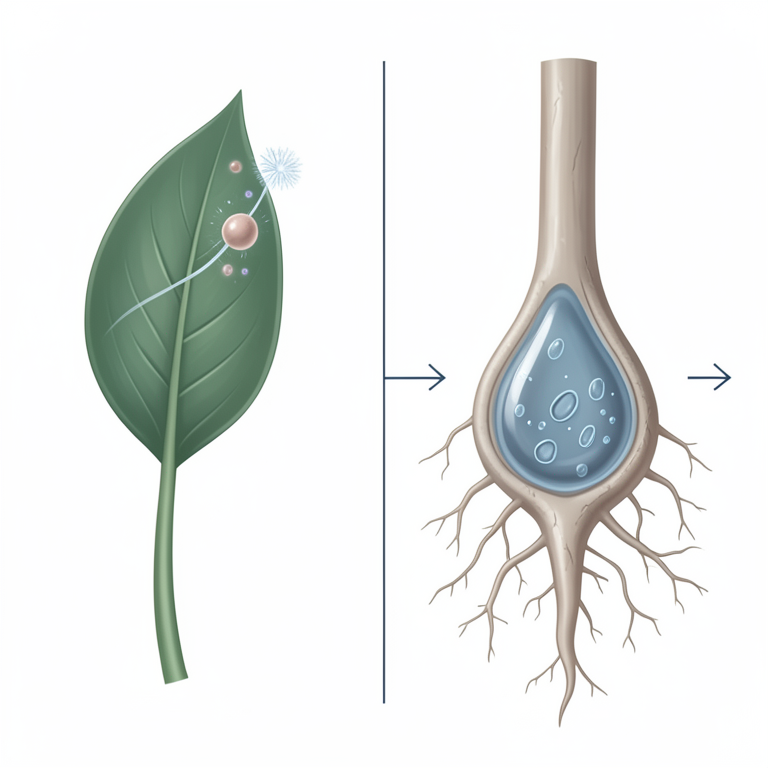
Salt Stress Response Mechanisms in O. coarctata
AI-generated conceptual illustration (Oryza coarctata (halophytic wild rice)). It explains the idea and does not show study data.
View source evidence ↗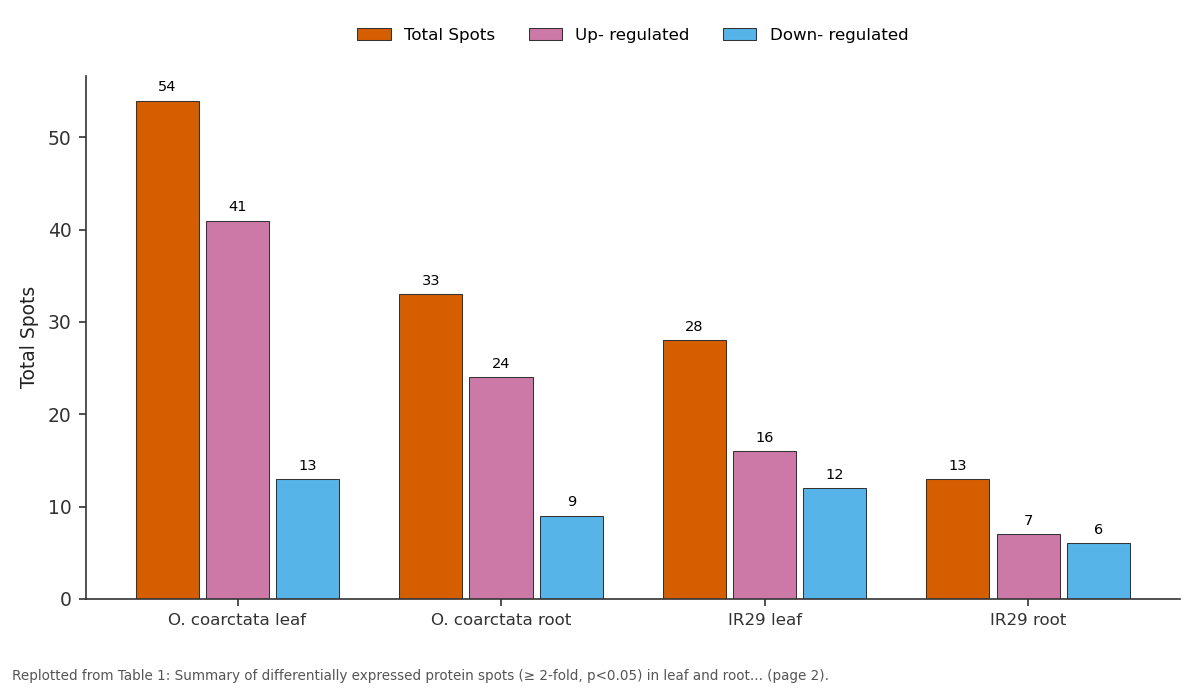
Total Spots and Up- regulated and more: O. coarctata leaf vs O. coarctata root vs IR29 leaf vs IR29 root
Replotted from Table 1 (page 2) of the original paper. Every bar is the paper's own table value.
View source evidence ↗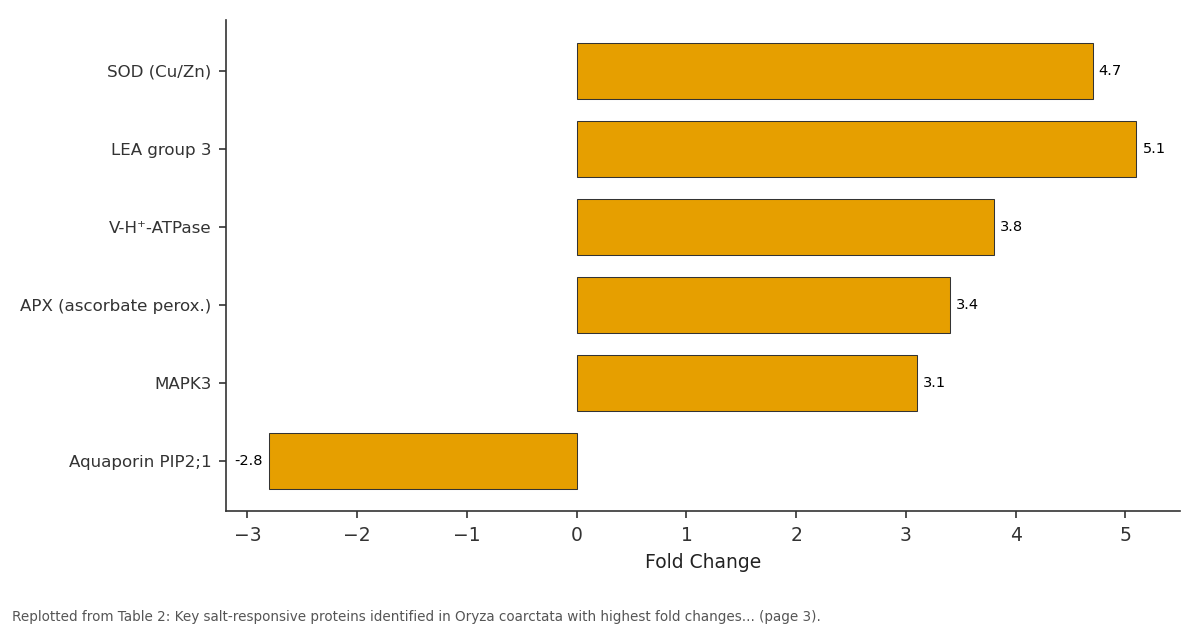
Fold Change: SOD (Cu/Zn) vs LEA group 3 vs V-H⁺-ATPase vs APX (ascorbate perox.) vs MAPK3
Replotted from Table 2 (page 3) of the original paper. Every bar is the paper's own table value.
View source evidence ↗Figures & tables
From the original paper Table 1
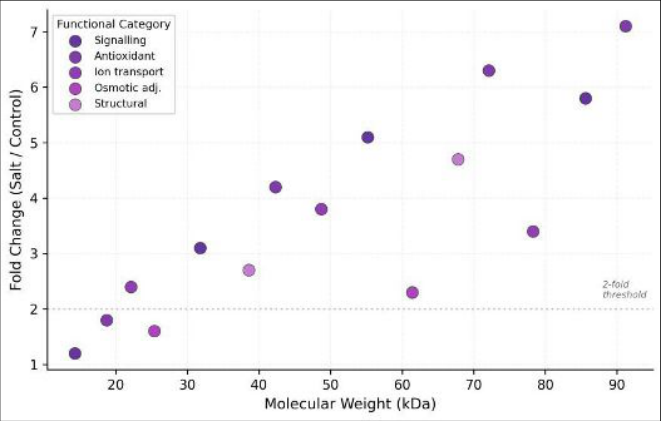 Figure 1
 Table 2
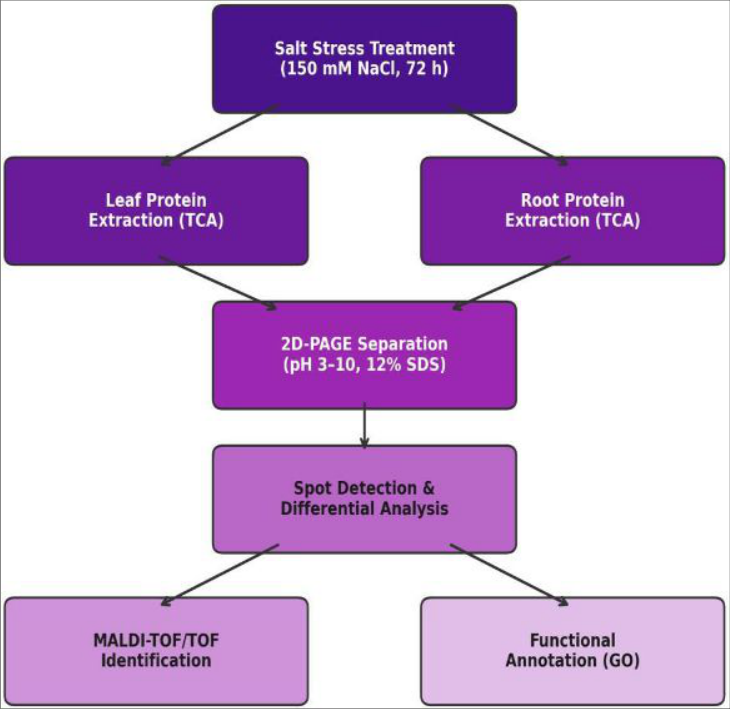 Figure 2
Introduction
The trend toward exploiting wild crop relatives for abiotic stress tolerance has accelerated as climate models project that salt-affected agricultural land will expand by 25-30% globally by 2050 [1] . Among cereals, rice is the most salt-sensitive, suffering yield declines above 3 dS m⁻¹ in soil extract-a threshold exceeded on roughly 40 million hectares of irrigated rice land worldwide [2] . Wild halophytic species within the genus Oryza, particularly O. coarctata Roxb., can survive salinities above 40 dS m⁻¹ and grow in tidal mangrove habitats, making them valuable genetic resources for breeding salt-tolerant rice [3,4] . Transcriptomic studies have identified thousands of salt-responsive genes in O. coarctata, but translating gene expression data into functional understanding requires proteomic validation, since post-transcriptional regulation often decouples mRNA and protein abundance [5] . Two-dimensional gel-based proteomics, despite its limitations in dynamic range, remains a practical first-pass tool for identifying abundant stress-responsive proteins and comparing proteome profiles across genotypes [6] . Previous proteomic work on salt-stressed rice has focused almost entirely on cultivated varieties. Kim and co-workers identified 34 salt-responsive proteins in the tolerant line Pokkali, while Dooki and colleagues found 31 differentially expressed spots in a sensitivetolerant genotype comparison [7,8] . No published 2D-PAGE dataset exists for O. coarctata under controlled salt stress conditions. This research aimed to: (a) generate the first comparative leaf and root proteome map of O. coarctata versus IR29 under 150 mM NaCl stress; (b) identify differentially expressed proteins by MALDI-TOF/TOF and classify them by functional category; and (c) highlight candidate proteins that may underpin the halophytic species' exceptional salt tolerance. The results are intended to guide future gene-to-protein functional studies and marker-assisted breeding for salt tolerance in rice.
Instrumentation and Analytical Platform
First-dimension isoelectric focusing (IEF) used 13 cm Immobiline DryStrip gels (pH 3-10 NL, GE Healthcare) on an Ettan IPGphor 3 system. Second-dimension SDS-PAGE was performed on 12.5% polyacrylamide gels using an SE 600 Ruby vertical electrophoresis unit (GE Healthcare). Gels were stained with colloidal Coomassie Brilliant Blue G-250 and scanned at 300 dpi with an ImageScanner III (GE Healthcare). Spot detection and quantification used ImageMaster 2D Platinum v7.0 software. Differentially expressed spots (≥ 2-fold change, p<0.05 by Student's t-test with FDR correction) were excised, in-gel digested with trypsin, and analysed by MALDI-TOF/TOF (Bruker Autoflex Speed, Bruker Daltonics, Germany). Peptide mass fingerprints were searched against the NCBInr and UniProt databases using MASCOT v2.6 (Matrix Science) with a significance threshold of p<0.05 [9] .
Material and Methods Material
Seeds of O. coarctata (accession IRGC 104502) were obtained from the International Rice Genebank at IRRI, Philippines, under a standard material transfer agreement. Seeds of O. sativa cv. IR29 (salt-sensitive check) were sourced from the Siberian Agricultural College seed repository. Plants were grown in a controlled environment chamber (28/22°C day/night, 14 h photoperiod, 400 μmol m⁻² s⁻¹ PAR) in half-strength Yoshida nutrient solution. At the 4-leaf stage (28 days after germination), seedlings were transferred to treatment solutions: 0 mM NaCl (control) or 150 mM NaCl (applied stepwise: 50 mM increments over 3 days). Leaf and root tissues were harvested at 72 h after reaching full salt concentration. Three biological replicates per genotype × treatment combination were maintained [10] .
Methods
Proteins were extracted from frozen tissues by TCA-acetone precipitation: tissues were ground in liquid nitrogen, suspended in 10% TCA in acetone with 0.07% βmercaptoethanol at -20°C for 2 h, centrifuged, washed three times with cold acetone, and solubilised in IEF buffer (7 M urea, 2 M thiourea, 4% CHAPS, 40 mM DTT). Protein concentration was determined by Bradford assay. For IEF, 250 μg protein was loaded per strip. IEF parameters: 30 V for 12 h (rehydration), 500 V for 1 h, gradient to 1,000 V over 1 h, gradient to 8,000 V over 3 h, and 8,000 V for 4 h. After equilibration, second-dimension separation and staining were carried out as described above. Protein functional classification followed Gene Ontology (GO) annotation through the UniProt database. All experiments were repeated three times independently [11] .
Extraction Protocol Quality Check
Extraction efficiency was verified by resolving 10 μg of each sample on a 1D SDS-PAGE gel (12%) to confirm consistent band patterns and absence of degradation before committing to 2D analysis. Gel-to-gel reproducibility was assessed by calculating the coefficient of variation (CV) for normalised spot volumes across triplicate gels; mean CV was 14.2% for O. coarctata and 16.1% for IR29, both within the acceptable range (≤ 20%) for comparative 2D-PAGE analysis [6] . Oryza coarctata showed 87 differentially expressed spots in total (54 in leaves, 33 in roots), more than double the 41 detected in IR29 (Table 1). The halophyte also displayed a greater proportion of upregulated proteins (74.7% vs 56.1% in IR29), consistent with an active stress-response strategy rather than passive shutdown. Fifty-two of the 87 spots were successfully identified by MALDI-TOF/TOF, with identification rates of 54-63% [12] .
| Genotype / Tissue | Total Spots | Up- regulated | Down- regulated | Identified by MS | Identification Rate (%) |
|---|---|---|---|---|---|
| O. coarctata leaf | 54 | 41 | 13 | 34 | 63.0 |
| O. coarctata root | 33 | 24 | 9 | 18 | 54.5 |
| IR29 leaf | 28 | 16 | 12 | 14 | 50.0 |
| IR29 root | 13 | 7 | 6 | 6 | 46.2 |
Table text extracted from the original PDF; superscript letters are shown inline. The original table image is below.
View original table image
Results
Results
Discussion
The 4.7-fold upregulation of Cu/Zn-SOD in O. coarctata leaves is consistent with its need to scavenge superoxide radicals generated by disrupted electron transport under salt stress. IR29 showed only a 1.6-fold increase in the same protein, suggesting a weaker antioxidant response [7] . The 5.1-fold increase in LEA group 3 protein in roots indicates strong osmotic protection of root cells, likely working in concert with the proline and glycine betaine accumulation pathways reported in transcriptomic studies of this species [5,13] .
The upregulation of vacuolar H⁺-ATPase (3.8-fold) points to active Na⁺ sequestration into root cell vacuoles-a wellcharacterised mechanism in halophytes that reduces cytoplasmic Na⁺ toxicity [14] . The downregulation of aquaporin PIP2;1 (-2.8-fold) in roots is equally telling: by reducing membrane water permeability, the plant may limit back-flow of water along the osmotic gradient created by high external salt [15] . These candidate proteins-SOD, LEA3, V-H⁺-ATPase, and aquaporin PIP2;1-represent priority targets for marker-assisted introgression into cultivated rice. Their corresponding genes can be mapped in O. coarctata using the recently published draft genome and validated through overexpression studies in sensitive backgrounds. The proteomic data generated here provide an essential bridge between the existing transcriptomic datasets and future functional breeding applications.
Conclusion
This research generated the first 2D-PAGE proteome map of the halophytic wild rice Oryza coarctata under 150 mM NaCl stress, identifying 52 salt-responsive proteins across leaf and root tissues. Antioxidant defence, osmotic adjustment, and ion transport proteins were the dominant functional categories, with SOD, LEA3, and vacuolar H⁺-ATPase showing the strongest responses. These proteins represent high-value targets for molecular breeding programmes aiming to introgress salt tolerance from wild rice into cultivated backgrounds. Future work should employ gel-free quantitative proteomics (iTRAQ or TMT labelling) to capture low-abundance regulatory
Figures and tables from the paper
| Protein | MW (kDa) | pI | Fold Change | Tissue | Functional Category |
|---|---|---|---|---|---|
| SOD (Cu/Zn) | 18.7 | 5.6 | 4.7 | Leaf | Antioxidant defence |
| LEA group 3 | 25.4 | 6.1 | 5.1 | Root | Osmotic adjustment |
| V-H⁺-ATPase | 67.8 | 5.2 | 3.8 | Root | Ion transport |
| APX (ascorbate perox.) | 31.8 | 5.8 | 3.4 | Leaf | Antioxidant defence |
| MAPK3 | 42.3 | 6.4 | 3.1 | Leaf | Signal transduction |
| Aquaporin PIP2;1 | 28.6 | 7.1 | −2.8 | Root | Ion transport |
Table text extracted from the original PDF; superscript letters are shown inline. The original table image is below.
View original table image
References
15 in the original paper- Qadir M, Quillérou E, Nangia V, Murtaza G, Singh M, Thomas RJ, Drechsel P, Noble AD. Economics of saltinduced land degradation and restoration. Natural Resources Forum. 2014;38(4):282-295.
- Munns R, Tester M. Mechanisms of salinity tolerance. Annual Review of Plant Biology. 2008;59:651-681.
- Bal AR, Dutt SK. Mechanism of salt tolerance in wild rice. Plant and Soil. 1986;92(3):399-404.
- Mondal TK, Rawal HC, Gaikwad K, Sharma TR, Singh NK. First de novo draft genome sequence of Oryza coarctata, the only halophytic species in the genus Oryza. F1000Research. 2017;6:1828.
- Garg R, Verma M, Agrawal S, Shankar R, Majee M, Jain M. Deep transcriptome sequencing of wild halophyte rice reveals novel insights into the mechanism of salinity tolerance. Scientific Reports. 2014;4:5708.
- Rabilloud T, Chevallet M, Luche S, Lelong C. Twodimensional gel electrophoresis in proteomics: past, present and future. Journal of Proteomics. 2010;73(11):2064-2077.
- Kim DW, Rakwal R, Agrawal GK, Jung YH, Shibato J, Jwa NS, Iwahashi Y, Iwahashi H, Kim DH, Shim IS, Usui K. A hydroponic rice seedling culture model system for investigating proteome of salt stress in rice leaf. Electrophoresis. 2005;26(23):4521-4539.
- Dooki AD, Mayer-Posner FJ, Askari H, Zainabidin AA, Salekdeh GH. Proteomic responses of rice young panicles to salinity. Proteomics. 2006;6(24):6498-6507.
- Perkins DN, Pappin DJC, Creasy DM, Cottrell JS. Probability-based protein identification by searching sequence databases using mass spectrometry data. Electrophoresis. 1999;20(18):3551-3567.
- Yoshida S, Forno DA, Cock JH, Gomez KA. Laboratory Manual for Physiological Studies of Rice. 3rd ed. IRRI. 1976.
- Görg A, Weiss W, Dunn MJ. Current two-dimensional electrophoresis technology for proteomics. Proteomics. 2004;4(12):3665-3685.
- Nouri MZ, Komatsu S. Comparative analysis of soybean plasma membrane proteins under osmotic stress using gel-based and LC MS/MS-based proteomics approaches. Proteomics. 2010;10(10):19301945.
- Sengupta S, Majumder AL. Insight into the salt tolerance factors of a wild halophytic rice Porteresia coarctata: a physiological and proteomic approach. Planta. 2009;229(4):911-929.
- Apse MP, Aharon GS, Snedden WA, Blumwald E. Salt tolerance conferred by overexpression of a vacuolar Na+/H+ antiport in Arabidopsis. Science. 1999;285(5431):1256-1258.
- Maurel C, Boursiac Y, Luu DT, Santoni V, Shahzad Z, Verdoucq L. Aquaporins in plants. Physiological Reviews. 2015;95(4):1321-1358.