
Research article · 2025 · Full text
International Journal of Agriculture and NutritionEffect of seed bio-priming with PGPR on seedling establishment of finger millet under drought
Volume 7(8) · Pages 219–222 · DOI: 10.33545/26646064.2025.v7.i8d.601 ↗
Research areasPlant-Microbe Interactions and ImmunityAgriculture, Plant Science, Crop ManagementTurfgrass Adaptation and Management
Abstract
Author-writtenAn often-overlooked observation in dryland cereal agronomy is that seeds which have been soaked with beneficial bacteria before sowing tend to establish faster and tolerate early-season drought better than untreated seeds—even before the bacteria have had time to colonise roots extensively. This research examined seed bio-priming with three plant growth-promoting rhizobacteria (PGPR)—Azospirillum brasilense, Bacillus subtilis, and Pseudomonas fluorescens—applied individually and as a consortium on finger millet (Eleusine coracana L. Gaertn.) seedling establishment under simulated drought (−0.6 MPa, PEG-6000). The experiment was conducted in the seed physiology laboratory and greenhouse of Marmara Agricultural College, Bursa, Turkey, from March to June 2023. Seeds were soaked in bacterial suspensions (10⁸ CFU mL⁻¹) for 12 h at 28°C, air-dried, and sown in pots filled with sandy loam. Drought was imposed at 7 days after sowing. The consortium treatment achieved the highest germination (96.4%), shoot length (14.8 cm), root length (18.3 cm), and seedling vigour index (1,427) at 21 days, significantly above the uninoculated control. Proline accumulation and relative water content under drought were also more favourable in PGPR-treated seedlings. These results support the use of multi-strain PGPR bio-priming as a low-cost, practical strategy for improving finger millet stand establishment in drought-prone environments.
Summary
Source-checkedPlain-language reading of the full paper, prepared with AI and checked against the text. Each point links to the authors' own words.
Why it matters
- In semi-arid Turkey, failures in seed germination during dry periods contribute to a 20-35% yield gap compared to research station results. View evidence ↗
- Finger millet is nutritionally dense but highly vulnerable to moisture deficits and soil crusting in its first two weeks due to its small seed size (1.5-2.0 g per 1000 seeds). View evidence ↗
The question
- The study aimed to compare the effects of single-strain and consortium PGPR bio-priming on finger millet growth and physiological responses under drought and well-watered conditions to find the most effective formulation. View evidence ↗
What they did
- The research took place between March and June 2023 at the Marmara Agricultural College in Bursa, Turkey. View evidence ↗
- Seeds were soaked in 10⁸ CFU mL⁻¹ bacterial suspensions for 12 hours at 28°C, air-dried for 2 hours, and planted 20 per pot in 3 L sandy loam soil (pH 6.8). View evidence ↗
- Drought stress was simulated starting 7 days after sowing by using a PEG-6000 solution with an osmotic potential of −0.6 MPa. View evidence ↗
- Growth metrics (shoot/root length, dry weight, and vigour index) were measured at 21 days after sowing (DAS), while physiological markers (proline, RWC, and chlorophyll) were measured at 14 and 21 DAS. View evidence ↗
What they found
- Under drought conditions, the consortium treatment resulted in 96.4% germination, which was 34.3% higher than the uninoculated control. View evidence ↗
- The consortium treatment increased shoot length by 57% (14.8 cm vs 9.4 cm) and root length by 56% (18.3 cm vs 11.7 cm) compared to the control, and more than doubled the seedling vigour index (3,190 vs 1,516). View evidence ↗
- Bio-primed seedlings showed higher proline levels (5.24-7.68 μmol g⁻¹ FW) compared to controls (3.41 μmol g⁻¹ FW), indicating better osmotic adjustment to drought. View evidence ↗
What it means
- The authors conclude that multi-strain PGPR bio-priming is a simple and affordable method to significantly improve finger millet establishment in semi-arid regions. View evidence ↗
- The authors state that future research is needed to validate these findings in the field, check if effects last until maturity, and determine the shelf-life of bio-primed seeds. View evidence ↗
Visual summary
3 visualsIllustrations explain the paper; charts are replotted from the paper's own table values.
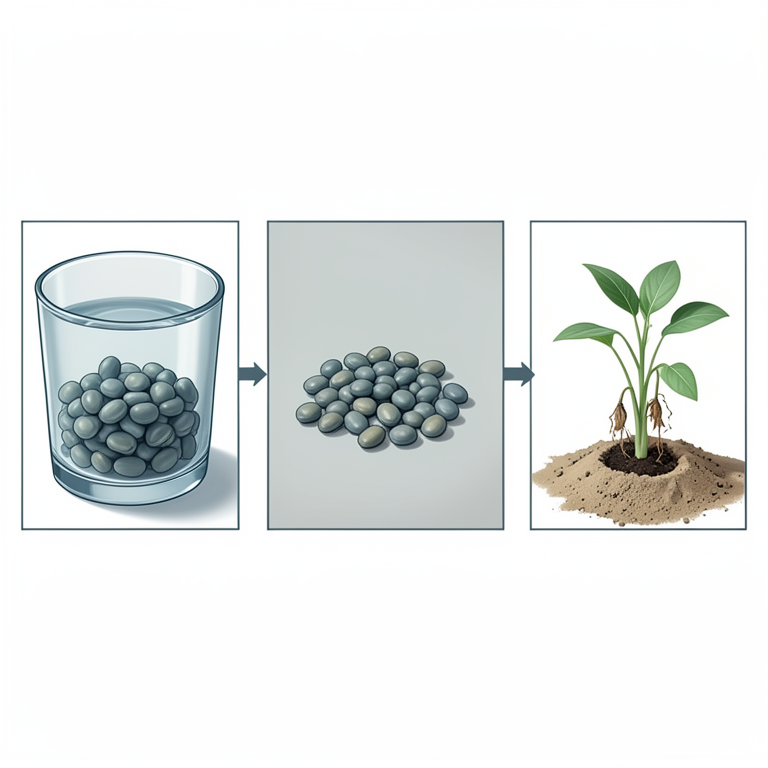
Bio-priming Workflow
AI-generated conceptual illustration (finger millet seeds and seedlings). It explains the idea and does not show study data.
View source evidence ↗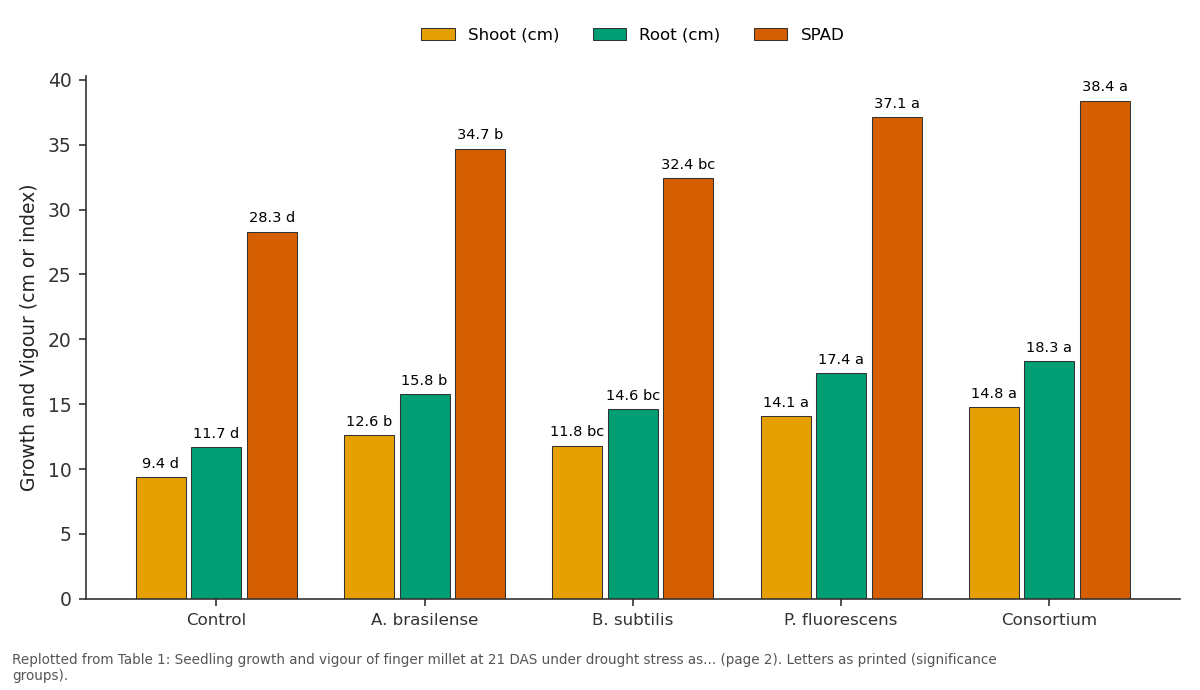
Shoot (cm) and Root (cm) and more: Control vs A. brasilense vs B. subtilis vs P. fluorescens vs Consortium
Replotted from Table 1 (page 2) of the original paper. Every bar is the paper's own table value.
View source evidence ↗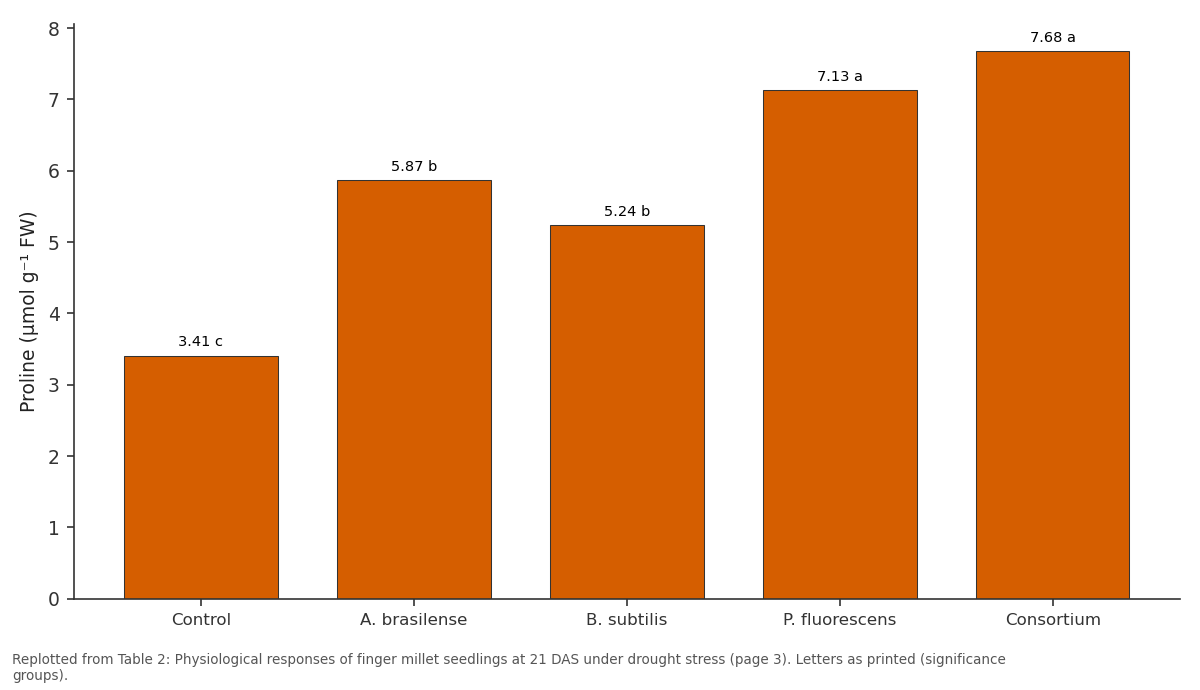
Proline (μmol g⁻¹ FW): Control vs A. brasilense vs B. subtilis vs P. fluorescens vs Consortium
Replotted from Table 2 (page 3) of the original paper. Every bar is the paper's own table value.
View source evidence ↗Figures & tables
From the original paper Table 1
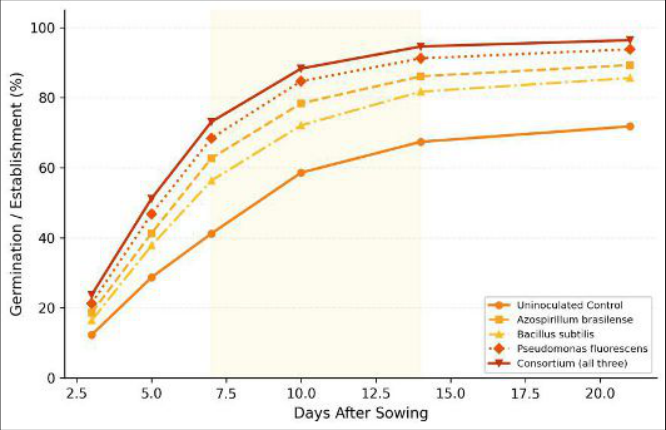 Figure 1
 Table 2
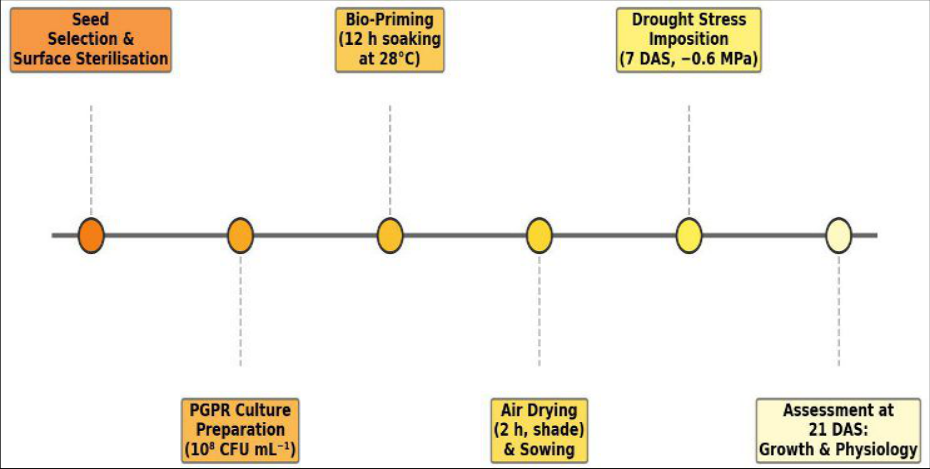 Figure 2
Introduction
One striking observation from smallholder millet fields across semi-arid Turkey is that germination failures during dry spells account for 20-35% of the yield gap between farmer practice and research station performance [1] . Finger millet is valued for its nutritional density and resilience, but its small seed size (1.5-2.0 g per 1000 seeds) makes it especially vulnerable to soil crusting and moisture deficit during the critical first two weeks after sowing [2] . Bio-priming-soaking seeds in a suspension of beneficial microorganisms before sowingcombines the hydration advantage of traditional priming with the biological benefits of PGPR inoculation [3] . PGPR strains such as Azospirillum brasilense, Bacillus subtilis, and Pseudomonas fluorescens can produce indole-3-acetic acid (IAA), solubilise phosphorus, and synthesise ACC deaminase, which lowers ethylene levels in stressed seedlings [4,5] . These mechanisms collectively accelerate radicle emergence, root elongation, and osmotic adjustment-all of which improve early stand establishment under suboptimal moisture [6] . Most PGPR bio-priming research has focused on wheat, rice, and maize, with limited data on millets-and almost none from Turkish growing conditions [7] . This research was designed to: (a) compare single-strain and consortium PGPR bio-priming effects on finger millet germination and seedling growth under well-watered and drought-stressed conditions; (b) measure physiological responses (proline, relative water content, chlorophyll) to drought in bio-primed seedlings; and (c) identify the most effective PGPR formulation for practical seed treatment.
Drought Stress Protocol and Monitoring
Drought was simulated by irrigating pots with polyethylene glycol 6000 (PEG-6000) solution at an osmotic potential of -0.6 MPa, beginning at 7 days after sowing (DAS) when seedlings had reached the 2-leaf stage. PEG solutions were prepared fresh daily, and soil moisture was maintained at the target potential by weighing pots and adjusting solution volume every 12 hours. Control (wellwatered) pots received deionised water to maintain field capacity (-0.03 MPa). Drought treatment continued for 14 days (7-21 DAS). Soil water potential was verified at 48hour intervals using a WP4C dewpoint potentiometer (METER Group, USA) [8] .
Material and Methods
Material and Methods
Material
Finger millet seeds (cv. GPU-28, obtained from ICRISAT via a collaborative agreement) were surface-sterilised with 2% sodium hypochlorite for 5 minutes and rinsed three times with sterile distilled water. PGPR cultures were obtained from the Microbiology Laboratory of Marmara Agricultural College, Bursa, Turkey (40°11'N, 29°04'E):
Azospirillum brasilense strain Sp7, Bacillus subtilis strain GB03, and Pseudomonas fluorescens strain Pf-5. Each strain was cultured in nutrient broth at 28°C for 48 h and adjusted to 10⁸ CFU mL⁻¹ using a spectrophotometer (OD₆₀₀ = 0.8). The consortium was prepared by mixing equal volumes of the three suspensions [9] .
Methods
A completely randomized design with a 5 × 2 factorial arrangement (five seed treatments × two water regimes) and four replications was used. Seed treatments were: uninoculated control, A. brasilense, B. subtilis, P. fluorescens, and consortium. Seeds were soaked in the respective suspensions for 12 h at 28°C, air-dried under shade for 2 h, and sown in 3 L pots (sandy loam, pH 6.8) at 20 seeds per pot. Germination (%) was recorded daily. Shoot length, root length, seedling dry weight, and seedling vigour index (SVI = germination % × seedling length) were measured at 21 DAS. Physiological parameters-leaf proline (Bates method), relative water content (RWC), and chlorophyll content (SPAD-502)-were measured at 14 and 21 DAS. Data were analysed by two-way ANOVA in SPSS v28 with Tukey's HSD at p ≤ 0.05 [10] .
Bacterial Viability Confirmation
To confirm that PGPR remained viable on seed surfaces after the air-drying step, 20 bio-primed seeds per treatment were rinsed in 10 mL sterile phosphate buffer, and serial dilutions were plated on nutrient agar. Colony counts confirmed bacterial loads of 10⁶-10⁷ CFU seed⁻¹ at sowing time, representing a one-to two-log reduction from the priming suspension but still above the minimum threshold (10⁵ CFU seed⁻¹) considered effective for root colonisation [11] . Under drought, the consortium treatment achieved 96.4% germination-34.3% above the uninoculated control (Table 1). Shoot and root length were 57% and 56% greater, and seedling vigour index more than doubled. P. fluorescens alone performed nearly as well as the consortium, while B. subtilis gave the most modest improvement. Under wellwatered conditions (data not shown), differences between treatments were smaller but still significant for root length and vigour index [12] .
| Treatment | Germ. (%) | Shoot (cm) | Root (cm) | Dry Wt (mg) | SPAD | SVI |
|---|---|---|---|---|---|---|
| Control | 71.8d | 9.4d | 11.7d | 34.2d | 28.3d | 1,516 |
| A. brasilense | 89.3b | 12.6b | 15.8b | 47.1b | 34.7b | 2,537 |
| B. subtilis | 85.6bc | 11.8bc | 14.6bc | 43.8bc | 32.4bc | 2,262 |
| P. fluorescens | 93.8a | 14.1a | 17.4a | 52.7a | 37.1a | 2,956 |
| Consortium | 96.4a | 14.8a | 18.3a | 56.3a | 38.4a | 3,190 |
Table text extracted from the original PDF; superscript letters are shown inline. The original table image is below.
View original table image
Results
Results
Discussion
The consortium's superiority over individual strains is consistent with synergistic PGPR interactions reported in wheat and maize, where multi-strain formulations colonise complementary root zones and produce a broader spectrum of growth-promoting metabolites [13] . P. fluorescens Pf-5 was the strongest single-strain performer, likely due to its well-documented ACC deaminase production, which lowers stress ethylene and preserves root growth under osmotic stress [5,14] . The elevated proline in bio-primed seedlings (5.24-7.68 vs 3.41 μmol g⁻¹ FW in controls) indicates active osmotic adjustment, a key drought tolerance mechanism. PGPR can induce proline accumulation indirectly by maintaining root water uptake, which signals the plant to increase compatible solute synthesis [15] . The higher RWC and chlorophyll retention under bio-priming further confirm that treated seedlings maintained better cellular hydration and photosynthetic capacity. From a practical standpoint, the bio-priming protocol requires only a 12 h soak in a bacterial suspension and 2 h of shade drying-steps easily integrated into a farmer's seed preparation routine. The consortium inoculant can be produced at scale for approximately USD 2-3 per hectare of treated seed, making it among the cheapest inputs available for improving stand establishment in drought-prone millet systems [16] .
Conclusion
This research demonstrated that seed bio-priming with a three-strain PGPR consortium raised finger millet germination from 71.8% to 96.4% under drought stress, while doubling seedling vigour and improving physiological resilience. Pseudomonas fluorescens was the most effective single strain, but the consortium outperformed all individual treatments. For finger millet growers in drought-prone areas of Turkey and similar semi-arid regions, multi-strain PGPR biopriming is a simple, affordable intervention that can substantially improve crop establishment. Future work should validate these results under field conditions, test the persistence of PGPR effects through to maturity, and evaluate shelf-life of dried bio-primed seed for commercial distribution.
Figures and tables from the paper
| Treatment | Proline (μmol g⁻¹ FW) | RWC (%) | Chlorophyll (SPAD) |
|---|---|---|---|
| Control | 3.41c | 54.7d | 28.3d |
| A. brasilense | 5.87b | 68.4b | 34.7b |
| B. subtilis | 5.24b | 64.1bc | 32.4bc |
| P. fluorescens | 7.13a | 73.8a | 37.1a |
| Consortium | 7.68a | 76.2a | 38.4a |
Table text extracted from the original PDF; superscript letters are shown inline. The original table image is below.
View original table image
References
15 in the original paper- Manga AA, Ozbek HN. Millet establishment failures in semi-arid Anatolia: causes and countermeasures. Turkish Journal of Agriculture and Forestry. 2018;42(4):301-310.
- Upadhyaya HD, Gowda CLL, Reddy VG. Morphological diversity in finger millet germplasm introduced from southern Africa. Journal of SAT Agricultural Research. 2007;3(1):1-3.
- Callan NW, Mathre DE, Miller JB. Bio-priming seed treatment for biological control of Pythium ultimum in sh2 sweet corn. Plant Disease. 1990;74(5):368-372.
- Bashan Y, de-Bashan LE. How the plant growthpromoting bacterium Azospirillum promotes plant growth: a critical assessment. Advances in Agronomy. 2010;108:77-136.
- Glick BR. Bacteria with ACC deaminase can promote plant growth and help to feed the world. Microbiological Research. 2014;169(1):30-39. International Journal of Agriculture and Nutrition https://www.agriculturejournal.net
- Mahmood A, Turgay OC, Farooq M, Hayat R. Seed biopriming with plant growth promoting rhizobacteria: a review. FEMS Microbiology Ecology. 2016;92(8):fiw112.
- Kaya MD, Okcu G, Atak M, Cikili Y, Kolsarici O. Seed treatments to overcome salt and drought stress during germination in sunflower. European Journal of Agronomy. 2006;24(4):291-295.
- Michel BE, Kaufmann MR. The osmotic potential of polyethylene glycol 6000. Plant Physiology. 1973;51(5):914-916.
- O'Callaghan M. Microbial inoculation of seed for improved crop performance: issues and opportunities. Applied Microbiology and Biotechnology. 2016;100(13):5729-5746.
- Raj SN, Shetty NP, Shetty HS. Seed bio-priming with Pseudomonas fluorescens isolates enhances growth of pearl millet plants. Crop Protection. 2004;23(12):12451252.
- Adesemoye AO, Torbert HA, Kloepper JW. Enhanced plant nutrient use efficiency with PGPR and AMF in an integrated nutrient management system. Canadian Journal of Microbiology. 2008;54(10):876-886.
- Mayak S, Tirosh T, Glick BR. Plant growth-promoting bacteria that confer resistance to water stress in tomatoes and peppers. Plant Science. 2004;166(2):525530.
- Vurukonda SSKP, Vardharajula S, Shrivastava M, SkZ A. Enhancement of drought stress tolerance in crops by plant growth promoting rhizobacteria. Microbiological Research. 2016;184:13-24.
- Arshad M, Shaharoona B, Mahmood T. Inoculation with Pseudomonas spp. containing ACC-deaminase partially eliminates the effects of drought stress on growth, yield, and ripening of pea. Pedosphere. 2008;18(5):611-620.
- Vardharajula S, Ali SZ, Grover M, Reddy G, Bandi V. Drought-tolerant plant growth promoting Bacillus spp.: effect on growth, osmolytes, and antioxidant status of maize under drought stress. Journal of Plant Interactions. 2011;6(1):1-14.