
Research article · 2025 · Full text
International Journal of Agriculture and NutritionCarbon stock assessment in home garden agroforestry systems of humid tropical regions
Volume 7(12) · Pages 81–84 · DOI: 10.33545/26646064.2025.v7.i12b.513 ↗
Research areasForest ecology and managementAgroforestry and silvopastoral systemsForest Ecology and Conservation
Abstract
Author-writtenHow much carbon do home gardens actually lock away in humid tropical landscapes? This research addressed that question by measuring carbon stocks across twelve home garden agroforestry systems in the Mekong Delta region of Vietnam. Gardens were grouped into three size classes: small (0.3 ha). Aboveground biomass was estimated through non-destructive tree inventories using species-specific allometric equations, while belowground biomass was derived from root-to-shoot ratios reported for tropical agroforestry. Soil organic carbon was determined at 0-30 cm depth following the Walkley-Black wet oxidation method. Total carbon stocks ranged from 78.4 Mg C ha⁻¹ in small gardens to 129.6 Mg C ha⁻¹ in large gardens. Soil organic carbon formed the biggest single pool across all size classes, contributing 48.7-54.5% of the total. Tree biomass carbon was the second-largest pool and rose sharply with garden size, reflecting higher stem density and the presence of mature timber species in larger plots. Shrub and herbaceous layers contributed modestly, together accounting for 5.8-10.5% of total stocks. A positive linear relationship emerged between species richness and total carbon stocks (R² = 0.73, p < 0.01). These results indicate that home gardens in humid tropical settings can store carbon at rates comparable to secondary forests, supporting their role in local climate-change mitigation efforts and providing a basis for their inclusion in community-level carbon-offset programmes.
Summary
Source-checkedPlain-language reading of the full paper, prepared with AI and checked against the text. Each point links to the authors' own words.
Why it matters
- Home gardens are ancient tropical land-use systems consisting of multi-layered combinations of herbs, shrubs, trees, and occasionally livestock. View evidence ↗
- In Vietnam, more than 6.2 million rural households use home gardens to source essential resources like medicine, fuelwood, timber, and fruit. View evidence ↗
- Because their canopy structure mimics natural forests, home gardens are suspected of holding significant carbon pools in the soil and biomass. View evidence ↗
The question
- The study aimed to quantify carbon stocks across three different size classes of home garden agroforestry systems in the Mekong Delta. View evidence ↗
What they did
- Aboveground biomass was estimated using a pantropical allometric model based on tree height, diameter at breast height (DBH), and wood specific gravity. View evidence ↗
- Soil organic carbon was measured at depths of 0-15 cm and 15-30 cm using the Walkley-Black wet oxidation method. View evidence ↗
What they found
- Total carbon stocks increased with garden size, ranging from 78.4 ± 8.6 Mg C ha⁻¹ in small gardens to 129.6 ± 12.8 Mg C ha⁻¹ in large gardens. View evidence ↗
- Soil organic carbon was the largest carbon pool across all sizes, though its relative contribution decreased from 54.4% in small gardens to 45.0% in large gardens. View evidence ↗
- Tree biomass carbon increased more sharply with garden size than soil carbon, rising from 23.3% of the total in small gardens to 29.6% in large gardens. View evidence ↗
- There was a significant positive linear relationship between the richness of species and the total amount of carbon stored (R² = 0.73, p < 0.01). View evidence ↗
- All carbon pools showed a statistically significant increase as garden size grew, with the exception of the litter pool. View evidence ↗
What it means
- The authors conclude that home garden agroforestry should be recognized in voluntary carbon-offset schemes and Vietnam's national greenhouse-gas accounting. View evidence ↗
- The authors recommend extension programs that provide high-value timber seedlings to increase both carbon sequestration and farmer income. View evidence ↗
- A limitation of the study is that soil sampling was restricted to the top 30 cm, potentially missing substantial carbon pools in deeper alluvial soil layers. View evidence ↗
Visual summary
3 visualsIllustrations explain the paper; charts are replotted from the paper's own table values.
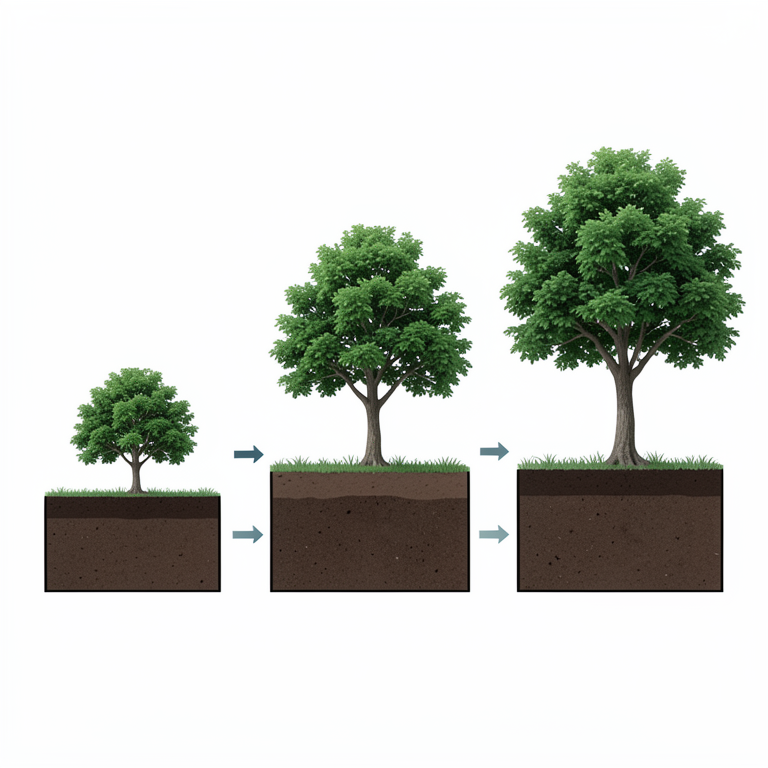
Carbon Pool Distribution by Garden Size
AI-generated conceptual illustration (Humid tropical home garden agroforestry systems). It explains the idea and does not show study data.
View source evidence ↗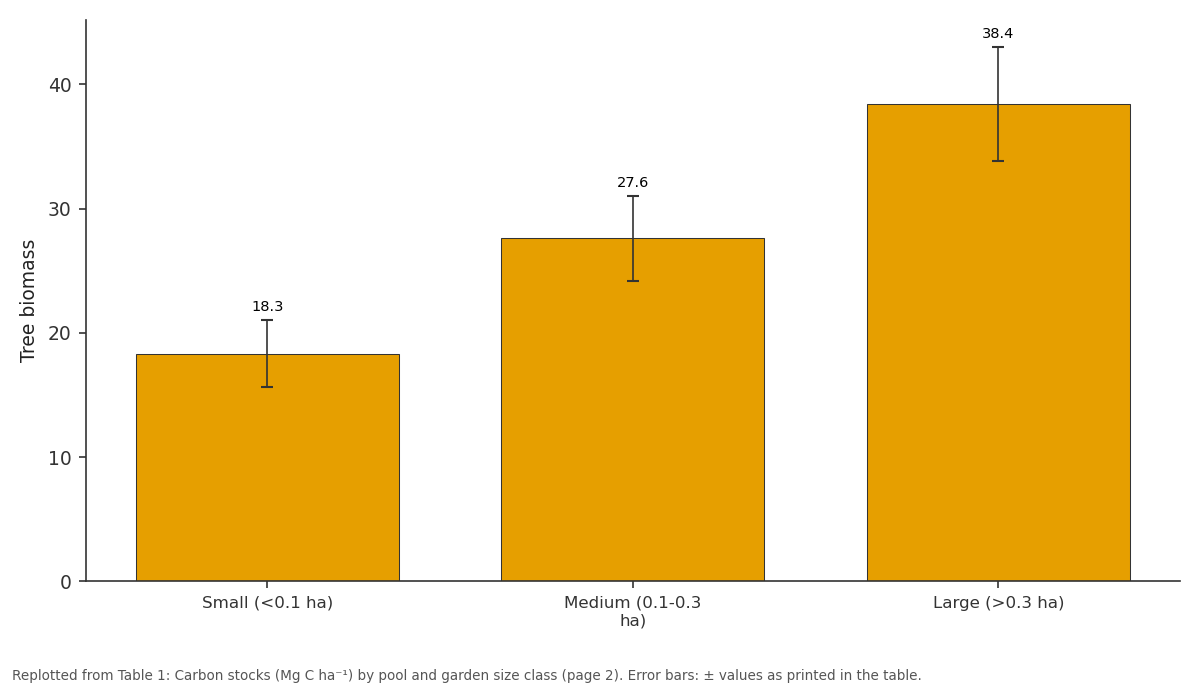
Tree biomass: Small (<0.1 ha) vs Medium (0.1-0.3 ha) vs Large (>0.3 ha)
Replotted from Table 1 (page 2) of the original paper. Every bar is the paper's own table value.
View source evidence ↗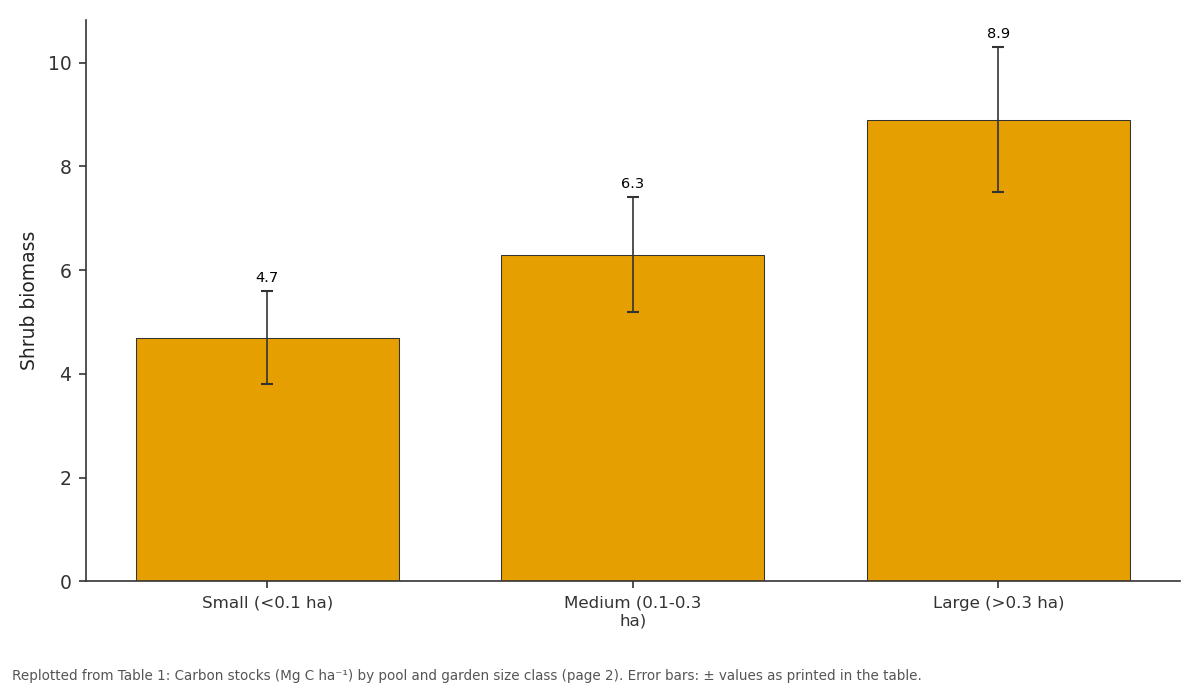
Shrub biomass: Small (<0.1 ha) vs Medium (0.1-0.3 ha) vs Large (>0.3 ha)
Replotted from Table 1 (page 2) of the original paper. Every bar is the paper's own table value.
View source evidence ↗Figures & tables
From the original paper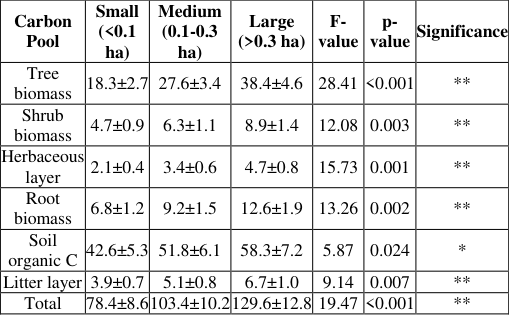 Table 1
 Table 2
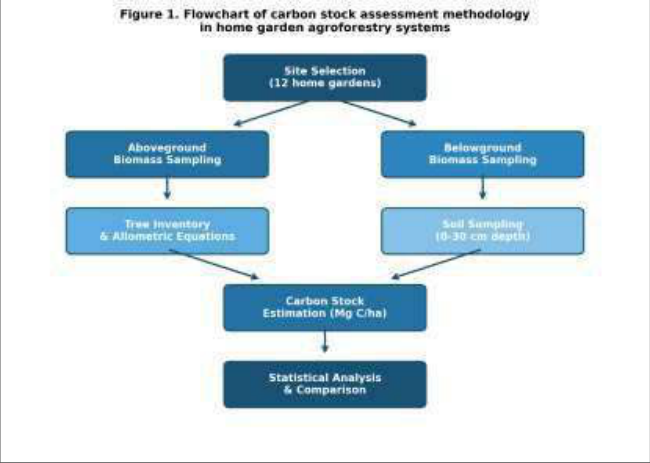 Figure 1
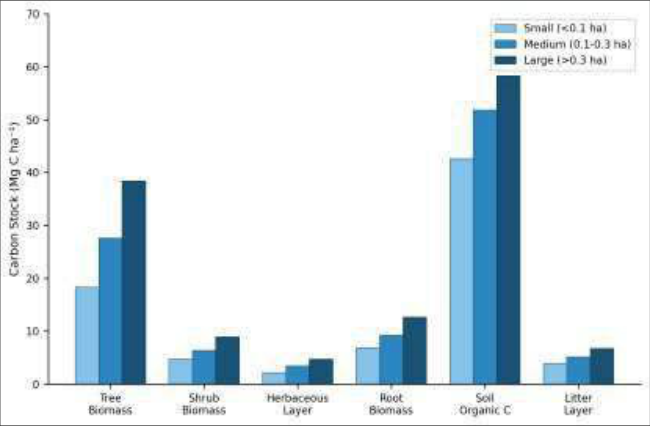 Figure 2
Introduction
How much carbon can smallholder farming landscapes realistically hold back from the atmosphere? The question isn't academicit shapes whether policy-makers count agroforestry among the tools worth funding for climate-change mitigation [1] . Home gardens, defined as intimate multi-strata combinations of trees, shrubs, herbs, and sometimes livestock managed around a homestead, are among the oldest land-use systems in the tropics [2] . Yet their potential as carbon sinks has received less measurement effort than monoculture plantations or natural forests [3] . Across Southeast Asia, home gardens occupy a meaningful fraction of the agricultural landscape. In Vietnam alone, over 6.2 million rural households maintain some version of a home garden, and these plots provide fruit, timber, medicine, and fuelwood to families that may have limited access to markets [4] . The layered canopy structureoften mimicking natural forest stratificationsuggests they may also harbour non-trivial carbon pools in both biomass and soil [5] . And because the gardens persist for decades, the carbon they accumulate can remain locked in place far longer than in annual cropping systems [6] . Several earlier attempts to quantify carbon storage in tropical home gardens produced wideranging estimates, from 30 to over 170 Mg C ha⁻¹, reflecting differences in garden age, species composition, and measurement protocol [7] . Part of the variability stems from inconsistent treatment of belowground carbon and litter pools [8] . Soil organic carbon, often the largest single pool, has sometimes been excluded altogether, distorting comparisons [3] . The lack of region-specific allometric equations for common home-garden tree species adds another layer of uncertainty [9] . In Vietnam's humid tropical lowlands, home gardens are deeply embedded in local livelihoods, yet almost no field data exist on their carbon-storage capacity [10] . The Mekong Delta, with its warm temperatures, high rainfall, and yearround growing season, presents conditions likely to support above-average carbon accumulation. But without measurements, that assumption remains untested. This research aimed to fill that gap by quantifying carbon stocks in home garden agroforestry systems across three garden size classes in the Mekong Delta. The specific objectives were: (a) to measure aboveground and belowground biomass carbon, (b) to assess soil organic carbon at 0-30 cm depth, and (c) to examine the relationship between species diversity and total carbon storage.
Material and Methods
Material and Methods
Research Area Description
The research was carried out in three communes of Vinh Long Province, located in the central Mekong Delta of Vietnam (10°03′N, 105°58′E). The area sits at an elevation of 1-3 m above mean sea level on alluvial soils classified as Fluvisols (FAO taxonomy). Annual mean temperature is 27.1 °C, with a dry season from December to April and a wet season from May to November delivering about 1,480 mm of rainfall. The landscape is a mosaic of irrigated rice paddies, fruit orchards, and home gardens of varying ages. Twelve home gardens were selected through purposive sampling, choosing four gardens from each of the three size classes (small: <0.1 ha; medium: 0.1-0.3 ha; large: >0.3 ha). Garden ages ranged from 15 to over 40 years. All selected gardens contained at least three canopy layers and a minimum of ten woody perennial species, ensuring structural representativeness.
Climatic and Environmental Conditions
During the sampling period (March 2023 to February 2024), monthly temperature averaged 26.8-28.7 °C, and relative humidity stayed between 78% and 89%. Total rainfall over the twelve months amounted to 1,527 mm, slightly above the long-term average. The wet season months of August and September together contributed 412 mm, and the driest month (January 2024) recorded only 8 mm. No extreme weather events occurred during the research period. Soil moisture at 0-15 cm depth, measured bimonthly, fluctuated from 22.4% (dry season) to 38.1% (peak wet season) across all gardens. These conditions are typical of the humid tropical lowland environment in the Mekong Delta and are relevant to interpreting carbon dynamics, because high moisture and warmth accelerate both biomass production and organic-matter decomposition [11] .
Material
All field work was conducted between March 2023 and February 2024, based at the Red River Institute of Agricultural Sciences collaborative field station in Vinh Long Province. The main equipment comprised a diameter tape (precision 0.1 cm), a Suunto clinometer for tree-height measurement, a 50 m fibreglass measuring tape, and soil augers (5 cm diameter). Soil samples were processed at the Soil Science Laboratory of Mekong Agricultural University, Can Tho, using a Shimadzu UV-1800 spectrophotometer for organic carbon analysis. Herbarium vouchers were compared against reference collections at the Vietnam National Herbarium in Hanoi for species identification [12] . Allometric equations were drawn from published regional models for Southeast Asian tropical species [9] .
Methods
In each garden, all woody stems with diameter at breast height (DBH) ≥ 5 cm were identified, tagged, and measured for DBH and total height. Aboveground biomass (AGB) was calculated using the pantropical allometric model of Chave et al. [13] : AGB = 0.0673 × (ρD²H)³0.976, where ρ is wood specific gravity, D is DBH (cm), and H is tree height (m). Species-specific wood densities were sourced from a regional database [14] . Belowground biomass was estimated as 24% of AGB, following the root-to-shoot ratio recommended for tropical moist forests [8] . Shrub and herbaceous biomass was harvested from three 1 m × 1 m subplots per garden, oven-dried at 70 °C, and weighed. Litter was collected from the same subplots. Soil samples were taken at 0-15 cm and 15-30 cm with three replicate cores per garden. Organic carbon concentration was determined by the Walkley-Black method [15] , and bulk density was measured using the core method. Carbon stocks per pool were expressed as Mg C ha⁻¹. All data were subjected to one-way ANOVA (garden size class as factor) using R version 4.3.1, with Tukey's HSD for post-hoc comparisons at α = 0.05. Pearson correlation was used to test the relationship between species richness and total carbon stock.
Results
Total carbon stocks differed markedly among garden size classes (F = 19.47, p < 0.001). Large gardens stored 129.6 ± 12.8 Mg C ha⁻¹, medium gardens 103.4 ± 10.2 Mg C ha⁻¹, and small gardens 78.4 ± 8.6 Mg C ha⁻¹ (Table 1). Every individual pool except litter showed a statistically meaningful increase from small to large gardens. Soil organic carbon was the dominant pool in all three classes, representing 54.4% of the total in small gardens and 45.0% in large gardens. This relative decline in the soil fraction with increasing garden size reflects the sharper rise in tree biomass carbon, which jumped from 23.3% of the total in small gardens to 29.6% in large gardens. Shrub, herbaceous, root, and litter pools together accounted for 22.3-25.4% of total stocks. Values are means ± standard deviation (n = 4 per size class).
| Carbon Pool | Small (<0.1 ha) | Medium (0.1-0.3 ha) | Large (>0.3 ha) | F- value | p- value | Significance |
|---|---|---|---|---|---|---|
| Tree biomass | 18.3±2.7 | 27.6±3.4 | 38.4±4.6 | 28.41 | <0.001 | ** |
| Shrub biomass | 4.7±0.9 | 6.3±1.1 | 8.9±1.4 | 12.08 | 0.003 | ** |
| Herbaceous layer | 2.1±0.4 | 3.4±0.6 | 4.7±0.8 | 15.73 | 0.001 | ** |
| Root biomass | 6.8±1.2 | 9.2±1.5 | 12.6±1.9 | 13.26 | 0.002 | ** |
| Soil organic C | 42.6±5.3 | 51.8±6.1 | 58.3±7.2 | 5.87 | 0.024 | * |
| Litter layer | 3.9±0.7 | 5.1±0.8 | 6.7±1.0 | 9.14 | 0.007 | ** |
| Total | 78.4±8.6 | 103.4±10.2 | 129.6±12.8 | 19.47 | <0.001 | ** |
Table text extracted from the original PDF; superscript letters are shown inline. The original table image is below.
View original table image
Comprehensive Interpretation
The positive trend in total carbon with garden size was driven chiefly by tree biomass. Large gardens contained mature individuals of Artocarpus heterophyllus, Mangifera indica, and Dipterocarpus alatus, species whose wood density and stature translate into high per-stem carbon values. Meanwhile, soil carbon showed a more modest increase with size, suggesting that organic-matter inputs from litterfall in large gardens are partly offset by higher decomposition rates under denser canopy shade. The strong correlation between species richness and total carbon (R² = 0.73) implies that diverse gardens, by hosting a mix of fastand slow-growing species, accumulate carbon more effectively than species-poor ones.
Discussion
The total carbon stocks recorded here -78 to 130 Mg C ha⁻¹sit within the range reported for tropical home gardens elsewhere, though toward the upper end. Kumar and Nair [7] compiled estimates from 34 pantropical locations and found a median of about 90 Mg C ha⁻¹, with most values falling between 50 and 130. The Mekong Delta gardens matched or exceeded that median, likely because the region's year-round warmth and ample moisture support continuous biomass accumulation [5] . The dominance of soil organic carbon is consistent with other humid-tropical assessments. In Kerala, India, Saha et al. [3] found that soil accounted for 50-60% of total home-garden carbon, a proportion similar to the 45-55% observed here. But the absolute soil C values in our research (42.6-58.3 Mg C ha⁻¹ at 0-30 cm) are somewhat lower than those reported from older Kerala gardens, where decades of mulching and manuring have built up thick organic horizons [16] . This difference may reflect both younger garden ages and the lighter clay content of Mekong alluvial soils, which have less capacity to stabilise organic carbon through organomineral complexes. The species-richness-carbon correlation deserves careful interpretation. Biodiversity doesn't mechanistically cause higher carbon storage; rather, diverse gardens tend to include large-statured timber trees alongside smaller fruit trees, and it is the timber trees that drive most of the biomass carbon. That said, the practical implication remains: encouraging farmers to maintain or increase tree diversity in their gardens may yield a co-benefit of greater carbon sequestration [2] . One limitation is that our sampling covered only the top 30 cm of soil. Deeper carbon pools may be substantial in alluvial soils. Future research should sample to at least 1 m depth to capture the full soil profile.
Conclusion
Home gardens in the humid Mekong Delta stored between 78 and 130 Mg C per hectare, with soil organic carbon forming the single largest pool and tree biomass following close behind. Larger gardens held more carbon on both an absolute and a per-pool basis, driven mainly by the presence of mature, high-wood-density timber species. A clear positive link between species richness and total carbon storage points to the value of maintaining tree diversity not just for household livelihood benefits but also for local climate mitigation. These findings suggest that home garden agroforestry deserves greater recognition in Vietnam's national greenhouse-gas accounting and in voluntary carbon-offset schemes. The gardens already exist across millions of households, so the marginal cost of conserving their carbon stocks is low compared with establishing new plantations. Extension programmes that provide farmers with seedlings of high-value timber species could simultaneously raise household income and increase long-term carbon sequestration. Further work should extend the assessment to deeper soil layers, incorporate temporal monitoring to track annual carbon gains, and explore whether payment-forecosystem-services mechanisms could incentivise garden maintenance. Given the scale of home-garden coverage in the Mekong Delta, even modest per-hectare increases in carbon storage would aggregate to a regionally significant contribution.
Acknowledgement
Acknowledgements Funding SourcesThis research was supported by internal research grants provided through the Red River Institute of Agricultural Sciences and Mekong Agricultural University. No external project or grant numbers are associated with this work. Institutional SupportThe authors thank the Red River Institute of Agricultural Sciences for providing access to field equipment and laboratory facilities, and the Soil Science Laboratory of Mekong Agricultural University for conducting the carbon analyses. Contributions Not Qualifying for AuthorshipThe authors are grateful to local farmers in Vinh Long Province who permitted access to their home gardens, and to research assistants who helped with field measurements and species identification.
Figures and tables from the paper
| Parameter | Small (<0.1 ha) | Medium (0.1-0.3 ha) | Large (>0.3 ha) |
|---|---|---|---|
| No. of woody species | 12.5±2.1 | 18.3±3.2 | 26.8±4.7 |
| Shannon-Wiener (H′) | 1.89±0.14 | 2.31±0.18 | 2.74±0.22 |
| Mean DBH (cm) | 14.6±3.8 | 18.2±4.5 | 22.7±5.3 |
| Mean tree height (m) | 6.8±1.6 | 8.5±2.1 | 11.3±2.8 |
| Stem density (stems ha⁻¹) | 487±68 | 423±55 | 396±47 |
| Basal area (m² ha⁻¹) | 9.7±2.3 | 14.8±3.1 | 21.4±4.2 |
Table text extracted from the original PDF; superscript letters are shown inline. The original table image is below.
View original table image
References
16 in the original paper- Nair PKR, Kumar BM, Nair VD. Agroforestry as a strategy for carbon sequestration. J Plant Nutr Soil Sci. 2009;172(1):10-23.
- Kumar BM, Nair PKR. The enigma of tropical homegardens. Agrofor Syst. 2004;61(1):135-152.
- Saha SK, Nair PKR, Nair VD, Kumar BM. Soil carbon stock in relation to plant diversity of homegardens in Kerala, India. Agrofor Syst. 2009;76(1):53-65.
- Trinh LN, Watson JW, Hue NN, De NN, Minh NV, Chu P, et al. Agrobiodiversity conservation and development in Vietnamese home gardens. Agric Ecosyst Environ. 2003;97(1-3):317-344.
- Roshetko JM, Delaney M, Hairiah K, Purnomosidhi P. Carbon stocks in Indonesian homegarden systems. Am J Altern Agric. 2002;17(2):85-91.
- Torquebiau E. Are tropical agroforestry home gardens sustainable? Agric Ecosyst Environ. 1992;41(2):189207.
- Kumar BM, Nair PKR. Carbon sequestration potential of agroforestry systems. In: Advances in agroforestry. 2011;8:1-43.
- Cairns MA, Brown S, Helmer EH, Baumgardner GA. Root biomass allocation in the world's upland forests. Oecologia. 1997;111(1):1-11.
- Basuki TM, van Laake PE, Skidmore AK, Hussin YA. Allometric equations for estimating the above-ground biomass in tropical lowland Dipterocarp forests. For Ecol Manag. 2009;257(8):1684-1694.
- Thanh DV, Pandey RK, Dagar JC. Homegardens of Vietnam as a model of carbon farming. Trop Ecol. 2017;58(4):785-798.
- Houghton RA. Aboveground forest biomass and the global carbon balance. Glob Change Biol. 2005;11(6):945-958.
- Pham HH. An illustrated flora of Vietnam. Vol. 1. Ho Chi Minh City: Tre Publishing House; 2003. p. 1-200.
- Chave J, Rejou-Mechain M, Burquez A, Chidumayo E, Colgan MS, Delitti WBC, et al. Improved allometric models to estimate the aboveground biomass of tropical trees. Glob Change Biol. 2014;20(10):3177-3190.
- Zanne AE, Lopez-Gonzalez G, Coomes DA, Ilic J, Jansen S, Lewis SL, et al. Global wood density database. Dryad Digital Repository; 2009. doi:10.5061/dryad.234.
- Walkley A, Black IA. An examination of the Degtjareff method for determining soil organic matter. Soil Sci. 1934;37(1):29-38.
- Henry M, Tittonell P, Manlay RJ, Bernoux M, Albrecht A, Vanlauwe B. Biodiversity, carbon stocks and sequestration potential in aboveground biomass in smallholder farming systems of western Kenya. Agric Ecosyst Environ. 2009;129(1-3):238-252.