
Research article · 2025 · Full text
International Journal of Agriculture and NutritionImpact of planting methods and nitrogen scheduling on productivity of spring maize
Volume 7(12) · Pages 85–88 · DOI: 10.33545/26646064.2025.v7.i12b.514 ↗
Research areasCrop Yield and Soil FertilityAgricultural Science and FertilizationAgricultural Productivity and Crop Improvement
Abstract
Author-writtenNearly 43% of India’s maize area is planted during the spring window, yet average productivity seldom crosses 4.5 t ha⁻¹ — well below the genetic ceiling of modern hybrids. This research examined how three planting methods (flat bed, ridge-and-furrow, and raised bed) combined with four nitrogen-scheduling patterns (100% basal; 50% basal + 50% at V6; 50% basal + 25% V6 + 25% tasseling; 75% basal + 25% tasseling) influenced the growth and grain yield of spring hybrid maize at Jabalpur, Madhya Pradesh. The experiment followed a split-plot design with planting method as the main plot and nitrogen schedule as the subplot, replicated three times during spring 2023. Ridge-and-furrow planting produced the highest grain yield (8.74 t ha⁻¹), outperforming flat bed by 14.3% and raised bed by 7.8%. Among nitrogen schedules, the three-way split (50-25-25) returned the best yield (9.12 t ha⁻¹), surpassing the full-basal treatment by 21.6%. The ridge-and-furrow × three-way-split combination reached 9.67 t ha⁻¹. These results point to split nitrogen application on ridges as a practical route to closing the spring-maize yield gap in central India.
Summary
Source-checkedPlain-language reading of the full paper, prepared with AI and checked against the text. Each point links to the authors' own words.
Why it matters
- A significant portion of India's maize is grown in spring, but yields typically stay below 4.5 t ha⁻¹, which is far lower than the potential of modern hybrid varieties. View evidence ↗
- The common practice of flat-bed sowing in Madhya Pradesh can lead to waterlogged root zones and poor aeration in heavy clay soils. View evidence ↗
- Applying all nitrogen at the start of the season increases the risk of nutrient loss, whereas split applications can better match the crop's peak nitrogen needs. View evidence ↗
The question
- The study aimed to determine how different planting methods and nitrogen scheduling patterns affect the growth and grain yield of spring hybrid maize in Jabalpur, Madhya Pradesh. View evidence ↗
What they did
- The researchers used a split-plot design with three replications during the spring of 2023, testing planting methods as main plots and nitrogen schedules as subplots. View evidence ↗
- The study compared three planting methods (flat bed, ridge-and-furrow, and raised bed) and four nitrogen schedules ranging from 100% basal to a three-way split. View evidence ↗
- The experiment was conducted on Vertisol soil with a pH of 7.4 and specific levels of organic carbon, nitrogen, phosphorus, and potassium. View evidence ↗
- Researchers measured yield components including cobs per plant and grain weight, adjusting the final grain yield to 15% moisture. View evidence ↗
What they found
- Ridge-and-furrow planting achieved the highest grain yield at 8.74 t ha⁻¹, which was 14.3% higher than flat bed and 7.8% higher than raised bed. View evidence ↗
- The three-way split nitrogen schedule (50-25-25) resulted in the best yield of 9.12 t ha⁻¹, a 21.6% increase over the full-basal treatment. View evidence ↗
- The combination of ridge-and-furrow planting and the three-way split nitrogen schedule produced the maximum yield of 9.67 t ha⁻¹. View evidence ↗
- Ridge-and-furrow (RF) planting showed 13.5% higher nitrogen uptake than flat bed (FB), likely due to better root-zone aeration and deeper rooting. View evidence ↗
- The three-way split nitrogen schedule increased the number of kernels per row by 15.2% compared to the single-basal treatment by aligning supply with crop demand. View evidence ↗
- Ridge-and-furrow planting resulted in the greatest plant height (208.7 cm) compared to raised bed (203.1 cm) and flat bed (196.4 cm). View evidence ↗
What it means
- The authors recommend using ridge planting combined with split nitrogen application as an affordable and effective strategy for spring maize in central India. View evidence ↗
- The authors state that future research is needed to test this approach across different soil types and multiple seasons to ensure it can be applied more broadly. View evidence ↗
Visual summary
3 visualsIllustrations explain the paper; charts are replotted from the paper's own table values.
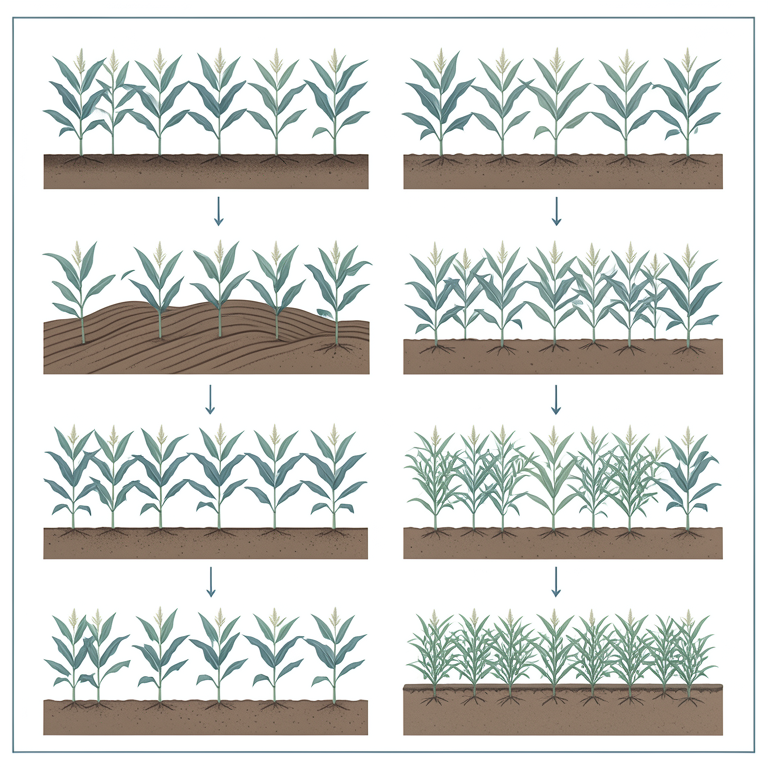
Experimental Treatment Matrix
AI-generated conceptual illustration (spring maize plants in soil). It explains the idea and does not show study data.
View source evidence ↗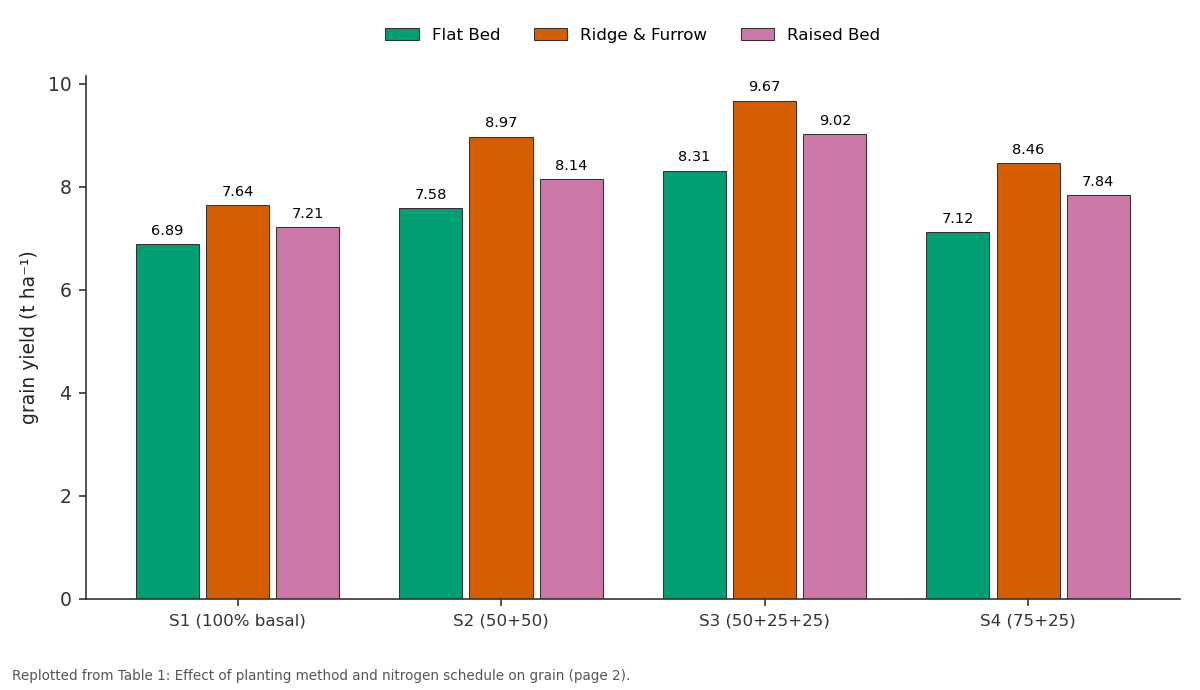
Flat Bed and Ridge & Furrow and more: S1 (100% basal) vs S2 (50+50) vs S3 (50+25+25) vs S4 (75+25)
Replotted from Table 1 (page 2) of the original paper. Every bar is the paper's own table value.
View source evidence ↗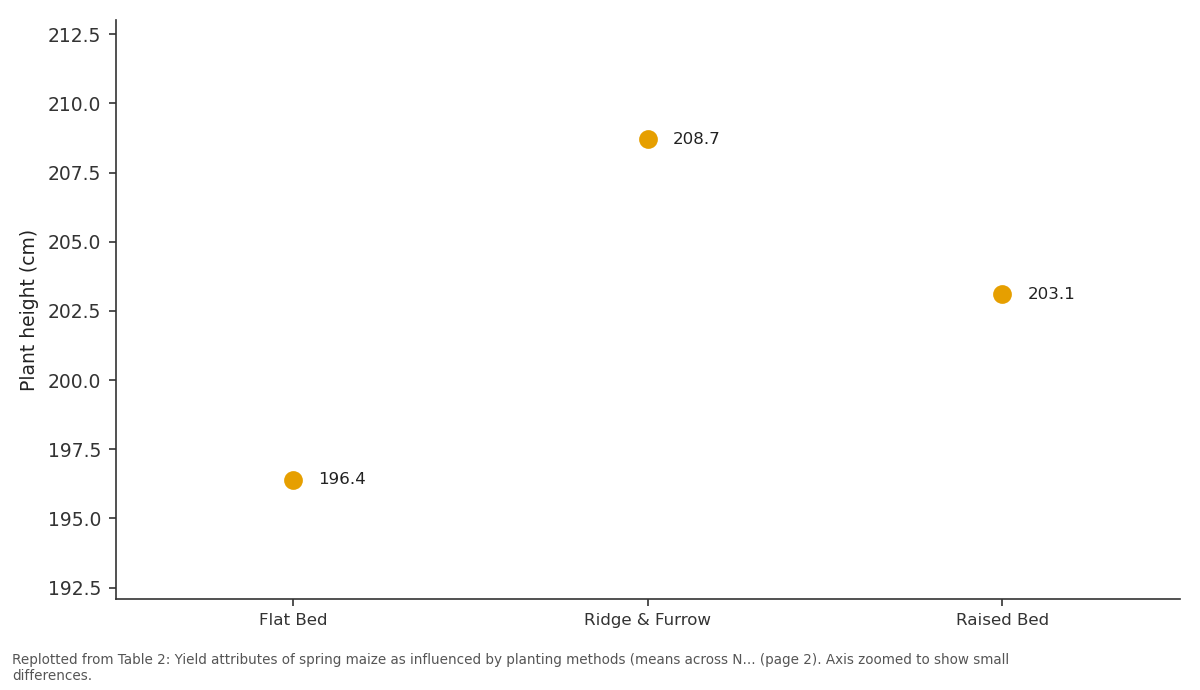
Plant height (cm): Flat Bed vs Ridge & Furrow vs Raised Bed
Replotted from Table 2 (page 2) of the original paper. Every bar is the paper's own table value.
View source evidence ↗Figures & tables
From the original paper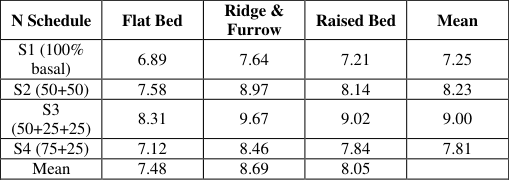 Table 1
 Table 2
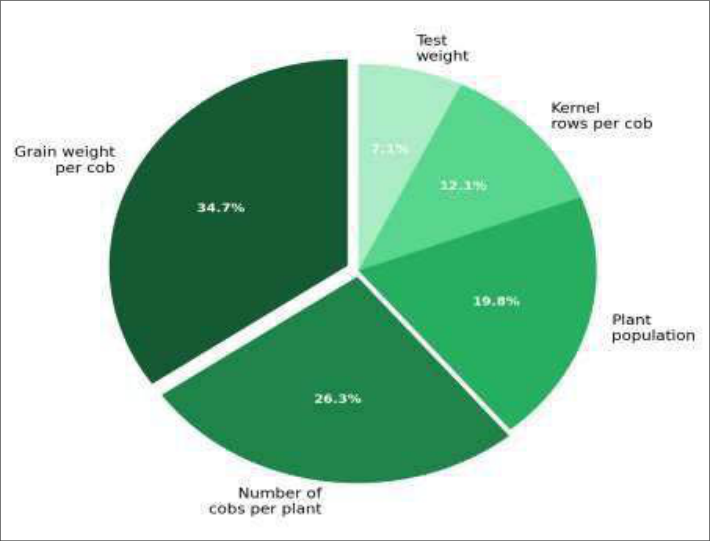 Figure 1
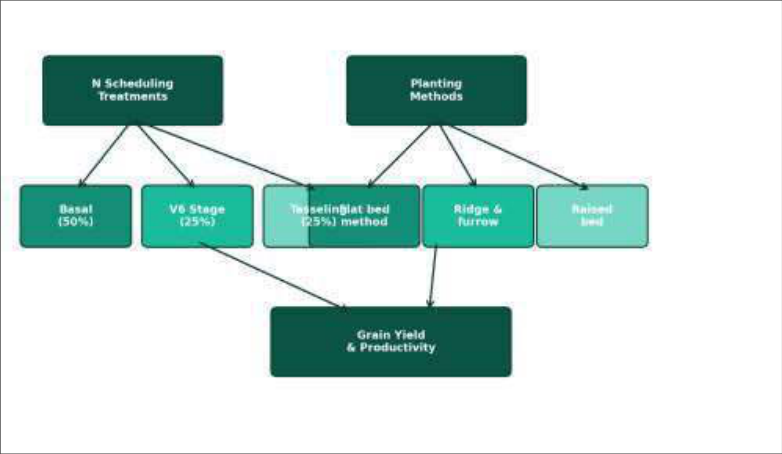 Figure 2
Introduction
India produced 35.9 million tonnes of maize in the 2022-23 crop year, ranking it fourth globally after the United States, China, and Brazil [1] . But the national average yield of about 3.2 t ha⁻¹ remains less than half of what top-performing countries achieve, signalling room for agronomic improvement [2] . The spring season, sown from late January to mid-February in the central Indian plains, gives maize a long, warm growing window with comparatively fewer pest pressures than the rainy-season crop [3] . Planting method is one factor that gets less attention than it deserves. Flat-bed sowing, the default in much of Madhya Pradesh, can waterlog root zones after unseasonal rain and limits aeration in heavy clay soils [4] . Ridge-and-furrow and raised-bed systems improve drainage, promote deeper rooting, and sometimes raise soil temperature around the seed zonea benefit during cool February nights [5] . Field evidence from wheat and soybean suggests yield gains of 8-18% from ridge planting, but comparable data for spring maize in Vertisols remain scarce [6] . Nitrogen management is the other lever. Maize is a heavy N feeder, and the mismatch between crop demand and N availability often limits yield. Applying all nitrogen at sowing risks early-season losses through leaching and volatilisation, while a well-timed split can align supply with the peaks of N uptake at V6 and tasseling [7] . Yet many farmers in the region still apply 60-80% of N at sowing. This research tested whether combining improved planting geometry with staggered N delivery could push spring-maize yields closer to the hybrid's potential under Jabalpur's Vertisol conditions.
Field Experimental Design
The trial was laid out in a split-plot arrangement with three replications at the Research Farm of Jawaharlal Nehru Krishi Vishwa Vidyalaya, Jabalpur (23°13′N, 79°57′E; 393 m elevation) during spring 2023. Main plots comprised three planting methods: flat bed (FB), ridge-andfurrow (RF, ridges 30 cm high), and raised bed (RB, beds 15 cm high × 90 cm wide). Subplots received four nitrogen schedules at a total dose of 150 kg N ha⁻¹ using urea (46% N): S1 -100% basal; S2 -50% basal + 50% V6; S3 -50% basal + 25% V6 + 25% tasseling; S4 -75% basal + 25% tasseling. Each subplot measured 5 m × 4 m. Hybrid Pioneer P3396 was sown on 8 February 2023 at a spacing of 60 × 20 cm.
Crop Growth Stage Documentation
Growth stages were tracked using the leaf-collar method. Emergence occurred 7-9 days after sowing across treatments. The V6 stage (six visible leaf collars) was reached 28-31 days after sowing, at which point the first split-N topdressing was applied. Tasseling commenced 52-55 DAS, and the second topdress was given within two days of tassel emergence. Silking followed 3-5 days later. Physiological maturity, identified by a black layer at the kernel base, was recorded between 105 and 112 DAS depending on planting method.
Material and Methods Material
The soil at the experimental site is classified as a Typic Haplustert (Vertisol) with pH 7.4, organic carbon 0.58%, available N 218 kg ha⁻¹, available P 14.6 kg ha⁻¹, and available K 287 kg ha⁻¹. The test hybrid, Pioneer P3396, is a medium-duration (110-115 days) single-cross with a yield potential above 10 t ha⁻¹ [8] . Urea served as the nitrogen source; single super phosphate (60 kg P₂O₅ ha⁻¹) and muriate of potash (40 kg K₂O ha⁻¹) were applied uniformly at sowing. Irrigation was scheduled at critical stages (V6, tasseling, grain fill) through furrow method.
Methods
Plant height, leaf area index (LAI), and dry-matter accumulation were recorded at 30-day intervals and at harvest from five tagged plants per subplot. Yield componentscobs per plant, kernel rows per cob, kernels per row, and 100-grain weightwere measured from the net plot area (3 m × 2.4 m). Grain yield was adjusted to 15% moisture. Nitrogen uptake was determined by Kjeldahl digestion of grain and stover samples [9] . Data were analysed using split-plot ANOVA in R (v4.3.1), with treatment means separated by LSD at p = 0.05. Values are means of 12 observations (4 N schedules × 3 replications).
Results
Results
Comprehensive Interpretation
The ridge-and-furrow system consistently outperformed flat-bed and raised-bed planting. Better root-zone aeration on ridges appears to have promoted deeper rooting and more efficient N capture, as reflected in the 13.5% higher N uptake recorded under RF compared to FB. Among N schedules, the three-way split (S3) aligned nitrogen supply with the two major demand peaksrapid vegetative growth at V6 and grain-set at tasselingcutting earlyseason losses and boosting kernel number per row by 15.2% over the single-basal treatment.
Discussion
The 14% yield advantage of ridge-and-furrow over flat bed agrees with findings by Jat et al. [5] , who reported 11-16% gains for ridge-planted maize on Vertisols in western Madhya Pradesh. Ridges drain excess moisture quickly after spring showers, preventing the transient waterlogging that can stunt maize roots in heavy clay [4] . The raised bed fell between the two, likely because bed width (90 cm) accommodated only one crop row, limiting population density compared with the two-row ridge system. Split nitrogen application is well established as a yieldraising practice in maize, and our results reinforce that principle. The three-way split delivered 21.6% more grain than full basal application, a margin wider than the 12-15% typically reported in irrigated kharif maize [7] . The difference may be larger in spring because lower soil temperatures during the first four weeks slow nitrification, meaning basal urea-N sits in the ammonium form longer and becomes vulnerable to volatilisation rather than moving into the nitrate pool that maize roots prefer [10] . Splitting the dose avoids this bottleneck. From a practical standpoint, the RF × S3 combination reached 9.67 t ha⁻¹, approaching the hybrid's rated potential. Adoption barriers are modest: ridge-making requires a single pass with a ridger attachment, and the two topdress operations can coincide with existing intercultivation rounds. Extension messages could target this combination as a low-cost pathway to higher spring-maize productivity in central India.
Conclusion
Ridge-and-furrow planting combined with a 50-25-25 nitrogen split produced the highest spring-maize grain yield (9.67 t ha⁻¹) under Vertisol conditions at Jabalpur. The planting method improved root-zone drainage and aeration, while the staggered nitrogen supply matched crop demand at V6 and tasseling. Together, these two adjustments closed much of the gap between farmers' current yields and the hybrid's genetic ceiling. These findings support recommending ridge planting with split nitrogen as a straightforward, affordable strategy for spring maize in the central Indian plains. Future work should test the approach across multiple seasons and soil types to confirm its wider applicability.
Figures and tables from the paper
| N Schedule | Flat Bed | Ridge & Furrow | Raised Bed | Mean |
|---|---|---|---|---|
| S1 (100% basal) | 6.89 | 7.64 | 7.21 | 7.25 |
| S2 (50+50) | 7.58 | 8.97 | 8.14 | 8.23 |
| S3 (50+25+25) | 8.31 | 9.67 | 9.02 | 9.00 |
| S4 (75+25) | 7.12 | 8.46 | 7.84 | 7.81 |
| Mean | 7.48 | 8.69 | 8.05 |
Table text extracted from the original PDF; superscript letters are shown inline. The original table image is below.
View original table image
| Parameter | Flat Bed | Ridge & Furrow | Raised Bed |
|---|---|---|---|
| Cobs per plant | 1.02 | 1.08 | 1.05 |
| Kernel rows per cob | 13.6 | 14.8 | 14.2 |
| Kernels per row | 28.4 | 32.7 | 30.1 |
| 100-grain weight (g) | 29.3 | 31.8 | 30.6 |
| Plant height (cm) | 196.4 | 208.7 | 203.1 |
| LAI at tasseling | 4.12 | 4.68 | 4.37 |
Table text extracted from the original PDF; superscript letters are shown inline. The original table image is below.
View original table image
References
19 in the original paper- ICAR-IIMR. Annual report 2022-23. Ludhiana: Indian Institute of Maize Research; 2023. p. 1-48.
- Prasanna BM, Vasal SK, Kassahun B, Singh NN. Quality protein maize. Curr Sci. 2001;81(10):13081319.
- Parihar CM, Jat SL, Singh AK, Majumdar K, Jat ML, Saharawat YS. Bio-energy, water-use efficiency and economics of maize-wheat-mungbean system under precision-conservation agriculture. Indian J Agric Sci. 2017;87(2):190-197.
- Aggarwal P, Choudhary KK, Singh AK, Chakraborty D. Variation in soil strength and rooting characteristics of wheat in relation to soil management. Geoderma. 2006;136(1-2):353-363.
- Jat ML, Saharawat YS, Gupta R. Conservation agriculture in cereal systems of South Asia. Nutr Cycl Agroecosyst. 2011;91(3):365-380.
- Hobbs PR, Sayre K, Gupta R. The role of conservation agriculture in sustainable agriculture. Philos Trans R Soc B. 2008;363(1491):543-555.
- Shivay YS, Singh RP, Prasad R. Nitrogen management in maize: A review. Indian J Agron. 2008;53(2):86-99.
- Pioneer Seeds India. Product guide: P3396 hybrid maize. Hyderabad: DuPont Pioneer; 2022. p. 1-4.
- Jackson ML. Soil chemical analysis. New Delhi: Prentice Hall of India; 1973. p. 1-498.
- Ladha JK, Pathak H, Krupnik TJ, Six J, van Kessel C. Efficiency of fertilizer nitrogen in cereal production. Adv Agron. 2005;87:85-156.
- Singh U, Ladha JK, Castillo EG, Punzalan G, TirolPadre A, Duqueza M. Genotypic variation in nitrogen use efficiency in medium and long duration rice. Field Crops Res. 1998;58(1):35-53.
- Cassman KG, Dobermann A, Walters DT. Agroecosystems, nitrogen-use efficiency, and nitrogen management. Ambio. 2002;31(2):132-140.
- Amanullah, Khattak RA, Khalil SK. Effects of plant density and N on phenology and yield of maize. J Plant Nutr. 2009;32(2):246-260.
- Ciampitti IA, Vyn TJ. Physiological perspectives of changes over time in maize yield dependency on nitrogen uptake and associated nitrogen efficiencies. Field Crops Res. 2012;133:63-73.
- Patel JB, Patel VJ, Patel JR. Influence of different methods of sowing and nitrogen levels on yield and quality of sweet corn. Indian J Crop Sci. 2006;1(12):141-143.
- Singh AK, Singh RS, Singh SP. Response of maize cultivars to nitrogen. Indian J Agric Res. 2012;46(1):67-71.
- Fageria NK, Baligar VC. Enhancing nitrogen use efficiency in crop plants. Adv Agron. 2005;88:97-185.
- Zhao RF, Chen XP, Zhang FS, Zhang HL, Schroder J, Romheld V. Fertilization and nitrogen balance in a wheat-maize rotation system in North China. Agron J. 2006;98(4):938-945.
- Timsina J, Jat ML, Majumdar K. Rice-maize systems of South Asia: current status, future prospects and research priorities. Plant Soil. 2010;335(1):65-82.